

Lunch period in 7th grade can feel like a tiny social world with its own weather. One table is laughing too hard, another kid is pretending not to look at the group they wish they were sitting with, and your child is trying to act cool while opening a lunch they packed themselves. That's exactly why lunch box notes for middle schoolers work best when they're brief, discreet, and a little more grown-up than the notes most younger kids love, because at this age, nobody wants a banner of affection waved in front of peers. The sweet spot is a note that feels private, useful, and personal, especially when you pair it with custom labels or themed stickers that make it feel more like a branded part of their gear and less like a little-kid surprise.
1. Personalized Encouragement Notes with Custom Labels
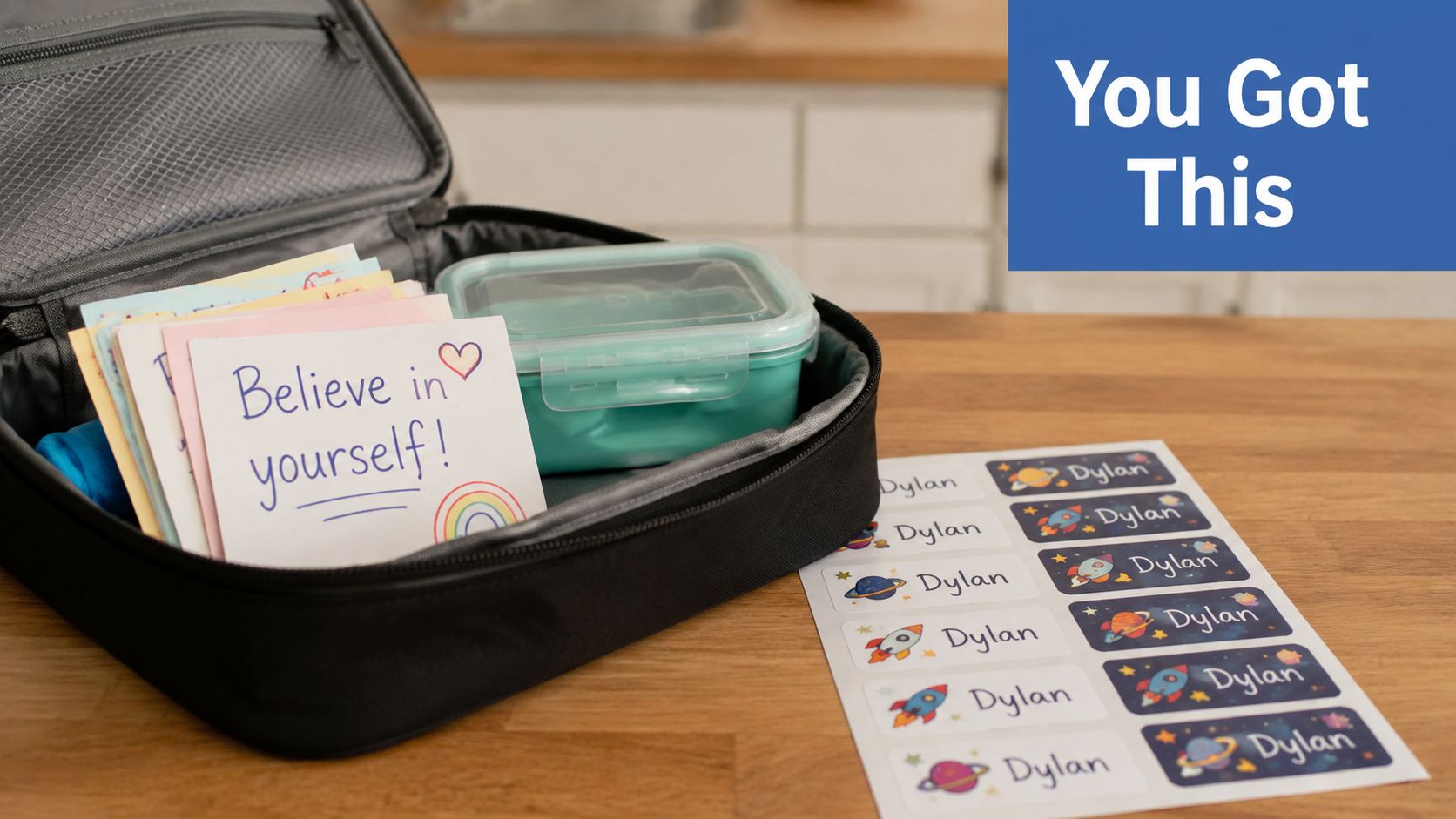
A simple encouragement note can land really well in middle school if it looks intentional, not babyish. A quick “You've got this, Maya” tucked beside a labeled napkin or a note card with your child's initials feels far more age-appropriate than a glittery slogan that announces itself from across the cafeteria. The format matters here, because guidance for this age group points toward compact, low-profile notes that can be read fast and don't draw attention.
Keep the message short, then personalize the presentation
Custom labels do a lot of quiet work. If you use a name label on the lunch container, a matching sticker on the note card, or a coordinated tag on the thermos, the whole lunch setup feels cohesive and more grown-up. The note itself can stay short and plain, while the label makes it feel like it belongs to them, which is often the part middle schoolers appreciate.
A few formats tend to work better than long pep talks.
- One-line encouragement: “Big presentation today. You're ready.”
- Name-based note: “Hey, Jordan, keep going.”
- Small identity cue: a star, lightning bolt, or sport-themed sticker instead of hearts or cartoons
- Rotating theme: math test, tryout day, or friend drama day, each with a different label style
If you want the personalization to feel polished, InchBug's personalized school supplies make it easier to keep labels, containers, and note cards visually aligned. That kind of consistency matters more with tweens than people realize, because it reads as thoughtful without feeling overly emotional.
Practical rule: if the note would embarrass your child if a friend glanced at it, shorten it or hide it better.
I've found that middle schoolers often accept this kind of note more readily when the visual language matches their age. A clean font, a custom label, and one short message can feel a lot more respectful than a long handwritten paragraph.
2. Joke and Riddle Notes for Daily Laughs
Middle schoolers are usually more willing to smile at a joke than at a big emotional message, especially in a crowded cafeteria where they want something quick and low-key. A note like “Why did the math book look sad? Because it had too many problems!” gives them a fast reaction and still feels like a private wink from home. For this age group, short works better than sentimental, and the joke should be easy to read before the lunch table gets loud.
A little personalization keeps the humor from feeling generic.
Match the joke to their kind of funny
The note lands better when it sounds chosen for your kid, not pulled from the same stack every family uses. Some tweens want cheesy dad humor. Others want a riddle, a science pun, or a joke that is dry enough to feel a little cooler. A custom label, a themed sticker, or even a tiny icon beside the note tells them you were paying attention to what they like.
I've found that middle schoolers are quick to reject anything that feels childish, but they'll often keep the joke if the presentation feels a little more grown-up. A clean label with their name, a simple color scheme, and one joke that fits their interests can make the note feel respectful instead of babyish. If they are into sports, music, or gaming, let the label hint at that. It reads as identity-aware, which matters a lot at this age.
A few formats tend to work better than long joke cards:
- Use category labels: dad jokes, science puns, music jokes, or riddle day
- Let them choose the style: some kids want puns, others want absurd one-liners
- Keep it clean and short: the cafeteria is not the place for jokes that need explanation
- Rotate the format: joke one day, riddle the next, so it stays fresh
If you want a repeatable rhythm, notes in lunch boxes can help you keep the humor varied without making it feel random. Pairing the note with a themed sticker, like a tiny tomato for a food pun or a music note for a riddle, makes the whole thing feel intentional and a little more age-appropriate.
A joke note should earn a smirk, not a groan that turns into a lecture.
That balance matters with tweens. They may act like they are above lunch notes, then save the funniest ones or mention them later at home. A small system, a labeled note card, and a joke that matches their personality give them something to enjoy privately, which is often exactly what they want.
3. Affirmation and Growth Mindset Notes
Middle school brings a steady stream of small-looking moments that feel enormous to the kid living them. A lunch note can be the quieter option when a test, tryout, or class presentation is already taking up space in their head. A line like “Mistakes are proof you're trying” gives support without turning the lunchbox into a pep talk. It respects their independence and still lets them feel backed up.
A lot of tweens also reject anything that feels young, even when they want the reassurance. That is where the presentation matters as much as the message. A simple custom label with their name, a muted color, or a small sticker tied to an interest like music, sports, or art makes the note feel more like something made for them and less like a kid craft.
Make the message match the moment
Generic positivity can land flat with a seventh grader. Specific encouragement usually works better because it sounds like you know what they are dealing with. If they have a presentation, name it. If they are worried about a friend group shift, keep the message calm and steady instead of overdoing it.
A few examples tend to work well once you add their name or a themed label:
- Challenge-focused: “You can handle hard things, Sam.”
- Effort-centered: “Keep going. Effort counts.”
- Resilience note: “Today's mistake doesn't change who you are.”
- Confidence cue: “You've done hard things before, and you'll do them again.”
That small layer of personalization does a lot of work. A label with their name, a color that matches their style, or a themed sticker on the lunchbox lid can make the note feel chosen, not generic. If you want a thoughtful place to start, InchBug's resources for mental health awareness line up well with this kind of supportive note and keep the tone grounded.
The strongest growth-mindset notes stay brief and steady. They should sound like a voice in the background, not a speech. A tween can read it, fold it back up, and act cool about it in public while still carrying the message through the rest of the day.
4. Fun Facts and Learning Tidbits
A good fact note gives middle schoolers something to read that doesn't feel emotionally loaded. It works well for kids who like science, random trivia, or anything that feels a little more grown-up than a heart emoji. It also fits that lunchbox notes can carry more than pep talks. Some classroom resources use lunch box data to help students interpret categorical and numerical data and talk about variation, so lunch-related messages can do a little teaching without turning into homework.
Keep the facts tied to their school world
The strongest fact notes connect to what your child is already studying. If they are in a science unit, send a plant fact. If geography is on the table, use a place-based tidbit. If they are in a language class, a tiny vocabulary note can feel smart without sounding like a lesson from the front of the room.
A few ways to keep the note interesting:
- Subject labels: science, geography, history, or language arts
- Theme days: Science Monday or History Thursday
- Quick fact plus reaction line: “Octopuses have three hearts. Wild.”
- Invite fact-checking: let your child correct, verify, or add their own
The packaging matters here too. A label with their name, a subject tag, or a themed sticker can make the note feel intentional instead of childish. That helps with middle schoolers, who often reject anything that looks too cute even when they secretly enjoy it.
A fact note can also fit neatly beside the lunch itself. Harvard's lunchbox guidance recommends building a healthy lunch around fruits and vegetables, whole grains, and protein, which makes the whole routine feel connected. For a tween, that connection can matter more than a long explanation, because it links what they eat with how they feel during the school day.
Colored labels by subject keep the notes organized, and short facts are easier to read in one glance. I like notes that feel a little like a neat school supply, because that tone usually gets a better reaction than something that feels babyish or overly sweet.
5. Challenge and Goal-Tracking Notes
Middle schoolers usually respond better to a challenge than to a lecture, especially when they get a say in the goal. A lunch note that says “Try your water goal this week, then mark each day with a sticker” feels active, specific, and a little more grown-up. That matters with tweens, who often shut down fast if a note looks too cute or too controlling, even if they secretly want the encouragement.
Make the goal visible and manageable
The note should not read like one more task stuffed into lunch. It works best when the challenge is small, clear, and chosen together. If your child helps pick the goal, they are far more likely to care about the sticker tracker that goes with it.
I like goal notes that feel practical enough to use at school and at home. A short label, a clean tracker, and one simple action give the note a more mature feel, which helps when a child is quick to reject anything that feels babyish.
A few examples keep the idea concrete:
- Hydration challenge: “Hit your water goal and add a sticker each day.”
- Kindness challenge: “Do one helpful thing and track it.”
- Reading goal: “Read for 15 minutes, then mark your progress.”
- Movement goal: “Take a walk after school and note it on your chart.”
The packaging matters here too. A moisture-resistant cardstock note, a small laminated card, or a label on a tracking sheet makes the system feel sturdier and easier to toss in a backpack. That fits school life, where lunch gear gets handled a lot and needs to hold up.
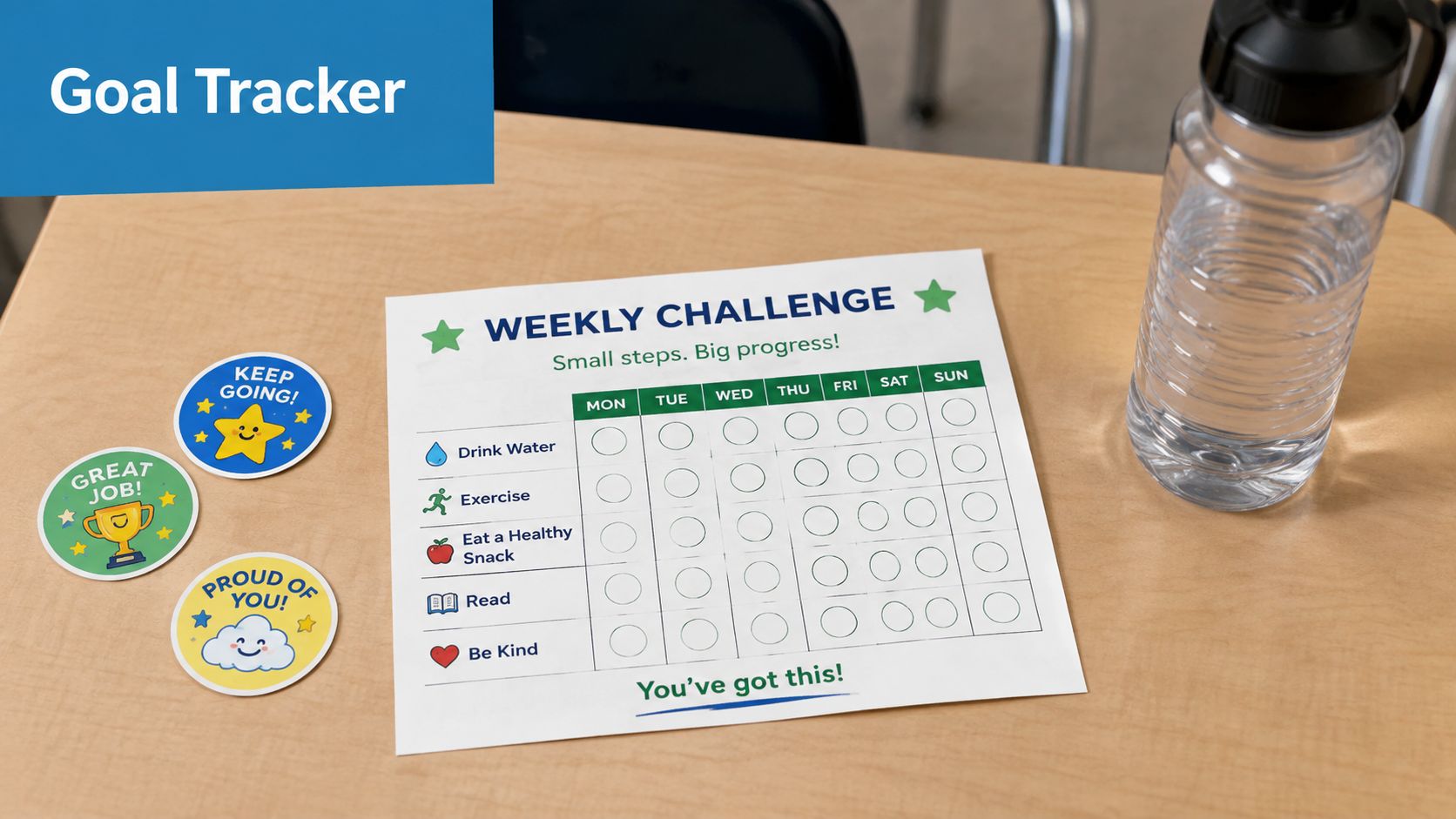
The best version feels like a private coaching tool, not a one-time pep talk. A custom label with your child's name, a themed sticker, or a simple color system can make the note feel intentional instead of childish. That small bit of personalization often makes the difference between an eye roll and actual use.
6. Personalized Playlist or Recommendation Notes
By middle school, kids start choosing taste on purpose. They want to know a recommendation was picked for them with care, and they notice fast if it feels random. A note like “I found a podcast about marine life because you've been into ocean stuff lately” respects their growing identity while still giving them something new to try.
Make the recommendation feel earned
The strongest recommendations come from paying attention to what your child already likes. If they love basketball, send a game recap or a sports story. If they read constantly, tuck in a book title with one short reason you thought of them. If they keep talking about a game or a band, show them you were listening.
A little personalization goes a long way here. A custom label with their name, a sticker for the media type, or a color-coded category system helps the note feel intentional instead of childish. Middle schoolers often reject anything that looks babyish, even when they secretly enjoy the attention, so a simple label or themed sticker can make the note feel more grown-up and identity-affirming.
I like this type of note because it opens a low-pressure conversation later. Your child can ignore it, love it, or critique it, and all three reactions tell you something useful. A playlist suggestion can also feel more grown-up than a generic “good job” note, especially when it matches what they care about. The point is not to perform taste. It's to show that you're paying attention without acting like you're trying too hard.
7. Lunch Box Surveys and Conversation Starters
Some middle schoolers will talk your ear off at dinner and give you one-word answers at lunch. A note that asks “What made you laugh today?” or “What's one thing you learned?” gives them a small opening without making them feel like they have to report back. That fits this age well. Private notes feel less embarrassing, and open-ended questions let them answer in whatever tone feels right that day.
Keep the prompt easy to answer, but not babyish
I've had better luck with questions that feel more like a check-in than an assignment. On a tired day, a quick rating or a short fill-in gives them a way to reply without thinking hard. On a calmer week, a question that asks for a little reflection can open the door to a real conversation later.
The trick is to keep the note sounding like it belongs to a middle schooler, not a little kid. A custom label with their name, a small themed sticker, or a color that matches the question type helps the note feel more grown-up and identity-affirming. That matters because many tweens will roll their eyes at anything that feels childish, even while they secretly appreciate the attention.
Here's a mix that works well in real life:
- Low-pressure questions: “Rate lunch from 1 to 10.”
- Mood checks: “Describe today in three words.”
- Reflection prompts: “What made you proud?”
- Connection prompts: “Who made you laugh?”
This style is useful because it opens a bridge between school and home without turning lunch into a quiz. If your child skips a response, let it go. If they answer with one word, take that as a win. The point is to keep the door open, not to collect perfect answers.
If you want something ready to print and rotate, InchBug's lunch box notes printable works well for conversation starters that feel organized without looking cluttered. A labeled card or small binder can also turn the replies into a keepsake later, which is a nice extra if you like saving the little paper trail of these years.
Don't turn the lunch note into an interrogation. Keep it light enough that your kid wants to answer tomorrow, too.
I've found these notes work best when they fit into a bigger family rhythm, like a quick dinner check-in or a chat in the car. Then the lunch note becomes one small part of a calmer pattern, not the whole conversation.
8. Themed Week Notes with Coordinated Labels
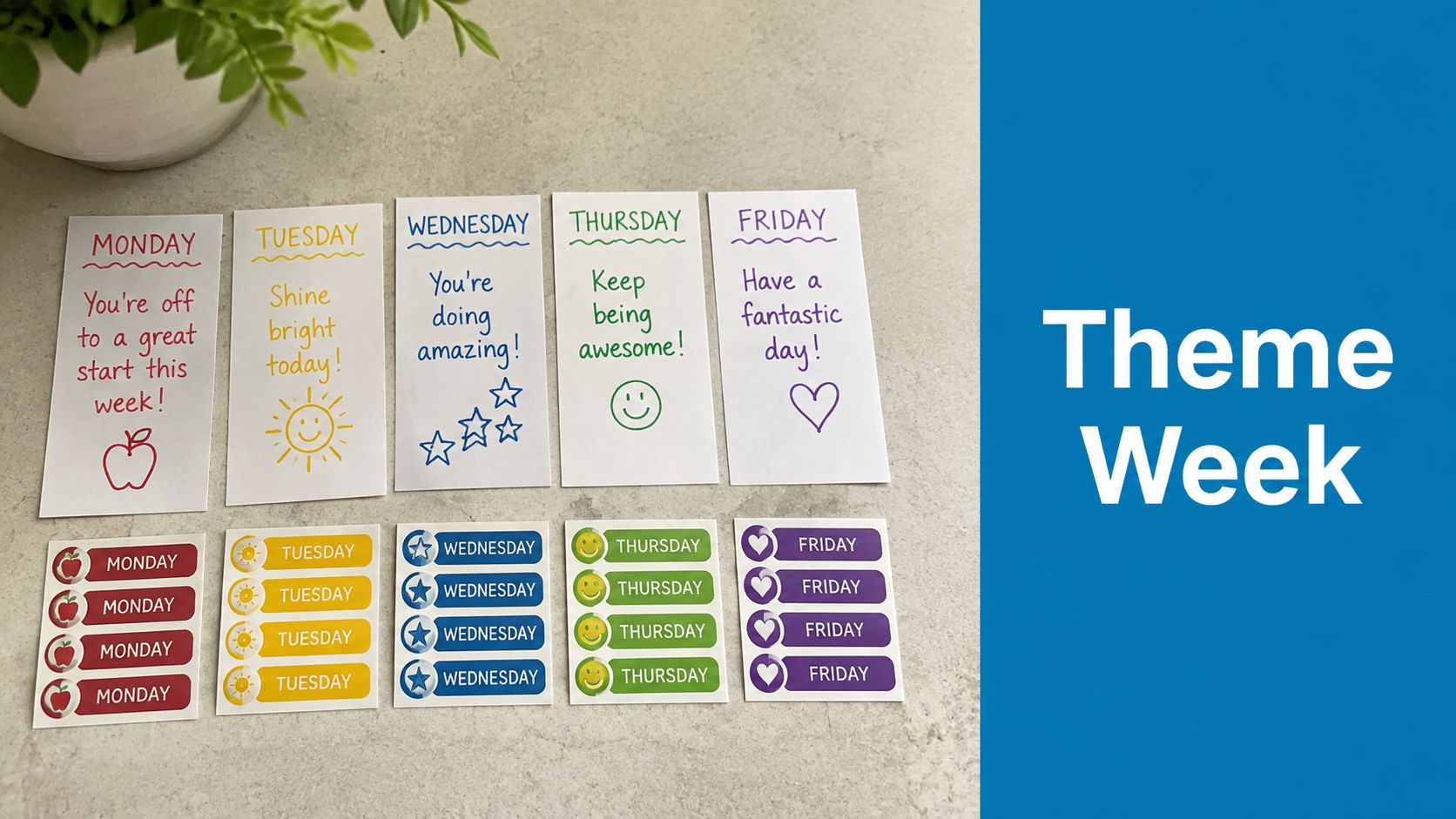
A themed week gives middle schoolers structure without making the notes feel repetitive. Motivation Monday, Thankful Thursday, and Science Friday set a rhythm that feels more mature than random sticky notes, and it is easier to keep up with on busy mornings. Matching labels and sticker packs help the notes look intentional, like a small system your child can recognize at a glance instead of loose paper pulled from the junk drawer.
Start with a simple weekly framework
Keep the pattern predictable, but give each day its own job. One day can carry encouragement, another can focus on gratitude, another can be a fact, a quick challenge, or a short check-in. That variety matters because middle schoolers often shut down when notes feel too cute or too emotionally intense, yet they are usually fine with something that feels thoughtful and understated.
A week can look like this:
- Motivation Monday: brief encouragement, blue or silver label, goal sticker
- Thankful Thursday: gratitude prompt, calm-colored label, star sticker
- Science Friday: fun fact, subject label, themed icon
- Weekend reset note: short encouragement for Monday prep, clean label, simple design
The label does more than decorate the note. It gives the message a clear identity, which helps the note feel grown-up and personal without turning it into a big emotional moment. That matters with tweens, who may reject anything that seems babyish even when they like the attention behind it.
A themed approach also helps when your child is in a phase where direct emotional messaging gets an eye roll. The theme carries some of the feeling, while the label and sticker make it theirs. InchBug's themed sticker packs fit neatly into that kind of system because the visual style stays consistent from week to week without much extra thought.
What works best is the version you can repeat. A short theme calendar, a few reusable templates, and a small stash of coordinated labels can keep the system going through the school year without making lunch notes feel like one more project you have to invent before breakfast.
8-Way Comparison of Middle School Lunchbox Notes
| Item | Implementation Complexity 🔄 | Resource Requirements ⚡ | Expected Outcomes 📊 | Ideal Use Cases 💡 | Key Advantages ⭐ |
|---|---|---|---|---|---|
| Personalized Encouragement Notes with Custom Labels | Moderate 🔄, design + prep time for customization | Low–Medium ⚡, labels, printer/laminating, parent time | Increases belonging and self-worth; creates keepsakes 📊 | Emotional support, boosting identity during transitions | Highly personal and durable; visually cohesive system ⭐ |
| Joke and Riddle Notes for Daily Laughs | Low 🔄, simple to compose or copy jokes | Low ⚡, joke sources, small stickers/notes | Reduces stress; promotes sharing and social connection 📊 | Lightening mood, social engagement, lunchtime laughs | Easy to scale and share; low prep cost ⭐ |
| Affirmation and Growth Mindset Notes | Medium–High 🔄, requires authentic, research-based phrasing | Medium ⚡, time to craft, consistent delivery, personalized labels | Builds resilience and confidence over time when consistent 📊 | Addressing self-doubt, test weeks, social challenges | Evidence-based messaging with lasting emotional impact ⭐ |
| Fun Facts and Learning Tidbits | Low–Medium 🔄, sourcing and fact-checking required | Low ⚡, reputable sources, brief formatting | Sparks curiosity and conversation; reinforces learning 📊 | Curriculum reinforcement, curious learners, STEM interest | Educationally engaging; encourages critical thinking ⭐ |
| Challenge and Goal-Tracking Notes | Medium 🔄, set up tracking system and realistic goals | Medium ⚡, stickers, charts, follow-up time | Promotes habit formation and measurable achievement 📊 | Habit building (hydration, reading, kindness), gamification | Gamified motivation with visible progress tracking ⭐ |
| Personalized Playlist or Recommendation Notes | Medium 🔄, curation and periodic updates needed | Medium ⚡, time to research, access to media references | Encourages discovery and shared interests; sparks conversation 📊 | Media literacy, parent-child bonding, discovery of new content | Highly relevant personalization; fosters dialogue about interests ⭐ |
| Lunch Box Surveys and Conversation Starters | Low–Medium 🔄, design varied, age-appropriate prompts | Low ⚡, labeled cards, occasional archiving | Improves communication and gives insight into daily life 📊 | Emotional check-ins, family dinner conversations, reflection | Low-pressure way to open dialogue and document changes ⭐ |
| Themed Week Notes with Coordinated Labels | Medium–High 🔄, planning weekly themes and coordinating materials | Medium–High ⚡, themed sticker/label bundles, prep time | Creates routine, anticipation, and a cohesive experience 📊 | Busy families wanting structure and variety, seasonal planning | Reduces decision fatigue; visually consistent and anticipatory ⭐ |
Make It a System, Not a Stress
The best lunch box notes for middle schoolers are cool, compact, and a little discreet. That doesn't mean they have to be emotionally flat. It means they should respect the fact that your tween is old enough to care what peers think, but still young enough to light up when they find a private note from home. The strongest notes usually read in under a minute, feel personal without being over the top, and match the social reality of middle school instead of ignoring it.
Tone matters more than decoration. If the note sounds cute in a preschool way, most middle schoolers will roll their eyes. If it sounds like it came from someone who understands their world, they'll keep it, even if they pretend not to care. That's why I like pairing a short note with custom labels, themed stickers, and a consistent layout, because the whole thing feels older, calmer, and more intentional.
Frequency matters too. You don't need to do this every single day for it to work. Three to five times a week is often easier to sustain than a daily promise, and it leaves enough space for the notes to feel special instead of routine. I'd rather send fewer notes that feel thoughtful than burn out trying to be cute seven days a week.
The most useful system is the one you can repeat without dread. Keep a small set of note cards, a few label styles, and a theme or two your child likes. Save the favorites in a keepsake box with their name on it, and let the system evolve as they do, because what works in 6th grade may need a cooler tone by 8th grade.
If you want a simple way to make the whole routine feel cohesive, InchBug offers customizable labels, teen sticker labels, bag tags that work well with lunch boxes, and themed sticker packs that fit the same back-to-school rhythm. Start with one note style, one label set, and one week of consistency, then build from there.
If you're ready to make lunch notes feel more age-appropriate and less like a craft project, visit InchBug to look at customizable labels and sticker packs that can help you build a simple system for middle school lunches. Pick one note style, add a name label, and start with a few days a week so the routine feels natural for both of you.