

Some school mornings feel like a relay race. You're packing lunch, signing a form, hunting for a water bottle, and trying to get everyone out the door with shoes on the correct feet. A printable lunch note only helps if it's easy to find, quick to prep, and right for your child.
That's why I don't think of lunch notes as just cute extras. A good lunch box notes printable becomes part encouragement, part routine, and sometimes part problem-solving. For a preschooler, it might be a smiley face and a simple joke. For a tween, it's often better as a riddle, code, or question that feels more like connection than sentiment. For some kids, the design matters just as much as the words because busy layouts can feel overwhelming.
The best approach is simple, flexible, and realistic enough to survive a weekday morning. Here's how to choose, print, personalize, and use lunch notes in a way that works.
Where to Find the Best Lunch Box Note Printables
The internet has a lot of lunch note printables. The challenge isn't finding one. It's finding one you'll still use after the first week of school.
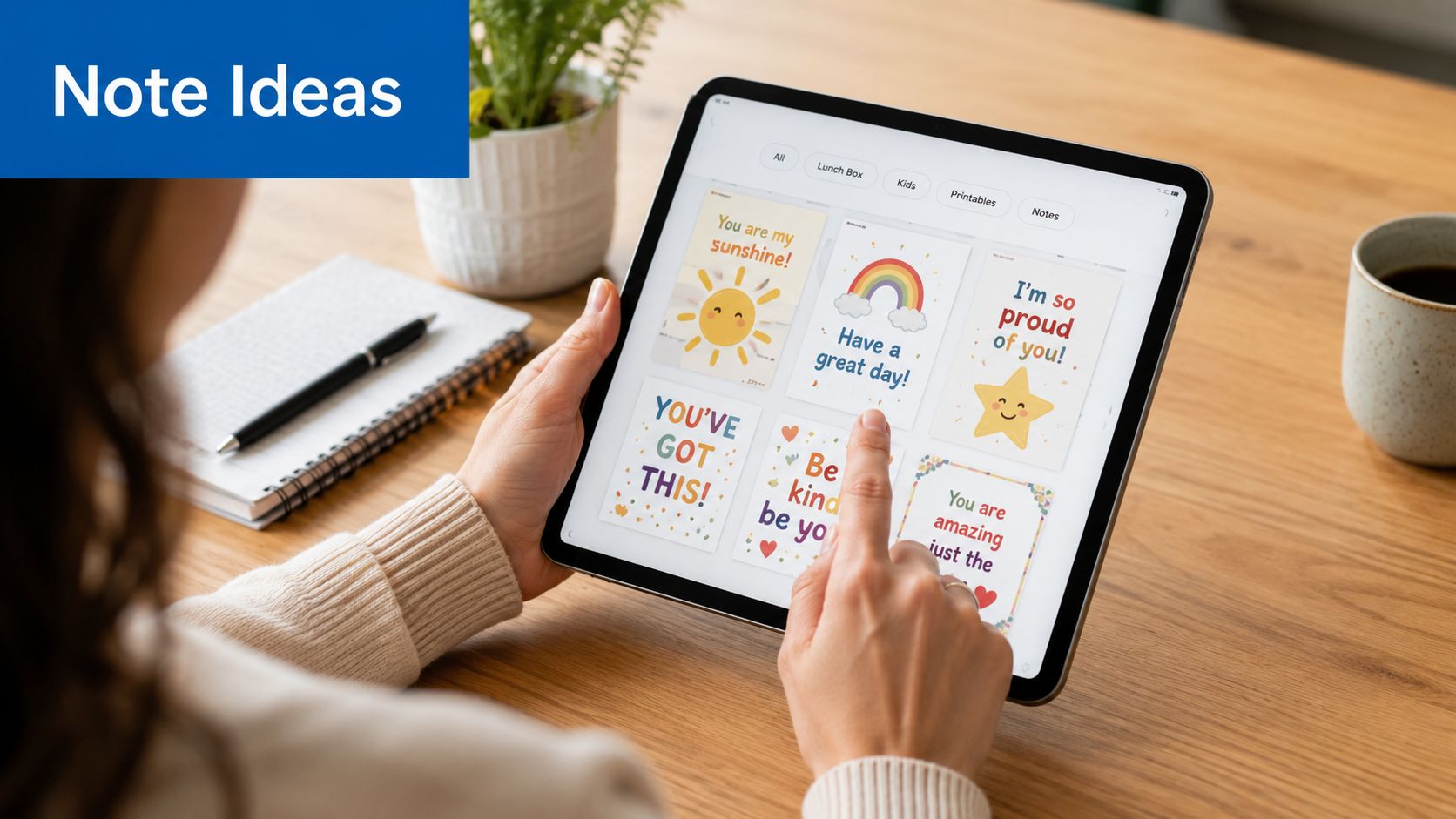
Start with the type of note your child will actually enjoy
Most printable sets fall into a few categories:
- Encouraging notes with short affirmations and comfort-focused messages
- Funny notes with jokes, silly drawings, and playful one-liners
- Educational notes that mix support with fun facts
- Interactive notes with fill-in prompts, questions, or mini activities
Younger kids usually respond well to bright, clear messages and simple visuals. Older kids often want something less gushy. If your child rolls their eyes at sweet notes, that's useful information. Pick a format that matches their personality, not the version of lunch notes you wish they liked.
A strong free option is Sanford Fit's “I Am Loved” set, which offers 30+ encouraging lunch box notes for Pre-K through K-2 in a ready-to-print format, as described on Sanford Fit's printable notes page. On the smaller side, Hallmark Ideas offers exactly 12 printable designs, which can be easier if you prefer a compact set over a giant download.
Choose between themed sets and one big collection
It's common for many parents to overcomplicate things. You don't need every seasonal bundle on the internet.
A small themed set works well if:
- Your child loves novelty and gets excited by changing designs
- You only want occasional notes instead of building a daily habit
- You prefer simpler choices and don't want a huge file to sort through
A large all-in-one collection works well if:
- You want one download to last through much of the school year
- You like batching prep on one evening instead of searching every month
- You have more than one child and need variety
Practical rule: If searching takes longer than printing, your system is too complicated.
I also look for printables with enough white space to add a handwritten sentence. Even the best pre-made note feels warmer when you add a name, a doodle, or a quick “good luck today.”
For more ideas on the simple emotional value behind this habit, InchBug has a thoughtful piece on notes in lunch boxes that pairs nicely with printable planning.
Printing and Prepping Your Notes to Last
A lunch note that comes home torn, soggy, or stuck to an apple slice isn't much use. The prep matters more than is commonly realized.
Here's the process that holds up best in real lunch boxes.
Use sturdier paper from the start
The most practical recommendation is to print on cardstock or heavier paper with a minimum weight of 65 to 80 lb, using a standard 8.5" x 11" layout with “scale to fit” enabled, and laminating if you want reuse, according to this lunchbox note printing guide.
That one change fixes a lot of common problems. Thin printer paper wrinkles fast, especially if your child packs an ice pack, juicy fruit, or a lunch container with condensation.
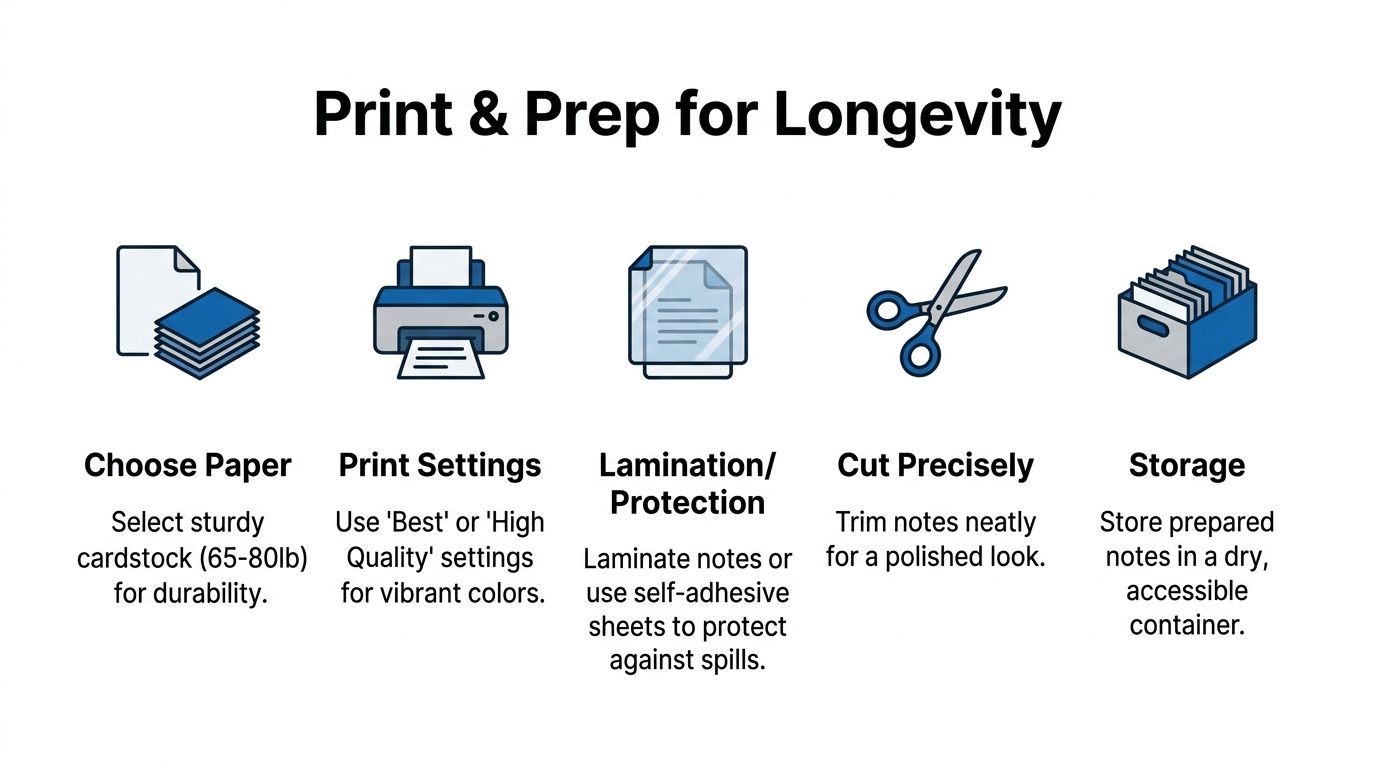
A simple prep checklist helps:
- Pick your paper first. Cardstock is easier to cut cleanly and survives backpack wear better.
- Use high-quality print settings if the design relies on color or small text.
- Turn on “scale to fit” so borders and edges don't get cropped.
- Cut with a paper trimmer or sharp scissors for fast, neat stacks.
- Sort by child or theme before storing.
Decide what needs lamination and what doesn't
Not every note needs to be laminated. If you're writing a fresh personal message every day, plain cardstock is usually enough. If you want reusable jokes, trivia cards, or conversation starters, lamination saves time.
I like to separate notes into two groups:
| Type of note | Best format |
|---|---|
| One-time encouragement | Cardstock |
| Reusable jokes or prompts | Laminated |
| Allergy reassurance card | Laminated |
| Weekly themed notes | Cardstock or laminated |
That last category matters if you're packing lunches for more than one child. Reusable cards can stay in rotation, while handwritten notes keep things personal.
A short demo can also help if you're setting up a print-and-prep routine for the first time:
Store them where mornings happen
Don't put your finished note stack in a random drawer across the kitchen. Store it where lunch gets packed.
A small bin, zip pouch, or narrow file works well. If you already label school gear, it helps to keep the note container with the rest of your lunch-packing supplies. InchBug shares practical organization ideas in its article on dishwasher-safe name labels, and the same logic applies here. The easier items are to identify and grab, the more likely you are to use them.
Crafting Messages for Preschoolers and Young Kids
Little kids don't need polished prose. They need warmth, clarity, and something they can understand at a glance.
That's why the best notes for preschoolers and early elementary kids are short enough to read quickly and playful enough to repeat at the lunch table. Some children want reassurance. Others light up when they get a joke, a doodle, or a surprising fact they can announce to everyone around them.
Keep the message simple and visual
A note for a young child works best when it does one job well. Too many words can get skipped, especially for early readers.
These formats tend to work nicely:
- Tiny encouragements like “You're doing great today”
- Simple jokes they can retell
- Picture-led notes with hearts, stars, or silly faces
- One fun fact that sparks curiosity
A large collection from Clarks Condensed includes 101 distinct lunch box note ideas and four printable sets, with facts such as a bee needing to visit 2 million flowers to make one pound of honey, and that about 150 people per year are killed by coconuts, as shared in the Clarks Condensed guide. That same guide also includes kid-friendly facts like a single cloud weighing more than 1 million pounds, which is exactly the kind of detail younger kids love repeating.
A good note for a younger child should be readable in a few seconds and memorable for the rest of the day.
Try message styles instead of writing from scratch every time
When parents get stuck, it's usually because they think every note has to be original. It doesn't. Rotate a few dependable styles and you'll never run out.
Here are some easy categories to keep in your back pocket:
-
Cheerleader note
“I'm proud of you for trying hard today.” -
Silly note
Draw a banana wearing shoes and write, “This banana thinks you're a-peel-ing.” -
Curiosity note
“Did you know a cloud can weigh more than 1 million pounds?” -
Connection note
“Tell me one funny thing that happened today.”
For kids who are just starting school routines, pairing lunch notes with reliable meal routines helps too. If you need simple meal inspiration to go with the note habit, InchBug's roundup of kindergarten lunch ideas is useful because it keeps the whole lunch process grounded in real life.
What usually doesn't work
Long inspirational messages often miss the mark with little kids. So do notes written in tiny fonts, pale colors, or crowded designs with too many clip-art elements.
The note should feel like a bright little surprise, not another worksheet.
Engaging Tweens and Teens with Interactive Notes
A lot of parents stop sending lunch notes once their child gets older. I think that's often the wrong conclusion.
The note isn't the problem. The format is.
Older kids usually want interaction, not sentiment
Teens often pull away from anything that feels babyish or overly emotional in public. That doesn't mean they don't want connection. It means the connection has to be delivered differently.
According to YourTeenMag's article on lunch box notes for teens, about 65% of teens feel “separate” from their parents during lunch hours, and they respond better to interactive notes such as puzzles, codes, or trivia. The same source says over 80% of current printable resources offer only static affirmations, which leaves many parents of older kids with options that don't fit.
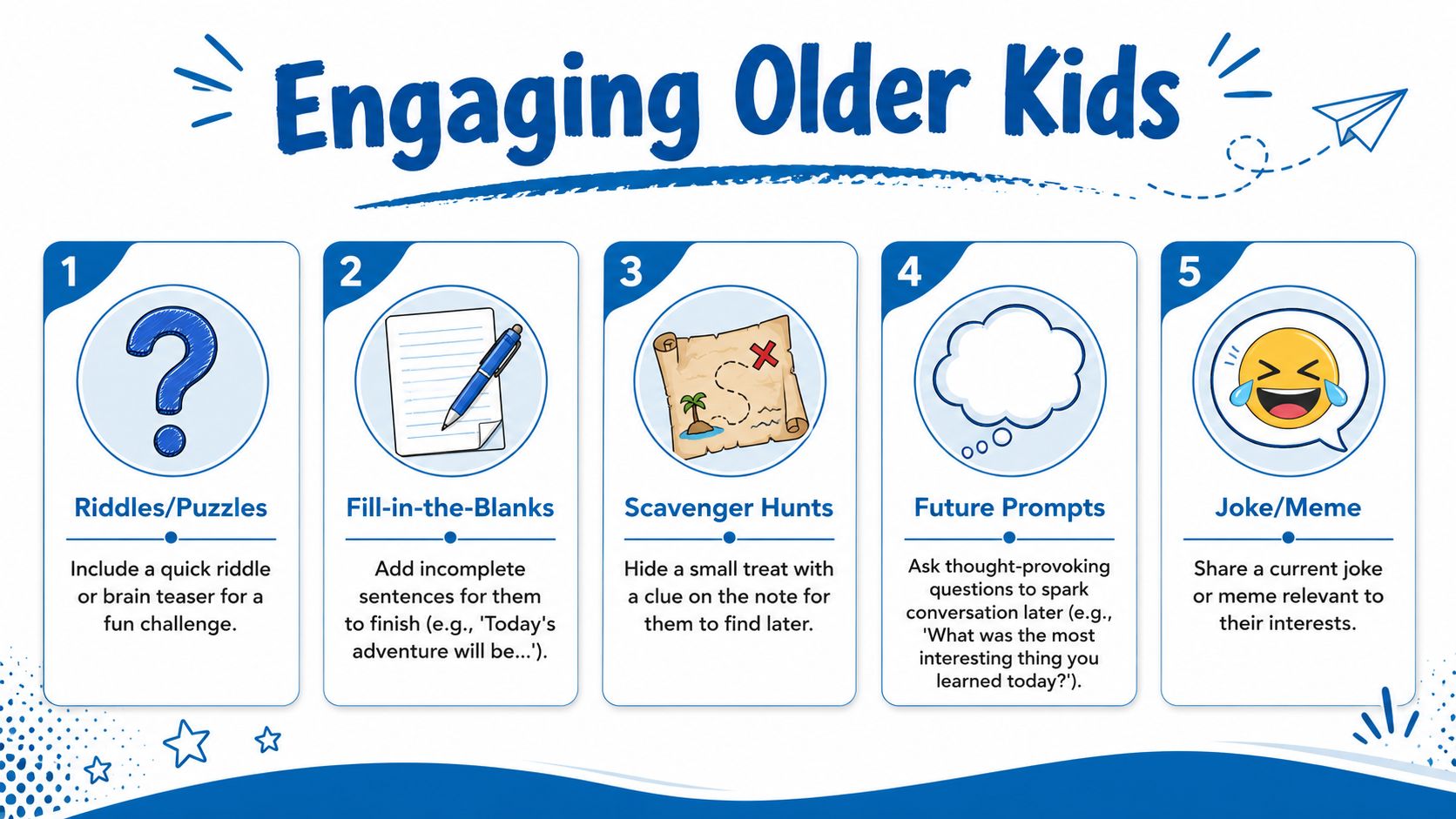
That matches what many families notice at home. A tween may cringe at “Love you forever, pumpkin,” but happily solve a coded message or answer a weird trivia question.
Better note ideas for the middle school and high school crowd
Try replacing affection-heavy notes with anything that invites a response later.
A few reliable options:
-
Mini puzzle
Give them a quick riddle with the answer waiting at home. -
Secret code
Use a simple number-letter key and hide a short message. -
Opinion question
“Which class should be twice as long and which should be half as long?” -
Prediction prompt
“What's one thing that will surprise you today?” -
Inside joke
Keep it subtle enough that it feels private, not performative
If your older child says notes are embarrassing, believe them. Then change the style instead of abandoning the habit.
Make it look age-appropriate
Design matters more with older kids than many parents expect. Cartoon animals and primary colors can make a note feel childish fast. A plain card with clean text, a monochrome design, or a tiny puzzle printed in one corner often lands better.
I'd also keep the note physically small. A compact card tucked under a napkin feels discreet. A giant decorated square on top of the lunch container can feel like a public announcement.
If you're labeling gear for older kids too, InchBug's article on name sticker labels for teens is a useful reminder that tweens and teens still need practical personalization. They just want it to look more grown up.
Creating Inclusive Notes for Every Child
A lunch note should help a child feel steadier during the school day. For some children, that means fun. For others, it means calm, clarity, and reassurance.
Many printable sets often fall short. They assume every child enjoys bright graphics, busy layouts, and broad encouragement. That's not always true.
Sensory-friendly design is part of the message
Some children do better with simpler visuals and predictable formatting. According to the TeachersPayTeachers search context provided in the verified data, an estimated 15 to 20% of school-aged children experience sensory processing challenges, and bright, complex visuals can cause distress. The same verified data notes that 30% of parents of kids with food allergies report lunch-related anxiety, pointing to a real need for more customizable printables tied to lunchtime reassurance.
For these children, a better lunch box notes printable often looks like this:
- Muted or low-clutter design instead of highly saturated color
- Large readable text instead of decorative fonts
- One message per card instead of layered visuals
- Predictable formatting so nothing feels visually chaotic
That doesn't make the note less cheerful. It makes it easier to receive.
Allergy-safe notes can reduce lunchtime stress
Children with food allergies or diet-related worries often carry a lot of mental load into lunch. A note can gently support that moment without drawing attention.
Useful messages might include:
-
Reassurance
“This snack is safe for you.” -
Confidence cue
“You know what to do if you have a question.” -
Comforting reminder
“Your lunch was packed with care.” -
Simple familiarity
“Everything in here is for you.”
These notes work best when they're direct and private. They shouldn't alarm the child or read like a warning label. The goal is steadiness.
A supportive note doesn't always need to be cute. Sometimes it just needs to lower stress.
Add meaning that fits your family
For some families, inclusion also means making room for faith, reflection, or calming routines that feel grounding before a busy school day. If that's part of your home rhythm, you might also like to discover children's prayer cards, which can inspire short, gentle lunch messages rooted in reassurance rather than pressure.
The key is personalization with purpose. If a note style makes your child feel seen, calmer, or more confident, it's doing its job.
The Busy Parent's System for Staying Organized
A lunch note habit only sticks if it takes almost no thought on a weekday morning. Good intentions won't carry you through a rushed Tuesday.
What works is a system.
Build one small lunch note station
Keep everything in one place near where lunches get packed. Not in a craft closet. Not in your office. Right where the lunchboxes, containers, and snack bins already live.
A practical station usually includes:
- Pre-cut note cards in a small pouch or bin
- A pen or ultra-fine marker for quick personalization
- A few reusable laminated cards for backup days
- Stickers or tiny stamps if your child enjoys them
- Lunch-packing supplies nearby so nothing gets separated
The trick is reducing decisions. If your note options are visible and ready, you'll use them. If they're buried under printer paper, you won't.
Batch once, use all week
I like a weekly approach better than a daily creative sprint. On one quieter evening, print or pull out several notes, add names if needed, and stack them in the order you want to use them.
That same habit pairs well with meal planning. If your lunches get repetitive or last-minute, it helps to build menus and grocery lists with a simple family system so the note becomes part of a smoother lunch routine instead of one more task.
A good weekly setup might look like this:
| When | What to do |
|---|---|
| Weekend or one quiet evening | Print, cut, sort, and pre-write notes |
| Night before school | Match note to lunch or mood |
| Morning of | Slip note in and go |
Label the pieces that tend to wander
If your lunch system constantly falls apart because containers, pouches, and extras disappear, organization matters more than motivation. This is especially true in homes with multiple kids or shared kitchen routines.
A clearly labeled lunch setup cuts friction. InchBug's post on how busy moms stay organized with personalized adhesive labels offers practical ideas for keeping everyday school gear sorted, and that same mindset helps your lunch note supplies stay usable instead of scattered.
The best system is the one you'll still follow when the morning is messy.
Answering Your Top Questions About Lunch Notes
How often should I send a lunch note
Daily notes are great if they feel easy. A few notes a week also work well. What matters is consistency your child enjoys, not an ideal schedule you can't maintain.
What if my child says the notes are embarrassing
Take that seriously. Don't argue them into liking the format. Change the style instead.
For younger kids, you can make the note smaller or simpler. For older kids, switch to discreet prompts, jokes, or codes. If they still don't want a note in the lunch box, try placing it in a backpack pocket for after lunch.
Should I reuse laminated notes
Yes, especially for jokes, trivia, scavenger clues, and standard encouragement cards. Reuse saves time. Just leave room for a small handwritten addition when you want the note to feel fresh.
Do lunch notes have to be elaborate
Not at all. A short sentence, one doodle, or a single reassuring phrase is enough. The note doesn't need to impress anyone. It only needs to meet your child where they are.
What makes a printable worth keeping
Keep the sets that are easy to print, easy to read, and easy to store. If a printable creates extra work or doesn't fit your child's age and needs, let it go.
If you want the lunch routine to feel less chaotic, InchBug makes it easier to keep bottles, containers, bags, and school essentials clearly labeled and easy to track. When the gear is organized, adding a lunch note feels like a small, doable kindness instead of one more thing to manage.