

You're standing beside the track after practice, holding one child's jacket while scanning a pile of identical black running shoes, water bottles, and team bags. Your child is certain the blue bottle is theirs, another parent has picked up the wrong sweatshirt, and the coach is trying to reunite everyone with their belongings before the next activity begins.
The benefits of personalized running gear are significant. For young children, personalization isn't about building elite-level equipment. It's a simple system for identification, safety, ownership, and fewer frantic searches. A name on a shoe, a reusable band on a bottle, or an allergy alert on a bag can make life easier for your child, the adults supervising them, and the whole family.
The broader custom athletic apparel market was valued at $1.725 billion in 2025, according to market coverage of custom athletic apparel. That growth reflects familiar family needs, including identity, fit, and self-expression. The same practical thinking applies across children's activities, including outdoor sports such as Youth kiteboarding in Key Biscayne, where clearly marked personal equipment can help prevent mix-ups.
Before choosing products, it helps to understand the difference between personalization and customization. For kids, the useful question usually isn't “How elaborate can this design be?” It's “Can my child and the supervising adults identify this item quickly and safely?”
Why Every Parent Needs a Personalization Strategy
At the end of a busy practice, children rarely remember which belongings they carried onto the field. They remember the snack, the score, and who got to run first. Parents are left sorting through equipment that looks remarkably similar, often while managing younger siblings, wet clothing, and a tired child who wants to leave immediately.
A personalization strategy removes guesswork. Instead of placing one tiny label on one important item, mark the gear your child regularly takes beyond the house:
- Footwear: Add a clear identifier inside each shoe, where it won't distract from the fit.
- Clothing: Mark shirts, shorts, jackets, and warm layers before the first practice.
- Containers: Label water bottles and snack containers in a way that remains visible during the activity.
- Bags: Add a name or recognizable design to the outside, plus identifying information inside.
- Small accessories: Don't forget hats, gloves, sunglasses cases, and race-day items.
Practical rule: Label the items your child removes, shares, or leaves unattended. Those are the pieces most likely to disappear.
The best system combines visibility with restraint. A child's full name may be useful on clothing stored at home or in a family gear bag, while a first name, initials, or family contact detail may be more appropriate on an item used in public. For younger children, a bright color or familiar symbol can help them recognize their belongings before they can read confidently.
Personalization also gives coaches and teachers a quick way to return items without interrupting practice. It helps parents avoid replacing equipment that was merely misplaced, and it gives children a small, repeatable responsibility: check the label, collect the right gear, and return it to the designated place.
What Personalized Running Gear Means for Kids
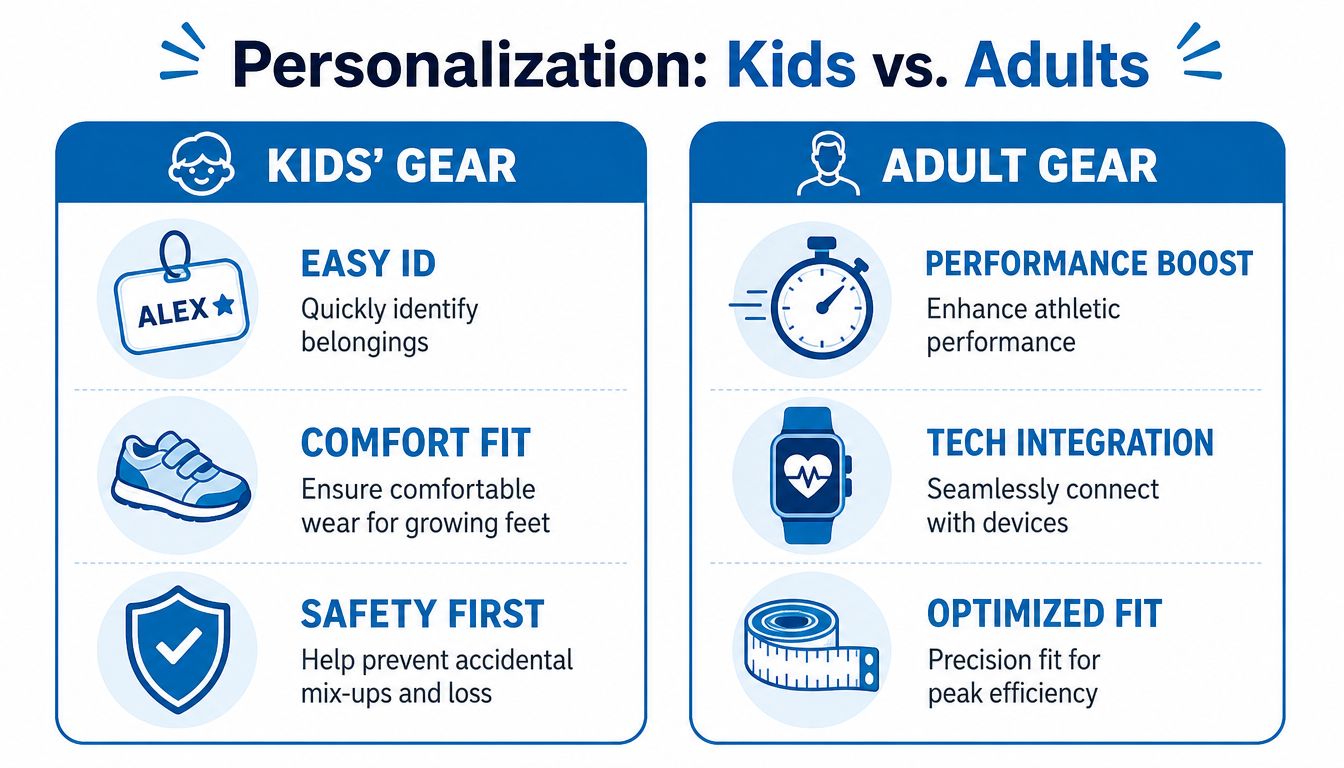
For adult runners, personalization may involve scan-based fitting, algorithm-driven design, or performance-focused footwear. Research on personalized insoles has examined 3D foot scans and additive manufacturing, with findings involving fit, heel discomfort, ankle movement, and heel pressure in the personalized condition (controlled study on personalized insoles). Other footwear research describes how individualized geometry, material behavior, and foot biomechanics can influence running economy and force transfer (research on individualized footwear design).
That isn't the starting point for most children. A young runner generally needs gear that fits comfortably, stays secure, and comes home again. Think of it as decorating a lunchbox rather than engineering a race car. The purpose is practical recognition, with a little fun added.
Identification comes first
A name label helps separate one child's black hoodie from another child's black hoodie. A distinctive color, icon, or pattern can help even more when children are moving quickly or the gear is covered in grass and dust.
Use the clearest identifier on items that regularly gather in groups. Water bottles, shoes, team shirts, and bags deserve priority because children commonly place them beside classmates' belongings.
Safety should be easy to understand
Personalization can also carry information that matters during an emergency. Depending on the item and the setting, parents may include an emergency contact number, an allergy alert, or a brief medical instruction. Keep the wording short enough for a coach, teacher, or first-aid responder to read quickly.
Don't place sensitive information where anyone can casually view it if that isn't necessary. A discreet inside label or contact card in a bag may be more suitable than a large external medical detail.
Ownership encourages better habits
Children are more likely to care for gear that feels distinctly theirs. Let your child choose a color, icon, or theme, then connect that choice to a simple routine: shoes go on the rack, bottles go in the wash area, and the sports bag returns to its hook.
For another activity-specific example of practical personalization, see personalized football gear. The principle is the same across sports, clear ownership makes organization easier.
The Best Ways to Personalize Kids Running Gear
Different items need different labeling methods. A sticker that works beautifully on a smooth water bottle may not stay readable on stretchy athletic fabric, while embroidery can be durable but uncomfortable in the wrong place.
Match the method to the item
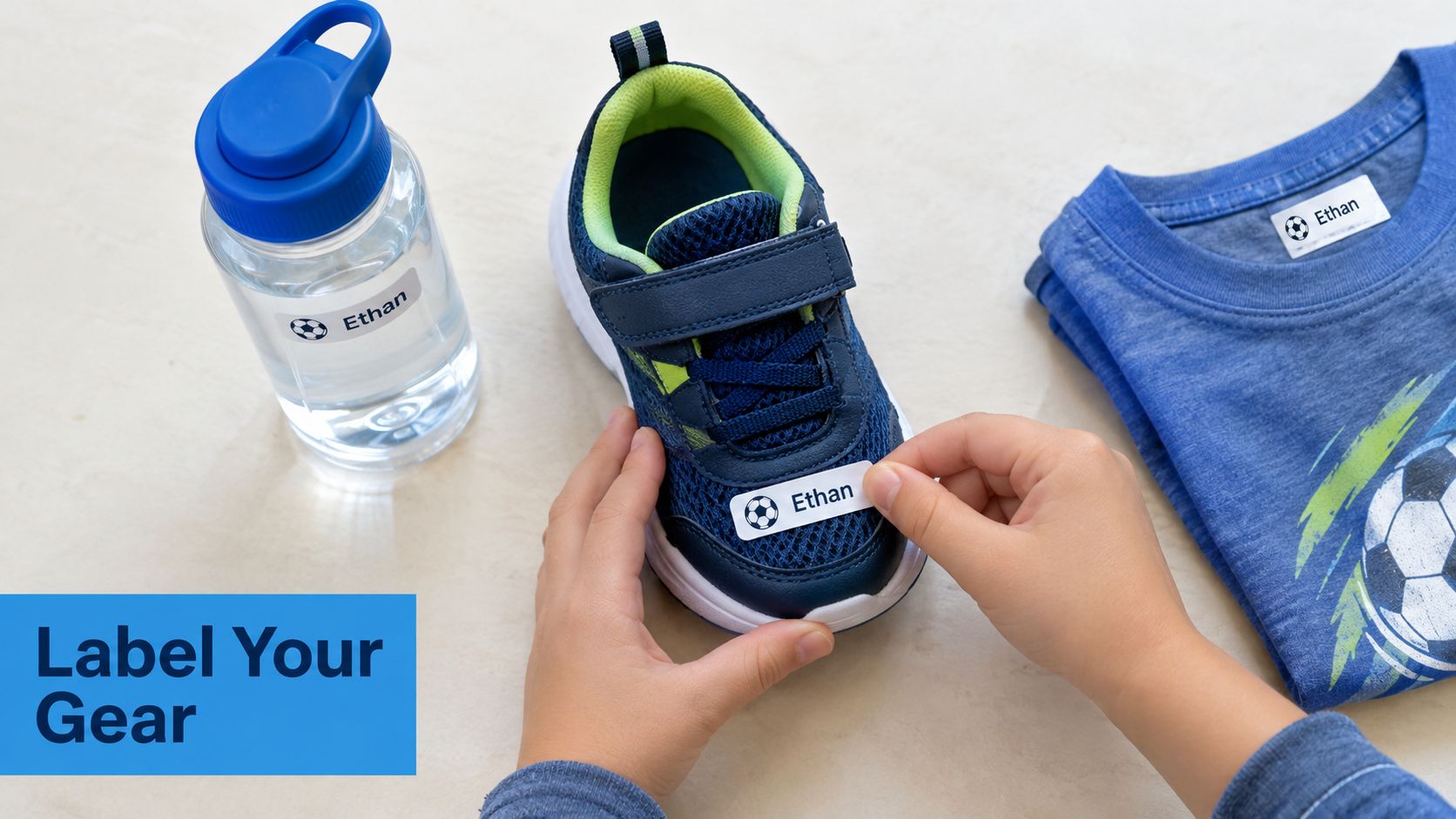
Waterproof sticker labels work well on hard, smooth surfaces such as bottles, lunch containers, helmet accessories, and storage boxes. They're quick to apply and easy to read, but the surface needs to be clean and dry. Curved or textured areas can reduce adhesion.
Reusable silicone bottle bands, such as Orbit Labels, are useful when a child changes bottles or a family rotates containers. They sit around the bottle rather than relying on a flat adhesive surface. Check that the band fits securely and doesn't slide into a place where the child grips the bottle.
Iron-on clothing labels suit shirts, shorts, jackets, and soft bags. They're less visually prominent than an outside tag, which can be helpful for older children or public settings. Follow the manufacturer's heat instructions carefully, especially with synthetic performance fabrics, because excessive heat can damage the garment.
Embroidery creates a permanent-looking finish on sturdy bags, jackets, and warm-up gear. It's a good choice for an item you expect to keep for a while, but it takes longer to arrange and may feel rough against skin if placed inside clothing.
A permanent marker can work as a backup for an urgent practice, particularly inside a shoe or on a hidden fabric area. It's inexpensive, but handwriting can fade, blur, or become difficult to identify after repeated washing.
For a closer look at choosing among label types, application surfaces, and attachment methods, use this guide to label application methods.
Think about daily wear
Running gear gets stretched, sweated in, washed, rubbed against bags, and dropped on outdoor surfaces. Put labels on a stable area rather than a high-flex point, and avoid adding anything that could rub against a child's foot, ankle, neck, or underarm.
InchBug offers options such as reusable bottle bands, clothing labels, shoe identifiers, bag tags, and waterproof labels for children's everyday items. Choose the product type according to the surface and the information you need to display, rather than solely on appearance.
This coach-friendly safety guide is also useful when thinking about placement. Anything attached to sports clothing should support movement and comfort rather than create a new irritation.
Before applying a full set, test one label on one item. Wash it, handle it, and check the edges. A small test can prevent you from labeling an entire batch with a method that doesn't suit the fabric.
Key Safety and Sizing Considerations
A label becomes a safety tool when it gives the right person useful information at the right moment. A child who has a bee sting allergy, for example, may need an alert that a supervising adult can recognize quickly. The information should be accurate, brief, and placed where staff can find it without searching through every pocket.
Use a simple hierarchy:
- Identify the child: Include a first name, initials, or another agreed identifier.
- Add an urgent alert when needed: State a known allergy or medical concern clearly.
- Provide contact information: Add a current parent or caregiver contact method when appropriate.
- Review the details: Update labels when phone numbers, caregivers, or medical instructions change.
Avoid treating every label as a medical record. A shoe label usually needs identification, not a long message. A bag tag or interior clothing label may offer more room for emergency information.
Size is part of safety
Personalization can't correct poor fit. Running shoes that are too small may cause discomfort, while oversized clothing can interfere with movement or become a trip hazard. Children also grow quickly, so the item that fit well at the start of a season may need checking later.
In families with multiple children, labels help prevent an older sibling's worn gear from being passed down without a fit check. Mark the child's belongings, but still inspect each item before use. Look at shoe length, fastening, sock thickness, and whether clothing restricts movement or bunches under another layer.
Choose materials with care
Labels and bands touch items that children handle all day. Look for products with clear care instructions and materials suited to the surface. Parents comparing options can review non-toxic materials as part of their selection process.
Even wearable technology can create organization challenges. If your child uses a tracker or watch during activities, a guide to help you master your smartwatch bands may be useful for keeping accessories secure and distinguishable. The same principle applies to every piece of gear: secure it, check the fit, and make sure it won't distract your child while running.
Making Your Personalized Gear Last
A label lasts longer when the item is prepared properly. Clean smooth surfaces before applying adhesive labels, remove dust and lotion, and allow the area to dry completely. For clothing, place the label where the fabric is stable and follow the recommended application method rather than improvising with extra heat.
Washing habits matter, too. Turn labeled clothing inside out when practical, use the care cycle recommended for the garment, and avoid pulling at label edges when the fabric is wet. Don't assume every label can handle identical treatment. Check whether the specific product is intended for a washing machine, dishwasher, or hand cleaning.
Water bottles need their own routine. Remove reusable bands before washing if the manufacturer recommends it, clean the bottle and band separately, and let both dry fully before reassembly. A damp bottle placed straight into a closed sports bag can develop an unpleasant smell, regardless of how well the name remains attached.
Build a gear station
A small station near the door can prevent the daily scatter. Use one basket or hook for the child's running shoes, outer layer, bag, and accessories. Keep bottles in a separate spot so they're easy to refill and less likely to be forgotten.
Add a short return routine:
- Empty the bag: Remove wrappers, wet clothing, and loose papers.
- Clean the bottle: Wash it and leave it open to dry.
- Check the labels: Look for peeling edges, fading, or missing information.
- Reset the gear: Put everything back in the assigned place.
For detailed product-care guidance, consult the label care instructions. The routine teaches children that personalized gear isn't disposable. They can help inspect it, put it away, and tell you when something needs replacing.
Your Quick-Start Checklist and FAQ
You don't need to personalize every item in one evening. Start with the pieces most likely to be mixed up, then add the less urgent accessories as your child's routine becomes clear.
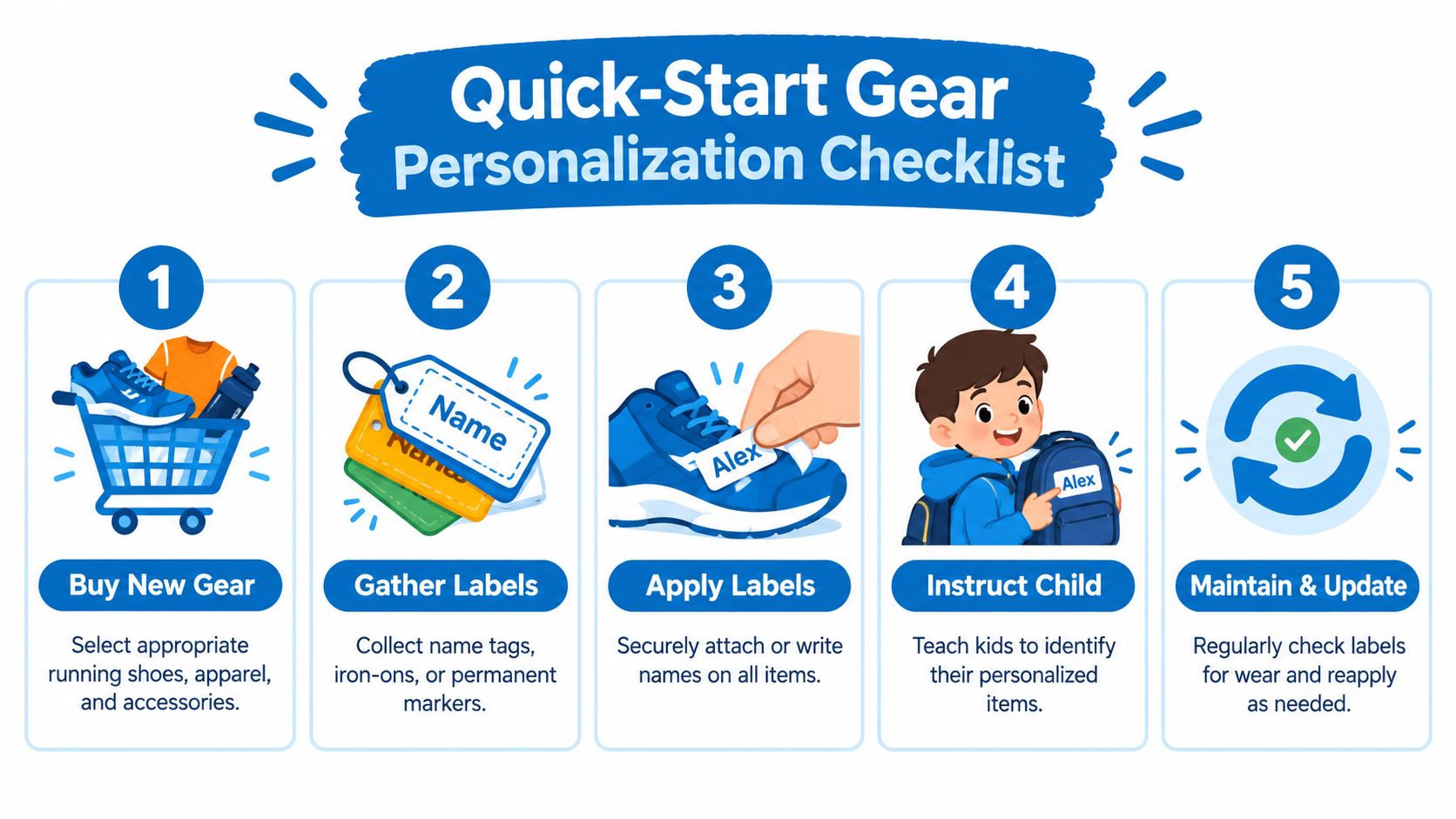
Five steps to get started
- Buy the right gear: Check shoe fit, clothing comfort, weather needs, and your child's activity.
- Gather suitable labels: Choose stickers, bands, iron-ons, embroidery, or markers based on the material.
- Apply before the first outing: Label both shoes, the main clothing pieces, the bottle, and the bag.
- Teach recognition: Show your child the name, color, or symbol and practice collecting the correct items.
- Maintain and update: Inspect labels after washing, replace worn identifiers, and revise emergency details when needed.
Common questions from parents
Will labels survive the washing machine and dishwasher?
Some products are designed for washing machines or dishwashers, but care depends on the specific label and the item's material. Follow the product instructions, prepare the surface correctly, and check the label after repeated cleaning.
At what age should my child's gear be labeled?
As soon as a child takes belongings to daycare, school, camp, practice, or group activities, labeling is useful. Young children benefit from symbols and colors, while older children can recognize names and help maintain their own gear.
What's the best label for stretchy athletic fabric?
Use a clothing label designed for fabric and place it on a stable area that doesn't stretch heavily or rub against skin. Test one item first, especially when the garment is thin, highly elastic, or made from performance material.
InchBug offers customizable labels and kid-friendly identification products for bottles, clothing, shoes, bags, and sports gear, including reusable bottle bands and allergy alert options. Visit InchBug to choose a practical labeling setup before your child's next practice, then make applying and returning the gear part of your family's routine.