

Saturday morning starts with a familiar scavenger hunt. Thirty young players arrive in matching jerseys, a row of identical black water bottles sits beside the bench, and one parent is already holding up a glove and asking, “Does anyone know whose this is?” By the time warm-ups begin, somebody has misplaced a bag, swapped drinks, or forgotten which number belongs to which child.
That's where personalized football gear earns its place. A name on a jersey helps coaches identify players, a durable mark on a bottle reduces mix-ups, and a labeled bag gives kids a practical reminder to take responsibility for their belongings. The right customization isn't decoration for its own sake. It's a small organizational system that can make game day calmer for players, coaches, and the parents who keep everything moving.
Why Personalized Football Gear Matters for Young Players
Young players rarely lose gear because they don't care. They lose it because their equipment looks exactly like everyone else's, gets dropped beside the same bench, and passes through several hands during a busy practice. A personalized football kit gives each item a visual cue that a child can recognize quickly, even when the player is tired or rushing to the car.
A jersey with a name and number has an obvious team purpose, but the practical value goes further. Coaches can match a player to the correct kit during substitutions, parents can sort laundry without a guessing game, and children start to connect their belongings with their own role on the team. That sense of ownership matters for kids who are still learning to pack, carry, and return their equipment.
Practical rule: Personalize the items that move between home, car, sideline, and locker room most often.
Water bottles deserve special attention. Shared-looking bottles create confusion, and children may grab the wrong one without realizing it. A dishwasher-safe name label or a durable bottle band makes the owner visible before the bottle reaches the child's mouth. Parents who want more ideas for organizing children's daily belongings can also review these practical reasons to use personalized name labels.
The same logic applies to duffel bags, gloves, cleats, and warm-up layers. A small identifier won't stop a child from leaving a bag under the bleachers, but it improves the chance that another parent, coach, or teammate can return it. That saves time for volunteers who already manage attendance, equipment, snacks, and transportation.
Personalization also supports team identity without making appearance the main objective. Kids often take more care with equipment that clearly belongs to them. A name can turn a generic bottle or practice shirt into something they remember to pick up before they leave.
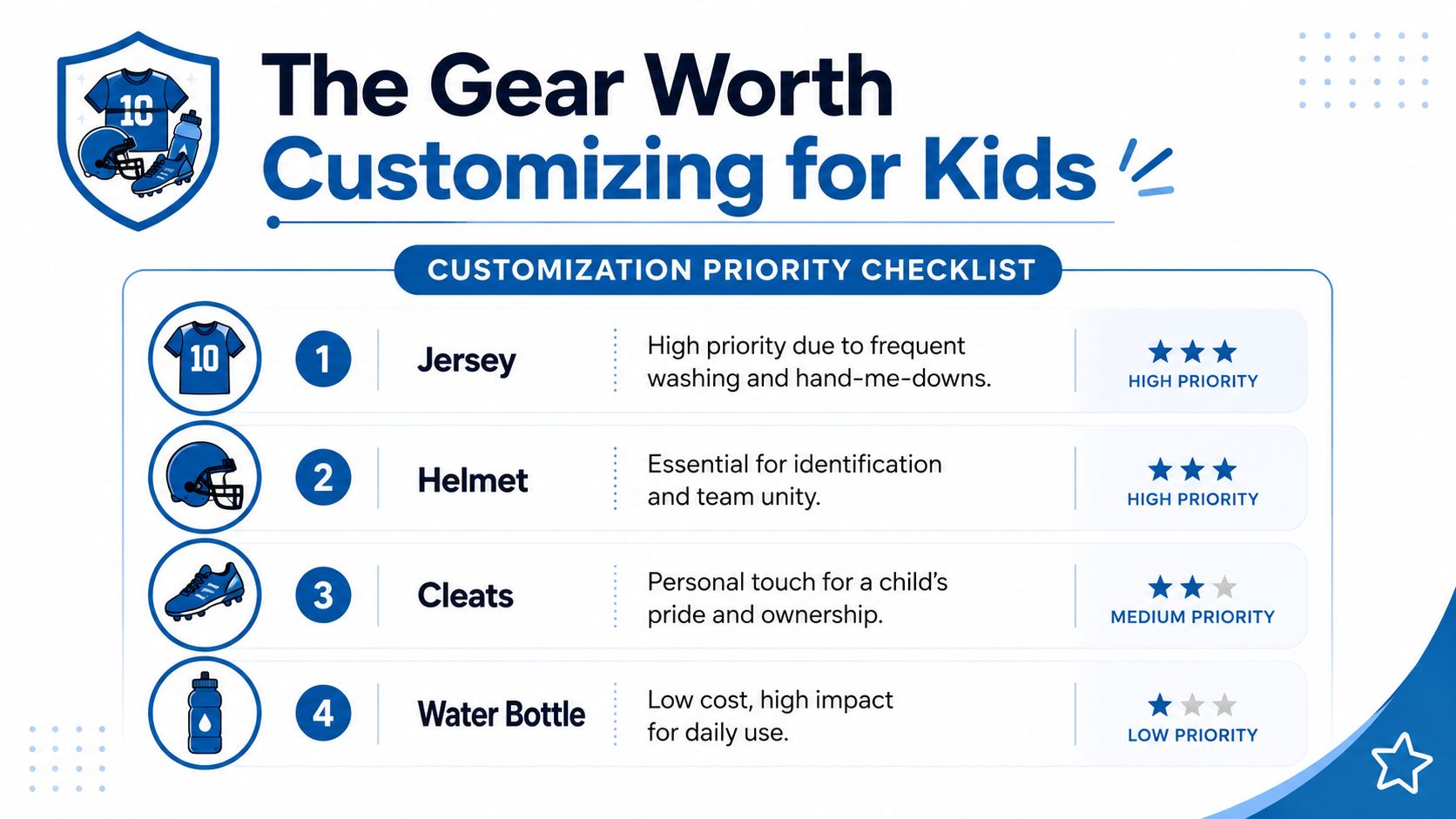
The Gear Worth Customizing for Kids
Not every piece of equipment needs a permanent name, matching graphics, or a custom number. Start with the items that get handled repeatedly, washed often, or mixed together during practice.
Start with the jersey and daily-carry items
The jersey usually deserves the most considered customization. Names and numbers should remain readable after regular washing, and the placement should leave room for league marks, sponsor graphics, and protective equipment. If the jersey may be handed down, a removable interior label can be more useful than permanently printing a child's name across the back.
Water bottles and duffel bags are lower-cost priorities with high practical value. Put the child's first name or surname where it can be read quickly, not hidden under a grip, zipper, or strap. For bottles, choose a label designed for repeated washing rather than a paper sticker or a basic iron-on transfer.
Treat helmets and mouthguards differently
A helmet isn't a canvas for craft paint. Paint, solvents, drilling, or poorly chosen adhesives can damage materials or cover safety information. Use a decal intended for the helmet's surface, keep certification markings visible, and place identification on a suitable strap or pad area when the manufacturer or league allows it.
Mouthguards are easy to confuse among younger players. A molded identifier, engraved option, or clearly marked storage case can reduce accidental swaps. The case often deserves the label because it stays with the mouthguard between drills and games.
Keep small equipment understated
Cleats have limited flat space and face constant abrasion. A slim label on the tongue, strap loop, or inside heel is more practical than a large decoration on the outer surface. Gloves can take a small mark near the cuff, while socks and base layers work better with an interior clothing label.
A child's comfort also depends on the equipment beneath the obvious pieces. If cleats cause pressure or fatigue, parents may want to compare insoles for football players before adding decorative features to the footwear. Customization should never create a rough edge, trapped moisture point, or obstruction that interferes with movement.
Common failures are predictable. Iron-on letters may lift when applied to a textured garment, large patches can snag, and stickers placed across a bottle's grip can peel quickly. Before customizing, ask how the item gets washed, where it rubs, and whether the child will outgrow or hand it down.
Customization Options That Hold Up on the Field
A design can look excellent on the first day and still be a poor choice for a full season. Grass, sweat, shoulder-pad friction, repeated washing, and hurried packing expose weak customization quickly. The most durable method depends on the surface, not just the artwork.
Sewn tackle twill is a strong choice for a traditional jersey name or number. It has a structured appearance and usually handles repeated wear better than a thin transfer, but it costs more and makes mid-season changes difficult. Sublimation works well for all-over designs because the color becomes part of the fabric rather than sitting as a separate layer. It offers visual freedom, though high-friction zones still need careful material and care choices.
Heat-pressed numbers remain attractive for budget-conscious teams and quick orders. They're convenient when rosters change, but edges can crack or lift if the garment is washed aggressively or dried with high heat. Metallic finishes and oversized graphics may photograph well, yet high-contrast standard colors are often easier for a coach to read from the sideline.
| Customization method | Best for | Durability | Flexibility |
|---|---|---|---|
| Sewn tackle twill | Classic names and numbers on game jerseys | High when stitched securely | Low, changes require removal or replacement |
| Sublimated print | Full-color jersey designs and gradients | Good when cared for correctly | Low once produced |
| Heat-pressed transfer | Small orders, quick changes, and budget kits | Moderate, vulnerable to heat and abrasion | Moderate |
| Certified helmet decal | Team marks and player identification | Good on a compatible clean surface | Moderate if removable |
| Sewn or embroidered label | Bags, clothing interiors, and straps | Good for fabric surfaces | High if the item changes hands |
| Patch | Decorative accents and limited team details | Variable, with potential snag points | Moderate |
Placement affects survival as much as the method. A strong graphic on a seam or gripping area can fail sooner than a simpler mark on a smooth panel. Parents can also use this label durability testing guidance when deciding whether a label is appropriate for a bottle, bag, or garment.
Permanent Personalization vs Reusable Labels Compared
Permanent customization makes sense when the item belongs to one player for a long time. A sublimated jersey, sewn number, embroidered name, or helmet decal can create a polished team appearance and withstand normal use when applied correctly. The drawback is obvious once a child changes teams, changes numbers, or passes the gear to a sibling.
Reusable labels solve a different problem. An Orbit label can move with a bottle, while a TagPal name tag can identify a bag, strap, or other frequently exchanged item without permanently altering the product. Parents can transfer the identifier when ownership changes, which is especially useful for expensive equipment and hand-me-downs.
| Method | Wash durability | Flexibility to change | Approx. cost | Best for |
|---|---|---|---|---|
| Sublimated jersey design | High when washed according to the care instructions | Low | Higher upfront cost | Dedicated team jerseys |
| Sewn twill name or number | High with secure stitching | Low | Higher per garment | Traditional game uniforms |
| Helmet decal | Good on a compatible surface | Moderate | Moderate | Team identity and visible identification |
| Embroidered name | Good on fabric items | Moderate | Moderate | Bags, jackets, and clothing |
| Reusable bottle label | Designed for repeated washing | High | Lower per item | Water bottles and lunch-style containers |
| Reusable clothing or bag tag | Good with correct application | High | Lower per item | Gear that may be handed down |
A practical buying rule is to reserve permanent work for the item whose identity won't change. Use reusable labels for objects that travel between home and practice, especially bottles, bags, chin straps, and cleat tongues. Parents comparing bottle-specific options can review reusable labels for bottles before ordering.
Don't assume permanence is automatically better. A permanent name on a jersey may look professional, but it can reduce resale or sibling reuse. A removable label may look less formal, yet it preserves the usefulness of the gear when a child outgrows it.
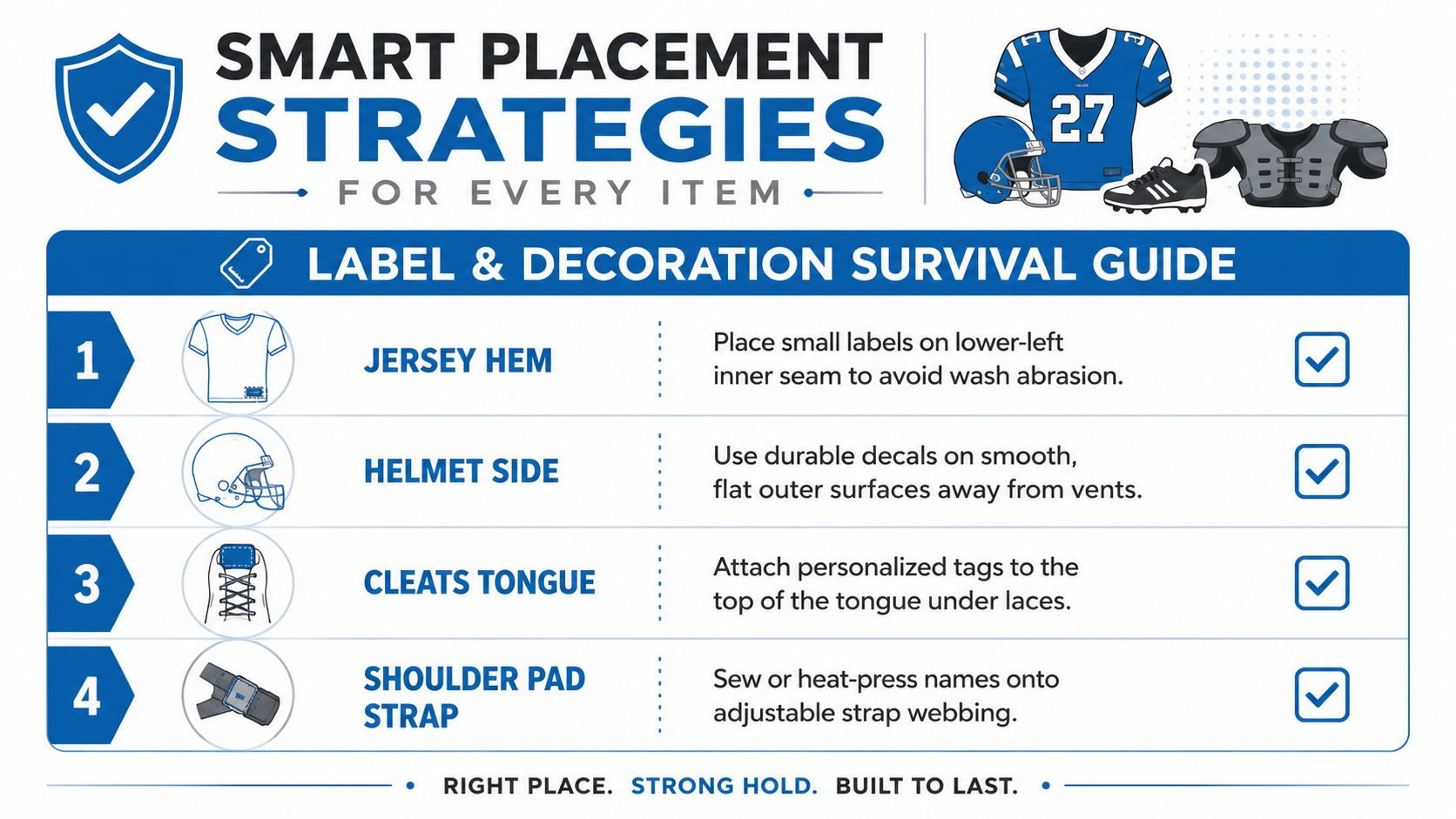
Smart Placement Strategies for Every Item
The best label is ineffective if it sits on the part of the item that receives the most friction. Placement should follow contact, moisture, washing, and visibility.
Jerseys and clothing
For a sublimated jersey, use a small interior identifier near the lower-left hem or inside seam. That area is easier to check during laundry and avoids the chest, back number, and high-abrasion zones. On shorts or pants, choose an interior waistband or a stable fabric panel rather than a stretch edge.
Names on the outside should remain readable without crowding the number. Check the league's uniform rules before ordering, because some competitions restrict where names, numbers, or patches may appear.
Helmets and protective gear
Never cover a certification sticker or place an adhesive where it interferes with a buckle, vent, adjustment mechanism, or pad. A name decal on a compatible smooth area can work, but a chin strap or removable pad identifier may be safer for ownership tracking. Ask the equipment supplier or league before applying anything to a certified helmet.
Water bottles need a clean, dry surface. Apply the label opposite the child's usual grip, press it firmly, and let the adhesive settle before washing. Bags can take a larger identifier inside a pocket or on a lower front corner, away from zippers and seams.
Cleats and small accessories
Cleats are the least forgiving. A narrow mark on the tongue or strap loop usually has a better chance than a label on the toe or outside heel. Apply it before the first lacing, then check that the label doesn't catch against the lace or create pressure across the foot.
Placement test: Put the item on, move it as the child does, and look for rubbing before you finalize the label.
Identification should be visible to the person returning the item, not necessarily to everyone in the stands. Inside a bag, under a bottle grip, or on a cleat tongue can be more durable and more useful than a large outward-facing graphic.
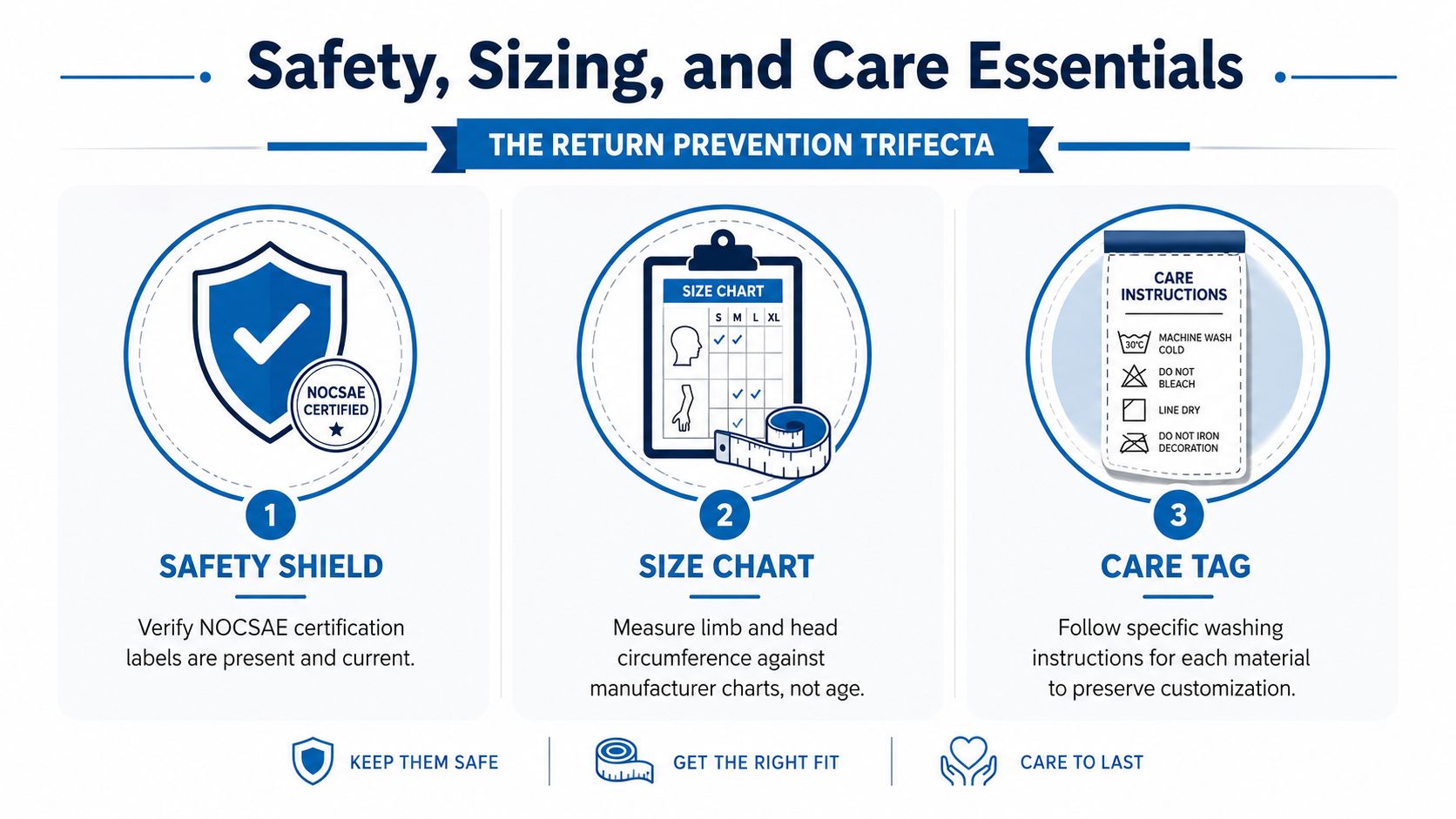
Safety, Sizing, and Care Essentials
Parents often treat customization as the final buying step, but safety and fit need to come first. A beautiful decal doesn't make an unsuitable helmet wearable, and a personalized jersey still has to fit over pads without restricting movement.
Confirm equipment safety
A football helmet should retain its valid NOCSAE or equivalent certification marking. Don't cover that sticker, alter the shell, use paint or solvents, or attach a rigid piece where it can affect the fit. Any name marker on a chin strap must leave the buckle, adjustment points, and padding fully functional.
Mouthguards also need adult attention. Fit a boil-and-bite model according to its instructions rather than handing it to a child to chew into place, and inspect it as the child's teeth and mouth change.
Measure the actual player
Street-clothing size is a poor substitute for sports-equipment sizing. Measure the player and compare the result with the manufacturer's chart, especially for head circumference, chest, torso, waist, and protective gear clearance. A jersey that fits over a T-shirt may feel tight over shoulder pads, while an oversized top can bunch, snag, or shift.
Safety first: Customize only after the equipment fits correctly and the league permits the modification.
Protect the customization during care
Lightweight moisture-wicking polyester in the 140–160 GSM range is commonly used for match jerseys and training tees because it balances breathability, shape retention, and sublimation quality, as described in this personalized team apparel guide. All-over dye sublimation infuses color into the fiber, which avoids the cracking and peeling associated with surface transfers. The same source notes support for 200+ wash cycles with less than 5% color loss under its specified cold-wash and hang-dry conditions, so follow the stated care routine rather than treating every garment the same.
Wash jerseys in cold water, turn printed garments inside out when appropriate, and use a mesh laundry bag for small items. Air-dry helmets away from direct heat, wipe bottle surfaces before reapplying labels, and inspect adhesive edges during the season.
For helmet cleaning, use the manufacturer's instructions and this practical guide on how to clean a football helmet. Cleaning products can affect decals, pads, and finishes, so test an unfamiliar product on a small compatible area first.
Ordering, Bundling, and Gifting Like a Pro
Team orders need more breathing room than individual purchases. Allow 4–6 weeks before the season opener for roster changes, sizing try-ons, number assignments, and production. Individual stocked items usually need 1–2 weeks for personalization and delivery, but the seller's stated production schedule should always control your deadline.
Start with the item that carries the most risk. For a team, that's usually the jersey or helmet identification. Confirm the roster, spelling, numbers, and sizes before adding bottles, bags, cleat tags, or warm-up pieces. A single parent order can also simplify shipping and reduce the number of packages coaches must distribute.
Build a useful bundle
A practical starter set might include a personalized jersey or practice top, a marked water bottle, an interior bag tag, and a small cleat identifier. For sideline support, teams can also consider affordable bulk headwear for kids when a cap fits the league's needs and the children's outdoor routine.
InchBug's sports label bundles include personalized labels and TagPal clothing labels for sports items, with sports-themed bag tags that can carry multiple lines of identification. Treat that kind of bundle as an organizational purchase, not a substitute for certified protective equipment.
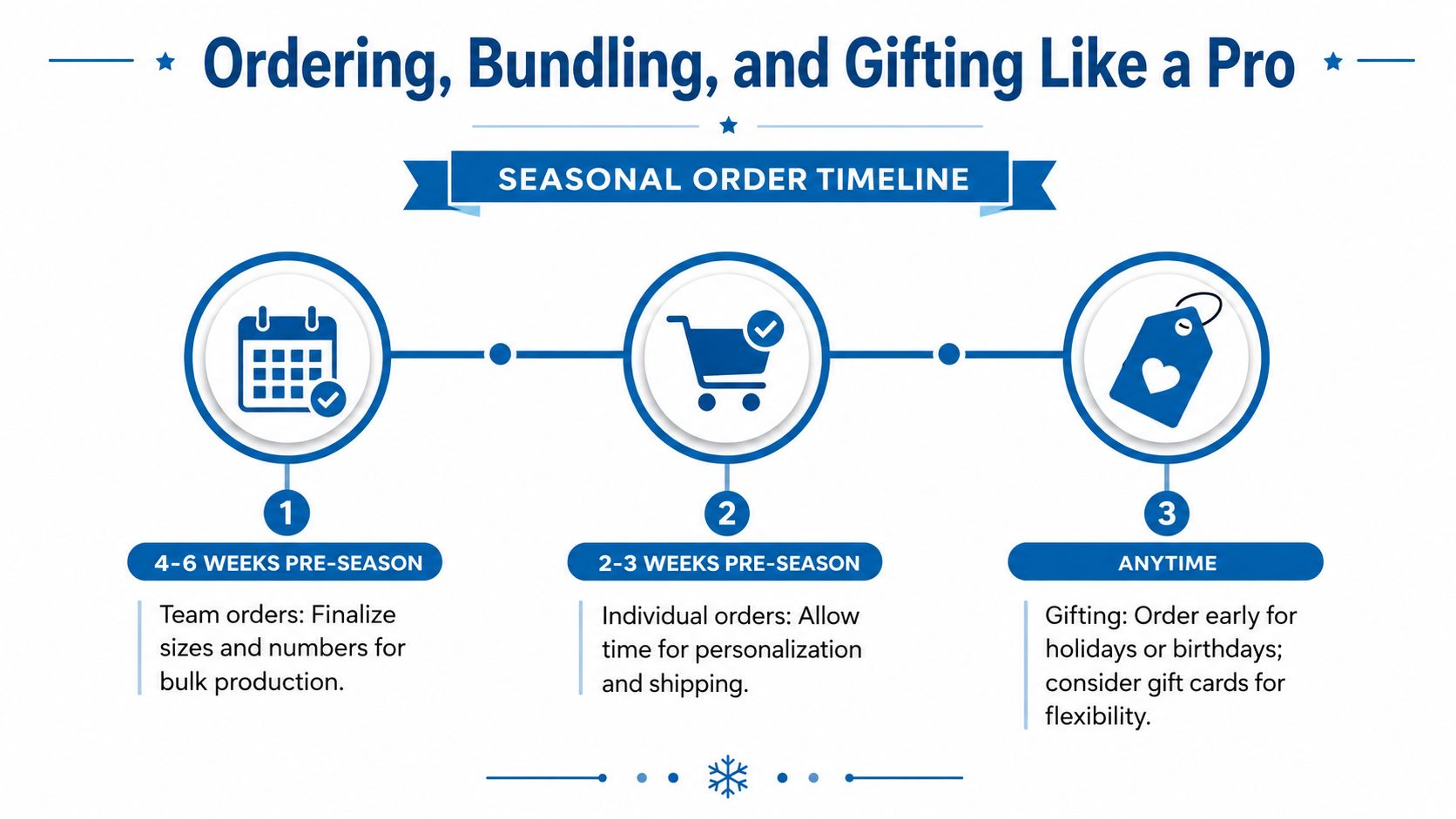
For gifts, confirm the child's current size, team colors, and number before ordering permanent pieces. A rolled jersey tied with a name-tag ribbon feels personal, while a boxed starter kit works well when the recipient needs several practical items. If the team assignment is uncertain, choose reusable labels or wait until the roster is confirmed. Parents planning several personalized items can also compare sports label combo packs before placing separate orders.
Real Parent Scenarios That Bring It Together
At a daycare-center Saturday league kickoff, the sideline filled with identical navy bottles. The coach called children over one at a time, and parents matched each bottle to a child using color-coded reusable labels applied earlier that week. Nobody needed a complicated system. The labels made ownership obvious before a mix-up became a hygiene problem.
That example captures the right role for customization. The bottle didn't need a large logo, a premium finish, or a full team graphic. It needed a readable identifier on a surface that could be washed and handled every day. The same parent could use a small interior label in each jersey, a bag tag in the duffel, and a discreet mark on the cleat tongue.
A grandparent gift calls for a different decision. One grandmother ordered a sublimated jersey, a helmet nameplate decal, and a labeled bag as one package. Before ordering, she confirmed the jersey size during a video call, checked the player's number, and kept the helmet marking away from certification information and adjustment hardware.
The result felt special because it was useful. The jersey delivered the team identity, the helmet decal helped with recognition, and the bag label addressed the item most likely to be left behind. The gift didn't rely on decoration alone. It followed the child from the wrapping paper to the changing area and then onto the grass.
A good game-day system is easy for a child to use without an adult standing beside them.
Parents who are building a broader packing routine may also appreciate this panic-proof sports parent checklist. The details vary by sport, but the principle is the same: identify belongings clearly, confirm fit and safety before the event, and choose care routines that keep the equipment usable.
InchBug offers customizable labels, TagPal clothing identifiers, sports bag tags, and reusable bottle bands that help separate jerseys, bottles, bags, cleats, and other youth football gear. Visit InchBug to choose the labels that match your child's equipment, then apply them before the next practice instead of waiting for the first lost bottle.