

The daycare morning starts with a familiar scramble. Two backpacks look almost identical, a sippy cup has vanished again, and at pickup a teacher is holding up a generic jacket that nobody can confidently claim. After enough mix-ups, masking tape and hurried Sharpie notes stop feeling like a solution. The tape peels, the handwriting fades, and the bottle still ends up in someone else's cubby.
That's why parents search for name labels online. Ordering lets you choose a durable format, enter a child's name clearly, and match the label to the item instead of forcing one sticker to do every job. The important decision isn't the brand name on the product page. It's the surface the label must survive on. A bottle, shirt, shoe, and backpack each need a different approach.
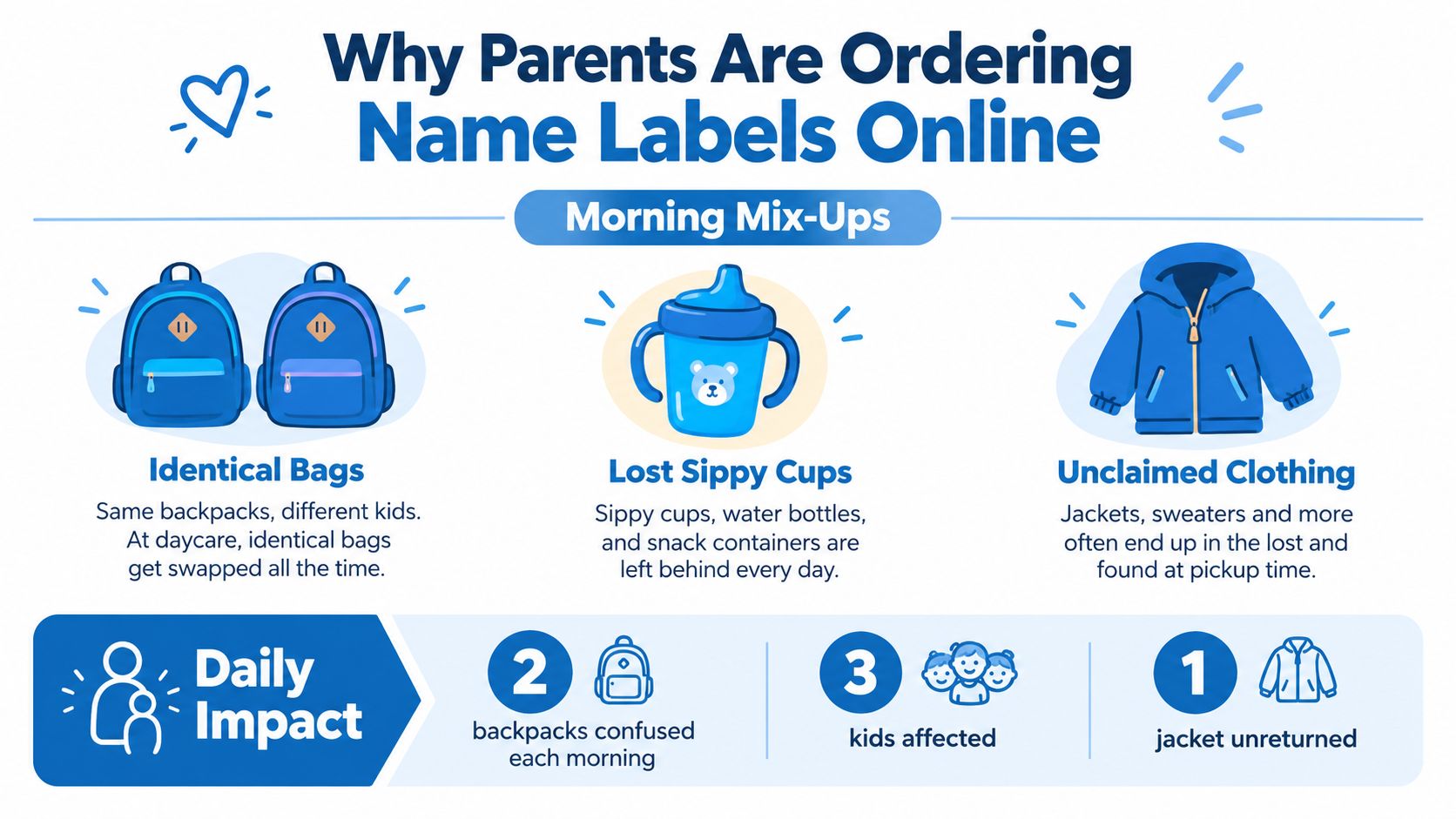
Why Parents Are Ordering Name Labels Online
Handwritten labels fail in predictable ways. Marker ink looks fine on the first morning, then becomes difficult to read after rubbing against lunch boxes, damp hands, and laundry. Masking tape curls at the edges, collects grime, and leaves you repeating the same labeling job whenever a replacement item enters the house.
Online name labels solve the repetition. You can save the correct spelling, choose a readable design, and order formats made for hard goods, fabrics, or curved containers. That matters in households where several children bring similar gear to the same daycare or school. A clear name on the outside of a lunch box helps a teacher identify it quickly, while a label inside a jacket gives the garment a better chance of returning home.
The broader category behind the convenience
Personalized name labels sit inside a wider labels industry that's already large and expanding. One recent estimate values the global labels market at USD 77.41 billion in 2025, with a projection of USD 118.15 billion by 2034, while another estimate places the market at USD 52.16 billion in 2024 and projects USD 73.92 billion by 2035. Those figures describe the broader labels category, not name labels specifically, but they help explain why short-run customization and durable adhesive formats are now practical for ordinary families. See the labels market estimate for that wider context.
Digital printing also changed what online sellers can offer. Variable-data printing supports individualized names, images, and other details without treating every order like a completely separate production project. The related variable-data printing labels market is estimated at USD 21.48 billion in 2025 and projected to reach USD 52.80 billion by 2032, according to market research on variable-data printing labels.
Practical rule: Start with the object, not the product category. “Labels for daycare” is too broad to guide a good order. “A curved stainless-steel bottle that goes through the dishwasher” gives you a useful specification.
That surface-first habit prevents the most annoying mistake, buying a general sticker pack and discovering that it won't stay on a bottle, shoe, or stretchy clothing seam. The next choice is usually among waterproof stickers, clothing tags, and bottle bands, and those formats aren't interchangeable.
Choosing the Right Label Type for Each Surface
A flat sticker is excellent on a flat lunch container. It's a poor substitute for a garment tag. Parents who order by surface usually get better results than parents who order a single multipurpose pack and hope it covers everything.
| Label Format | Best Surface | Wash Rating | Top Use |
|---|---|---|---|
| Waterproof sticker label | Smooth, hard surfaces | Choose a product tested for repeated washing and wet use | Lunch boxes, sunscreen bottles, folders, electronics |
| Clothing tag or iron-on label | Fabric and garment interiors | Follow the product's laundering instructions | Shirts, uniforms, socks, jackets |
| Bottle band or sleeve-style wrap | Curved bottles and containers | Choose a dishwasher-compatible format when needed | Sippy cups, baby bottles, metal water bottles |
Waterproof stickers for hard goods
Use a sticker label on a clean, smooth area of a lunch box, plastic container, folder, or bottle with enough flat space. A laminate can protect printed text from ordinary water exposure, but waterproof doesn't automatically mean heatproof, bleachproof, or abrasion-proof. A dishwasher, a rough backpack pocket, and a bottle rubbing against other items each create different stresses.
Stickers also need careful application. Wash and dry the surface first, avoid applying across a seam, and press the edges firmly. They're convenient and easy to replace, but a small flat sticker can lift when placed on a sharply curved bottle or a recessed base.
Clothing labels for fabric
Clothing tags and iron-on labels belong inside garments, where a sticker would scratch, peel in the dryer, or disappear into the weave. Sew-in or iron-on formats can work well for uniforms, coats, and reusable daycare clothing, but installation and care instructions matter. An iron-on label applied with insufficient heat may lift, while too much heat can damage delicate fabric.
For more guidance on matching a format to garments, compare personalized name tags for clothes. Pay attention to whether the label is intended for a care tag, a smooth fabric panel, or direct application to the garment.
Bottle bands for curved containers
Bottle bands solve a geometry problem. A wrap or band grips the circumference of a bottle, so it doesn't have to force a flat adhesive label around a tight curve. That makes it useful for sippy cups, baby bottles, and metal water bottles that are handled constantly and washed often.
The trade-off is fit. Measure the bottle's circumference and check whether the band can move over the widest point. A band that's too loose can slide, while one that's too tight may be difficult to install or remove. For a typical daycare set, buying a few hard-surface stickers, clothing labels, and bottle-specific bands is more practical than expecting one format to cover every item.
Sizing and Placement That Actually Stays Put
A label can be made from durable material and still fail because it was placed where hands, seams, heat, or friction attack it. Before ordering, measure the usable area rather than the entire object. The usable area is the flat panel or fabric zone where the label can sit without crossing an edge.
Measure the destination
Use a flexible tape measure, a strip of paper, or a piece of masking tape to mark the available width and height. For a bottle, measure the widest flat section and, if you're considering a band, measure around the bottle at the point where the band will rest. For a clothing tag, measure the inside label area or the side seam, not the whole garment.
A quick check prevents two common errors. A label that's too large wraps onto a curve or seam, while one that's too small becomes difficult to read and easy to overlook. Product sizing guidance such as this name tag label size guide can help you compare the measured space with the available formats before checkout.
Place labels away from stress points
Center a flat bottle or lunch-box sticker on the widest smooth panel. Keep it away from the bottom rim, molded seams, recessed grooves, and areas that scrape against a dishwasher rack. Clean the surface with mild soap, let it dry completely, and apply the label without stretching it.
For clothing, the inside back of the neck is easy for adults to find, but it can bother children who are sensitive to tags. The side seam or a smooth care-label area is often more comfortable. Socks need special care because stretchy cuffs distort labels and create friction. A sewn-in or purpose-made fabric label is usually a better choice than a rigid sticker.
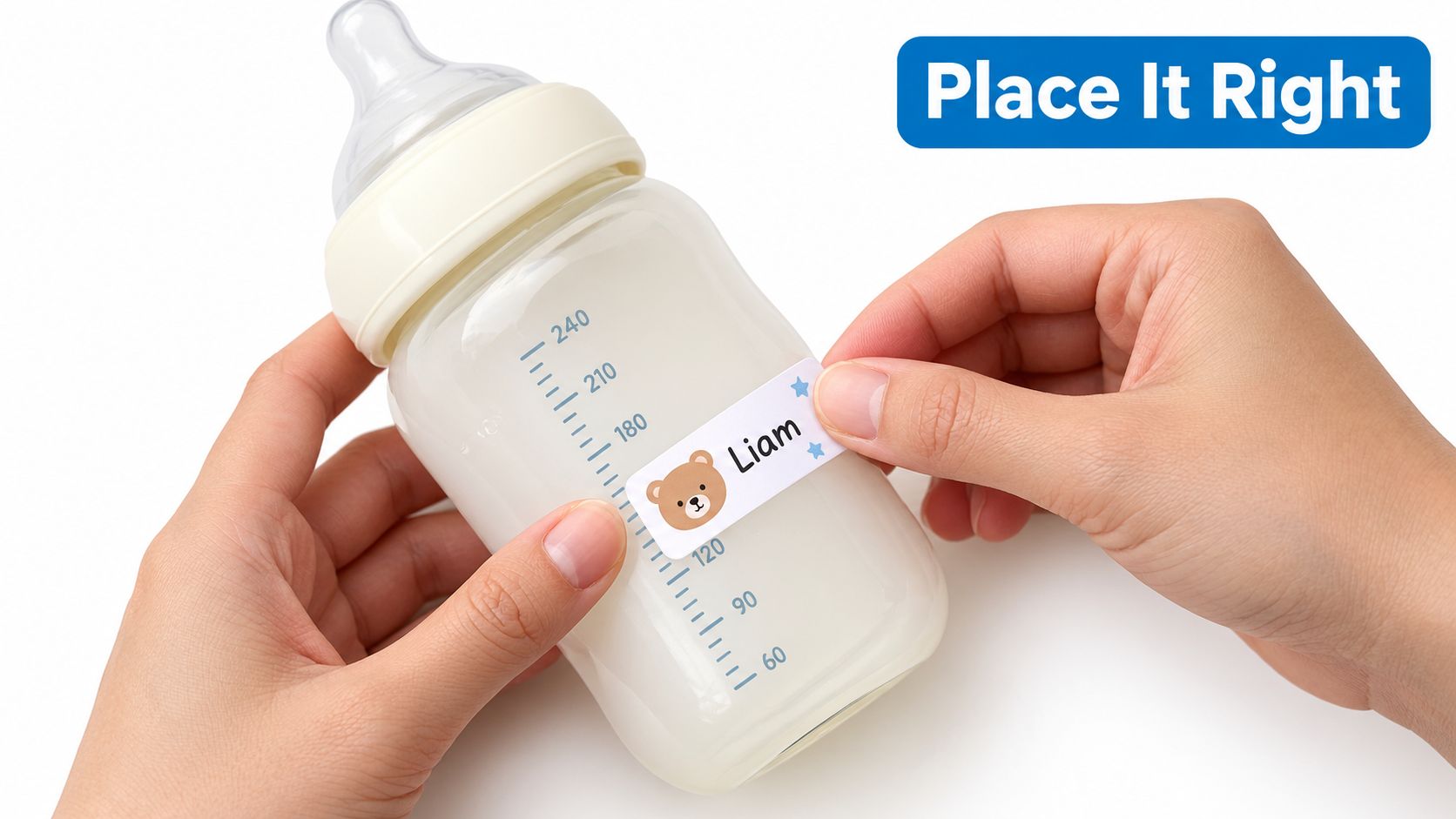
Shoes need a protected location. The tongue or heel pocket is generally more forgiving than the smooth toe box, where movement and contact can push an adhesive label loose. For bags and zipper pulls, use a small label on the inside-facing panel or a sewn-in loop rather than placing it directly where the zip hardware rubs.
Placement test: Put a paper mock-up in the intended spot and use the item normally for a day. If the paper folds, rubs, or gets hidden, the finished label will face the same problem.
Personalization Options Worth Picking
The design screen can make a label feel like a small creative project, but most choices should serve readability and identification first. A bold name that a teacher can recognize at a glance is more useful than an intricate design that looks attractive on a phone screen.
Choose legibility over decoration
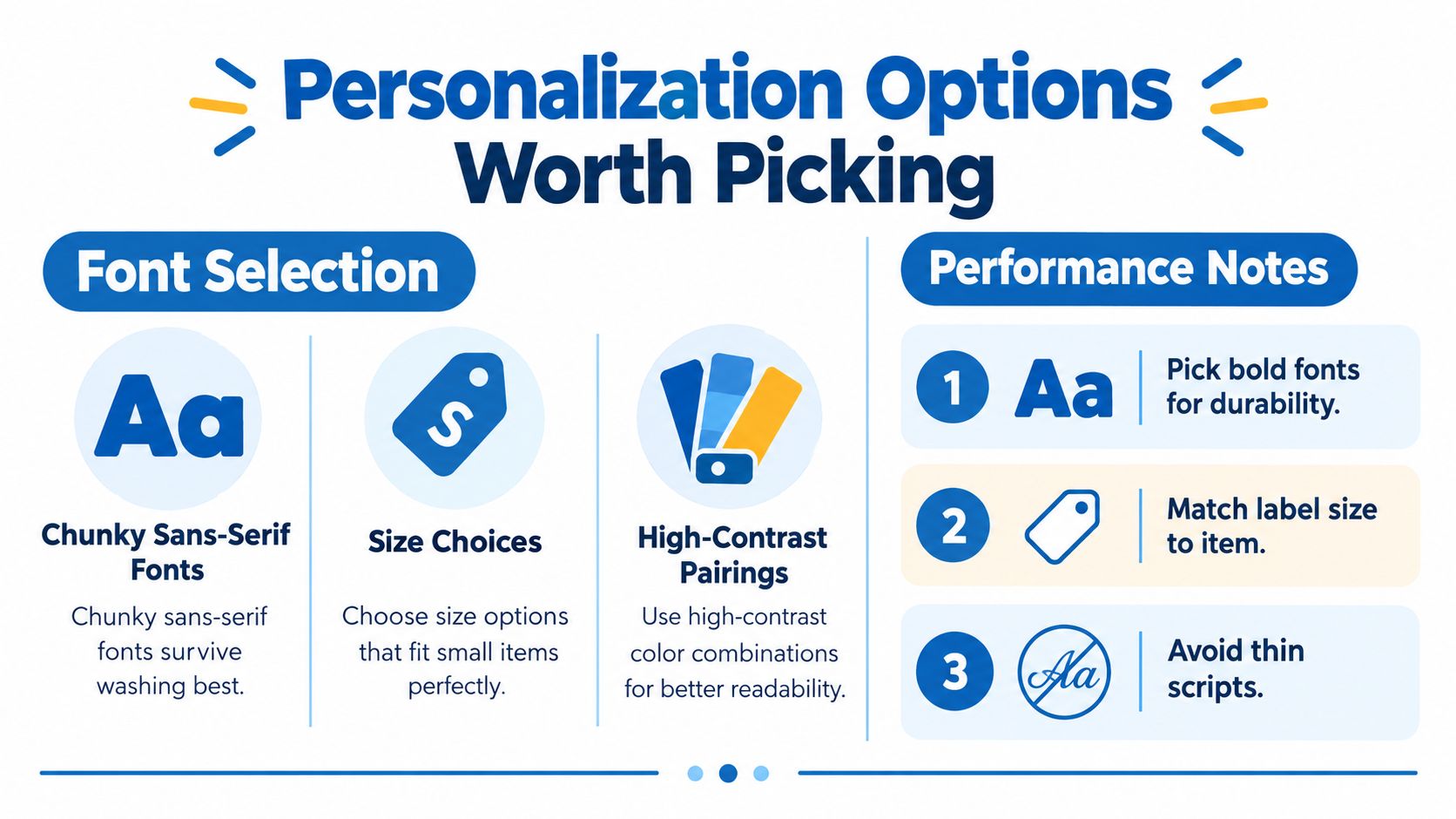
Chunky sans-serif fonts usually make the safest choice for bottles, lunch containers, and clothing. Thin lettering and script styles can lose clarity when printed small, viewed in dim cubbies, or exposed to repeated washing. If a child has a long name, reduce decorative elements before shrinking the name until it becomes difficult to read.
Icons can help when children share a cubby or have similar items. A small animal, color symbol, or familiar object can help a pre-reader recognize their own gear, and a matching icon can distinguish one child's shoes from a sibling's. Keep the icon secondary, though. If it crowds the name, it has stopped helping.
Dark text on a light background, or light text on a dark background, gives the strongest contrast. Avoid placing medium-gray text on a busy pattern, especially for small labels on zipper pulls, pencil cases, or shoe tongues.
Decide what information belongs on the label
For most daycare items, a first name and last initial may be enough. A shared family last name can make sense on items that travel between siblings, but it won't always identify the correct child in a classroom. Twins or siblings with the same first initial may need a full first name, a second initial, or a small personal icon.
A phone number can be useful on a backpack tag or an item that leaves school grounds. An allergy alert line belongs only where the information can be read easily and maintained accurately. For belongings moving between two homes, adding a second identifier can reduce confusion more effectively than adding extra decoration.
The distinction between changing the appearance and changing the underlying product matters. This explanation of personalization versus customization is useful when a shop offers multiple ways to alter a label.
Washability and Waterproof Claims Decoded
A bottle label faces condensation, detergent, and curved surfaces. A clothing label faces repeated laundering, stretching, and fabric movement. A lunch-box sticker may face cold storage, thawing, and daily handling. Choose the label for the surface first, then check whether the product's washability and waterproof claims match that job.
“Waterproof” usually describes the label's outer layer. It does not guarantee that every component will tolerate every environment. A laminate can resist splashes while heat weakens the adhesive, sunlight fades the ink, or repeated bending lifts the edge.
For clothing, repeated laundering is the meaningful test. Independent testing summarized by Wirecutter's review of labels for kids' gear found personalized labels with no visible wear or tear after more than 60 washes, while they continued adhering to metal, plastic, and folders. Evidence across many cycles gives a clearer picture than a single “washable” claim on a product page.
| Label Type | Typical Waterproof Claim | Wash Cycles to Expect | Best Use Case |
|---|---|---|---|
| Hard-surface sticker | Water-resistant or waterproof laminate | Look for repeated-cycle evidence, not only a claim | Containers, folders, lunch boxes |
| Clothing label | Washable, iron-on, or laundry-safe | Follow the manufacturer's care instructions and look for multi-cycle testing | Uniforms, coats, socks |
| Bottle band | Dishwasher-safe or water-resistant wrap | Check rack placement and heat guidance | Bottles and curved drinkware |
Look for the actual failure point
Inspect curved bottles for peeling corners and lifted edges. On dark fabrics, check whether the lettering stays distinct after washing. Stretchy cuffs can expose ink bleed, wrinkling, or twisting as the fabric contracts. Labels made with similar adhesive materials may still perform differently because application, printing, and edge finishing vary.
Dishwasher wording needs detail. “Top-rack safe” gives different instructions from a product rated for broader dishwasher use. Steam, detergent, and repeated handling can expose weak edges. Silicone-style bands often behave differently from thin vinyl stickers on curved containers, so follow the product's care guidance. For rack placement and heat details, see this guide to dishwasher-safe name labels.
Run a small home test
If you have a sample, apply it to a clean item and inspect it after ordinary use. A lunch-box sticker can go through a freezer-to-thaw cycle to test whether cold, condensation, and flexing loosen the adhesive. A backpack label can spend a short period in direct sun to reveal early fading. Check the corners, printed name, and bond to the surface. A label that remains present may still be failing if the print is unreadable or an edge is lifting.
Recycling applications raise stricter questions about adhesive behavior. RecyClass guidance summarized for daycare label selection describes labels detaching from PE and PP packaging without adhesive remaining on washed flakes. Its testing included a 72-hour storage period, agitation at 1,000 rpm for 10 minutes, and a 5-minute cold-water rinse. You do not need to reproduce that industrial test at home. It shows why aging, friction, and residue matter alongside initial stickiness.
Bundling for Daycare and School Savings
The useful bundle is based on the child's routine, not the number of designs in a product carousel. Daycare usually creates a heavier bottle-and-clothing workload, while elementary school shifts more of the labeling toward lunch gear, folders, shoes, and bags.
Build the daycare order around daily rotation
Start by listing what leaves the house each week. Include bottles, pacifiers, spare clothes, jackets, bibs, shoes, and comfort items. Then separate items by surface so you can choose the correct format instead of buying several versions of the same flat sticker.
A practical daycare bundle might include:
- Bottles and drink containers: Use bands or curved-surface labels that won't curl around the container.
- Pacifiers and small accessories: Choose compact labels that remain readable without covering the item's functional surface.
- Clothing and spare outfits: Use fabric-specific labels inside garments and on jackets.
- Shoes and soft bags: Reserve small identifiers for protected areas such as the tongue, heel pocket, or inner panel.
Buying a coordinated pack can reduce the waste that comes from ordering single formats one at a time. It also means you're less likely to discover on Sunday evening that the only remaining label is the wrong shape for the object you need to mark.
Change the mix for school
Elementary school gear usually needs more lunch-box stickers, water-bottle identifiers, clothing tags, folder labels, backpack tags, and shoe markers. Bottle-specific items can take up less of the order than they did during the daycare stage. Count the items that rotate through the week, including replacements, rather than ordering based on every possession in the bedroom.
For siblings, one larger family order can make sense when they share a last name and use similar formats. Two smaller sets may be safer when each child wants a different icon, when one child changes schools, or when one child is likely to outgrow a theme before the other. A shared family design may identify ownership, but an individual icon or full name still helps staff return the right item.
The daycare label combo pack guide offers another way to think about combining formats. Order before the busy season rather than waiting until orientation week, when popular designs, production queues, or shipping delays can leave you labeling supplies at the last minute.
Ordering Checklist and Mistakes to Avoid
The order should take less time than the rework. Before opening a customization screen, gather the items that need labels and divide them into hard surfaces, fabrics, curved containers, shoes, and bags. That simple inventory tells you what to buy and prevents a generic pack from becoming an expensive compromise.
Check these details before payment
- Measure real surfaces: Compare label dimensions with the flat panel, care tag, shoe tongue, or bag loop where the label will sit.
- Confirm every spelling: Check capitalization, accents, initials, and the order of first and last names before submitting.
- Preview small text: Make sure a long name still fits without becoming too small to read.
- Choose the right format: Use stickers for suitable hard surfaces, fabric labels for clothing, and bands or wraps for curved bottles.
- Review the icon: Confirm that the selected symbol is available and won't crowd the text.
- Count weekly rotations: Include spare clothing, frequently washed bottles, and items that move between homes.
- Read care instructions: Check whether a label is iron-on, stick-on, top-rack dishwasher-safe, or intended for hand washing.
- Plan delivery: Leave enough time for the labels to arrive and for you to apply them to clean, dry surfaces before the first school day.
Avoid the mistakes that create repeat orders
Ordering the smallest label to save space can make the name unreadable on a crowded cubby shelf. Choosing a flat sticker for a sharply curved bottle can produce lifted edges even when the material itself is durable. Applying a clothing label without checking the fabric or heat instructions can damage the garment or weaken the bond.
A waterproof claim doesn't answer every question about dishwasher heat, detergent, sun exposure, or abrasion. Treat each claim as a starting point, then look for the surface and care conditions that match your household. Don't wait until the night before orientation, either. Rushed orders encourage wrong sizes, misspelled names, and unsuitable formats.
Finally, check whether shared gear needs one family label or separate child identifiers. A last name may be enough for a household item, but siblings with similar initials need clearer differentiation. Once the surface, size, placement, and care method are confirmed, ordering name labels online becomes a short practical task rather than another source of daycare chaos.
For a surface-matched order, InchBug offers personalized stickers, clothing labels, shoe identifiers, bag tags, allergy alert tags, and bottle bands designed for children's everyday gear. Visit InchBug to compare the formats, personalize each child's labels, and build a daycare or school order around the items your family uses.