

The backpack is packed, the water bottle is clipped on, and everyone is already late. Then, at pickup, your child reaches for a navy bag that looks exactly like three others in the classroom cubby. The name isn't visible, the side pocket is full of someone else's crayons, and the lost-and-found search begins before dinner.
Labels for kids backpacks aren't just a cute back-to-school accessory. They give teachers, daycare staff, bus drivers, and other parents a quick way to identify a bag when children set it down, swap it accidentally, or forget where they left it. The right label also has to survive rain, rubbing, spills, repeated handling, and the rules of the school or daycare. Placement, material, information, and order size all matter.
Why Backpack Labels Matter More Than You Think
A backpack can disappear without going far. It may be under a table, in the wrong cubby, beside a sibling's bag, or sitting in a crowded lost-and-found bin. With similar colors and popular character designs everywhere, a child may recognize a favorite picture but still struggle to distinguish their bag from another one at a glance.
A widely cited 2013 parent survey found that 80% of children had lost items at school during the previous year. School supplies accounted for 52% of commonly misplaced items, lunch boxes for 36%, and book bags for 14%. The same survey estimated that U.S. parents spent $26.7 billion on back-to-school purchases, making misplaced belongings more than a minor inconvenience for many families. (PR Newswire survey report)
A label changes the lost-and-found workflow
Without identification, an adult has to guess who owns a backpack. With a readable name or recovery detail, staff can sort it quickly and return it without asking every child to inspect the contents. That small change helps during daycare transitions, classroom cleanup, field trips, sports practice, and end-of-day pickup.
Schools also treat labeling as a practical loss-prevention measure. Canadian school guidance asks families to label belongings such as jackets, sweaters, pencil boxes, and binders so found items can be returned, while unlabeled belongings move into lost-and-found handling. Alberta guidance similarly recommends putting students' names prominently on personal supplies and outdoor clothing. (Capilano Elementary personal belongings guidance)
Practical rule: Treat the backpack label as part of school preparation, not as decoration added after everything else is packed.
A good starting point is to review a practical loss-prevention guide for children's belongings, then check your own school's instructions before choosing an exterior tag or interior marking. The purpose is simple: make the bag identifiable to the right adult without exposing more information than necessary.
Types of Labels for Kids Backpacks Compared
No single label format works on every backpack. A soft canvas bag offers fabric surfaces for iron-ons, while a smooth coated lining may accept an adhesive label more easily. A bag with a sturdy zipper can also support a hanging tag or silicone band, even when its outer fabric is difficult to mark.
| Label Type | Best For | Durability | Application |
|---|---|---|---|
| Adhesive sticker | Smooth fabric panels, coated surfaces, lunch bags | Good when applied to a clean, stable surface, but edges may lift with abrasion | Peel and press |
| Iron-on label | Canvas or other heat-safe fabric sections | Strong on suitable fabric when applied correctly | Requires heat, pressure, and cooling time |
| Hang tag | Exterior pockets, handles, and zipper areas | Depends on the tag material and loop | Attach through a handle or zipper |
| Silicone band | Zipper pulls, handles, or narrow straps | Useful where a flexible band fits securely | Stretch or fasten around the attachment point |
Adhesive stickers
Adhesive labels are the quickest option. They work well on smooth, clean areas such as a coated pocket, interior lining, or a lunch bag surface. They don't require an iron, so they're convenient for families labeling several items during a rushed evening.
Their weak point is edge exposure. If the label sits on a folded seam, a high-contact pocket flap, or a rough woven panel, fingers and friction can gradually catch the edge. Press it firmly onto a dry, grease-free surface, and don't apply it where the backpack flexes constantly.
Iron-ons
Iron-on labels suit fabric panels, especially canvas or cotton-like sections that can safely tolerate heat. They create a less removable identification mark than a simple sticker, but they aren't a universal solution. Many modern backpacks use nylon, foam padding, plastic coatings, or mixed materials that shouldn't be heated without checking the manufacturer's care instructions.
Apply an iron-on to a smooth interior fabric panel rather than a seam, elastic area, or heavily padded section. Heat and pressure need to reach the label evenly, and the adhesive needs time to set before the bag is exposed to hard use.
Hang tags and silicone bands
A hang tag is often the most visible choice. It can be attached to a handle, exterior loop, or zipper pull, making it easy for staff to spot in a pile. The trade-off is exposure. A tag hanging outside can snag, rub against playground surfaces, or display personal information to everyone nearby.
Silicone bands are flexible and convenient for zipper pulls or handles. They're particularly useful when the backpack has no safe flat surface for an adhesive label. Choose a band that fits tightly enough not to slide off, and inspect it occasionally for stretching or cracking.
For daycare bags and other frequently shared belongings, daycare labeling ideas and formats can help you match the label to the item instead of forcing one format onto everything.
Materials and Durability That Survive Daily Use
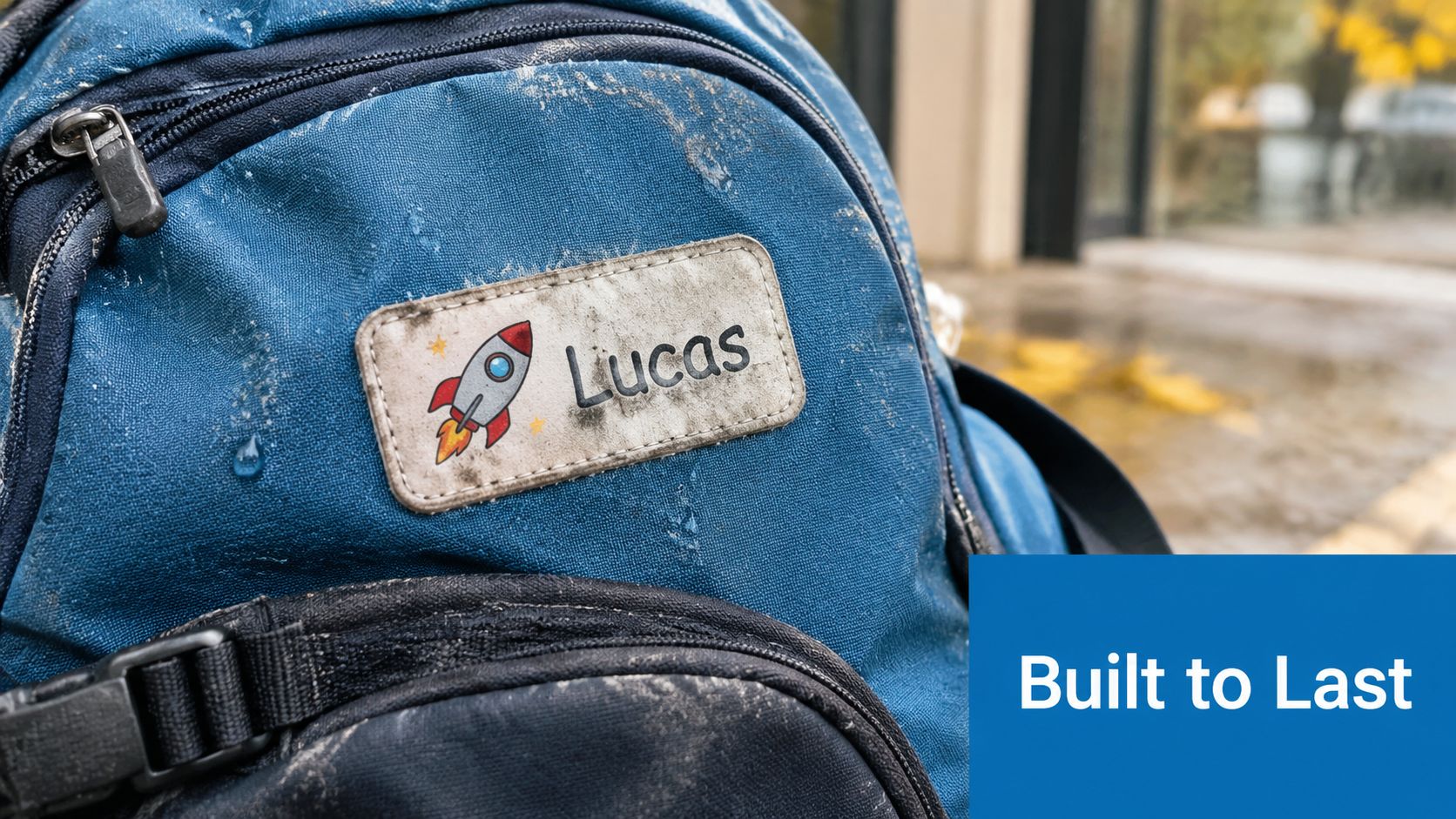
A label that looks perfect on the first morning can become unreadable after weeks of rubbing against cubbies, car floors, coat hooks, and playground equipment. Durability comes from the combination of material, adhesive, placement, and aftercare, not from the word “waterproof” alone.
Children's apparel and made-up article guidance describes labels as needing to remain permanent, legible, and durable enough for the cleaning treatment specified by care instructions. Indian draft textile regulations also describe resistance to water, heat, chemicals, and abrasion, along with clear type, contrasting colors, and suitable sizing. Those principles apply neatly to backpack identification. (Children's Apparel Product Safety Guidelines)
What to check before buying
Start with the actual environment rather than the product description.
- Water resistance: Useful for rain and damp hands, but it doesn't automatically mean the label can be submerged or washed repeatedly.
- Dishwasher or washing-machine guidance: These claims describe a tested use case more clearly than “splashproof.” Follow the instructions for the specific item and label.
- Abrasion tolerance: A label on a front pocket may experience more rubbing than one inside the main compartment.
- UV and fade resistance: Important for exterior tags that spend time in sunlight.
- Adhesive strength: Strong adhesion helps, but only if the surface is clean, dry, smooth, and compatible.
- Contrast and type size: A faded or tiny name defeats the point of labeling.
A durable label should remain readable after the backpack has had a bad day, not just after it leaves the package.
Apply it like you want it to last
Clean the surface according to the label maker's instructions. Alcohol preparation can help with some adhesive products, but it isn't suitable for every fabric or coating, so check the care guidance first. Smooth the label from the center outward, press the edges, and allow the recommended cure time before the bag gets wet or heavily handled.
For fabric applications, keep the label away from seams and stretchy areas. If you're comparing heat-applied options for fabric sections, these apparel label solutions provide useful background on the role of heat, textile compatibility, and application technique.
A simple home test is valuable. Rub the labeled area with your hand, flex the fabric, wipe it with a damp cloth, and check whether the print remains clear. More formal label durability testing guidance can help you think through water, heat, cleaning, and abrasion before committing to a large order.
Where to Place Labels on a Backpack
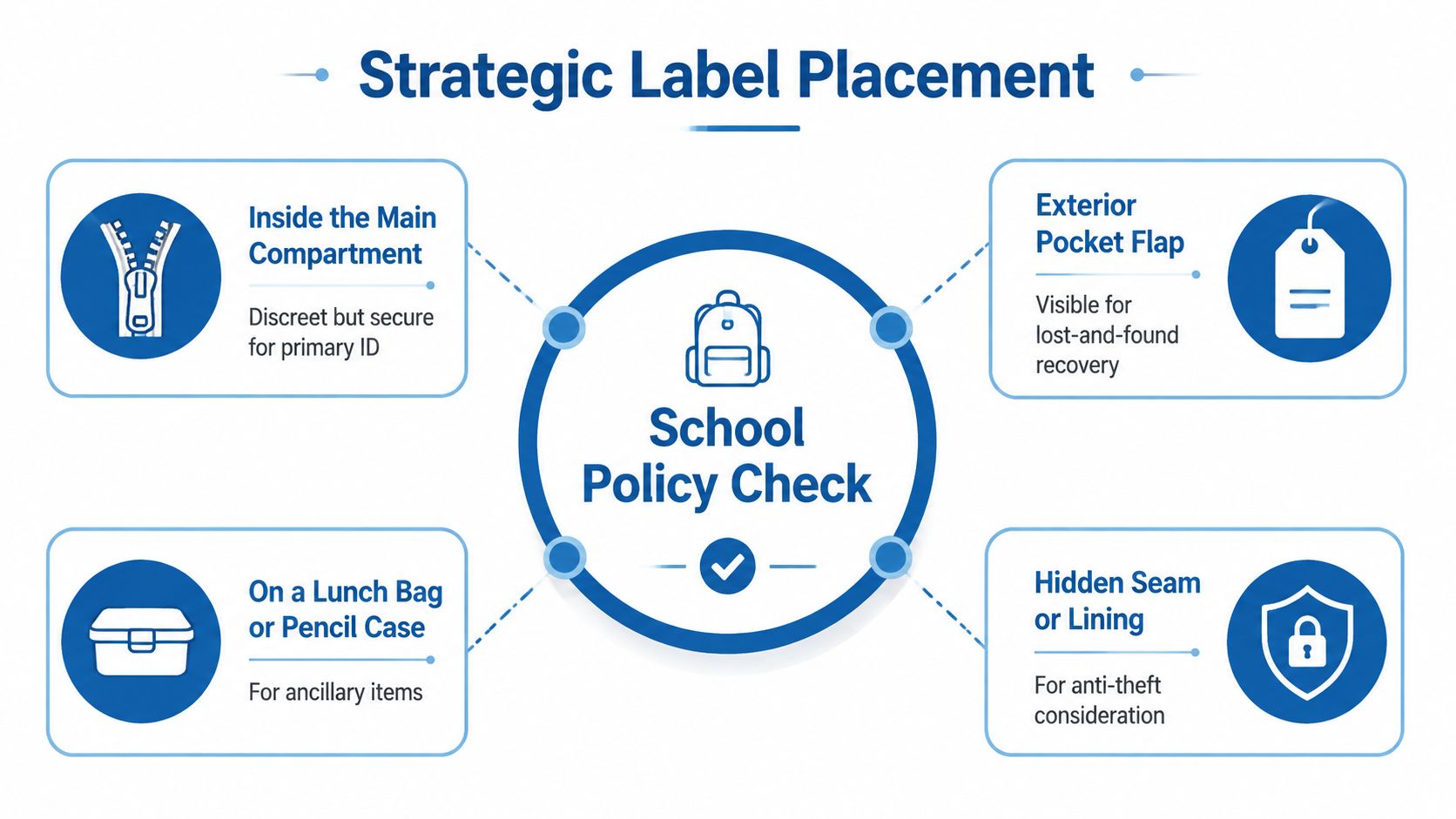
The right location depends on school policy, visibility, privacy, and the backpack's construction. Some schools ask families to put names on the outside so staff can identify bags quickly. Others may prefer personal details to stay inside, and some distinguish between belongings that belong to one child and shared classroom supplies. Check the supply list, handbook, or teacher's instructions before labeling every item indiscriminately.
Match the label to the backpack zone
The inside of the main compartment is a strong primary location. A fabric panel, sewn-in pocket, or smooth lining keeps the identifier discreet while protecting it from rain, sun, and scraping. An iron-on generally belongs on a suitable fabric panel, while an adhesive label needs a smooth, clean area.
The exterior pocket flap offers faster visual recovery. A readable hang tag or approved exterior label can help a teacher identify the bag in a crowded cubby, but avoid displaying unnecessary personal details. A first name, last initial, classroom identifier, or school-approved contact route may be enough.
Zipper pulls and handles work for silicone bands or looped tags. Inspect the attachment point regularly, particularly if the child drags the bag or overloads the zipper. A label that remains readable but loses its loop still fails its job.
One identifier or two
For many families, a two-point system is practical. Put a discreet primary identifier inside the bag, then add a school-approved exterior tag or visible marking if quick sorting matters. The outside label should support recognition, not publish a child's full address or detailed personal information.
Don't label shared supplies automatically. Some school instructions separate personal belongings from communal classroom materials, so a name on every item can create confusion or conflict with the teacher's system. The most useful bag name tag placement ideas start with the institution's workflow, then adapt to the bag's materials.
Personalization Options That Actually Help
Personalization should make identification faster, not make the label busier. A large, readable first name paired with a distinctive icon often works better for a preschooler than a crowded design with tiny text. A child who can't read yet may still recognize a rocket, rainbow, animal, or color pattern on the correct bag.
For older children, add a last initial, classroom, teacher, grade, team, or daycare group only when the school permits it. These details can help staff sort similar bags, but they shouldn't replace a reliable parent or school contact route. Keep the information appropriate for a tag that may be seen by other families.
Build the label around the return process
Ask what a responsible finder needs to do next.
- Recognition first: Make the child's name or approved identifier the most prominent element.
- A visual cue second: Use an icon, color, or theme that the child can identify quickly.
- A recovery route third: Add a parent or guardian phone number, email, school office contact, or another approved method when appropriate.
- Group information selectively: Include a classroom or daycare group only if it helps staff and doesn't conflict with privacy rules.
A phone number can speed up a return, but it also exposes contact information on a public-facing tag. An interior label may be the better place for it, while an exterior tag carries only a first name and visual identifier. Avoid putting a full home address on the outside of a child's backpack.
Allergy and accessibility details
Allergy alert labels need more care than ordinary personalization. Use a clear alert format approved by the child's school or daycare, and confirm whether the information belongs on the backpack, lunch container, medical form, or another designated item. A label shouldn't replace the facility's formal health and emergency procedures.
For design ideas that balance a personal look with useful recognition, you can find Tula Pink fabrics at B-Sew Inn, especially if you're coordinating sewn accessories or fabric-based gear. The broader distinction between decorative choices and functional identification is also covered in this guide to personalization versus customization.
Ordering Tips and Bundle Strategies for Parents
The easiest way to waste money is to order a backpack label before checking the rest of the gear. By the time you remember the lunch bag, coat, water bottle, shoes, pencil case, and sports items, you may have bought several small packs with different designs and incompatible formats.
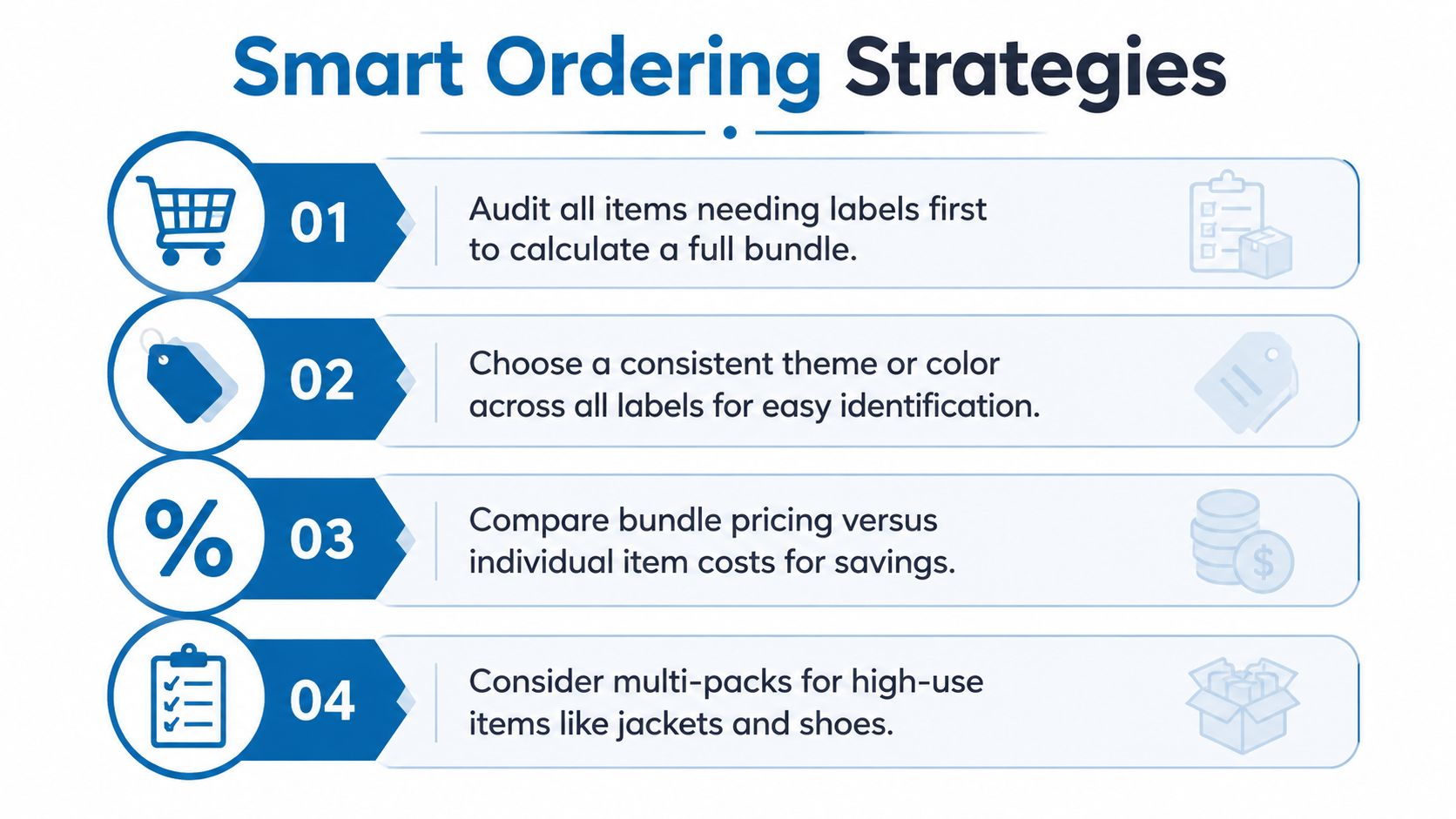
Start with a household audit. Write down every item that moves between home and school, then divide the list by surface: fabric, hard plastic, coated fabric, zipper, and footwear. That tells you whether you need adhesive labels, iron-ons, hang tags, silicone bands, or a mixture.
Buy for the routine, not the fantasy
A coordinated bundle works best when it covers the items your child uses. Matching colors or icons help children recognize their gear, while different formats handle different materials. Don't buy a large pack of iron-ons if the backpack has no suitable fabric panel, and don't choose only stickers when the main items are rough, wet, or heavily handled.
Use this order of operations:
- Audit first: List bags, containers, clothing, shoes, and small supplies before opening a label shop.
- Group by material: Match each item to the label type it can safely accept.
- Compare the complete cost: Check bundle pricing against separate packs, including whether unused formats would be wasted.
- Allow for real life: Order a modest reserve for items that get replaced, outgrown, or lost.
Store unused labels flat in their original packaging, away from heat and direct sunlight. Keep the order where you can find it before the next daycare change or school term, and save the personalization details so replacements don't require rebuilding the design from memory.
Your Backpack Labeling Checklist
Use this list while packing, not after the first lost-item call.
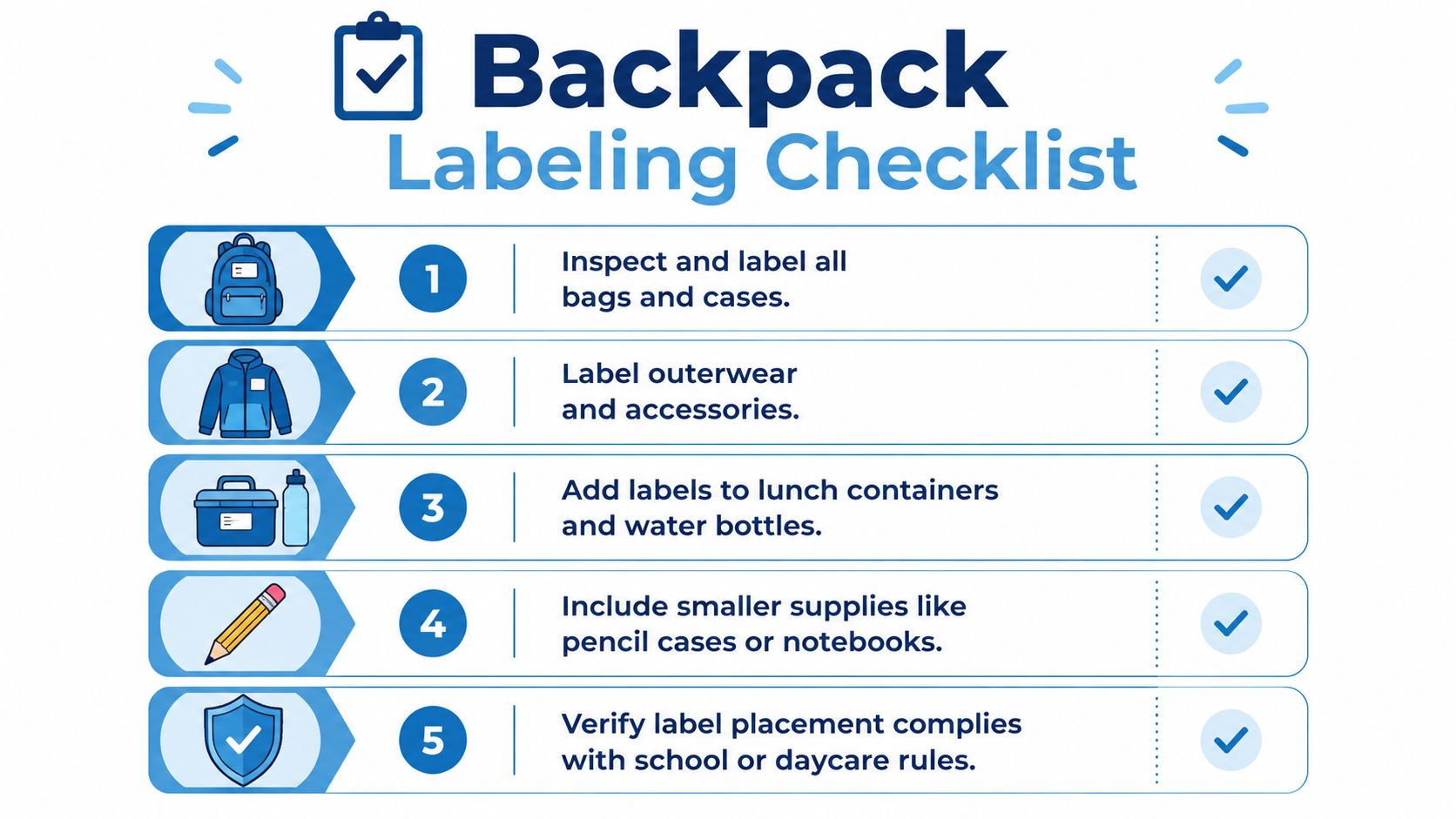
- Inspect every bag: Check the backpack, lunch bag, sports bag, and pencil case for a suitable label surface.
- Choose the format: Use adhesive, iron-on, hang tag, or silicone band according to the material and school rules.
- Make the name readable: Favor strong contrast, a clear typeface, and a design your child recognizes quickly.
- Protect privacy: Keep public-facing information limited, and place contact details inside when appropriate.
- Secure the attachment: Press adhesive edges, apply fabric labels correctly, and test loops or bands for slipping.
- Label related gear: Mark outerwear, accessories, water bottles, lunch containers, shoes, and smaller supplies as needed.
- Check the policy: Confirm whether the school or daycare wants names outside, inside, or not on shared items.
- Test before use: Wipe, flex, and handle the labeled area before sending it into daily rotation.
- Store the reserve: Keep unused labels flat and accessible for replacements.
The best system is the one your child, teacher, and daycare staff can use without stopping to decode it. A small investment in durable, readable identification can prevent the larger hassle of replacing a bag or searching through an anonymous lost-and-found pile.
InchBug offers personalized bag tags and kid-friendly labels for backpacks, lunch boxes, bottles, clothing, shoes, and sports gear, with formats suited to different materials and daily routines. Review the options at InchBug, choose the labels that match your child's actual gear, and place them before the next busy school or daycare morning.