

You know the drill. The wrong cup comes home from daycare, the jacket on the hook isn't your child's, and your preschooler insists the blue bottle in the cubby is theirs even though you packed the pink one at 7:10 a.m. That's the daily reality vinyl flower stickers can solve when they're used as labels, not just decoration.
A good flower sticker does two jobs at once. It helps a child recognize their own gear fast, and it stays on through the stuff that ruins ordinary labels, like damp backpacks, tossed lunch boxes, and being handled by a tired teacher in a hurry. In other words, this is less about cute art and more about choosing a label that survives a child's life.
The Morning Mix-Up Every Parent Knows Too Well
The daycare pickup line has a way of exposing every weak spot in a family system. One kid leaves with someone else's jacket, two identical sippy cups sit in the bin, and a teacher is trying to remember which bottle belongs to which child while ten small voices talk at once. That's usually the moment parents realize they don't need “more things,” they need better identification.
Vinyl flower stickers fit that problem in a simple, surprisingly practical way. They're pretty enough that kids don't reject them, and distinctive enough that a child can spot their own bottle or lunch box without reading a full name every time. That matters more than it sounds, especially for toddlers and preschoolers who recognize shapes and colors before they can reliably read text.
The category also makes sense because vinyl has become a scaled, mainstream material, not a niche craft supply. One market estimate puts the global vinyl sticker market at USD 1,304.04 million in 2024 and projects it to reach USD 2,994.94 million by 2034, with a CAGR of 8.67% from 2025 to 2034, which points to sustained demand across branding, packaging, and consumer goods use cases. Another report places the market at US$4.9 billion in 2025 with a projected rise to US$7.4 billion by 2034 at a 4.7% CAGR, which reinforces the same basic takeaway, this is a mature category with room to grow. Zion Market Research's vinyl sticker market report and Reports and Insights' vinyl sticker market forecast both frame vinyl stickers as a durable everyday product line, not a novelty.
Practical rule: if the sticker needs to survive toddler reality, treat it like a label decision first and a design decision second.
That's the lens for the rest of this guide, what works on a child's gear, what peels too soon, and what looks lovely but fails in a backpack.
What Vinyl Flower Stickers Actually Are
Vinyl flower stickers are not the same thing as paper stickers you peel from a craft sheet, and they're not the same as static-cling decals that only rely on friction. Vinyl uses a layered construction that's better suited to repeated handling, so parents can think of it as a thin flexible film with a job to do, not just a pretty surface.
A typical vinyl label has three parts. The face film is the visible printed layer, the adhesive layer is what sticks to the object, and the backing paper is the liner you peel away before application. That structure is why vinyl can be made for different jobs, from decorative wall decals to functional name stickers for bottles and lunch gear. For a parent comparing options, that difference matters more than the flower pattern itself.
The finish changes the feel too. Matte looks softer and reduces shine, glossy gives a brighter, more polished look, holographic adds a reflective effect, and clear lets the object show through behind the design. A child's flower sticker can look sweet on a notebook and still be readable on a water bottle if the contrast is handled well.
The other important distinction is where the sticker is meant to live. Decorative vinyl flower decals are often made for walls and windows, while functional vinyl flower name stickers are meant for bottles, gear, and containers that get touched all day. That's where buying guides often blur the line, and parents end up with a pretty decal that won't hold up on a lunch box.
For a deeper product-specific comparison, InchBug's guide on waterproof vinyl labels is useful because it focuses on what families care about most, label durability on real kid gear.
Simple translation: if a sticker is just for show, almost any vinyl may be fine. If it has to identify a child's bottle, the construction matters.
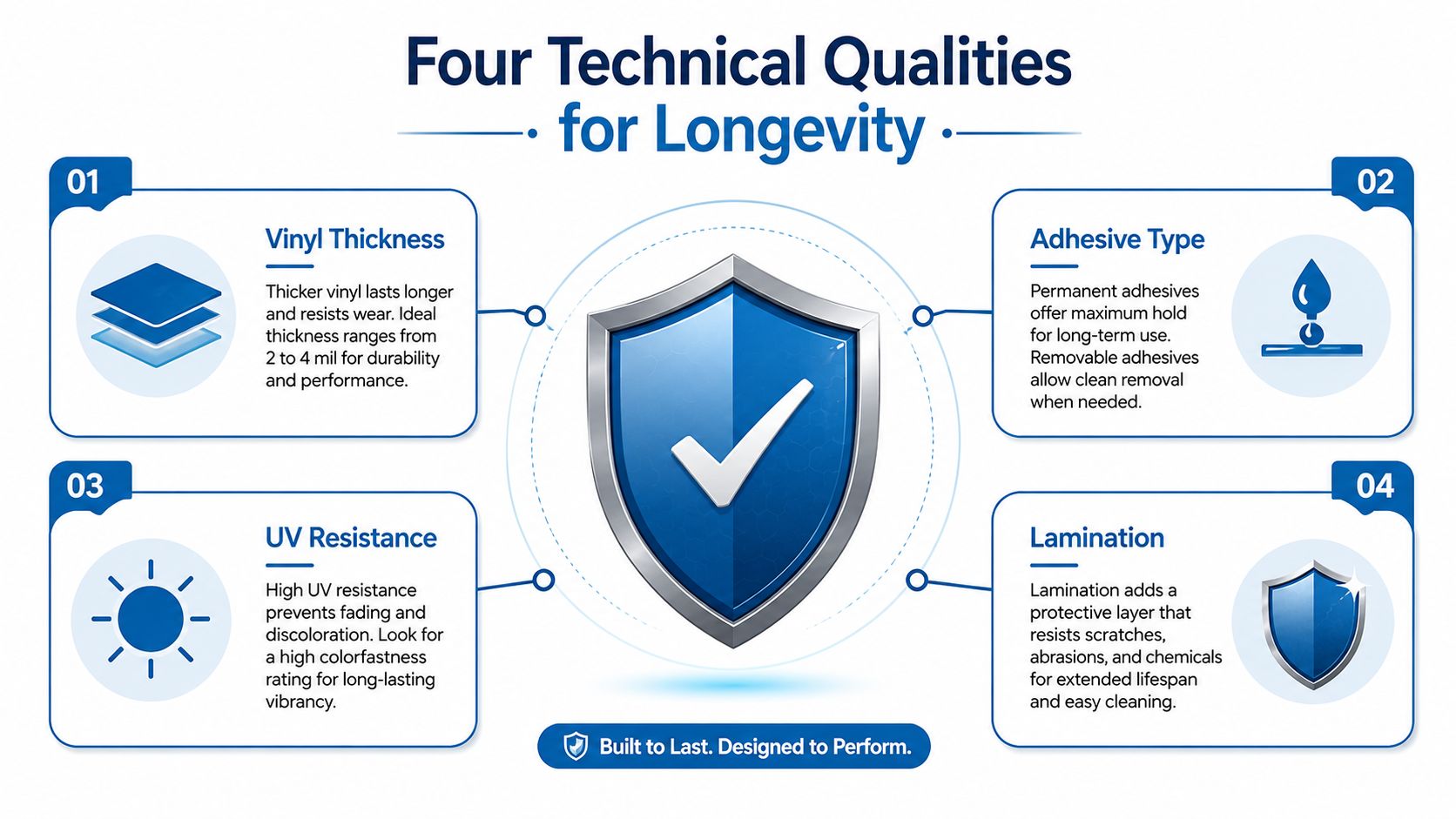
The Four Technical Qualities That Decide Whether They Last
Parents usually ask whether a sticker is cute enough. The better question is whether it can survive the exact abuse a child's gear gets every week. The vinyl sticker market is large and growing, which tells you the product category is mature, but maturity doesn't make every label equal. The details still decide whether a flower sticker stays put or starts curling at the edge after a few wash cycles.
Adhesive choice matters more than most listings admit
The biggest fork in the road is permanent versus removable adhesive. Removable vinyl is designed to come off with less residue, which is helpful for painted walls, rented spaces, and gear that changes hands often. Permanent adhesive makes more sense on bottles and containers that get washed repeatedly, especially when the item is staying in one child's rotation for a while.
If you want a broader consumer-label comparison, FloofChonk's bubble free stickers are a useful reference point because they show how much a product page can emphasize application quality alongside design. That's the kind of detail parents should be looking for before buying a full sheet.
The other test is how the label behaves under real use
Water resistance, fade resistance, and material safety aren't abstract features in a kid context. A bottle label that gets hand-washed, a lunch box that gets wiped clean, and a sticker that sits in sunny daycare pickup windows all face different stresses. If a child mouths the item, parents also need to pay attention to whether the product is intended for kids' belongings and whether the materials are suitable for that environment.
Good parent test: press a sample sticker onto a spare item, wash the item the way your child's gear will actually be washed, and check whether the edges lift or the print fades.
The earlier section on label durability testing is especially relevant if you're comparing a few options at once. It helps you think in terms of stress, not just style, which is exactly the mindset that keeps a label from becoming clutter in the dishwasher.
Matching the Sticker to the Surface
A sticker that works beautifully on a smooth notebook cover may fail on a curved tumbler or textured shoe tongue. That's where a lot of parents get frustrated, because the flower design looks universal, but the adhesive behavior isn't. The smart move is to match the sticker to the surface first, then choose the prettiest option from the types that fit.
The most useful comparison is simple. Bottles need different handling than walls, and shoes need a different plan than lunch boxes. If you keep that in mind, the shopping process gets much less overwhelming.
| Surface | Adhesive Type | Best Finish | Why It Works |
|---|---|---|---|
| Stainless steel water bottle | Permanent | Glossy or matte | Handles frequent handling and gives enough visual contrast for quick recognition |
| Plastic lunch box | Permanent or strong removable, depending on use | Matte | Easier to read and less likely to look scratched in daily use |
| Fabric shoes and jackets | Product-specific label or removable option designed for gear | Matte | Needs flexibility and a surface-friendly approach |
| Smooth walls | Removable | Matte | Lower-risk for painted surfaces and easier to change later |
| Notebooks | Removable or permanent, depending on how long you need it | Glossy or matte | Works on flat covers and usually doesn't face heavy wash wear |
For parents comparing container labels specifically, labels for containers is a practical companion read because bottles and lunch boxes are where adhesive choice becomes obvious very quickly.
A curved surface deserves special mention. A bottle with a slight taper is usually friendlier than a heavily textured shoe or a powder-coated tumbler, because the sticker can lie flatter and grip more evenly. If the object has ridges, seams, or a rough coating, the label needs to be chosen with that in mind.
A short video can also help if you're a visual learner.
Applying Them Without Bubbles or Crooked Petals
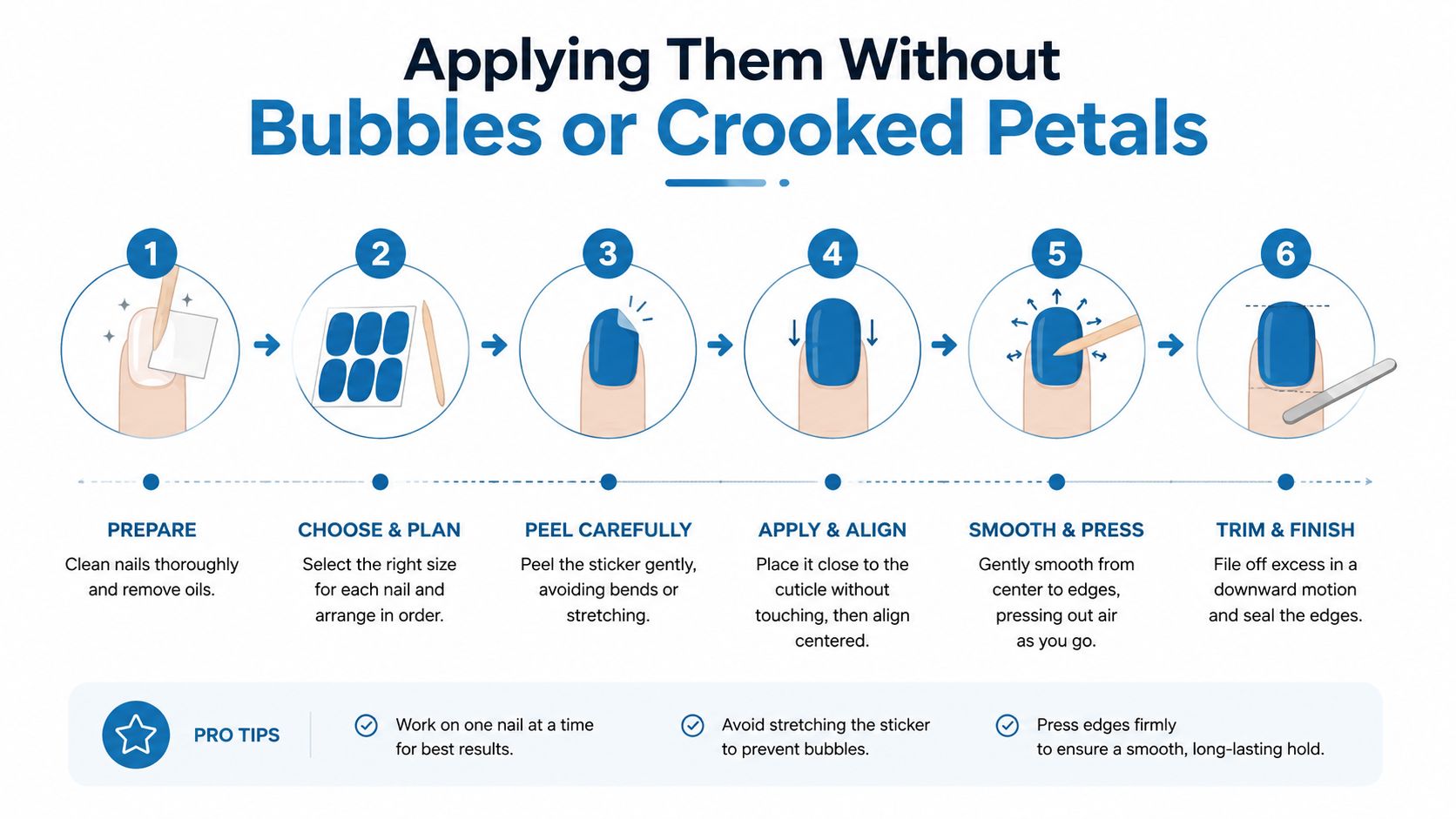
The best-looking flower sticker can still disappoint if it goes on crooked or traps dust under the center petal. Parents don't need artisan-level skill here, but they do need to slow down long enough to prep the surface. Clean, dry, room-temperature gear gives adhesive a better chance to grab evenly.
A tape-transfer method helps when you're working with a full sheet or a set of matching flower decals. You can position the design first, tape one edge as a hinge, and check the angle before committing the adhesive. That little pause saves a lot of frustration later, especially on a lunch box lid where a slightly tilted bouquet looks off every time you open it.
The inside view from label application guides is consistent with what families notice in practice. InchBug's label application methods guide emphasizes controlled placement, and that's the same idea parents should use at home. Press from the center outward, then work toward the edges so air has somewhere to go.
If a sticker arrives curled from packaging, gentle warmth can help it relax. A hair dryer on a low setting, used briefly, is usually enough to soften the vinyl so it lies flatter before application. Keep the heat mild, because the goal is to make the film easier to handle, not to warp it.
Useful habit: lay the full design out with painter's tape first. Five extra seconds of positioning beats a crooked flower cluster on a five-year-old's favorite bottle.
Parents sometimes ask about bubbles that won't budge. Tiny trapped specks happen, and the fix is usually patience, not force. Smooth outward, lift only when needed, and accept that one imperfect speck matters less than a label that stays readable all week.
For parents who also organize classroom or volunteer gear, VolunteerBadge is another example of how clear identification makes everyday handoffs less chaotic. The design lesson is the same, easy-to-read labeling reduces confusion before it starts.
Removing and Cleaning Without Damaging the Surface
Every family eventually has to retire a sticker. Maybe the flower pattern feels too babyish, maybe the bottle gets handed down to a sibling, or maybe you're switching gear for a new season. A good removable label should come off without turning the object into a cleanup project, but timing matters because adhesive that sits too long can bond more stubbornly.
Warmth helps. A hair dryer on the warm setting, kept moving and never blasted too close, softens the adhesive so the edge can lift more cleanly. Once the corner starts to release, pull slowly and keep the angle low instead of yanking straight up. That reduces stress on painted surfaces and finished plastics.
If residue remains, start gently. A little baby oil can loosen sticky remnants, and a melamine sponge can help on some hard surfaces if you use it carefully. Skip harsh solvents on children's items and painted walls, because the cleanup can do more damage than the residue ever did.
The cleaning question is separate from removal, but parents care about both because labels live in the same ecosystem as dishwashers, lunch boxes, and sticky fingers. Some vinyl labels are meant for frequent washing, while others are better treated as hand-wash or wipe-clean items. The safest approach is to test one item before you commit the whole set to a full wash routine.
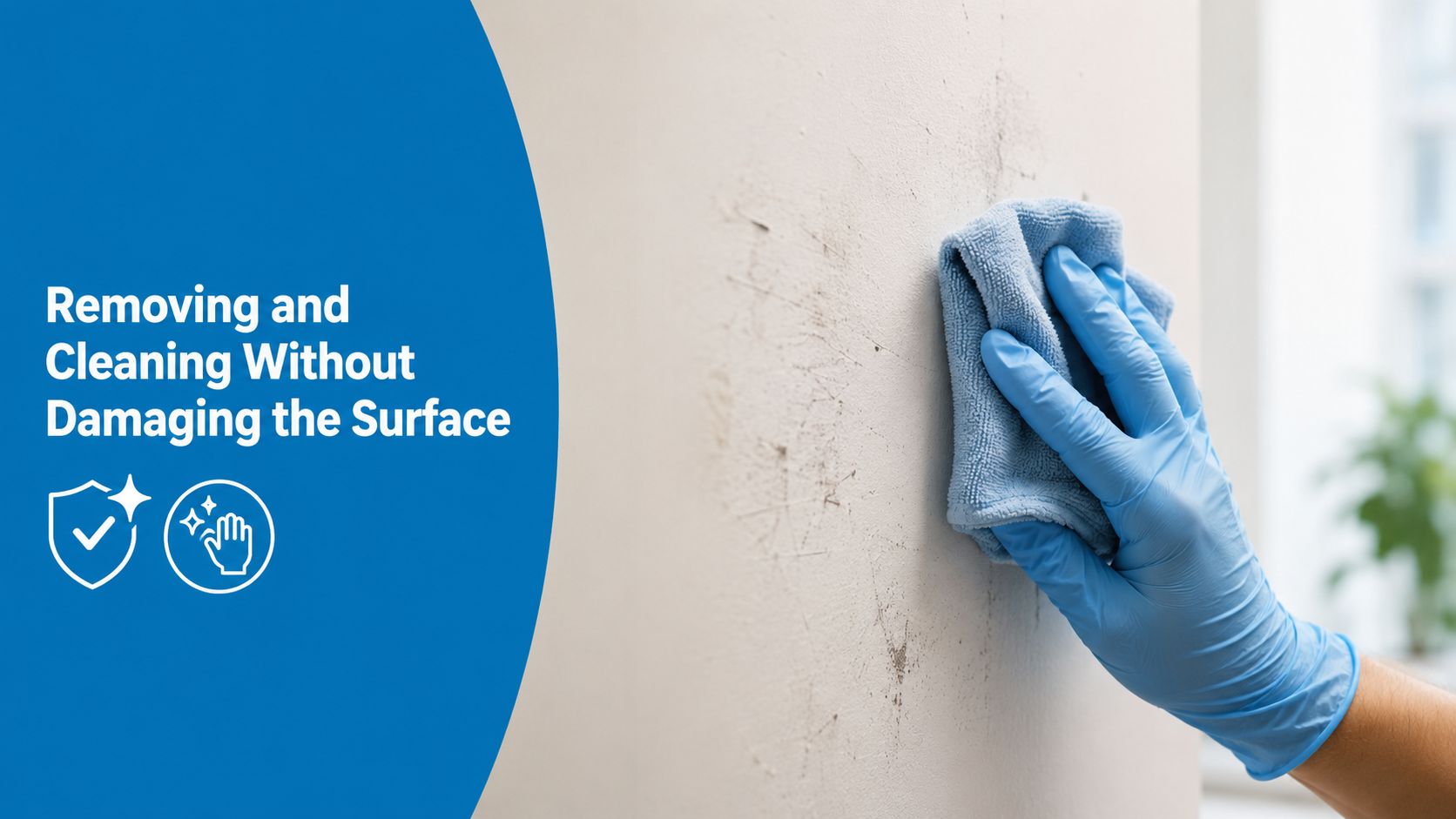
The cleanup mindset helps with walls too. If a decorative flower decal has to come down from a nursery wall, careful removal is slower but much kinder to the surface than trying to scrape it off in one go.
Personalizing the Design for Real Kids and Real Mornings
The payoff isn't just that the sticker looks cute. It's that your child can recognize their own things in a room full of identical ones, and you can get out the door without inspecting every bottle cap like a detective. A flower theme works especially well because it softens the look of a practical label, which makes kids more willing to keep using it.
Names still matter most, but the other details help too. A small icon, a favorite color, or an allergy alert can turn a flower pack into something that fits a child's routine. If you're shopping for daycare or back-to-school, themed packs and combo bundles can simplify ordering because you can cover multiple items without piecing together separate designs for every single thing.
For broader design ideas, InchBug's label design ideas shows how personalization can stay functional while still feeling playful. That balance is the point. Parents need labels that children recognize fast, and children usually respond better to a design that feels like theirs rather than a plain block of text.
A practical checklist helps before you click buy:
- Choose the right adhesive: removable for temporary use, more permanent for repeat-wash gear.
- Match the surface: smooth bottle, flat notebook, painted wall, or something textured.
- Use readable contrast: pretty is fine, but name visibility still comes first.
- Think about cleanup: if the item will be swapped later, removal matters now.
- Keep the child in mind: a design they like is more likely to stay in use.
A flower sticker can be a tiny thing and still solve a real problem. When it's chosen well, it cuts down on lost bottles, speeds up the morning shuffle, and gives a child one small, familiar signal in a day full of transitions.
If you're ready to make mornings easier, start with a label set that matches your child's bottles, lunch gear, and daycare routine, then choose the flower style that they'll recognize. A quick visit to InchBug can help you compare personalized options and pick a setup that feels practical before it feels pretty.