

Drop-off time has a way of exposing every label problem at once. A child reaches for the blue cup, another child reaches for the same blue cup, and suddenly you're squinting at a faded sticker that peeled halfway off in the dishwasher. That's where vintage name labels earn their place, because they can calm the chaos without making every bottle and lunch box look the same.
The best version of this idea does two jobs at once. It looks warm, classic, and a little more thoughtful than a bright generic sticker, while still being easy for teachers, caregivers, and kids to read fast. That balance matters, because labels that are charming but flimsy don't solve much, and labels that are durable but hard to read can create their own mess.
Why Vintage Name Labels Are Gaining Popularity
A child's bottle ends up in the wrong cubby. A lunch box comes home with a smudged sticker. A backpack needs to be easy to spot in a pile of nearly identical gear. Parents want a label that sorts belongings fast, and kids often respond better to something that feels a little personal than to a plain factory-style mark. Vintage name labels meet both needs by borrowing from older object-marking traditions while still working on the bottles, lunch boxes, and backpacks that move through daily life now.
Nostalgia that still makes sense
The style feels familiar for a reason. Labeling goes back to ancient Egypt, where bone and ivory tags attached to goods buried with King Scorpion I date to about 3200 BCE, and by the Middle Ages, guilds were already using symbols, marks, notes, and scrolls to identify goods and origin (Avery's history of labels). That long history helps explain why retro typography, badge shapes, and heritage-inspired borders feel so natural on kid gear. They echo older systems of ownership and identification, only in a friendlier, more modern form.
What has changed is the job the label needs to do. A vintage-style label today serves sorting, returning, and tracking for items that travel between home, school, and daycare. If you want to compare how different styles handle that balance, these label design examples show how look and function can work together in one small space.
Practical rule: if a label is hard to read at arm's length, the style has gone too far.
Why parents are choosing the look
Retro-inspired labels show up on water bottles and lunch boxes because they soften all the hard plastic and stainless steel kids use every day. Muted colors, small borders, and compact badge-style layouts make items look organized without feeling overly busy. That is a meaningful shift from purely decorative stickers, which may look cute but often ignore the demands of real use.
The appeal is straightforward. A vintage look should keep legibility, durability, and speed at drop-off intact. If a label is going to live on a lunch box, it has to survive the wash cycle, stay readable in a crowded cubby, and still look intentional after months of rough handling. That is what makes the style more than a trend. It gives parents something that feels warm and classic while still doing the everyday work of a name label.
What Vintage Name Labels Are
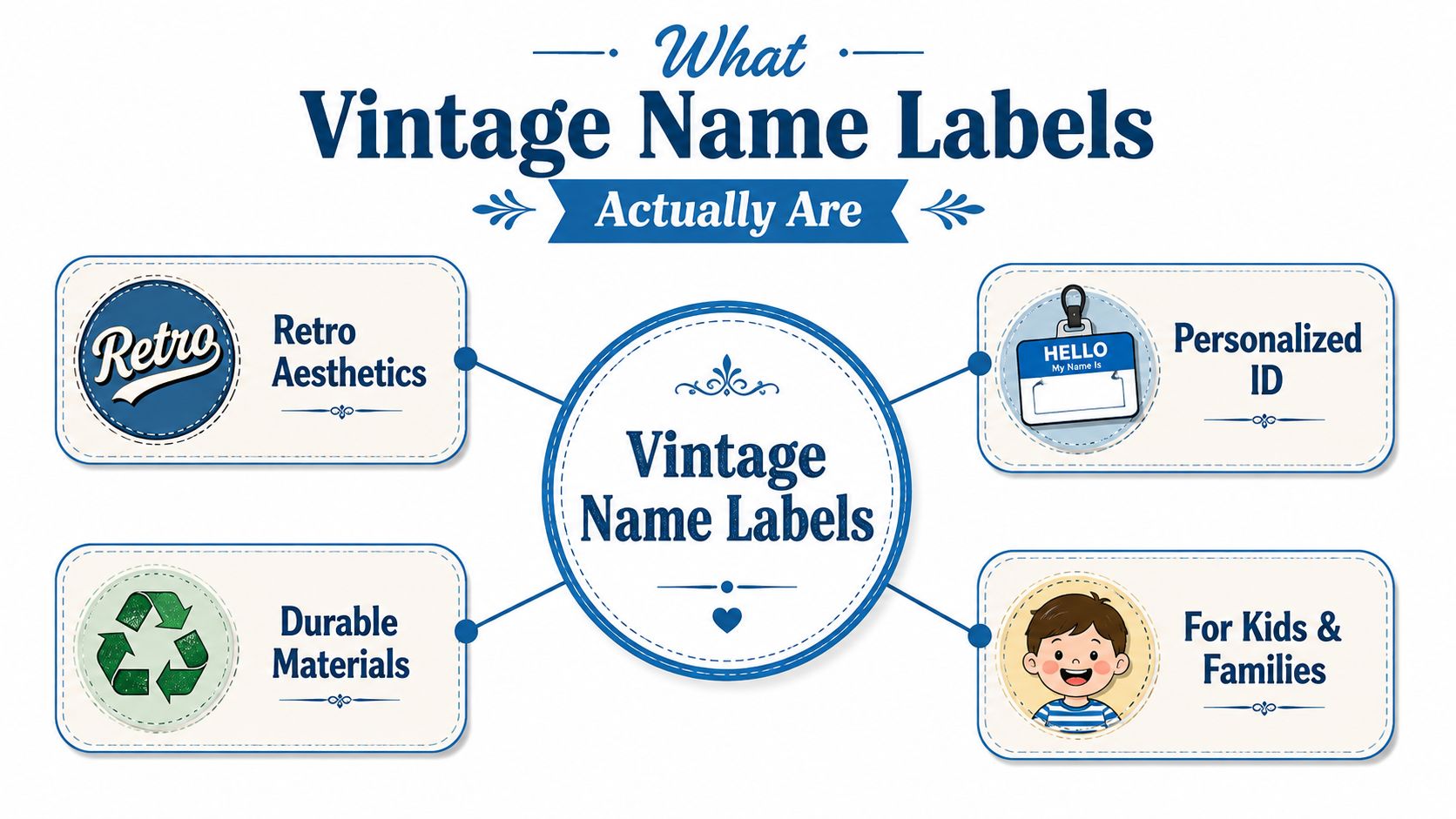
The phrase sounds simple, but parents often mean two different things by it. Sometimes they mean a true old label that came from another era. More often, they mean a vintage-style personalized label, a new product designed to look classic while still handling ordinary family use.
Style versus age
That difference matters because the label's age and the label's look are not the same thing. A collectible antique label is an original object from the past. A vintage-style label is something you buy now, usually printed or made to echo older design cues like script fonts, sepia tones, classic badge shapes, and border details that feel borrowed from apothecary jars or old luggage tags. These fabric personalized labels show how a newer product can borrow that older feel without losing everyday usefulness. The style can be charming without pretending to be a museum piece.
A modern personalized label may go in a brighter direction, with bold colors, simple sans-serif type, and layouts that are easy to spot on kid gear. The question is whether the design helps your child's belongings stay identifiable in the world.
The formats parents use
Most families run into a few common forms. Sticker labels work well on smooth hard surfaces, such as bottles and lunch containers. Sew-on or iron-on woven tags belong on clothing, especially items that get washed often. Silicone or rubber bottle bands make sense for drinkware because they are reusable and easy to spot. Small badge-style tags show up on backpacks and gear, where the label needs to be visible without taking over the item.
A commercial vintage label size of 1 7/16" x 2 1/4" is close to common name-badge dimensions, which helps keep the name readable while staying compact enough for apparel and small belongings (Namemaker vintage labels). That scale is part of why the style works so well for school and daycare gear.
Parents sometimes get stuck on the word “vintage” and assume it means fragile or fussy. It does not have to. The useful version is a label that looks classic and still behaves like a practical identifier.
A good rule of thumb, if it can't be read quickly by the person who finds the item, it is not doing its main job.
Comparing Materials, Attachment Methods, and Durability
This is the part most parents need before they buy. The look can be lovely, but the wrong material will peel, fray, or vanish in the wash. A smart choice depends on where the label will live, how often it gets washed, and whether you need it to stay put forever or come off later.
The main options side by side
| Label Type | Best For | Attachment | Wash Performance |
|---|---|---|---|
| Vinyl stickers | Smooth hard surfaces like bottles and containers | Peel and press | Best on hard surfaces, not textured gear |
| Woven satin sew-on labels | Clothing that gets repeated washing | Sewn in | Machine-washable and dry-cleanable |
| Iron-on labels | Fabric when you want a no-sew option | Heat applied | Good on fabric when applied correctly |
| Silicone bottle bands | Drinkware and reusable bottles | Stretch-on band | Dishwasher-friendly for compatible bottles |
What each one gives you
Vinyl stickers are the easiest fit for smooth, hard surfaces. They're straightforward for lunch boxes, snack containers, and bottles, but they don't love texture. A rough or curved surface can weaken the bond, so a sticker-only plan is risky on gear that gets tossed around a lot.
Woven satin sew-on labels take more time, but they reward that effort. The technical details matter here, because these labels are made with washable black ink, are specified as machine-washable and dry-cleanable, and use a pinked edge to help reduce fraying. One typical size is about 7/8" (22 mm) by 2 1/4" (57 mm), which is small enough for collars or waistbands while still staying legible (woven clothing labels by Name Maker). That construction is what keeps them readable after repeated laundering.
Iron-on labels save time, especially when you're marking uniforms or everyday tops. They're still fabric labels, so the fit depends on the material and the quality of the application. For sewing-oriented guidance, these sew-on name label notes can help parents compare fabric options without guessing.
Silicone or rubber bottle bands are the easiest to reuse. They grip drinkware well and make labels visible without adhesive, which is useful when the bottle itself is going through constant washing. The catch is fit. If the diameter doesn't match, the band won't sit properly.
Choosing durability over decoration
The vintage look only works if the label survives the routine. A label that fades in the wash or frays at the edge stops being charming and starts being another chore. For families, the win is a design that still looks good after contact with lunch, laundry, backpacks, and a child's very determined hands.
Where Vintage Labels Make Life Easier
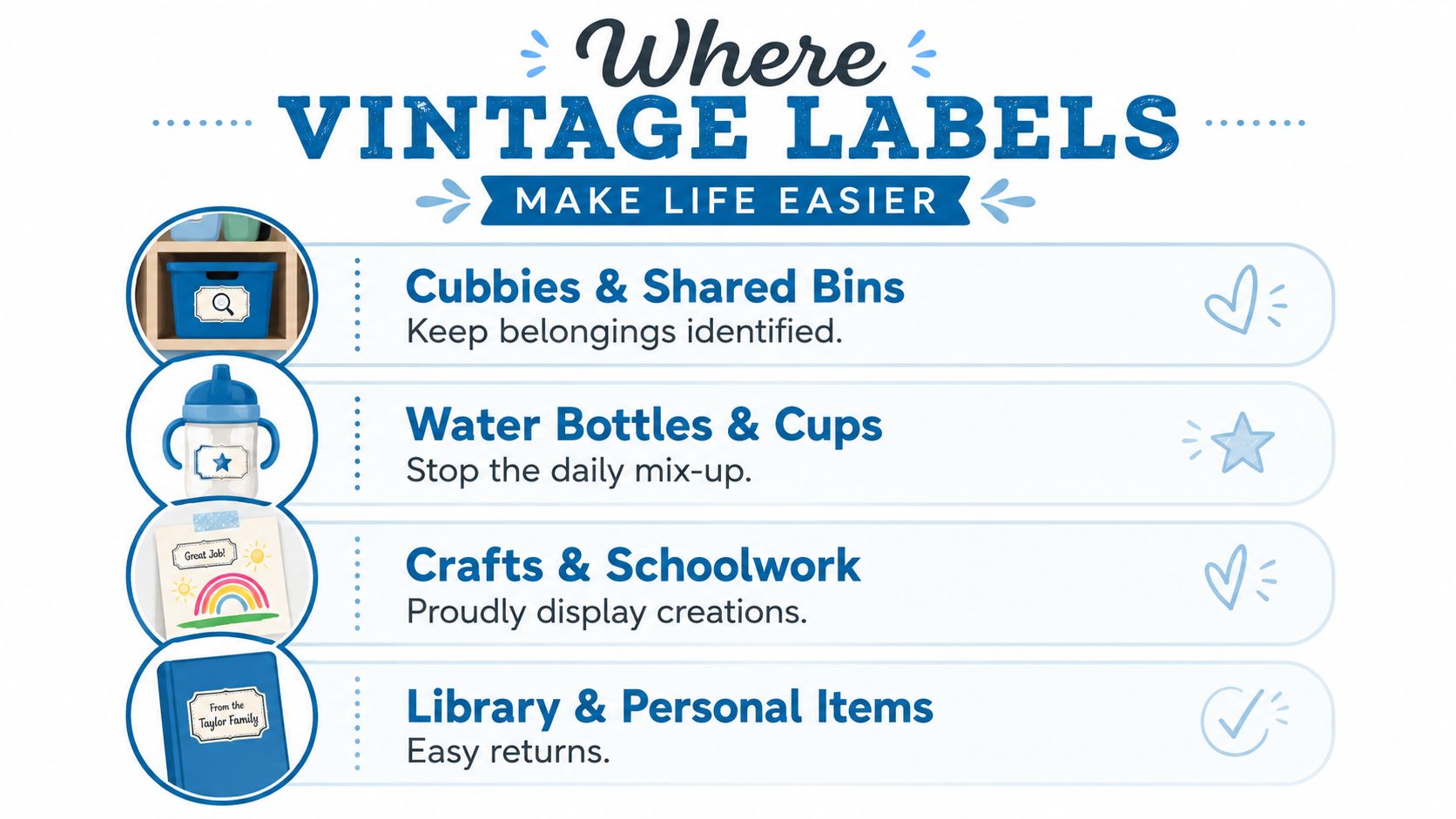
The labels that earn their keep are the ones that show up in the same spots every week. In a busy home or classroom, a good label works like a parking spot for a child's things, it gives each item a clear place to land, which saves time, cuts mix-ups, and keeps less of it drifting into the lost-and-found. Families usually feel that difference most in the places where cups, shoes, and jackets seem to disappear on a regular basis.
Daycare, school, and shared spaces
Daycare cubbies are the first place many parents notice the value of a label. Identical sippy cups, snack containers, and soft toys collect quickly, and the label has to do more than look charming at drop-off. A reusable bottle band or a waterproof sticker makes sense here because the item gets handled often and still needs to be easy to identify after repeated washing.
Backpacks and lunch boxes need a different kind of help. These items get set into bins, carried on bus rails, and wiped down after spills, so the label has to stay visible without getting in the way. A compact badge-style label or a hard-surface sticker keeps the name easy to read, which matters more than ornament when a child is trying to find the right lunch in a crowded room.
The same idea applies in classrooms and shared care settings. A label that looks nice on the table still has to survive the day, with hands, water, and quick cleanups. A simple guide to personalization versus customization can help parents sort out which details are decorative and which ones improve daily use.
Clothing and the small things that disappear
School clothing creates its own kind of confusion. Jackets get left on hooks, sweatshirts drift into the lost-and-found, and costume pieces slip between home and classroom. Sew-on or iron-on labels make more sense than stickers for fabric, because the label needs to move with the garment. If you are labeling cuffs, necklines, or waistbands, inside placement keeps the name discreet and still easy for adults to spot.
Sports gear adds another layer. Shin guards, water bottles, and bags move between home, practice, and games, so the label has to handle moisture and repeated touch without cracking or lifting. For families who want the look of vintage labeling on fabric items, embroidery file prep tips can help explain why clean setup matters before anything is stitched or pressed.
Practical rule: put the label where adults are most likely to look first, not where it looks prettiest.
Travel and the identity problem
Family travel brings its own mix-ups. Kids' bottles and snack containers end up on tables beside other families' nearly identical items, and a name label helps prevent the quick swap that happens when everyone is tired. A vintage-style label can still look polished on travel gear, but it needs to stay readable after wipes, rinses, and being packed in a bag all day.
The test is simple. Choose the label format that fits the job, then let the style do the visual work.
Personalization and Styling Choices That Work
Retro styling can go wrong fast if the name becomes decorative instead of readable. The safest approach is to make one part of the label carry the vintage feel while the actual name stays clear and easy to scan. I've seen plenty of beautiful labels that fail because the script looked lovely in a preview and vanished on a curved bottle in real life.
Fonts, contrast, and spacing
Font choice comes first. Serif and slab-serif typefaces usually read as vintage without sacrificing clarity. Ultra-thin scripts are where parents get into trouble, especially on smaller labels. If the child's name is hard to read when you glance at it from a few feet away, choose a different typeface.
Color contrast matters just as much. Sepia, cream, and muted tones can look elegant, but the name itself still needs a strong contrast against the background. A light border or a darker name field helps keep the text readable. That's especially important when a label is tucked inside clothing or seen across a room in a classroom.
What to include and what to leave out
A single small icon, a heritage-style border, or a name and initial combination can preserve the look without crowding the label. Full first names usually work well for daycare and school. If field trips, camps, or shared programs are involved, a last name or class detail can help adults return items faster.
Some items need a different category altogether. Allergy or medical alert tags should stay visually direct so the safety cue is clear at a glance. That's less about style and more about making sure the right adult notices the right information quickly.
If you've ever prepped embroidery art before handing it off, these embroidery file prep tips are a useful reminder that the design file itself affects clarity just as much as the fabric or finish does. The same idea applies here. Good personalization starts with readable artwork, not just a pretty concept.
For parents comparing setup options, this note on personalization versus customization is worth a look because it helps separate a child's name from the decorative choices around it.
Keep the styling quiet and the name loud.
Vintage style should support function, not replace it. If the decoration starts fighting the letters, the label has lost its job.
Care and Maintenance That Make Labels Last
Even a well-made label can fail if it's applied carelessly or washed the wrong way. The fix is usually simple, but the routine needs to match the label type. Once parents see how each format behaves, the maintenance side gets a lot easier.
A basic routine by label type
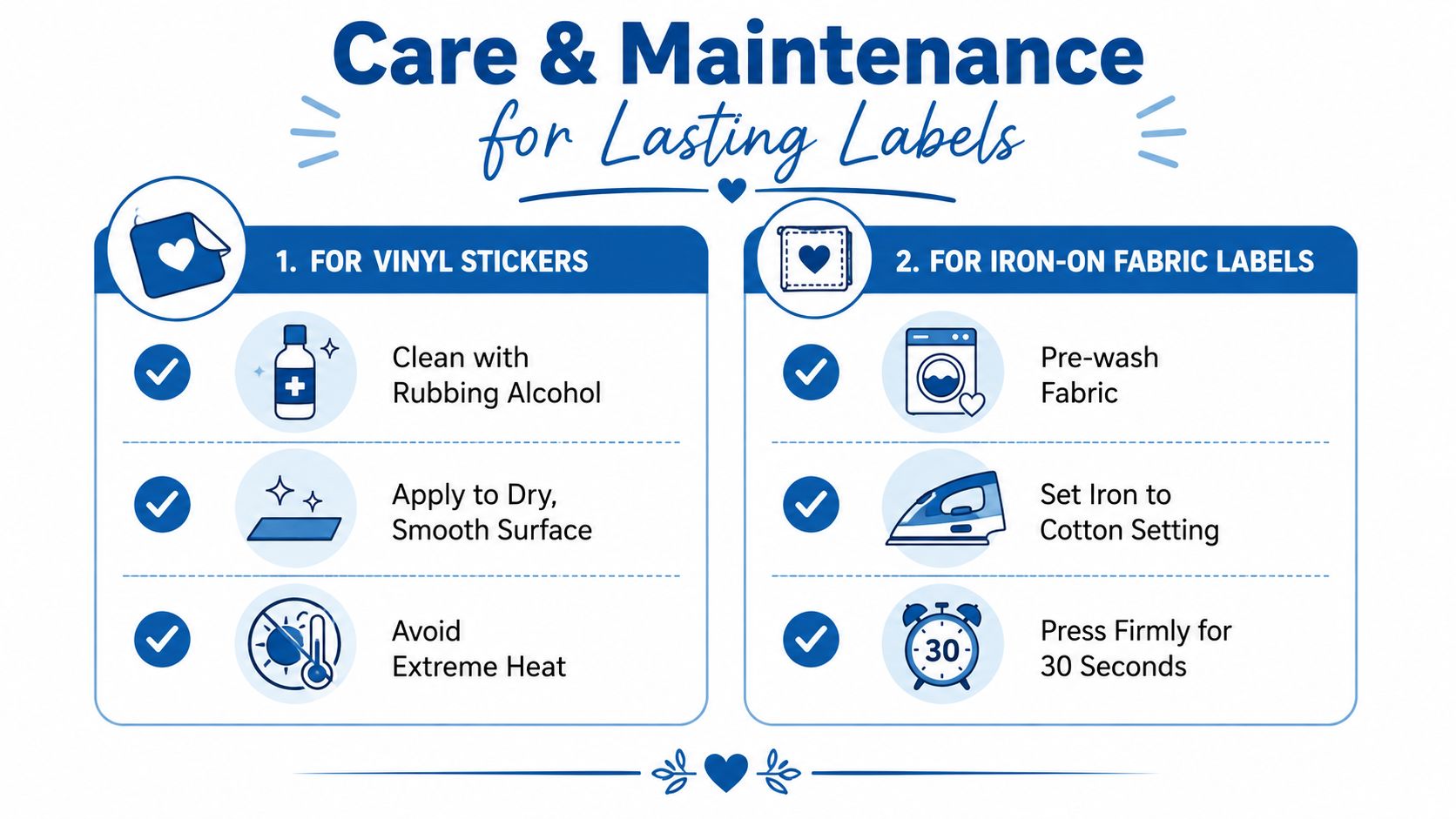
For vinyl stickers, start with a clean surface. Wipe the item with rubbing alcohol before application, press firmly for about 30 seconds, and wait 24 hours before the first wash. That prep step gives the adhesive a clean surface to bond to instead of dust or oils. The same idea applies whether the item is a lunch box or a water bottle.
For sew-on woven labels, pre-wash the garment first. Place the label where a needle won't keep hitting the same point, then trim threads close so they don't snag later. The pinked edge matters here because it helps reduce fraying after repeated washing, which is exactly why construction details matter as much as appearance.
For iron-on labels, use the right temperature for the fabric and reinforce high-stress items with a quick stitch if needed. That extra stitch is useful on items that take a lot of pulling, like cuffs or bag linings. For a broader clothing-label care guide, this machine-washable label resource gives a helpful reference point.
For silicone bottle bands, rinse after sticky drinks, use the top rack of the dishwasher when appropriate, and stretch the band gently before first use. They're convenient, but they still need a little care so they keep their shape.
What breaks labels faster
Avoid bleach and harsh detergents on personalized labels. Those products can break down the ink faster than the surrounding fabric or surface, which makes the name fade while the rest of the item still looks fine. That uneven wear is what makes a label look old before its time.
Practical rule: if the item is still dirty enough to need harsh chemicals, the label is getting more punishment than it should.
Save this short checklist for later.
- Prep before applying. Clean the surface or pre-wash the fabric.
- Match the label to the item. Hard surface, fabric, or bottle band.
- Give it cure time. Don't rush first use.
- Watch for edge wear. Fraying and peeling usually start there.
- Skip bleach. It shortens the life of the print.
Buying Checklist for Parents and Daycare Staff
The smartest purchase is the one that solves the most frequent problem first. Before you order anything, look at the items that disappear, get shared, or come home damp and unlabeled. That gives you a better list than shopping by design alone.
A fast order plan
Start with the most churned items. Bottles, lunch containers, jackets, and backpacks usually need labels before decorative toy bins or keepsake folders. Then match the format to the surface, because sticker-only labels don't belong on textured gear, and fabric labels don't help a plastic cup.
A practical ordering habit is to get at least two labels per high-turnover item, so you have a spare ready when one starts to wear out or gets repositioned. Confirm lead times before school starts, especially if you're labeling a whole household at once. If the seller offers sample packs, that can make it easier to compare finish, size, and readability before you commit to a larger order.
What to look for in the product details
Look for fade-resistant language, strong washability claims, and safety details such as BPA-safe materials where they apply. Check whether the font stays readable on small products, because a pretty preview can become too tiny once the label is printed at actual size. If you're building a mixed household system, combo bundles that include sticker, sew-on, and bottle formats can simplify ordering.
For families making back-to-school items on a budget, these budget-friendly back-to-school crafts can also help you pair labels with simple homemade organization without adding more clutter.
A quick buying checklist
- List the first five items that go missing most often.
- Choose the right format for each surface.
- Order a spare for every high-turnover item.
- Check readability at real size, not just in the preview.
- Avoid sticker-only plans for textured or washable gear.
- Confirm shipping timing before the school rush.
The outfit doesn't need to match every time. The labels do need to work every time.
Frequently Asked Questions About Vintage Name Labels
Parents usually ask these questions once they're ready to buy, or when the first label starts looking tired. A clear answer now saves a lot of guesswork later.
How do I make vintage labels readable for younger kids
Use a simple font with strong contrast and keep the name short if possible. A child who is still learning letters benefits from a label that looks calm and clear, not ornate. If the vintage style starts to hide the name, simplify the border or remove extra decoration.
What should I do if a label starts peeling or fading mid-year
Check the surface first, then the application. If the label was applied to a damp or textured item, or if it went through a wash cycle too soon, the fix may be to replace it and prep the surface better next time. For fabric labels, look for edge wear and reinforce high-stress spots before the next wash.
Do vintage-style labels cost more than standard modern labels
Sometimes the price difference comes from the format, not the style. Fabric tags, bottle bands, and specialty finishes often cost more than a basic sticker because they use different materials and attachment methods. If you're building a registry or starter kit, planning your baby gift list can help you sort label needs alongside other practical essentials.
Can a daycare ask for a unified labeling system
Yes, and many rooms benefit from one. A shared system makes it easier for staff to sort cups, spare clothes, and art supplies quickly. The best version is one the center can explain in a sentence, then parents can follow without much thought.
If you want labels that balance a classic look with real-life durability, InchBug offers personalized options for bottles, lunch gear, clothing, shoes, bags, and school routines. Visit InchBug to explore labels that help families keep track of the things kids carry every day.