

The missing cardigan shows up three weeks later in a classroom cubby, a lost-and-found bin, or another child’s backpack. By then, you have already replaced it, written your child’s name on three more things with a fading marker, and wondered why something this small keeps turning into a weekly problem.
That is why uniform name tags matter. They are not just for formal uniforms or workplaces. For families, they are one of the simplest ways to keep school clothes, lunch gear, jackets, shoes, and daycare supplies from drifting into the wrong hands.
The End of Lost Uniforms and Daycare Chaos
If your mornings feel rushed, labeling frequently slips to the bottom of the list. You buy the required polos, cardigans, socks, and PE kit. You sign the forms. You pack the bag. Then the first missing item disappears, and the main problem starts.
A navy sweater looks identical to every other navy sweater. The same goes for white polos, black shorts, and spare daycare clothes. In shared spaces, unlabeled items blur together quickly.
Parent forums consistently point to the same issue. Unlabeled items in daycares frequently experience mix-ups, and most online content about uniform name tags centers on military uses instead of family life and school routines (Bradley’s Surplus). That gap is evident, and parents often end up piecing together advice from product pages, school emails, and trial and error.
Where the stress frequently appears
Some items vanish more than others:
- Cardigans and sweaters: They come off at recess, in the lunchroom, or during aftercare.
- PE uniforms: Kids change quickly and grab what looks familiar.
- Lunch boxes and water bottles: Staff sort them in batches, often quickly.
- Spare clothes for daycare: If the outfit changes midday, pieces get separated.
This becomes most apparent once the school year gets busy. Add sports practice, theme days, and after-school club activities, and suddenly your child has gear moving between classrooms, playgrounds, gym bags, and activity leaders all in the same week.
Practical tip: If an item leaves the house regularly, it needs a visible identity plan. Not just a name scribbled once on a tag that no one can find.
A simple system works better than a heroic memory
The families who stay ahead of the chaos often do one thing well. They label once, consistently, and in the right places.
This approach applies well to daycare gear. If you are building a more reliable routine, this guide to labels for daycare is a useful place to start because daycare labeling needs are often broader than school-only labeling.
Uniform name tags solve a common problem. They help teachers sort faster, caregivers return items sooner, and parents stop rebuying things they already own. That may sound small, but on a Tuesday morning, small fixes are the ones that save your sanity.
Understanding Modern Uniform Name Tags
Modern uniform name tags are broader than the old stitched patch most of us picture. For parents and schools, the term now includes clothing labels, stick-on tags for lunch gear, shoe labels, bag tags, and other identifiers that help a child’s belongings return to the right place.
That shift matters because school life is not one surface. A child’s “uniform system” often includes fabric, plastic, metal, silicone, and insulated containers. One labeling method rarely works for all of it.

Why name tags exist in the first place
The idea behind uniform name tags is old. During the American Civil War, soldiers began pinning paper slips or rudimentary tags to their uniforms before combat because battlefield conditions made identification difficult, and an estimated 40 to 42% of Civil War dead remained unidentified (JCV Veterans Council).
Parents are obviously dealing with a very different situation. But the core need is surprisingly similar. In crowded, fast-moving environments, identity gets lost unless someone makes it visible.
That is still the whole job of a good name tag. It should help another adult answer one question quickly: “Whose item is this?”
What counts as a modern uniform name tag
For family use, the most useful options tend to fall into a few categories:
- Clothing labels for polos, sweaters, skirts, pants, and PE uniforms
- Stick-on labels for lunch boxes, snack containers, folders, and bottles
- Shoe labels for pairs that often get separated in daycare and sports settings
- Bag tags for backpacks, dance bags, and nap mats
- Medical or allergy alert labels when visibility matters as much as identification
Some are designed to stay on through washing. Others are made for hard goods that go through the dishwasher. Others prioritize fast application because many parents are labeling a full week’s worth of school gear the night before orientation.
If you want a closer look at clothing-focused options, this guide to personalized name tags for clothes shows how today’s labels differ from older sew-in approaches.
The big mindset shift
The mistake I see most often is treating all labels like they do the same job. They do not.
A label inside a cardigan serves a different purpose from one on a lunch container. One needs to survive laundry. The other needs to handle water, heat, and repeated washing. A shoe label needs to cope with friction. A bag tag needs to stay easy to spot.
Once you stop looking for one universal fix, choosing the right uniform name tags gets much easier.
How to Choose the Right Name Tag Type
The best label is the one you will use on the right item. Parents frequently lose time trying to find a perfect all-in-one option. In practice, a small mix of tag types works better.
Some belong on clothing. Some belong on hard surfaces. Some are best when you need flexibility. The easiest way to choose is to match the tag to the item and to your tolerance for prep work.
Comparison of Uniform Name Tag Types
| Tag Type | Ease of Use | Durability | Best For | Removability |
|---|---|---|---|---|
| Sewn-in labels | Low | High | Uniform pieces used all year | Low |
| Iron-on patches | Medium | High when applied well | Clothing without easy care tags | Low to medium |
| Adhesive clothing labels | High | Strong for everyday school wear | Fast labeling of uniforms and spare clothes | Medium |
| Tag clips | Medium | Moderate | Temporary labeling or hand-me-down planning | High |
| Silicone bands | High | Strong on bottles and cups | Reusable drink containers | High |
Sewn-in labels work best for long-term uniforms
If your child wears the same style of cardigan, blazer, or PE shorts all year, sewn-in labels remain a solid option. They feel permanent because they are.
The trade-off is obvious. Sewing takes time, and many parents do not want to repeat that process across multiple items in multiple sizes. Sewn labels also become less convenient when a younger sibling may inherit the uniform later.
Best for: blazers, cardigans, and expensive items you do not expect to relabel soon.
Less ideal for: fast back-to-school prep and parents who want flexibility.
Iron-on patches can be excellent if you follow directions carefully
Iron-on labels sit in the middle. They can feel more finished than stick-on clothing labels, and they avoid stitching. But they are less forgiving if you rush the application.
Heat, pressure, fabric type, and placement matter. If the surface is textured, stretched, or not clean, the bond may be less reliable. On some school uniforms, that is fine. On others, especially heavily washed basics, I often prefer a simpler clothing label system.
Best for: parents who want a more secure clothing-only option without sewing.
Watch out for: delicate fabrics, hurried application, and garments you plan to resell or pass down.
Adhesive clothing labels are the easiest for busy households
For most families, this is the sweet spot. Adhesive labels for clothing are quick to apply, easy to read, and practical for labeling a pile of uniforms in one sitting.
They are especially helpful on care tags or smooth interior label areas. That makes them useful for polos, dresses, sweatshirts, spare underwear bags, and PE basics. The primary advantage is consistency. If labeling feels easy, you are more likely to do all of it.
What works in real life: Label every daily-use item in one batch. If you wait to do “just the missing ones later,” later usually becomes never.
Best for: school uniforms, daycare spare clothes, and families who need speed.
Less ideal for: surfaces that are rough, fuzzy, or constantly rubbed.
Tag clips are handy when permanence is not the goal
Tag clips are useful when you need something attached but not permanently fixed. They can be practical for special-event clothing, occasional outerwear, or items moving between siblings.
The downside is that anything removable can also be removed accidentally. For younger children, that may not be the best match for daily school clothing.
Best for: short-term labeling, costume pieces, or garments you are not ready to mark permanently.
Silicone bands solve the bottle problem better than stickers do
Water bottles, sippy cups, and reusable drink containers need a different approach. Smooth hard surfaces can work with stickers, but many families prefer silicone bands because they are reusable and easy to move between containers.
That is especially useful if your child rotates bottles during the week or if a daycare requests that cups be clearly labeled but not permanently marked.
Best for: bottles, cups, snack containers with compatible shapes.
Not a fit for: flat fabric items or anything without a shape the band can grip.
A simple buying framework
If you are deciding quickly, use this filter:
- Choose sewn-in labels when permanence matters most.
- Choose iron-on labels when you want a secure clothing label without stitching.
- Choose adhesive clothing labels when ease and speed matter most.
- Choose tag clips when you need flexibility.
- Choose silicone bands for drinkware and reusable containers.
Most families do not need one kind. They need a small system. Clothing labels plus bottle labels plus one visible bag identifier generally cover the majority of school-year problems.
Decoding Material Quality and Durability
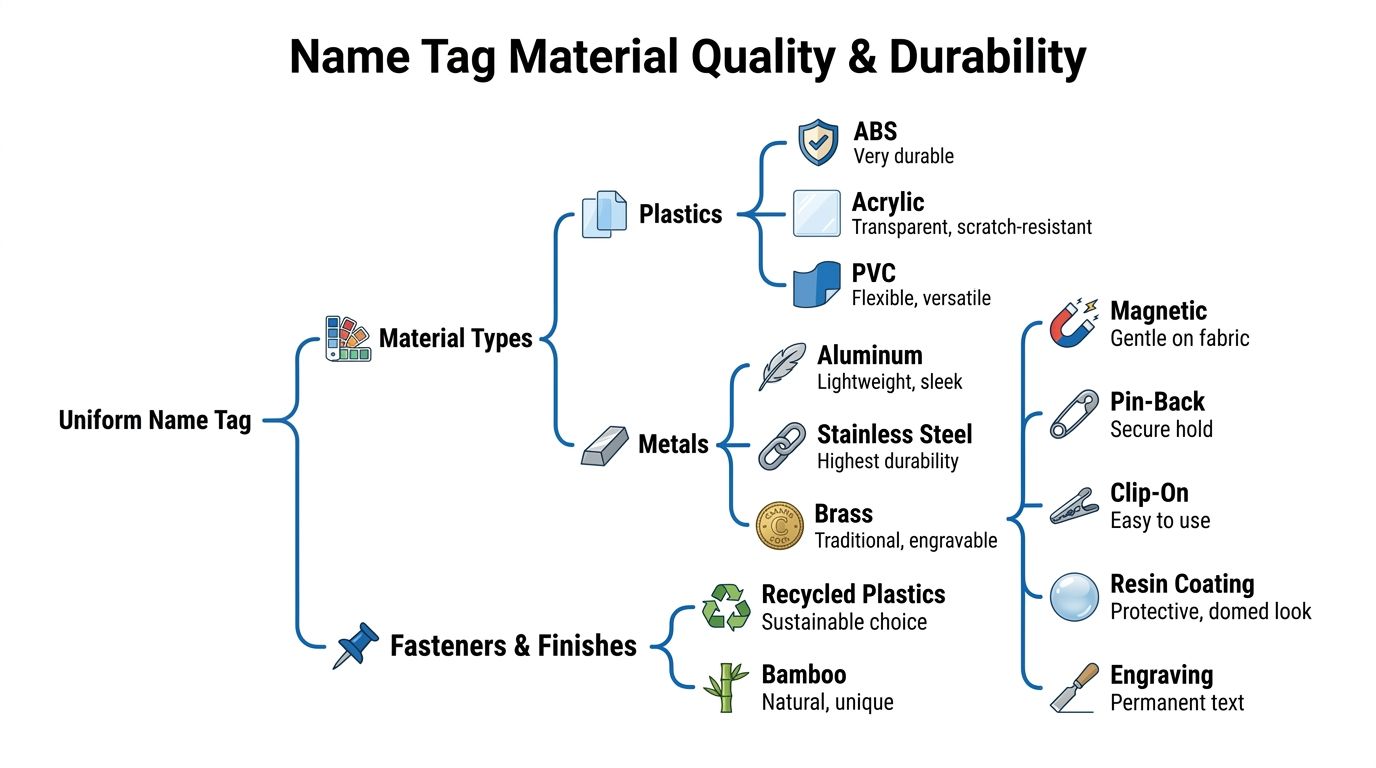
Two labels can look almost identical on a website and behave very differently after a week of real use. The difference usually comes down to material, finish, and how well the label matches the item.
For parents, the important question is simple. Will this still be readable and attached after laundry, lunch clean-up, and daily handling?
What strong materials achieve
Polyester, vinyl, and silicone each solve different problems.
Polyester works well when a label needs to stay stable through repeated washing. Vinyl can be a practical choice for smooth hard surfaces if the adhesive and print quality are strong. Silicone is useful when the goal is reuse, stretch, and grip, especially on bottles or cups.
The safest buying habit is to think in categories:
- For clothing: look for materials and adhesives made for wash wear
- For food-related items: prioritize kid-safe materials and clear dishwasher compatibility
- For bottles and cups: favor flexible options that can handle repeated handling
- For bags and shoes: choose labels that resist rubbing and everyday abrasion
Why wash performance matters more than first-day appearance
A label that looks great on arrival but peels after a few cycles is not saving you any time. That is why I pay more attention to durability language than to design alone.
Military standards are a useful reminder of what resilience looks like. Military uniform standards such as AR670-1 use hook-and-loop name tapes designed to withstand hundreds of wash cycles, and high-quality children’s labels apply the same durability mindset. One example cited for kids’ labels is waterproof polyester with backings that achieve 500+ wash cycles in ISO 6330 durability tests without delaminating (HoopTalent).
That does not mean your child needs military-grade labeling. It means the best kid labels are built with the same common sense. They should expect rough treatment.
Buying tip: Ignore pretty mockups if the product does not clearly address washing, water exposure, and fade resistance.
If dishwasher-safe labels are on your list, this guide to dishwasher safe name labels is worth reading before you buy. Bottles, lunch containers, and snack boxes need a different durability standard from a school cardigan.
Kid-safe details matter too
Durability is not the only filter. If a label touches a child’s skin, sits on a cup, or ends up on lunch gear, material safety matters.
I always look for plain-language answers to these questions:
- Is it appropriate for frequent contact items
- Will it stay readable after repeated cleaning
- Does the print resist fading
- Will the edges stay flat instead of curling
The strongest labels balance toughness with practicality. Parents do not need industrial jargon. We need labels that survive a school week without becoming a chore.
What frequently fails first
In real family use, labels frequently fail in one of four ways:
- Edges lift because the surface was wrong for that label type.
- Print fades because the finish was not made for heat or water.
- The label slides off because it was applied quickly or onto lint, texture, or moisture.
- The wrong material was chosen for the item.
That last one is the big one. Most “bad label” experiences stem from mismatches. Put the right material on the right surface, and uniform name tags become remarkably low-maintenance.
Best Practices for Application and Placement
Placement decides whether a label helps. A beautifully printed name hidden in an awkward spot still gets missed by a teacher sorting twenty cardigans after recess.
The goal is simple. Put the tag where an adult can find it fast, read it easily, and return the item without guesswork.

Use consistent placement, not random placement
University name tag standards offer a useful lesson here. Guidelines built for readability at 5 feet show that clear, consistent placement helps people scan names quickly, and in preschool settings that kind of visibility can reduce mix-ups by up to 75% by letting teachers scan 50+ items in under 30 seconds (University of Illinois brand guidelines).
For parents, that translates into one practical rule. Put labels in the same spot on the same type of item every time.
That way, a caregiver knows exactly where to look.
Best spots for common school items
For clothing, the inside care tag is frequently the easiest win. It is protected, smooth, and usually easy to access.
A few dependable placements:
- Polos and shirts: inside care tag or neckline label area
- Sweaters and cardigans: inside neckline or side care tag
- Pants, skirts, and shorts: waistband care tag
- Socks: use a method designed for tiny fabric items, or skip if the label will be more annoying than useful
- Shoes: inside heel area or dedicated shoe label position
- Backpacks: visible outer tag plus optional interior identifier
- Lunch boxes: flat inside or outside panel that stays easy to wipe
- Water bottles: smooth exterior area or a reusable band if that format fits better
Quick rule: If a teacher has to unfold, unzip, or dig to find the name, the label is in the wrong spot.
Application mistakes that cause most failures
Parents often blame the label when the underlying issue is placement or prep.
The biggest mistakes typically are:
- Applying onto textured fabric: Rough knit or fuzzy material gives adhesives less to grip.
- Ignoring care tags: Smooth sewn-in tags often hold clothing labels better than the garment fabric itself.
- Placing labels on high-friction zones: Waistbands and cuffs can work, but avoid spots that rub constantly if another area is available.
- Labeling in a hurry: Moisture, lint, and lotion on hands can all make adhesion less reliable.
If you are using heat-applied clothing labels, this guide to iron-on nametags helps with the small setup details that make a big difference.
A short visual walkthrough can also help if you are labeling a pile of items at once:
Build a labeling routine that sticks
The easiest system is the one tied to a moment you already have. Label uniforms the day you wash and sort them. Label lunch gear when you unbox it. Label new shoes before they ever get worn to school.
I like a simple check when packing for the week:
- Clothing identified
- Lunch gear identified
- Bottle identified
- Bag identified
- Any medical alert visible if needed
Once placement becomes routine, uniform name tags stop feeling like one more task and start acting like quiet insurance.
Meeting School Requirements and Allergy Alerts
Most schools and daycares do not need elaborate labeling. They need clarity. Staff want to know whose item they are holding, and they want that answer fast.
That is why basic customization matters. Some programs ask for a first and last name. Others want a classroom name, nap room, or phone number on selected items. Before ordering anything, check the handbook or ask one direct question: “What exactly needs to be labeled, and what information do you want visible?”
The safety issue many parents discover late
Name labels do more than prevent mix-ups. In some cases, they support safety communication.
This matters most for allergies. Globally, 1 in 10 children are affected by allergies, and sources tracking this gap note that post-2025 school policy shifts are increasingly pushing allergy labeling while many traditional uniform tag providers still do not offer integrated waterproof alert icons (Kellac).
That gap is bigger than it should be. Many labeling systems were built for identification only. Parents of children with allergies often need something more visible and more specific.
What helpful allergy labeling looks like
The best allergy-aware labels do not try to hold a child’s full medical file. They communicate one critical point quickly.
Useful examples include:
- A clear allergy icon: especially for younger classrooms where visual scanning matters
- A short alert phrase: enough to flag a nut, dairy, or other serious concern
- Placement on high-contact items: lunch boxes, snack containers, bottles, and bags
- Waterproof construction: because food-related items get wiped and washed constantly
I would not rely on a label as the only safety measure. But I would absolutely use one as a visible backup that supports teachers, aides, substitutes, and aftercare staff.
Important mindset: An allergy label is not a substitute for school paperwork. It is a fast visual cue in busy moments.
Matching labels to school policy
Some schools prefer labels hidden inside clothing. Others appreciate visible bag tags and lunchbox labels because staff can sort quickly during transitions.
If you are labeling for compliance and convenience, split the job into two groups:
Inside labels For uniforms, coats, and spare clothes. These help with lost property and daily dressing.
Outside-visible labels For lunch bags, water bottles, backpacks, and allergy alerts. These help adults in shared spaces identify items at a glance.
Parents dealing with food restrictions may also want to read more about how visible alerts support care teams. This overview of how allergy alerts can help keep your child safe gives practical context for when and where to use them.
What not to do
Avoid overloading labels with too much text. Tiny type helps no one. Keep the message clear enough that a teacher can scan it while juggling a class transition.
Also avoid assuming every item needs the same information. A sweater may only need a name. A lunch container may need both a name and an allergy cue. A backpack may need a more visible identifier than a pair of shorts.
The best systems are not more complicated. They are more intentional.
How to Order and Maximize Your Investment
The smartest order starts with your child’s actual week, not a generic label count. Lay out what goes to school or daycare regularly, then group those items by surface.
Most families need labels for three buckets: clothing, food gear, and carry items. Once you see the full list, the ordering decision gets easier.
What information to include
Keep the text short and useful. Depending on the item, that might mean:
- Full name: best when the school requests it
- First name plus last initial: useful when space is tight
- Classroom or teacher name: helpful in daycare and preschool
- Phone number: more useful on bags or outerwear than on every item
- Medical alert text: only where it improves visibility and safety
For tiny items, less is usually better. A readable short label beats a crowded one.
Why mixed packs usually make more sense
A single format rarely covers uniforms, lunch containers, shoes, bottles, and bags well. That is why bundled assortments are often the better investment for back-to-school prep.
They solve two common problems at once. First, you get formats suited to different surfaces. Second, you avoid overordering one type and underordering another.
I usually recommend thinking in seasons, not in one-time use. Order enough to handle the opening school rush, the midyear replacement sweater, the new PE shoes, and the extra camp bottle that appears out of nowhere.
A practical ordering checklist
Before you click buy, check these boxes:
- Match the label type to the item surface
- Decide what information belongs on clothing versus bags
- Include allergy alerts where they matter
- Order enough duplicates for backup items
- Choose a design your child can recognize quickly
That last part matters more than people think. Younger kids often identify their own belongings faster when the label is visually familiar.
Uniform name tags are one of those purchases that feel small until they start saving time every week. Done well, one organized order can cover the school year far more smoothly than piecemeal replacements.
Frequently Asked Questions About Uniform Name Tags
Can adhesive clothing labels be removed later
Sometimes, yes. It depends on the fabric, how long the label has been in place, and how strongly it bonded. If hand-me-down flexibility matters a lot, use a less permanent option on expensive pieces and reserve stronger labels for everyday basics.
Do uniform name tags work on sports gear
Often, yes, but the right format matters. Smooth water bottles, shin guard cases, and lunch containers usually need a different label type from fabric uniforms. Sports bags also benefit from a visible outside identifier instead of only an inside label.
What is the best place for a clothing label
The inside care tag is frequently the most reliable spot because it is smooth and easy to find. If the garment does not have a useful care tag, choose a flat interior area that will not rub constantly.
Are visible labels better than hidden labels
For bags, bottles, and lunch gear, visible labels usually help staff more. For uniforms, inside placement is frequently tidier and effective. The best system mixes both.
How do I make labels last longer
Apply them to a clean, dry, appropriate surface. Press firmly. Do not rush the first use if the instructions suggest waiting. For clothing, avoid placing labels on rough or stretchy areas when a smoother tag or lining is available.
Should every item have the same information
No. A polo shirt may only need a name. A backpack may benefit from a fuller identifier. A lunch bag may need an allergy alert in addition to the child’s name. Match the information to the item’s job.
If you are ready to stop relabeling, replacing, and searching through lost-and-found bins, InchBug offers kid-friendly personalized labels for clothing, bottles, lunch gear, shoes, and bags, including allergy-aware options designed for the everyday mess of daycare and school.