

By pickup time, the lost-and-found bin is usually a tiny museum of kid life. One water bottle with the lid missing. One sweatshirt nobody claims. One lunch container that somehow made it through the whole day without finding its way back into the right backpack. If you've ever stood there squinting at three identical cups and wondering which one belongs to your child, you already know the problem isn't just clutter. It's repetition.
That's why rainbow name tags matter more than they first appear to. For parents, they're not classroom decoration. They're a system for getting bottles, shoes, jackets, snack containers, and nap-time gear back where they belong. The cute part is nice. The useful part is what saves your sanity on a Wednesday.
Most of what you'll find online treats rainbow name tags like printable desk cards or first-week-of-school labels. That's fine for a classroom bulletin board. It's not enough for a lunchbox that gets wiped down every day, a water bottle that goes through constant use, or a hoodie that gets pulled on and off by a preschooler who's always in a hurry.
The End of Daycare Lost and Found
The daily scramble usually starts small. Your child comes home with one mitten instead of two. The water bottle is gone. The lunchbox returns, but the container inside belongs to somebody else. Then the next morning begins with a fast search through the car, the kitchen counter, and the daycare cubby area while everyone is already running late.
That's where a good label system earns its keep.
Rainbow name tags work because kids notice them quickly. Parents do too. In a sea of plain containers and navy sweatshirts, a bright label is easier to spot, easier to describe, and easier for a caregiver to match back to the right child. A toddler may not read a full name yet, but they can often recognize a familiar band of color.
Why this problem keeps happening
A lot of kids' gear looks the same on purpose. Daycare cups are similar sizes. School jackets come in the same few colors. Lunch containers stack neatly because they're made from the same molds. That convenience for manufacturers creates confusion for families.
A weak label makes it worse. If it peels after one wash or fades until the name is hard to read, it stops doing its one job.
Practical rule: If a label can't survive the way your child actually uses the item, it's not organized. It's temporary.
What helps in real life
Parents usually don't need more labels. They need labels that stay put on the right things.
- Drinkware needs visibility: Bottles and cups get handled by adults and kids all day. The name has to be readable at a glance.
- Clothing needs staying power: Socks, hoodies, and jackets go through friction, folding, and washing.
- Lunch gear needs moisture resistance: Condensation, spills, and repeated wiping can ruin flimsy paper-based tags fast.
Rainbow name tags can absolutely be fun. But the main benefit is that they reduce the low-level chaos that builds up over a full school week.
What Are Rainbow Name Tags Really For
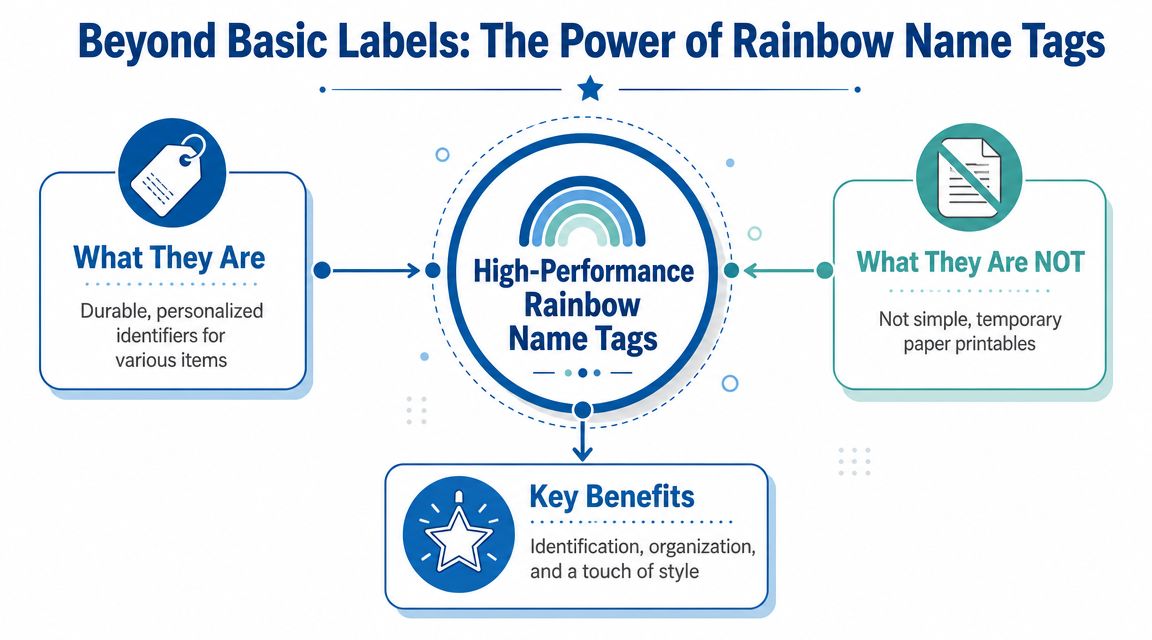
At their best, rainbow name tags are durable, personalized identifiers for the items your child uses every day. They are not just paper labels for desks, cubbies, or first-day photos. Think of them as color-coding for your child's whole routine.
That matters because the rainbow motif is already widely recognizable. The rainbow flag's broader cultural visibility predates modern classroom label trends. The first rainbow pride flag was designed in 1978 by Gilbert Baker, first flown on June 25, 1978, and the now-common six-stripe version became widely established over time. Britannica notes that by 1994, the 25th anniversary of the Stonewall riots, the rainbow flag was “firmly established” as a symbol of LGBTQ pride in the wider culture, which helps explain why rainbow stripes read so quickly and distinctly across everyday products (Britannica's history of the rainbow flag).
What they do for kids
For young children, rainbow name tags create a shortcut. Before a child can read every letter of their name confidently, they can often learn, “Mine is the one with the rainbow stripes and the bus icon,” or “Mine is the one with the purple side.” That kind of recognition builds independence.
It also encourages ownership. Kids are more likely to put away and keep track of something they can identify quickly.
What they do for adults
Teachers and daycare staff are usually sorting a lot of similar-looking items at once. A bright, personalized tag gives them one less mystery to solve. Parents feel that benefit later, when the right sweatshirt comes home.
If you're labeling gear for younger children, name tags for preschoolers are worth reviewing because preschool labeling needs are different from classroom desk labels. The focus should be daily-use items, not just decor.
What they are not
A lot of rainbow name tags sold or shared online are temporary by design.
- Not built for bottles: Paper printables may look charming, but moisture gets to them quickly.
- Not meant for laundry: Adhesive alone won't solve every fabric use case.
- Not ideal for hand-me-down gear: Some tags look nice for a week and then curl, crack, or smudge.
When parents talk about rainbow name tags, they're often really looking for a labeling system that helps a child move through daycare, preschool, and early elementary life with fewer mix-ups.
Choosing Labels That Survive Childhood
Durability matters more than design variety. A beautiful label that fails after regular use creates the same problem all over again, except now you've spent time applying it too.
That's the big gap in most content around rainbow name tags. The dominant search results usually frame them as teacher resources for desks and first-day-of-school use, but rarely answer whether they hold up under dishwasher cycles, washing machines, lunchbox moisture, or backpack abrasion. That leaves out the parent's real need for long-life labels on bottles, clothing, and gear, which you can see in the classroom-focused framing of Teach Starter's rainbow name tags resource.
What dishwasher-safe should mean to you
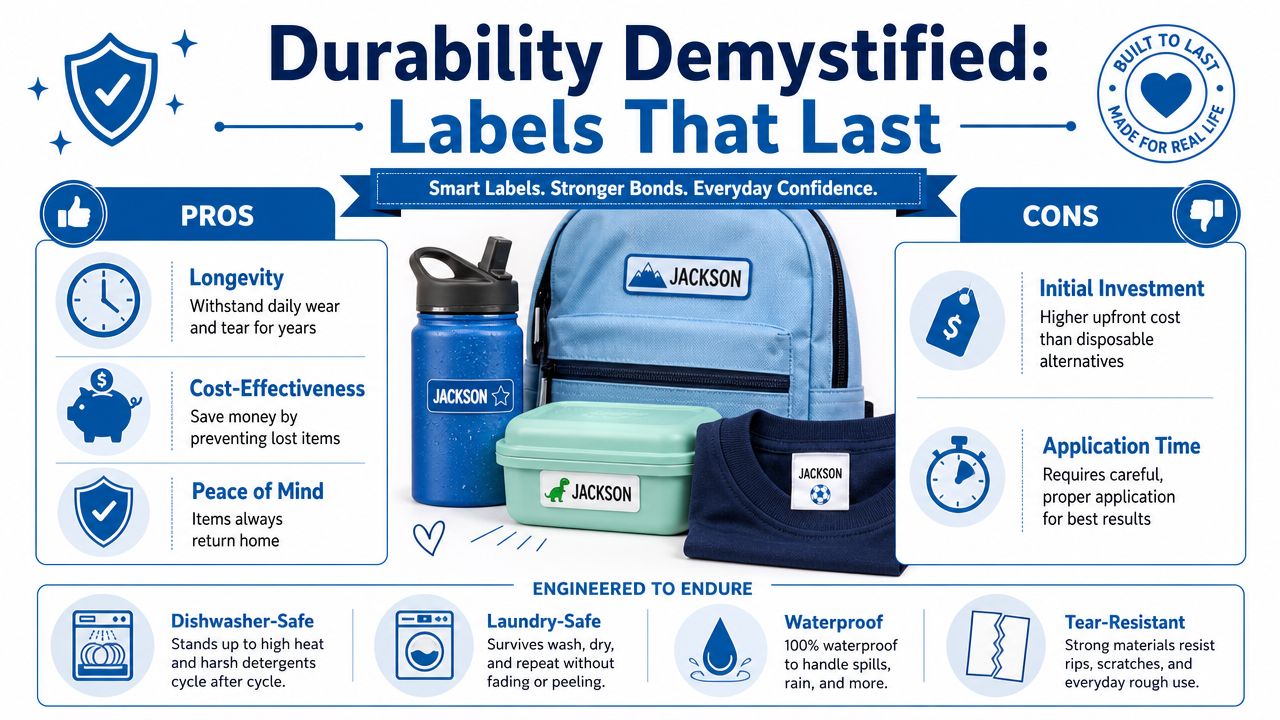
For a parent, dishwasher-safe shouldn't be a vague comfort word. It should mean the label stays readable and attached through normal, repeated cleaning on the kinds of cups and containers your family uses.
The same goes for laundry-safe and waterproof. Those terms only matter if the label keeps doing its job after friction, moisture, soap, heat, and routine handling.
A good working test is simple. Ask what the item goes through in a normal week.
| Item | What it faces | What the label needs |
|---|---|---|
| Water bottle | Washing, gripping, drops | Strong adhesion or secure band-style identification |
| Lunchbox | Moisture, wiping, crumbs | Surface durability and clear print |
| Jacket | Folding, rubbing, laundering | Fabric-specific labeling method |
| Shoes | Sweat, bending, repeated wear | Secure fit and abrasion resistance |
What usually fails first
Paper-style labels and basic printables tend to break down fastest on high-contact items. They're fine for one-time events, desk spots, or temporary bins. They're a poor fit for the gear that leaves the house every day.
Common failure points include:
- Edges lifting: Once a corner lifts, water and dirt get underneath.
- Ink fading: A colorful design isn't helpful if the child's name becomes hard to read.
- Wrong material for the surface: A smooth bottle, fabric tag, rubber sole, and lunchbox shell all behave differently.
A label should match the item, not just the color scheme.
What works better
Parents usually need a mix, not one universal format.
- Adhesive labels: Good for smooth, hard surfaces like bottles, food containers, and supplies.
- Clothing-specific labels: Better for garments, especially when laundry is involved.
- Reusable bands or tags: Useful when you want identification without committing adhesive directly to the item.
If you're comparing options for drinkware and lunch gear, dishwasher-safe name labels are the category to look at, not generic printable name tags. One example in this space is InchBug, which offers labels and reusable bottle identifiers designed for repeat washing and daily handling.
The trade-off is straightforward. Durable labels usually cost more up front than disposable ones. But if they stay readable and attached through everyday family life, they save the replacement cycle that frustrates parents most.
Creative Customization and Color-Coding Ideas
Once durability is handled, customization becomes useful instead of just decorative, allowing rainbow name tags to do real organizational work for a busy household.
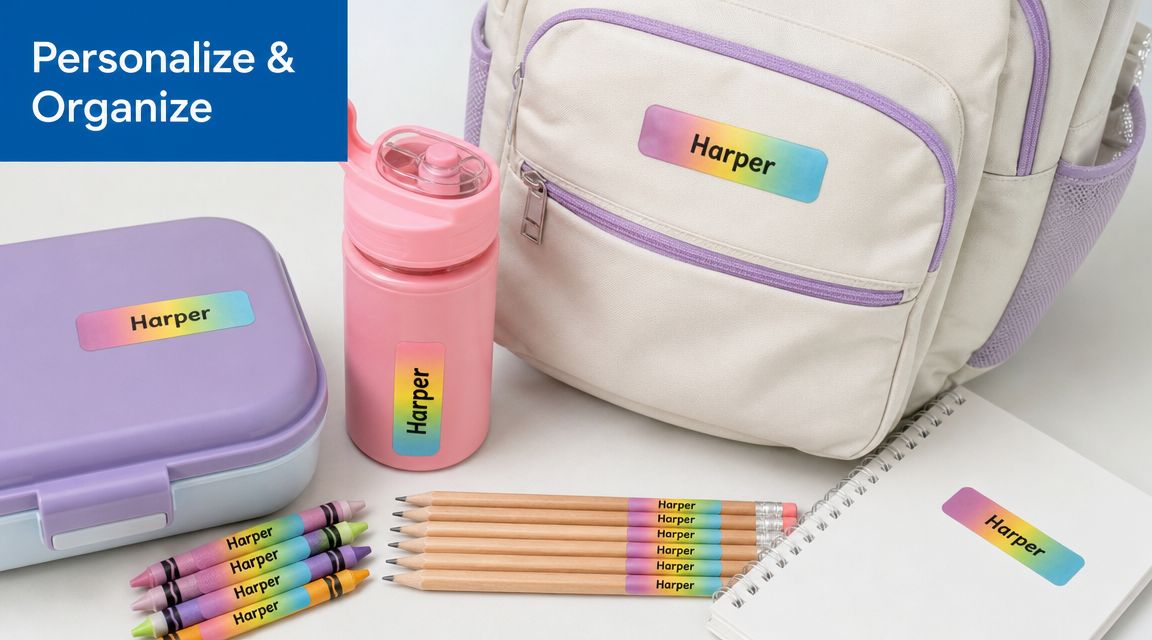
A rainbow theme gives you more than one color to play with, so you can assign meaning to it. In a family with multiple kids, that's useful fast. One child gets warm tones, another gets cool tones. Or one child gets rainbow labels with a star icon, while another gets rainbow labels with a dinosaur or heart.
Smart ways to color-code
You don't need a complicated system. The systems that stick are the ones you can remember when you're packing lunches half awake.
- By child: Give each child a dominant color family or icon so siblings' items never get mixed.
- By category: Use one style for drinkware, another for food containers, another for clothing.
- By destination: Daycare gear can look different from camp gear or sports gear.
For some families, category coding works better than child coding. If all lunch items use one style and all clothing tags use another, anyone helping in the morning can sort quickly.
Make the label readable first
A lot of rainbow products focus on brightness and editability, but that still leaves a key question unanswered. Are they easy for kids to read and recognize?
Current listings in the category still tend to prioritize design variety over inclusive usability, which creates a practical opening for parents who want labels that are both cheerful and legible, as seen in the rainbow name tag listings on Teachers Pay Teachers. The important design choices are contrast, font clarity, and icon support, especially for young children and those with visual impairments.
What helps most
- Choose simple fonts: Clean letterforms beat fancy script every time on a small label.
- Use strong contrast: A rainbow background can still work if the name sits on a clear, readable field.
- Add an icon: A shoe, rocket, animal, or heart helps pre-readers identify belongings faster.
- Keep the name short when possible: If your child has a long name, consider whether first name only is more usable on tiny items.
Helpful reminder: A rainbow palette doesn't automatically improve visibility. Contrast and legibility do.
If your child enjoys color-based routines, that same logic can carry into reading and play. A fun companion idea is a color-rich activity like the new Space Ranger Fred book, which can reinforce color recognition in a low-pressure way.
For more label style ideas, customized name tag stickers can help you think through combinations of names, icons, and formats without defaulting to whatever looks cutest on the screen.
Smart Labeling for Allergies and Safety
Some labels are about convenience. Allergy labels are about clarity when another adult is caring for your child.
A bright rainbow design can help here because it stands out fast, but the visual appeal should never compete with the message. If the point is to communicate an allergy alert, the most important parts are visibility, plain wording, and consistent placement.
Where to place safety-focused labels
The right location matters almost as much as the label itself.
- Lunchboxes: A visible spot on the outside helps staff notice it before food is opened.
- Water bottles: Useful when bottles travel with the child throughout the day.
- Medicine or comfort-item pouches: Helpful for quick identification in a shared storage area.
If your child's care setup includes multiple handoffs between teachers, aides, aftercare staff, or relatives, consistency helps. Put the alert in the same general location on every item.
What to include and what to skip
Keep the wording direct. A cluttered label is harder to process quickly.
A simple approach works well:
- Child's name
- Allergy alert wording
- A clear symbol if your setting recognizes it
Don't treat a label as a replacement for school paperwork, medical forms, or direct communication. It's a visible backup layer. That layer matters.
If this is part of your routine, how allergy alerts can help keep your child safe offers examples of how families use labels to support caregivers without relying on memory alone.
When adults are moving fast, the clearest label is the one they'll notice and understand immediately.
How to Apply and Care for Your Name Tags
Even a durable label can fail early if it's applied in a rush. Most problems start before the item ever reaches school.
A simple application routine
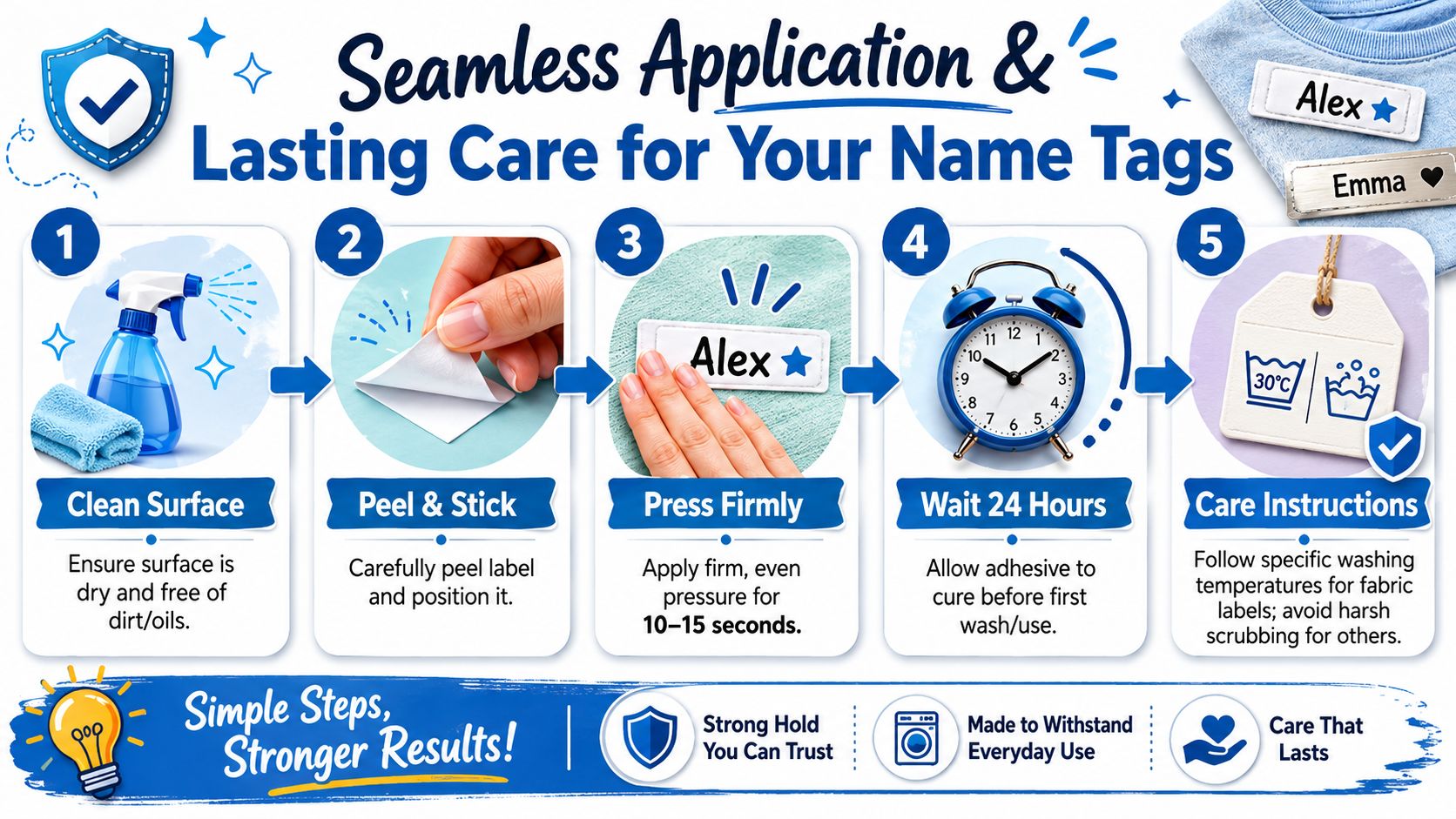
Use this checklist and you'll avoid most common problems.
-
Clean the surface
Wipe away crumbs, soap film, lint, and skin oils. The surface should be dry before you start. -
Match the label to the item
Don't put a general adhesive label where a clothing label or reusable tag is the better fit. -
Press firmly
Smooth from the center outward so air doesn't get trapped at the edges. -
Let it sit before heavy use
If the product instructions say to wait before washing or wearing, follow that. Rushing this step is a common reason labels peel early.
Care habits that help labels last
The goal isn't to baby the label. It's to avoid unnecessary stress on it.
- Avoid picking at corners: Kids do this absentmindedly, especially on bottles.
- Skip harsh scrubbing on the printed area: Clean around it when possible.
- Check fabric instructions: Clothing labels often work best when applied exactly as directed.
If you're labeling shirts, jackets, or uniforms, iron-on nametags are worth reviewing before you start, because fabric labeling has different rules from bottle or lunchbox labeling.
A little patience during application usually means fewer replacements later.
Your Rainbow Name Tag Questions Answered
Are rainbow name tags safe for items kids handle all day
That depends on the product and the intended use. For drinkware, clothing, lunch gear, and bags, use labels made for those specific surfaces and follow the product instructions. If an item often ends up near your child's mouth, choose a labeling format designed for that kind of repeated daily handling.
Can I remove labels later for hand-me-downs
Sometimes yes, but it depends on the label type and the surface. Reusable tags and bands are the easiest to transfer. Adhesive labels vary. Some remove cleanly, while others leave residue or are meant to stay in place long term. If hand-me-down flexibility matters, choose that on purpose before labeling everything.
How many should I order
More than you think you need, but not randomly. Start with the gear your child uses every week: bottles, lunch containers, shoes, jackets, backpacks, nap items, and any special pouches. Combo packs often make sense because families rarely stop at just one bottle and one sweater.
If you're ready to stop relabeling the same items over and over, InchBug is a practical place to compare personalized options for bottles, clothes, shoes, bags, and allergy alerts. The goal isn't just a cute label. It's getting your child's things home again with less effort from everyone involved.