

By lunch on the first week of kindergarten, many kids are already running low. They have followed new rules, managed a noisy room, and spent hours away from home. Opening a lunch box and finding a short note from you can give them a familiar moment in the middle of a very new day.
That small ritual works best when it stays simple. Kindergarteners usually respond to a quick sentence, a doodle, a sticker, or a silly joke more than a long message they cannot read on their own yet. A note should feel comforting, not like extra work tucked beside the grapes.
I have found that the challenge is not writing one sweet note. It is keeping the habit easy enough to last past the first exciting week. That is why this guide does more than round up popular lunch box note packs. It also helps you choose a style that fits your child, your mornings, and the way lunch goes at school.
Some children love opening a folded note with a sticker seal. Some prefer bright pictures and simple words. Some want jokes. Some picky eaters do better with a note that keeps lunch positive and low-pressure, especially if they already feel watched over what they eat. If you want ideas for why parents tuck notes into lunch boxes in the first place, the answer is usually the same. It is a small connection point that can make the school day feel more manageable.
The best lunch box notes for kindergarten support that routine instead of complicating it. The picks below cover different formats, price points, and personalities, then the strategy section pulls it together so you can decide how often to send notes, what to write, and how to keep the whole thing realistic.
1. Little Letters for Lunch (Chronicle Books)
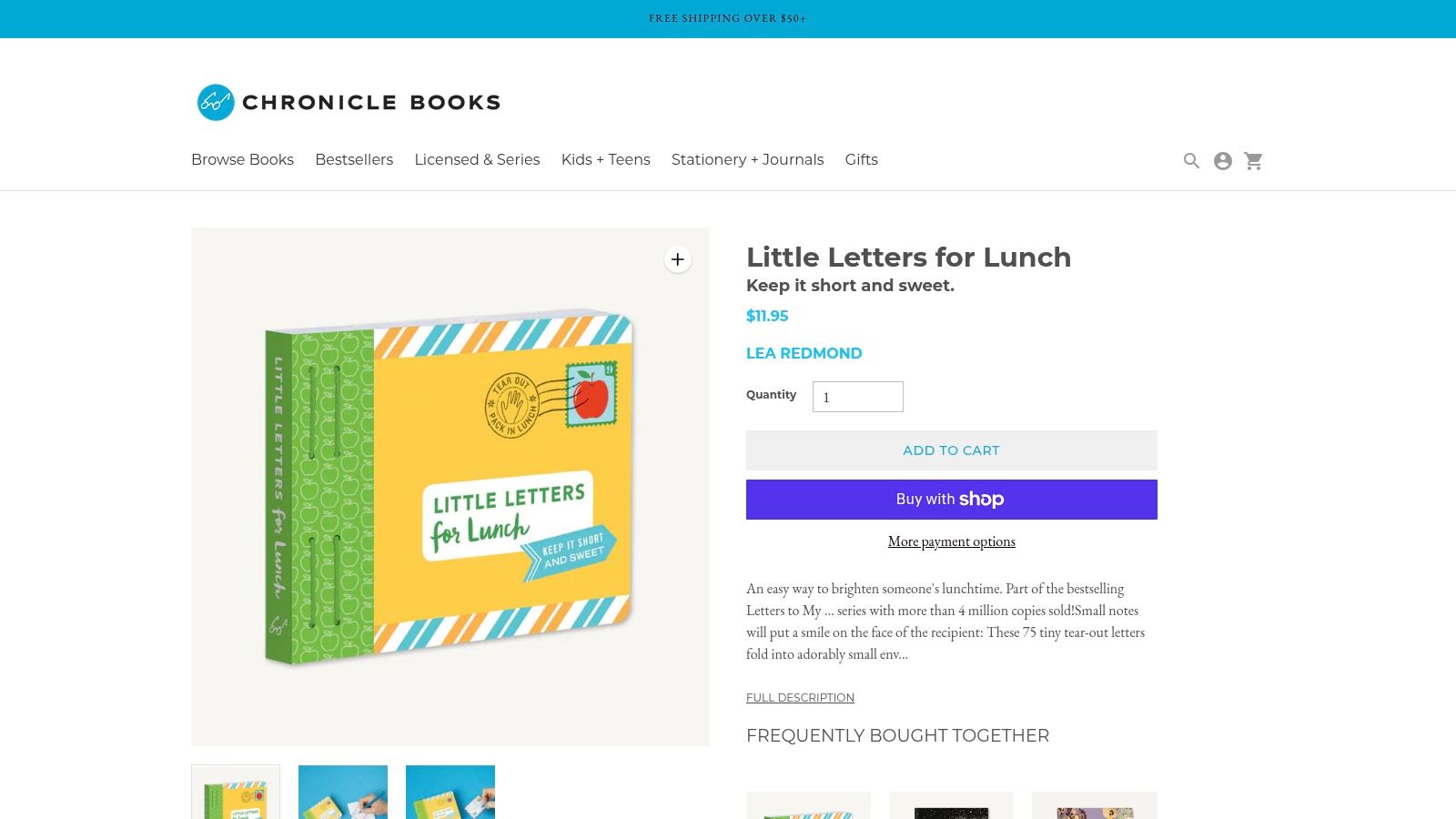
Little Letters for Lunch feels special in a way most flat cards don't. Each note folds into a tiny envelope and seals with a sticker, so your child gets a small reveal before they even read the message. For many kindergarteners, that extra step matters.
The pad includes 75 tear-out notes in a compact 4.5" x 3.5" format. That size slips easily into a lunch bag, bento compartment, or side pocket without taking over the whole lunch.
Why it works for kindergarten
This set matches how younger children process notes. Short messages are easier to decode, and the envelope format makes the note feel like a little delivery instead of just another paper square. If your child is still sounding out words, this is one of the easier styles to use well.
Practical rule: Keep your message to one warm sentence. “You are brave.” or “I can't wait to hear about recess” lands better here than a full paragraph.
A few real trade-offs stand out:
- Best for short notes: The writing space is tiny, so it's great for simple encouragement and not great for storytelling.
- Easy to keep going: With 75 notes in one pad, it supports a regular routine without constant restocking.
- Single-use paper: If your lunch box tends to get damp from condensation, these won't hold up like laminated cards.
If you like the emotional side of this ritual, InchBug's article on notes in lunch boxes pairs nicely with this style because it leans into connection over perfection.
This is the set I'd pick for a child who loves opening tiny things, enjoys pretend mail, or gets excited by stickers. It's less ideal if you want lots of room to personalize every note.
2. Lunch Box Notes for Kids – Set of 60 (Peter Pauper Press)
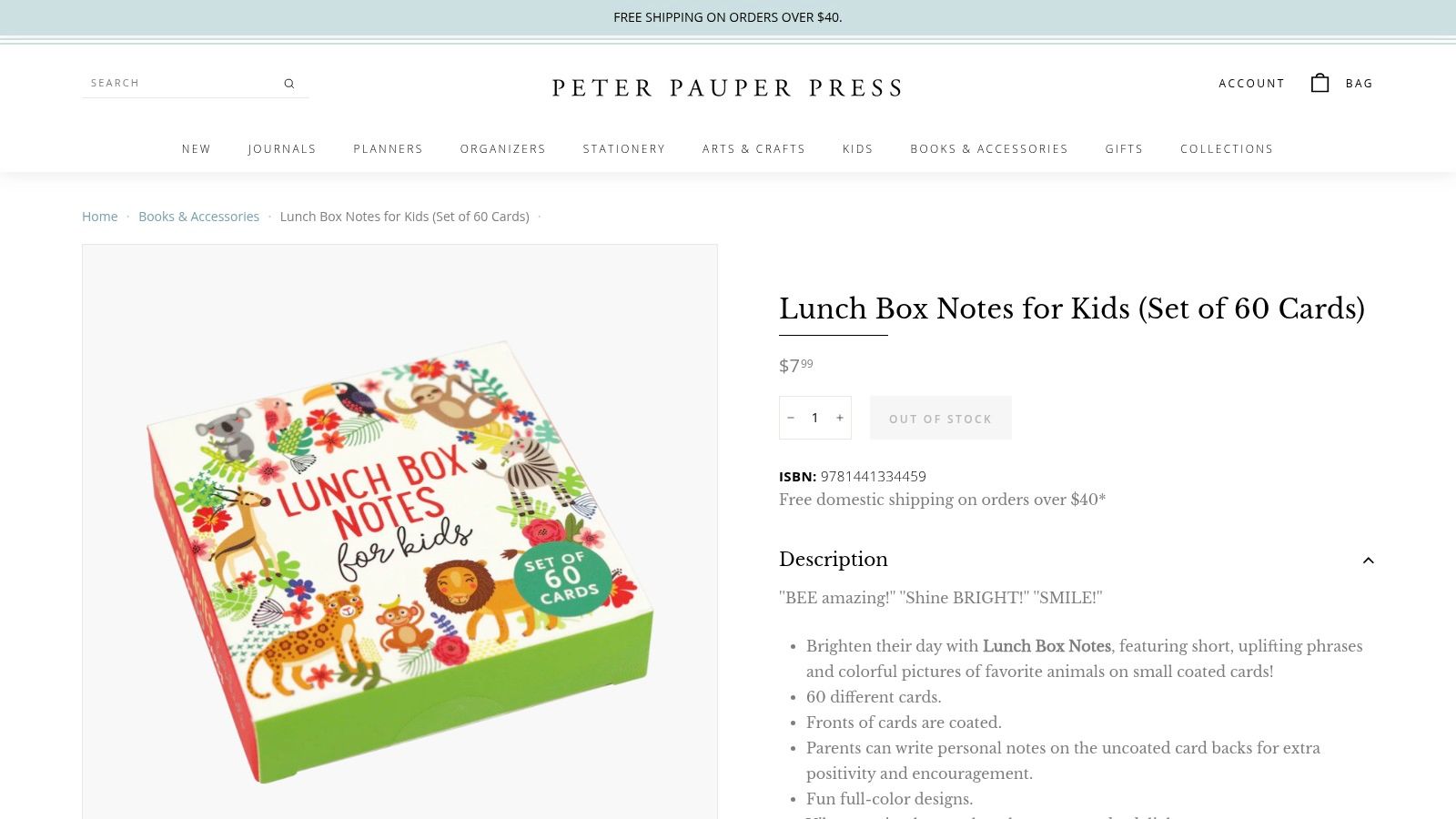
Some mornings, you need a note that feels thoughtful without asking you to create one from scratch at 6:45 a.m. Peter Pauper Press Lunch Box Notes for Kids fits that job well. The front already feels cheerful and finished, and the writable back gives you room to make it personal in less than a minute.
You get 60 square cards with rounded corners in a reusable storage box. I like that detail more than I expected to. A boxed set is easier to keep near lunch containers, ice packs, and napkins, which matters if you're trying to turn lunch notes into a routine instead of a once-in-a-while gesture.
Best for parents who want a fast routine that still feels personal
The standout feature here is the art. The animal designs give kindergartners something to notice right away, even on days when they are too distracted or too tired to focus on every word. For younger kids, that visual cue helps the note feel friendly before they even start reading.
The back gives you enough room for what works best at this age. A name, a heart, a quick joke, or one specific line such as “Good luck at centers today” is usually plenty. If you are trying to build a low-stress system, printable lunch box notes for kids can also be useful as backup for weeks when you run through preprinted cards faster than expected.
A few trade-offs are worth considering:
- Easy to use regularly: The card format is quick to grab and quick to write on.
- Kid-friendly design: Bright animal artwork keeps the note interesting for early readers.
- Limited variety over time: Some messages may start to feel familiar if you pack a note every single day.
- Best for short additions: The writable space works for one warm sentence, not a long story or detailed reminder.
This set works especially well for families who want the full lunch note habit to stay simple. You get the convenience of a ready-made pack, but you still have enough space to add the personal detail that makes a child feel seen. For kindergarten, that balance is often what keeps the routine going.
3. Lunchbox Notes for Kids (Blue Star Press, by Korie Herold)
A long school week goes more smoothly when the note stack is already handled. Lunchbox Notes for Kids by Korie Herold is a practical pick for families who want that kind of routine. The box includes 180 cardstock cards at 3" x 4", so you can use them often without running out a month in.
The size is the main advantage here. These cards feel easy for small hands to manage, and the extra space gives you room to write something your child will connect with, like “I know the bus felt hard this morning” or “Have fun at music today.” That matters in kindergarten, where a note works best when it feels specific and easy to understand.
Best for parents who want to prep ahead
This set fits well into a weekly system. I like larger packs for parents who want to write several notes at once, tuck them near lunch supplies, and stop thinking about it on rushed mornings. The cards are sturdy enough to survive a lunch bag that gets shoved into a cubby or bounced around on the bus.
A few trade-offs are worth knowing before you buy:
- Plenty of writing room: Helpful if you want to add one personal sentence instead of relying only on the printed front.
- Good value over time: 180 cards can cover a full school year, even if you use them several times a week.
- Takes up more storage space: This is a box you need to keep in a real spot, not a crowded junk drawer.
- Can feel repetitive if used daily: With any preprinted pack, it helps to mix in your own words and skip days when a note is not needed.
If your child starts wanting more variety, printable lunch box notes for kids make a good backup. They are useful for theme weeks, holiday lunches, or stretches when your kindergartner suddenly decides only dinosaur cards are acceptable.
This set works best for families who want lunch notes to become an easy habit instead of another morning task to remember from scratch.
4. ThoughtFulls for Kids You're Amazing (Compendium)
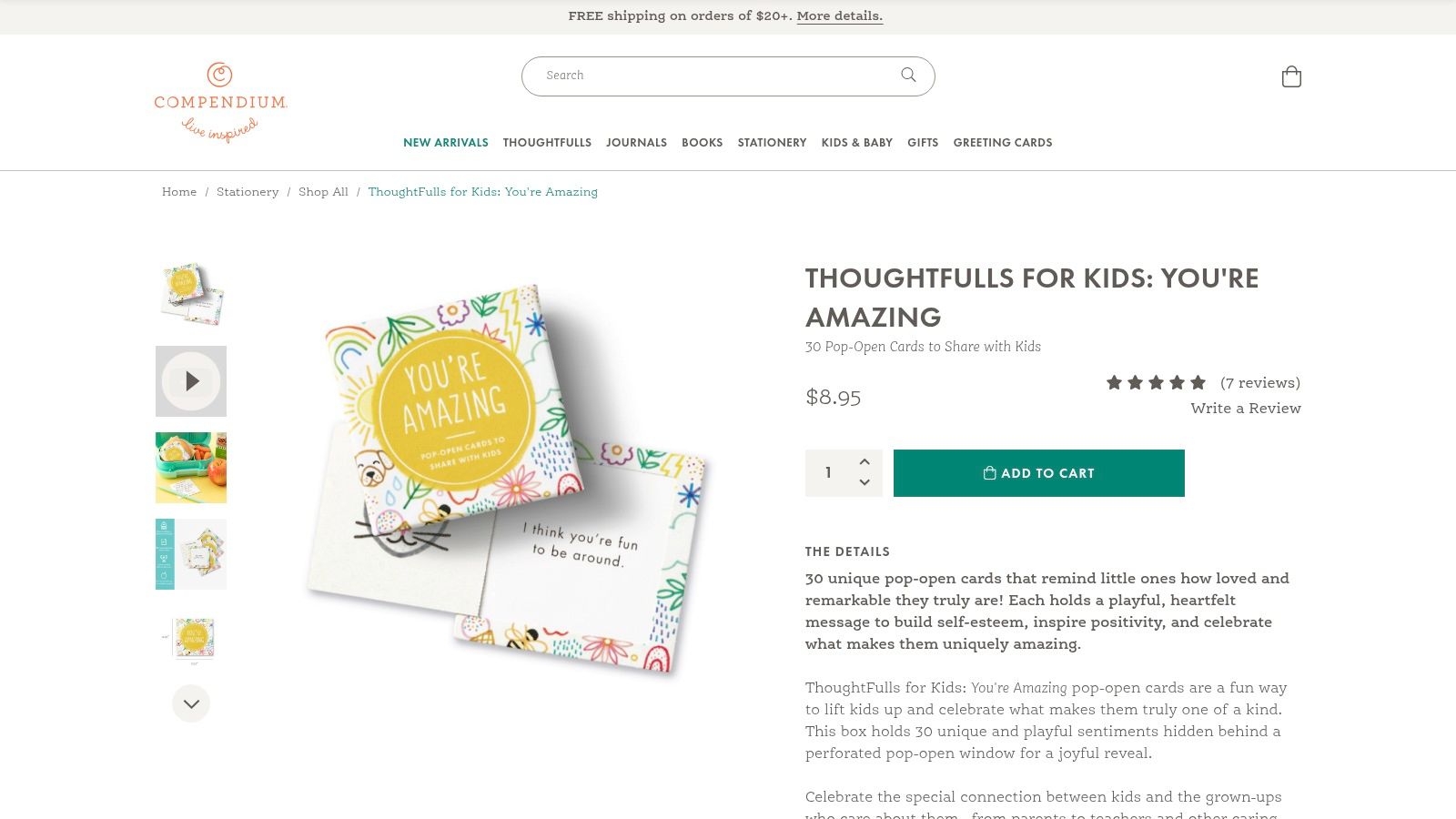
ThoughtFulls for Kids: You're Amazing doesn't feel like a standard lunch note set. Each mini card has a perforated window your child pops open to reveal the hidden message inside. That tactile part makes a difference for kindergarteners who like hands-on surprises.
The cards are compact at 2.25" x 2.25", and the box includes 30 unique messages focused on confidence, kindness, and encouragement. If your mornings are hectic, the ready-to-use format is the biggest selling point.
Best for very busy mornings
There's no pressure to write anything. You can slide one in and be done. For some parents, that's the difference between using lunch box notes and meaning to use them.
This set is especially helpful if your child responds well to novelty. The pop-open action creates a little ritual at lunch time.
- Low effort: No writing required.
- High engagement: Opening the window is fun and memorable.
- Limited personalization: There isn't much room to make the note feel specifically yours.
That last point matters. Some children are perfectly happy with a sweet prewritten message. Others really want to see your handwriting, their nickname, or a little heart drawn in the corner. If your child falls into the second group, this may work better as an occasional rotation item than your main set.
A note doesn't have to be long to feel personal, but it usually helps if your child can tell it came from you.
This is a nice pick for families who want a polished, giftable set and need something completely grab-and-go.
5. Boxed Lunch Notes & Affirmation Cards (Papersalt)
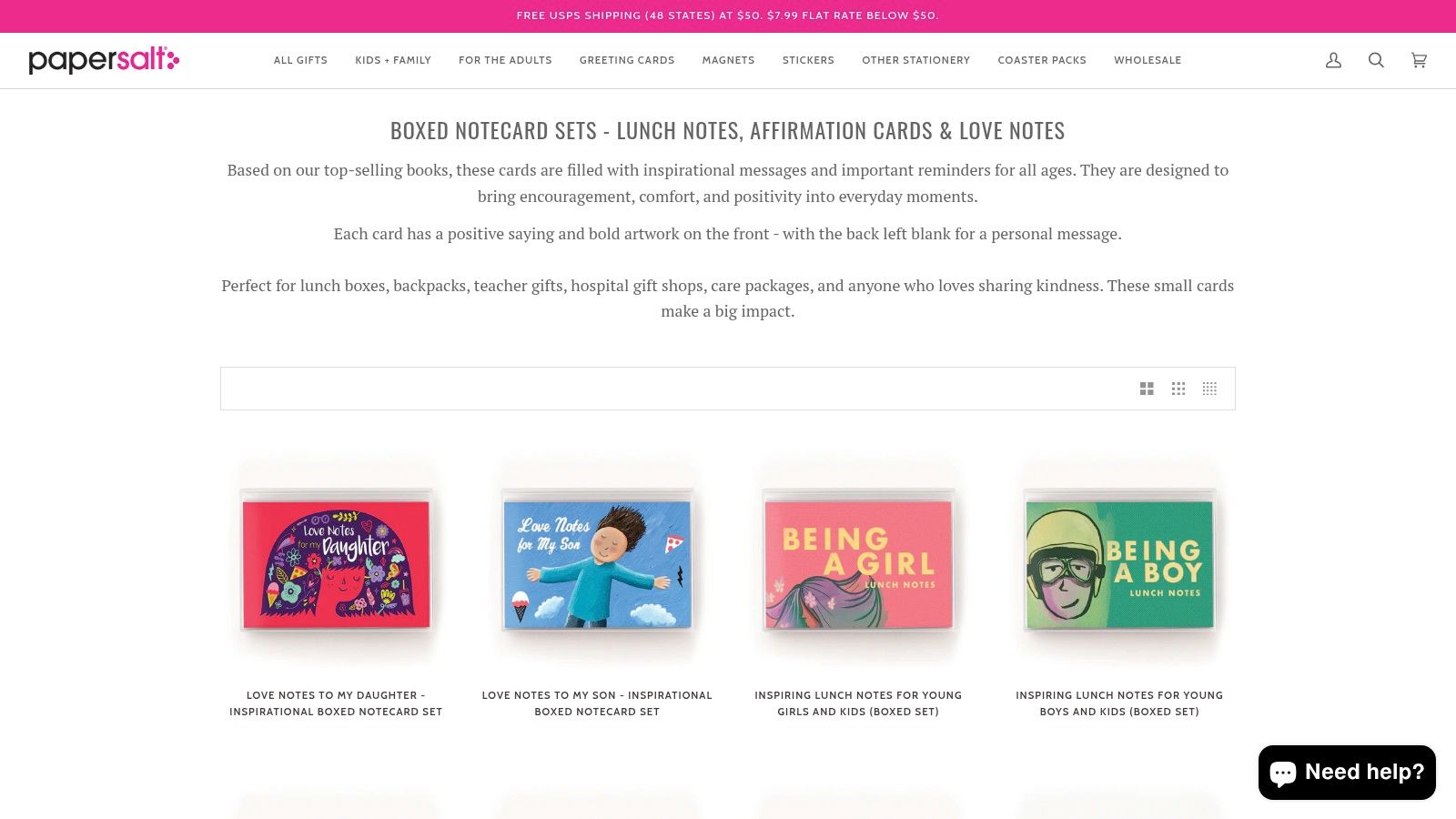
Some kindergarteners notice details. If the card has animals, colors, or a style they already love, they are more likely to pull it out, read it, and keep it. That is where Papersalt lunch notes and affirmation cards have an edge. The boxed sets come in different themes, so the note can feel chosen with your child in mind instead of pulled from a random stack.
That matters more than it sounds. A note routine works best when the child looks forward to it, and themed cards can help create that habit. Papersalt also gives you a useful middle ground. The front already carries the design and encouraging message, while the blank back leaves space for your own handwriting.
Best for specific encouragement
I like this set for families who want lunch notes to support a child's sense of self, not just cheer on good behavior or school performance. A quick line like “You are a kind friend” or “I love how curious you are” goes further than a generic “Have a good day,” especially for kids who need a steady confidence boost at lunch.
The trade-off is simple. These work best if you are willing to spend ten extra seconds personalizing the back. Without that, they can still feel a little polished and prewritten. With a nickname, a doodle, or a one-line reference to something that happened at breakfast, they land much better.
A few practical notes:
- Strong theme options: Helpful for kids who connect with certain interests, colors, or moods.
- Blank back for personalization: Easy to add your own short message without starting from scratch.
- Good for rotation: Works well as part of a larger lunch note system, not just a one-pack solution.
- Availability can vary: Some designs sell out seasonally, so your favorite set may not always be in stock.
If you want the whole lunch routine to feel easier, pair your note habit with a few stress-free school lunch packing tips. Notes are more likely to happen when the rest of lunch prep is simple.
This set is a strong pick for parents who want lunch box notes for kindergarten to feel warm, intentional, and easy to personalize without writing every card from scratch.
6. Lunchbox Love Notes (Lovebox America), Washable/Reusable
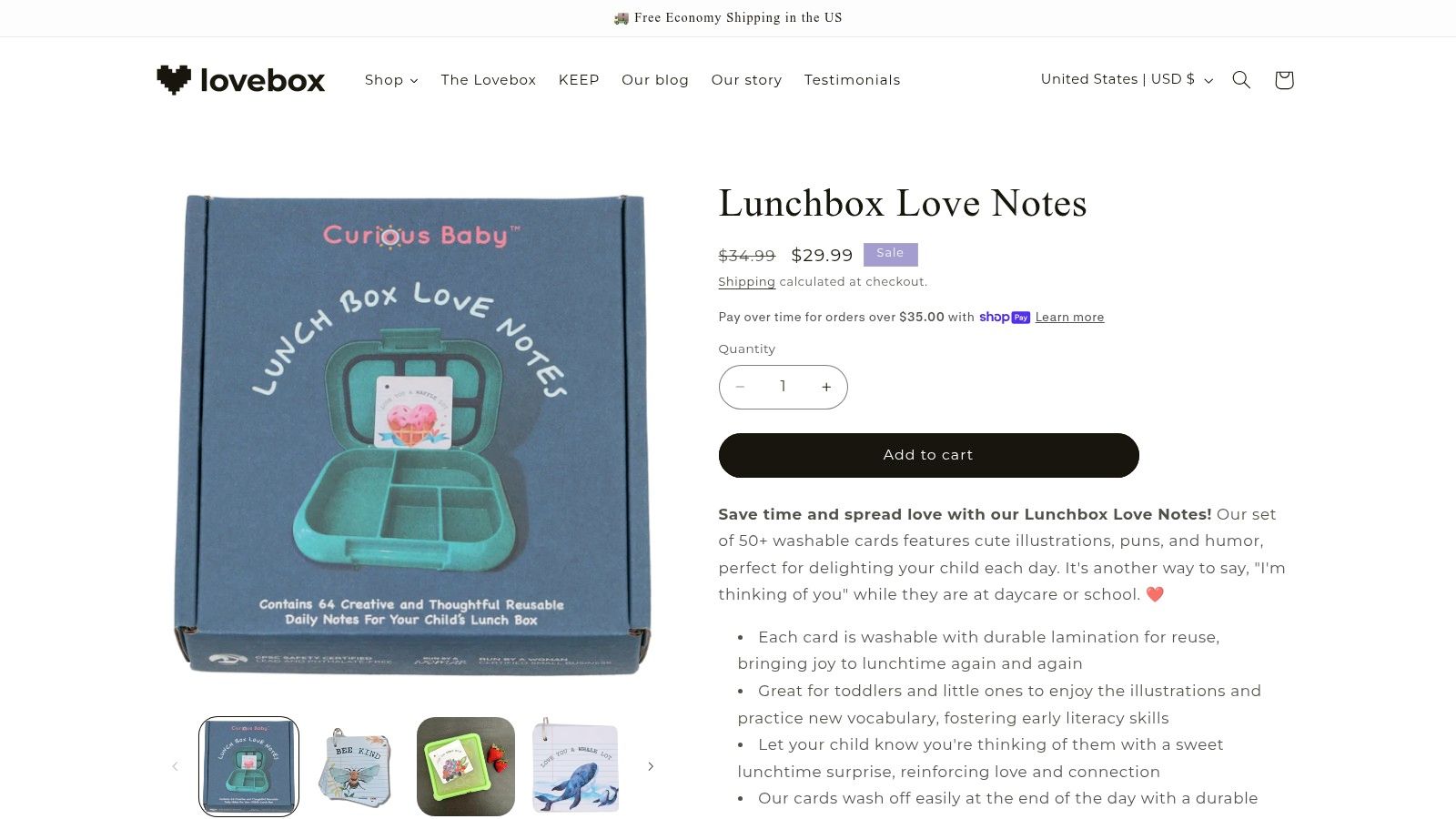
If your child's lunch box comes home sticky, damp, or covered in cracker dust, reusable cards start to make a lot of sense. Lunchbox Love Notes from Lovebox America is built around that reality with laminated, washable cards designed for repeated use.
This is the most practical option in the roundup for families who hate waste or who don't want notes ruined by applesauce leaks and melted ice packs.
The durable option
The big strength here is simple. You wipe the card and use it again. For some households, that's easier than remembering to keep buying fresh packs.
That practicality lines up with broader lunch gear trends. In the kids' lunch kits market, convenience-driven features, including personalization readiness, account for over 40% of new product adoption, according to Market Intelo's kids' lunch kits market report. Parents want things that are easy to maintain and easy to use.
A few honest trade-offs:
- Excellent for messy lunches: Lamination is forgiving.
- Long-term value: Better fit if you use notes often.
- Less flexible for custom writing: The product isn't meant for dry-erase personalization.
For smoother mornings overall, InchBug's stress-free school lunch packing tips pair well with this kind of reusable system.
This is my favorite style for kids who carry lunches in hard-working, well-loved lunch bags and for parents who want one less disposable thing in the school routine.
7. Pun-Filled Jokes Lunch Box Notes (Amanda Creation)
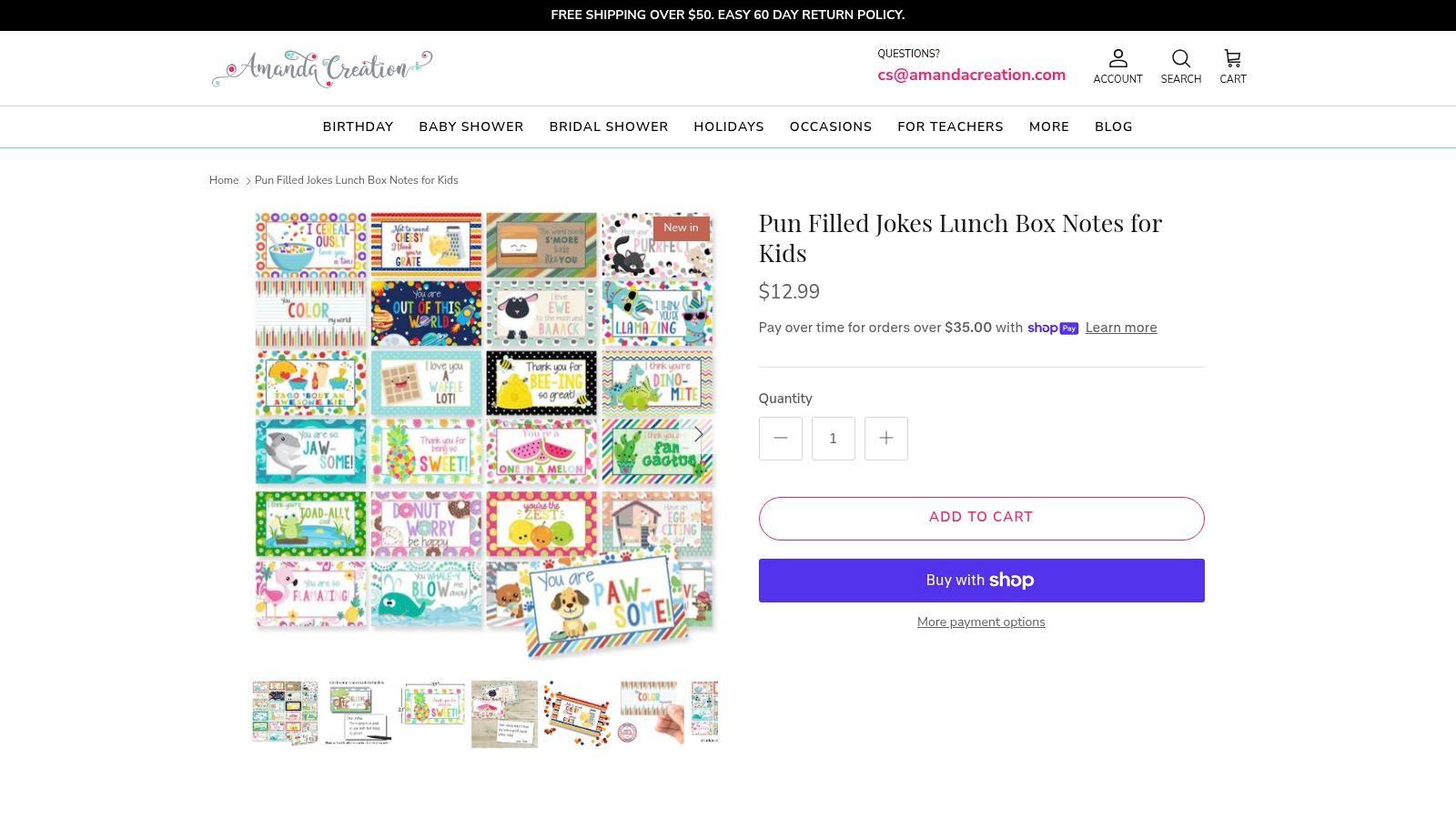
Some children don't want sweet. They want funny. Amanda Creation's Pun-Filled Jokes Lunch Box Notes leans hard into humor, with 25 small joke cards printed on 80# cardstock and blank backs for a custom line.
That humor-first angle is useful for kindergarteners who get shy about emotional language but still love feeling seen. A silly note can build connection without making the lunch box feel too serious.
Best for kids who respond to laughter
Interactive or playful note styles can do more than entertain. Your Teen Magazine's lunch box notes article reports that interactive lunch box notes featuring word games, mazes, codes, or trivia can boost kindergarten students' emotional security and school-day engagement by 22% to 35%. Joke cards aren't the same as a maze, but they draw from the same idea. Play creates connection.
This set works well when you want to keep the mood light.
- Memorable tone: Jokes make the note feel different from standard affirmations.
- Good tuck-in size: Small enough to slip beside snacks or utensils.
- Shorter lifespan: A 25-count pack goes quickly if your child wants one every day.
One more practical point matters here. Parents.com's lunch note ideas article points out a real social anxiety gap around loud, highly visible notes and suggests more discreet placement, such as inside napkins, under sandwich wraps, or taped to the lid. That advice is especially smart for joke cards if your child likes the note but doesn't want to make a big public show of it.
These are a great match for kids who love riddles, puns, and surprise laughs more than heartfelt one-liners.
7-Item Comparison: Kindergarten Lunch Box Notes
| Item | Complexity 🔄 | Resources ⚡ | Expected outcomes 📊⭐ | Ideal use cases 💡 | Key advantages ⭐ |
|---|---|---|---|---|---|
| Little Letters for Lunch (Chronicle Books) | Very low, tear-out & fold; sticker seals | Minimal, pocket pad, 75 single-use sheets | Encourages daily habit; surprise envelope boosts engagement | Daily quick notes in lunch bags; emergent readers | High note count; fun envelope reveal; compact |
| Lunch Box Notes for Kids – Set of 60 (Peter Pauper Press) | Low, ready cards, no prep | Moderate, 60 coated fronts/uncoated backs, storage box | Strong visual engagement for pre-readers; easy personalization | Early readers, quick handwritten lines, visual learners | Bold artwork; affordable per card; reusable box |
| Lunchbox Notes for Kids (Blue Star Press, 180 cards) | Low, ready-to-use; larger pack size | Higher upfront, 180 sturdy cardstock cards, bulkier stack | Covers a school year; larger size aids handwriting & handling | Daily use throughout school year; small hands need space | High volume; spacious backs; durable cardstock |
| ThoughtFulls for Kids: You're Amazing (Compendium) | Very low, pop-open, no writing required | Low count, 30 pop-open mini cards, boxed | High tactile engagement; delivers uplifting messages | Busy mornings; tactile/timing surprise moments | Tactile pop-open reveal; ready-to-use; focused affirmations |
| Boxed Lunch Notes & Affirmation Cards (Papersalt) | Low, themed boxed sets, ready-to-use | Variable, themed sets, blank backs, single-use | Themed rotation supports interest; allows personalization | Themed gifting; rotate by child interest; personalization | Multiple themes; blank backs for notes; age-appropriate sayings |
| Lunchbox Love Notes (Lovebox America), Washable/Reusable | Low–moderate, wipe-down routine for reuse | Higher upfront, laminated washable cards, durable | Reduces waste; consistent daily durability and reuse | Families wanting sustainable, reusable lunch notes | Reusable & washable; durable for messy lunchboxes |
| Pun-Filled Jokes Lunch Box Notes (Amanda Creation) | Low, ready joke cards | Limited, 25 cards on 80# cardstock; small-biz made | Humor increases anticipation and reading engagement | Humor-focused kids; supporters of small businesses | Funny-driven engagement; US-made; sturdy cardstock |
Your Complete Lunch Note Strategy
A good note pack helps, but the routine matters more than the product. The most successful lunch note habit is the one that feels easy enough to keep doing on ordinary Tuesdays.
Tips for a joyful lunch note habit
You do not need to send a note every day. Two or three times a week is often plenty, and it keeps the note from blending into the background. Mondays, field trip days, the first week of school, and days when your child seems clingy or nervous are great times to use one.
Keep personalization small and manageable. A preprinted card becomes warmer when you add “Love, Mom,” a smiley face, or a heart on the back. If your child is still learning to read, simple drawings can carry a lot of meaning.
Bright and obvious isn't always best. Some children love showing notes to friends, and some would rather discover them privately.
That's why placement matters. A note on top of the lunch can feel fun for one child and embarrassing for another. Tuck it under a sandwich wrap, fold it into a napkin, or place it under the lunch box lid if your child is more reserved.
School rules can matter too. If your classroom has sharing rules or a teacher who prefers fewer distractions at lunch, it's worth asking what's okay. A quick check avoids confusion.
Helping picky eaters with notes
Notes can help with food resistance when you keep the tone playful. A simple doodle next to a new fruit or vegetable makes it feel less unfamiliar. A note that says, “Tell me if you tried one bite,” works better than pressure.
Quebec health guidance even recommends parents “add a loving note or a motivating message” as part of a healthy kindergarten lunch routine, and that same guidance says presentation can influence eating, with food consumption potentially increasing by up to 15% in reluctant eaters when meals are made more appealing through choices and presentation, according to Quebec public health lunch box guidance.
DIY and printable notes
Homemade notes still work beautifully. Index cards, cardstock squares, or sticky notes can all do the job. Keep your messages short. “You are my sunshine,” “I'm proud of how kind you are,” or “Tell me one fun thing from today” is enough.
Printable notes are helpful if handwriting isn't your thing or you want a faster system. Quebec guidance also notes that printable resources offer over 40 templates designed for kindergarten readers, and using pre-designed printables takes less time per note than handwritten versions in that guidance's comparison, which is one reason many busy families stick with them.
Ultimately, the best lunch box notes for kindergarten are the ones your child will enjoy finding and you can realistically keep using. Pair that note habit with a lunch container your child can open, foods they recognize, and a label that helps everything return home. If you're also planning the food side of the routine, this parents' guide to healthy school lunch snacks is a useful companion read.
A good lunch note routine works even better when the whole lunch setup is organized. InchBug makes it easy to label lunch boxes, water bottles, bags, and other school essentials with durable, kid-friendly personalized labels that hold up to daily use. If you're tired of mix-ups, lost containers, and morning scramble, InchBug is a simple way to make your kindergarten lunch routine feel more manageable.