

You're probably in the same spot many parents hit every October. One costume piece is on the couch, another is in the car, the treat bags still need names, and school or daycare has sent a reminder about allergy-safe snacks. Halloween is supposed to feel fun, but the small details can turn it into a scavenger hunt.
That's where labels for Halloween stop being a cute extra and start acting like a real system. A good label helps a child get the right water bottle back, keeps costume parts together, makes classroom favors easier to sort, and gives teachers a fast way to spot allergy information when the room gets busy.
Why Halloween Labels Matter for Parents
Halloween creates a perfect storm for mix-ups. Kids bring special shirts for spirit week, costume accessories for class parades, labeled cups for parties, and treat containers for after-school events. When all of those items look similar, they get swapped, lost, or tossed into the wrong backpack.
That's why labels for Halloween work best when you treat them as organization tools first, decoration second. A pumpkin sticker is fun. A pumpkin sticker with a child's name, class, and allergy note is useful.
According to The Shelf's Halloween spending infographic, $3.8 billion was spent on personalized holiday items in 2024, and over 182 million Americans budgeted for Halloween candy. That tells you how many items move through homes, classrooms, parties, and front porches during this season. More stuff means more chances for confusion.
Where parents usually run into trouble
A lot of label problems start with ordinary moments:
- Costume parts get separated when wings, capes, masks, and gloves come off during recess or bathroom breaks.
- Treat bags look identical when a teacher stacks them on one table for pickup.
- Water bottles and lunch containers get mixed up at daycare Halloween parties.
- Party favors travel home with the wrong child because nobody can tell whose is whose.
For everyday daycare and school routines, the same logic applies year-round. This guide on why you should label your child explains the bigger habit well: labels reduce guesswork for adults and help kids learn ownership of their belongings.
Practical rule: If an item leaves your house and might be set down in a shared space, it should have a label.
What a Halloween label should do
Parents often assume a label only needs a name. For Halloween, that's usually not enough. A better label system includes:
- Identification so the item returns to the right child.
- Visibility so teachers or caregivers can read it quickly.
- Durability so it survives spills, handwashing, and outdoor use.
- Safety information when treats or materials could cause problems.
When you think of labels this way, they become part of your Halloween plan, just like checking costume fit or packing extra wipes. They save time before the event, reduce confusion during it, and make cleanup easier after it's over.
Creative Label Use Cases for Halloween Celebrations
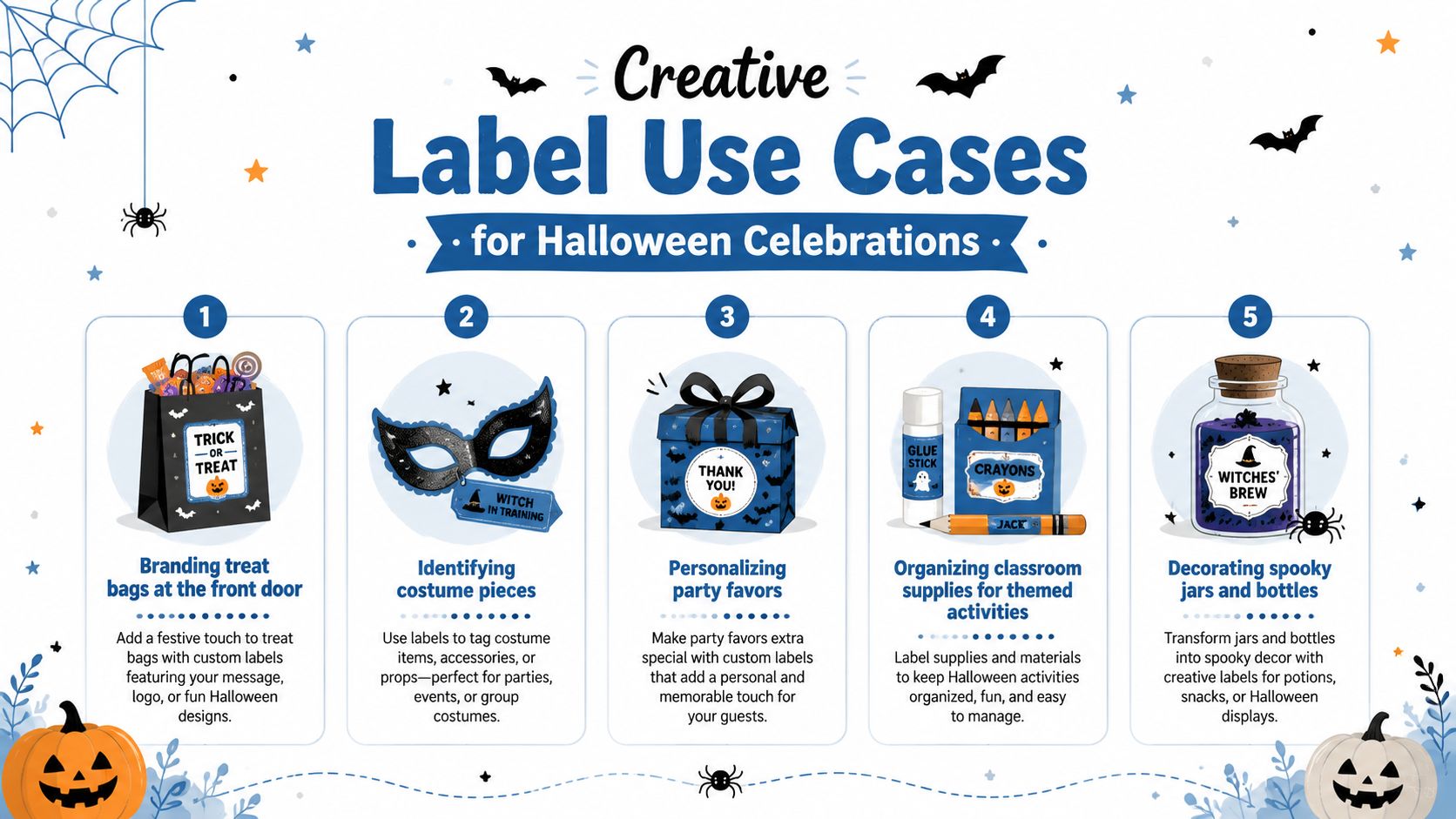
Labels for Halloween can do a lot more than decorate favor bags. They can facilitate the whole event. The trick is matching the label to the moment instead of using one generic sticker for everything.
Front-door treat bags
Some families prep individual treat bags ahead of time rather than handing out candy by the handful. A small label can show a child's name for neighborhood parties, or a short greeting for visitors. That helps if you're setting aside special bags for cousins, neighbors, or kids with different snack rules.
If you want a few non-candy add-ins, browsing collections like Online Gifts Canada for Halloween can spark ideas for small themed items that pair well with labeled bags and favor setups.
Costume pieces that wander off
This is one of the most useful applications. Masks, capes, light jackets, broomsticks, fairy wings, and trick-or-treat buckets rarely stay together all day. A discreet label on the inside seam or underside of an accessory makes it much easier for teachers and caregivers to reunite the set.
Consider the act of labeling lunch containers. Each piece doesn't seem important until one goes missing.
A costume isn't one item. It's a collection of loose parts moving through a very busy day.
Classroom party favors
Party favors often end up in a pile near the door. Personal labels turn that pile into an organized pickup station. Children can spot their own items faster, and adults don't have to read tiny handwriting on folded paper tags.
For more ideas on using labels for events, this post on party labels and favors is especially helpful if you want practical options instead of purely decorative ones.
Themed school supplies
Halloween week often brings special crayons, glue sticks, mini notebooks, or paint shirts. Labels make those temporary supplies easier to assign and collect. This is especially useful for preschool classrooms where multiple children use the same colors and tools in quick rotation.
Spooky jars and bottles at home
Parents also use labels for non-school setups. A labeled jar for glow sticks, a bottle for bubble solution, or a bin for costume makeup keeps prep simpler on a rushed evening. Here, the label acts like a tiny signpost. It tells everyone what belongs where without you repeating instructions.
Materials and Durability Considerations for Holiday Labels
Not every Halloween label is built for the same job. A sticker for a paper favor bag doesn't need the same strength as a label on a water bottle, lunch box, or costume container that gets dropped in the grass and washed later that night.
The material matters because Halloween is rough on labels. You've got damp weather, sticky hands, textured costume fabric, plastic buckets, and quick cleanups.
What makes one label stronger than another
A durable label depends on three things working together:
- The face material such as vinyl or polyester
- The adhesive that grips the surface
- The printing method that keeps text and colors readable
According to 3M's durable label material sheet, UV-stable polyester labels with adhesion energies above 15 N/cm retain tack and print fidelity through seasonal outdoor exposure and 70°C dishwasher cycles when stored between 60°–80°F. For parents, the takeaway is simple: if a label will face water, sunlight, or repeated washing, material specs aren't a technical detail. They're the difference between a label lasting and peeling.
Comparison of Halloween Label Materials
| Label Type | Waterproof | Dishwasher Safe | Reusable | Best Use Case |
|---|---|---|---|---|
| Vinyl sticker labels | Yes, depending on finish | Some are, some aren't | No | Treat containers, plastic buckets, smooth favor packaging |
| Polyester name labels | Yes | Yes, when made for that purpose | No | Water bottles, lunch boxes, snack containers, supply bins |
| Silicone bands | Yes | Yes | Yes | Drink bottles and cups that get reused often |
Polyester and vinyl often sound interchangeable to parents, but they don't behave the same way. Polyester tends to be the better choice when you need a stronger, more durable name label on a hard item. Vinyl is often a good fit for decorative or seasonal use on smooth surfaces.
Silicone bands are different from adhesive labels because they wrap around a bottle instead of sticking to it. That makes them handy when you want a reusable option that can move from one tumbler to another.
Storage matters more than people expect
Parents usually think about application, not storage. But labels can lose performance if they sit in the wrong environment before you ever use them. Heat, direct sun, and high humidity can affect how well an adhesive grabs later.
If you're making a batch of Halloween labels early, keep them in a cool, dry indoor space until you're ready to apply them. Don't leave them in a hot car, garage shelf, or sunny windowsill.
If you're also making porch signs or larger event markers, this ultimate spooky sign guide offers useful inspiration for matching visual style across labels and party signage.
For a broader look at how long labels hold up under stress, label durability testing is worth reading before you choose materials for drinkware or lunch gear.
Design and Personalization Tips to Engage Kids
Children are much more likely to keep track of something that feels like theirs. That's why the best labels for Halloween don't just look seasonal. They help a child recognize their own item quickly.
A good design balances fun and function. If the label is too busy, adults can't read it. If it's too plain, kids ignore it.
Use contrast before you use decoration
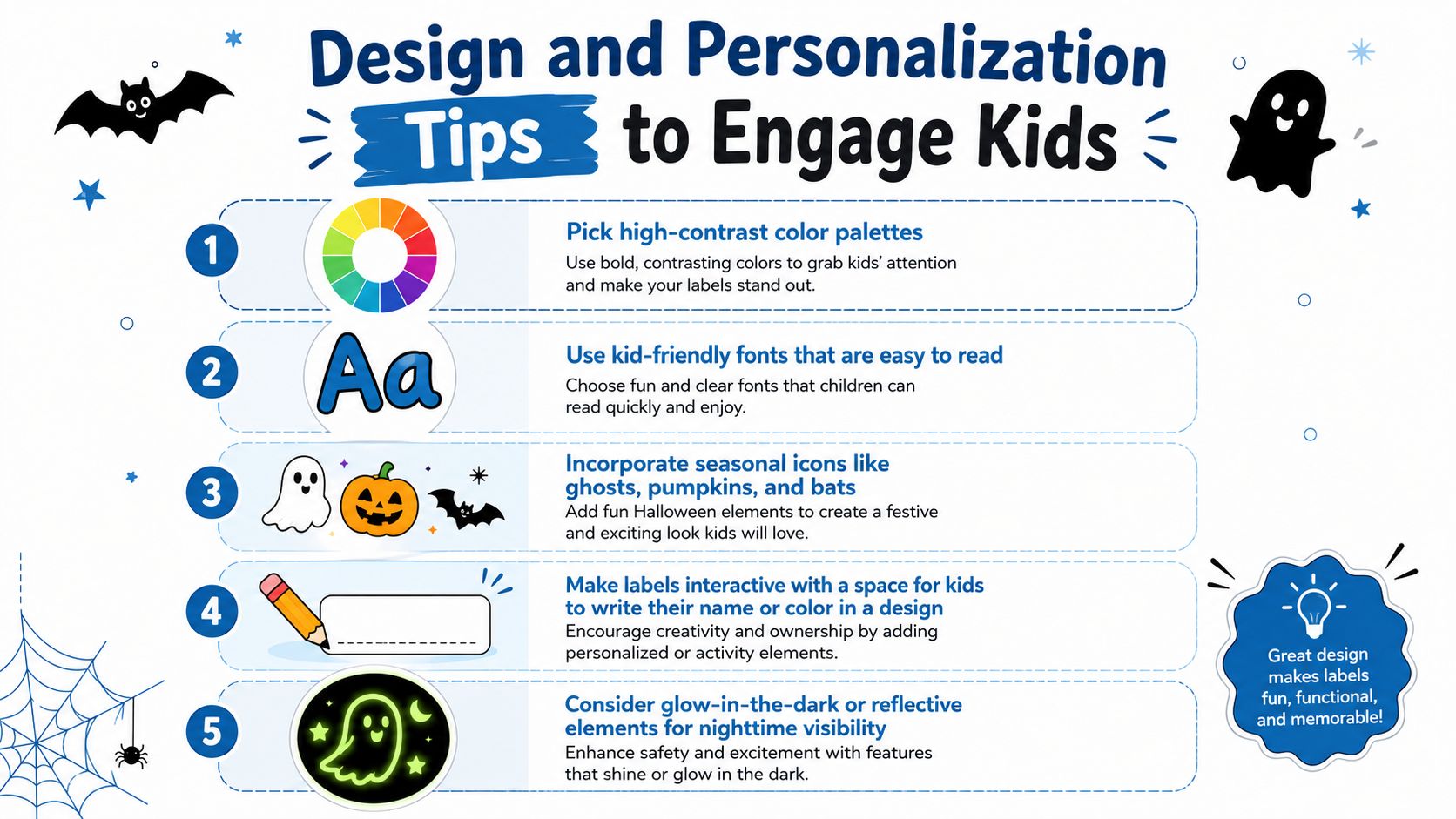
When parents design seasonal labels, they often start with cute backgrounds. Start with readability instead. Orange and black, purple and white, or black and lime can work well if the text stays crisp and large enough to read in dim light.
A child should be able to glance at a label and spot their name without rotating the item three times. Teachers should be able to read it while standing, not squinting over a crowded table.
Choose kid-friendly details that still read clearly
These design choices usually work well:
- Simple fonts: Rounded, clean lettering is easier for young readers than ornate spooky script.
- One main icon: A ghost, pumpkin, bat, or candy corn adds personality without clutter.
- Short text: Name first. Optional second line for class, teacher, or allergy note.
- Consistent color coding: One color family per child helps siblings tell items apart quickly.
This collection of label design ideas is useful if you want inspiration that still keeps readability front and center.
When a label has to work in a classroom, “cute enough” isn't the goal. “Readable at a glance” is.
Let kids help, but narrow the choices
Giving children total creative freedom often leads to labels that are hard to read. A better approach is to offer controlled choices. Let them choose between two icons, two background colors, or two Halloween themes.
That keeps the label practical while still giving them a sense of ownership.
Try this simple formula:
- Parent chooses the shape and font.
- Child chooses the icon.
- Parent checks text size and contrast.
- Child picks one accent color.
This small bit of involvement can make a big difference. Kids who recognize and like their labels are more likely to notice when something is missing and more likely to return items to the right place.
Labeling for Safety and Allergy Management
Halloween gets most of its attention for costumes and candy, but for many families, a primary concern is safety. A label can prevent a mix-up that isn't just inconvenient, but risky.
That matters in classrooms, daycare rooms, trunk-or-treat events, and neighborhood gatherings where food, crafts, and personal items all move quickly from hand to hand.
Why allergy labels belong in Halloween planning
Existing guides often focus on spooky style and overlook safety. But Fercom's article on Halloween labels and badges highlights a major gap: 1 in 13 U.S. children have food allergies, and mainstream Halloween label advice often misses the need for visible allergen warnings.
That's the key shift parents should make. Don't ask only, “How do I make this festive?” Ask, “Can a teacher or caregiver spot the important information immediately?”
What to include on a safety-focused label
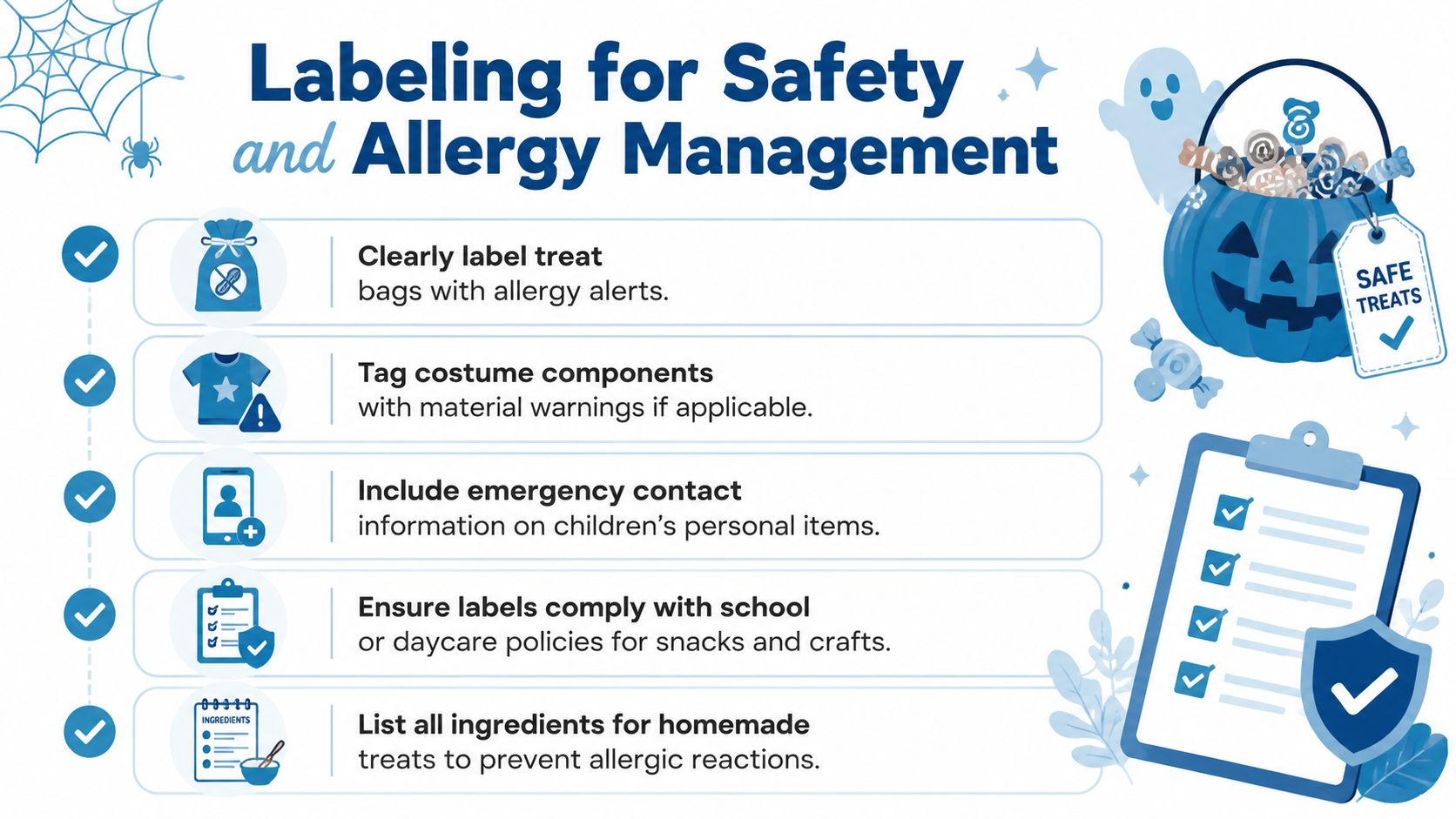
For school or daycare use, a label may need more than a child's name. Depending on the item, consider including:
- Allergy alert wording on treat bags or food containers
- Ingredient information for any approved shared item
- Material notes for costume components if a child is sensitive to certain fabrics or finishes
- Emergency contact details on personal gear that leaves the classroom
- Clear ownership so children don't swap snacks or cups by mistake
A practical layout works best. Put the child's name in the largest text. Put the safety note directly below it in short, plain wording.
Safety shortcut: If an adult has to unfold the bag, flip the item over, or guess at a symbol, the label isn't doing enough.
Questions to ask the school or daycare first
Parents often get stuck because every classroom handles party items a little differently. Before printing labels, ask:
- Are homemade treats allowed?
- Does the class require ingredient visibility?
- Are non-food favors preferred?
- Can costume props come to school?
- Should bags include the child's full name or first name only?
That small check can save you from relabeling everything the night before. It also helps you design labels that support the rules instead of fighting them.
Label Application Removal and Care Best Practices
Even a strong label can fail if it's applied poorly. Most problems come from dust, moisture, curved surfaces, or rushing the job while packing for school.
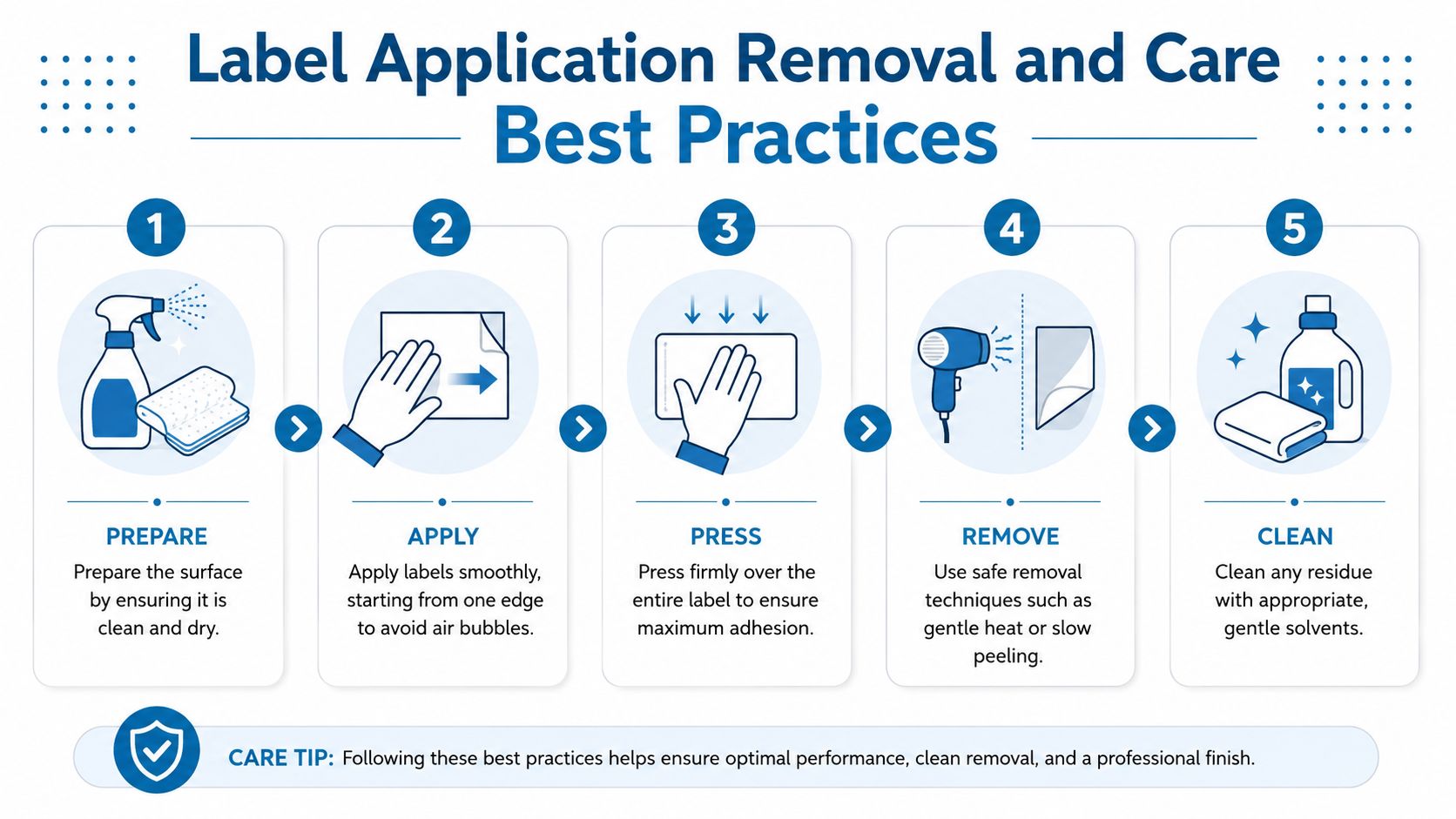
Start with a clean, dry surface. Wipe away crumbs, lotion, condensation, or lint. Labels stick best when the surface is smooth and fully dry, especially on bottles, snack cups, buckets, and plastic boxes.
For curved items, place one edge first, then smooth across slowly with your thumb. That reduces trapped air. Once the label is in place, press over the full surface instead of only the center.
Simple care habits that help labels last
- Wait before washing: Give a newly applied label time to settle before heavy use or cleaning.
- Avoid picking at corners: Kids often test a label by scratching the edge. Press corners back down early if needed.
- Hand-check after events: After trick-or-treating or a class party, inspect labels on wet or dirty gear before tossing items into the sink.
Here's a visual walkthrough for the process:
Removing labels without making a mess
When the season is over, removal works best with patience. On hard surfaces, gentle warmth can soften adhesive. Peel slowly from one corner instead of ripping straight upward. If residue remains, clean it with a mild cleaner that's safe for the item.
For reusable containers, wash and dry the item fully before applying a new label. A fresh label sticks better to a clean surface than one that still has old adhesive film or soap residue.
How to Order and Customize InchBug Halloween Label Bundles
If you want a faster way to get organized, bundled label sets are often easier than trying to piece together separate items one by one. For Halloween, that usually means thinking in groups: clothing, shoes, bottles, treat containers, and allergy reminders.
The Halloween labels collection is the best place to start if you want themed options already built for seasonal use. Instead of starting from scratch, you can look for products that match the exact items your child takes to school or daycare.
A simple way to choose the right bundle
Pick labels based on where the item will be used:
- For clothes and costumes: TagPal clothing labels help with shirts, jackets, and wearable costume pieces.
- For shoes and costume footwear: ShoePal identifiers are useful when dress-up shoes or backup pairs go to school.
- For bottles and lunch gear: durable name labels or reusable bottle identifiers work well on daily-use items.
- For allergy visibility: allergy alert tags help important warnings stand out quickly.
A practical bundle usually covers the items that leave your house most often. For many families, that's enough to handle both school routines and Halloween events without ordering separate specialty products later.
How to customize without overthinking it
The easiest path is to keep the design choices narrow. Choose one Halloween theme, one readable font, and one color direction for each child. Then add the child's name and any essential safety wording.
Before placing the order, check three things:
- The spelling of names
- The size of the label against the item you'll use it on
- Whether the design stays easy to read at a glance
That approach keeps the process quick and avoids labels that look fun on screen but don't work well in a real classroom or daycare setting.
If you want labels that can handle school, daycare, and holiday chaos without making the ordering process harder, InchBug is a smart place to start. Their customizable options make it easier to organize bottles, clothes, shoes, bags, and allergy-related items so Halloween feels more fun and less frantic.