

Getting ready for kindergarten is a huge milestone, and let's be honest, it can feel a little overwhelming. Between the mountain of paperwork, doctor's appointments, and just trying to make sure your little one feels ready, the to-do list seems endless. A good checklist is your best friend here—it turns that giant, scary process into small, doable steps.
Think of it as your roadmap. It helps you make sure nothing important (like a registration deadline!) slips through the cracks and gives you a clear path to follow for a smooth, happy transition into school.
Your Guide To A Stress-Free Kindergarten Transition
That leap into "big kid" school is exciting, but it's completely normal to feel a bit of stress creeping in. You're juggling administrative tasks, health forms, and helping your child get ready emotionally. It's a lot!
But a structured plan can change everything. It turns that anxiety into confidence, knowing you've got it all covered well before the first school bell rings. This guide is meant to be your command center, breaking down everything you need to do, month by month.
Prioritizing Your Preparation Timeline
Knowing what to do is only half the battle; knowing when to do it is the real secret. Some things, like registering for school, have hard deadlines months in advance. Others, like practicing your new morning routine, work best in the weeks leading up to the big day.
This timeline helps visualize the key phases of prep so you can see what to focus on and when.
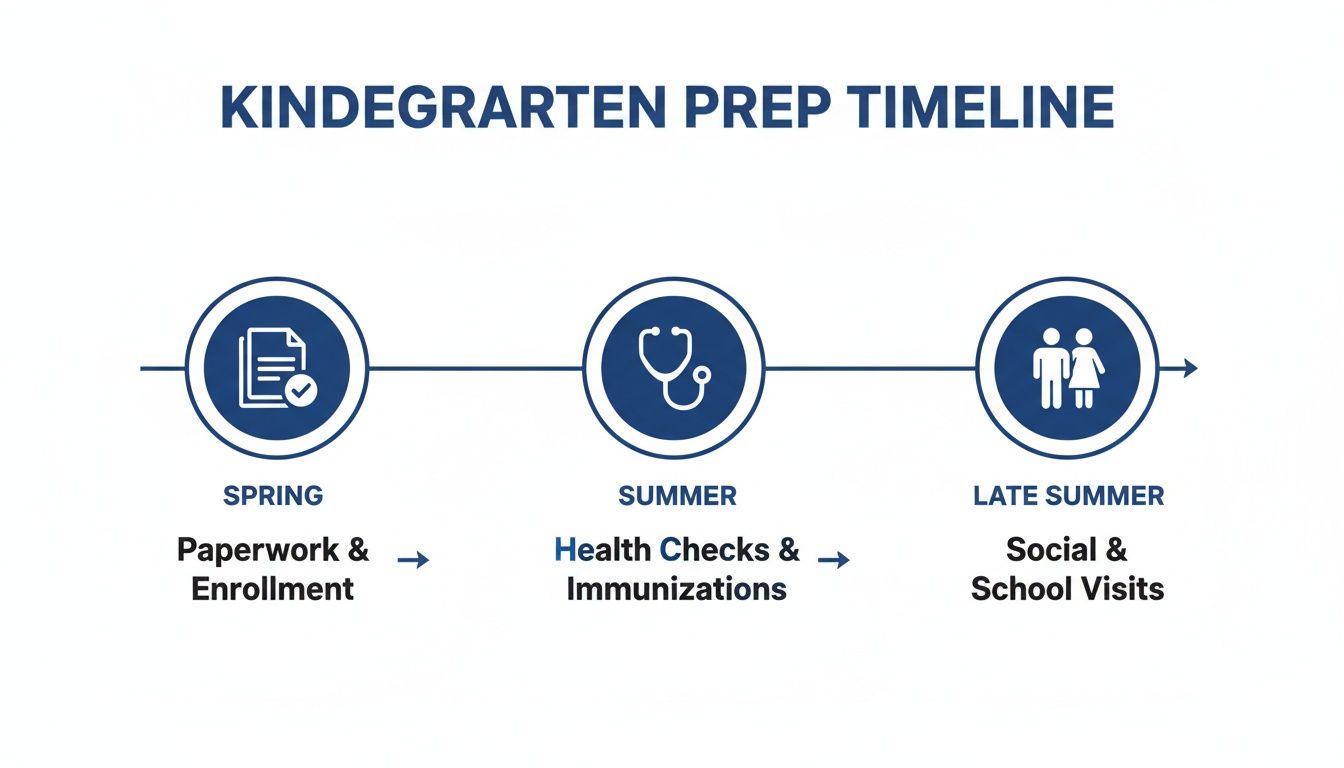
As you can see, it’s best to get the paperwork out of the way early, then book those doctor visits to beat the summer rush. All the while, you can be weaving in social and emotional prep to build their confidence.
To give you a quick overview of what's ahead, here’s a simple table that breaks down the major categories you'll be tackling.
Quick-Glance Kindergarten Readiness Checklist
| Category | Key Action Items | Recommended Timeline |
|---|---|---|
| Paperwork & Enrollment | Gather birth certificate, proof of residency, immunization records. Complete online/in-person registration. | 6-9 months before school starts |
| Health & Wellness | Schedule well-child checkup, dental, and vision exams. Submit required health forms to the school. | 3-6 months before school starts |
| School Supplies & Gear | Purchase items from the school's supply list. Get a backpack, lunchbox, and water bottle. | 1-2 months before school starts |
| Clothing & Labeling | Buy school-appropriate clothes & shoes. Label absolutely everything with your child's name. | 1 month before school starts |
| Routines & Self-Help Skills | Practice the new morning/bedtime routine. Work on zipping coats, opening containers, and bathroom independence. | 1-2 months before school starts |
| Social & Emotional Prep | Talk about school, read books about kindergarten, and arrange playdates. | Ongoing, with more focus 2-3 months prior |
This table is just a starting point, but it helps put the entire process into perspective. We'll dive deeper into each of these areas in the sections below.
Building a Strong Foundation
Getting ready for kindergarten isn't just about knowing the ABCs. It's about making sure your child feels secure, capable, and ready to learn. A huge part of a stress-free transition is understanding the benefits of early intervention to boost child development, which helps you spot and support any areas where your child might need a little extra help.
The goal is not to create a "perfect" student but to foster a confident, curious child who is excited about learning. Focusing on small, consistent steps in social, emotional, and self-help skills makes a world of difference.
For many of us, this isn't our first rodeo. If you’ve been through the preschool transition, a lot of these steps will feel familiar. For a quick refresher on those early days, you can check out our tips on how to prepare your toddler for preschool. By tackling this next big step in stages, you can make the journey to kindergarten a positive and exciting one for the whole family.
Navigating School Paperwork and Health Checks
Before you get to the fun part of kindergarten prep—like picking out that first, tiny backpack—there’s the mountain of paperwork. Trust me, tackling these administrative tasks early is the secret to a stress-free registration. It's best to start gathering everything a few months before school starts, because some documents can take a surprising amount of time to track down.
Think of it as a scavenger hunt with a deadline. Most schools open enrollment for a specific window, usually in the spring, and you’ll want to have everything ready to go. There’s nothing worse than that last-minute panic when you realize a key document is missing.
Gathering Your Essential Documents
Your school district will give you a specific checklist, but the core items are pretty universal. My advice? Create a dedicated folder—digital or physical—to keep everything in one place. It will save you from that frantic, late-night search for a birth certificate.
Here are the documents you'll almost certainly need:
- Proof of Your Child's Age: This is usually an original or certified copy of their birth certificate. If you can't find yours, you can typically order one from the vital records office in the state where your child was born.
- Proof of Residency: Schools need to confirm you live in their district. This often means providing two different forms of proof, like a recent utility bill, a lease agreement, or a mortgage statement.
- Parent/Guardian Photo ID: A driver's license or another government-issued photo ID will do the trick.
- Immunization and Health Records: This one is critical. You’ll need an up-to-date record from your pediatrician showing your child has all the state-mandated vaccinations.
Don't wait until the week before registration to realize something is missing. Ordering a new birth certificate, for example, can take several weeks to arrive. Starting early prevents any frustrating delays.
Scheduling The Necessary Health Screenings
Beyond the shot record, most states require specific health screenings before a child starts kindergarten. These checks are designed to catch any potential issues that could affect their ability to learn and thrive in a classroom setting. Waiting until August to book these appointments is a recipe for disaster; pediatricians' schedules fill up incredibly fast.
Try to schedule these appointments in the late spring or early summer. This gives you plenty of breathing room to get the required forms filled out by the doctor without feeling rushed.
Common required health checks include:
- A Comprehensive Physical Exam: Your pediatrician will do a standard well-child checkup and fill out a specific school health form. Remember to bring the form with you to the appointment!
- A Vision Screening: Good eyesight is obviously crucial for seeing the board and learning to read. An eye exam can catch things like nearsightedness or a lazy eye early on.
- A Dental Checkup: A quick dental screening makes sure your child doesn’t have painful cavities or other oral health issues that could be a major distraction in class.
Tackling health forms isn't just about checking a box. These screenings ensure your child can see the board, hear the teacher, and feel their best, setting a strong foundation for their entire academic journey.
If your child has specific health concerns, like severe allergies, now is the time to create a detailed action plan with the school nurse. You can find more information about how to prepare a child with allergies for a school environment to ensure their safety and your peace of mind. Getting all this paperwork and these appointments handled early clears your plate, letting you focus on the more exciting parts of getting ready for kindergarten.
Building The Social And Emotional Skills Kids Need
While we all worry about academics, a child's social and emotional skills are what truly help them adapt, make friends, and thrive in a bustling new classroom. This part of your kindergarten preparation checklist is all about practical, at-home activities that build real-world confidence. These are the foundational skills that make the huge transition from home to a big school feel manageable and even exciting.
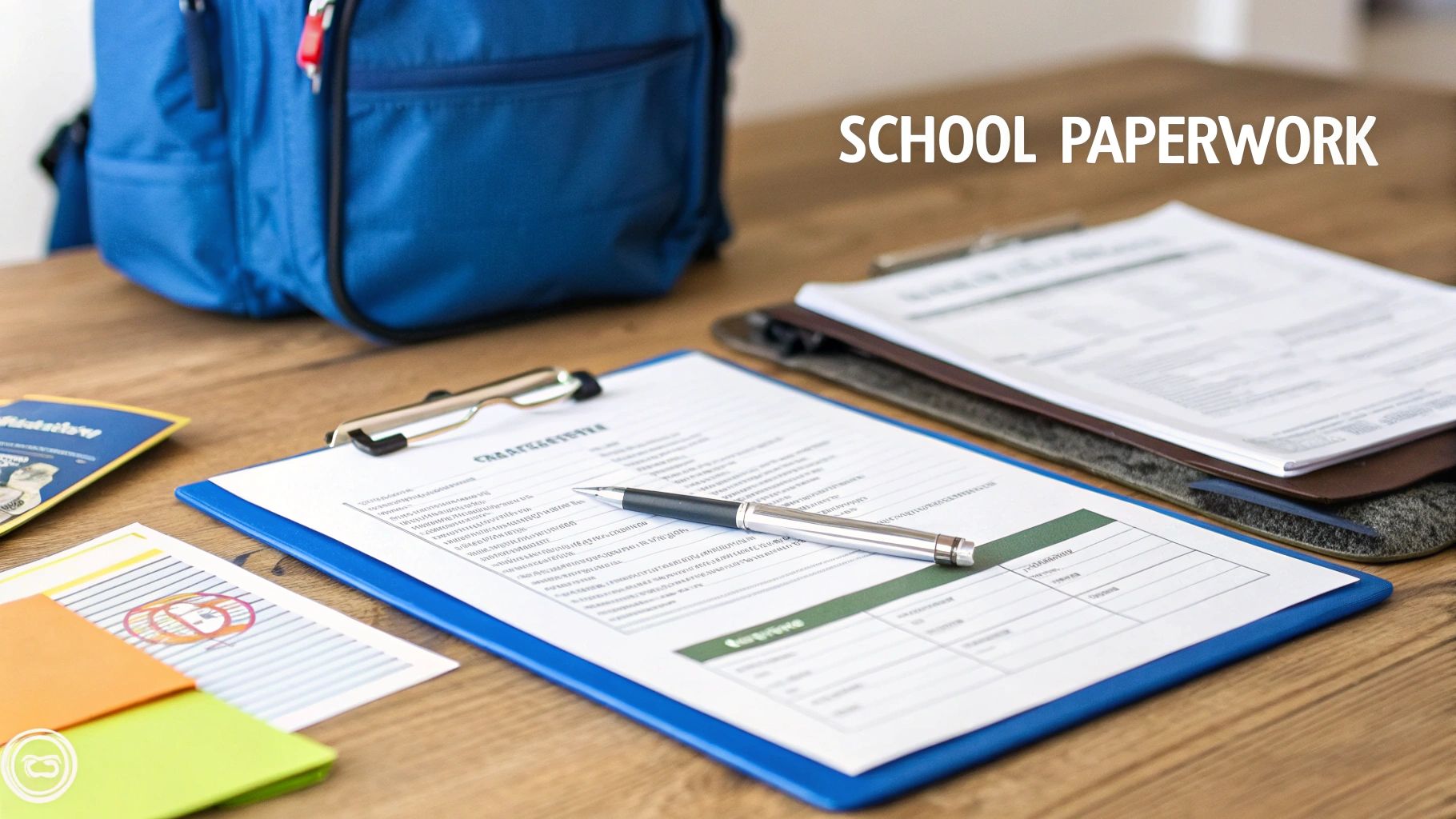
This focus isn't just a gut feeling; it's backed by data. Recent federal stats from the National Survey of Children's Health found that while about two-thirds of 3- to 5-year-olds are on track for kindergarten, there are significant gaps. The survey looks at five key areas, and a child’s ability to self-regulate and interact positively is just as crucial as knowing their letters and numbers.
Practicing Essential Social Skills Through Play
Let's be real: play is a child’s work. It’s also the most effective way to teach complex ideas like sharing, taking turns, and empathy without a boring lecture. You can bring these concepts to life in your everyday routine.
Try working these simple games into your day:
- Board Games: Even something as simple as Chutes and Ladders or Candy Land is fantastic. They’re a low-stakes way to practice taking turns, being patient, and handling small disappointments with grace.
- Building Together: Grab the LEGOs or blocks for a shared project. This teaches collaboration. One person can be the "architect" who describes the plan, while the other is the "builder" who actually places the blocks.
- "Pass the Story" Game: You start a story with one sentence, then have your child add the next. This simple back-and-forth is amazing for listening skills and teaches the give-and-take of a real conversation.
These playful moments build a super strong foundation for making friends and navigating the social world of a kindergarten classroom.
Giving Feelings Names And Encouraging Expression
A classroom can be an emotionally overwhelming place for a five-year-old. The truth is, children who can identify and express their feelings with words are way less likely to act out by hitting or crying when they feel frustrated or sad.
You can help by making "feelings talk" a normal part of your day. For instance, you could say, "I see you're getting frustrated with that puzzle. It's okay to feel that way. Let's take a break for a minute." This does two things: it validates their emotion and models a healthy way to cope. To go even deeper, you can also explore some great books about social emotional learning that use wonderful stories to spark these important conversations.
Key Takeaway: The goal isn't to prevent your child from ever feeling sad or angry. It's about giving them the tools to manage those big feelings. Labeling emotions like "disappointed," "excited," or "nervous" builds their emotional vocabulary and self-awareness.
Fostering Independence For A Confident Start
Independence is a huge confidence booster. When a child can manage their own basic needs, they feel so much more capable and less anxious in a new place. A teacher with 25 students simply can't help everyone open their snack at the same time, so self-sufficiency is a gift to both your child and their educator.
Start practicing these key self-help skills a few months before school starts:
- Bathroom Independence: This one is non-negotiable. Make sure your child can use the toilet, wipe themselves, flush, and wash their hands completely on their own.
- Lunchbox Logistics: Do a few trial runs. Pack a practice lunch and have your child open everything themselves. Ziploc bags, thermoses, and yogurt tubes can be surprisingly tricky for little hands.
- Managing Their Gear: Have them practice putting on their own coat, zipping up their backpack, and putting papers into a folder. This little bit of mastery makes a huge difference in their daily routine.
By focusing on these practical social, emotional, and self-help skills, you're not just preparing your child for kindergarten; you're equipping them with the confidence and resilience they'll need for years to come.
Establishing Routines That Set Your Child Up For Success
Let's be honest, consistent routines are the secret weapon for a smooth transition to school. They provide the predictability and security that our little ones absolutely crave. The structured school day is a massive shift from the laid-back rhythm at home, and by establishing some key daily habits before school even starts, you give your child a comforting sense of control that melts away those first-day jitters.
Think of this part of your kindergarten preparation checklist as creating a simple blueprint for your days. This isn't about rigid, minute-by-minute schedules. It’s about creating a gentle, predictable flow so everyone knows what to expect. Kicking these routines off a couple of weeks early gives you time to work out the kinks and helps your child feel like a pro long before the first bell rings.
Mastering The Morning Rush Without The Rush
We’ve all been there—that frantic morning scramble that sets the whole family on edge. A peaceful, practiced morning routine can change everything, turning potential chaos into a calm point of connection. The key is to start early and practice when the stakes are low.
First up, gradually adjust their sleep schedule. If they’ve been waking up at 8:00 a.m. all summer, a sudden 6:30 a.m. alarm is going to be a shock to the system. Start shifting bedtime and wake-up time by 15 minutes every few days until you hit your school-day targets. It’s a much gentler way to help their internal clock adjust.
Next, create a simple visual chart for their morning jobs. Kids thrive on this!
- Get Dressed: Lay out clothes the night before to skip the morning decision-making.
- Eat Breakfast: Have a few easy, healthy options ready to grab.
- Brush Teeth & Hair: Keep their toothbrush and hairbrush in a spot they can easily reach.
- Pack Backpack: Make sure the lunchbox and any take-home folders are good to go.
This little chart empowers them to take ownership of their morning, building independence that will serve them well all year.
Creating A Peaceful After-School Wind-Down
How the school day ends is just as important as how it begins. Your child will likely come home tired, overstimulated, and bursting with stories they can't quite articulate yet. A predictable after-school routine gives them a much-needed soft landing and helps them decompress.
The first step is creating a "landing zone." For us, it’s a hook by the door for the backpack and a basket on the counter for the lunchbox and papers. This super simple habit stops the school gear explosion and teaches a bit of organization right from the start.
A consistent after-school routine isn't just about tidiness; it's about creating a dedicated moment to reconnect. It signals that the demands of the day are over and that home is a place to relax and share.
We found a simple three-step flow that works wonders:
- Unpack & Snack: Empty the backpack and lunchbox together while they munch on a healthy snack. This is the perfect low-pressure time to ask open-ended questions like, "What was the most fun part of your day?" instead of "How was school?"
- Quiet Time: Let them have 20-30 minutes of totally unstructured free play or quiet time. After a day of rules and sitting still, they need time to just be a kid and recharge their batteries.
- Handle Papers: Sort through the mountain of papers they bring home. Designate one spot for precious artwork and another for forms that need your signature.
By setting up these predictable bookends to the day, you're building a comforting structure that helps your child navigate the exciting, and sometimes overwhelming, world of kindergarten with total confidence.
Conquering The School Supply List And Why You Must Label Everything
Tackling the official school supply list can feel like its own little mission. You're navigating crowded aisles, trying to decipher vague requests like "one blue pocket folder," and wondering what’s for your child versus what goes into a communal classroom stash. This part of your kindergarten preparation checklist is all about cutting through that confusion with some real-world advice.
First, let's break down the two types of supplies: personal and community. Your child’s personal gear—their backpack, lunchbox, and water bottle—are the things that will (hopefully!) come home with them every day. Community supplies are the glue sticks, tissues, and dry-erase markers the teacher collects and hands out to the class as needed. Knowing the difference is key because it tells you exactly what needs your child's name on it.
Personal Gear Versus Community Supplies
My rule of thumb is simple: if you expect an item to come home at the end of the year, or even just the end of the day, it needs a label. Teachers will often ask you not to label community items like crayons or markers since they all get pooled together for the classroom to share.
But anything that belongs solely to your child is at high risk of getting lost in a room full of 20+ other five-year-olds. Put yourself in the teacher's shoes for a second: when three identical blue water bottles are left behind after recess, how can they possibly know which one is your kid's?
The Non-Negotiable Rule: Label Everything
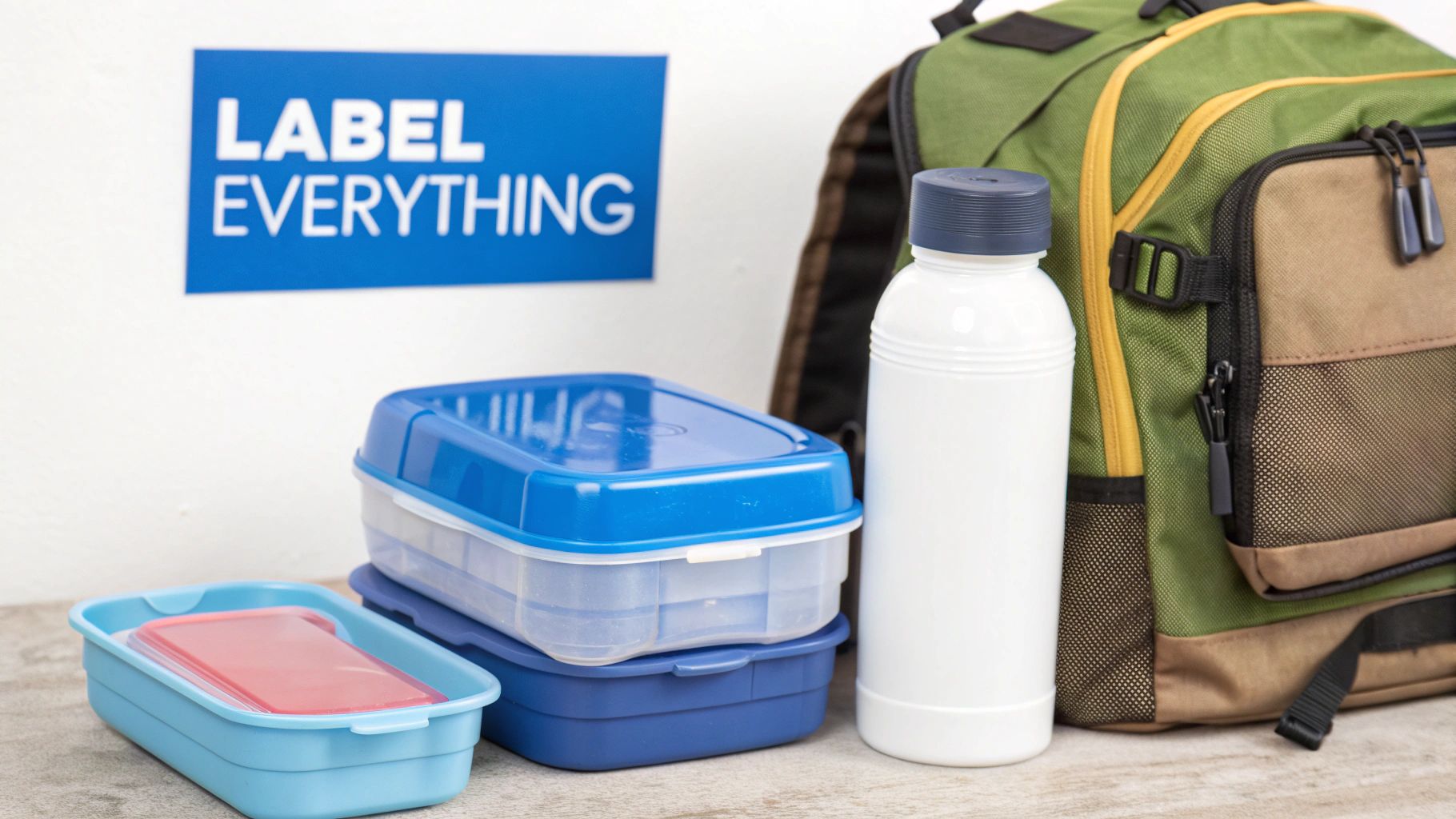
Let's be honest about kindergarten classrooms: they are chaotic wonderlands where jackets, lunchboxes, and water bottles magically swap owners or vanish into a lost-and-found black hole. Labeling isn't just a nice suggestion; it’s the single best way to make sure your child's belongings actually make it back home. It saves teachers time, reduces mix-ups, and saves you the frustration (and money!) of replacing lost gear.
A labeled item has a 90% chance of being returned to its owner. An unlabeled item? It’s almost always a goner. It’s a simple action that protects your investment and teaches your child a little bit about responsibility.
This is where durable, kid-proof labels become a parent’s best friend. You need something that can handle being thrown in a backpack, run through the dishwasher, or tossed in the wash. A faded marker just won't cut it after a few weeks.
For things like bottles and thermoses, a non-adhesive solution like InchBug’s Orbit Labels is a total game-changer. They’re reusable, dishwasher-safe, and stretch to fit around containers, which means no more peeling off sticky residue. For everything else—from jackets and backpacks to shoes and lunch containers—waterproof sticker labels are a must. I swear by TagPal clothing labels, which are made to stick right onto care tags and stay put through countless wash cycles. They've saved so many hoodies from the lost-and-found bin in our house!
If you want to dive deeper, you can learn more about what to label in our in-depth school labeling guide.
I know it can feel like a lot to keep track of, so I've put together a quick-reference table to help you figure out what to label and which labels work best for the job.
The Essential 'Label Everything' Checklist
| Item to Label | Why It Gets Lost | Recommended InchBug Label |
|---|---|---|
| Jackets & Hoodies | Taken off at recess and left on the playground. Easily the #1 lost item! | TagPal Clothing Labels |
| Backpacks | Multiple kids often have the same character or color backpack. | Rectangle Bag Tags or Adhesive Labels |
| Lunchboxes | Left in the cafeteria or mixed up with identical ones. | Adhesive Labels or Allergy Alerts |
| Water Bottles | The ultimate mix-up item. Everyone has one, and they all look alike. | Orbit Labels |
| Shoes & Boots | Swapped for gym shoes or snow boots and accidentally taken by a friend. | ShoePal Labels |
| Food Containers | Lids and containers get separated during lunch cleanup. | Dishwasher-Safe Adhesive Labels |
| School Supplies | Personal items like pencil boxes or scissors can easily get misplaced. | Mini Rectangle Labels |
Taking just a few minutes to get everything labeled before that first day of school will make a world of difference. Trust me on this one!
Your Ultimate Labeling Mini-Checklist
To make it even easier, here's a quick rundown of the must-label items for any new kindergartener. Work your way through this list, and you'll be set for a year with a lot fewer lost-item headaches.
- Outerwear: Jackets, sweaters, raincoats, and hats are the first things to go missing.
- Backpack & Lunchbox: These are your child’s most important pieces of daily gear.
- Water Bottle & Food Containers: Super important for preventing accidental sharing and germ swaps.
- Shoes & Boots: Especially for gym class or changing into snow boots in the winter.
- Art Smock or Extra Clothes: Label the item itself and the bag it’s stored in.
- School Supplies (Personal Only): Think pencil cases, scissors, and any folders meant for individual use.
By taking the time to properly label everything before school starts, you’re not just organizing your child’s stuff—you're setting them up for a smoother, less stressful school year.
Preparing For The First Day And Beyond
You've tackled the paperwork, conquered the shopping, and practiced the new routines. With your kindergarten preparation checklist nearly complete, the big day is finally coming into view. This last stretch is all about handling the real-world logistics of that first week and navigating what can be an emotional rollercoaster for both you and your little one.
A little bit of planning right now can turn those first-day jitters into genuine excitement. It really sets the tone for a positive start to their entire school adventure.
The goal isn’t just to survive that first drop-off; it's to build a foundation of confidence that will carry them through the first month and beyond. These final steps are all about making the school environment less mysterious and creating comforting rituals that ease the transition.
Easing Into The New Environment
Familiarity is the ultimate antidote to fear. The more your child knows what to expect, the less that big school building will feel so intimidating. My advice? Go to any and all orientation events the school offers.
- Meet-The-Teacher Events: This is your golden ticket. It’s a low-pressure chance for your child to see their classroom, find their cubby, and meet their teacher with you right there by their side.
- Do a Trial Run: About a week before school starts, do a practice run. Drive or walk the route at the same time you will on school mornings. I always made a point to get out of the car and walk up to the main entrance, pointing out the playground and talking about all the fun things they'll do there.
These small actions make the first real morning feel like something you’ve already done together, which is incredibly reassuring for a five-year-old.
Handling First-Day Jitters And Separation Anxiety
It's completely normal for your child (and let's be honest, you!) to feel a little wobbly about separating. Having a game plan for a calm, confident goodbye makes all the difference. The key is to be loving but firm, projecting a sense of "you've got this" even if your own heart is pounding.
Create a special, quick goodbye ritual. This could be a secret handshake, a silly rhyme, or two quick hugs and a high-five. Practice it at home so it feels routine and familiar. When it’s time to go, do your ritual, say "I love you," and then leave promptly. Trust me, lingering often makes the separation harder for everyone.
Parent Tip: Acknowledge their feelings. Try saying something like, "I know it feels a little scary, but you are going to have so much fun, and I will be right here to pick you up when the day is over." This validates their emotions while reassuring them that you are coming back.
Checking In And Staying Connected
The prep work doesn't stop after the first drop-off. The days and weeks that follow are so important for building open lines of communication with your child and their teacher. After school, try to avoid the generic "How was school?" question—it almost always gets a one-word answer.
Instead, I've found that asking more specific, open-ended questions works wonders:
- "What was the silliest thing that happened today?"
- "Tell me about a new friend you talked to."
- "What game did you play at recess?"
This approach encourages more detailed stories and gives you a much better window into their world. At the same time, make a point to connect with the teacher early on. A simple introductory email or a quick "hello" at pickup lets them know you're an engaged partner. That open line of communication will be invaluable as you navigate the year together.
Common Questions About Kindergarten Readiness
Even with the most thorough kindergarten preparation checklist, it’s totally normal to have a few last-minute worries pop up. As you get ready for this huge milestone, questions are bound to surface. Let's walk through some of the most common concerns I hear from parents and get you some clear, reassuring answers.
What If My Child Cannot Read Yet?
This is a big one, and I want to put your mind at ease. It's a widespread myth that kids need to be reading before they walk into their kindergarten classroom. The truth is, most kindergarten programs are designed to teach those exact fundamentals, like letter sounds and phonics.
Your job right now isn't to be a reading instructor. The most important thing you can do is simply nurture a love for stories. Focus on snuggling up and reading together every day.
Kindergarten teachers don't expect fluent readers on day one. They are looking for curious kids who are excited about books and ready to learn.
How Can I Prepare My Child For a Full Day?
That jump from a half-day of preschool (or no school at all) to a full, long day can be a shock to their little systems. To make the transition smoother, try phasing out afternoon naps a few weeks before school starts. A consistent sleep schedule with an early bedtime is your best friend here—it helps them bank plenty of rest.
It also really helps to talk them through what the day will look like. Explaining the schedule—circle time, lunch, recess, art—makes it feel less intimidating and more predictable. A well-packed lunch and some planned downtime right after school will also be key to managing those energy levels.
My Child Is Shy. What Can I Do?
For our shy and quiet kids, a little extra prep can go a long way in building their confidence. You can practice social scripts at home by role-playing things like, "Hi, my name is Leo. Can I play blocks with you?" It might feel silly, but it gives them the words they need in the moment.
If you can swing it, a low-pressure playdate with a future classmate before school starts can work wonders. Just giving them one familiar face in a sea of new ones can make all the difference. I also always recommend giving the teacher a heads-up about your child’s temperament so they can help foster connections in the classroom.
Ready to conquer the chaos of lost jackets and water bottles? The most practical tip on any kindergarten preparation checklist is to label absolutely everything. InchBug makes it so easy with durable, kid-proof labels for clothes, lunchboxes, and all their gear. Shop our Back-to-School essentials today!