

Monday morning is where a labeling system gets tested. One child's sippy cup is missing its lid. Two snack containers look exactly alike. A glass leftovers dish comes home from school in the wrong bag, and nobody is eager to identify it by smell.
That kind of mix-up usually starts small. A label peels at the corner. Marker fades after one dishwasher cycle. A container gets handed down to a younger sibling, but the old name never comes off cleanly. For families, good labeling is not just about keeping things neat. It is about managing the full life of the container, from the first use to the day it gets repurposed.
Waterproof labels help because different containers need different solutions. A squeeze pouch cap, a daycare snack cup, and a glass meal-prep dish do not get used the same way, washed the same way, or retired the same way. The right label has to stay put through spills, rinsing, and dishwashing, then remove without leaving a sticky mess when that container changes jobs.
That is also why labeling works best as part of a repeatable routine. If school mornings already feel rushed, these stress-free school lunch packing tips pair well with a setup that helps every container stay identified from packing to pickup.
Keeping Track in a World of Mix-Ups
By Thursday, the lunch containers all start to look the same. The blue water bottle in the daycare bin could belong to your child or someone else's. The glass dish in the fridge might be leftovers for tomorrow, or the container that was supposed to go back to school two days ago. Once names rub off or corners start peeling, the whole system falls apart fast.
Waterproof labels earn their keep in those ordinary moments. They stay readable through condensation, lunch bag spills, quick sink rinses, and repeated dishwasher cycles. That matters because family containers do not live one simple life. A sippy cup might start with one child, get passed to a sibling, then end up as a car snack cup. A glass food container may rotate between school lunches, leftovers, and freezer duty. The label has to match that full cycle, including coming off cleanly when the container gets a new job.
A good label saves time in small ways that add up all week.
It cuts down on mix-ups at daycare, helps teachers and grandparents identify the right container quickly, and keeps you from playing guessing games with lids, cups, and snack tubs at day's end. If mornings already feel rushed, these stress-free school lunch packing tips work even better with a labeling routine that holds up after washing.
The practical question is not whether a label looks nice on day one. It is whether it still sticks, still reads clearly, and still removes without sticky residue once that container gets handed down or repurposed. Families reuse a lot of gear. Labels need to keep up with that reality.
That is why the right system starts with the container, not the label sheet. Soft-sided snack cups, hard plastic lunch boxes, stainless bottles, and glass dishes all get handled and washed differently. Keeping track works better when the label fits the actual job from first use to final hand-me-down.
What Makes a Label Truly Waterproof and Kid-Safe
“Waterproof” gets thrown around loosely, but for food containers it should mean more than “fine if you splash it once.” A useful waterproof label has three jobs. It needs the right face material, the right adhesive, and a printed surface that stays readable after washing and handling.
The face material matters first. For food packaging, BOPP, or biaxially oriented polypropylene, is often preferred because it resists water, oils, and many chemicals better than paper-based labels, as explained in this overview of waterproof label materials from Consolidated Label. That's why paper labels fail so quickly on lunch containers. They absorb moisture, scuff easily, and start looking tired fast.
Think of the label as a tiny raincoat
BOPP works because it behaves more like a thin protective film than a paper tag. On a container that sits in the fridge, sweats on the counter, and gets washed repeatedly, that difference shows up quickly.
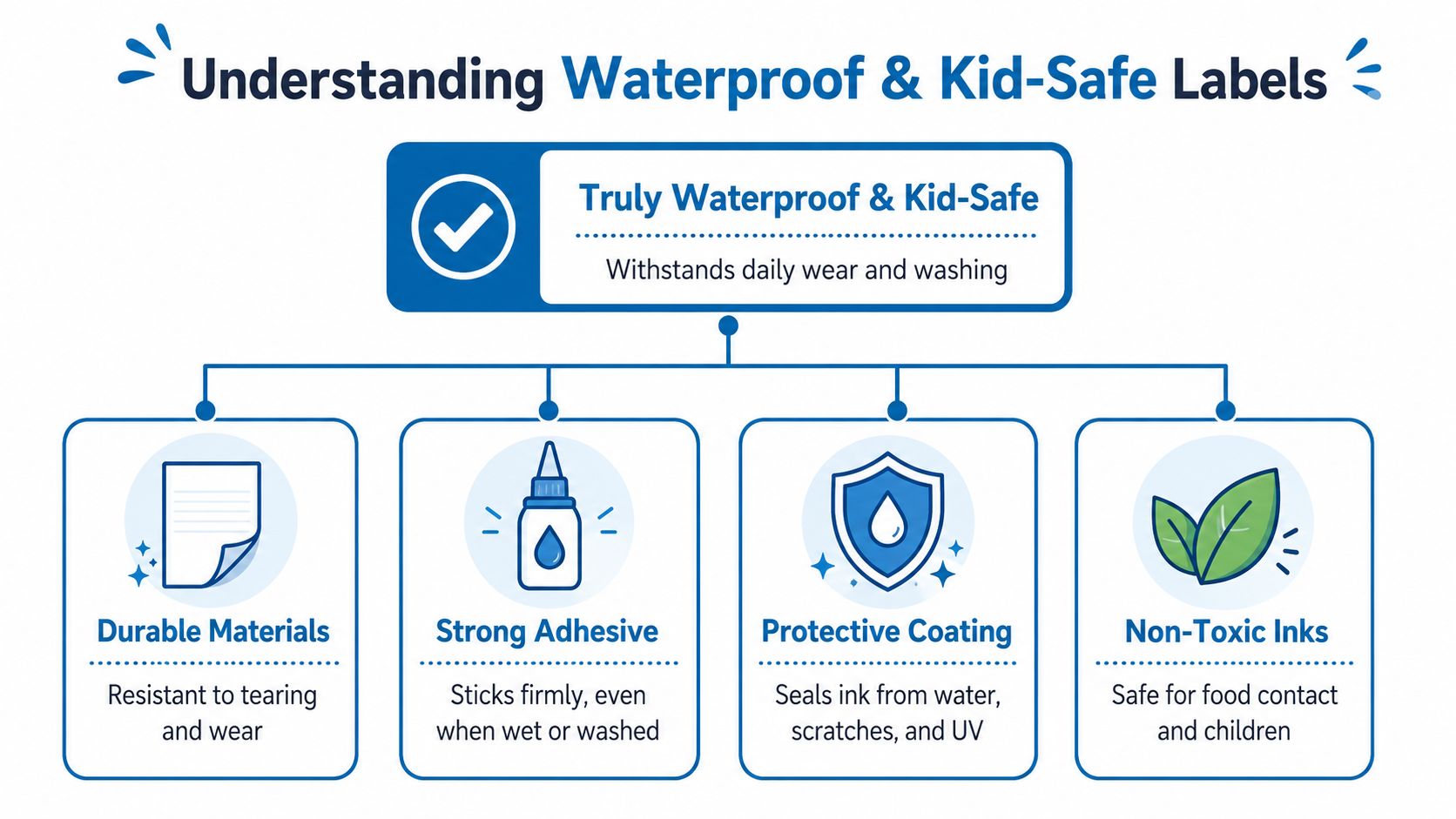
A label can have a waterproof face stock and still disappoint if the adhesive isn't suited to the container. Curved surfaces, textured plastics, and lids that flex a little all put more stress on the bond. That's why durability testing matters. If you want to see how repeated wear affects different label setups, this piece on label durability testing is useful.
Readability is a safety feature
For family food storage, the label isn't just for ownership. It often carries information that needs to remain legible. That includes names, allergen notes, and date details that help adults make the right decision quickly.
Here's what to look for in a practical waterproof food-container label:
- Synthetic material: A film face stock like BOPP generally handles moisture and oils better than paper.
- Clear print protection: The surface should resist smudging from damp hands, lunch bag friction, and routine washing.
- Strong but sensible adhesive: It should stay put through daily use without sliding off after one dishwasher run.
- Kid-safe design choices: For family use, parents usually want labels made with non-toxic materials and inks appropriate for everyday handling.
Practical rule: If the label can't stay readable on a cold, damp container, it's not solving the problem you actually have.
The kid-safe side of the equation is simple. A food-container label sits on items children handle constantly, so families tend to prefer labels made for that environment, not office stickers repurposed from a drawer. The goal isn't industrial toughness for its own sake. It's safe, steady performance in kitchens, lunch bags, and daycare bins.
How to Choose the Perfect Labels for Your Containers
Monday morning usually makes the differences obvious. One child needs a labeled snack cup for school, another has a stainless bottle rolling around in a backpack, and there is a glass container in the fridge that may need a new purpose by Friday. The best label is the one that fits that whole cycle, not just the moment you stick it on.
Start with the container itself. Shape matters, but so does what your family plans to do with that item over time. A flat glass meal-prep dish can handle a standard adhesive label well. A rounded sippy cup or bottle asks more from the label, especially if it gets gripped, dropped, washed, and packed every day.
Match the label to the shape
Curved surfaces create the most complaints. Standard sticker corners tend to lift on sippy cups, baby bottles, and narrow snack jars after repeat washing. Flat-sided lunch boxes and rectangular storage containers are simpler. They give adhesive labels a steadier place to bond.
| Container type | What usually works | Watch out for |
|---|---|---|
| Flat plastic lunch box | Adhesive waterproof sticker | Oil or soap film before application |
| Glass meal-prep dish | Adhesive label on a smooth side or lid | Edge wear from reheating and stacking |
| Stainless steel bottle | Label made for slick surfaces, or a non-adhesive band style | Condensation and constant handling |
| Sippy cup or rounded bottle | Wrap-safe option or bottle band | Corners lifting on standard stickers |
If you want a clearer sense of where flat adhesive labels fit best, this guide to waterproof sticker labels for food containers and everyday items is a helpful comparison.
Match the label to the lifecycle
This is the part busy families often learn the hard way. A label can survive water and still be the wrong choice if you need to remove it later without scraping at adhesive during clean-out day.
Ask one practical question first. Is this container staying with one child for the school year, or is it likely to move between siblings, daycare rooms, grandparents' houses, and new uses at home? The answer changes what “perfect” looks like.
For containers with a long-term owner, a stronger adhesive makes sense. For containers that get reassigned, a cleaner-removing option saves time and frustration later. Rounded drinkware often works better with a bottle band because it avoids the corner-lift problem and can move with the cup's next use.
The best family label survives the dishwasher, stays readable in daily use, and does not turn into a stubborn cleanup project when the container gets repurposed.
A parent-friendly way to decide
Use this filter before you buy:
- Choose a long-lasting adhesive label for containers one child uses week after week.
- Choose a cleaner-removing option for containers that get passed down, shared, or reassigned often.
- Choose a bottle band or curved-surface label for sippy cups, baby bottles, and rounded drinkware.
- Choose a low-profile label for lids that stack, nest, or need to slide into packed lunch bags.
InchBug offers both adhesive labels for food containers and Orbit Labels, which are reusable bottle bands for rounded drinkware. That mix reflects real family life. Most homes need different label types for different jobs, and the easiest system is the one that still works when the container's job changes.
Application and Care for Long-Lasting Labels
A good label can still fail if it goes onto a greasy lid or gets thrown straight into the dishwasher an hour later. Most peeling starts with application mistakes, not bad intentions. The fix is simple and doesn't take long.
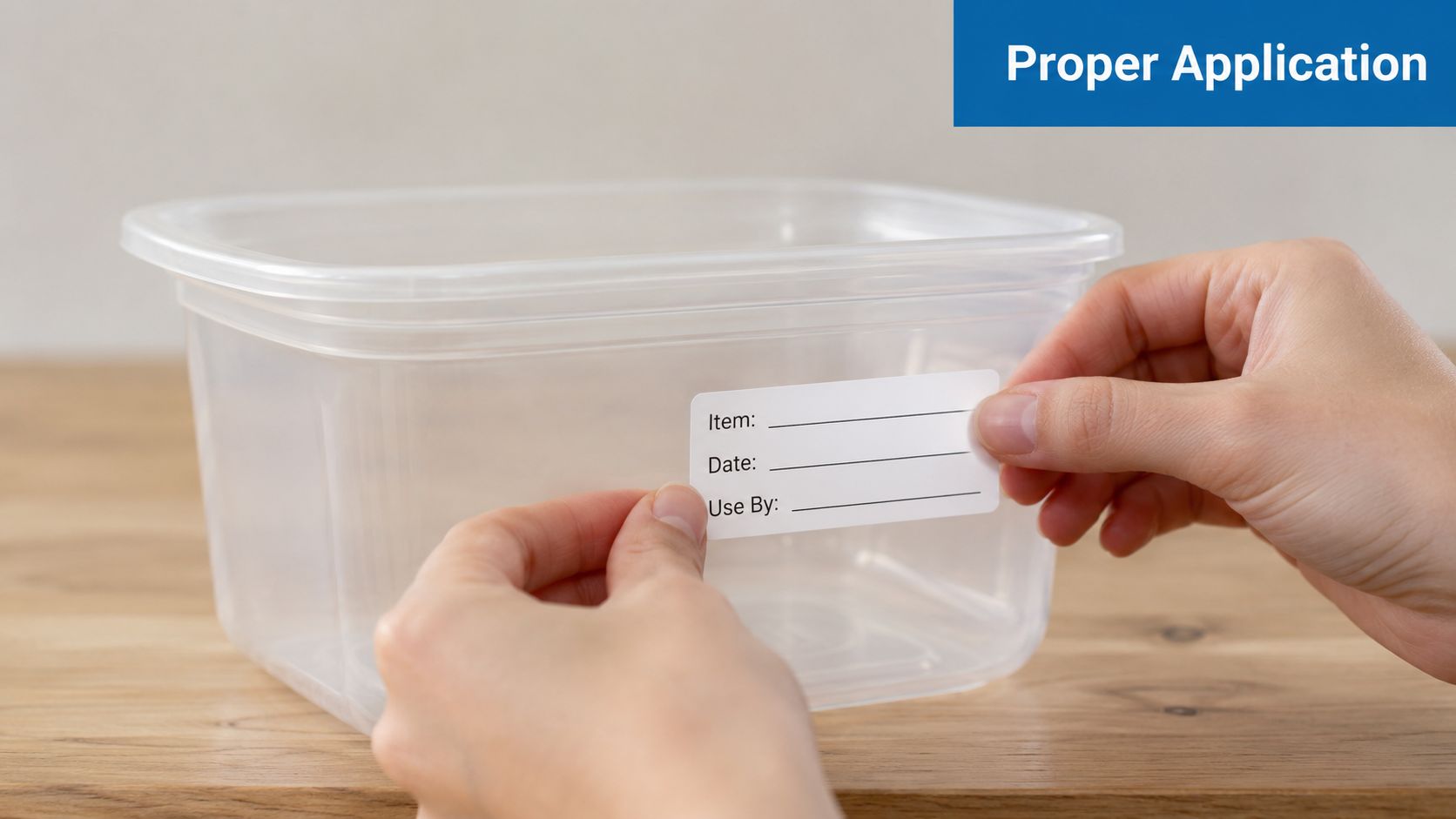
Apply it like you want it to last
Start with a clean, fully dry surface. If the container has oil film from food, a bit of soap residue, or lingering moisture from the dishwasher, the adhesive has to fight through that layer before it can bond to the container.
A simple process works well:
- Wash and dry first. Don't label a damp container fresh out of the sink.
- Pick the flattest practical spot. Avoid seams, ridges, and soft corners if you can.
- Press from the center outward. That pushes out air and helps the edges sit flat.
- Let it rest before heavy use. Giving adhesive time to set improves staying power.
For parents who want a quick visual demo, this article on dishwasher-safe name labels is a handy reference.
Small care habits make a difference
Most waterproof labels can handle real kitchen use, but they still do better when you avoid unnecessary abuse. Try to place labeled items where they won't scrape hard against rough dishwasher racks or get trapped under heavy pans.
Put the label where hands can see it, but friction can't constantly attack the corners.
This quick video shows the kind of everyday handling that matters when you want labels to stay neat over time.
If a label edge starts to lift, don't ignore it. Water tends to get in at the corner first. Replacing one worn label early is easier than dealing with a half-peeled, unreadable one after several more washes.
Smart Labeling Ideas for Busy Families
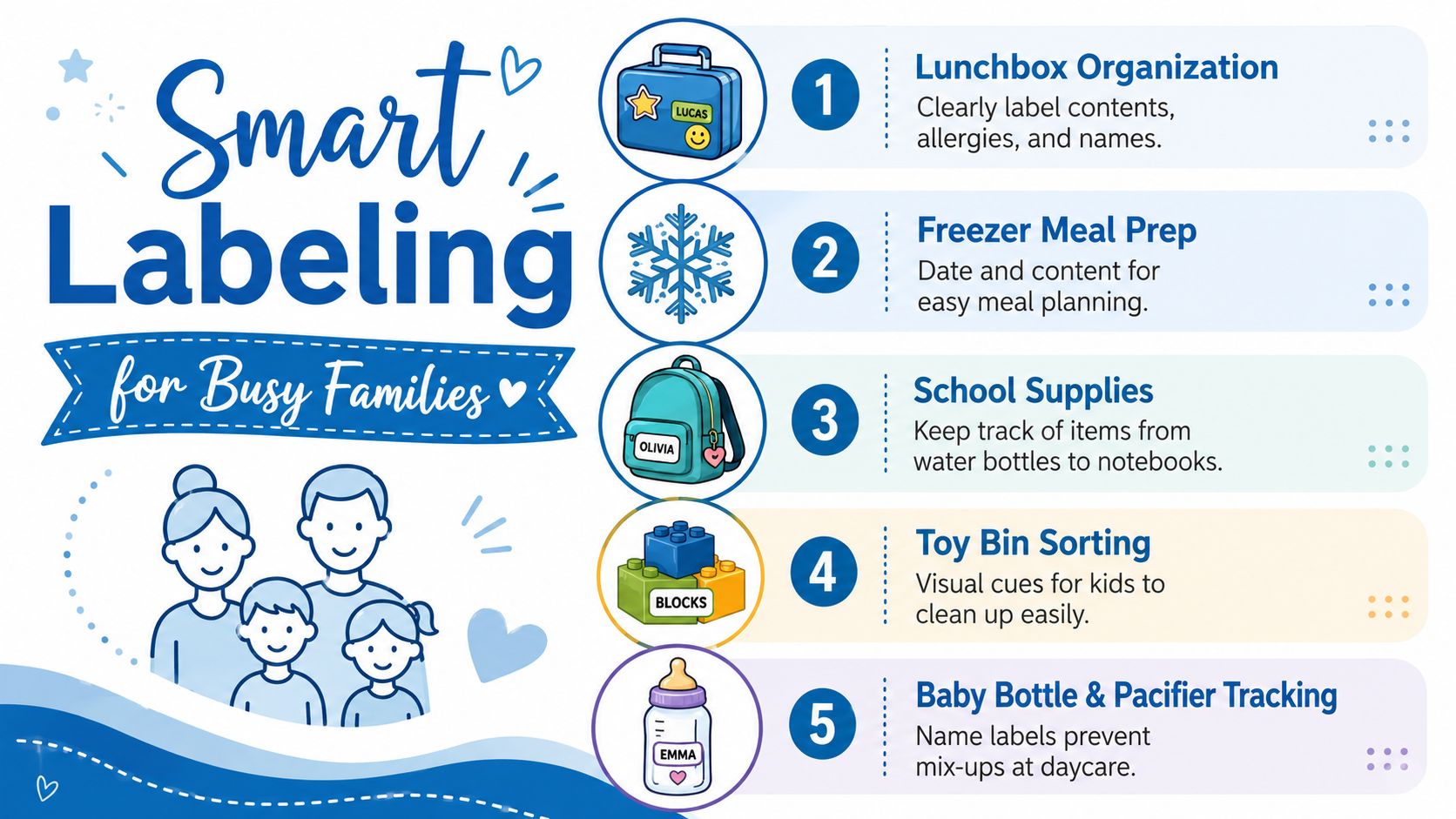
The most useful labels do more than put a child's name on a cup. They carry just enough information to prevent confusion while you're moving fast. In real homes, that often means labeling for meals, safety, and shared ownership all at once.
Use labels to prevent the avoidable mistakes
Food-container labels are functional tools, not decoration. Whitlam Group describes them as adhesive stickers used to identify contents, dates, and storage instructions, and notes four details that make them useful in practice: the contents, the date prepared or frozen, the use-by date, and any special handling note such as an allergen warning, as explained in Whitlam's guide to food container labels.
That's especially helpful in homes with school lunches, daycare meals, and a fridge full of leftovers that all look the same from above.
Real-life ways families use them
One child needs a dairy warning on lunch gear. Another brings snack containers to preschool three days a week. A parent batch-cooks rice, chicken, and cut fruit on Sunday and wants weekday lunches to be grab-and-go instead of guesswork.
In those situations, waterproof labels for food containers work best when they're specific. Not just “Emma.” Better is “Emma, dairy-free” on one container type, or “pasta salad, packed Monday” on another. You don't need to write a novel. You need enough clarity that another adult can make the right call without texting you from the pickup line.
Here are a few strong uses:
- Daycare lunch kits: Put the child's name on the container and lid so pieces don't get separated and lost.
- Allergy communication: Add a clear handling note when a teacher, grandparent, or sitter may be serving the food.
- Freezer and fridge prep: Label what's inside and when it was packed so leftovers don't become mystery science.
- Shared family storage: Mark reusable containers by purpose, like “school snacks,” “cut fruit,” or “taco toppings.”
Keep the system simple enough to maintain
The best labeling system is the one you'll still use when you're tired. That usually means having a few label types, not fifteen. One for rounded drinkware, one for flat containers, and one temporary option for short-term food prep is enough for most families.
When labels fit the workflow, they reduce mental load. You stop opening every container to check what's inside. You stop rewriting names in marker. You stop sending duplicate snack cups because you can't tell which one already belongs at school.
Your Questions About Waterproof Labels Answered
Will waterproof labels survive the dishwasher every time
They're designed for repeated washing, but results still depend on the surface, the adhesive match, and how well you applied them. Labels last longer on a clean, smooth area than on a textured lid with leftover oil film. If your family washes everything nightly, good application matters almost as much as label quality.
Can I write on a waterproof label myself
Sometimes, yes. It depends on the finish. Some labels are meant to be pre-printed and left alone, while others can handle handwritten notes such as dates or contents. If you plan to handwrite, test your marker on one label first and let the ink dry fully before handling.
What's the real difference between a sticker label and a bottle band
A sticker label adheres directly to the container, so it works well on flat or gently curved surfaces. A bottle band wraps around the item without adhesive, which makes it useful for rounded cups and bottles that are handled constantly. If you've had sticker corners lift on a sippy cup, that's usually a sign the shape is fighting the format.
How do I remove a label when I want to repurpose the container
Start slowly and peel from one corner. If the adhesive hangs on, warm water can help loosen residue on some containers. This is also why it's worth learning the differences between longer-term and more removable options before you buy. For more practical details, these common questions about adhesive labels cover the everyday concerns parents usually have.
If you're ready to make lunches, daycare drop-offs, and fridge organization less chaotic, take a look at InchBug for food-container labels, bottle bands, and other family labeling tools designed for the daily cycle of packing, washing, reusing, and relabeling.