

You buy the water bottle. Then the lunch box. Then the backup sweater because the first one vanished sometime between drop-off and pickup. A week later, the cheap name stickers are already curling at the corners, and the daycare cubby has three identical bottles with no names left visible. That's when “saving money” starts to feel a lot like paying twice.
Most parents don't need a lecture on budgeting. We need fewer repeat purchases, fewer mystery items in the lost-and-found bin, and fewer rushed evenings spent rewriting names on tape with a fading marker. The drain isn't only the purchase price. It's the replacement cycle, the extra errands, the note from school asking whose jacket this is, and the low-grade stress of always being one missing item away from another small mess.
That's why value for money matters so much with kids' gear. It's not a fancy finance term in practice. It's a simple question: does this purchase keep working long enough, well enough, to justify what you spent in money, time, and sanity? The same thinking helps with larger home buys too. If you've ever compared low-price furniture with options that hold up better over time, this guide to buying affordable sofas shows the same basic truth. The sticker price is only the beginning.
The Real Cost of Cheap Kids Stuff
A lot of “budget” kids' products look smart in the cart and frustrating in real life.
The common pattern goes like this. You choose the lowest-priced labels or accessories because you need several of them at once. Then they peel after the dishwasher, fade in the wash, or stop sticking to textured plastic. Now the bottle is anonymous again, the jacket tag is gone, and you're back to rebuying something that was supposed to solve the problem the first time.
That's not just a product issue. It's a value for money issue.
Where the money leak actually happens
Parents often focus on the first receipt because that's the easiest number to see. But the true cost shows up later:
- Replacement cost: You buy the same category again because the first version didn't last.
- Time cost: You relabel, re-shop, or message teachers and caregivers.
- Mix-up cost: Your child comes home with the wrong item, or not at all.
- Stress cost: You start every school week slightly annoyed before it's even started.
Cheap gear gets expensive when it creates repeat work.
That's why I'd rather judge an item by what happens after real use. Can it handle lunch bags, dishwashers, washing machines, backpacks, cubbies, and tired adults rushing through the morning?
For labels in particular, product testing matters more than pretty packaging. If you want a look at how one brand evaluates reliability before products reach families, InchBug's overview of its quality assurance process is useful because it frames quality as something built and checked, not just claimed.
A better shopping mindset
The goal isn't to buy the fanciest thing. It's to stop buying the wrong cheap thing over and over.
For parents, value for money means choosing products that survive normal family life and reduce friction. That's a practical shift. When you shop that way, you stop asking only “What does it cost today?” and start asking “Will this still be doing its job a month from now?”
What Value for Money Really Means for Parents
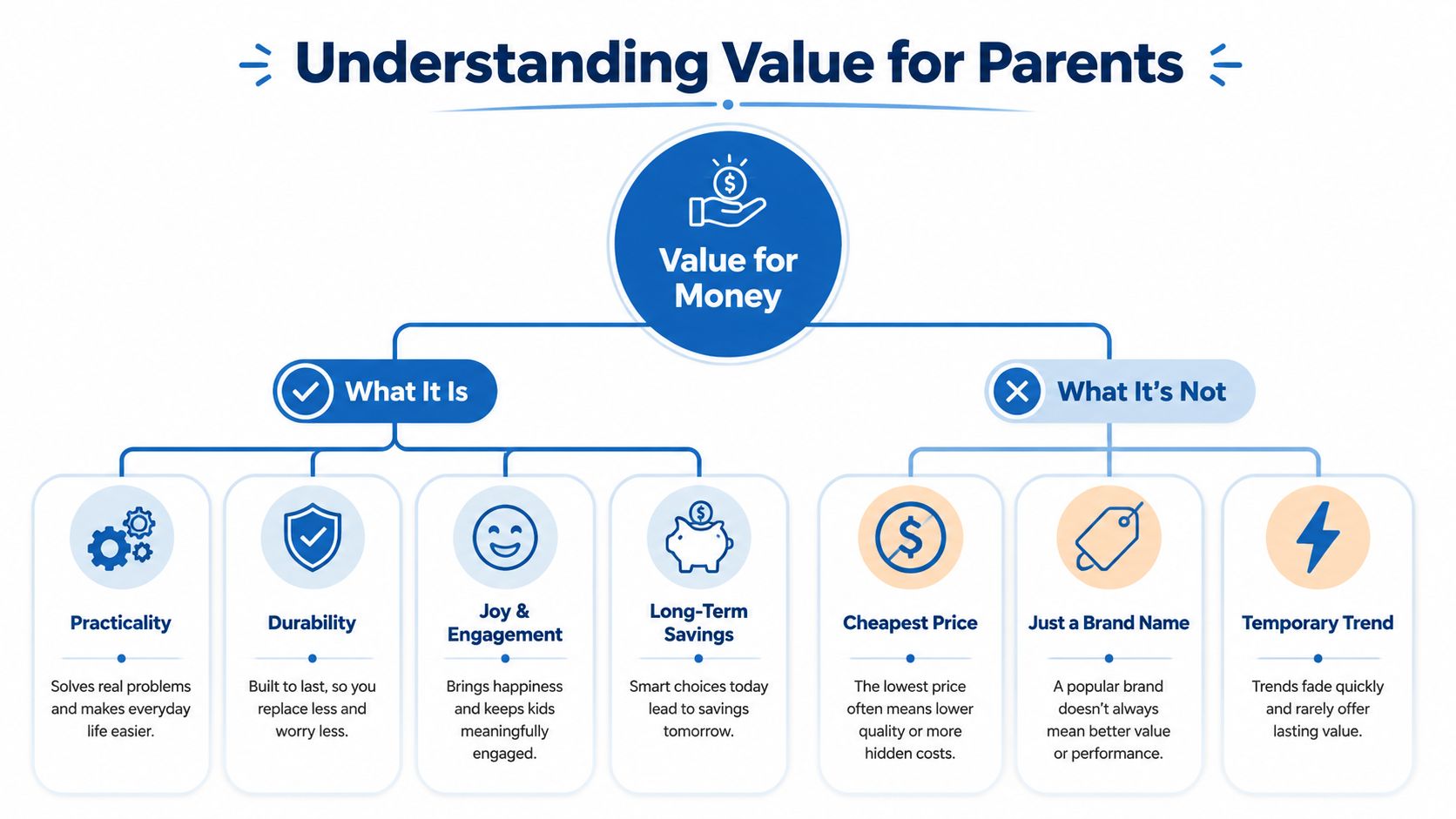
A practical way to think about value for money is this: price matters, but performance over time matters more.
In formal performance frameworks, value for money is commonly broken into the three Es: economy, efficiency, and effectiveness. Those frameworks separate input cost, how well inputs turn into outputs, and whether the intended result is achieved. They also note that a lower-cost input can still be poor value if it reduces throughput or fails to deliver the result (ACCA's explanation of the three Es).
For parents, that same idea becomes much easier to use.
The parent version of the three Es
Think about a family car. The cheapest old clunker on the lot might save money at checkout. But if it keeps breaking down, wastes your time, and can't reliably get the kids where they need to go, it wasn't a bargain.
Kids' gear works the same way.
| Parent lens | What it means in real life | What to ask |
|---|---|---|
| Economy | The upfront price | Is the starting price reasonable for what I'm getting? |
| Efficiency | How well it holds up in daily use | Will this keep working without extra fixes, relabeling, or replacement? |
| Effectiveness | Whether it solves the actual problem | Will it prevent mix-ups, save time, and make routines easier? |
A cheap label may score well on economy and fail badly on the other two. A better-made label can cost more upfront and still give stronger value for money because it keeps doing the job.
Price, performance, and peace of mind
Parents usually make the best decisions when we evaluate gear through three simpler filters:
- Price: Can this fit the budget right now?
- Performance: Will it survive the way my child uses things?
- Peace of mind: Will this reduce confusion, lost items, and repetitive mental load?
Parent rule: If a product only wins on price, keep looking.
That matters most during high-volume buying seasons. Back-to-school shopping pushes families into fast decisions, and that's exactly when low-value purchases slip in. A more deliberate list can help you separate true needs from false savings. InchBug's post on how to save money on back-to-school shopping is helpful for that reason. It centers planning, not panic buying.
What value for money is not
It isn't automatically the cheapest option.
It isn't just “big brand equals good value.”
It isn't paying more for features your family will never use.
The right purchase is the one that meets your child's real routine without creating new chores for you. That's the version of value for money parents feel.
The Smart Parent Metrics for Buying Kids Gear
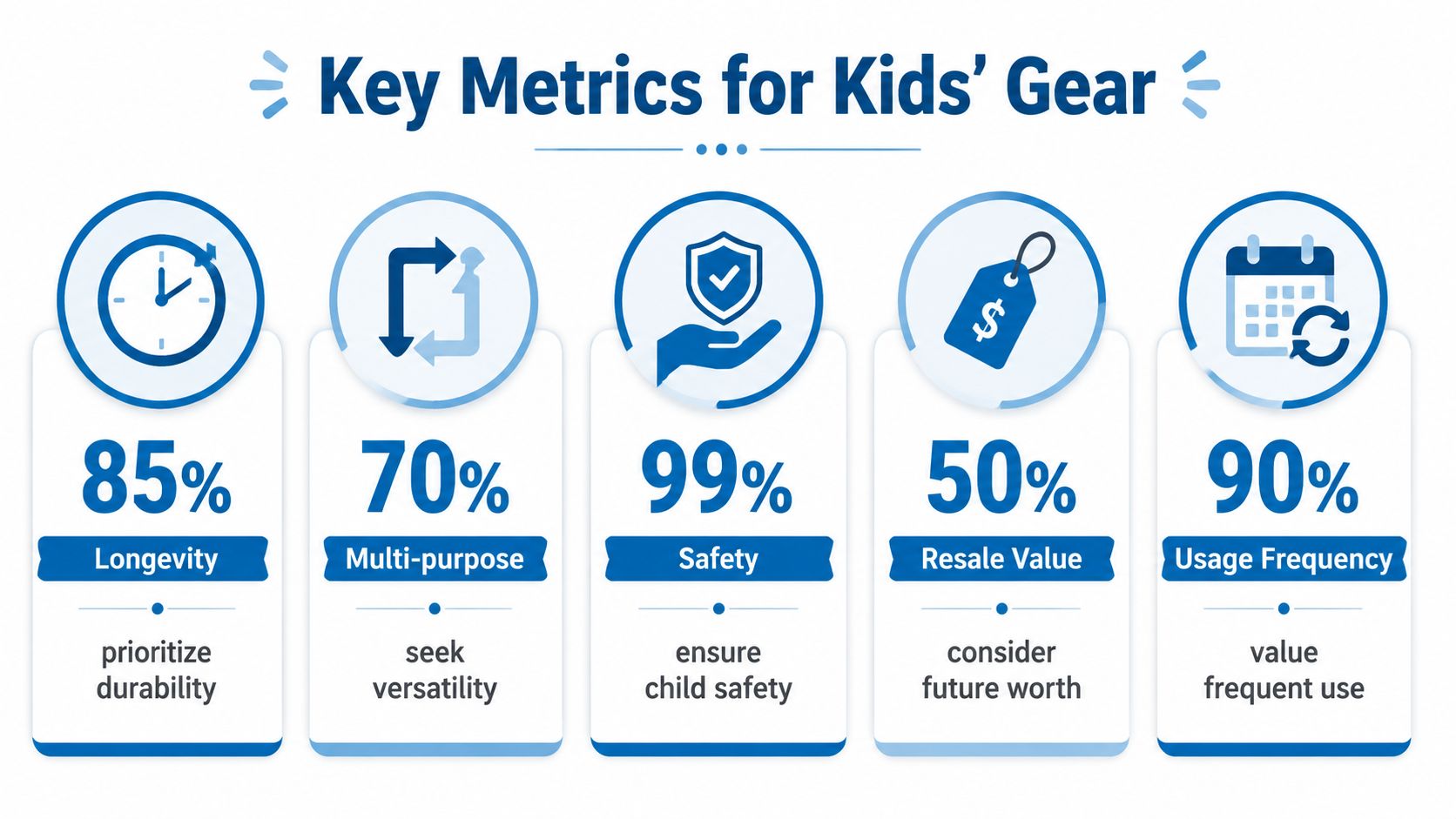
Families don't need a spreadsheet for every lunch container and label pack, but a few simple metrics make shopping much easier.
The strongest formal definition I've seen says value for money is the optimum combination of risk-adjusted life-cycle costs and quality needed to meet the user's requirement, rather than the lowest upfront price. It also emphasizes comparing options on a common scope and looking across the full lifecycle, not just the first transaction (BAC's value-for-money principles).
For parents, “life-cycle costs” means asking what this item will cost you over the whole period you use it.
Start with cost per use
This is the cleanest metric for kids' gear.
If one label option works briefly and another keeps working through repeated daily use, the second one often costs less per useful use, even if it costs more at checkout. You don't need exact industry benchmarks to use this. You just need honesty about your routine.
Ask yourself:
- How often will this be used? Daily bottle labels and lunch box labels get tested fast.
- How long is it likely to last? Think dishwasher, microwave, laundry, friction, and backpack wear.
- What happens if it fails? A decorative item failing is annoying. An identity label failing creates confusion immediately.
A cheap item with a short working life usually has a terrible cost per use.
Measure the hidden performance factors
A lot of products fail because parents only compare one visible feature: price.
Use this list instead:
- Durability under normal abuse: Can it survive daily handling, moisture, washing, and rubbing in bags?
- Material fit: Does the product suit the item it's meant for, such as clothing, shoes, bottles, or food containers?
- Ease of application: If it's fiddly or slow, many parents won't use it consistently.
- Readability: A label that technically sticks but can't be read doesn't solve much.
- Maintenance burden: Does it save work, or create another small task to remember?
For a practical look at what durability testing can involve for labels, this overview of label durability testing gives a useful benchmark for the kinds of wear families should care about.
A short explainer can help you think through lifecycle buying in broader family terms:
Don't ignore budget fit
Value for money still has to work inside a real household budget. Good budgeting advice can help you decide when it makes sense to pay more for durability and when you need to simplify categories entirely. I like Peaceful Mindful Pocket's budgeting advice because it treats family spending as a trade-off exercise, not a guilt exercise.
Buy fewer low-risk extras. Spend more carefully on the items that get handled every single day.
That one shift improves a lot of purchase decisions.
Your Value for Money Decision Checklist
The easiest way to shop smarter is to ask the same set of questions every time.
That approach matters because lifecycle value is often missed when people compare only the first price tag. Public-sector value-for-money frameworks explicitly stress the optimum combination of risk-adjusted life-cycle costs and quality, and they warn against treating a purchase as a one-time cost decision (BAC's lifecycle value explanation).
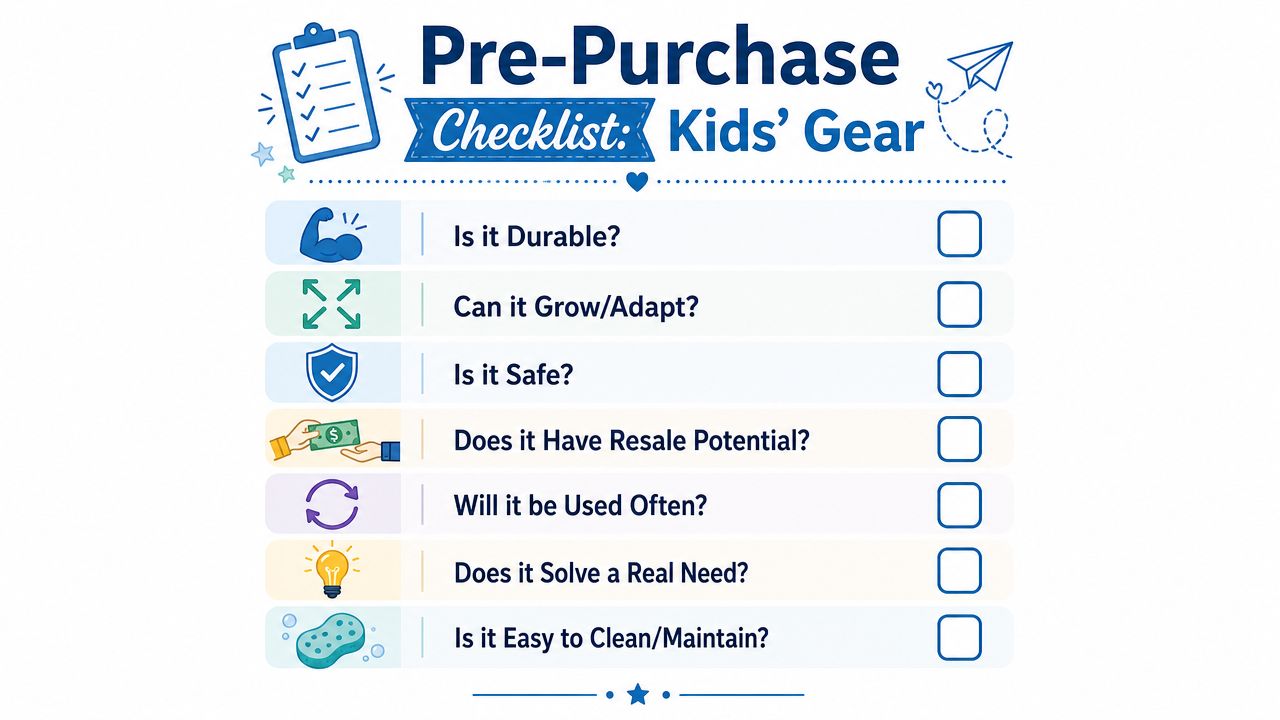
Questions worth asking before you click buy
-
Will it survive my child's real routine?
Don't buy for the ideal week. Buy for spilled milk, rushed drop-offs, overstuffed backpacks, and repeated washing. -
What's the replacement pain if it fails?
Some failures are minor. Others mean rebuying, relabeling, and sorting out confusion with teachers or caregivers. -
Does it save time or add steps?
If setup is annoying, many parents stop using the product consistently. -
Is the quality tied to the exact use case?
A label for shoes doesn't face the same stress as one used on bottles or lunch gear. Match the product to the job.
The stress test
A useful purchase doesn't just “work.” It removes friction from your day.
Ask:
- Will this reduce mix-ups?
- Will another caregiver understand it quickly?
- Can my child identify their own things more easily?
- Will I have to think about this again next week?
If the answer to that last question is yes, the item may be cheap but still poor value.
A fast yes or no method
Use this simple screen at checkout:
| If the product does this | Treat it as |
|---|---|
| Solves a frequent problem and keeps doing it | Higher value |
| Looks cheap now but needs frequent replacing | Lower value |
| Requires extra maintenance from you | Lower value |
| Works across multiple settings or caregivers | Higher value |
A good purchase keeps helping after you stop thinking about it.
That's the standard worth using with kids' gear.
Value in Action for Daycare and School Essentials
Value for money changes with context. What works for a daycare baby isn't always the right buy for a grade-school kid managing jackets, lunch gear, and sports items.
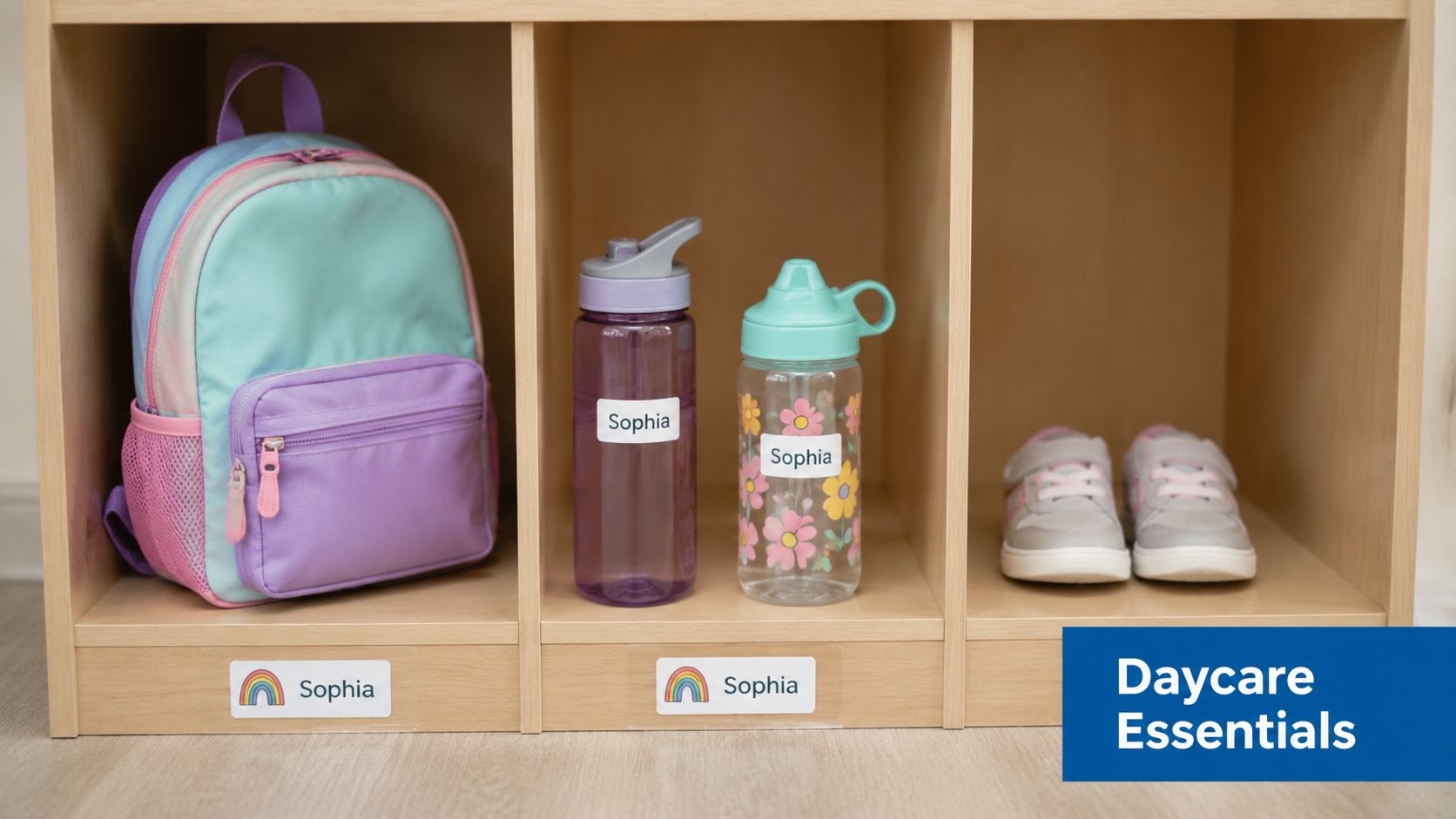
Daycare needs durability first
Daycare items usually get heavy handling and frequent washing. Bottles, cups, food containers, extra clothes, sleep items, and bags often move through several adult hands in one day.
That means value comes from products that are:
- Easy to read quickly
- Built for repeated washing
- Simple for caregivers to match to the right child
- Reusable across routine changes
A parent shopping for that stage should think less about style variety and more about dependable identification. A practical starting point is a solid daycare supplies list so you can label the right categories instead of missing obvious ones and patching the system later.
School needs coverage across more item types
Once kids hit preschool or elementary school, the challenge shifts. Fewer bottles may need constant sterilizing, but many more belongings travel back and forth: coats, lunch boxes, pencil cases, shoes, sports gear, and library bags.
That's where broader label coverage can create better value for money than buying one-off pieces. One option in that space is InchBug, which offers reusable bottle bands as well as labels for clothing, shoes, bags, and containers. The practical point isn't the brand name by itself. It's that matching the label type to the item type usually creates better results than forcing one product to do every job.
Value also includes fairness at home
Modern value-for-money thinking can include equity, meaning whether benefits are distributed fairly. In family life, that translates into a simple question: does a system only help organized, low-chaos households, or does it also reduce stress for families juggling daycare handoffs, allergy alerts, shared classrooms, and multiple caregivers? Better Evaluation's discussion of value for money and equity is useful here because it broadens the definition beyond price alone.
That wider lens matters. A labeling system that cuts confusion for every caregiver in a child's day has value even when the savings don't show up neatly on a receipt.
Quick Answers to Your Smart Shopping Questions
Parents usually ask the same few questions once they start thinking beyond the sticker price.
Are bundles and combo packs actually worth it
Sometimes yes, sometimes no.
They're worth it when the bundle matches the way your child uses things. If your kid needs labels for bottles, lunch gear, clothing, and shoes, a coordinated pack can reduce gaps and simplify ordering. If the bundle includes categories you won't use, the “deal” may just hide waste.
When is the cheapest option good enough
When failure won't create repeat cost, confusion, or stress.
If the item is temporary, low-stakes, and rarely used, the cheapest option can be perfectly sensible. But for anything handled daily by kids, teachers, and caregivers, low upfront price often stops being useful very quickly.
How can I tell whether quality claims are real
Look for evidence tied to use, not slogans.
Check whether the product description speaks plainly about how it handles washing, dishwashing, friction, or repeated use. Look for answers to practical questions, like the ones covered in these common questions about InchBug adhesive labels. You want specifics that match your routine.
Why does value for money feel so hard to judge
Because “value” is often context-specific, not universal.
In economics, value for money is assessed through economy, efficiency, and effectiveness. Public policy goes even further. Government agencies use tools such as the EPA's Value of a Statistical Life of $7.4 million in 2006 dollars in benefit analysis, which shows that value can involve complex judgments beyond sticker price (AIFS overview of value for money and VSL). For parents, the lesson is simpler: the right choice depends on the actual problem you need solved.
That same mindset helps with tech too. If you're comparing phones for a child, teen, or family backup device, this roundup of cheap iPhone deals UK is a good example of shopping by practical fit instead of assuming the lowest listed price is automatically the smartest buy.
If you want a simpler way to keep track of bottles, lunch gear, clothing, and school essentials, take a look at InchBug. The product range is built around everyday identification problems parents deal with, which makes it a useful place to apply this whole value-for-money mindset in real life.