

You're trying to get everyone out the door, and somehow the missing water bottle has started a full family investigation. One shoe is by the couch, the lunch box lid is on the counter, and the spare sweater you packed for daycare has already vanished into the mysterious pile of “maybe it's in the cubby.” By pickup time, a teacher is sorting nearly identical cups, jackets, and snack containers while three kids insist every dinosaur item belongs to them.
That's where themed sticker packs stop being a cute extra and start pulling real weight.
Used well, they help parents label faster, help kids recognize their own things, and help childcare staff keep shared spaces calmer. They also give children a visual cue they'll notice. A plain name label can work. A rocket, puppy, or construction-themed label a child loves usually works better because they remember it.
What Are Themed Sticker Packs
Themed sticker packs are coordinated labels and stickers built around one recognizable design set, such as dinosaurs, trucks, flowers, or space. The point is consistency. One child sees the same visual cue on their bottle, lunch box, extra clothes bag, and folder, and the adults around them can use that same cue to sort and return items faster.
That shared visual language is what makes these packs useful in both homes and childcare settings.
More than a craft supply
A random sticker sheet is usually decorative. A themed pack is meant to be used across a routine.
At home, parents use themed stickers to mark the items that leave the house every day and the ones that tend to come back missing. In daycare or preschool, staff can match that same theme to cubbies, bins, and personal belongings without stopping to read every name label during a busy handoff.
That overlap is where themed packs earn their spot. They help children recognize their things, help parents keep gear organized, and help providers run a room with fewer small interruptions.
Practical rule: If a child can spot their theme from across the room, you've already reduced one small piece of chaos.
Younger kids often recognize an image faster than printed text. A child may skip over their name on a small label, but they can usually find “my turtle” or “my dump truck” right away. That makes themed packs especially useful in shared spaces where many items look alike.
What makes a pack different from loose labels
A themed pack usually works better than mixing separate labels because it removes one more decision from an already busy system. You pick one design family once, then use it across the items that need to stay together.
A practical pack usually includes:
- Consistent artwork so items are easy to group at a glance
- Kid-friendly designs children can recognize without reading
- Different sizes or formats for bottles, containers, shoes, folders, and bins
- A clear job such as labeling belongings, organizing classroom supplies, or marking allergy-safe items
That last point gets overlooked. In group care, stickers are not only about ownership. They can also support communication. A clearly marked theme can help separate one child's backup clothes from another's, flag a lunch container that needs extra attention, or make allergy-related routines easier to follow when combined with written labels and center policies.
Why families keep using them
The market's shift beyond novelty means families have more options built for routine use, not just party favors. Good themed packs are made to handle repeated use on real kid gear, and that changes how often they get used.
They also make children more willing to participate. It is a lot easier to hear “pick the shark label for your cup” than “come help me label all your containers.”
If you're comparing larger sets for home and classroom use, bulk kids stickers for school and daycare organization can help you estimate how many labels you'll need once you start tagging the everyday basics.
Benefits for Parents and Childcare Staff
Parents and childcare teams usually want the same thing. Fewer mix-ups, fewer reminders, and less time spent figuring out whose item is whose.
The difference is where the stress shows up. At home, it looks like replacing lost containers, washing the wrong sweater, and trying to get a child to care about their own stuff. In a daycare room, it looks like a shelf full of matching bottles and ten interruptions in a row.
Why parents feel the difference first
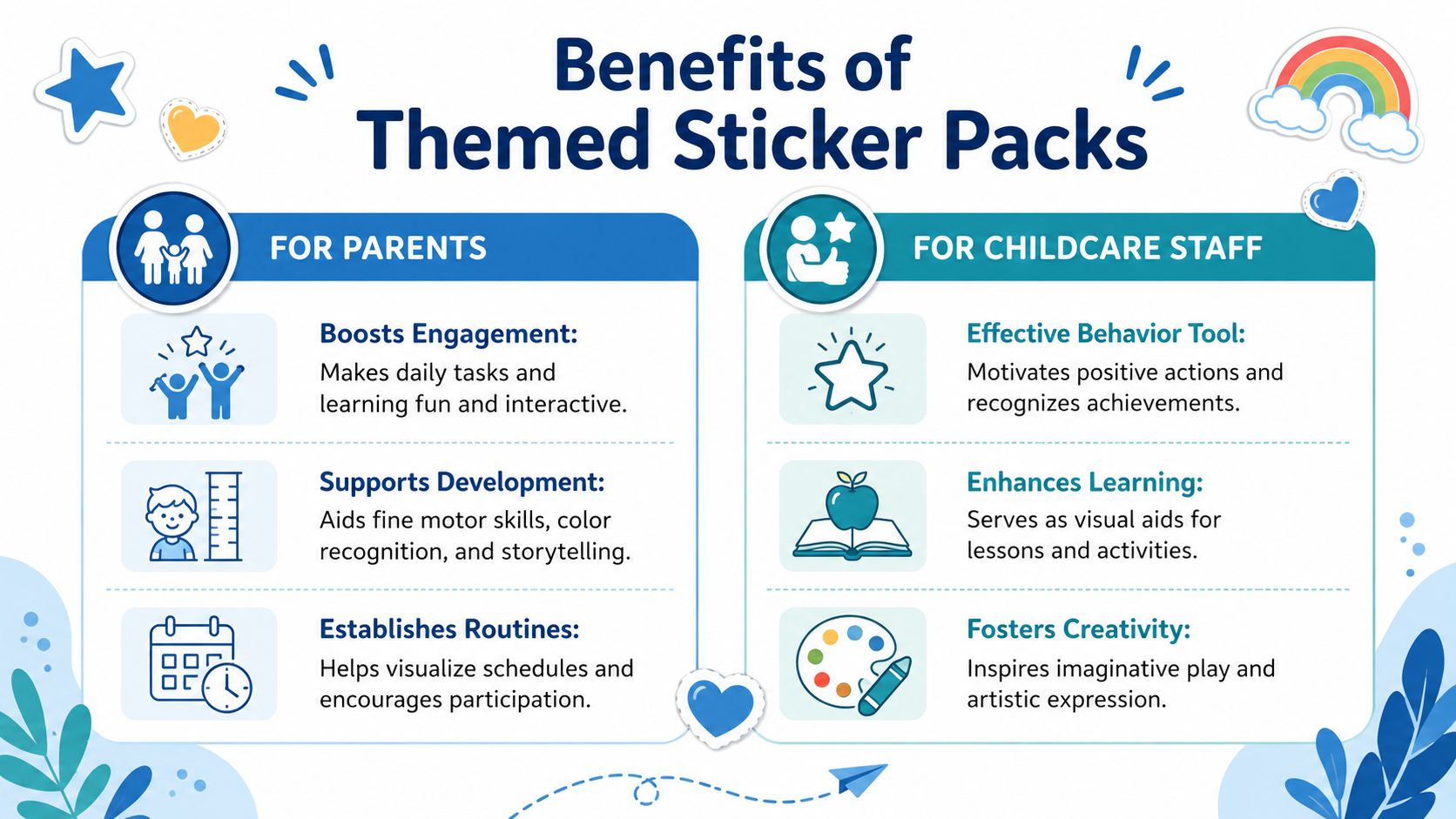
For parents, themed sticker packs reduce friction in the spots that repeat every day. Morning prep gets easier when the lunch box, backup clothes bag, and water bottle all have an obvious visual marker. Kids also start to take ownership faster when their labels feel personal and familiar.
A good theme does more than identify an item. It gives your child a shortcut.
- Less arguing: “Find your rainbow cup” lands faster than “Read the small print label.”
- Less replacing: Clearly marked items are more likely to make it home.
- More independence: Children can match their items to cubbies, bins, and hooks without waiting for help.
Why childcare staff need practical systems
In group care, the value is speed and clarity. Staff don't need one more cute activity. They need tools that support routine.
That's especially true because there's a real gap between sticker products marketed as conversation starters and tools that fit a classroom workflow. One example highlights that 25 non-judgmental questions are marketed for journals, but not for group settings, leaving teachers managing 15+ students without much guidance for structured use, as noted on Disobedient Ga's question sticker pack page.
That gap is where themed sticker packs can help when used intentionally.
In a busy room, visual systems beat verbal reminders every time.
A sticker theme can support classroom efficiency in ways that feel almost invisible once the system is running. Staff can match a child's bottle, blanket bag, and art folder at a glance. They can also separate allergy-related items, comfort objects, or nap gear with a consistent visual marker that parents and staff both understand.
Shared benefits in home and daycare
When both sides use the same theme, handoff gets smoother.
Here's what that can look like in practice:
| Situation | At home | In childcare |
|---|---|---|
| Water bottles | Easier to pack the right one | Easier to return after washing or snack time |
| Spare clothes | Simple to identify in a bag | Faster to match after accidents |
| Allergy items | Clear visual reminder for parents | Quick recognition for staff |
| Comfort items | Child knows what belongs to them | Less confusion during rest time |
That shared system lowers stress because it doesn't rely on memory alone. It puts the cue right on the object.
Practical Ways to Use Sticker Packs
The easiest way to get value from themed sticker packs is to use them in repeating trouble spots. Don't save them for crafts first. Start with the things that go missing, get mixed up, or trigger daily negotiations.
Labeling that actually gets noticed
One of the best uses is also the least glamorous. Label the items your child carries in and out every day.
A water bottle is the classic example because it travels, gets washed, gets set down in common spaces, and often looks almost identical to five others. A visible themed label gives both kids and adults a faster cue than a plain name alone.
I'd start with this small list:
- Daily drink gear: water bottles, sippy cups, straw cups
- Food containers: lunch boxes, snack cups, utensil cases
- Wearables: shoes, jackets, hats, spare-clothes bags
If you're sorting more than just cups and containers, these storage labeling ideas for families and classrooms are useful for turning a pile of stuff into a recognizable system.
Rewards that don't feel forced
Stickers still work as rewards because they're immediate and visual. The trick is keeping the job small and clear.
A toddler who won't wash hands without a protest may suddenly care a lot if handwashing earns a puppy sticker on a simple routine chart. A preschooler who resists cleanup may respond better when they're collecting construction-themed stickers toward a special privilege at home.
The sticker itself isn't magic. The routine is.
Keep the target behavior narrow. “Put shoes in the basket” works better than “be more responsible.”
In childcare settings, that same idea works for line-up routines, gentle hands, bathroom transitions, and quiet rest prep. Children can see progress, and adults don't need a complicated tracking tool.
Organizing spaces kids can follow
Here, sticker packs earn their keep. Put matching themed stickers on the outside of toy bins, art drawers, cubbies, and take-home folders. Then use the same theme on a child's personal belongings.
Now a child isn't decoding text. They're matching symbols.
A few low-effort examples:
- Toy bins: animal theme for pretend play, vehicle theme for blocks and cars
- Supply drawers: color-coded themes for crayons, glue, scissors, and paper
- Cubbies: one theme per child or per classroom group
That kind of setup helps children reset a room with less adult direction. It also makes substitute coverage easier because the system is visible, not tucked away in someone's memory.
How to Choose the Right Stickers
The sticker that works at home is usually the one that also makes sense to a teacher at pickup. If a provider can spot it fast on a bottle, nap item, or take-home folder, daily handoffs get easier for everyone.
Start with function, then pick the cute option inside that lane. Three choices matter most: theme, material, and size.
Pick a theme a child and caregiver can spot fast
Choose artwork your child recognizes in a second, but also check that another adult can identify it just as quickly in a busy room. That rules out a lot of overly detailed designs.
For toddlers and preschoolers, clear images beat busy illustrations. A bold dinosaur, truck, heart, or rainbow is easier to find than artwork with tiny faces, patterns, and background clutter. If the sticker is helping with identification, simple wins.
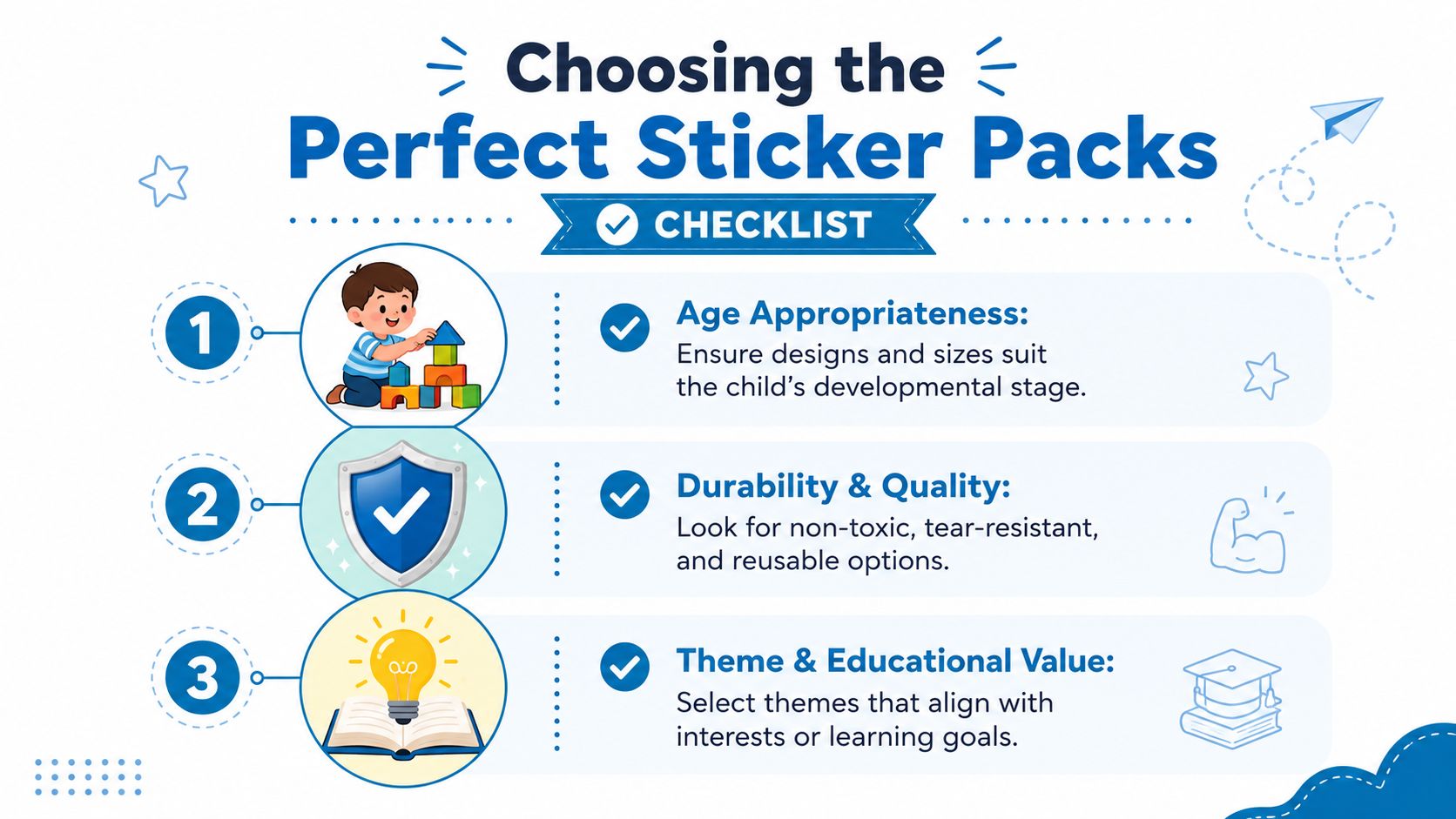
One practical test helps here. Set the sheet on a table and ask, “Which one is yours?” If your child hesitates or points to three different options, the design is probably too complicated for real-life use.
Choose material that holds up to shared spaces
A sticker on a bedroom bin has an easy job. A sticker on a daycare water bottle has to survive washing, rubbing, spills, sunscreen hands, and being tossed into the wrong backpack.
That is why material matters so much. As noted earlier, vinyl shows up again and again because it handles moisture and daily wear better than standard paper stickers. For bottles, lunch gear, and toiletry items, waterproof sticker labels for daily-use items usually hold up better over time.
Cheap stickers fail first on the items that move between home and childcare every day.
If you also need plain utility labels for temporary sorting, supply rotation, or quick classroom organization, Phomemo D30 labels for business can cover the less decorative jobs without wasting your themed packs.
Match the size to the actual surface
Size mistakes are common. Oversized stickers lift around curved lids. Tiny ones disappear on cubbies and don't help a rushed caregiver much.
Use this quick guide:
| Item | Better choice |
|---|---|
| Water bottles and lunch containers | Medium labels with clear artwork |
| Shoes and small accessories | Compact shapes with strong contrast |
| Cubbies and bins | Larger stickers visible from a short distance |
For families sharing items across home, daycare, and after-school care, mixed-size packs tend to earn their keep. A little variety lets you label the bottle, the extra clothes bag, and the cubby without forcing one sticker size onto every job.
Making It Personal with Customization
Personalization is what turns a general sticker into something that feels owned. That can be the difference between a child ignoring a label and proudly pointing it out to a teacher.
A child who loves fire trucks might like a fire truck sticker. A child who sees their own name paired with that fire truck is much more likely to notice it, remember it, and use it as a cue.
What to customize first
Start with the most useful details, not every possible design flourish.
Good personalization usually includes:
- Name first: this is the core identifier
- Simple color choice: enough contrast to read quickly
- Theme second: supports recognition and buy-in
- Optional extra detail: class name, allergy note, or family contact detail when appropriate
For some families and providers, a mix of permanent custom labels and temporary print-on-demand tags works well. If you also need quick utility labels for bins, rotating classroom supplies, or short-term sorting, Phomemo D30 labels for business can be a practical companion resource for the non-cute, purely functional jobs.
Why image quality matters
If you're adding custom artwork, a character image, or a photo, file quality matters more than commonly expected. Professional production calls for 300 DPI artwork or vector files at the final print size, because lower-resolution files such as 72 DPI can look blurry and lose edge clarity on small stickers, as explained in Overnight Prints' sticker printing guide.
That's especially important with children's labels because many are small, matte, and handled up close. If the text or image isn't crisp, it stops doing its job.
Here's the practical version of that rule:
- Use the original file, not a screenshot
- Avoid enlarging tiny images
- Keep names in readable fonts
- Choose contrast over decorative effects
Customization that stays useful
The best personalized stickers don't try to do everything. They stay readable, durable, and easy to identify from a glance.
If you're weighing name-based options, customized name tag stickers for children's belongings can help you think through what information belongs on everyday labels and what's better saved for specialty tags.
Customization works best when it makes daily routines simpler. If it adds visual clutter, it's not helping.
Creative Bundles and Activity Ideas
Bundles are where themed sticker packs become more than an item-by-item fix. They help you cover the whole ecosystem of kid gear at once, which is why they're useful before daycare starts, before school begins, or right before a season change when everything needs relabeling.
Bundle hacks that save effort
Bundling works because it simplifies the choice. According to Printkeg's guide to sticker bundle ideas, themed sticker bundles are one of the most effective ways to increase average order value because they encourage people to buy multiple designs without overthinking, and round-number pricing such as $5, $10, or $15 helps anchor value.
For parents, the useful takeaway isn't the sales strategy. It's the planning shortcut.
A well-chosen bundle can cover:
- Back-to-school basics: bottle, lunch box, pencil pouch, folders
- Daycare rotation items: spare clothes bag, nap items, comfort object case
- Home organization: toy bins, craft drawers, bathroom step-stool charts
Another simple idea is using themed packs as sticker gift tags for party favors and seasonal treats. That works well when you want something practical that still feels personal.
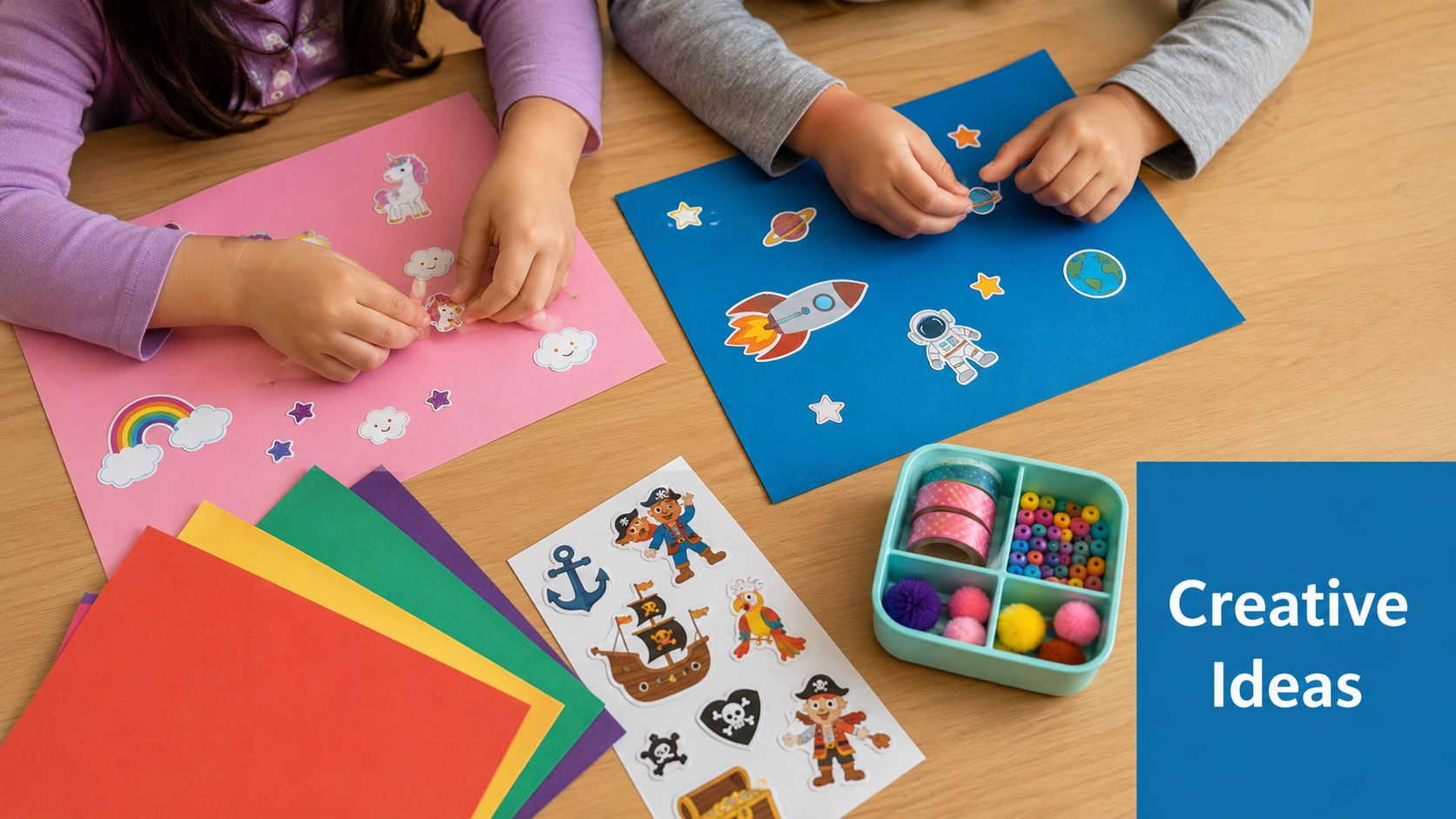
Low-effort activities kids actually repeat
Try one of these when you want stickers to do more than label:
- Story starter jar: drop themed stickers into a jar and let kids pick one or two to start a made-up story
- Keepsake box decorating: each child decorates a memory box with their theme
- Routine cards: add a sticker to each step of a simple morning or cleanup sequence
- Thank-you notes: children decorate folded cards for teachers, grandparents, or classmates
If you want a quick visual spark, this video gives a nice feel for hands-on sticker creativity in action.
The best part is that none of these ideas require a perfect setup. They just give stickers a second life after the labeling is done.
If you're ready to make daycare drop-offs, classroom sorting, and everyday kid clutter feel more manageable, InchBug is a smart place to start. Their personalized labels and kid-friendly organization tools are built for the everyday world of bottles, lunch boxes, cubbies, shoes, allergy alerts, and all the little things that tend to wander.