

A calmer classroom starts at the doorway. Students arrive carrying coats, water bottles, lunch boxes, papers, folders, and loose supplies while you're trying to prepare the first lesson. If each item has a visible home, a label children understand, and a routine they can repeat, arrival becomes manageable instead of becoming the first problem of the day.
Effective teacher classroom organization isn't about buying more attractive containers. It's about connecting the room's systems. Belongings enter through a drop zone, materials move through labeled stations, papers follow a defined path, and students learn how to reset each area after use. The seven tools below support those connected systems in different ways. Each includes practical materials, setup steps, implementation guidance, trade-offs, and a classroom-ready example. For additional ideas about child-scaled spaces, see this Montessori classroom furniture guide.
1. InchBug
A crowded entry area creates daily confusion. Students arrive with bottles, lunch boxes, coats, shoes, and bags, then need to decide where each item belongs before the first lesson begins. InchBug labels help connect those personal belongings to a clear classroom drop zone, so ownership is visible before items reach cubbies, backpacks, or shared tables.
The Orbit Labels® reusable silicone bottle band is designed to snap around a bottle and be reused instead of replaced like a one-time sticker. InchBug also offers dishwasher- and microwave-safe name labels for water bottles and lunch boxes, plus TagPal clothing labels, ShoePal shoe identifiers, bag tags, allergy alerts, clothing stamps, and themed sticker packs in the full InchBug label collection.
Build a visible belongings system
Start with one drop zone and keep its sequence consistent. Label each cubby with the child's name, photo, or a name-and-icon combination. Teach students to hang the coat, place the bag, put the bottle in the bottle area, and move the lunch box to its assigned location. The guidance on classroom cubby labels can help you choose a format that matches your students' reading and visual needs.
Put labels where children make decisions, not only where adults track inventory. A color-coded symbol can identify a supply bin, an icon can mark a center container, and a readable name label can identify personal belongings. Using both words and visuals supports early readers, multilingual learners, and students who depend on visual cues.
What works and what doesn't
Works well:
- Durable identification: InchBug labels are waterproof and fade-resistant, with selected labels designed for machine washing or dishwasher use.
- Broad coverage: One labeling approach can cover bottles, lunch boxes, clothing, shoes, bags, sports gear, and allergy-related items.
- Simple ordering: Daycare and back-to-school bundles help families label several item types together.
- Child-friendly handling: Names, colors, and icons help students recognize their belongings without stopping an adult.
The trade-off is fit and cost. Orbit bands can be snug to put on and remove, which supports a secure, reusable fit. Smaller orders may be less economical when shipping applies, so bundles or promotions can suit families labeling many belongings. Orders generally ship in 3–4 business days, and InchBug lists free shipping on orders of $50 or more in its store information. Check the current terms before ordering.
Label the item students confuse most often first. Expand the system after the drop zone works reliably.
2. Really Good Stuff
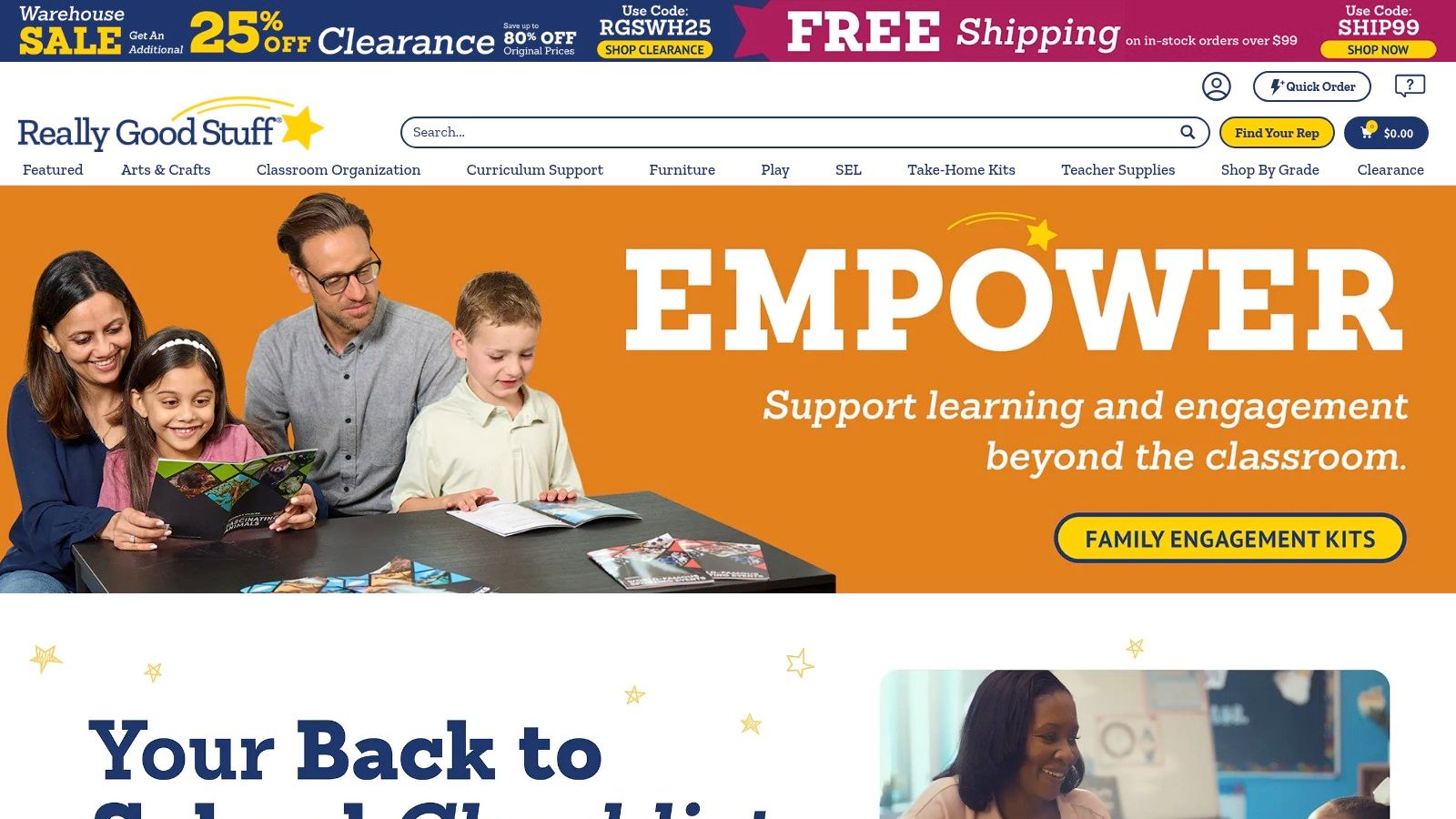
Really Good Stuff suits teachers who want a coordinated supply system without assembling every component from unrelated sources. Its classroom organization range includes caddies, tubs, baskets, chair pockets, book pouches, drawer units, and color-coordinated storage, giving students consistent visual signals across desks, centers, and libraries.
Match storage to student movement
Use a caddy at each table for supplies students share during a lesson. Keep the contents limited to what that group needs, then place a small picture label on each section. A book bin belongs beside the reading area, while a chair pocket belongs at the student's seat. Storage works best when children can reach it without crossing the room.
The ColorClass system can support group or subject coding. For instance, blue can identify math materials, green can identify science resources, and a particular color can identify one table team. The system only helps if the same color means the same thing everywhere, so avoid changing the code for decoration.
The practical trade-off
Really Good Stuff's plastics are designed for frequent classroom use, and the products are purpose-built for PreK and elementary settings. That makes them easier to combine than random household bins, especially when several areas need the same visual language. Teachers should still check dimensions before ordering, because a bin that fits a shelf may not fit a desk, cubby, or rolling cart.
The main drawback is cost. Generic storage may be cheaper for a quick fix, while a coordinated system costs more upfront. Popular colors can also sell out during back-to-school season, so choose a neutral base if you need to expand the system gradually. Browse the Really Good Stuff classroom organization collection and begin with the area that causes the most daily interruptions.
3. Lakeshore Learning
A classroom often becomes disorganized because essential materials are spread across too many locations. Lakeshore Learning addresses that problem with rolling teaching carts, multi-bin mobile centers, book bins, seat sacks, and storage furniture that consolidate materials near the point of use.
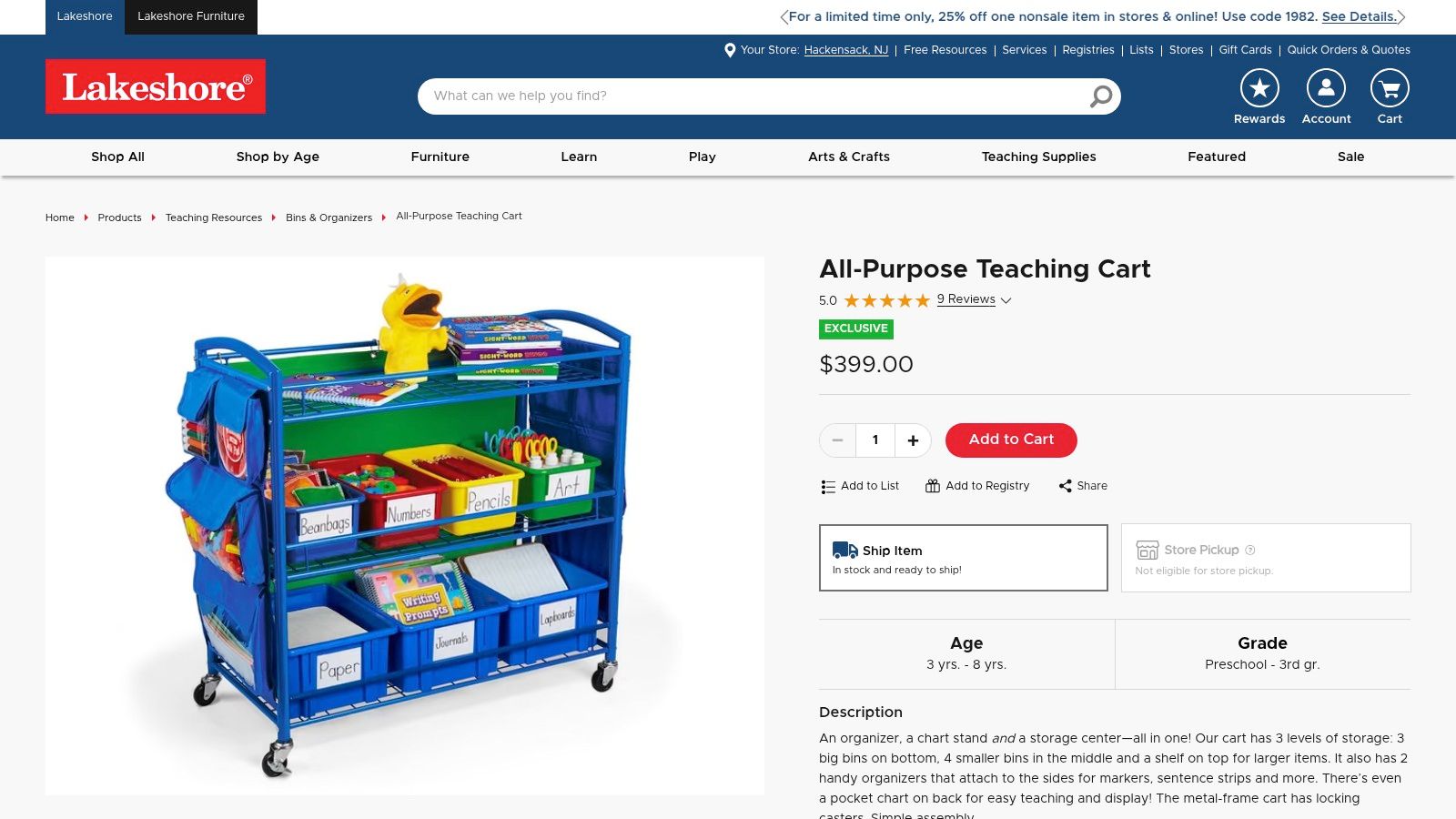
A rolling cart can hold the resources for one instructional block, such as phonics cards, whiteboards, markers, and response materials. Instead of sending students to several shelves, you move the cart to the teaching area. That reduces traffic and makes resetting the lesson more straightforward.
Give every cart a job
Don't create a “miscellaneous” cart. Assign each cart a specific role, such as small-group reading, intervention, art, or technology. Label each bin by task rather than by vague contents. “Partner reading cards” tells students what belongs there, while “supplies” leaves too much room for random items.
Lakeshore's all-purpose teaching cart is a good example of a mobile command center. Before buying a larger unit, map the route it needs to travel. Measure doorways, storage spaces, and turning areas, then decide where it will park when students aren't using it.
Use mobility carefully
Mobile storage works when movement has a purpose. It doesn't work when every object rolls around the room and students can't tell which cart is active. Keep one designated parking space for each cart, and post a reset picture showing what the cart should look like at the end of the lesson.
Lakeshore products are known for school-friendly construction and educator-informed design, but larger units can be expensive and heavy. Freight or shipping costs can also add to furniture purchases. If your problem is scattered daily supplies, start with a smaller mobile organizer rather than outfitting the whole room at once. For additional preschool layout ideas, review these preschool classroom setup ideas.
4. School Specialty
School Specialty is strongest when the task is larger than organizing one shelf. Its Classroom Select and Childcraft ranges support coordinated room outfitting with cubbies, shelving, book displays, carts, mobile storage, and integrated classroom furniture. That makes it a practical option for administrators, preschool directors, or teachers moving into an empty room.
The advantage of a single institutional supplier is consistency. Cubbies can align with storage shelves, book displays can match the traffic flow, and mobile units can be selected around the room's teaching zones. A coordinated setup is easier to explain to students because the furniture itself reinforces where belongings, books, and materials belong.
Plan the room before ordering
Draw the room and mark four practical zones: entry and belongings, whole-group instruction, independent work, and resource access. Then identify which items students need independently and which should remain teacher-managed. This distinction matters. Open access encourages ownership for everyday supplies, while controlled access protects special materials and prevents a crowded resource area.
School Specialty provides planning and specification resources, but its broad catalog can feel overwhelming. Narrow your search with measurements, student access requirements, mobility needs, and the type of material each unit will hold. A low book display serves a different purpose from a tall storage cabinet, even if both technically store books.
Procurement is part of organization
For a full room, ask about delivery conditions before committing. Some products are quick-ship, while configurable furniture may have different lead times, and freight delivery requires planning. The Classroom Select furniture range is better suited to deliberate room planning than an urgent small-bin purchase.
The trade-off is scale. This supplier can simplify a large project, but a teacher seeking one replacement caddy may find the selection excessive. Use it when your organization problem involves the room's structure, not just a cluttered drawer.
5. Teacher Created Resources
Teacher Created Resources blends classroom organization with visual design. Its storage bins, caddies, chair pockets, labels, and floor markers come in coordinated themes such as Eucalyptus, Boho, and Brights. That can help teachers build a calm-looking room while still giving students clear signals about where supplies and materials belong.
A theme is useful when it supports a code. Use one color family for writing materials, another for math manipulatives, and floor markers to show where small groups gather. Keep the coding simple enough that a student can answer, “Where does this go?” without looking for you.
Make decoration do practical work
A chair pocket can hold an individual folder or independent-reading book. A small caddy can carry the tools needed for a center. A floor marker can identify a meeting spot or indicate where a finished project should wait. These small organizers often solve movement problems better than a large cabinet placed at the back of the room.
The literacy center organization guide offers a useful principle for this kind of setup, label the resource by the activity students perform, not only by the material inside. “Word building” is more actionable than “cards and tiles.”
Know the limits
Teacher Created Resources is a strong fit for teachers refining traffic flow and visual consistency. It offers many small-format organizers, but heavier furniture options are more limited than with institutional furniture suppliers. Seasonal themes may also rotate, so a design you plan to expand might not always be available.
Choose a neutral storage foundation if you expect the room to grow. Then use themed labels, floor markers, or caddies for the parts of the system students interact with most. That approach keeps the classroom recognizable without making every future purchase depend on a single seasonal line. Explore the Teacher Created Resources organization collection for modular pieces that support a connected routine.
6. Copernicus Educational Products
Copernicus Educational Products is built for classrooms where materials move constantly. Its mobile teaching easels, trolleys, tub systems, Tech Tub device storage, and STEM or maker carts combine storage with the teaching surface or activity area. Instead of treating a cart as a container, you can use it as a mobile work station.
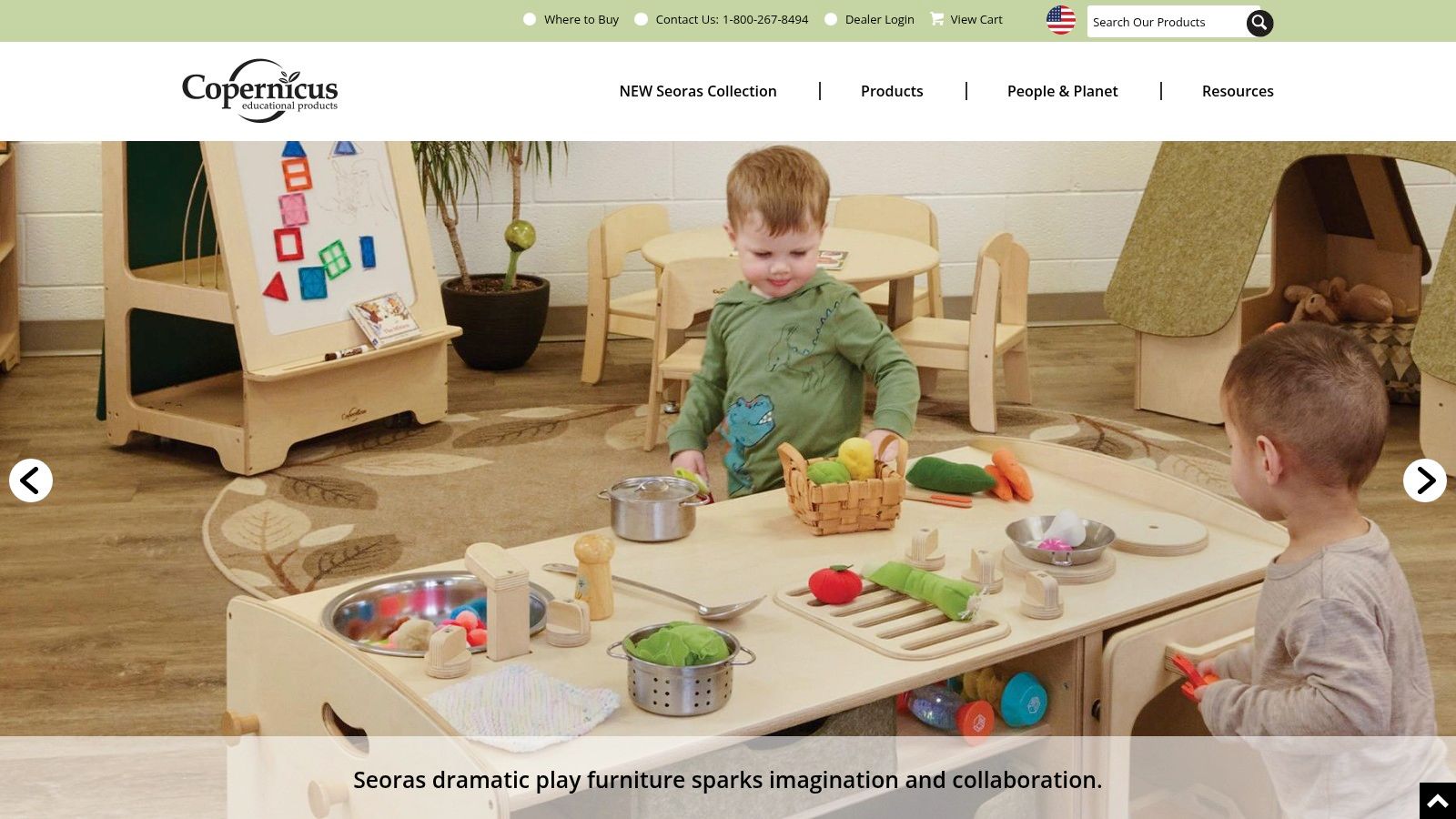
This works particularly well for project-based classrooms. A STEM cart might hold building materials, planning sheets, safety supplies, and finished-work trays. A teaching easel can combine a whiteboard, book ledges, chart storage, and tubs, so the teacher doesn't need to carry separate materials between the meeting area and the work area.
Design for transitions
Give each tub a clear task and place materials in the order students use them. For an art activity, one tub might hold paper, another tools, and another cleanup materials. Optional hinged lids can help contain items between sessions, while stackable tubs make it easier to store a complete activity together.
Device storage deserves its own routine. Assign each device a numbered slot, show students how to return cables, and make charging part of the closing procedure. A cart can't create organization by itself. Students need a predictable sequence for collecting, using, returning, and checking materials.
Copernicus hardware is intended for frequent movement and heavy use, but its products generally cost more than simple bins. Some models are also bulky, so measure the room and plan where the cart will sit when it's not active. The Copernicus classroom storage collection is most useful when mobility reduces repeated trips and transition clutter. For smaller creative areas, pair a mobile cart with this art supply organization guidance.
7. Erin Condren Teacher Lesson Planner And Accessories
A tidy classroom can still lose time if planning sits in scattered notes, sticky reminders, email threads, and loose papers. Erin Condren's Teacher Lesson Planner and accessories bring lessons, schedules, checklists, seating charts, and classroom communication into one portable system.
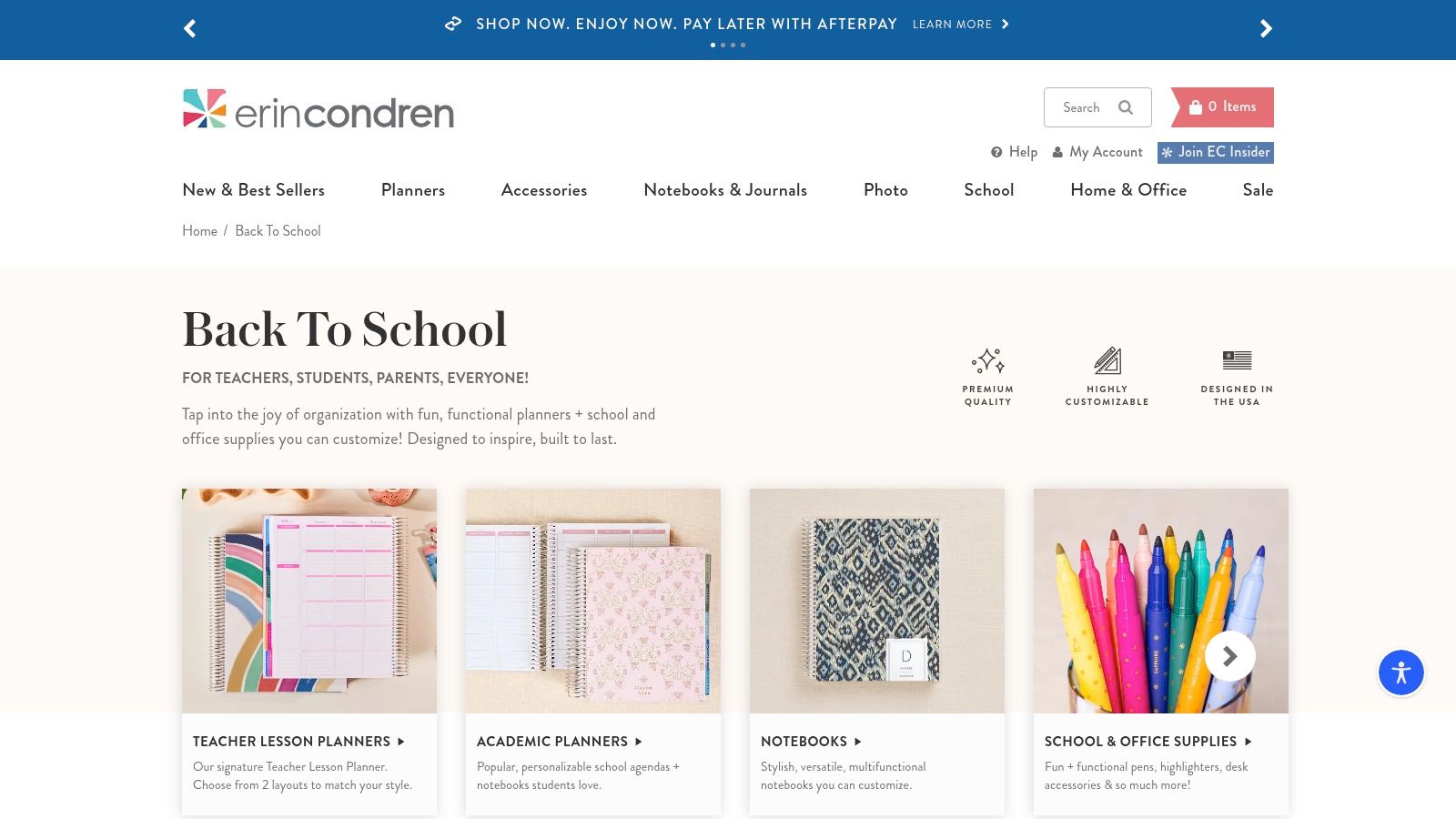
Use the planner to coordinate the room's student-facing systems. Record the day students practise the supply routine, note when a station needs replenishing, and track papers waiting for distribution or filing. A dashboard or bookmark can mark the current teaching block. Checklists can keep preparation separate from the end-of-day reset.
Connect planning to the room
Plan the paper path before papers start piling up. Set up three clearly labelled trays, such as To Copy, To Distribute, and To File, then record those names in the planner. Students can return work to the correct place because the tray labels match the instructions they hear.
Apply the same structure to materials. For each lesson, note what students need, where they collect it, and where they return it. Planning accessories can document that sequence, while the physical stations give materials a dependable home. The best classroom management strategies work better when expectations, room layout, and teacher follow-through use the same system.
The main advantage is customization. Different layouts, coil options, dashboards, stickers, and bundles let teachers build around their recurring workload. The trade-offs include price, extra weight, and limited fit for teachers who prefer a fully digital workflow. Review the Erin Condren teacher planning collection, then choose only pages that support decisions you make each week. A planner should guide drop zones, labelled stations, and paper routes, not become another attractive container that requires managing.
Top 7 Classroom Organization Brands Comparison
| Product | Implementation Complexity 🔄 | Resource Requirements ⚡ | Expected Outcomes 📊 | Ideal Use Cases 💡 | Key Advantages ⭐ |
|---|---|---|---|---|---|
| InchBug | Low, simple ordering & label application (🔄) | Low per-item cost; best with bundles; minimal space (⚡⚡) | Durable, long-lasting ID; fewer lost items (📊 High) | Families, daycare, back-to-school personal labeling | Reusable Orbit bands; waterproof/dishwasher-safe; strong reviews (⭐⭐⭐) |
| Really Good Stuff | Low, ready-to-use classroom supplies (🔄) | Moderate cost; durable plastics; easy to replenish (⚡⚡) | Cohesive, routinized classroom organization (📊 High) | PreK–elementary classrooms needing modular storage | Teacher-designed lines; ColorClass system; long-lasting plastics (⭐⭐) |
| Lakeshore Learning | Moderate, some assembly/installation for furniture (🔄🔄) | Higher cost for large units; freight possible (⚡) | Comprehensive storage that reduces setup time (📊 High) | Classrooms needing carts, mobile centers, and furniture | Teacher-tested designs; ready-to-roll classroom solutions (⭐⭐) |
| School Specialty (Classroom Select/Childcraft) | High, planning, specs and procurement for whole-room outfitting (🔄🔄🔄) | High cost + freight/lead times for furniture (⚡) | Coordinated, scalable room solutions for full classrooms/schools (📊 High) | Administrators or large-scale classroom/facility outfitting | Multiple in-house brands; planning tools and specification support (⭐⭐) |
| Teacher Created Resources | Low, plug-and-play themed organizers (🔄) | Moderate, many small-format items; limited heavy furniture (⚡⚡) | Unified classroom aesthetic with functional organization (📊 Moderate–High) | Teachers who want coordinated decor and small-format storage | Theme-based lines; lots of small organizers to refine routines (⭐⭐) |
| Copernicus Educational Products | Moderate, some setup for mobile/tech carts (🔄🔄) | Higher cost; bulky units require storage planning (⚡) | Durable mobile “command centers” that streamline transitions (📊 High) | Classrooms needing heavy-duty mobile carts, STEM/maker, tech charging | Very durable hardware; purpose-built for frequent movement (⭐⭐) |
| Erin Condren, Teacher Planner & accessories | Low, buy and start using; customizable layouts (🔄) | Moderate cost; physical storage for paper planners (⚡⚡) | Centralized planning, schedules, and communication tracking (📊 Moderate–High) | Teachers preferring paper planners and customizable organization | Highly customizable planners, dashboards, and teacher-focused accessories (⭐⭐) |
Make Organization Easy to Repeat
Start with the classroom's biggest daily friction point, not a complete room makeover. If arrival creates the most disorder, build the entry and belongings system first. If students constantly interrupt small groups to ask for supplies, organize one accessible station and teach the collection and return routine. If papers pile up, define the paper path before buying another drawer unit.
The strongest systems follow a simple sequence. Assign every item a clear home, label that home in language children understand, model the routine, practice it when the stakes are low, and revisit it after several days. Students may need to see you demonstrate how to place a folder in a tray, return a marker to its section, or reset a center before they can do it independently.
Physical layout also needs to account for real classroom conditions. Multigrade and highly mixed-ability classrooms can involve overlapping roles, compressed instructional time, limited space, and insufficient materials, which makes organization more than a visual exercise. Research on elementary multigrade settings describes logistical strain and instructional confusion when teachers organize multiple age groups and curricula in the same room, so generic advice built around one grade and one curriculum may not transfer cleanly to every classroom (multigrade classroom research).
New teachers often need the same practical support. Research on novice teachers describes inadequate preparation and limited professional support for establishing classroom organization and behavior routines, leaving many teachers to translate theory into daily systems on their own (research on beginning teacher preparation). A routine should therefore be teachable, visible, and forgiving when students forget.
Classroom organization also protects instructional time. In a longitudinal study of 132 classrooms, teachers spent an average of 25.83 minutes per day in the fall on orienting and organizing activities, while teacher-managed activity averaged 68.8 minutes per month and declined by 1.49 minutes per month as the school year progressed, as reported in this classroom organization study. The practical lesson isn't to chase a perfect room. It's to build routines that gradually require less adult management.
Choose one system this week. Label the home, show the movement, let students practice, and adjust the layout when the routine reveals a problem. Durable reusable labels can support long-term ownership for bottles and other frequently mixed-up belongings, while storage, planning tools, and visual cues work together to make the classroom easier for students and teachers to maintain.
InchBug offers reusable Orbit Labels® bottle bands, waterproof name labels, clothing and shoe identifiers, bag tags, allergy alerts, and school-ready bundles for children's everyday belongings. Visit InchBug to label the items most likely to get mixed up and connect your classroom entry routine to a clearer, calmer organization system.