

Lost jackets, misplaced gym shorts, mystery sweaters… every parent knows the struggle. When you’re tired of the lost-and-found pile claiming another piece of your child’s wardrobe, sew on name labels offer a classic, permanent solution. Think of them as a lasting signature on your kid's belongings—unlike stickers that peel or ink that fades, these identifiers are the definition of "set it and forget it" peace of mind.
Why Parents Trust Sew On Name Labels
I like to think of sew on name labels not just as tags, but as a small investment in preserving my child's wardrobe and my own sanity. They’ve been the go-to choice for daycare, school uniforms, and summer camp for generations for one simple reason: their durability is absolutely unmatched.
Because you stitch them directly into the fabric, they become a permanent part of the garment. This physical bond means they can handle the toughest conditions imaginable—from high-heat washing machine cycles and tumble dryers to the everyday reality of the playground. That resilience is what keeps clothes from disappearing, saving you the frustration and cost of replacing them.
The Advantage of Permanence
The real magic of sewing on a label is its permanence. While modern options offer speed, none can truly match the longevity of a securely stitched tag. This is a game-changer for items where losing them is just not an option:
- Expensive Uniforms: It’s a simple way to protect the investment you’ve made in blazers, skirts, and gym kits.
- Sentimental Items: That first team jersey or a cherished blanket will always find its way home.
- Hand-Me-Downs: When your child outgrows the item, the labels can be carefully removed with a seam ripper, leaving the garment pristine for the next kid.
It’s clear parents are looking for reliable solutions. The global fabric labels market, which includes sew on name labels, reached a value of approximately $5 billion USD in 2025 and is expected to keep growing. This trend is driven by parents like us who need labeling options we can count on for school and daycare.
Quick Label Type Comparison
To really see their value, it helps to compare sew on labels to the other common options out there. While each type has its place, for sheer endurance, the traditional method is still the champion.
Here’s a quick look at how they stack up.
| Label Type | Durability | Application Method | Best For |
|---|---|---|---|
| Sew-On | Highest | Hand or machine sewing | Uniforms, outerwear, hand-me-downs |
| Iron-On | High | Hot iron application | T-shirts, socks, non-stretchy fabrics |
| Stick-On | Medium | Peel and stick | Care tags, hard surfaces, shoes |
Ultimately, choosing the right clothing labels for your kids makes life simpler for everyone involved—parents, teachers, and caregivers. That simple act of stitching on a name ensures belongings are easily identified, cutting down on mix-ups and losses in busy classrooms and chaotic coat rooms.
The Unmatched Durability of Stitched Labels
While iron-on labels can start to peel at the edges and marker ink inevitably fades with every wash, a stitched label is in it for the long haul. The real strength of a sew-on name label is its incredible resilience—a quality that more convenient, modern alternatives just can't seem to match.
When you physically stitch a label onto a piece of clothing, you're creating a bond that often outlasts the item itself. Think about that school blazer passed down through siblings or a favorite camp hoodie worn for years on end. Through it all, the sew-on label stays put, clear and easy to read.
Built to Withstand Childhood
A single school year is basically the ultimate endurance test for any clothing label. Between playground tumbles, repeated high-heat washes, and being stuffed into cubbies, the demands are constant. Sew-on labels are made to handle these challenges head-on, saving parents the headache of relabeling everything mid-year or replacing lost items.
This amazing staying power makes them the ultimate "set it and forget it" solution for busy families. Once you've attached it, you can rest easy knowing your child’s gear is permanently identified, no matter what adventures come their way.
The durability of stitched labels is a big deal—so much so that they've become the leading type in the clothing label market. Unlike printed labels that can fade or peel, stitched versions hold up to serious wear and tear while staying readable, a quality that people often link with higher-end products. You can read more about brand clothing labels and their market performance over at Fortune Business Insights.
A Story of a Single School Year
Picture a brand-new school jacket at the start of the year. You take a few minutes to attach a sew-on label inside the collar.
- Autumn: The jacket gets tossed in muddy puddles and goes through weekly washes. The stitched label doesn’t even flinch.
- Winter: It’s crammed into overflowing school cubbies and tugged on during recess games. The label’s threads hold firm without a single fray.
- Spring: As the weather warms up, the jacket is often tied around a waist or shoved into a backpack. The label doesn’t curl, peel, or snag on anything.
By the end of the year, the jacket itself might be showing a little wear and tear, but that name label looks just as clear as the day you attached it. This is the kind of performance that defines a stitched identifier. It’s a small detail that provides some serious peace of mind.
Of course, for items that see a little less action, other options like InchBug’s super convenient laundry labels can be a fantastic choice to round out your labeling game.
How to Choose the Perfect Sew On Labels
Picking out the right sew-on name labels can feel like a bigger deal than it is, but honestly, it just comes down to a few simple things. If you think about the material, how easy it is to read, and maybe add a little personal flair, you’ll find the perfect tags to keep track of your family’s stuff.
The biggest decision you'll make is the label's material. This choice really affects how comfortable the label is and how long it will last, so you want to match the fabric to whatever you're labeling.
For anything that's going to touch your child's skin—like the inside collar of a t-shirt or their favorite pajamas—a soft, woven cotton label is your best bet. It’s breathable and won’t irritate sensitive skin, which is a must for little ones. But for the tough stuff like sports bags, winter coats, or camping gear, a durable polyester label is the way to go. It’s built to handle rough treatment and moisture without falling apart.
Making Your Labels Easy to Read
Once you’ve got the material sorted, the next step is making sure anyone can read it at a glance, from your kid to their teacher. This is where your font and color choices really matter.
Think about contrast. A dark thread on a light label (or the other way around) makes the name stand out. Navy blue thread on a white label is so much easier to spot than, say, light blue on white.
The font should be just as clear. While a fancy script might look nice, a clean, bold font is way easier for young kids who are still learning to recognize their own name. That simple choice helps them feel more independent when they can find their own things.
The main goal here is quick and easy identification. A high-contrast, readable name is what prevents mix-ups and gets lost items back home. The cute factor is great, but it comes second to a label that actually does its job in a busy classroom or at camp.
Adding a Personal Touch
This is the fun part where you get to make the labels truly yours. Most places let you add more than just a name—think phone numbers, classroom details, or even a little icon.
- Thread Color: You can pick a thread that blends in with the clothing or go bold with a fun, contrasting color that shows off their personality.
- Fun Icons: For preschoolers who can't read yet, adding a small star, car, or animal next to their name is a total game-changer. It gives them a visual clue to spot their stuff in a pile.
- Size and Shape: Think about where the label is going. A small, discreet tag is perfect for a shirt collar, but you'll want something bigger and more obvious for a backpack.
If you're digging into the details of choosing and attaching labels for a permanent solution, A Pro Guide to Sew On Clothing Tags is a great resource. Just taking a few minutes to think through these options will help you land on sew-on name labels that are not only tough but also a perfect fit for your child and all their gear.
A Simple Guide to Attaching Your Labels
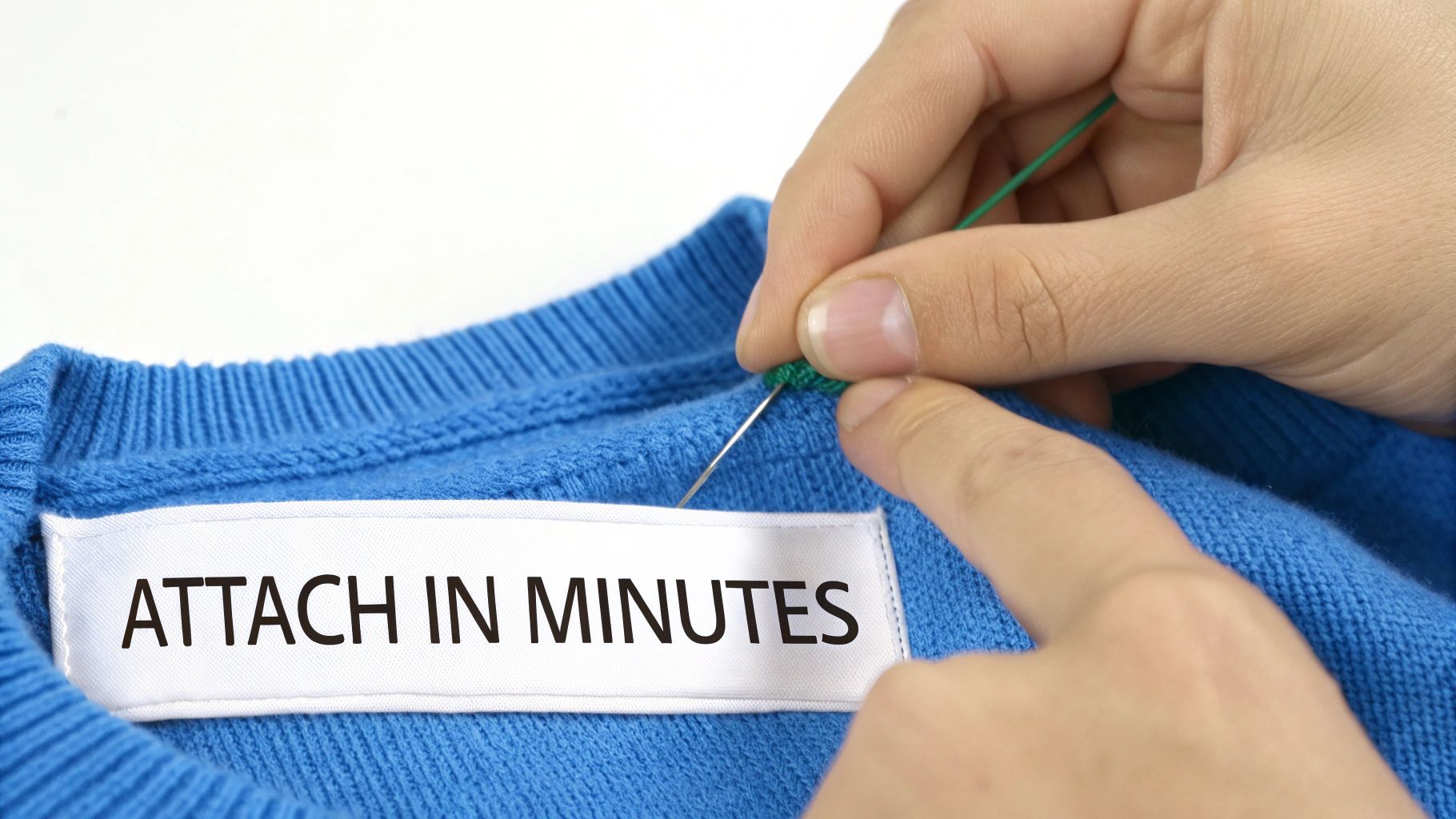
The idea of sewing can feel a little old-fashioned, maybe even a bit complicated. But trust me, attaching a sew-on name label is a super simple, five-minute task that anyone can handle.
You don’t need a sewing machine or any fancy skills—just a needle, some thread, and a tiny bit of patience. Think of it less like a big sewing project and more like fastening a button. That little bit of effort creates a permanent identifier that will save you so many headaches over lost items down the road.
Gathering Your Simple Supplies
Before you start, you only need a few basic things. Chances are, you probably have most of these tucked away in a drawer somewhere already.
- Needle: Any standard sewing needle is perfect.
- Thread: Pick a color that matches the clothing for a nearly invisible look, or choose a contrasting color for a fun pop of personality.
- Scissors: Any pair will do the trick for snipping thread.
- Thimble (Optional): If you’re sewing onto a tougher fabric like denim or canvas, a thimble can be a real finger-saver.
That’s literally it! With these tools in hand, you’re ready to get started.
The Step-by-Step Sewing Process
Attaching your sew-on labels is incredibly straightforward. Just follow these simple steps for a secure and tidy result that will last through countless tumbles in the washing machine and adventures on the playground.
- Position the Label: First, figure out the best spot for the label. To keep things comfy, it’s best to place it on the garment’s existing care tag or along an inside seam where it won’t irritate your child’s skin. For bags or other gear, pick a spot that's visible but still a bit discreet.
- Thread Your Needle: Cut a piece of thread about 18 inches long. Guide one end through the eye of the needle, pull it through, and tie a small, secure knot at the very end of the long tail.
- Start Your First Stitch: Begin from the underside of the fabric, pushing the needle up through one corner of the label. This is a great little trick to hide the knot neatly underneath.
- Sew Around the Edges: Use a simple running stitch (an easy up-and-down motion) or a whipstitch (looping the thread over the edge of the label) to secure it. Try to make your stitches small and even for maximum durability.
- Secure and Finish: Once you’ve sewn all the way around, push the needle back to the underside of the fabric one last time. Loop it through your last stitch a couple of times to create a knot, then snip the extra thread.
Don't worry about making your stitches perfectly straight or professional-looking. The goal is simply to secure the label firmly so it can do its job. A securely attached label is far more important than a perfectly stitched one
Thinking Beyond Clothing: Where to Use Sew-On Labels
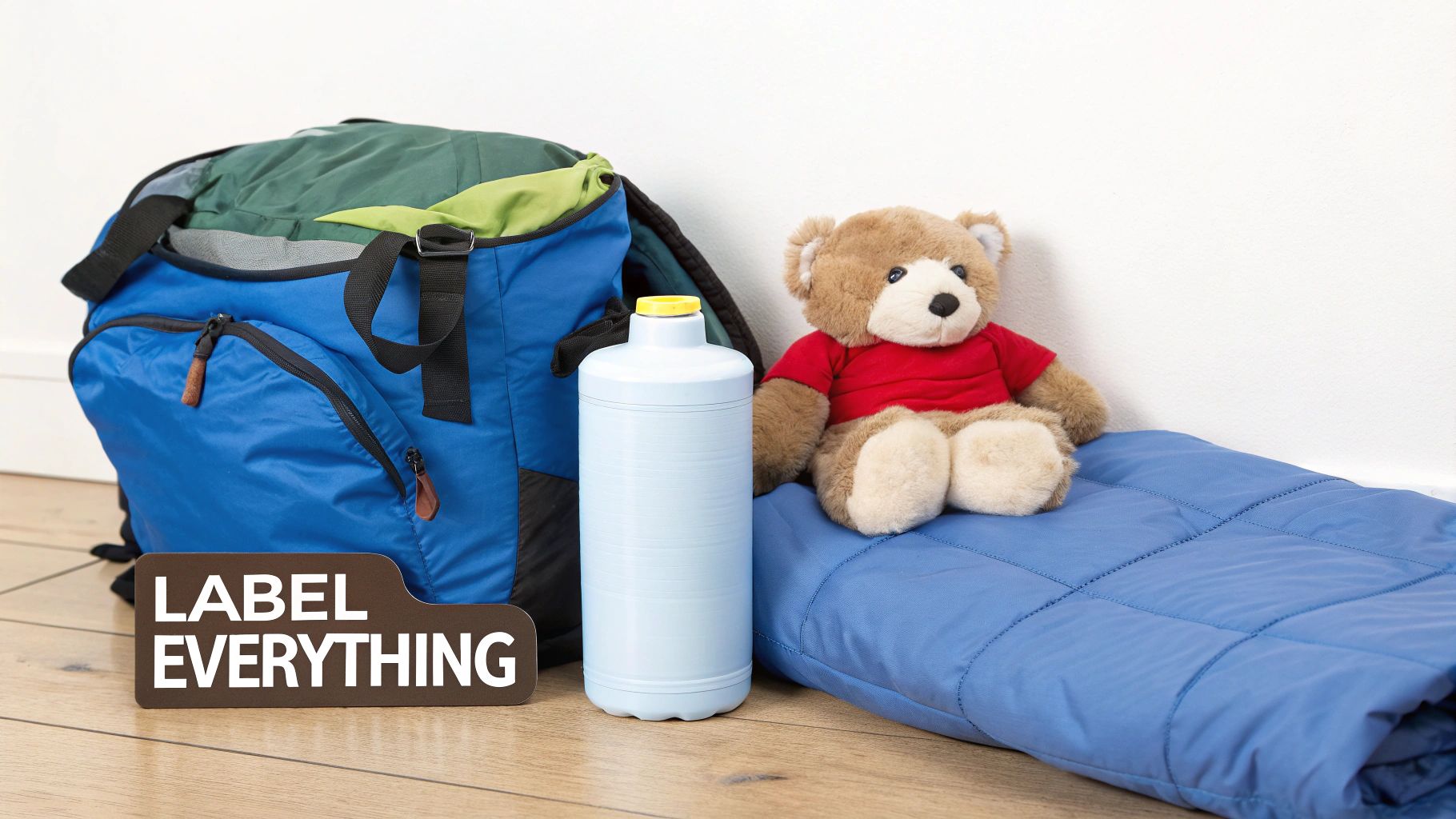
Sure, school uniforms and daycare outfits are the first things that come to mind. But if you stop there, you're missing out on the real magic of sew-on name labels. Their incredible durability makes them the perfect organizational tool for just about anything that leaves the house with your kids.
Think about the sheer volume of gear your family juggles. Between sports practice, sleepovers, and camping trips, there are so many opportunities for things to get mixed up or left behind. Applying that same permanent labeling strategy to all their belongings creates a simple, effective system that actually works.
For Sports and Hobbies
After-school activities are a black hole for lost items. A securely stitched label can be the one thing that separates a permanently lost piece of equipment from one that finds its way back home.
You can attach them to all sorts of things:
- Sports Bags: Stitch a label onto an interior seam or an exterior strap for can't-miss ownership.
- Team Gear: Uniforms are an obvious one, but don't forget equipment bags, warm-up jackets, or even baseball gloves.
- Musical Instrument Cases: The soft fabric lining of a guitar or violin case is the perfect spot for a discreet, permanent label that won’t get torn off.
For Adventures and Travel
Family trips and summer camp can feel chaotic, and keeping track of everyone’s stuff is a major challenge. Imagine a world where you never have to guess which sleeping bag belongs to which kid again.
The real value of a sew-on label shines when you’re away from home. In a sea of identical backpacks or a pile of towels at the pool, a clear name tag is your best defense against accidental swaps and permanent losses.
Here are a few travel-ready ideas:
- Sleeping Bags and Camping Gear: Most camping equipment has little fabric loops or tags that are just begging for a name label.
- Backpacks and Luggage: Secure a label inside a pocket or along an inner seam for identification that can’t be ripped off like a paper tag.
- Beach Towels and Blankets: A clearly marked label stitched into the corner is all it takes to prevent poolside mix-ups.
For Cherished Comfort Items
For a little one, losing a favorite stuffed animal or a beloved "blankie" can be absolutely heartbreaking. A soft, woven label stitched discreetly onto a seam provides a vital safety net, seriously increasing the chances of a happy reunion if their treasured friend gets left behind.
This is especially helpful for daycare, where comfort items are constantly traveling back and forth. You can learn more about how to label baby clothes for daycare and apply those same principles to blankets and special toys. It brings so much peace of mind.
Comparing Sew-On Labels to Modern Alternatives
In a world full of quick fixes and convenient options, do old-school sew-on labels still have a place? The answer is a big, resounding yes. But the best choice really depends on what you're labeling. This isn't about finding one single winner; it's about building a versatile labeling toolkit for your family.
While the sheer permanence of a stitched label is its greatest strength, modern alternatives are all about speed. Take InchBug's TagPal™ clothing labels, for example. They're a simple peel-and-stick solution that applies in seconds, making them an absolute lifesaver for busy parents staring down a mountain of daycare clothes.
Speed vs. Staying Power
When you get right down to it, the core difference is the application method and how well the label holds up long-term. A sew-on label creates a physical bond with the fabric that's incredibly tough to break, making it perfect for high-value items or school uniforms that go through the wash constantly. Its main downside, of course, is the time it takes to sit down and actually sew it on.
On the flip side, modern labels are designed for quick and easy application.
- Stick-On Labels (like TagPals™): These are the fastest of the bunch. They stick directly to a garment's care tag and are surprisingly durable, but they work best on those smooth, flat surfaces.
- Iron-On Labels: These use a heat-activated adhesive that creates a stronger bond than most stickers. While nothing beats the traditional reliability of a sew-on, learning how to apply iron-on transfers gives you a great middle ground between speed and permanence.
Think of it this way: a sew-on label is like a welded joint—strong, permanent, and it takes some initial effort. A stick-on label is like a powerful magnet—quick to attach and surprisingly effective, but best for specific jobs.
Label Showdown: Sew-On vs. Modern Alternatives
So, how do all these options really stack up against each other? It can feel overwhelming trying to decide which label is right for which item. I've found that seeing the pros and cons side-by-side makes the decision so much easier.
Here’s a quick breakdown to help you pick the perfect label for every situation, from your child's favorite teddy bear to their brand-new gym shoes.
| Feature | Sew-On Labels | InchBug TagPal™ (Stick-On) | Iron-On Labels | Waterproof Stickers |
|---|---|---|---|---|
| Best For | School uniforms, coats, sentimental items, hand-knits | Everyday clothing (on care tags), daycare items in bulk | Cotton T-shirts, socks, items without a care tag | Lunchboxes, water bottles, shoes, electronics, gear |
| Application | Hand or machine sewing | Peel and stick | Iron and heat press | Peel and stick |
| Time to Apply | 5-10 minutes per label | < 10 seconds | 1-2 minutes | < 10 seconds |
| Durability | Extremely high; outlasts the garment | Very high; washer & dryer safe | High; can peel over time with many washes | Very high; waterproof & dishwasher safe |
| Removability | Removable with a seam ripper | Removable, but leaves no residue | Difficult to remove; can leave residue | Removable, but leaves no residue |
| Surface | Any fabric | Smooth care tags | Most heat-safe fabrics | Smooth, non-fabric surfaces (plastic, metal, etc.) |
Ultimately, choosing the right label is all about matching the tool to the task. Each type has its own superpowers, and knowing when to use each one will save you time, money, and a whole lot of sanity.
The best strategy is often a hybrid one. Use sew-on name labels for those big-ticket items you absolutely cannot afford to lose, like winter coats and school blazers. But for the dozens of everyday t-shirts, socks, and shorts that need labeling in bulk, the speed of TagPals™ is a game-changer. By combining methods, you get ultimate durability where it really counts and time-saving convenience everywhere else.
Your Questions About Sew-On Name Labels Answered
Even with all their staying power, I know you might have a few lingering questions about going the traditional sew-on name label route. Let's tackle some of the most common worries I hear from parents to help you feel totally confident about this choice.
A big one is always comfort. Will a stitched label bother a child with sensitive skin? The answer is a resounding yes, they're perfectly comfortable! High-quality labels are made from soft stuff like woven cotton or satin that isn't the least bit irritating. The trick is to attach them flat along an existing seam or right onto the garment's care tag. When you do that, they lie flat and won't scratch or cause any fuss.
Another question I get all the time is about removal. What happens when you’re ready to pass an item down to a younger sibling or donate it? This is where sew-on labels really shine. Unlike their iron-on cousins that can leave behind a sticky, permanent mess, taking off a sew-on label is clean and simple. All you need is a small pair of scissors or a seam ripper to carefully snip the threads. The label pops right off, leaving the clothing looking good as new.
Choosing the Right Label for the Job
This little decision tree is a great way to see which label type is best for you based on what you need most.
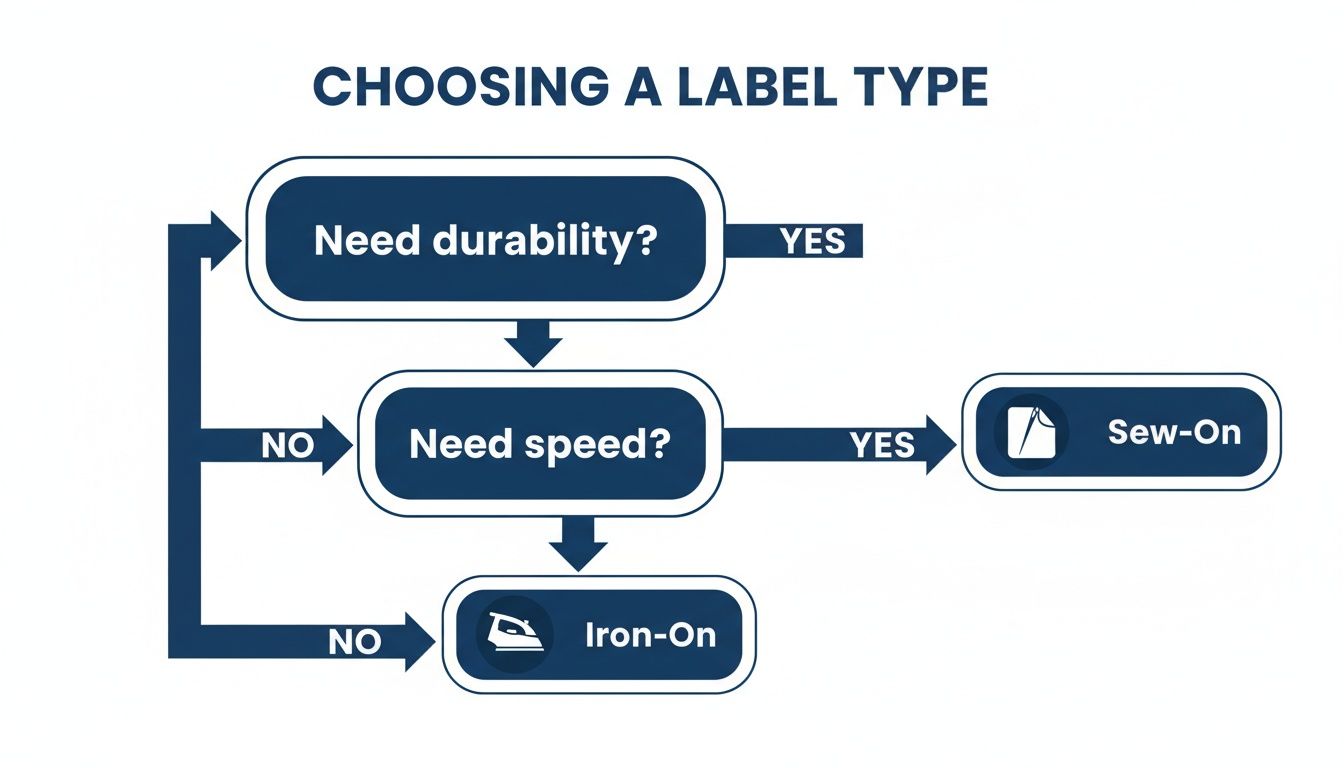
As you can see, if durability is what you're after, sew-on labels are the hands-down winner. But if you need something super quick, stick-on and iron-on options get the job done faster.
Finally, can you use a sewing machine to speed things up? Absolutely! A machine is a fantastic way to attach labels quickly with a super neat and secure finish. Just use a standard straight stitch around the edge of the label. This is my go-to method for tougher items like backpacks, winter jackets, and sports gear—it ensures the label will hold on for dear life.
Ready to get your organizing system in place? Check out the full range of kid-friendly labeling solutions from InchBug and find the perfect match for everything from school uniforms to snack containers. Pop over to InchBug.com and make your life a little simpler.