

You're standing in the hallway with one shoe on, your child's backpack half-zipped, and a missing water bottle turning a five-minute exit into a scavenger hunt. A jacket gets mixed into someone else's pile, the daycare drop-off line keeps moving, and you're left wondering whether a better label, a sturdier bottle, or a smarter system would've saved the morning.
That's where parent testimonials stop being marketing fluff and start acting like decision support. In kids' categories, parents aren't just buying a product, they're buying less stress, fewer mix-ups, and a little more confidence that the thing will hold up when real life gets messy. The trust gap is real, too, NORC survey findings on how parents use information show that 48.3% of parents said they very much trust service providers they know, while only 18.2% said the same about people they don't know.
That's why one honest review from a parent who's been through the same morning scramble can outweigh a polished product page. If you want a useful model for how parent-facing reassurance can be framed around real routines and daily use, ABA reinforcement insights from Guiding Growth is a practical adjacent read because it shows how behavior and consistency matter in family settings.
For shoppers comparing everyday kids' gear, the clearest examples are often the ones on real product pages, like the kind collected on InchBug reviews, where parents look for proof that a label, tag, or bottle solution survives the same kind of chaos you're dealing with right now.
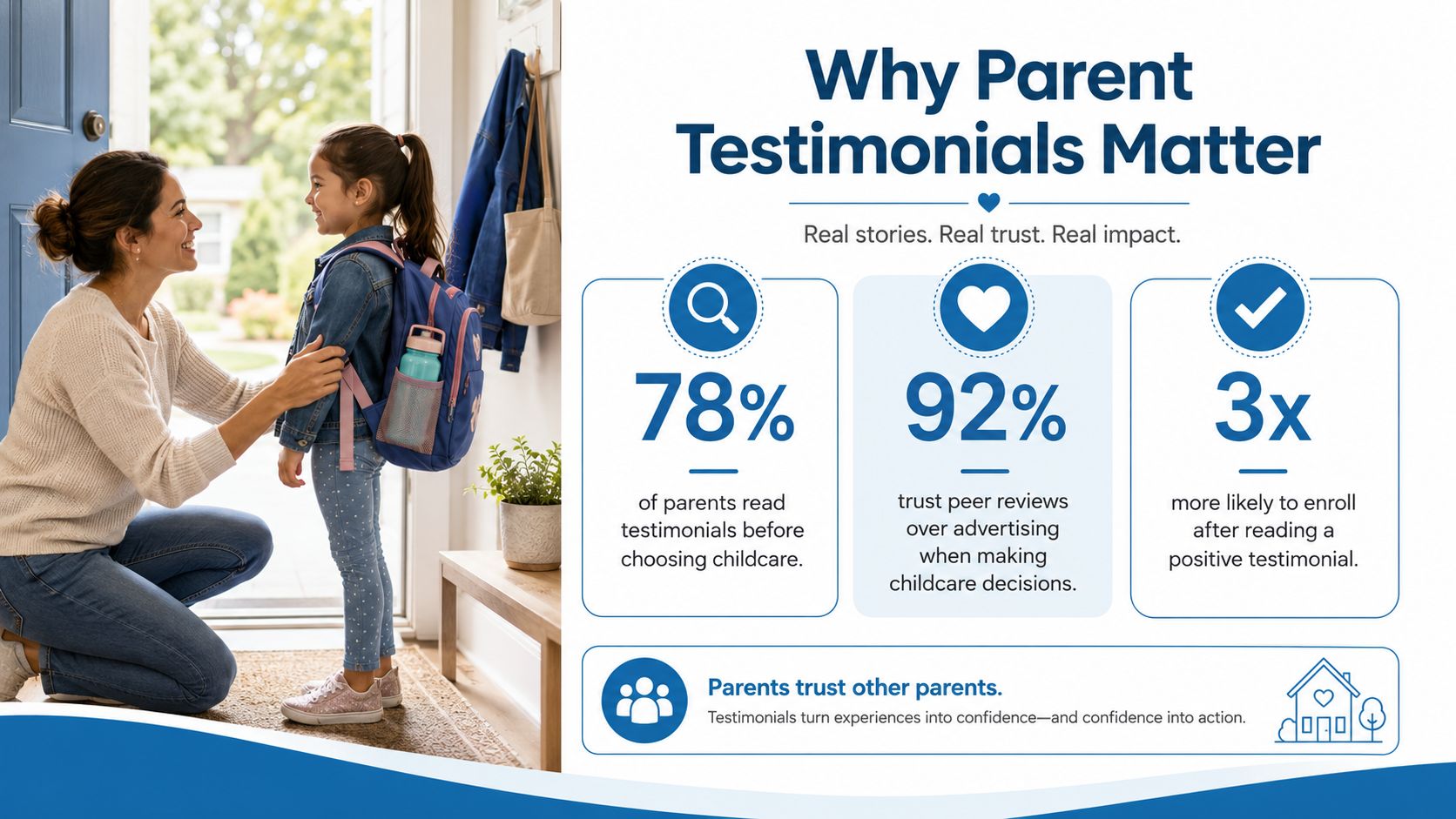
Why Parent Testimonials Matter More Than You Think
The best parent testimonials do something marketing can't. They translate a product into a lived outcome, like fewer lost items, less bedtime friction, or a smoother handoff at daycare. That matters because the emotional stakes are higher when the product touches your child's safety, comfort, or daily routine.
A glossy description can tell you a label is waterproof or a bag tag is durable. A parent testimonial tells you whether the label stayed readable after repeated washing, whether the tag survived the backpack shuffle, or whether the product made one less thing to worry about. In family categories, that kind of practical confirmation often carries more weight than specifications alone.
The trust dynamic is not accidental. In the NORC survey, parents trusted people they knew far more than strangers, and that maps neatly onto how testimonial pages work. You're not looking for advertising language, you're looking for someone who sounds like the parent in the next school pickup line.
Why peer voices cut through faster
Parents usually don't have time to decode a long feature list while juggling lunchboxes and permission slips. A single specific story can answer the question that matters, “Will this work in my house, with my child, under my constraints?” That's why testimonials function as a shortcut to confidence, not just a nice extra.
Practical rule: if a testimonial helps you picture a real day, not just a happy outcome, it's doing useful work.
That's also why emotional safety matters so much in this category. A product for kids isn't only judged on utility. It's judged on whether it reduces anxiety for the adult and friction for the child.
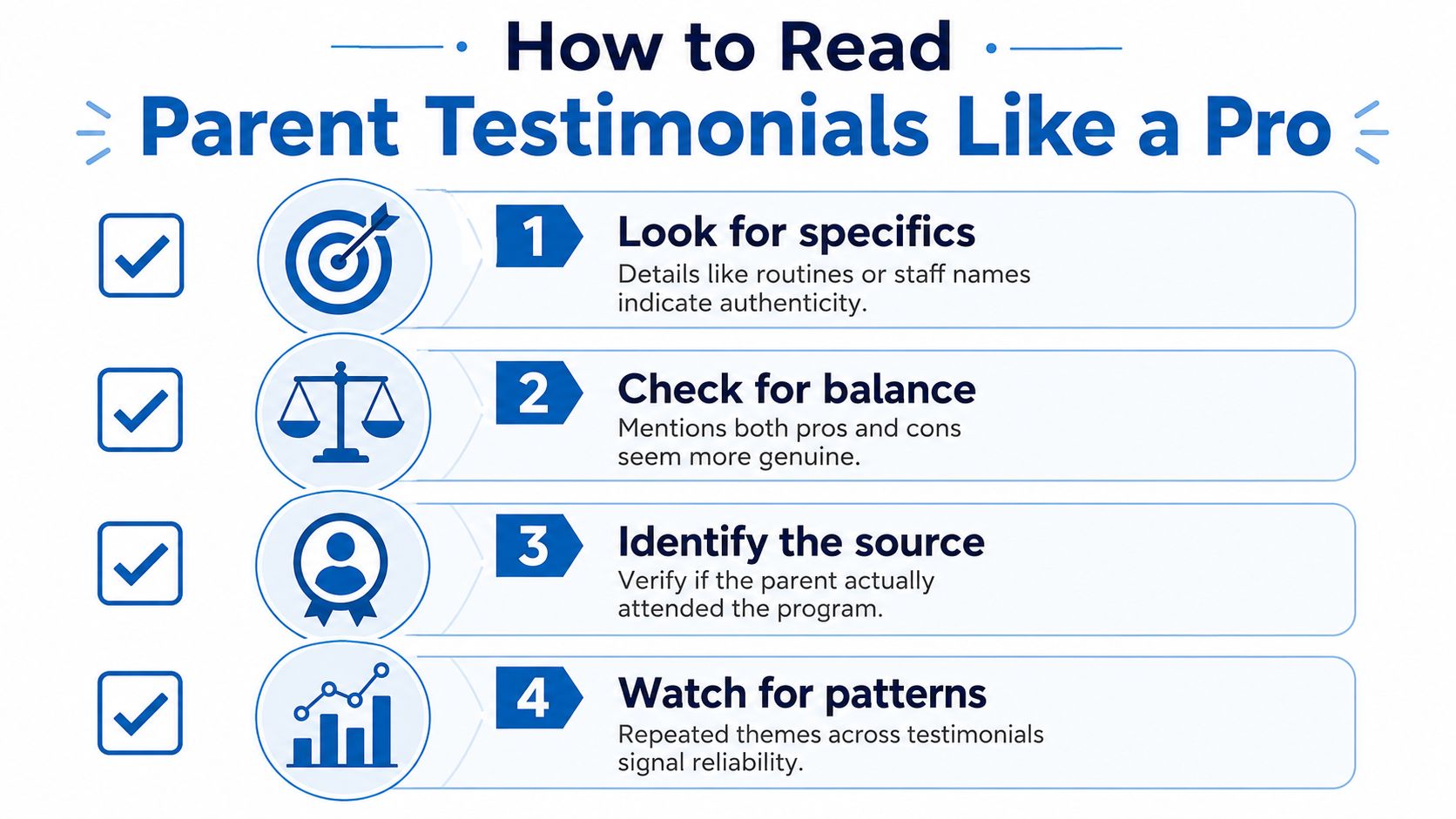
How to Read Parent Testimonials Like a Pro
Not every testimonial deserves equal weight. The easiest way to sort the useful from the generic is to look for details that anchor the review in a real situation. A parent who mentions when, where, and how a product was used is giving you more than praise, they're giving you evidence.
That lines up with pediatric care feedback research, where 39% of parent comments were actionable because they included specific details about when, what, where, who, or how the experience happened (pediatric care feedback research). The lesson carries over to consumer reviews, concrete context makes a testimonial more reusable and more believable.
The signals that matter most
- Specific routine details: Mentions of daycare drop-off, school lunch packing, travel, or laundry cycles usually beat vague praise.
- A real before-and-after: Look for what problem the parent had first, then what changed after using the product.
- Mixed but fair feedback: A review that names a trade-off often feels more honest than one that sounds perfectly scripted.
- Time-based language: References to weeks, months, or repeated use matter more than first-day excitement.
A testimonial that says “works great” doesn't tell you much. A testimonial that says a label stayed legible after repeated dishwasher use, or that a toddler stopped pulling a tag off a backpack, gives you something you can compare against your own needs.
Short test: if you removed the brand name, would the review still sound like a real parent's experience? If yes, it's probably useful.
If you're scanning a brand's testimonial library, the review organization matters too. A well-structured library makes it easier to compare concerns by theme, not just by star rating, which is why a page like the one on InchBug's quality assurance process can be useful when you want to understand how the company thinks about product consistency.
The Trust Formula Behind Authentic Parent Reviews
Authentic reviews usually feel balanced, even when they're positive. Parents tend to trust testimonials more when they sound like someone who used the product in ordinary life, not someone writing for a campaign. That often shows up in the way the review handles repetition, context, and small imperfections.
A review becomes more credible when it describes the same product being used across more than one setting, like home, school, and travel. It also helps when the parent returns later with a second impression, because long-term use is harder to fake than initial enthusiasm. Consistency over time is the key signal, not sheer volume of praise.
A quick trust checklist
- Look for repeat use: Reviews that mention ongoing use are usually more informative than launch-day reactions.
- Notice emotional consistency: If the tone stays steady across multiple reviews, that can be a stronger trust cue than a pile of identical compliments.
- Watch for small caveats: A review that names one inconvenience can still be more credible than a flawless pitch.
- Check whether the source is known: Parents often trust known providers more than strangers, as the NORC survey found.
A suspicious review often overuses generic praise and underuses lived detail. It may say the product is amazing, but never say how it was used, what problem it solved, or what made the experience different from similar products. That doesn't automatically make it false, but it does make it less useful.
Trust grows when a testimonial sounds like a parent describing a week of real life, not a brand reciting its own brochure.
The best testimonial pages usually balance authenticity with usefulness. They don't pretend every family had the same result, and they don't hide the fact that some parents care about durability while others care about simplicity, speed, or appearance.
What Parent Testimonials Reveal About Kids Products
A parent review is often a small field report from daily life. It shows how a product performs in a lunch bag, in a classroom cubby, or after a wash cycle with the rest of the family load. That is why testimonials matter so much for kids' products, where parents are judging durability, ease of use, and whether the item reduces stress.
The most useful reviews connect practical function to emotional relief. Parents are rarely just buying an object. They are also buying fewer reminders, fewer surprises, and fewer decisions to manage during a busy day. In the Pew Research Center survey on parenting in America, parents described both strong confidence in their parenting and real worry about their child's emotional well-being. That mix helps explain why a testimonial that speaks to peace of mind can carry more weight than polished product copy.
A review of a daycare label, for example, is not only about whether the adhesive sticks. It can point to fewer lost items, less back-and-forth with caregivers, and one fewer morning task to remember. Parents read that kind of testimonial as a sign that the product solves a daily problem, not just that it looks good in a photo.
| Signal | Why It Matters | What It Tells You |
|---|---|---|
| Repeated washing | Confirms durability in a real household | The product may hold up past first use |
| School or daycare mention | Shows the product fits a shared environment | It's likely relevant to daily kid routines |
| Readability over time | Checks whether names stay visible | The label or print still serves its purpose |
| Easy application | Reveals setup friction | The product won't add extra work |
Maintenance matters too, especially for clothing or fabric-adjacent products. A guide to baby bedding care is a useful reminder that parents are not just evaluating the purchase itself, they are also judging the upkeep that comes with it. A product that looks helpful on day one can become a burden if it is difficult to clean, reapply, or keep in good condition.
For readers comparing practical options like InchBug's value for money guidance, the question is not whether the item is inexpensive or premium. It is whether the testimonial shows that it keeps doing the job after the first few uses, when the routine gets messy and real trade-offs show up.
How to Submit a Parent Testimonial That Helps Others
The most useful testimonial you can write is specific, plainspoken, and grounded in an actual routine. Start by naming the problem you were trying to solve, then say what product you used, where you used it, and what changed. That structure gives other parents something they can compare with their own situation.
A blank form usually produces vague praise. A structured prompt produces better evidence. One education-marketing source recommends asking parents about their original criteria, why they chose the service, and how outcomes changed, then storing the responses in a tagged library by theme, format, and usage (testimonials workflow guidance). That approach works because concrete prompts elicit concrete answers.
What to include
- Your starting point: Explain the problem before the product, not just the happy ending.
- The context: Mention the child's age, setting, and how often the item was used.
- The result: Say what improved, what stayed the same, and what you'd still want differently.
- A proof point: A photo, a short video, or a specific use case can help other parents trust the review.
Keep the tone honest and useful. You don't need to oversell the product, and you don't need to write a negative essay if the experience was mostly good. Balanced feedback helps other families more than perfect language.
If you're leaving a review on a brand site, a support path like InchBug customer support is useful when you want to mention a product issue clearly before you post a public testimonial. That way, the review reflects both your real experience and the company's response.
A good parent testimonial answers the question, “Would this help a family like mine?” not just, “Did I like it?”
Frequently Asked Questions About Testimonials
How can I tell if a testimonial is verified? Look for indicators that the reviewer used the product or service, and pay more attention to comments that mention specific routines, settings, or outcomes. Verified context usually matters more than polished wording.
Can anonymous testimonials still be trustworthy? Yes, but they're easier to evaluate when they include concrete details. The NORC survey suggests parents trust known people more than strangers, so anonymous praise needs more substance to earn confidence.
What if I leave a negative review? A fair negative review can still help other parents if it explains what happened and when it happened. That kind of detail is more useful than frustration alone.
How do companies protect my privacy? Many testimonial systems let you share a first name, initials, or general location instead of full personal information. You can often give helpful context without exposing your child's identity.
Should I trust a page with only five-star reviews? Not automatically. Pages that show a little variation can feel more credible because real families rarely have identical experiences every time.
If you're sorting through school labels, bottle bands, bag tags, or daycare gear, InchBug offers practical personalization tools that parents can review, compare, and use in daily life. Visit InchBug to see how its kid-friendly labels and organizers fit into the same real routines parents describe in their testimonials.