

Mornings with kids can turn chaotic fast. One missing folder becomes a search under the couch, a water bottle disappears somewhere between the car and the classroom, and a last-minute project supply need sends you digging through junk drawers that somehow contain everything except glue sticks.
That's why an office supplies checklist matters so much more for families, teachers, and daycare providers than most articles admit. In a child-centered setting, the problem usually isn't making a shopping list. It's building a system that helps you know what you have, what belongs to whom, what needs replacing, and what keeps vanishing into the classroom lost-and-found.
Traditional office checklists have long treated supplies as a full operating inventory, not just a short shopping list, covering categories like general supplies, technology, furniture, and storage according to AllBusiness. For parents and educators, that same mindset works even better when you adapt it to real life with kids. You're not just stocking crayons and tissues. You're managing lunch gear, spare clothes, daily daycare items, home learning tools, and all the tiny objects that get mixed up when many children share one space.
Your Guide to a Stress-Free School Year
By the second week of school, most families have already seen the weak spots in their routine. A jacket comes home in the wrong cubby. The snack container is missing its lid. The teacher asks for extra markers, but the box you bought is nowhere to be found. None of this feels dramatic on its own, but together it creates that steady drain on your time and patience.
Parents often start with a list and stop there. That's the part that usually fails. A list helps you shop once. A system helps you function every day.
Think about the points where things usually break down:
- Morning handoff: Something important never made it into the bag.
- Shared spaces: Bottles, sweaters, and lunch boxes look alike.
- Homework time: The item needed for tonight's assignment was used up or lost last week.
- Season changes: Extra clothes, tissues, and classroom extras change throughout the year.
Practical rule: If you replace the same item more than once, it belongs on your checklist and in your organization routine.
For families, the most useful office supplies checklist isn't a giant printable with random items. It's a working document tied to your child's actual day. It includes what gets packed, what stays at school, what lives at home, and what needs a name on it before it ever leaves the house.
That's also why school-year organization works best when it starts before the first day and gets adjusted after real life exposes the gaps. If you want a simple reset before the rush starts, InchBug's guide to back-to-school organization is a practical place to begin.
How to Build Your Ultimate Supply Checklist
A strong supply checklist starts as a management tool, not a shopping note. For parents, caregivers, and educators, that matters because the problem usually is not buying supplies once. It is keeping the right items in the right place, in usable condition, and attached to the right child all year.
Traditional office checklists focus on inventory for adults. A family or classroom checklist has a different job. It needs to cover supplies that get used up, gear that travels back and forth, and personal items that disappear the minute they are not labeled. That is the difference between a list that looks organized and one that saves time.
Start with four categories
Use a page, notes app, or spreadsheet and divide supplies into these groups:
-
Consumables
These get used up and need regular replacement. Crayons, glue sticks, tissues, snacks, wipes, printer paper, and dry erase markers belong here. -
Durables
These should last and stay in rotation. Water bottles, lunch boxes, scissors, binders, headphones, backpacks, and pencil cases fit this group. -
Personal items
These belong to one child and need clear ownership. Sweaters, bottles, food containers, nap mats, jackets, and extra shoes usually land here. -
Shared stock
These stay in the classroom, learning space, or family supply zone. Extra pencils, art materials, tissues, hand sanitizer, paper, and backup folders are common examples.
This setup makes decisions easier. Consumables need a restock plan. Durables need condition checks. Personal items need names on them before they leave the house. Shared stock needs a home base and a simple rule for who refills it.
Build around real routines
The fastest way to build a useful checklist is to follow the child's day from start to finish. That shows you what belongs in a backpack, what should stay at school, and what needs a backup at home.
Ask practical questions such as:
- Morning departure: What has to leave the house every day without fail?
- School or daycare use: Which items get handled in shared spaces and are easy to mix up?
- After-school work: What needs to be available at home for homework, reading, or projects?
- Storage points: What lives in a cubby, diaper bag, backpack, or classroom bin?
- Seasonal shifts: What changes when the weather, schedule, or classroom requests change?
If you need help turning teacher requests into something workable at home, this school supply list guide for parents is a useful starting point. Educators can also save time by supporting teachers with essential resources when they build lists for families to follow.
A short table helps many families and teachers keep the list usable instead of letting it sprawl.
| Category | Examples | What to track |
|---|---|---|
| Consumables | Glue sticks, crayons, tissues | Running low, seasonal restock |
| Durables | Lunch box, headphones, scissors | Condition, return rate |
| Personal | Water bottle, sweater, shoes | Name ownership, daily return |
| Shared | Markers, paper, sanitizing items | Bin level, classroom backup |
A quick visual walkthrough can also help if you're building your system from scratch:
Keep the first version small
Many parents make the list too long on day one, then stop using it because it takes too much effort to maintain. Start with the items that create repeat problems each week. Add to the checklist only after something gets lost, runs out, or causes a scramble.
I have found that this is also the point where labeling stops being optional and starts doing real work. InchBug products are the secret weapon for keeping bottles, containers, outerwear, and other child gear from disappearing into the wrong cubby or coming home in someone else's bag.
A checklist works when it matches daily life, assigns each item a place, and makes lost belongings less likely in the first place.
Essential Checklists for Parents and Educators
The most helpful checklists are the ones you can copy, adjust, and use right away. For families and educators, three lists tend to carry most of the load: the daily daycare handoff, the back-to-school setup, and the classroom stock list.
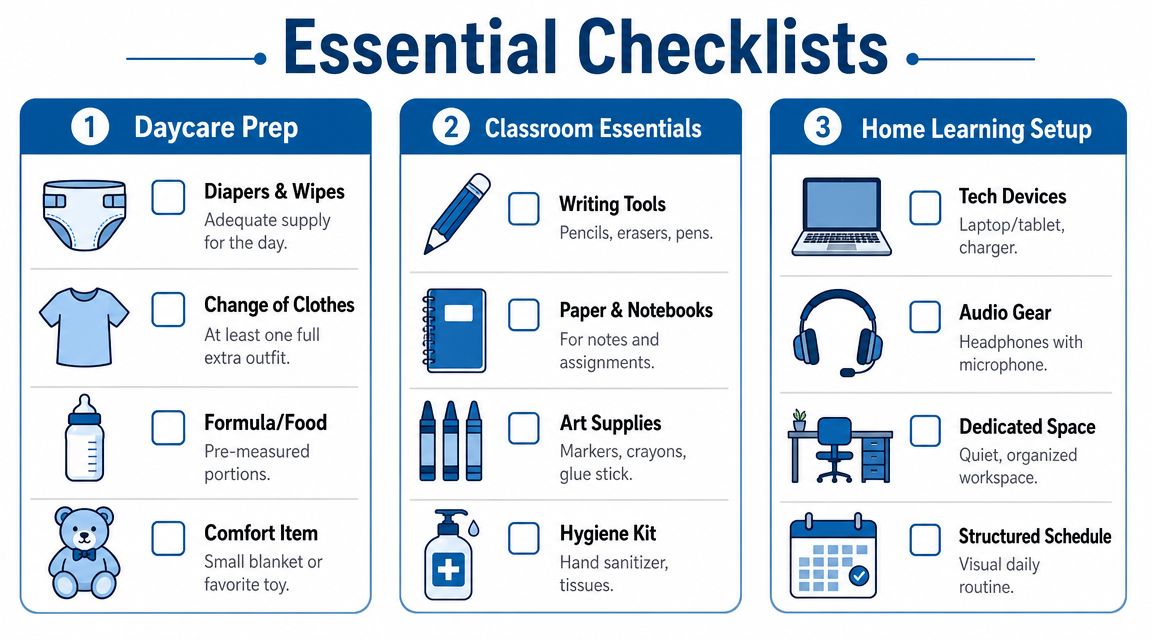
Daycare daily drop-off checklist
This list works best when it lives near the door or inside the diaper bag pocket.
-
Daily care basics
Diapers, wipes, creams if required, and any feeding supplies your provider requests. -
Spare clothing
At least one full extra outfit, plus weather-appropriate layers. -
Food and comfort items
Bottles, pre-portioned food, utensils if needed, bib, and a comfort item for rest time. -
Take-home and take-back items
Dirty clothes bag, daily sheet, medication forms if applicable, and anything that came home the day before and needs to go back. -
Labeled gear
Bottles, cups, containers, blankets, and outerwear should all be easy to identify.
For a more detailed parent-facing packing approach, this daycare checklist for parents is useful to keep alongside your daily bag routine.
Comprehensive back-to-school shopping list
This one should cover both the classroom list and the home setup, because school doesn't happen in just one location anymore.
For the classroom
-
Writing supplies
Pencils, erasers, pens when age-appropriate, crayons, markers, colored pencils -
Paper goods
Notebooks, folders, loose paper, index cards, sticky notes if requested -
Project tools
Glue sticks, child-safe scissors, ruler, pencil box -
Health and cleanup items
Tissues, hand sanitizer, disinfecting wipes if the school requests them
For home
-
Homework station basics
A small supply caddy with pencils, paper, crayons or markers, scissors, and glue -
Tech setup
Charger, headphones, a clear place to store school devices -
Routine support
Calendar, visual schedule, homework tray, return-to-school bin
Teachers who want to share support materials with families can also point parents to resources focused on supporting teachers with essential resources, especially when classroom routines need reinforcing at home.
Teacher classroom supply checklist
Teachers need a different lens. The classroom has to function for the group, not just for one child.
-
Instruction tools
Whiteboard markers, paper, sticky notes, clipboards, pens, pencils, extra sharpeners -
Student-use stock
Crayons, markers, glue, scissors, folders, notebooks, erasers -
Organization supplies
Bins, file folders, labels, cubby identifiers, turn-in trays -
Care and cleanup
Tissues, disinfecting supplies, hand sanitizer, paper towels if allowed -
Comfort and backup items
Spare snacks if policy permits, extra clothing space, calm corner materials, bandaids if school rules allow classroom storage
Keep a separate line on your checklist for “items families forget.” Those are the things that create classroom friction fastest.
A final note that saves headaches. Don't merge student-personal items and room stock on one master line. That's how teachers end up with five glue sticks in one bin and no clear idea whether they belong to the room, the child, or the project table.
The Secret to Keeping Track of Everything
Buying supplies is only half the job. In schools, daycares, and shared kid spaces, the bigger problem is what happens after the items arrive. They get mixed up, left behind, washed with no owner attached, or sent home in the wrong backpack.
That's why loss prevention matters more than procurement in child-centered environments. Traditional office lists focus on consumables, but schools and daycares need durable identification for bottles, containers, and clothing, making personalized labeling a core operational control according to Indoff's office supply closet guidance.
What usually gets lost first
Some items are repeat offenders. They move between adults, cubbies, sinks, lunch tables, and playgrounds all day.
| Item type | Why it disappears | What helps |
|---|---|---|
| Water bottles | Many look identical | Durable visible name label |
| Lunch containers | Lids and bases separate | Matching labels on both parts |
| Sweaters and jackets | Taken off during transitions | Clothing tag label |
| Shoes | Mixed up at nap time or changing time | Left-right identifiers |
| Supply pouches | Shared tables and group work | Name plus class or room marker |
The simple truth is that kids can't manage ownership on their own in busy shared spaces. Adults need visual systems that work at a glance.
Labeling is not optional
A label does more than mark possession. It reduces duplicate buying, shortens the “whose is this?” conversation, and makes cleanup easier for teachers and caregivers.
In practical terms, different items need different label styles. Stretchy bottle bands work differently from adhesive stickers. Clothing tags need something that stays put without turning laundry into a project. Lunch gear needs labels that can handle regular washing. Some families also need allergy information visible on specific items.
One factual example in this category is InchBug, which offers Orbit Labels for bottles, TagPal clothing labels, and waterproof labels for lunch boxes, containers, and gear. Those products fit the practical problem because they're built for repeated daily handling in daycare and school settings.
If you're replacing the same bottle, sweater, or container over and over, the issue usually isn't shopping. It's identification.
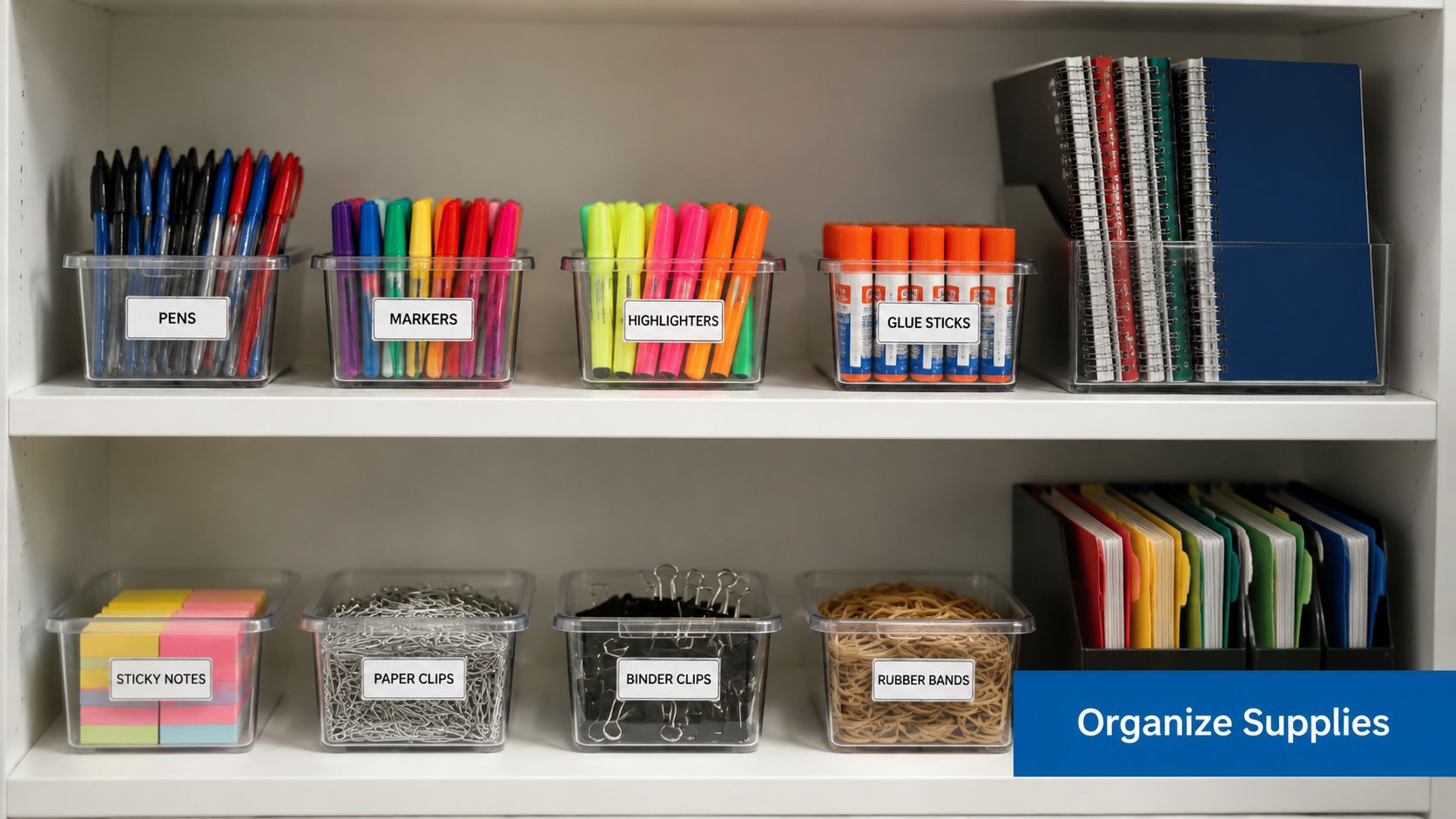
For classroom storage ideas that pair well with a clear labeling system, I like seeing how others arrange supplies visually. This roundup from Ocodile is helpful for thinking through bins, drawers, and art-material zones.
Where labels matter most
Start with the items that create the biggest daily interruptions:
-
Drinkware
Water bottles, sippy cups, thermoses -
Food gear
Lunch boxes, snack cups, utensils, ice packs -
Clothing
Hoodies, sweaters, coats, hats, nap blankets -
School tools
Pencil boxes, scissors, headphones, supply pouches -
Travel gear
Backpacks, diaper bags, sports bags
If you want a practical overview of what kinds of labels fit which school items, this guide to name labels for school supplies lays it out clearly.
Smart Budgeting and Restocking Strategies
A good office supplies checklist should save money because it cuts emergency purchases, duplicate orders, and those odd trips where you buy three things you didn't need just to get the one thing you forgot.
The easiest place to start is with your recent buying history. A common procurement best practice is to review invoices from the previous 6 months to create a spending baseline and spot recurring demand for items like paper, ink, and stationery, according to Order.co's office supplies guidance. For families and classrooms, that same habit works with receipts, online order history, or even photos of what you bought.
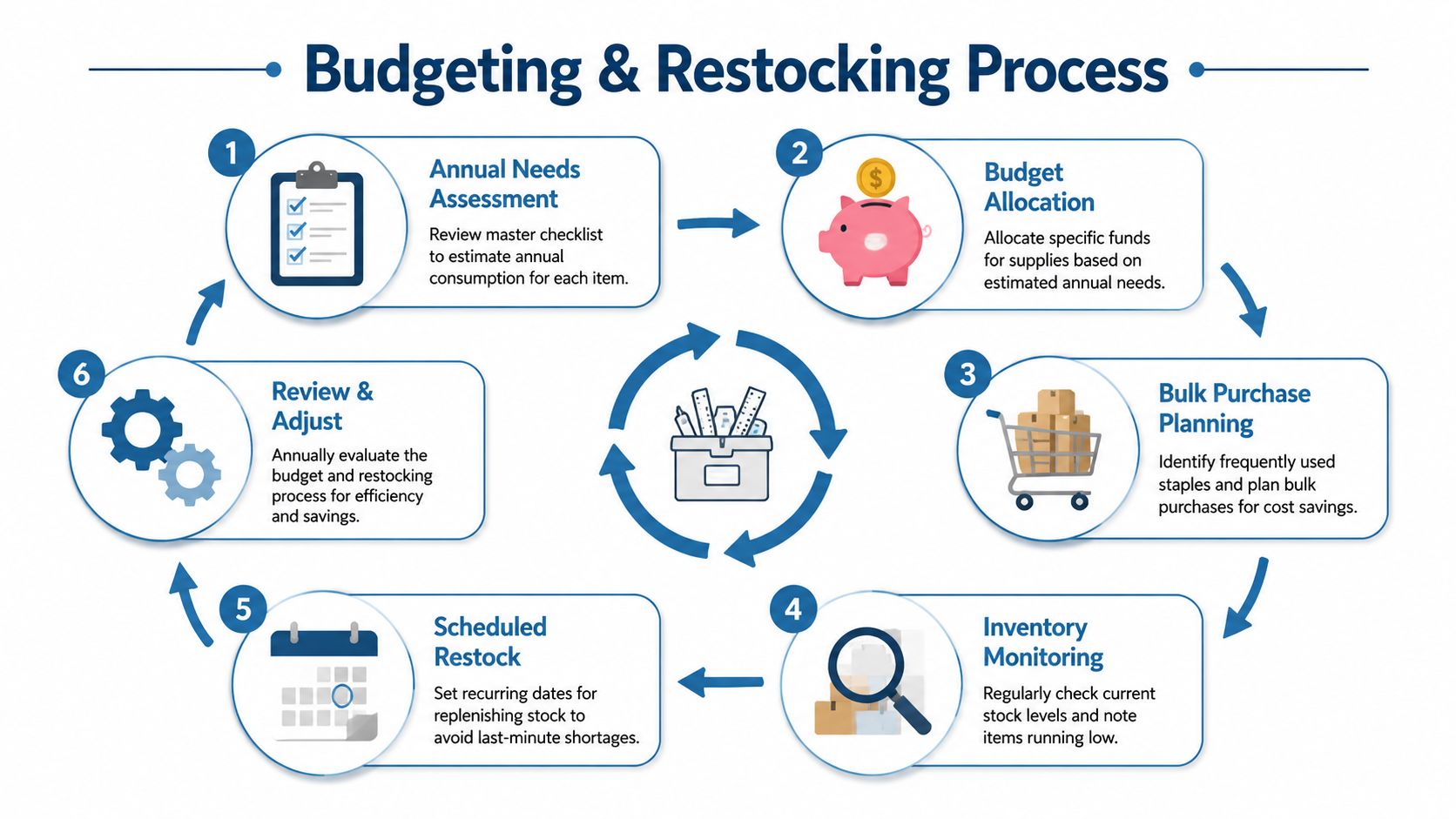
Use your last season to plan the next one
Pull up purchases from the last several months and sort them into patterns.
-
Steady-use basics
Pencils, notebooks, tissues, wipes, glue sticks, printer paper -
Occasional replacements
Headphones, lunch containers, scissors, backpacks -
Seasonal spikes
Back-to-school, classroom party supplies, winter extras, summer camp gear
This step matters because memory is unreliable. Most parents remember the big trip in August and forget the steady stream of smaller restocks that happen all year.
Create one restocking station
At home, one shelf or bin system is enough. In a classroom, it might be one cabinet with clearly assigned bins.
Try a setup like this:
- Top bin for unopened backups
- Middle bin for active daily supplies
- Small basket for “running low” items
- Visible note for items that must be replaced before the next week starts
A whiteboard, shared phone note, or printed list taped inside the cabinet door works better than mental tracking.
Budget habit: Buy singles for testing. Buy multiples only after an item proves it gets used consistently.
Know when bulk helps and when it doesn't
Bulk buying works for predictable staples. It does not work well for every category.
| Buy ahead | Buy carefully |
|---|---|
| Plain notebooks | Trendy character folders |
| Basic pencils | Highly specific teacher-requested items |
| Tissues | Clothing in changing sizes |
| Glue sticks | Gadgets your child may not use often |
| Standard art paper | Specialty craft materials |
Families homeschooling through a charter or managing approved educational spending may also benefit from checking a practical Charter Homeschool Help funding guide before ordering curriculum-adjacent supplies.
If saving on annual supply purchases is a priority, InchBug also shares straightforward ideas on how to save money on back-to-school shopping.
Putting It All Together Your Yearly Plan
The checklist works when it becomes a rhythm. You don't need a complicated system. You need a repeatable one that catches problems before they become rushed errands and missing-item frustration.
Operationally, checklists work better when they include a replenishment cadence. ISM notes that some organizations restock certain items on a fixed cycle, with an example of every 20 days, and also reduce complexity by standardizing purchases such as choosing one pen type instead of many according to ISM's guidance on strategic office supply purchasing. For families and classrooms, the same principle applies even if the cycle is tied to weekends, paydays, or the start of each month.
A simple annual rhythm
-
Before school starts
Build the master checklist, label personal items, and set up the storage zone. -
Early fall check-in
Notice what's already disappearing, breaking, or getting used faster than expected. -
Before holidays
Refill basics, rotate clothing sizes, and clear out damaged containers. -
Late spring
Stop overbuying, use up what you have, and note what should change next year. -
Summer reset
Clean bins, archive the old list, and keep only the categories that were relevant.
Get kids involved
Children don't need the whole system, but they can own small parts of it. A preschooler can match labeled items to the right bin. An elementary-aged child can check the homework caddy or return water bottles to the same spot every afternoon.
That small involvement matters because it turns organization from “Mom always fixes it” into a family routine. The more consistent the reset, the fewer things go missing.
A calm school year usually comes from boring systems. That's a good thing. When the checklist, labels, and restocking habit all work together, mornings get easier, classroom handoffs go faster, and you spend less time replacing things that should have come home in the first place.
If you want one practical place to start, browse InchBug for personalized labels and school-ready organization tools that help families keep bottles, lunch gear, clothing, and everyday kid items clearly identified.