

You're holding a sleepy child in one arm, a daycare bag in the other, and checking whether bottles, spare clothes, a comfort item, and paperwork made it inside. The camera is ready, yet the morning is moving too fast for a meaningful photo. A well-planned first day of daycare sign can pause the rush, mark the milestone, and give caregivers useful context instead of becoming another decorative item to carry.
Daycare starts at different ages and in many countries, so the belongings and routines entering the room will vary. Whether your child is an infant or preschooler, the practical task remains similar: make home habits and personal items recognizable in a busy shared setting.
Use the sign for two jobs. Add the date, child's name, or a short milestone note for a sentimental photo, then include information caregivers can act on, such as a comfort item, bottle schedule, or pickup detail. Keep those details brief and readable. A sign that supports the handoff belongs beside the labeled bag, prepared clothing, and required paperwork, not separate from the morning's organization.
Why the First Day of Daycare Sign Matters
The first drop-off can feel strangely quiet after weeks of preparation. You may have toured the room, met the caregivers, and packed the bag, yet the final goodbye still lands with force. Your child may cling, cry, or look uncertain, while you're trying to appear confident enough to leave calmly.
Separation anxiety deserves practical attention, not dismissal. A pediatric primary-care study found a weighted prevalence of 10.5% for separation anxiety disorder among preschool children, while any anxiety disorder affected 19.4% of the sample (pediatric study on preschool anxiety). The same source summarizes other research with separation-anxiety estimates ranging from 0.3% to 5.4%, and reports different anxiety trajectories over time. That variation matters because children won't all respond to the first day in the same way.
Make the sign part of the routine
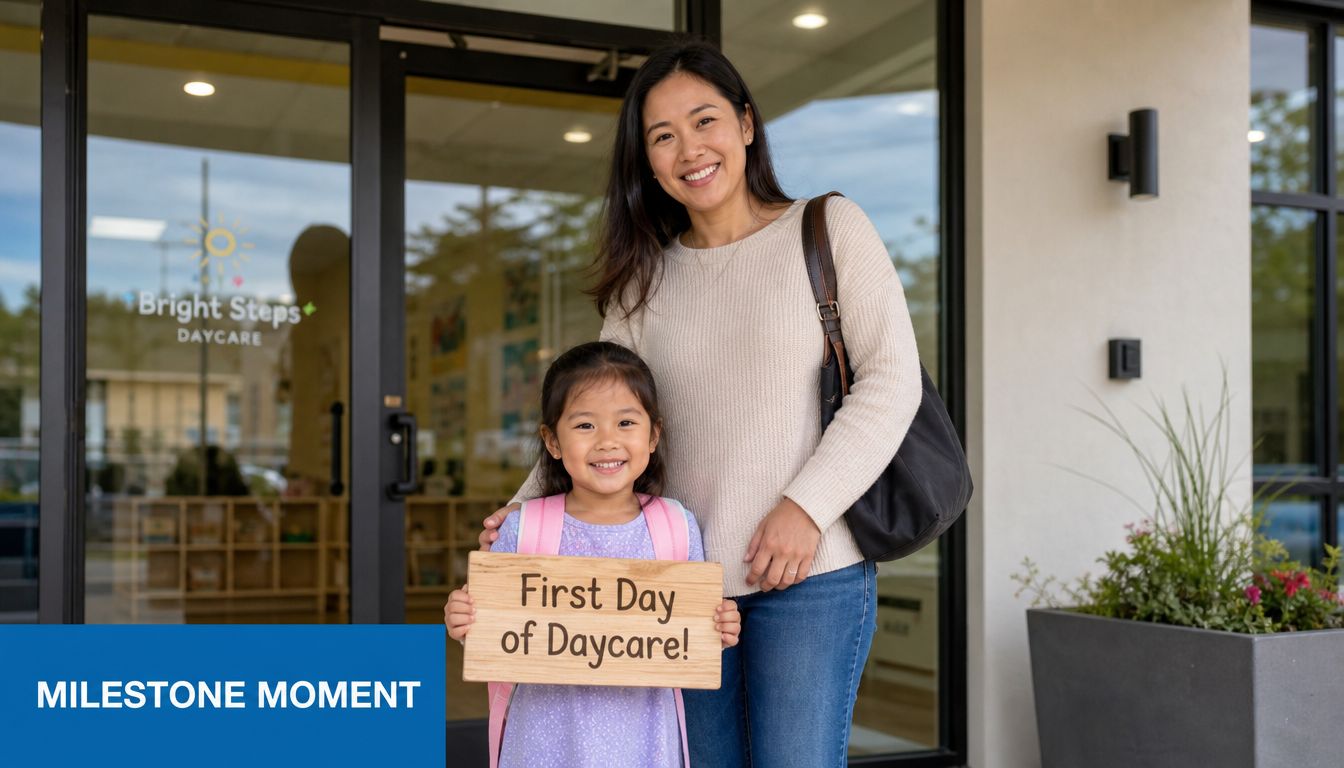
A sign gives the morning a small, predictable task. Take the photo before shoes go on, outside the center, or after your child has settled into a favorite pose. The point isn't to force a perfect smile. It's to create a clear marker that says, this is the beginning of a new chapter.
For a child who's upset, the sign can also bridge home and daycare. The same colors, phrase, or character can appear on a bag tag or bottle label, giving familiar visual cues a place in the new environment. Practical preparation can make the emotional handoff feel less scattered, as outlined in this guide to navigating the transition to daycare.
Practical rule: Take the milestone photo before the goodbye becomes emotionally difficult. Don't make the child perform for the camera at the classroom door.
The sign should remain optional for the child. If they won't hold it, place it beside them, photograph the empty sign with the packed bag, or ask a caregiver to take a later picture if the center permits photography. The memory still counts when the pose isn't polished.
Creative Wording and Design Templates
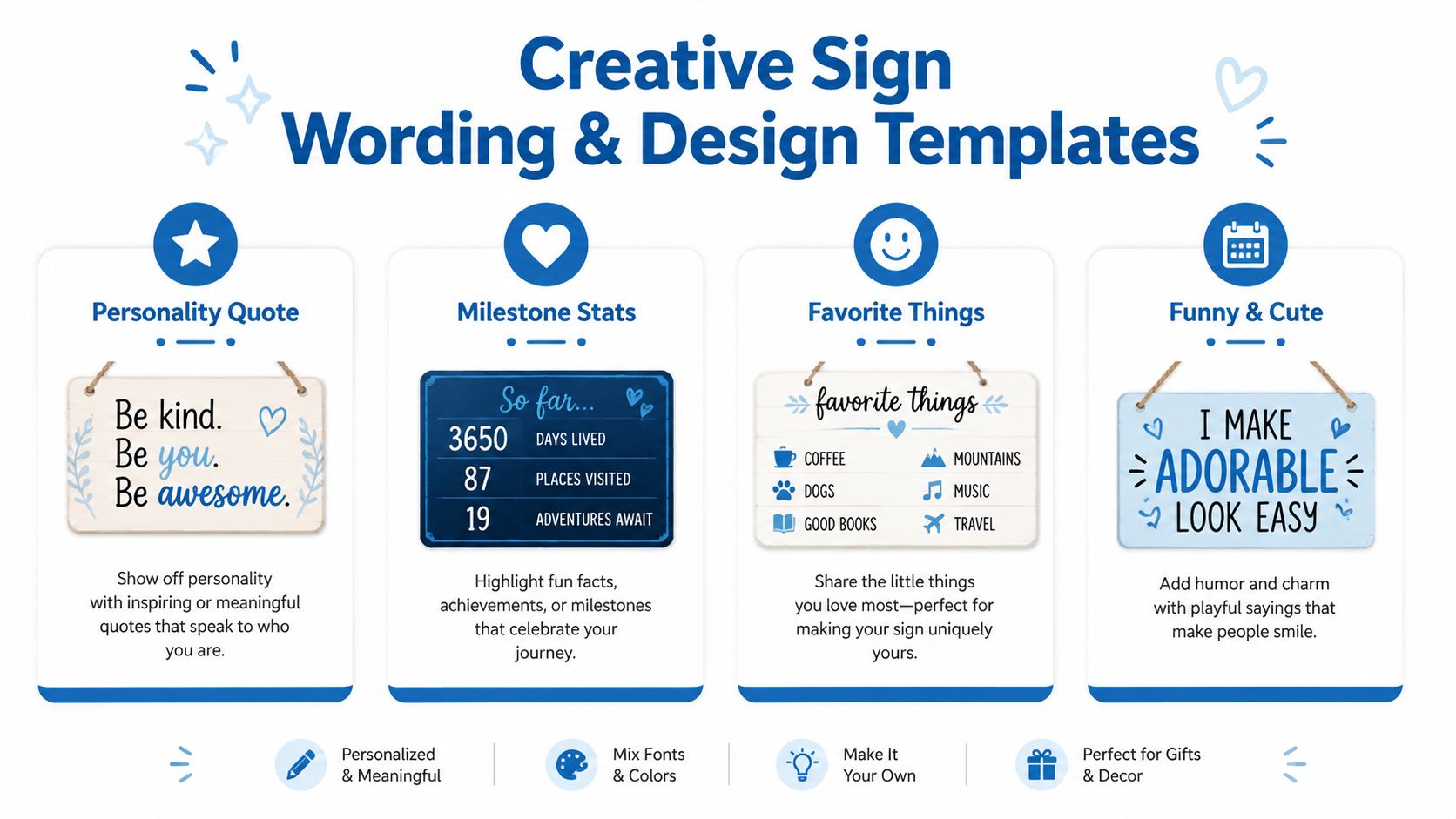
Start with the information you want the photograph to preserve. “My First Day of Daycare” is clear, but it won't tell you what made this particular moment yours. Add one or two details that will help you remember your child as they are now.
Build the main message first
Use a large headline and a smaller detail line. Keep the headline readable from a phone camera, then reserve the lower portion for personality or handoff notes.
Try wording such as:
- Simple milestone: “My First Day of Daycare” with the child's name and date.
- Age-focused: “First Day at Daycare, [child's name], [age] months.”
- Favorite activity: “First Day of Daycare, currently obsessed with bubbles.”
- Personality-led: “First Day of Daycare, ready to explore at my own pace.”
- Future message: “Dear future me, today I was brave.”
- Family voice: “Today I started daycare, and my family cheered me on.”
- Light humor: “Dropped off with snacks, picked up with stories.”
A child's age can be useful for family memories, but it doesn't need to dominate the sign. If the board will also travel into the daycare room, prioritize information staff can act on over a long quote.
Turn decoration into a quiet handoff aid
A dual-purpose sign can include a small “care notes” area beneath the photo message. Avoid cramming every detail into tiny lettering. Instead, use short, clearly labeled fields that complement the design:
- Pronouns: Include the language your family uses.
- Allergy alert: State the allergy plainly and follow the center's formal documentation process.
- Comfort item: Note the familiar object your child uses to settle.
- Nap preference: Record a useful cue, such as preferred sleep position or calming routine, where appropriate.
- Pickup note: Add an approved pickup detail only if the daycare confirms the sign is suitable for that purpose.
- Preferred language: Tell caregivers which language is most effective for communication with your family.
The sign shouldn't replace enrollment forms, medical records, allergy plans, or authorized pickup documentation. It can serve as a visible reminder, but staff need the official information in the format their center requires.
For visual ideas that extend beyond a single board, browse these label design ideas. Match the sign to the child's bag or labels with a simple color, icon, or pattern rather than copying a crowded layout.
A sentimental sign preserves a moment. A structured sign helps people remember what your child needs.
Choosing Materials and Printing Methods
The right material depends on whether you want one polished photo, a keepsake that returns for future milestones, or a sign your child can safely handle outdoors. Busy parents often do better choosing a format that's easy to prepare than selecting the most elaborate option.
| Material | Strengths | Trade-offs | Best use |
|---|---|---|---|
| DIY chalkboard | Reusable, adjustable wording, handmade character | Can smudge, needs neat lettering, may reflect light | Families who enjoy crafting |
| Printed cardstock | Fast to design, easy to personalize, affordable to replace | Bends, tears, and dislikes moisture | A single indoor or sheltered photo |
| Laminated poster | More resistant to spills and handling | Can create glare and adds a plastic layer | Repeated use during the first week |
| Acrylic | Clean appearance, durable surface, easy to wipe | Heavier, can be less comfortable for a toddler to hold | A long-term keepsake |
| Wood | Warm texture, sturdy presentation, reusable | Bulkier and may need careful finishing | A display piece at home |
Match the method to the morning
A DIY chalkboard works when you already have the board and can write legibly under pressure. It's less practical if the lettering takes longer than the morning routine allows. Chalk dust, glare, and erased details can also make the photo harder to read.
A printed poster gives you predictable typography and color. Print on heavier paper, then place it in a clear protective sleeve or laminate it if the center's policy and the intended use allow. Keep the edges smooth, avoid loose embellishments, and don't add glitter or small parts that a young child could pull off.
If you're considering custom apparel or a matching tote rather than a board, this comparison of screen printing vs DTG vs DTF explains how different printing approaches affect the finished design. The same basic lesson applies to sign planning: choose the process based on how much detail, durability, and repeat use you need.
Design for safe handling
Use non-toxic, child-appropriate materials and inspect the sign before handing it over. Avoid sharp corners, exposed staples, brittle decorations, and long loose ribbons. A sign that looks beautiful on a shelf may be awkward or unsafe in a toddler's hands.
For a printable version, a label template for printing can help you organize type, spacing, and repeatable design elements. Print a backup copy if the first sign will travel in a wet or crowded daycare bag.
Styling and Photography Tips for Perfect Shots
A good first-day photograph depends more on light and timing than on expensive equipment. Take the picture when your child is fed, dressed, and not already rushing toward the classroom. If the morning is tense, photograph the sign at home and capture a candid arrival image separately.
Set up the phone before the child arrives
Use indirect natural light near a doorway or window. Direct sunlight can create harsh shadows and make a glossy sign reflect the sky, while a dim hallway can blur movement. Position the child so the light falls across their face and the sign, rather than directly behind them.
Keep the background simple. A daycare entrance, plain wall, front step, or uncluttered room gives the image context without competing with the wording. Coordinate clothing with the sign's colors, but don't dress the child in a pattern that makes the board difficult to read.
Make the sign readable
Hold the board slightly below the child's face, keeping it parallel to the camera. Tilt it only enough to remove glare. Tap the phone screen on the child's face, then check that the lettering remains sharp before moving on.
Take several quick frames instead of asking for one perfect pose. Ask for a wave, invite the child to show a favorite shoe, or let them hold a familiar object just outside the frame. Genuine expressions usually appear when the child has something simple to do.
Keep the session short. The sign is there to preserve the milestone, not to turn an already emotional morning into a photo shoot.
A board designed for repeated school milestones can simplify future pictures. InchBug's personalized first day of school board is one example of a customizable keepsake format that can be prepared ahead of the event.
Pairing the Sign with Daycare Organization Essentials
A first-day sign can serve two jobs: a sentimental photo prop and a quick communication aid for caregivers. Give it a visual theme that carries through the items moving between home and daycare. A matching color or icon helps you recognize belongings quickly, while a clear name label gives staff the identification they need.
Start with items that often leave the main bag:
- Bottles and cups: Mark each item according to the center's labeling rules.
- Clothing: Label jackets, sweaters, hats, socks, and spare outfits.
- Comfort items: Identify the lovey, blanket, or soft toy that helps your child settle.
- Bags and containers: Add a visible tag or label that is easy to check at cubby time.
- Shoes and outerwear: Use identifiers that stay attached through ordinary handling.
Caregivers make repeated decisions during feeding, changing, dressing, and pickup. Consistent labels reduce avoidable mix-ups across different daycare age groups and routines, as noted earlier.
Build the kit before the photo
Place the sign, labeled bag, bottles, spare clothes, and comfort item together the night before. Use that layout as a final inventory: check the required bottles, a complete change of clothes, comfort item, diapers or toileting supplies, and any forms the provider requested. A short note can clarify details a label cannot, such as, “Blue bottle is for the morning; spare outfit is in the front pouch.”
Keep medical instructions separate from the sentimental message on the sign. Use an allergy alert tag or the center's required documentation wherever staff need an unmistakable warning. Waterproof, fade-resistant labels suit items exposed to washing, spills, and daily handling.
For broader packing guidance, compare your provider's requirements with this daycare supplies list. The completed kit can also become part of the keepsake record, while a dedicated resource helps you capture baby's first year with Liz by without confusing memory-making with daily care instructions.
Making the Transition Easier for Everyone
By the time the first morning arrives, the most helpful work has already happened. The sign is designed, the wording is readable, the gear is labeled, and the bag is packed where you can reach it. That preparation won't eliminate tears, but it can remove avoidable confusion from an emotionally loaded morning.
Take the photo before the final goodbye, follow the daycare's handoff procedure, and keep your farewell calm and consistent. If the picture doesn't look perfect, save the sign and try again another day. The milestone is your child entering a new environment with familiar routines and caregivers who know what to expect.
A first day of daycare sign can hold both parts of the experience: the tenderness of watching your child grow and the practical details that help someone else care for them well. Take a breath, make the handoff, and let the photograph remind you that a difficult beginning can still be a meaningful one.
InchBug offers customizable labels and personalized essentials for bottles, clothing, shoes, bags, lunch items, and other daycare gear, including durable options designed for everyday washing and handling. Visit InchBug to coordinate your child's labeled daycare kit with a first-day sign that captures the milestone and supports a smoother routine.