

The missing sock is annoying. The missing jacket is worse, especially when it's the only one that fits and the daycare cubby is full of almost-identical navy hoodies. Most parents don't need another cute organizing hack, they need fabric labels for kids clothes that survive school runs, laundry, hand-me-downs, and the kind of chaos that starts before breakfast.
That's why labels for kids' clothing aren't a niche accessory anymore. A market report valued permanent clothing labels for kids at $1.2 billion in 2025 and projected $1.9 billion by 2034, with iron-on labels holding 42.3% of sales and North America at 38.5% of revenue; it also estimates parents spend $8–$25 per child per year and that 23% of back-to-school household spending includes label purchases (market report on permanent clothing labels for kids). That lines up with what families feel in real life, labels are a recurring need, not a one-off purchase.
If you're getting ready for nursery or preschool, a practical prep list helps more than a last-minute shopping sprint. This parent-friendly guide on tips for preparing your child for nursery pairs well with a labeling plan because the calmer your system, the fewer morning surprises you'll get.
Why Every Parent Needs a Labeling Strategy
The lost-and-found basket has a way of turning one child's sweatshirt into community property. A label helps, but only if it matches the garment, the laundry routine, and the child who has to wear it. When a label peels, scratches, or disappears after washing, the whole system falls apart and you are back to guessing whose socks are whose.
A good labeling plan saves more than clothing. It saves minutes on rushed mornings, lowers the odds of replacing items that were already in your house, and makes handoffs at daycare, school, sports practice, and travel much easier. In homes with more than one child, that matters fast, because laundry piles mix together and a navy hoodie can look like any other navy hoodie until someone notices the name inside.
Parents also need to think about the child, not just the clothing. Sensory-sensitive kids may refuse a scratchy tag or a stiff patch, even if the label itself is durable. Modern tagless fabrics create another problem, since there may be less interior space to work with, so the label has to fit with the garment instead of fighting against it. That is why a labeling plan works best as part of the full routine, which fits with the fact that labels are only one piece of getting ready for busy days, along with the tips for preparing your child for nursery.
Practical rule: if a garment leaves the house often, it needs a label that stays readable after repeated washing and handling.
Parents also tend to spend more thoughtfully than they expect. The earlier market data points to permanent labels as a recurring purchase, not a one-time fix, and that matches family life. Labels have to survive school runs, muddy play, last-minute changes, and the wash cycle, so the main question is not whether to label, it is how to build a system that keeps working. For families who want labels that are meant to hold up in the wash, a machine-washable labels guide can help explain what that durability should look like in practice.
If your child is starting nursery, preschool, or a new classroom, labels become part of the packing system, right beside spare clothes, shoes, and snack containers. That is especially true in multi-child homes, where one organized approach keeps everyone's things from blending together and gives you a simple habit you can repeat every week.
The Four Main Types of Fabric Labels Explained
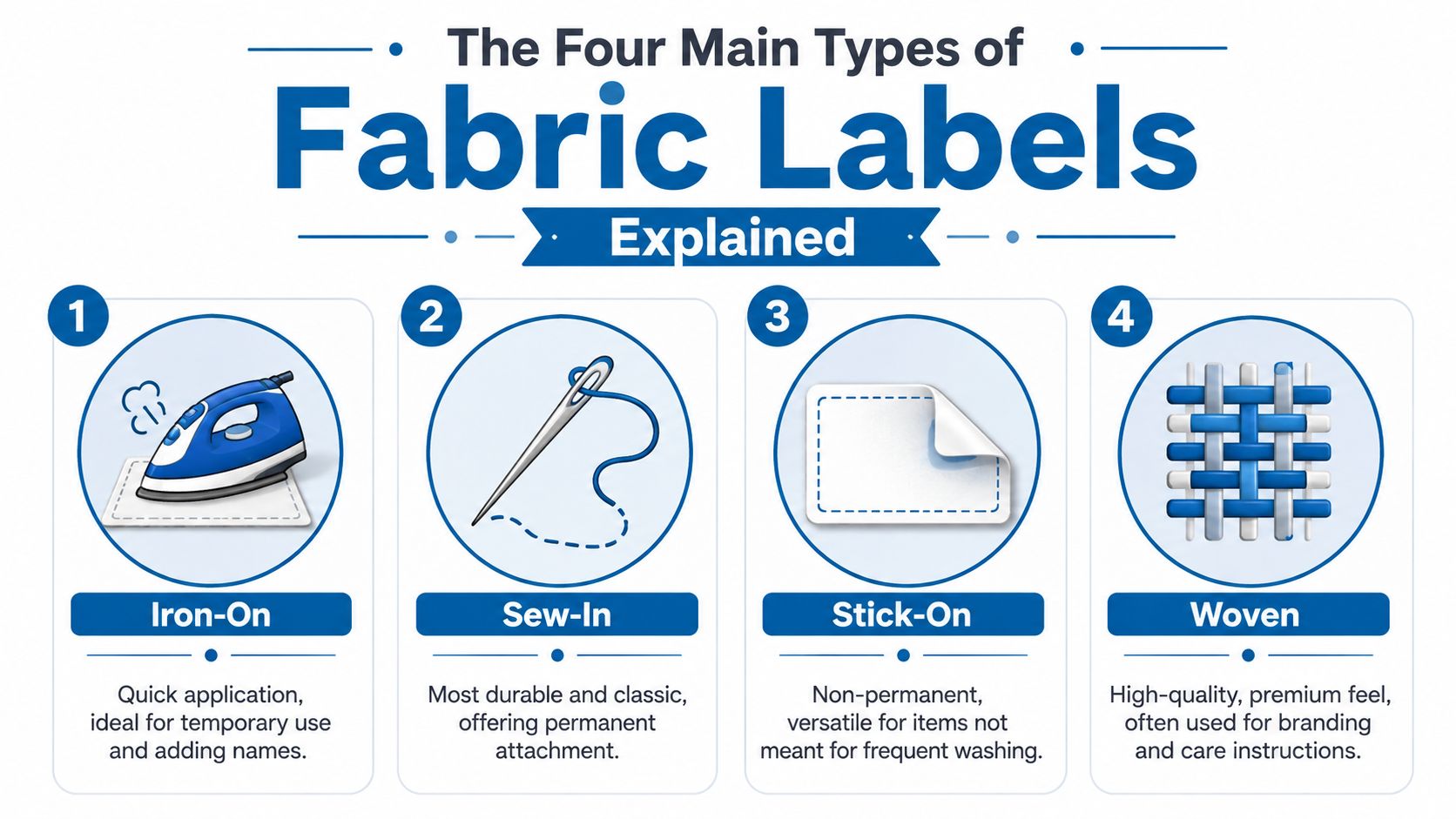
The main choice isn't whether to label, it's which kind of label fits the garment. For kids' clothes, that usually comes down to iron-on, sew-in, stick-on, and woven labels. Each one solves a different problem, and the wrong match is where most frustration starts.
What each type feels like in daily use
Iron-on labels are the classic option for clothing identification. You press them on with heat, and they're meant to stay put through routine washing. They're a strong fit for cotton basics, uniforms, and other garments with a smooth interior surface. Their strength is also their weakness, because they rely on heat and a compatible fabric.
Sew-in labels are the old-school permanent choice. They're stitched into a seam, waistband, or care-tag area, which makes them useful when you want a very secure attachment and don't mind the extra effort. Parents often choose them when they want a traditional, long-lasting finish.
Stick-on labels are usually the fastest to apply. They're especially practical on care tags, bags, or items that shouldn't be exposed to heat. For clothing, the key is placement. The label has to go where it can stay stable, not stretch with the fabric.
Woven labels usually have the most polished feel. They're textile-based and often used when the priority is a premium finish, branding, or a soft label edge. They're appealing when you want the label to feel part of the garment instead of something added later.
Choose the label for the life you expect the garment to live, not for how easy it looks on the product page.
Quick comparison
| Label Type | Application | Durability | Best For |
|---|---|---|---|
| Iron-on | Heat applied | Strong when matched to the right fabric | Cotton clothes, uniforms, everyday basics |
| Sew-in | Stitched in place | Very secure | Heirloom-like permanence, heavy-use garments |
| Stick-on | Pressed onto a tag or flat surface | Good when used correctly | Care tags, jackets, tag-friendly items |
| Woven | Sewn or attached as a textile label | Long-lasting and polished | Premium look, soft finish, branding |
For a broader overview of name-tag options, this guide to personalized name tags for clothes is a useful companion read.
Which Labels Survive the Laundry Machine
Durability isn't just “does it stay on.” For kids' clothes, it means the label still reads clearly after wash day, tumble drying, lunch spills, and the rough handling that comes with changing a child fast before school. If the print fades or the attachment weakens, the label stops doing its main job.
The laundry question matters because children's apparel labels need to stay legible and durable through laundering so care instructions and fiber composition remain usable (textile regulations guidance). That's especially important for blended garments, where the fiber mix affects comfort and care. High-contrast printing and wash-resistant materials aren't just nice to have, they're what keep the label readable long enough to matter.
What durability really means
An iron-on label that looks fine before the first wash but curls afterward is not durable in a parent's world. A woven label that frays at the edges or becomes scratchy also misses the mark. The best choices keep their shape, stay readable, and don't turn into a texture problem after laundry.
The garment itself matters too. Cotton and cotton-heavy items are usually easier for label attachment than slippery synthetics, but the final result depends on placement and application more than marketing language. That's why application instructions are as important as the label material.
This is also where a second opinion helps. A practical machine-washable labels guide can be useful if you're trying to match label type to routine washing, especially for school uniforms and everyday basics.
If a label can't survive the wash rhythm your family actually uses, it's the wrong label for the job.
Keeping Labels Safe and Comfortable for Kids
A label isn't successful if your child refuses to wear the clothing because the neckline itches or the seam rubs. Comfort matters as much as staying power, especially for toddlers, kids with eczema, and children who notice every scratchy edge. Traditional tags can irritate the neck area when stitching is rough or the fabric is thick, which is why flat, soft, smoothly integrated labels are so valuable (sensory sensitivity guidance).
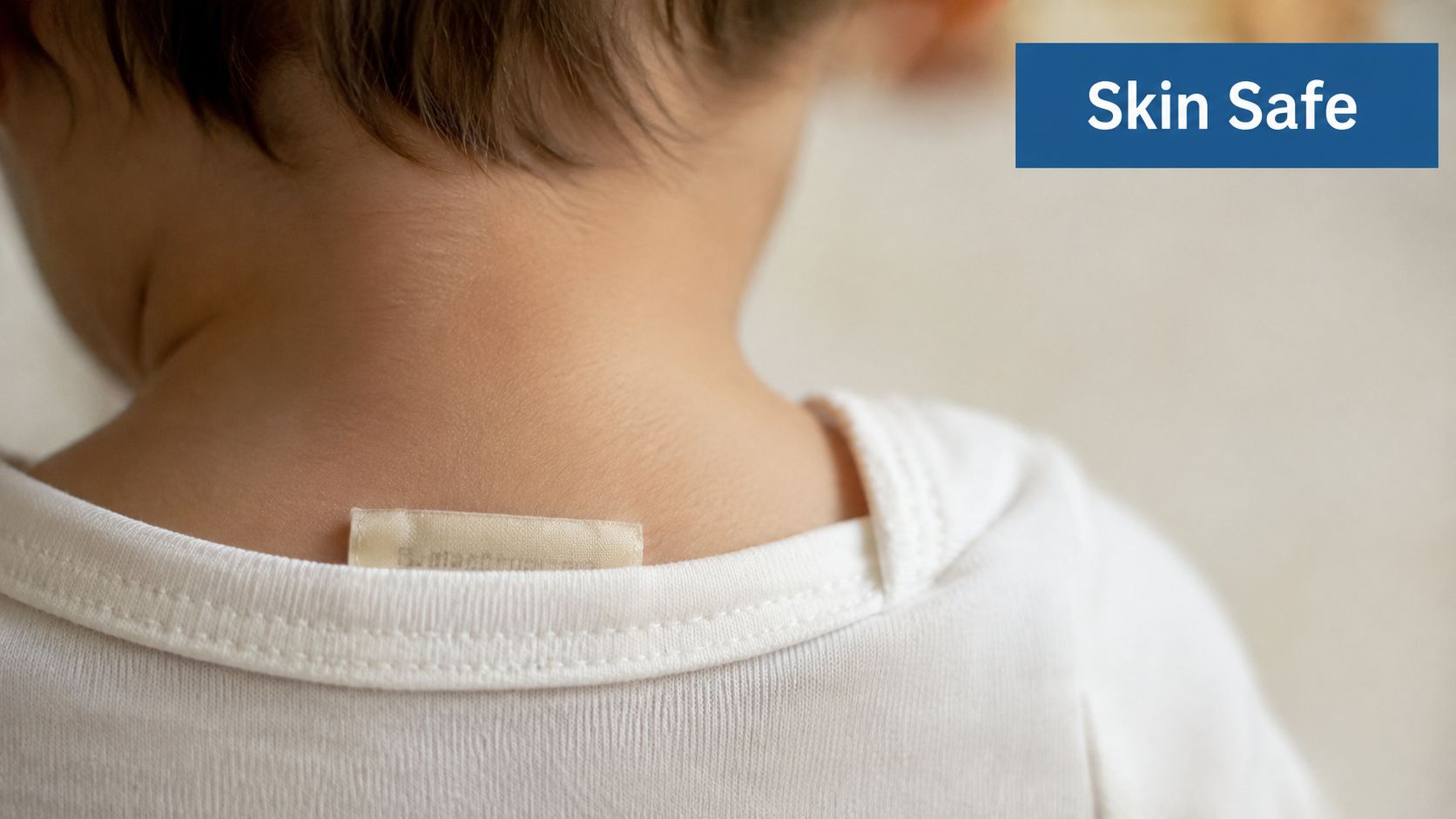
The safest-feeling labels are usually the ones a child forgets are there. That can mean a soft woven label, a smooth printed tag, or a label placed away from the neckline so there's less friction against the skin. When clothing already has a seam or care tag area, keeping the label integrated into that space tends to work better than adding bulk where the body bends.
Sensory comfort changes the decision
For a sensory-sensitive child, even a label that's technically “wash-safe” can still be a daily problem if it scratches. That's why the placement and finish matter just as much as the attachment method. If the child already objects to neck tags, choose the softest option available and keep the label low-profile.
For families shopping for baby and toddler essentials, it also helps to think about the garment itself, not just the label. Soft fabrics and smooth finishes reduce friction before the label is even added. A product like Peppervale's sustainable baby range is a good reminder that the base layer matters, because a gentle garment gives any label a better chance of staying comfortable.
The best comfort test is simple. If you can feel the label immediately when you touch the inside of the collar, your child probably will too.
How to Apply Fabric Labels for a Perfect Stick
The fastest way to waste a label is to put it on the wrong surface. Modern clothing creates more problems than parents expect, because some garments don't have a traditional care tag, and others are too delicate or stretchy for heat-based application. A good rule from parent conversations and how-to guides is to check the garment's iron-safe symbol first, then choose stick-on labels for delicate, stretchy, or non-iron-safe fabrics (parent discussion on no-care-tag clothing).
For step-by-step application help, this label application methods guide is worth keeping nearby when you're labeling a pile of new clothes.
Getting the surface right
For iron-on labels, the fabric has to tolerate heat and the placement needs to be flat. For stick-on labels, the best spot is a stable tag or tag-like surface, not a stretchy part of the garment. That difference sounds small, but it decides whether the label stays put through a full term or lifts after the first wash.
Tagless shirts are where many parents get stuck. If there's no care tag, you'll need to check the garment instructions and choose an attachment method that doesn't damage the material. Stretch leggings, fleece jackets, and similar modern fabrics often do better with a non-heat option because their surfaces move too much for a bonded label to hold consistently.
Placement that reduces irritation
The collar isn't always the best place. Side seams, care tags, or waistband areas can be smarter because they're easier to hide, less likely to bother a child, and less likely to be rubbed by skin. Socks are a separate problem, because they need a label point that can survive friction and stretching without becoming uncomfortable inside the shoe.
A simple routine works best in real homes.
- Check the care symbol first: If the garment can't handle heat, don't force a heat-based label.
- Choose the flatest spot available: Care tag, seam, or waistband usually beats the neckline.
- Apply to clean, dry fabric: Dirt, lint, and moisture reduce adhesion.
- Press firmly and let it settle: Rushing the first wear shortens label life.
- Use a separate strategy for tricky fabrics: Fleece, stretch, and tagless items often need different handling than cotton basics.
If you label in batches, sort the pile by fabric type before you start. That saves time and keeps you from trying to make one method fit every garment in the drawer.
Making Your Kids Labels Fun and Functional
A label can do more than say a name. It can carry a phone number for emergencies, alert staff to an allergy, or help a pre-reader spot their own backpack in a crowded room. That's where customization becomes practical, not decorative. A child who can't yet read their name may still recognize a color, icon, or character they picked themselves.
A label with a small visual marker can make morning routines easier. For example, siblings can each have a different icon, and a child with allergies can have a visible alert that adults notice quickly. That kind of personalization turns an ordinary tag into a tiny communication tool.
For more creative ideas, this label design ideas guide gives parents a useful starting point when they want labels to be both practical and child-friendly.
Once the functional part is covered, design can help with ownership. Kids are more likely to recognize and care about items that feel personal to them, especially when they had a hand in choosing the look. That matters for school shoes, spare clothes, lunch gear, and anything that tends to wander between home and classroom.
The best labels don't need to be flashy. They just need to be clear enough for adults, meaningful enough for kids, and specific enough to solve the problem sitting in the lost-and-found basket.
The Smart Parents Checklist for Ordering Labels
A good label order starts with the practicalities of your child's wardrobe. Manufacturer tags can be wrong, hard to read, or missing details that matter, so parents often need their own system to keep clothing sorted and returned correctly. In a label accuracy analysis, analysts found that many garment labels were incorrect, especially on common cotton-polyester blends (garment label accuracy analysis). That is why ordering custom labels is less about decoration and more about replacing unreliable information with something clear, durable, and easy to use.
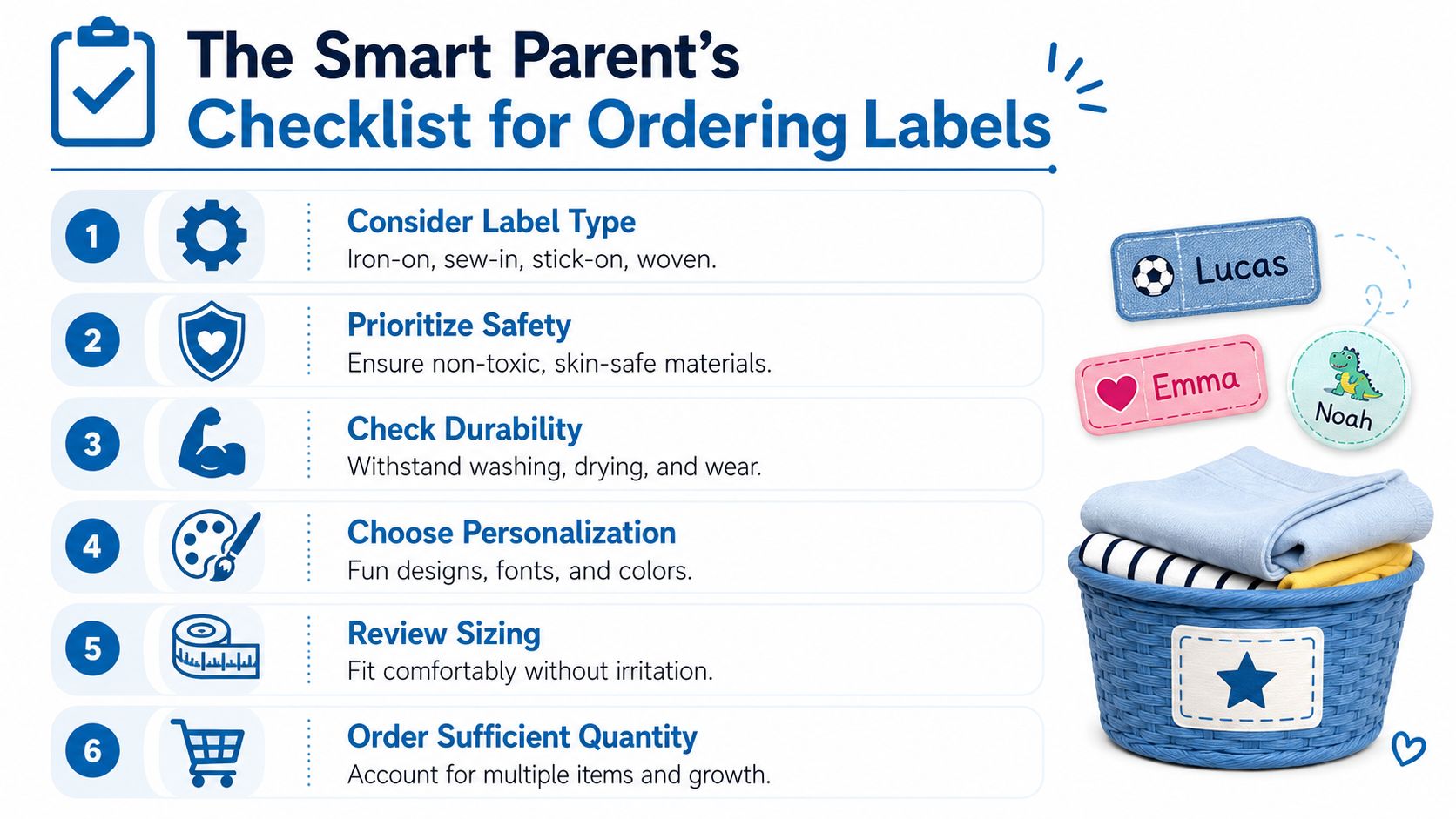
A simple ordering checklist
- Pick the label type first. Decide between iron-on, sew-in, stick-on, or woven based on the fabrics in your child's closet. Tagless shirts, stretchy leggings, and thicker uniforms all behave differently, so one format rarely fits everything.
- Check comfort needs. If your child is sensory-sensitive, choose flat, soft, low-profile options that do not rub or bunch. Some children notice every seam, while others barely feel a label, so comfort should guide the choice.
- Match the material to the laundry routine. Some clothes need a heat-safe solution, others need a tag-friendly one. If a garment sees frequent hot washes or heavy drying, pick a label that is built for that routine.
- Choose the right personalization. Names are important, but icons, colors, or alerts can help pre-readers and caregivers. A simple visual cue can make a label easier to spot on busy mornings.
- Review placement. Think through where the label will be seen, felt, and washed. Inside the collar works for some items, while a hem or side seam may be better for sensitive kids or modern garments with minimal tags.
- Order enough for the full wardrobe. Do not forget spare clothes, jackets, school extras, and growth items. It helps to have extras ready for hand-me-downs, daycare backups, and the clothes that seem to disappear most often.
If you want help comparing options, the help me choose name labels page is a practical way to sort through mixed fabrics and different age groups before you place an order.
A complete system often includes more than clothing labels. Fabric labels handle clothing, but lunchboxes, bottles, and gear may need other kinds of identifiers. Keeping those categories separate helps you avoid buying the wrong format for the wrong item, and it makes your label stash much easier to manage.
For parents who need a setup that works for daycare mornings, school uniforms, sensory-sensitive kids, and modern tagless clothing, InchBug offers personalized clothing labels alongside other kid-friendly identification products. Visit InchBug to choose a labeling option that fits your child's wardrobe, comfort needs, and daily routine.