

The night before day care starts often feels louder than it should. You're washing tiny bottles, hunting for one more pair of socks, checking the weather, and wondering how so many small items can create such a big mental load.
That feeling is normal. Starting care means handing part of your daily rhythm to someone else, and even when you trust the provider, the logistics can feel relentless. The practical side matters more than people admit. If your child's bottles, backup clothes, blanket, shoes, and comfort item aren't ready to go, the whole morning gets harder.
A good day care essentials system does more than fill a bag. It protects your budget, helps staff move quickly, and gives your child more consistency during a major transition.
Navigating Your New Normal with Daycare Prep
Daycare is a major household expense, so the gear you send needs to come home again. In the U.S., the average weekly cost for daycare is $340, or about $17,680 per child annually if used year-round, according to Zippia's child care availability statistics. When care costs that much, replacing lost bottles, cups, jackets, sleep sacks, and lunch containers gets frustrating fast.
That's why day care essentials aren't just about having enough diapers and wipes. They're about building a repeatable system your provider can work with and your family can maintain on tired mornings. The families who seem calm at drop-off usually aren't magically more organized. They've just reduced decisions.
The biggest shift is treating daycare prep like an operating routine, not a one-time shopping trip. The right setup makes it easier to spot what's missing, restock before you run out, and keep sentimental comfort items from disappearing into the wrong cubby.
Practical rule: If an item would be annoying, expensive, or emotionally hard to replace, it needs a dedicated place and a clear label before the first day.
A strong setup also helps your child. Familiar gear creates continuity between home and care. A recognizable bottle, a specific lovey, or the same pair of easy shoes can lower stress during handoff and make the day feel more predictable.
If you're still adjusting to the emotional side of this change, these tips for navigating the transition to daycare are worth reading alongside your packing prep. The emotional transition and the practical transition really do affect each other.
The Ultimate Daycare Essentials Checklist
Most daycare lists cover the basics. Fewer help you pack in a way that still works after the first week, when things start coming home damp, inside out, or not at all. That's where your checklist needs to do more than remind you what to buy.
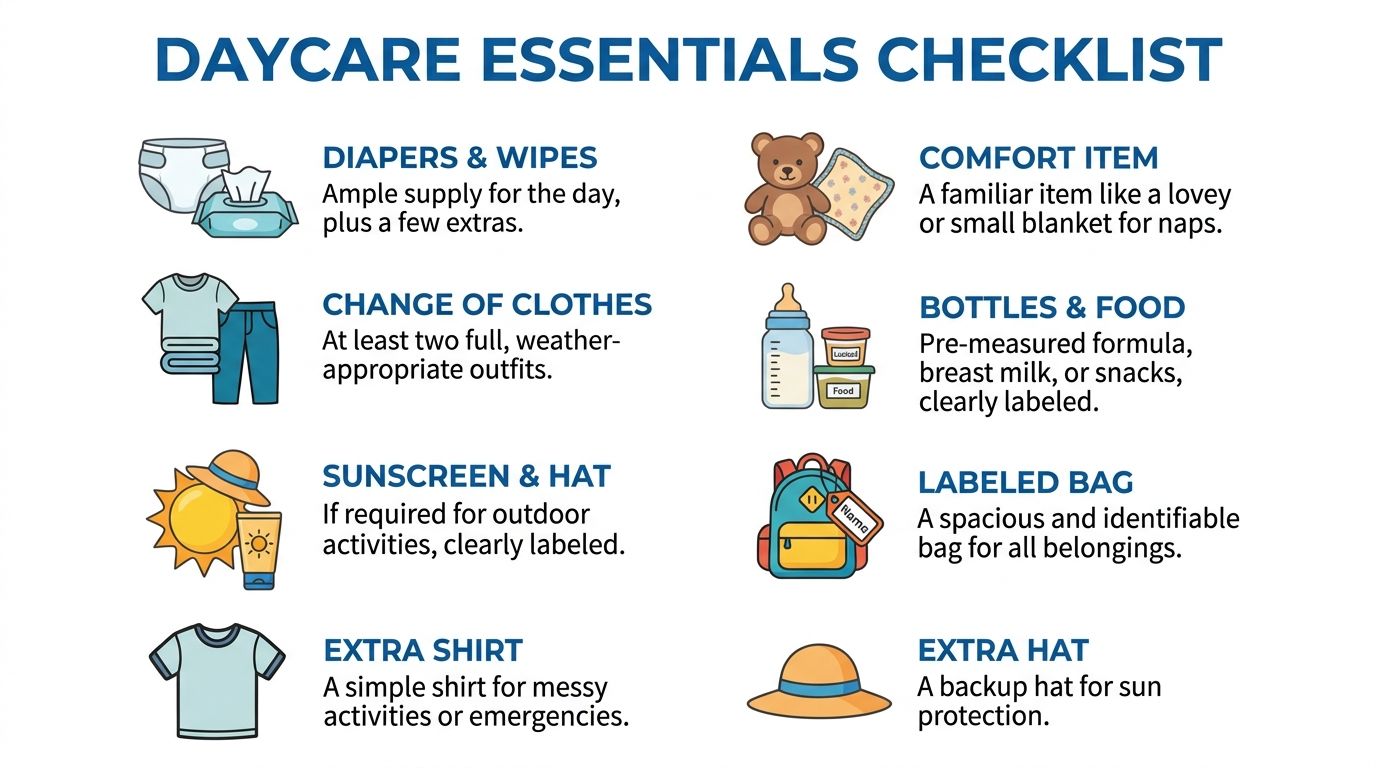
A useful bag has three qualities. It's easy for staff to open quickly, easy for you to restock at night, and packed with items that can survive a full day of handling, spills, and laundry. One overlooked issue is durability after labeling. While 87% of parents label items initially, over 60% report labels fading or peeling within three months, which leads to a 45% increase in lost items by mid-year, as noted by Playto's infant care essentials discussion.
Feeding supplies
For infants, feeding gear usually causes the most stress because there are more rules attached to it.
- Bottles or cups. Send the number your provider requests, plus any matching lids or caps. If your child is transitioning to a straw cup, make sure the daycare version is one they already know how to use.
- Prepared milk, formula, or snacks. Follow your center's storage and labeling rules exactly. If they ask for separate portions, don't send one large container and hope it works.
- Bibs and burp cloths. These disappear easily because they're small, neutral-looking, and often end up in laundry bins together.
A simple mistake is packing feeding items that are technically washable but annoying to reassemble. If a cup has five tiny valve pieces, it may be perfect for home and a terrible fit for daycare.
Diapering and potty training items
This category gets used hard, so send more than your optimistic self thinks you'll need.
- Diapers or training pants. Keep a larger backup stash at the center if they allow it.
- Wipes. Some programs ask for unopened packs. Others want a refillable container.
- Diaper cream or ointment. Check whether a form is required.
- Wet bag or plastic bag. This is for soiled clothes, messy bibs, or accident cleanups.
Pack diapering supplies as if your child will have the messiest day of the week on a day when you're running late. That's usually the right amount.
Clothing and outerwear
Clothes are the category parents underestimate most, especially in the first month.
A smart clothing setup includes:
- Two full spare outfits. One sounds reasonable until there's a diaper leak at 9 a.m. and yogurt at lunch.
- Extra socks. Wet socks can derail a whole afternoon.
- Seasonal layers. A lightweight sweater, a warm hoodie, mittens, or a sun hat, depending on the time of year.
- Easy shoes. Pick pairs your child can move in and your provider can put on quickly.
If your center uses cubbies, choose clothing that staff can identify at a glance. Similar navy leggings and gray sweatshirts all start to look the same by pickup.
Comfort and sleep items
These are often the smallest items in the bag and the biggest emotionally.
| Item | Why it matters | Better choice |
|---|---|---|
| Lovey or small blanket | Helps with naps and drop-off transitions | Send one designated for daycare |
| Pacifier | Keeps routines consistent for infants | Pack extras in a clean pouch |
| Nap sheet or crib sheet | Required by many programs | Use one reserved only for daycare |
If your child is strongly attached to one comfort object, consider whether a daycare-specific duplicate is the safer move. Some children do well with that. Others notice immediately. You know your child best.
For a center-by-center comparison of what often gets requested, this daycare supplies list from InchBug is a handy reference.
Health and documentation
This final category is easy to forget because it doesn't always live in the main bag.
- Medication paperwork. Keep copies where you can find them quickly.
- Any required cream or sunscreen forms. Policies vary.
- Emergency contacts. Make sure the provider has current numbers.
- Daily note items. Some families tuck in a spare labeled bag, note card, or communication folder.
The goal isn't to carry everything. It's to make sure the items that matter most are always there, always recognizable, and easy to replace in the same spot.
Mastering the Art of Labeling and Organization
The fastest way to lose control of daycare gear is to label casually. One bottle gets a sticker. One sweatshirt gets initials on the tag. Shoes are left blank because you'll “do it later.” Then later becomes the day your child comes home with someone else's cup and one missing sock.
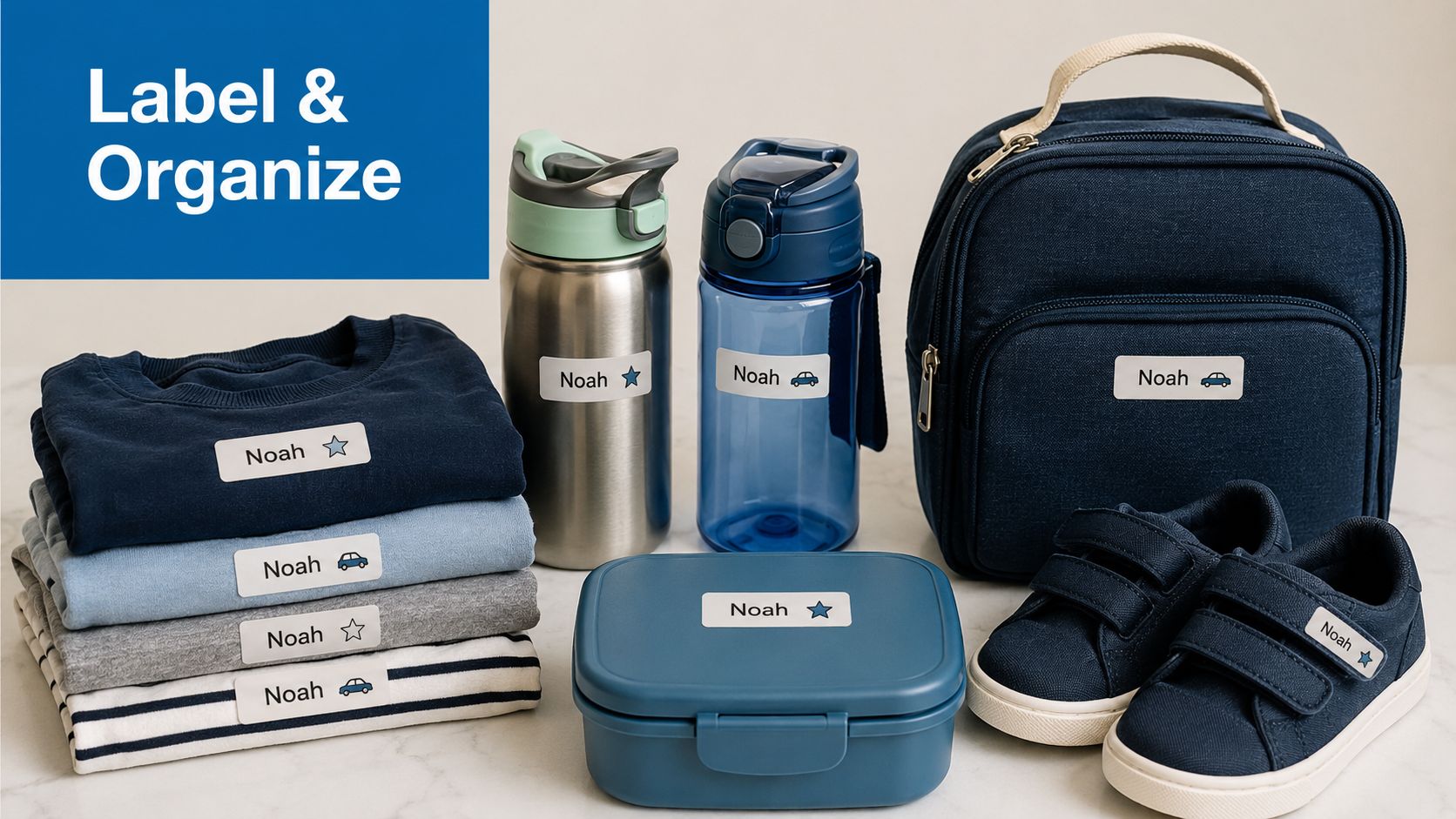
That's not a small detail. Monica + Andy's daycare checklist article states that using waterproof, BPA-free name labels on high-visibility zones like bottle necks and collar seams can reduce misidentification rates by 94%.
Where labels actually work
A label only helps if staff can see it quickly and it stays readable after repeated use.
Here's where placement matters most:
- Bottles and cups. Put the child's name where it's visible when the item is standing upright or stored in a fridge bin. Hidden labels on the base are easy to miss.
- Clothing. Collar seams, care tags, or another visible interior area work better than writing directly on fabric that stretches or fades.
- Shoes. Label both shoes. One identifier on one shoe won't help when pairs get split up during outdoor play.
- Bags and lunch gear. Place labels on the outside and, if possible, one inside too.
The common mistake is choosing the least noticeable placement because it looks neater. Daycare labels need function first. Staff need to identify items in seconds, often during a busy transition.
What holds up and what doesn't
A true test isn't whether a label looks good on day one. It's whether it survives washing, dishwashing, sanitizing, and being shoved into a damp backpack pocket.
Ink-only stickers tend to disappoint because they're easy to apply but often don't last under regular daycare use. Reusable bottle bands, durable clothing labels, and shoe identifiers usually work better because they match the material and the wear pattern of the item they're attached to.
If a label needs to be babied, it's the wrong label for daycare.
Product type matters more than color or cute fonts. For example, InchBug Orbit Labels are reusable bottle bands designed for bottles and cups, while TagPal clothing labels and ShoePal identifiers fit the specific surfaces they're meant for. That's a more practical setup than trying to force one sticker style onto everything.
A simple organization system that sticks
Parents don't need a complicated inventory spreadsheet. They need a setup that makes missing items obvious.
Try this three-part system:
- Assign a category home. Feeding items in one pouch, clothing in another, diapering in one section of the bag.
- Label by visibility, not aesthetics. If the label can't be spotted quickly by someone who doesn't know your child's things, move it.
- Check weak points weekly. Look at bottle lids, jacket cuffs, shoe insides, and comfort items. Those areas tend to loosen, peel, or disappear first.
If you want examples of which label types fit which items, this guide to labels for daycare is useful because it breaks the choices down by real use case instead of treating everything like the same surface.
Your Daily Packing and Unpacking Routine
A calm daycare morning usually starts the night before. That doesn't mean doing everything in advance. It means doing the parts that take thinking.
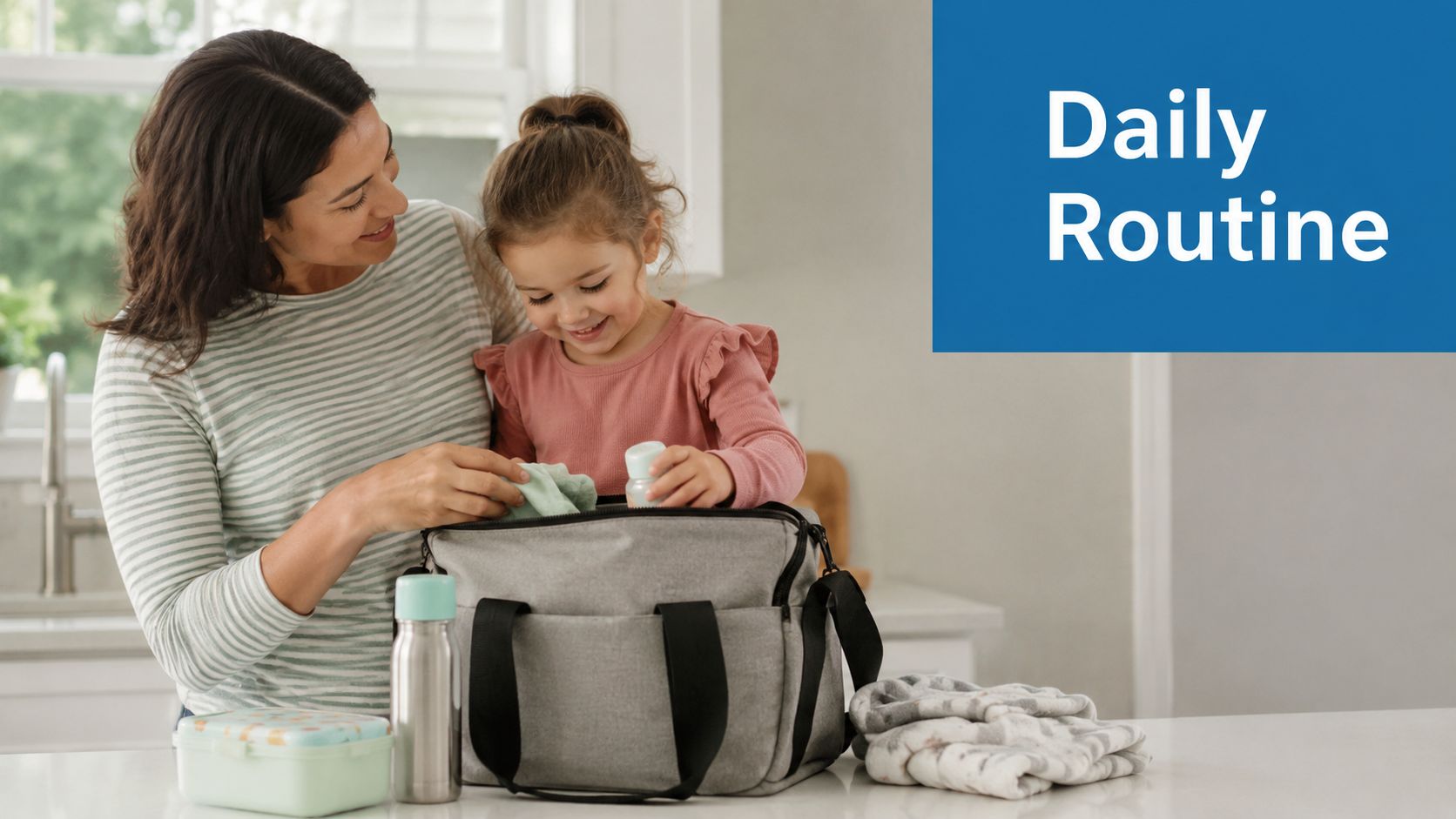
Evening prep
Evening prep works best when it's short and repeatable. Don't aim for a deep reset every night. Aim for a quick reset that keeps tomorrow from getting messy.
A reliable evening rhythm looks like this:
- Restock the essential items. Refill diapers, wipes, extra clothes, and any daily comfort item.
- Set out tomorrow's outfit. Include socks, outerwear, and shoes so you're not making weather decisions half-awake.
- Handle food prep early. Pack dry snacks, clean bottles, or put lunch components together if your center requires food from home.
One small trick helps a lot. Keep a master stash in one bin at home. If everything gets replaced from the same place, you stop hunting through different rooms for a clean bib or backup leggings.
Morning pack-out
Mornings should be for final checks, not full assembly. If you're still building the whole bag at breakfast time, the routine is doing too much.
Use a short scan before leaving:
- Cold items added
- Comfort item packed
- Daily sheet or note returned
- Bag zipped and ready by the door
If you tend to forget one category over and over, put that item with your keys or on top of the bag zipper. The goal is to interrupt the autopilot rush.
For families trying to simplify the whole bag setup, this backpack organization guide has solid ideas that translate well to daycare bags too.
A visual walk-through can also help if your current routine feels clunky.
End-of-day unpack
The pickup-to-home window is where a lot of systems fall apart. Dirty clothes sit in the bag, bottles get forgotten until morning, and notes from the teacher disappear under junk mail.
A better unpack routine is simple:
- Pull out anything damp or soiled immediately
- Move bottles and containers straight to the sink
- Read the daily report while the day is still fresh
- Restock what's missing before bedtime if possible
A daycare bag should be empty enough by evening that you can repack it without sorting through yesterday first.
That one habit prevents the most common morning problem, which isn't forgetting an item you never owned. It's forgetting the item that came home yesterday and never made it back.
Smart Tips for Laundry and Cleaning
Daycare laundry isn't normal household laundry. It's a rotating mix of food stains, outdoor grime, mystery dampness, and fabrics you need back in circulation quickly. The easiest way to stay ahead of it is to separate “needs washing” from “needs decision-making.” If everything comes home into one pile, you create extra work.
Sort by item type, not by child mood
Set up a simple landing zone near the door, laundry room, or kitchen.
Use separate spots for:
- Soiled clothing. Accidents, spit-up, paint, and playground dirt.
- Feeding gear. Bottles, lids, snack cups, lunch containers.
- Soft comfort items. Blankets, loveys, nap sheets.
- Outerwear. Jackets, hats, mittens, and rain gear that may only need drying out.
That split helps you act quickly. Clothes can go to stain treatment, bottles can head to the sink, and a damp blanket can be aired out before it picks up that familiar daycare-bag smell.
Clean on a rhythm you can repeat
Pre-treat visible stains as soon as you can. You don't need an elaborate system. What matters is speed and consistency. If a shirt is likely to sit until the next day, at least rinse or mark it for special attention.
For feeding items, wash all matching pieces together so you're not searching for the right lid at 6:45 a.m. A small basket or dishwasher container for bottle parts helps keep the set intact. The same goes for straw cup parts and snack cup inserts.
Washing machines need care too, especially if they're constantly handling soiled daycare clothes and towels. If your washer has started to smell musty or leaves items less fresh than expected, these PureHQ Inc. washer cleaning tips are a practical reference.
The cleaning routine that works is usually the one with the fewest decisions. Same basket, same wash day, same restock spot.
Protect the system while you clean
Many labeling setups fail under specific circumstances. Labels may look fine after application but start curling, smudging, or disappearing once they meet warm water, detergent, and repeated handling.
When you choose labels for daycare items, match them to the cleaning reality of the item. Bottle identifiers should tolerate frequent washing. Clothing labels should stay readable after regular laundry. Shoe labels need to handle friction and moisture, not just look neat on a clean pair at the kitchen table.
It's also worth checking labels during folding, not only when packing. That gives you a quiet moment to replace or reinforce anything that's wearing down before it causes confusion at drop-off.
Communicating with Your Daycare Provider
Packing well helps at home. Clear labeling helps your provider all day long. That's the difference between organization as a parent convenience and organization as a care tool.
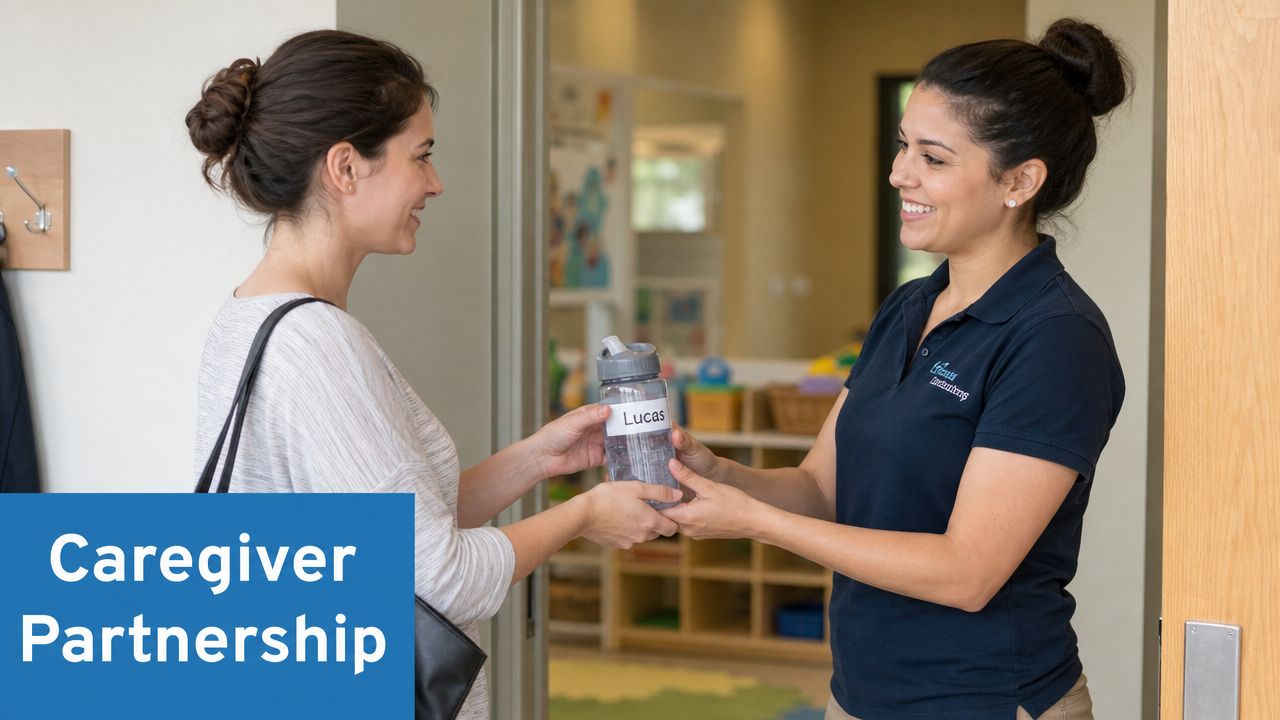
The strongest daycare partnerships usually share one trait. Parents make it easy for staff to identify what belongs to the child, what needs special handling, and what matters emotionally. According to the World Bank document cited in the verified data, daycare provider success with infant health safety improves by 67% when standardized labeling is used for feeding and medical supplies, and a 2026 survey showed 64% of providers struggle daily with unmarked allergy alerts.
Use labels as communication, not decoration
A label should answer one of three questions immediately:
| Label purpose | What staff need to know | Good use case |
|---|---|---|
| Ownership | Whose item is this? | Water bottle, sweater, shoes, blanket |
| Safety | Does this item need special handling? | Allergy items, medication-related supplies |
| Comfort | Is this part of the child's routine? | Lovey, pacifier case, nap item |
That middle category matters most. If your child has an allergy, feeding restriction, or specific comfort need, the label is doing communication work long after drop-off. Staff don't have time to memorize every bag and bottle by appearance alone.
Match the setup to your child's age
Infants need a tighter, more controlled system. Bottles, pacifiers, backup clothing, diaper cream, and nap items all need straightforward identification because several children may use very similar gear. For toddlers and preschoolers, the focus shifts slightly toward shoes, jackets, cups, lunch gear, and comfort items that travel in and out of cubbies.
Some children also need what I think of as functional personalization. Not extra decoration. Extra clarity. A familiar icon, a consistent color cue, or a clearly marked comfort item can help a child recognize their own things faster and settle more easily into the day.
Some labels are for adults to read fast. Some are for children to recognize fast. The best system does both.
If your child struggles with separation, consistency helps. The same labeled water bottle, the same nap item, and the same visual cues in the bag can make daycare feel less unpredictable. During rough drop-off phases, these ideas for handling difficult drop-offs can help you pair practical routines with emotional support.
Questions worth asking your provider
Policies vary a lot, so it helps to ask specifics instead of broad questions.
- How do you want bottles labeled? Some rooms have fridge bins, some use trays, some separate lids and bodies.
- Do you want names on the outside only, or on each item part? This matters for lunch containers and pump parts.
- How should allergy information be marked? If your child needs high-visibility allergy labeling, ask what format staff spot fastest.
- Which comfort items are allowed at nap or during transitions? The answer may shape what you pack.
The goal isn't to impress your provider with a perfect bag. It's to make your child's day easier and safer, and to make caregiving smoother for the adults handling a room full of similar-looking things.
A simple day care essentials system can change the feel of your whole week. If you want durable, personalized labels for bottles, clothes, shoes, lunch gear, and allergy communication tools, take a look at InchBug.