

It's a headache every parent knows all too well: the jacket that mysteriously vanishes from the school coat rack, the single sock that returns from the laundry without its partner, or the hat that gets swapped at daycare. You've probably tried a permanent marker, only to watch it fade into a blurry, unreadable smudge after a few washes.
Thankfully, there's a simple, modern solution: waterproof name labels for clothing. These aren't just flimsy stickers; they're durable little identifiers designed to survive the chaos of the playground, the washing machine, and whatever else your kids throw at them, ensuring every item finds its way back home.
The End of Lost Jackets and Mismatched Socks
We’ve all been there, staring into a lost-and-found bin that looks like a black hole for kids' clothes. That favorite hoodie, the perfectly broken-in baseball cap, the expensive winter coat—they all look the same in a giant pile. This daily struggle isn't just frustrating; it adds up, costing real money over the year.
Waterproof name labels are the ultimate answer to this chaos. Think of them as tiny, personalized guardians for your child’s wardrobe. They’re engineered to be tough, laundry-proof, and totally customizable, leaving the clumsy, ink-bleeding permanent marker in the dust.
Why Every Parent Needs a Labeling Strategy
In busy places like schools, daycares, and camps, mix-ups are practically guaranteed. With dozens of kids wearing similar-looking clothes, it’s just too easy for items to get swapped or left behind. A clear, easy-to-read name label instantly transforms an anonymous blue jacket into your child's blue jacket. It’s a simple step that saves teachers and staff a ton of time and makes sure your kiddo stays warm and has what they need.
And it’s not just you—parents everywhere are catching on. The global market for these labels recently hit USD 1.42 billion, a huge sign that families are fed up with losing their belongings. In the US, where over 12 million children attend daycare, surveys show that up to 40% of parents report lost items, costing them hundreds of dollars each year. You can dig deeper into market trends and see just how many families are looking for practical solutions like this.
These labels aren't just about getting organized; they're about buying back your peace of mind. Knowing your child's things are clearly marked is one less thing to worry about in an already hectic day.
By putting a simple labeling system in place, you can finally stop the cycle of lost clothing. This guide will walk you through everything you need to know, from picking the right kind of label to the best ways to apply it so it lasts. It’s time to bring those lost socks home and keep every jacket where it belongs.
Decoding the Different Types of Clothing Labels
When you first start looking into clothing labels, it can feel like you’ve stumbled into a whole new world. Do you need something quick and easy for that last-minute camp packing spree, or something that will last through years of hand-me-downs? It really comes down to finding the right balance of convenience, durability, and how much time you have on your hands.
Each method has its own personality, and what works for a pair of socks might not be the best choice for a hand-knitted sweater. Let’s walk through the four main players in the clothing label game so you can figure out exactly what your family needs.
Modern Stick-On Labels
Let’s be honest, waterproof name labels for clothing that stick on are a modern parenting miracle. Think of them as super-stickers, engineered to survive the chaos of the washing machine. These aren't your average paper stickers; they're made from a tough, flexible vinyl with a laundry-safe adhesive that’s surprisingly strong.
The biggest win here is the speed. You literally just peel it off the sheet and press it firmly onto the garment's satin care tag (that silky little tag with the washing instructions). That's it. No iron, no needle, no fuss. This makes them a lifesaver when you're staring down a mountain of clothes for school or daycare.
- Application Time: Less than 10 seconds per item. Seriously.
- Best For: Daycare clothes, school uniforms, camp gear, and anything you need labeled right now.
- Key Feature: They’re removable! This is a game-changer for hand-me-downs or reselling clothes later.
Traditional Iron-On Labels
Iron-on labels are the trusty workhorses. They've been around for ages for one simple reason: they work. Instead of just sticking to the fabric, the heat from an iron actually melts the label's adhesive backing, fusing it with the fabric fibers.
It takes a bit more effort—you’ll need to heat up the iron and press for about 15-30 seconds—but the payoff is a label that feels like it's part of the clothing. They’re fantastic for things that don't have a care tag, like socks, tagless tees, or fleece PJs.
The key difference is the bond. A stick-on label adheres to the surface, while an iron-on label fuses with the fabric. This makes iron-ons incredibly resistant to peeling, even after dozens of high-heat washes.
Classic Sew-In Tags
For a truly permanent solution with a classic touch, nothing beats a sew-in tag. These are little fabric labels, usually soft cotton or satin, that you physically stitch into a seam or collar. It’s the old-school method that generations of parents have relied on for its unmatched staying power.
This is definitely the most time-consuming option, requiring a good old needle and thread (or a sewing machine if you're fancy). But the result is a soft, non-irritating label that will probably outlast the garment itself. I love these for handmade items, special occasion outfits, or heirloom pieces where you want a more traditional feel.
Quick-Use Ink Stamps
Finally, we have clothing ink stamps. If your goal is pure speed for a huge batch of clothes, this is your champion. You can stamp a name directly onto fabric in seconds, moving from one item to the next in a flash. It's one of the fastest ways to get a whole wardrobe labeled.
But there are trade-offs. The ink can sometimes bleed on certain fabrics, and it will fade over time with washing. Plus, once it's on there, it's on for good, making it a no-go for hand-me-downs. It performs best on light-colored, tightly woven cottons but can be hard to see on dark or synthetic fabrics.
A Quick Comparison of Your Clothing Label Options
To make it even easier, here’s a quick rundown of how these four options stack up against each other. Think about what matters most to you—speed, durability, or removability—to find your perfect match.
| Label Type | Application Method | Durability & Wash Cycles | Removability | Best For |
|---|---|---|---|---|
| Stick-On | Peel and press onto care tag | High (50+ cycles) | Easy to peel off | Daycare, school, camp |
| Iron-On | Heat-pressed with an iron | Very High (100+ cycles) | Difficult, may leave residue | Tagless items, socks, uniforms |
| Sew-In | Stitched with needle & thread | Permanent | Requires cutting threads | Handmade items, heirlooms |
| Ink Stamp | Pressed directly onto fabric | Medium (fades over time) | Not removable | Quick, bulk labeling |
Ultimately, there’s no single "best" label—just the best one for the job at hand. Many parents (myself included!) end up using a mix of different types for different clothes, giving you the perfect blend of convenience and performance.
What Makes a Label Truly Laundry-Proof?
Ever wonder what separates a waterproof name label for clothing that peels after a few washes from one that seems to last forever? It’s not magic, it’s some pretty clever engineering. Think of it like a high-tech raincoat versus a flimsy plastic poncho—one is built with layers of protection, while the other gives up at the first sign of a real storm.
A genuinely laundry-proof label is a tiny powerhouse of material science. It’s not just a sticker; it’s a complete system designed to shrug off water, handle high heat, and stand up to the tough chemicals in laundry detergents. Every single part has a job to do.
This kind of resilience is a lifesaver for parents. With over 20 million daycare spots across North America and Europe, you can bet there are a lot of mix-ups. In fact, a whopping 40% of parents deal with lost items every single month. InchBug's specialized labels, which are designed to last for over 500+ washes, are the perfect answer. It just makes financial sense, too—when a lost jacket can cost $20-$50 to replace, a label that lasts for years pays for itself in no time.
The Unbeatable Material Foundation
The journey to a truly permanent label starts with its core material. Forget paper—that would turn to mush in seconds. Instead, these high-performance labels are made from non-porous synthetic materials, usually a special blend of vinyl or polyester.
These materials are waterproof by nature. Just like a sealed kitchen countertop, they simply don’t absorb moisture. This is key because it means they won’t swell up, get weak, or start peeling away, even after being submerged for an entire wash cycle.
The Power of an Industrial-Strength Adhesive
Next up is the label's unsung hero: the glue. A standard sticker uses a basic adhesive that just can't handle the heat and tumbling of a laundry machine. Waterproof name labels, on the other hand, use an industrial-strength, pressure-sensitive adhesive.
This isn’t your kid’s craft glue. It’s a specialized formula designed to create an incredibly strong bond that actually gets stronger over the first 24 hours after you apply it. When you press the label firmly onto a clothing care tag, you're kicking off a chemical process that creates a semi-permanent bond—one that’s built to resist:
- Extreme Temperatures: From cold-water rinses to the high heat of the dryer.
- Detergent Chemicals: Stands up to the very ingredients meant to break down grime.
- Constant Friction: The endless tumbling, twisting, and rubbing inside the machines.
A great label's adhesive is engineered to be dormant until you press it on, then it becomes incredibly tough for years. This is exactly why the instructions always say to press down firmly and wait before the first wash. It’s the secret to making it stick for good. If you want to dive deeper into what makes some labels so tough, this waterproof stickers guide is a great resource.
Printing That Won’t Fade Away
Finally, what good is a label if the name disappears? The best ones use printing methods with thermal transfer or solvent-based inks. These inks don't just sit on top of the label; they chemically fuse with the synthetic material itself.
This process ensures the name stays crisp, clear, and easy to read, wash after wash, without any fading or smudging. It’s this smart combination of material, adhesive, and ink that makes a label genuinely laundry-proof and a reliable go-to for every parent.
Applying Your Labels for Maximum Staying Power
A top-notch waterproof name label is only as good as how well you stick it on. Think of it like painting a wall—the secret to a perfect, long-lasting finish is all in the prep work and your technique. Getting this part right is what makes sure your labels can handle endless trips through the washer and dryer, staying put from the first day of camp to the last.
Thankfully, putting on modern stick-on labels is incredibly simple. The whole process was designed with busy parents in mind who need a solution that's both fast and foolproof. Just follow a few key steps, and you’ll create a powerful, laundry-proof bond that keeps every t-shirt, sock, and hoodie accounted for.
The Foundation: A Clean and Smooth Surface
Before you even think about peeling a label off its backing, the first step is prepping the garment. The absolute best place for a stick-on label is the clothing’s smooth, satin care tag—you know, that little tag with all the washing instructions. The fabric itself, especially if it's stretchy or fuzzy like a sweater or fleece, just doesn't give the adhesive enough to grab onto.
It’s like trying to put a sticker on a fuzzy tennis ball versus a smooth glass window. The window gives the adhesive a flat, stable surface to bond with completely. The care tag on a piece of clothing does the exact same thing, offering that perfect, non-porous foundation.
Your Step-by-Step Application Guide
Once you've found the care tag, you're ready to go. This quick process will give your label the best possible chance to stick around for the long haul.
- Prep the Tag: Make sure the care tag is totally clean and dry. Any little bit of dust, lint, or moisture can get in the way of a good stick. A quick wipe is all it takes.
- Peel and Place: Carefully lift your waterproof name label from its sheet. Lay it flat onto the care tag, making sure none of the edges are hanging off.
- Press Firmly: This is the most important part! Use your thumb to press down hard across the entire label. Give extra attention to the corners and edges, smoothing out any little air bubbles you see. This pressure is what activates the adhesive and really gets the bonding process started.
The goal here is to get full contact between the adhesive and the tag. Pushing out every single air bubble means there are no weak spots where water or friction could sneak in and cause the label to lift later.
The Final and Most Important Step: Patience
After you've pressed the label on, the final instruction is the easiest one, but it's also the one most people skip: wait 24 hours before you wash the garment. This waiting period is non-negotiable. It gives the industrial-strength adhesive time to fully "cure" and create the strongest bond possible with the tag.
Tossing a freshly labeled shirt right into the laundry is like trying to drive on a newly paved road before the asphalt has hardened. Giving the adhesive a full day to set is the real secret to making sure your waterproof name labels live up to their laundry-proof promise. For more hands-on advice, our guide on how to label baby clothes for daycare has even more great tips. With the right technique, your labels will stay crisp, clear, and firmly attached through every single adventure.
You’ve picked out the perfect waterproof name labels, and now you’re ready for the final step: actually putting them on everything. It might seem simple, but where you stick a label is just as important as the label itself.
A well-placed label is discreet enough for everyday wear but obvious enough for a teacher or camp counselor to find in a hurry. Think of it as choosing the best real estate on each piece of clothing—you want a spot that’s easy to find, won’t bug your kid, and gives the label a smooth surface to grab onto for a super-strong hold.
Everyday Clothing Essentials
For the mountain of t-shirts, pants, and sweaters in your kid's wardrobe, consistency is your best friend. When teachers and caregivers know to look in the same general area on every item, getting lost things back becomes so much faster.
-
T-Shirts, Sweaters, and Hoodies: The garment’s shiny satin care tag is prime real estate. It’s smooth, out of the way, and the perfect surface for a stick-on label's adhesive to bond like superglue. If you’ve got a tagless shirt, the next best spot is right on the brand stamp inside the collar.
-
Pants, Shorts, and Skirts: Check for the care tag along the inside of the waistband. This keeps the label hidden while they're wearing it but makes it easy for an adult to spot when sifting through a pile of clothes.
-
Dresses and Jumpsuits: Again, the care tag is your go-to, usually found along a side seam or near the collar. Its predictable placement makes it a reliable spot for anyone trying to identify the owner.
This simple breakdown shows the core steps for making sure your labels stay put, wash after wash.
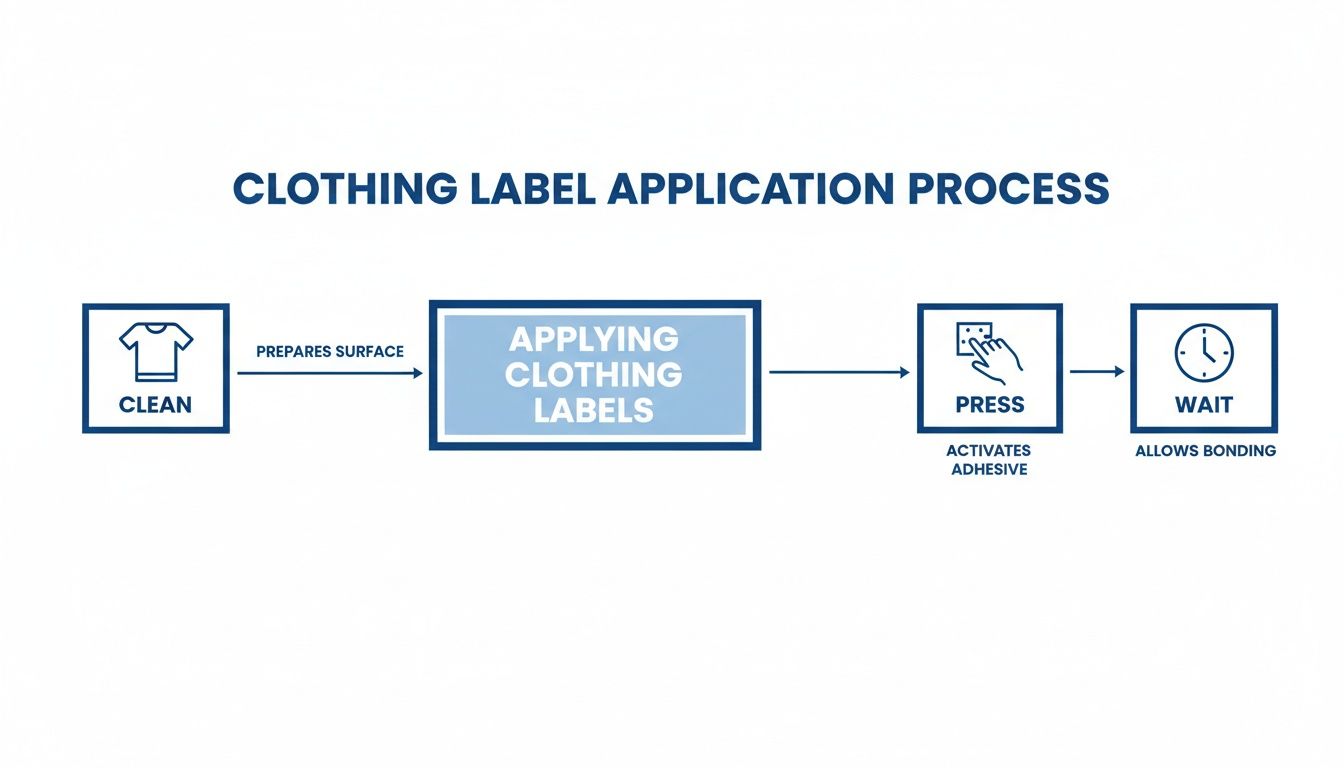
As you can see, a clean surface and some firm pressure are all it takes to get that adhesive working for a long-lasting, laundry-proof bond.
Tackling Tricky and Tiny Items
Some things just seem designed to get lost. Single socks, swapped shoes, and mystery mittens are the bane of every parent's existence. With over 50 million elementary students in the US, teachers say unlabeled items make up 25-35% of what ends up in the lost-and-found bin each year. For preschools, good labels can head off 70% of mix-ups, saving hours of sorting each week. To learn more about how big this little industry is becoming, you can check out insights on the waterproof label market.
Here’s my playbook for labeling those notoriously tricky items for good:
- Socks: Since socks almost never have tags, the best spot is on the sole, right in the arch. An iron-on label works great here, or a stick-on if the material is smooth enough. The curve of the foot helps protect it from getting worn down.
- Shoes and Boots: The underside of the tongue is the perfect hiding spot. It’s protected from foot friction but easy for a teacher to flip up and check. Another great option is the inner side of the shoe, up near the heel.
- Hats and Beanies: The inside care tag or the sweatband are ideal. These spots are hidden during wear but are the first places someone will look.
- Gloves and Mittens: Stick the label on the inside cuff. It’s the most logical place someone will check when trying to identify a stray glove in the snow.
Pro Tip: For small, tagless items like socks or gloves, consistency is everything. Always label either the right or left item in a pair. This creates a quick system for sorting and matching, saving you from rummaging through a basket of lonely singles.
Labeling Beyond the Wardrobe
Don't stop at clothes! A name label is just as crucial on a lunch box as it is on a jacket. Anything that leaves the house is fair game.
- Backpacks: The inside of the top flap or on an interior pocket is perfect. It keeps personal info private but is still easy for school staff to find.
- Lunch Boxes: Place a label on the outside near the handle for quick identification at a glance. For all the little containers inside, pop a label right on the lid.
- Water Bottles: Apply a waterproof label vertically on a smooth part of the bottle, making sure to avoid any textured grip areas where it might not stick as well.
By creating a system for labeling every item, you’re basically building an organizational forcefield that ensures everything your child takes out the door has a clear path back home.
Finding the Perfect Label Pack for Your Family
Choosing the right waterproof name labels for clothing isn't a one-size-fits-all deal. A family with a toddler just starting out in daycare has a completely different set of needs than a family with a third-grader juggling school, sports, and music lessons. The secret is to look at your current life stage and pick a pack that actually solves your family's organizational challenges.
Label companies totally get this, which is why they offer curated bundles designed for different phases of childhood. These packs aren't just a random assortment; they’re more like thoughtfully assembled toolkits created to tackle the exact problems you’re facing right now, saving you both time and money in the long run.
The Daycare Starter Pack
For parents of babies and toddlers, the Daycare Starter Pack is your best friend. This stage is all about labeling a smaller, but absolutely critical, set of items: bottles, pacifiers, a few changes of clothes, a favorite blanket, and maybe a beloved stuffed animal. These bundles are usually smaller and more focused for that reason.
You'll typically find a mix of super-durable clothing labels and specialized bottle labels. This combination is key because it tackles the two biggest sources of mix-ups in an infant or toddler room. It’s the perfect, cost-effective entry point for new parents just dipping their toes into the world of labeling.
The All-Encompassing School Bundle
Once your child hits preschool or elementary school, the sheer volume of "stuff" just explodes. Suddenly you’re responsible for labeling not just a uniform and jacket, but also a backpack, lunch box, water bottle, pencils, notebooks, and sports gear. This is where a comprehensive School Bundle becomes a true lifesaver.
These larger packs are designed for maximum value and variety, often including:
- Standard Clothing Labels: For uniforms, jackets, and sweaters.
- Mini Labels: Perfect for tiny items like pencils, rulers, or even inhalers.
- Shoe Labels: Specially shaped to fit inside shoes and withstand constant friction.
- Large Gear Labels: For bigger things like lunch boxes, binders, and instrument cases.
Buying a bundle like this is almost always more economical than purchasing different label types one by one. It ensures you have the right tool for every single job, from the tiniest crayon to the biggest backpack, all in one go.
Why Combo Packs Offer the Best Value
The real genius of a well-designed label pack is its versatility. Combo packs that mix different types of waterproof name labels for clothing with gear and shoe labels give you the ultimate organizational system. You get the peace of mind knowing that every single item leaving your house can be clearly and durably marked.
For instance, a good combo pack might include laundry-safe clothing labels for the school uniform, dishwasher-safe stickers for lunch containers, and tough, scuff-proof labels for your child's soccer cleats. This integrated approach means you're prepared for any labeling challenge that comes your way.
To help you figure out what you need, you can explore our guide on choosing the right daycare label combo pack for a more detailed breakdown. Picking the right bundle from the start prevents those last-minute panics and ensures you’re always prepared.
Still Have Questions? We've Got Answers.
Even after finding the perfect labels, it's totally normal to have a few more questions pop into your head. When you're trusting something to keep track of your kid's favorite hoodie or lucky socks, you want to be sure you know exactly how it all works. Let's clear up some of the most common questions I hear from other parents.
Think of this as the final piece of the puzzle, so you can feel confident and ready to tackle that labeling pile.
Will Waterproof Name Labels Really Survive the Washer and Dryer?
Absolutely. This is the #1 question, and the answer is a huge YES. High-quality waterproof labels aren't like the stickers you find in a craft store; they're engineered for the chaos of a laundry room. They use a super-strong, laundry-safe adhesive and durable materials built to handle dozens and dozens of hot washes and high-heat tumbles without peeling off, fading, or turning into mush.
Just remember the two golden rules for success. First, always stick them onto the garment's smooth, silky care tag—not the main fabric. And second, give them a full 24 hours to "cure" and form that super-strong bond before their first trip through the wash.
Can I Remove Labels to Hand Down Clothing?
You bet! This is one of the best things about modern stick-on labels compared to permanent options like ink stamps or iron-ons. While they’re built to be tough, they aren't fused to the fabric forever. When it's time to pass a jacket on to a younger sibling or a cousin, you can just carefully peel the label right off the care tag.
Sometimes, a little bit of sticky stuff gets left behind. If that happens, a quick dab with a cotton ball dipped in rubbing alcohol will take it right off. The garment is left fresh and ready for its next adventure with a new owner.
The ability to remove labels cleanly makes them such a smart and sustainable choice. You get all the benefits of knowing whose is whose, without permanently marking up the clothing. It really helps extend the life of every piece.
Are These Labels Safe for My Child's Skin?
Good brands always put safety first. The labels themselves are made from non-toxic, BPA-safe materials that are totally gentle. But the real genius is in the design—they are made to be applied to the clothing’s satin care tag, not directly onto the fabric.
This placement is intentional. It means the label almost never even touches your child's sensitive skin. It’s a smart way to prevent any chance of rubbing or irritation, keeping your little one comfortable all day long.
What Makes a Clothing Label Different from a Regular Sticker?
It all comes down to being specially engineered for a tough job. Think of it like this: you wouldn't use a paper plate in a rainstorm, right? A regular sticker is usually made of paper with a weak adhesive meant for a scrapbook. It stands no chance against the heat and water of a laundry cycle—it’ll just fall apart.
On the other hand, waterproof name labels for clothing are made from tough stuff like vinyl. They use a powerful, industrial-grade adhesive that is specifically created to be completely laundry-safe. One is made for temporary fun; the other is built to survive the wash, again and again.
Ready to end the lost-and-found chaos for good? Explore the full collection of durable, customizable, and laundry-proof labels at InchBug. Find the perfect combo pack for your family and enjoy the peace of mind that comes with knowing every item will find its way home. Shop now at inchbug.com.