

We've all been there—that frantic morning rush, hunting for a missing hat just minutes before the bus arrives. Or that sinking feeling at the end of the day when you realize your child's favorite jacket never made it home. It's a universal headache for parents everywhere.
That’s where stick-on clothing labels come in. Forget the hassle of sewing or ironing; these are the simple, modern answer for keeping track of everything from coats and sweaters to lunchboxes and water bottles.
The Simple Answer to Lost Jackets and School Gear
The lost-and-found bin at any school is basically a graveyard for forgotten gear. Every single misplaced jacket, lonely hat, or swapped water bottle costs parents time, money, and a whole lot of stress. It feels like a never-ending cycle. But the good news is, there’s a much better way.
This guide is for any busy family ready to make life just a little bit easier. We're moving past the old-school methods that required a needle and thread or a hot iron. Instead, we'll dive into the peel-and-stick convenience that modern families really need. A high-quality stick-on clothing label isn't just a sticker; it's a tough little tool engineered to be durable and incredibly easy to use.
What You Will Learn Here
I'll break down everything you need to know about these parenting game-changers. By the end of this guide, you'll know:
- How these special labels actually work and why they can survive endless trips through the washing machine.
- The real differences between stick-on, iron-on, and sewn tags.
- What to look for when picking out the best labels for your family.
- The right way to apply them so they stay put all school year long.
Of course, labels are just one piece of the puzzle. Combining them with smart ways to organize kids' clothes in a closet can create a system that truly ends the morning chaos.
The goal here is simple: to end the lost-and-found cycle for good. When you choose the right labels and stick them on correctly, you can make sure every single item that leaves your house has a clear path back home. That means a lot less stress for you.
Understanding How Stick On Labels Actually Work
Ever wondered what makes a proper stick-on clothing label different from a regular sticker you'd get at a craft store? The secret is all in the engineering. It's best not to think of them as simple stickers at all, but as tiny pieces of tech designed specifically to survive the chaos of a kid's wardrobe.
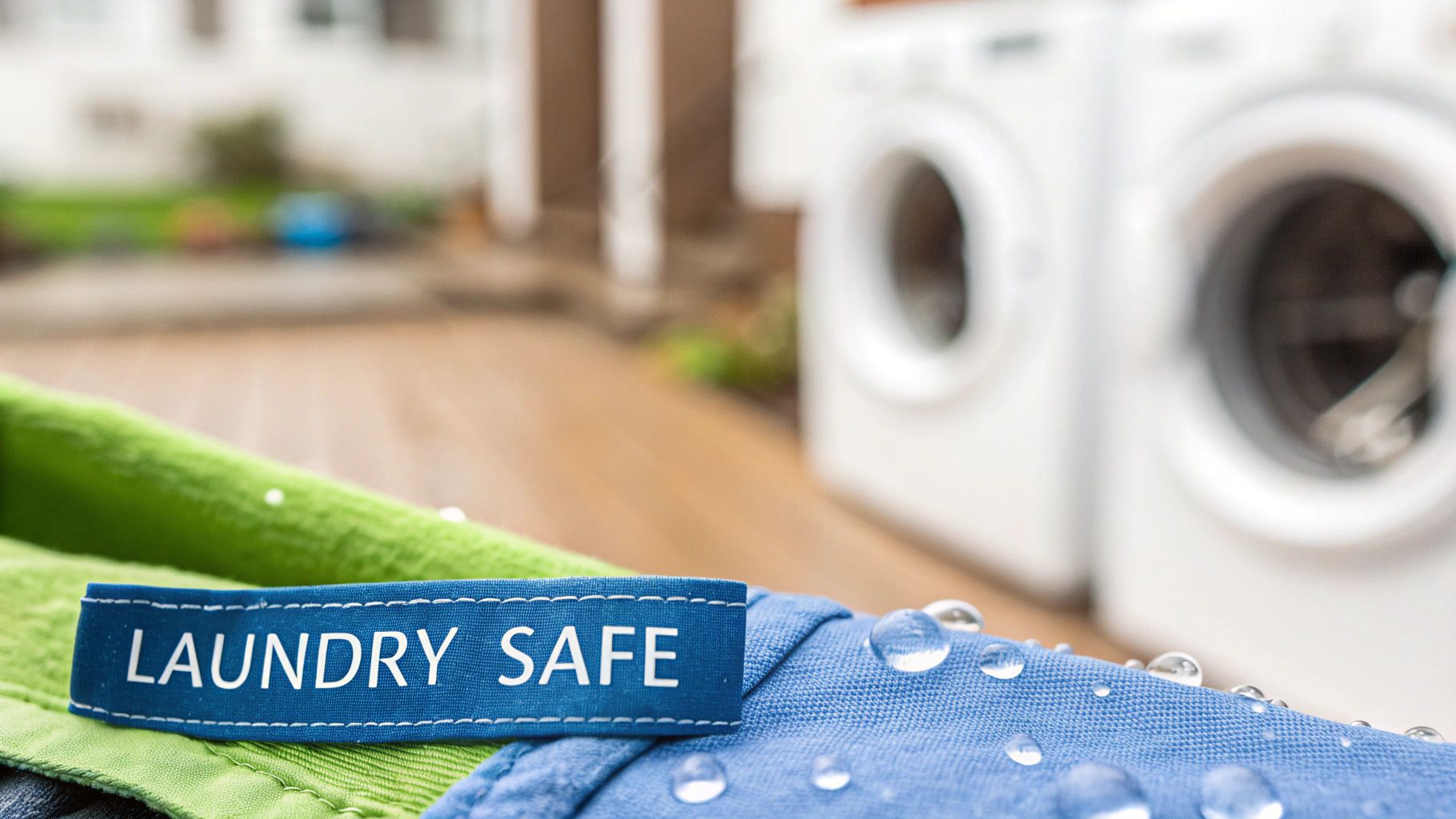
The real magic is in the adhesive. This isn't your average glue; it's a powerful bonding agent created to fuse with the smooth, non-porous surface of a garment's satin or nylon care tag. That part is crucial. A typical sticker would peel right off when it gets wet or hot, but this adhesive is built to be both laundry-safe and waterproof.
This special formula lets the label go through dozens of wash and dry cycles without peeling, fading, or falling apart. The label material itself is just as important—usually, it’s a high-quality vinyl that repels water and can handle the rough-and-tumble of a full laundry load. Once you get this, you see why they’re such a smart, long-lasting way to keep every last sock and sweater identified.
The Science of Sticking Power
A high-quality stick on clothing label doesn't just rely on brute force to stay put; it's all about smart design.
The label's success really comes down to a perfect team-up between three key players:
- The Label Material: This is usually a flexible, tear-resistant vinyl that can bend and move with the garment tag without cracking or getting wrinkled.
- The Adhesive: It's a pressure-sensitive glue that creates a strong, semi-permanent bond when you press it firmly onto the right surface.
- The Application Surface: That smooth, silky care tag is the ideal spot. It gives the adhesive a perfectly flat area to grab onto, unlike the bumpy texture of the main fabric.
It’s no surprise that parents are looking for durable labeling solutions like these. The global market for clothing labels was valued at around USD 1.458 billion and is expected to keep growing. This trend is driven by parents like us who are tired of mix-ups, especially when surveys show that up to 70% of parents have lost their kids' items, costing families hundreds of dollars a year in replacements.
Why They Work Better Than Regular Stickers
The difference becomes crystal clear when you put them to the test. A paper sticker would basically dissolve in the wash, and a standard vinyl decal would probably peel off after just one or two tumbles in the dryer.
Stick on clothing labels are engineered for a specific, harsh environment—the laundry. Their adhesive is formulated to be water-resistant and heat-tolerant, while the protective top layer ensures the printed name remains crisp and legible wash after wash.
This specialized design is what makes them such a reliable tool for busy families. If you want to learn more, check out our beginner's guide to adhesive labels for kids, which gets into all the different types and uses. At the end of the day, choosing a label made for the job ensures it will last as long as the clothes do.
Comparing Stick On Vs Iron On Vs Sewn Labels
When it comes to labeling your child’s clothes, you’ve got a few options. But for busy families, they are definitely not created equal. Picking the right one is all about weighing the time it takes to apply them against how well they hold up and what you can use them on. Let’s break down the three main players: stick-on, iron-on, and the old-school sewn-in labels.
The goal is always to find something that actually works without adding another complicated chore to your plate. While the traditional methods have been around forever, they demand a level of time and effort that most of us just don’t have anymore.
The Modern Choice Stick On Labels
For sheer speed and convenience, stick-on clothing labels are the hands-down winner. You literally just peel the label off its backing and press it firmly onto the shiny care tag inside the garment. That’s it. No tools, no heat, no sewing skills needed—the whole thing takes seconds.
This incredible ease of use is exactly why they’ve become so popular. They were designed for the fast-paced reality of modern parenting, giving you a quick way to label everything from school uniforms to summer camp gear. Their versatility is a huge plus, too; they stick just as well to hard surfaces like lunchboxes and water bottles.
The demand for these simple solutions is real. The brand clothing label market is projected to hit USD 2,498.53 million in 2025, partly because parents are tired of losing things. With an estimated 1 in 3 kids' items going missing each school year, it's no surprise we're all looking for a better way. Thanks to modern digital printing, which has grown at an 8.87% CAGR, these labels are now vibrant, tough, and ridiculously easy to apply. You can discover more insights about the brand clothing label market on 360researchreports.com.
The Traditional Methods Iron On and Sewn Labels
Iron-on labels are a bit of a middle ground. They need a hot iron and a few minutes of careful pressing to get the adhesive to bond with the fabric. While they can be more permanent than a regular sticker, the process is finicky. Too little heat, and they’ll peel off in the wash; too much, and you risk scorching delicate fabrics. They also have a tendency to get stiff and can sometimes irritate sensitive skin.
Then you have sewn-in labels, the most traditional and time-consuming method of them all. This requires a needle, thread (or a sewing machine), and a whole lot of patience.
While sewn labels are incredibly durable and will never fall off, their permanence is also their biggest drawback. Removing them for hand-me-downs or donations is a tedious task that involves carefully snipping threads without damaging the garment.
For parents who need to label a whole pile of clothes at once, sewing just isn't a practical choice. You can check out our own durable, laundry-safe adhesive labels here to see exactly why the peel-and-stick approach has become a family favorite.
A Head to Head Comparison
Choosing the right label type can feel overwhelming, but when you look at them side-by-side, the best option for busy parents usually becomes pretty clear.
| Feature | Stick-On Labels (e.g., TagPals) | Iron-On Labels | Sewn-In Labels |
|---|---|---|---|
| Application | Peel and stick to care tag; takes seconds | Requires hot iron and pressing; takes minutes | Requires needle and thread; can take many minutes |
| Durability | Excellent; laundry and dryer safe | Good, but can crack or peel over time | Excellent; most permanent option |
| Removability | Removable without leaving residue | Difficult; often leaves a stiff, sticky residue | Very difficult; requires carefully cutting threads |
| Versatility | High; works on hard surfaces too | Low; for fabric only | Low; for fabric only |
| Skin Comfort | Soft and flexible; no irritation | Can be stiff and scratchy | Can be itchy depending on thread and placement |
| Best For | Busy parents, hand-me-downs, multi-surface use | Permanent labeling on sturdy fabrics | Heirlooms, handmade items, permanent branding |
At the end of the day, while iron-on and sewn-in labels have their place, the convenience and versatility of stick-on labels make them the clear winner for everyday family life. They save time, reduce hassle, and make it easy to pass clothes on to the next kid in line.
How to Choose the Perfect Stick On Labels
Picking the right stick on clothing labels might seem like a small task, but trust me, it makes a huge difference in how well they actually work. With so many choices out there, focusing on a few key things will make sure you get labels that are not just cute, but also tough enough to last. It’s kind of like buying a raincoat—it needs to look good, sure, but more importantly, it has to keep you dry.
The first thing I always look at is the material. Top-notch labels are usually made from a durable, flexible vinyl. This is super important because it needs to survive the heat of the dryer and the tumbling of the washing machine without cracking, fading, or peeling off. A cheaper, flimsy material might seem fine at first, but it’ll probably fall apart after just a few washes.
Prioritizing Safety and Durability
Beyond just being tough, safety is obviously a huge priority for anything our kids use. Always check that the labels are specifically listed as BPA-free. This is non-negotiable for me. It means no nasty chemicals are present, which gives me total peace of mind since these labels will be on everything from their jacket zipper to their lunchbox.
Here’s a quick look at how different label types stack up against each other.
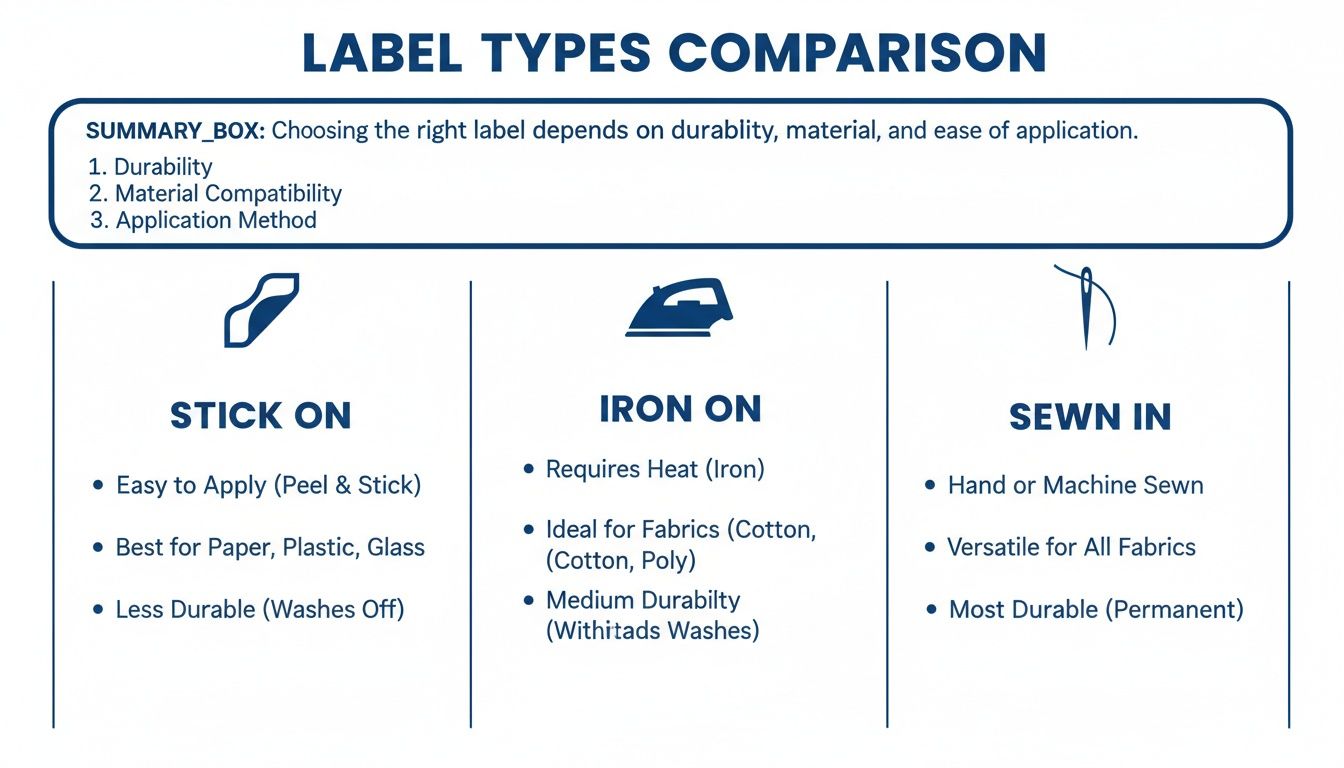
As you can see, stick-on labels really hit that sweet spot of convenience, durability, and versatility that busy families need.
Making Customization Work for You
Personalizing a label is about so much more than just a name. The best brands offer practical options that make the labels even more helpful.
- Iconography: For little ones who can't read yet, a familiar icon like a dinosaur or a star is a total game-changer. It helps them spot their own stuff long before they can recognize their name.
- Allergy Alerts: Some companies let you add critical info like "No Peanuts" or "Dairy Allergy." This is an invaluable layer of safety, especially in a bustling daycare or school.
- Size and Shape: One size definitely does not fit all. You'll want small, skinny labels for tiny shirt tags, but a bigger, rounder one might be perfect for a backpack or water bottle.
Choosing the right mix of features turns a simple name tag into a powerful tool for organization and safety. It’s all about finding a label that fits what your family actually needs.
Honestly, spending a few extra minutes to choose a durable, safe, and thoughtfully customized label will save you so many headaches later on. If you're looking for a little more guidance, you can check out our deep dive on which InchBug labels are right for you to find the perfect match for every single item.
Making Your Labels Last: A Practical Application Guide
You’ve designed the perfect personalized labels, and now it’s time for the most important part: sticking them on. Getting this step right is the secret to making sure your stick-on clothing labels survive an entire school year of playground adventures, ketchup spills, and a whole lot of laundry. A few little tricks can be the difference between a label that peels off and one that stays put for good.
The whole process is quick and simple, but taking your time is everything. I've found that rushing the application is the number one reason labels don't stick the way they should.
The Right Way to Apply Your Labels
First things first, make sure the garment’s care tag is clean and totally dry. Any dust, moisture, or leftover residue from the factory can stop the adhesive from getting a good grip.
- Find the Sweet Spot: Always, always apply the label directly to that smooth, satin-like care tag or brand tag inside the clothing. Try to avoid sticking them right onto the main fabric—especially stretchy stuff like cotton knits—because the texture makes it tough for the label to get a secure bond.
- Peel and Press Firmly: Peel a label from its backing sheet. Place it flat on the care tag and then use your thumb to press down hard, applying even pressure across the whole thing for about 10-15 seconds. You want to smooth out any little air bubbles and make sure the edges are sealed down tight.
- Let It Cure: This is the step you absolutely cannot skip. You have to wait at least 24 hours before washing the item. This waiting period lets the pressure-sensitive adhesive fully cure and create a super-strong, waterproof bond with the tag.
Think of it like letting paint dry. You wouldn't touch a freshly painted wall, right? Same idea here. Don't send a freshly applied label straight into the washing machine. Giving the adhesive that full day to set is what truly makes it laundry-proof.
We all know durability is a huge deal for parents, and today's labels are built to last. It’s a big reason why the clothing print label market is growing, all thanks to better adhesive technology. Proper application is key to that longevity, helping us parents avoid the 40% of lost item reports that happen just because a label came off. You can read more about trends in the clothing label market at industryresearch.biz.
Care Instructions for Maximum Longevity
Once your labels are on and have had time to cure, a few simple laundry habits can help them last even longer. They’re designed to be tough, but a little extra care never hurts.
For the best results, I always turn our clothes inside out before washing and try to avoid the highest heat settings on the dryer. High-quality labels like InchBug’s TagPals are made to handle normal wash and dry cycles, but constant, extreme heat can weaken any adhesive over time. Following these simple steps ensures every single label stays put from the first day of school right through to the last.
Your Questions About Stick On Clothing Labels Answered
Even after getting the rundown, it’s totally normal to have a few lingering questions before you dive in. Think of this as our final chat, where we tackle all the common things parents ask us about stick on clothing labels. I want to give you clear, straight-from-experience answers so you can feel 100% confident you’re making the right choice.
We’ve gathered the top questions we hear all the time—from how to get them off for hand-me-downs to whether they’re safe for sensitive skin. Let’s get them answered.
Can I Remove Stick On Labels for Hand-Me-Downs?
Yes, and honestly, this is one of my favorite things about them! A high-quality stick on label is designed to be removable when you want it to be. Unlike iron-on or sewn-in tags that are a permanent commitment, these labels peel off without wrecking the garment, which is perfect for passing clothes on to the next kiddo.
Getting them off is super simple. Just catch a corner of the label with your fingernail and peel it back slowly. If it puts up a little fight, don’t force it—a bit of warmth is all you need.
A few seconds of heat from a hairdryer will soften the adhesive right up, letting the label lift off cleanly. This little trick is a lifesaver and prevents that stiff, ugly residue that iron-on labels are famous for leaving behind.
Are These Labels Safe for My Child’s Sensitive Skin?
Absolutely. Any reputable brand puts child safety first, and that means thinking carefully about both the materials and where the label is meant to go. Good labels are made to be stuck on a garment’s satin care tag or brand tag—never directly on the fabric that will be touching your child's skin.
This smart placement means there’s zero chance of itching or irritation. On top of that, you’ll find that the best labels are made from durable, BPA-safe materials, so you don't have to worry about weird chemicals. It’s total peace of mind, especially for those of us with kids who have sensitive skin, eczema, or allergies.
Can I Use These Labels on Water Bottles and Lunchboxes?
Definitely! Don’t let the name fool you. While they’re amazing for clothes, their tough, waterproof adhesive makes them a total all-star for just about everything else. I think of them as my one-and-done labeling solution for all the gear my kids take to school, daycare, or camp.
They are perfect for all those non-fabric items that seem to grow legs and walk away. You can stick them on:
- Plastic or metal water bottles
- Lunch boxes and bento containers
- Thermoses and food jars
- School supplies like pencil cases and notebooks
- Sports gear, helmets, and bats
- Even the inside of shoes!
Because they’re made to be dishwasher-safe, microwave-safe, and fade-resistant, they work just as well on a hard plastic lunchbox as they do on a t-shirt tag in the laundry. This is what makes them such a great value for busy parents.
How Many Washes Can a Stick On Label Really Survive?
A really good stick on clothing label is built to last. I’m talking about lasting longer than your kid will even fit into the clothes. While the exact number of washes can vary based on things like your detergent or how hot you run your dryer, a quality label is designed to handle dozens and dozens of trips through the laundry.
The secret sauce is the combo of a super-strong adhesive and putting it on the right way. When you press the label firmly onto a clean, dry care tag and give it 24 hours to set before that first wash, you create a waterproof bond that’s ready for anything. Trust me, thousands of parents will tell you these labels stay put and stay readable for the entire time their kid wears the clothes.
Ready to end the lost-and-found cycle for good? Explore the durable, customizable, and laundry-safe label solutions at InchBug and find the perfect fit for your family’s needs. Shop our collection of TagPals and more today!