

If you've ever felt that frantic, heart-pounding panic of searching for a missing school sweater or daycare jacket minutes before you need to leave, you're not alone. It's that universal parent moment where a perfectly calm morning suddenly turns into a stressful scramble. That chaos doesn't just add stress; it costs real money when those items vanish for good.
Stick on clothes labels are pretty much the fastest way I've found to organize my kid's stuff for daycare, school, or camp. Forget the iron or needle and thread. These are just simple peel-and-stick labels that go right onto the clothing care tags, saving tons of time and preventing those frustrating mix-ups. For a busy parent, they're a total game-changer.
The Quick Solution to Lost Clothes and Chaotic Mornings
Stick on clothes labels are designed to bring a little order back into your family's routine. Think of them as tiny, powerful organizers that work tirelessly behind the scenes. By clearly marking every hat, glove, and uniform, you create a simple system that helps items actually find their way back home from the lost-and-found pile.
Why Every Parent Needs a Labeling System
Let’s be honest, in places like daycare or school, an unmarked piece of clothing is basically an open invitation for it to get lost. With dozens of kids wearing similar-looking jackets and sweaters, it’s so easy for something to end up in the wrong cubby or backpack. A clear, personalized label is hands-down the best way to stop this from happening.
For parents, this simple little tool is about more than just organization—it’s about peace of mind. You can send your child off for the day knowing their belongings are clearly marked, which means:
- Fewer Lost Items: Labels drastically cut down the chances of clothes going missing for good. That saves you the headache and expense of having to buy replacements.
- Less Morning Stress: When the wardrobe is organized, you can say goodbye to those last-minute searches for a specific part of a school uniform or sports kit.
- Easier Daycare Management: Clearly labeled items just make life simpler for teachers and caregivers. They can make sure everything from spare outfits to jackets gets back to the right child. For more great tips, check out our complete guide on how to label baby clothes for daycare.
For a quick overview, here's a look at what makes these labels so helpful for busy families.
Stick On Clothes Labels At a Glance
| Feature | What It Means for Parents | Best For |
|---|---|---|
| Peel-and-Stick Application | No ironing or sewing needed. Just peel it off and press it on the care tag. Super fast! | Quick labeling sessions the night before school or camp. |
| Durable Adhesive | Stays put through countless washing machine and dryer cycles. | Everyday school uniforms, daycare clothes, and sportswear. |
| Waterproof Material | Won’t fade, peel, or smudge when wet. | Swimwear, rain jackets, and anything that gets washed a lot. |
| Personalized Designs | Fun colors and icons make items easy for kids to spot. | Helping young children who can't read yet identify their own belongings. |
These little labels are basically your first line of defense against the chaos of managing a child’s mountain of clothes and gear.
By taking just a few minutes to apply stick on clothes labels, you are investing in smoother mornings, fewer replacement costs, and a more organized life for both you and your child.
They’re the simple, effective solution that busy parents need to keep everything in order without adding another complicated task to their already full plates.
It seems like a bit of a magic trick, doesn’t it? How can a simple sticker possibly survive the heat, tumbling, and suds of a washing machine? I’ll admit, I was skeptical at first. I pictured a faded, peeled-off label clogging up my machine’s filter after just one wash.
But the secret behind high-quality stick on clothes labels isn't magic at all—it's just smart science and design.
Think of a good stick-on label like a high-tech bandage made specifically for fabric. Every single part of it is chosen with one goal in mind: surviving the laundry. It all starts with the label itself.
The Science of Sticking Power
Most of these durable labels are made from a flexible, tear-resistant vinyl. Unlike a paper sticker that would turn to mush, this material is completely waterproof. That flexibility is also super important; it lets the label bend and move with the garment's care tag, so it won’t crack or peel under the stress of a wash cycle.
The real secret weapon, though, is the adhesive. This isn’t your kid’s craft glue. It’s a specialized, industrial-strength adhesive that’s been engineered to form a super-strong, permanent bond with one specific type of surface.
The adhesive on a laundry-safe label is chemically designed to stand up to water, heat, and the harsh stuff in laundry detergents. It's made to cure and get even stronger over the first 24 hours, creating a seal that holds up to wash after wash.
This leads us to the most critical part of making these labels work: where you stick them. That special adhesive is made to bond with the smooth, silky material of a satin or nylon care tag—not the clothing fabric itself.
Why the Care Tag Is Everything
Trying to apply a stick-on label directly to a cotton t-shirt or a wool sweater is like trying to put a bandage on a fuzzy blanket. It’s just not going to get a good grip. The fabric's fibers create a bumpy, uneven surface with tons of tiny gaps, so the adhesive can't make full contact. Water and soap will sneak right underneath and break the bond.
A slick, silky care tag, on the other hand, is the perfect canvas.
- Smooth Surface: The adhesive can get 100% surface contact, creating a complete seal with no gaps.
- Non-Porous Material: The tag doesn't soak up the glue. Instead, the adhesive bonds directly to its surface.
- Waterproof Barrier: When you press it on firmly, the label creates a waterproof shield with the tag, locking out moisture.
This is why following the application instructions is non-negotiable if you want the labels to last. This need for reliable labeling is a big deal for families everywhere. The global label market, which was valued at USD 47 billion in 2025, is expected to keep growing, which just goes to show how essential tools like these have become for keeping homes and schools organized. You can actually read more about this market growth on MordorIntelligence.com.
So, when you press a stick-on label firmly onto a clean care tag, you’re creating a tiny, laminated system that’s built to withstand chaos. The vinyl repels water, the powerful adhesive holds tight, and the smooth tag gives it the perfect foundation to ensure your child's name stays put, wash after wash.
Comparing Label Types: Stick-On vs. Iron-On vs. Sew-In
When you're staring down a mountain of new school uniforms, choosing the right way to label everything can feel like a massive decision. In the world of labeling, you’ve basically got three main options: stick-on clothes labels, the traditional iron-on kind, and the classic sew-in labels.
Each one has its place, but they are miles apart when it comes to saving you time and hassle.
I like to think of it like hanging a picture. Sew-in labels are like using a drill and wall anchors—it’s not going anywhere, but it requires tools, a bit of skill, and a real time commitment. Iron-on labels are like using a hammer and nail; a little faster, but you still need a specific tool (a hot iron) and have to be pretty careful.
And then you have stick-on clothes labels. They’re the Command Hooks of the labeling world. No tools, no damage, and you're done in seconds. For busy parents who need a solution that just works, the difference is night and day.
Speed and Convenience: The Deciding Factor
The biggest difference between these labels is the time and effort it takes to get them on the clothes. A sew-in label, while incredibly durable, means finding a needle, thread, and sitting down to carefully stitch it onto each garment. That might take several minutes an item, which really adds up when you're tackling an entire wardrobe.
Iron-on labels are a step up in speed, but you still have to wait for the iron to heat up, carefully line up the label, press for just the right amount of time, and let it cool. It's a whole process that involves a very hot tool, which isn't always ideal with curious little ones running around.
This is where stick-on labels are a total game-changer. Their peel-and-stick design means zero tools and zero prep. You just peel the label off its backing, press it firmly onto the garment's care tag, and move on. You can get through a whole pile of clothes in the time it takes for an iron to get hot.
The real magic of stick-on labels is their instant application. For parents juggling a million things, this isn’t just a small perk—it's a critical time-saver that makes a recurring chore genuinely simple.
This simple decision tree shows you exactly where to apply them to make sure they stay put, wash after wash.
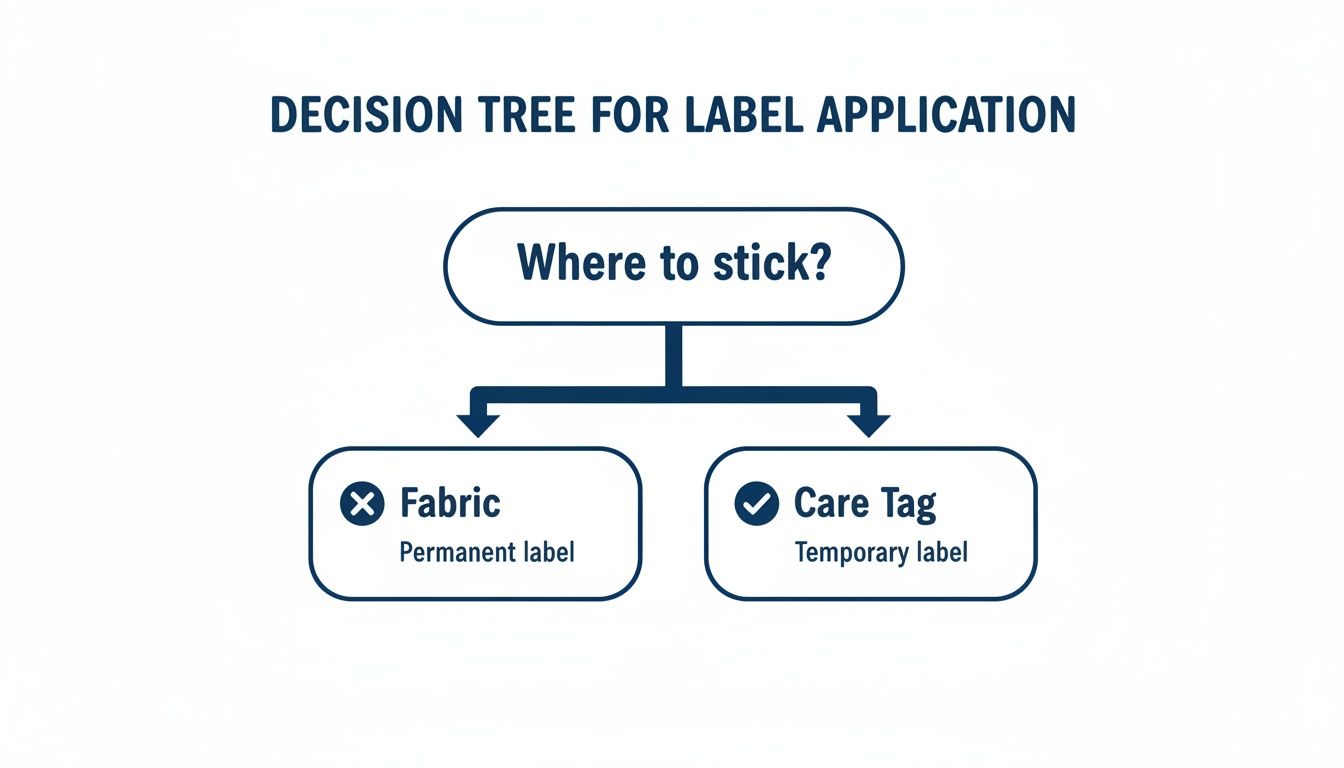
The takeaway here is super clear: the label's powerful adhesive is made to bond with the smooth, slick surface of a care tag, not the bumpy fibers of the fabric itself.
Durability and Fabric Compatibility
While sew-in labels are often seen as the most permanent option, both iron-on and high-quality stick-on labels are incredibly durable when you apply them correctly. Iron-on labels basically melt adhesive into the fabric, creating a bond that’s very tough to remove. That’s great for longevity, but not so great if you plan to pass clothes down the line.
Stick-on clothes labels, on the other hand, form a waterproof seal on the care tag that holds up through countless cycles in the washing machine and dryer. They're designed to be long-lasting but can usually be removed with a little focused effort. That's a huge bonus for handing clothes down to a younger sibling or donating them.
When you're trying to decide what's best for your family, a side-by-side comparison can make all the difference.
Label Type Showdown: Stick-On vs. Iron-On vs. Sew-In
Here's a quick breakdown to help you see exactly how these three label types stack up against each other.
| Attribute | Stick-On Labels | Iron-On Labels | Sew-In Labels |
|---|---|---|---|
| Application Time | Seconds | 5-10 minutes (including iron heat-up) | 5-15 minutes per label |
| Tools Needed | None | Hot Iron | Needle & Thread |
| Best For | Smooth care tags on most garments | Cotton, poly-blends (no care tag needed) | Any fabric, especially delicate or textured ones |
| Removability | Removable with effort | Difficult to permanent | Removable by cutting threads |
Ultimately, while each label has its moment to shine, the unbeatable speed and pure simplicity of stick-on clothes labels make them the clear winner for the day-to-day needs of modern families. They strike that perfect balance of being tough enough to last but convenient enough to not add another chore to your plate.
What to Look for in a High-Quality Clothing Label
Let's be honest, not all stick-on clothes labels are created equal. You've probably seen a bunch online that look pretty much the same, but I can tell you from experience there’s a massive difference between a premium label and a cheap knockoff. Choosing the right one means the difference between a name that stays put for years and one that’s floating around the washing machine after just one cycle.
So, how do you spot the good ones? The best labels are a mix of three key things: tough materials, a super-strong adhesive, and printing that won't give up. Think of it like buying a raincoat. A cheap plastic poncho might get you through a light drizzle, but you’ll need something made of durable, waterproof material to get through a real storm. It’s the exact same idea with your labels.
Material and Durability
The heart of a great label is the material it’s made from. You want to look for labels made from a tear-resistant, flexible vinyl. This stuff is naturally waterproof and can bend and twist with the garment’s care tag without cracking or peeling. Those paper-based or thin plastic labels just can't handle the heat and chaos of the washer and dryer.
Next up is the adhesive—this is where the magic happens. A high-quality clothing label uses a special, laundry-safe adhesive that’s designed to bond like glue to those smooth nylon or satin care tags.
The strength of a label's adhesive is its most critical feature. A premium adhesive creates a waterproof seal that cures over 24 hours, becoming stronger and more resilient with each wash. This is what ensures it won't lift, even in hot water or a high-heat dryer cycle.
Finally, check out the printing. A quality label will have ink that is laminated or sealed, making it totally smudge-proof and fade-resistant. This makes sure your child's name stays crisp and clear, not a blurry mess after a few months of wear and tear. Our guide to getting started with adhesive labels for kids has even more tips on what makes a label last.
Safety and Other Key Factors
Beyond durability, safety is a huge deal, especially for things our little ones wear. A good brand will always use non-toxic materials. Make sure the labels you’re considering are BPA-free and safe for items your child uses every day. Since these labels stick to care tags, they don't directly touch the skin, but knowing the materials are non-toxic gives you that extra peace of mind.
Here are a few other little things that signal you've found a top-tier product:
- Customization Options: Look for brands that offer clear, easy-to-read fonts and maybe a simple icon. This is a game-changer for pre-readers who can spot their own little symbol from a mile away.
- Verified Reviews: Don't just trust the marketing. Dig into real customer reviews to see what parents are saying after months of use and countless laundry cycles.
- Clear Instructions: A great company makes it easy for you. They’ll provide simple, foolproof instructions for applying the labels so you get the best results right from the start.
Investing in quality labels is just a smart move, especially when you think about how much we spend on kids' clothes. With the brand clothing label market projected to hit USD 3441.42 million by 2034 and the children's apparel market valued at $274.25 billion in 2024, it’s clear we need reliable ways to keep track of it all. You can discover more insights about these market trends on 360researchreports.com. By keeping an eye out for these signs of quality, you're making sure your money is well spent—saving you time, stress, and another trip to the lost and found.
A Step-by-Step Guide to Applying Labels That Last
So, you've got your stick on clothes labels and you're ready to tackle that mountain of clothes. But getting them to actually stay put through dozens of tumbles in the washing machine isn't just a simple peel-and-stick job; it's all about the technique. When you do it right, you create a super strong, waterproof bond that turns that little sticker into a laundry-proof name tag.
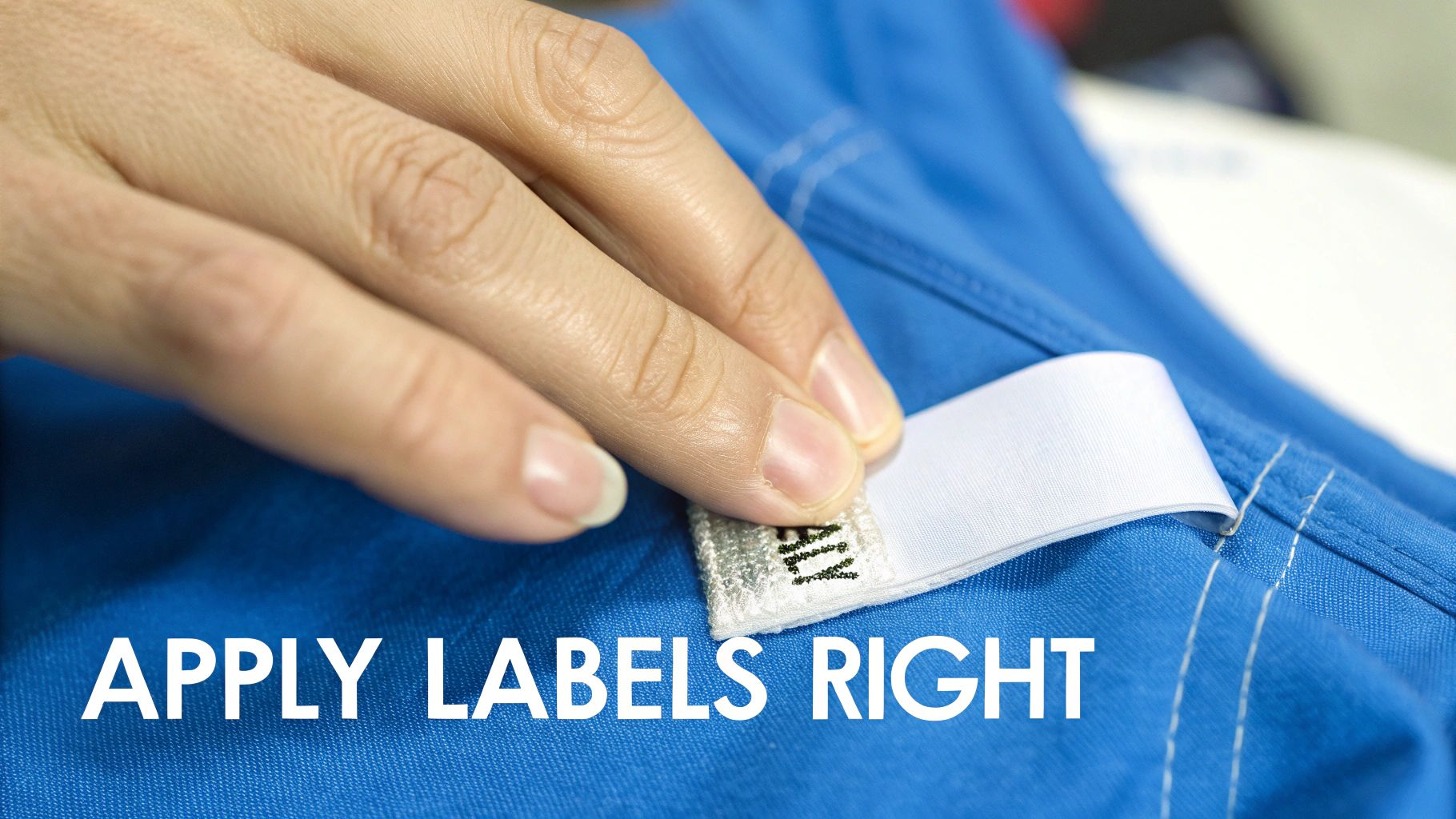
I like to think of it like putting a screen protector on your phone. If you just slap it on without a second thought, you’re asking for dust, air bubbles, and corners that start peeling up in a week. But if you take a moment to prep the surface and apply it carefully, it becomes almost invisible and lasts forever. It’s the exact same idea here.
The Foolproof Application Process
Honestly, following these steps is the single most important thing you can do to make sure your labels live a long, sticky life. The whole process takes just a few seconds per shirt or pair of pants, but it makes all the difference in the world for durability.
-
Find the Right Spot: Always, always stick the label onto the garment's smooth, silky care tag—the one with all the washing instructions. Don't apply it directly to the clothing fabric itself. The texture of the fabric keeps the adhesive from getting a complete, solid grip.
-
Make Sure It's Clean and Dry: The care tag has to be totally clean, dry, and free from any leftover fabric softener gunk. A quick wipe is usually all it takes to get the surface ready for a perfect bond.
-
Peel and Press Firmly: Peel the label off its backing sheet. Place it flat on the care tag and then use your thumb to press down hard, paying extra attention to the edges. I like to smooth it out from the center to the sides to push out any tiny air bubbles.
-
Let the Adhesive Cure: This is the game-changing step that so many people skip! You have to wait at least 24 hours before you wash the garment for the first time. This waiting period lets the special adhesive fully cure and create that permanent, waterproof bond with the tag.
Rushing this part is the number one reason stick-on labels fail. That 24-hour curing time isn't just a friendly suggestion—it's the chemical reaction that gives the label its incredible power to stand up to water, heat, and detergent.
Maximizing Your Label's Lifespan
Once your labels are on and fully cured, they're built to be tough. But a few simple laundry habits can help them last even longer, keeping them looking crisp and new for years. When you're ready to check out the ultimate in laundry-safe labeling, you can explore our popular TagPal clothing labels.
Here are a few pro tips I've picked up for long-term care:
- Avoid High-Heat Settings: While our labels are totally dryer-safe, constantly blasting them on the highest heat setting can eventually weaken any adhesive over time. Sticking to low or medium heat is just good practice.
- Do Not Use Bleach: Harsh chemicals like bleach can break down the label's material and make the print fade.
- Turn Garments Inside Out: This is a great tip for taking care of clothes in general, but it also gives the labels extra protection from rubbing against other clothes or the inside of the washing machine.
By following this simple application and care routine, your stick on clothes labels will stay put, keeping your kid's stuff out of the lost-and-found and saving you a whole lot of time and money.
Where Stick On Clothes Labels Save the Day
Let's be real. The true genius of stick on clothes labels isn't just that they're easy to apply. It’s how they solve those little, everyday problems that slowly drive parents crazy. From the chaotic cubby room at daycare to the sea of identical jerseys on a sports field, these labels are the unsung heroes of keeping your sanity intact. They prevent mix-ups, cut down on morning stress, and save you from buying the same jacket three times in one school year.
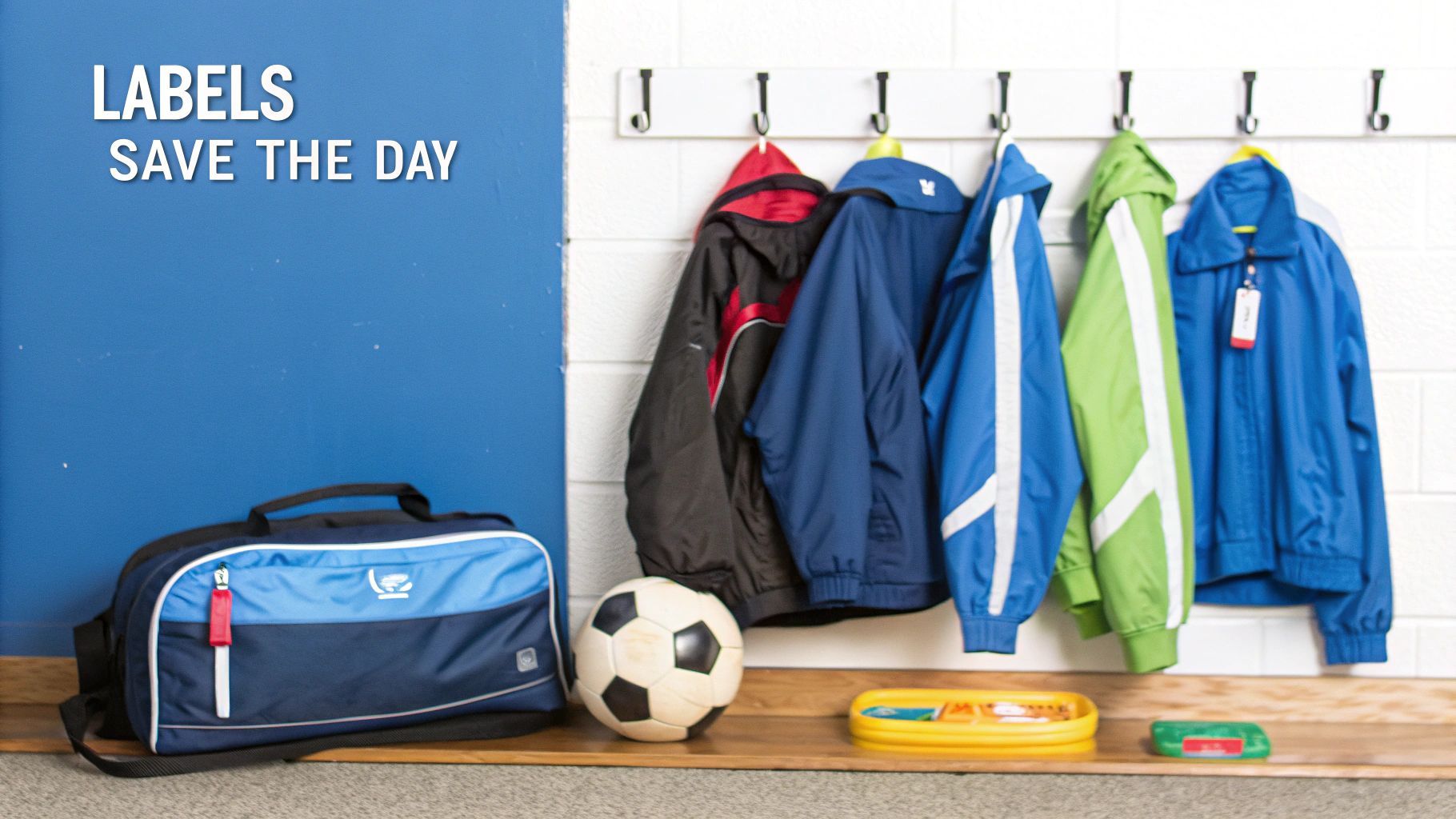
Think of each label as a tiny insurance policy for every piece of clothing that leaves your house. So, where do they really shine? Let's walk through the scenarios where they turn potential chaos into calm.
Conquering Daycare and Preschool Mix-Ups
Daycare is the ultimate proving ground for any labeling system. When you have a dozen toddlers running around in similar-looking outfits, a simple name label on a care tag is an absolute lifesaver for caregivers. It means less time trying to solve the mystery of the single lost sock and more time actually focused on the kids.
For you, it means no more accidentally bringing home another child's coat or losing that favorite sweater your mother-in-law just bought. It’s a simple fix that makes drop-off and pickup so much smoother for everyone involved.
The daycare environment is the ultimate test for any organizational system. Stick on clothes labels provide a quick, reliable way to ensure every hat, mitten, and spare onesie makes it back into the right bag at the end of the day.
This need for simple, effective labeling is a big reason the global clothing print label market is growing so fast. What was a USD 2115.72 million market in 2025 is expected to climb to USD 2950.97 million by 2034 as more parents discover these smart solutions. You can read the full analysis of the clothing label market on industryresearch.biz. That growth isn't just numbers; it's a reflection of how essential these little tools have become for modern families.
Surviving Elementary School and Summer Camp
Once kids hit elementary school, the sheer volume of stuff just explodes. School uniforms, gym clothes, jackets for recess, and spirit wear—it all starts to look the same. A discreet label on the care tag is the easiest way to keep your child’s belongings out of that overflowing lost-and-found bin.
Summer camp takes this organized chaos to a whole new level. It's a whirlwind of swimming, crafts, and games where clothes, swimsuits, and towels get changed multiple times a day. Labels aren't just helpful here; they're an absolute necessity to maintain any sense of order.
A few items that scream for a label in these settings:
- School Uniforms: From polo shirts to sweaters, labeling every piece prevents you from having to buy costly replacements mid-year.
- Outerwear: Jackets, hoodies, and raincoats are, without a doubt, the most frequently lost items at school.
- Camp Gear: Labeling everything from t-shirts and shorts to towels and sleeping bags is a must for any overnight camp.
Keeping Sports Gear and Uniforms Straight
If you’re a sports parent, you know the struggle. That post-game pile of identical jerseys, shorts, and warm-up jackets is a recipe for confusion. This is another arena where stick on clothes labels are a total game-changer, especially for team sports.
Labeling each part of the uniform makes it easy for kids to grab their own gear after a game, preventing those accidental swaps. It's a simple step that helps teach them a little responsibility while making sure your investment in expensive team apparel doesn't walk away with the wrong player. From the soccer field to the dance studio, a quick label brings a whole lot of peace of mind.
Answering Your Top Questions About Clothing Labels
Even after hearing all the good things, it’s totally normal to have a few last-minute questions before you click "buy." When it comes to products for our kids, we all want to be absolutely sure we’re making the right call. So, let's go through some of the biggest questions parents have about stick on clothes labels to help you feel completely confident.
Think of this as your final checklist before you say goodbye to the lost-and-found bin for good. We’ll cover everything from laundry survival to skin safety, so you know exactly what you’re getting.
Will Stick On Labels Really Stay On in the Washer and Dryer?
This is the number one question, and I'm happy to report the answer is a big yes—when you put them on the right way. High-quality stick-on labels are made with a super-strong, laundry-safe adhesive that’s designed for exactly this.
The secret to making them last is to apply them to that silky satin or nylon care tag inside the clothes, not directly on the fabric itself. Just press the label firmly onto a clean tag, give it about 24 hours to let the adhesive set, and then you're good to go. This creates a waterproof bond that can handle countless tumbles in both the washing machine and the dryer.
Are the Labels Safe for My Child's Sensitive Skin?
As parents, safety is always our top priority. The good news is that trusted brands make their labels from non-toxic materials and make sure they are BPA-free. This is something you should always look for when picking out labels.
And because these labels are meant to go on the garment's care tag, they don't actually have much direct contact with your child's skin. This simple design trick pretty much eliminates any risk of irritation, making them a safe and worry-free choice, even for kids with the most sensitive skin.
You can feel confident knowing that premium stick on clothes labels are designed with your child’s well-being in mind, offering a practical solution that doesn't compromise on safety.
Can I Remove the Labels Later On?
Absolutely! While they’re built to be incredibly tough, one of the best things about stick-on labels is that you can take them off when you’re ready to pass down clothes or donate them. This gives them a huge advantage over more permanent options like iron-on labels.
Here’s how to do it:
- Start at a Corner: Try gently peeling the label up from one corner. A lot of the time, it will come right off with a little bit of steady pulling.
- Add a Little Heat: If a label is being extra stubborn, a quick blast of heat from a hairdryer will soften the adhesive. This usually helps it peel away from the care tag without leaving any sticky stuff behind.
This easy removability makes them a super practical choice for your child's constantly changing wardrobe.
Can I Use These on Items Other Than Clothes?
While they're made for clothing care tags, their waterproof and durable design makes them surprisingly useful for other things, too. They stick really well to other smooth, non-porous surfaces.
Lots of parents (myself included!) successfully use them on items like:
- Lunch boxes
- Water bottles
- School supplies
- Plastic food containers
Just keep in mind that for things with weird curves or tricky materials, like shoes or silicone bottles, it’s always best to use a label specifically made for that item. That way, you know it’s going to stick around for the long haul.
Ready to conquer the chaos of lost clothes? At InchBug, we’ve perfected the art of the durable, kid-friendly label. Discover our laundry-safe TagPals and find the perfect labeling solution for your family at https://www.inchbug.com.