

The first cold snap always exposes the same problem. The snowsuit that fit in November is suddenly missing a mitten, the fleece smells a little stale, and the daycare jacket pile has swallowed whatever was supposed to be ready for Monday morning. Seasonal clothing storage feels like a small household task until you're standing at the door with a preschooler who needs boots right now.
A good system prevents that scramble. It also keeps you from pulling out sweaters with mildew spots, outerwear that's lost its shape, or bins full of clothes that nobody can identify because every label has rubbed off. Families already do this as a routine, not a niche project. In a seasonal-clothing survey, 75.9% of respondents said they do rotate or reorganize clothes by season, and 57.9% of those who rotate said they do it twice a year, with closets and drawers or storage cases as the most common storage spots, according to the survey summary from Mitoriz (seasonal clothing storage survey findings).
Why Seasonal Clothing Storage Matters for Families
The worst version of this job is when it gets treated like an afterthought. A parent packs away a puffy coat in a hurry, forgets to wash the mud off the cuffs, and six months later pulls it out to find a faint smell, a hidden stain, or a crunchy zipper that should've been fixed before storage. That's the moment the whole “I'll deal with it later” approach gets expensive.
I've watched the same pattern play out in family homes over and over. The off-season pile grows, the good sweater gets tossed into a random tote, and the everyday drawer fills with clothes that no longer fit. Then daycare calls for a backup set, and nobody can remember whether the next size-up leggings are in the closet, the basement, or a bin marked “winter stuff.”
Seasonal clothing storage works because most wardrobes hold far more than daily life uses. Storage-industry reporting cites a global study saying Americans don't wear 88% of their wardrobe, which means only about 12% is in regular use at any given time, and a wardrobe study in Flanders found an average of 198 garments per adult, with 22% dormant in the previous 12 months and 75% still reusable (storage-industry reporting on wardrobe usage). That's why families end up storing clothes seasonally in the first place. It's not about perfection, it's about keeping the right pieces accessible when a child grows faster than the calendar.
Practical rule: if a garment is out of season, outgrown, or too delicate for daily chaos, it needs a home that protects it and makes the next rotation easy.
A family system also needs a way to keep kids' gear from disappearing into the general household jumble. For organizing the overflow before it goes into storage, this guide to a clutter-free kids' room pairs well with the same mindset: kids' room organization ideas. When storage is intentional, the next season starts with fewer surprises and less replacement shopping.
Sorting and Preparing Kids Clothes Before Packing
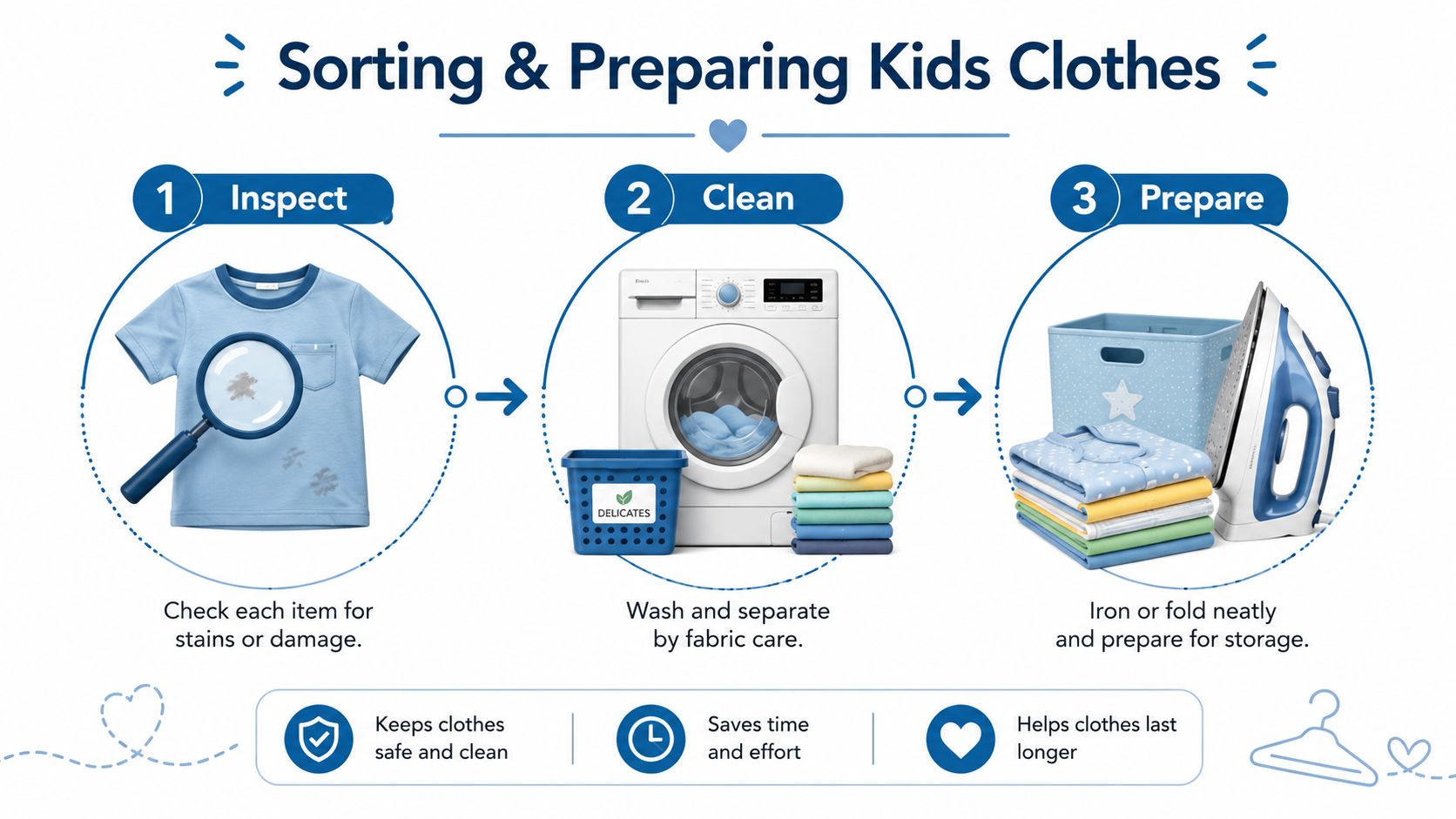
Before anything goes into a bin, I sort every piece into three piles: keep, repair, and move on. Kids' wardrobes are full of almost-right items, too, tiny jeans with a knee hole, a snowsuit with a missing snap, a sweater that fits but won't survive another playground wash cycle. If you skip this pass, you're storing clutter with a label on it.
Inspect first, then decide
Start by checking for stains, stretched cuffs, loose buttons, broken zippers, and pilling. Anything that won't be useful next season belongs in the donate, pass-down, or discard pile, not in storage taking up space for six months. This is also the time to separate pieces that still fit from pieces that were only barely surviving by the end of the season.
Laundry labels matter here because not every children's item is built the same way. Cotton play clothes can usually be washed at home, while dry-clean-only pieces should go out for proper cleaning before storage, and delicate garments need gentler handling than the average daycare uniform. For a practical overview of laundry tags and what they mean for labels that stay legible through wash cycles, this resource is useful: laundry labels for clothing.
Clean by fabric, not by convenience
Dirty fabric is a storage problem, not just a laundry problem. Food residue, invisible spills, and body oils can settle in and become stains or attract pests over time. That's especially true for organic fibers like wool and silk, which should be cleaned before they're tucked away for the season.
I treat performance wear and elastane blends differently from plain cotton. These pieces often live in the same drawer as everyday school clothes, but they don't always behave the same way in storage or in wash care. If the tag says delicate, hand wash, or dry clean, follow that instruction before you seal anything up.
Repair while it's in front of you
A missing button takes five minutes now and becomes a missing outfit later if you ignore it. Mend small tears, re-sew loose hems, and replace dead zippers while the garment is still visible on the sorting table. That's the difference between opening a bin next season and immediately being ready to dress a child without a repair project in between.
Packing Methods That Protect Every Fabric Type
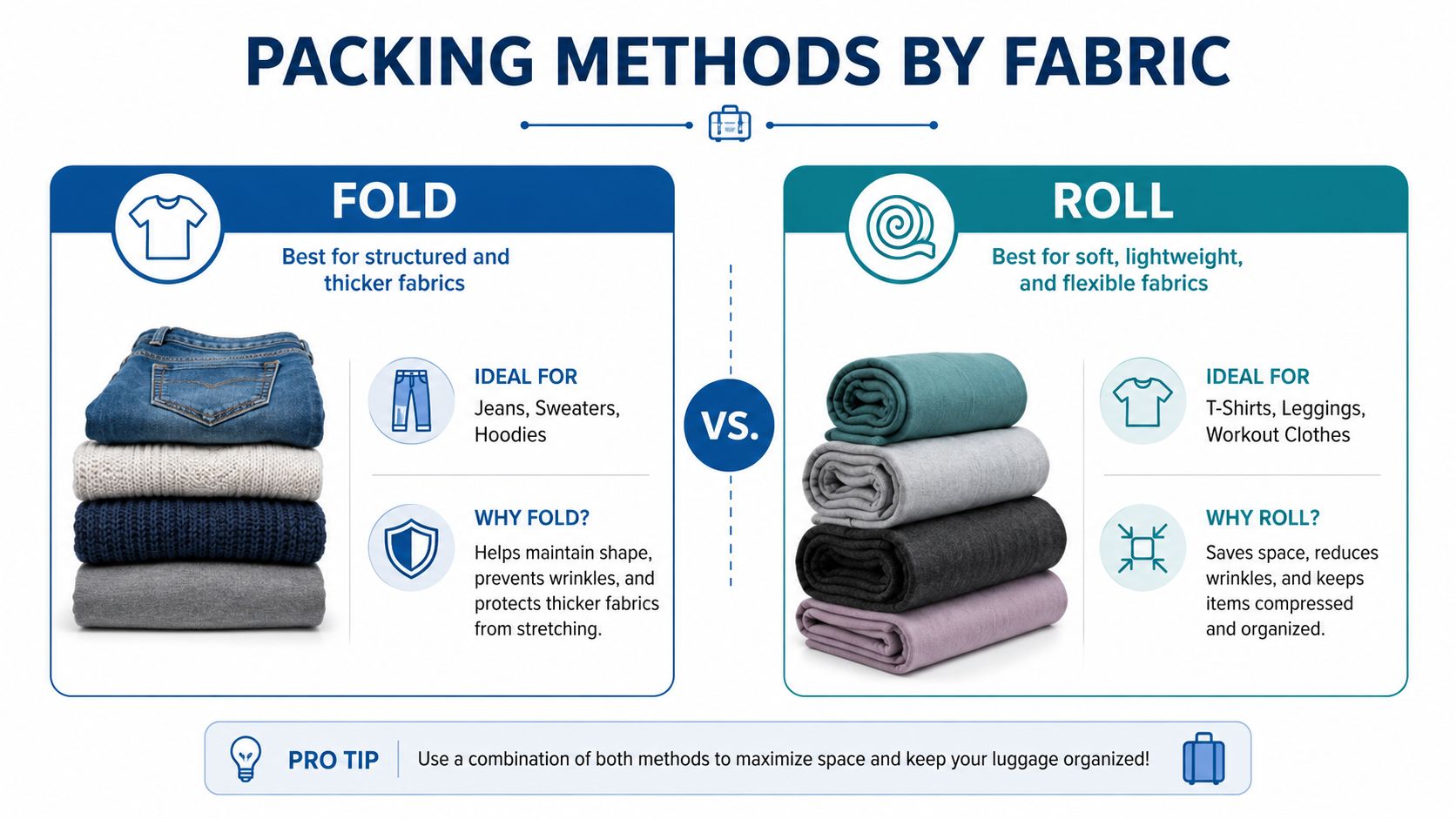
A child's winter coat, a knit sweater, and a cotton tee may all end up in storage, but they should not be packed the same way. Fabric type decides whether a piece needs support, space to breathe, or a flat fold that keeps it from stretching out. Using one method for everything is how you end up with crushed insulation, warped shoulders, and collars that no longer sit right when the season changes.
Use structure for shape, softness for flexibility
Structured garments do best with support. The Home Edit recommends laundering or dry-cleaning first, then hanging structured pieces on supportive wooden hangers and folding stretch-prone knits flat to avoid distortion, with acid-free tissue for delicate folds and breathable canvas or linen for silk, cashmere, and wool rather than plastic (seasonal clothing storage guidance). That matches what works in a family closet. Clothes need to come back in the same shape they left.
Sweaters and other stretch-prone knits should be folded flat and packed without weight on top of them. Hanging them seems tidy, but it pulls at the shoulders and leaves bumps that show up fast once a child wears the piece again. Bulkier coats and puffy outerwear need the same kind of restraint. If they are squeezed down too hard, the loft flattens and the garment looks worn before it has even gone through a cold snap.
Be careful with compression
Vacuum sealing sounds efficient, but it is not right for every item. Current advice notes that some sources recommend vacuum-sealed bags only for suitable fabrics and short-term use, while others warn to hang puffy or fluffy items in garment bags and avoid overstuffing containers (modern fabric storage guidance). That matters with children's outerwear, performance layers, and specialty pieces, because those fabrics depend on shape and recovery more than plain basics do.
Best rule for kids' gear: if the fabric needs loft, stretch recovery, or shape retention, do not compress it just to save inches.
Breathable garment bags usually work better than plastic sleeves for hanging items because they let air move around the fabric. If you want extra protection from moths on wool or cashmere, this garment bag moth protection advice is worth checking before you store anything expensive or sentimental. Parents notice the difference when a favorite coat comes out of storage smelling stale or looking off.
Containers need the same practical attention. A bin that bulges is harder to stack, harder to close, and harder to trust later when you are racing through a daycare morning. Use storage box labels so you can tell what is inside without opening every lid, and leave enough room inside each container that the fabric is not packed tight against the sides. A neat bin you can lift and read beats an overfilled one every time.
Choosing the Right Storage Location and Environment
Where the clothes live matters as much as how they're folded. A clean bin in a bad environment still creates problems, especially for children's clothing that may sit for months without being touched. Moisture, heat, and sunlight do more damage than people expect, and they do it slowly enough to be annoying instead of obvious.
Closets, under-bed spaces, basement bins, and attic corners all have trade-offs. Bedroom closets are usually the easiest to monitor, but they're also the first place families overfill. Under-bed containers work well when they're easy to pull out and sealed enough to resist dust, while basements and attics demand more caution because dampness and heat swings can ruin clothes even when the packing itself is solid.
Aim for cool, dry, dark, and ventilated
Benchmark guidance says stored garments should stay in a cool, dry, dark, ventilated location, away from heat, dampness, and direct sunlight, because moisture and poor airflow raise mildew and pest risk (seasonal storage environment guidance). One expert-style source also gives a target storage humidity of 45–55% RH and a 90-day refresh cycle to check desiccants and rotate folded items (same storage guidance). That's a useful benchmark if you live somewhere with sticky summers or damp winters.
Silica gel packets are a simple add-in for bins, and clear or lidded containers make inspections easier because you don't have to open every box to find the right size. Breathable canvas bins can be a better fit for certain delicate items, while sealed plastic containers can help keep dust and pests out when the contents are already properly cleaned and dry.
Watch for pests and stale air
Moths, silverfish, and other storage pests thrive where fabric sits undisturbed. For a pest-focused overview of the types of insects that cause trouble in stored clothing, this wardrobe pest control guide is worth reading before you stack boxes in a basement or attic. The main lesson is simple, stale air and damp fabric are an open invitation.
Keep bins out of direct sunlight and away from heaters, water pipes, and damp concrete whenever you have a choice.
I also keep a small inventory list inside the bin lid or on the outside of the container. That way, when the next weather shift hits, I'm not opening six boxes just to find one pair of rain pants. For families juggling all the extra gear that comes with daycare and school, this daycare storage ideas angle helps connect clothing storage to the rest of the daily routine.
Labeling Strategies That Prevent Daycare Mix-Ups
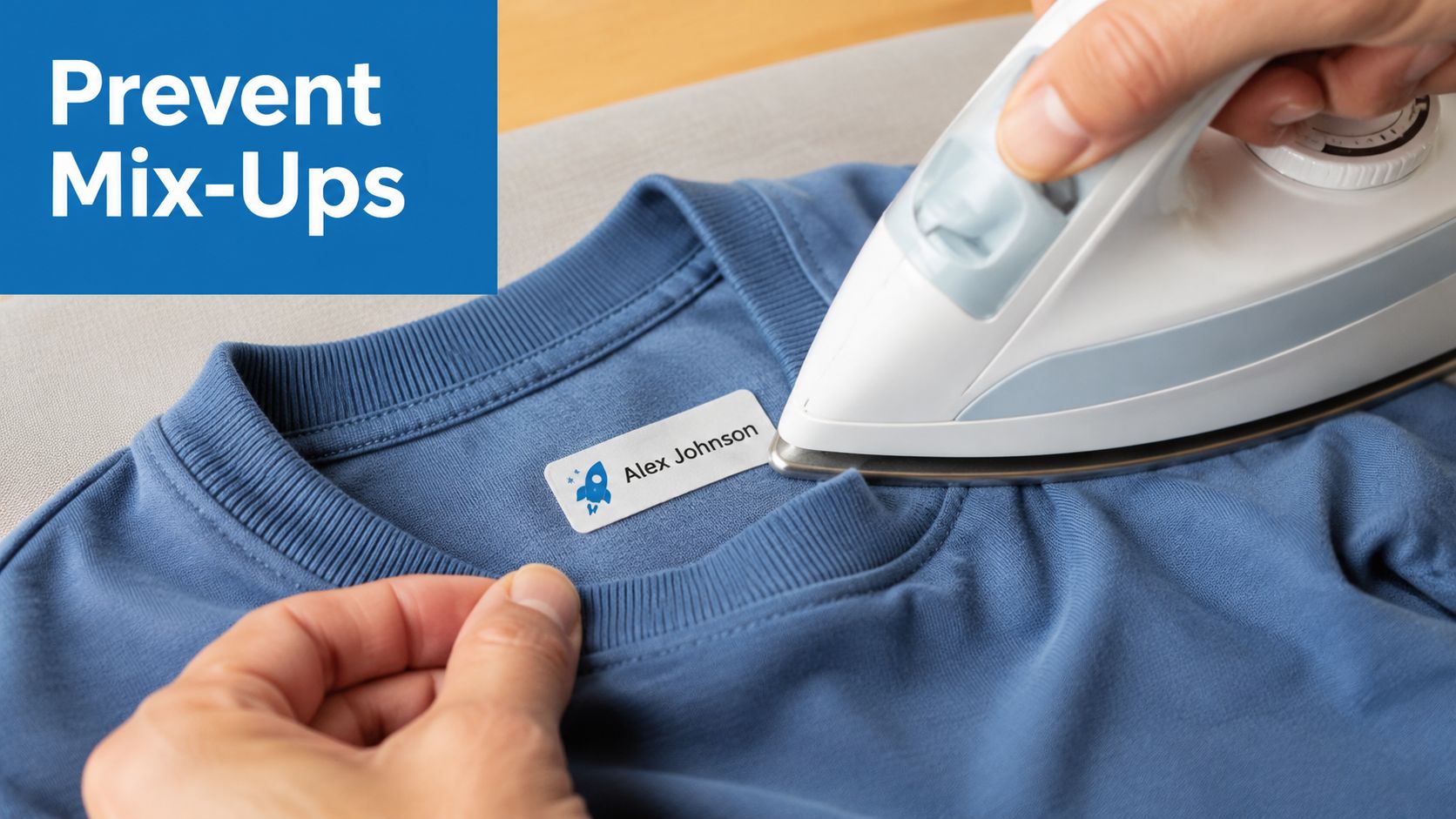
Labeling is the step that keeps a good storage system from functioning effectively. Daycare hooks, school cubbies, shared coat rooms, and sibling hand-me-down piles all create the same problem. Clothes move, and if they aren't clearly marked, they end up in the wrong child's bin or the wrong season's stack.
Personalized labels should go on anything that might be packed, passed along, or sent out of the house. That includes jackets, rain gear, mittens, backpacks, shoes, lunch bags, and the small storage boxes that hold the next size up. I like labels that are readable at a glance, survive repeated wash cycles, and still make sense after a tired parent has grabbed the bin in a hurry before work.
Label for ownership and rotation
I label by child, size, and season. Those three details matter because the most common mistake isn't losing a garment completely, it's misplacing it into the wrong season or the wrong sibling's pile. A bin marked “Nora, 4T, winter” is faster to use than a vague tote with a marker scribble that starts fading as soon as the plastic gets scuffed.
The internal logic matters just as much as the label material. Put one label on the storage container, one on the hanging garment tag or inside seam for clothes in rotation, and one on any matching accessory bag. That saves time on rotation day because you don't have to open everything to figure out what belongs where.
The labels for daycare guide is a smart companion if you're trying to keep the home storage system aligned with what leaves the house each week. The same principle applies to school gear, sports equipment, and backup outfits.
Make the system visible
I also like labels that are visually distinct. When kids' clothes all look alike in a stack, a clear label on the outside of a bin or garment bag prevents the classic morning mix-up where one child's snow pants end up in another child's backpack. The point isn't decoration, it's speed.
The video below is useful if you want a quick visual refresher on how parents keep labels working on real clothing items.
For families with more than one child, consistency beats creativity. Use the same placement every time, inside collar, inside waistband, or front of the storage bin, so you don't waste effort hunting for the tag when it's time to rotate. Good labeling turns seasonal storage from a memory test into a quick grab-and-go system.
Building a Seasonal Rotation Schedule That Sticks
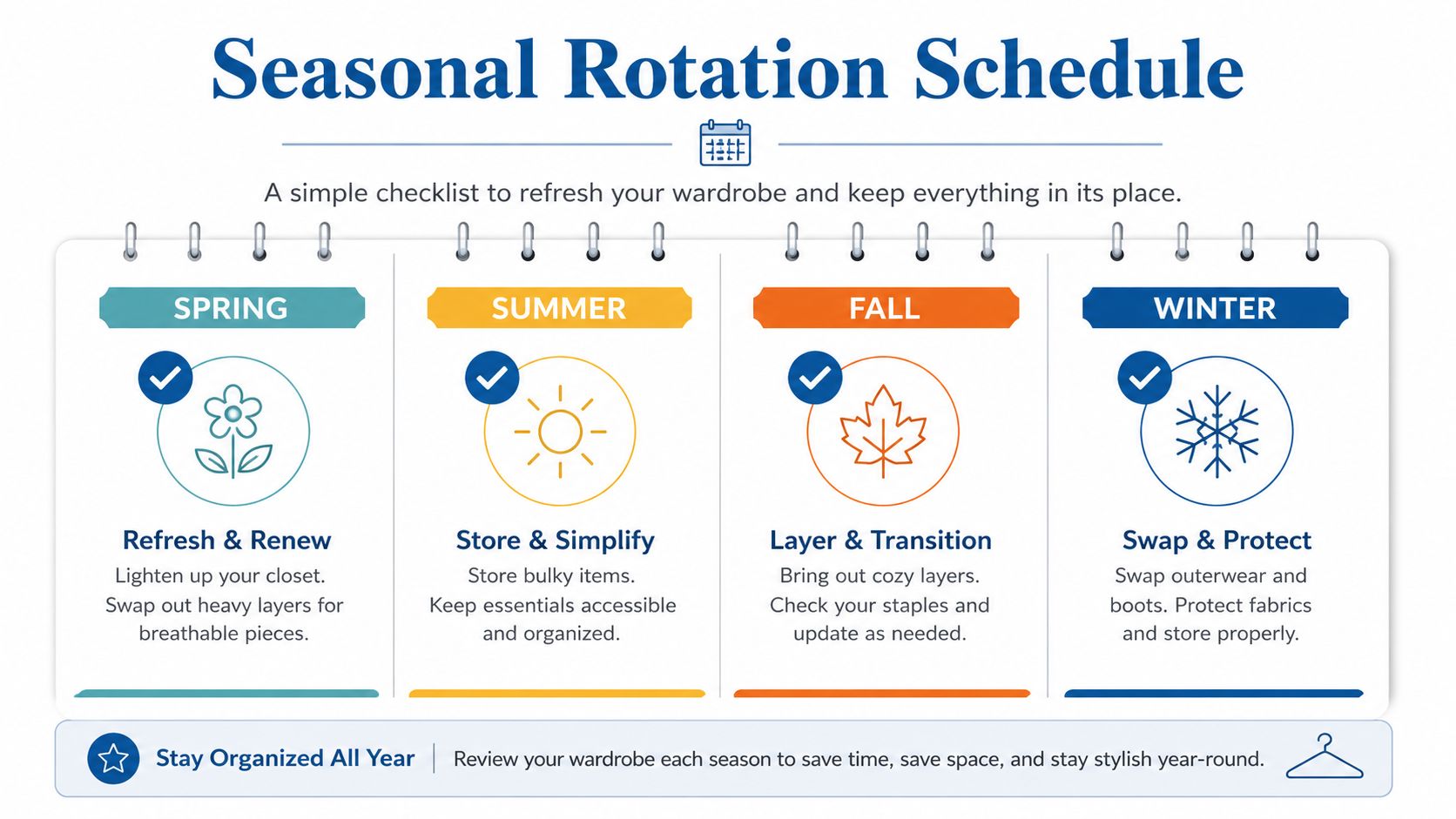
The best rotation schedule is the one you can repeat without needing a full weekend and a heroic mood. For most families, that means syncing the swap to weather shifts and school rhythms instead of a random date on the calendar. When the mornings turn consistently colder or the daycare locker starts filling up with hats and gloves, it's time.
Keep the checklist short
My rotation checklist has the same core steps every time. Pull out the stored bin, inspect items for damage or size changes, refresh desiccant packets if you use them, and update labels when a size has moved up or a garment is being handed down. Then decide what stays, what passes to the next child, and what gets donated.
Don't let the kept pile become a new storage pile. If a piece didn't get worn last season and still doesn't fit, move it out quickly so the next bin doesn't fill up with maybes. The goal is a working wardrobe, not a museum of almost-right clothes.
Use the season as the trigger
I like a twice-a-year rhythm because it matches how families live, once going into colder weather, once going into warmer weather. That rhythm also matches the survey pattern where those who rotate clothes do it twice a year (seasonal clothing storage survey findings). It's a practical cadence, not a perfect one.
If a child has a growth spurt, don't wait for the formal swap. Rotate the size-up pieces immediately and relabel the bin before they get buried.
Hand-me-down management is easier when it happens during the same rotation pass. Keep the pieces that still have life left, pass along what's ready for another child, and donate what no longer makes sense to store. That way, each swap clears space instead of adding another hidden pile.
By the time the season changes, your bins should already be telling the story of what's ready, what's missing, and what needs replacing. That's the system that saves weekday mornings, because it turns seasonal clothing storage into a routine instead of a rescue mission.
If you want a simpler way to keep kids' gear organized from one season to the next, visit InchBug for customizable labels and family-friendly essentials that make daycare mix-ups and storage chaos easier to manage. Their labels fit the same real-life routine parents use at home, in backpacks, and in seasonal bins, so rotation day doesn't turn into a scavenger hunt.