

Preschool gift shopping usually starts with good intentions and ends with one more object on the floor. A monogrammed stuffed animal is sweet. A custom puzzle is adorable. Then Monday comes, the water bottle disappears at pickup, the hoodie gets swapped with another child's, and someone realizes the lunchbox should have had an allergy note attached.
That's why I think about personalized gifts for preschoolers a little differently now. The gifts that parents remember are rarely the ones that only look cute in a gift bag. They're the ones that help a child feel known and help a family get through the week with less friction.
The key is finding something that does both. A preschooler lights up when they see their name, favorite color, or favorite animal. Parents light up when that same item comes home from school.
Why Personalized Gifts Win with Preschoolers
Preschool life is full of tiny ownership battles. “That's my cup.” “That's my backpack.” “No, the purple one is mine.” Kids this age are still learning where they end and the world begins, so anything that clearly says this belongs to you has extra power.
That's part of why personalized gifts for preschoolers work so well. They don't just feel special. They make everyday objects easier for kids to recognize, claim, and care about.
Verified data shows that 68% of kids form a stronger emotional bond with toys that feature personal touches, and they are 75% more engaged with personalized toys compared to generic ones, as seeing their name makes learning and play feel personally relevant, according to this overview of personalized gifts and child development.
Their name changes the experience
A preschooler may ignore a generic storybook and ask for the one with their name in it every night. The same thing happens with puzzles, art kits, cups, and backpacks. Personalization turns a basic item into something the child recognizes as theirs, not just something adults handed them.
That matters for emotional reasons, but it also matters for routine. A child who can quickly spot their own bottle or lunch bag often moves through drop-off, pickup, and transitions with less resistance.
Personalized gifts work best when they support identity and routine at the same time.
The preschool years reward practical personalization
A lot of gift lists stop at “cute.” Parents usually need more than cute. They need gifts that survive snack time, nap time, and the lost-and-found bin.
That's why I like treating personalization as a parenting tool, not just a finishing touch. If you want more ideas in that direction, InchBug has a useful roundup of personalized gift ideas for kids that leans practical instead of purely decorative.
The strongest gifts for this age do one simple thing well. They help the child feel seen, and they help the adults stay organized.
Choosing Gifts That Solve Problems Not Create Clutter
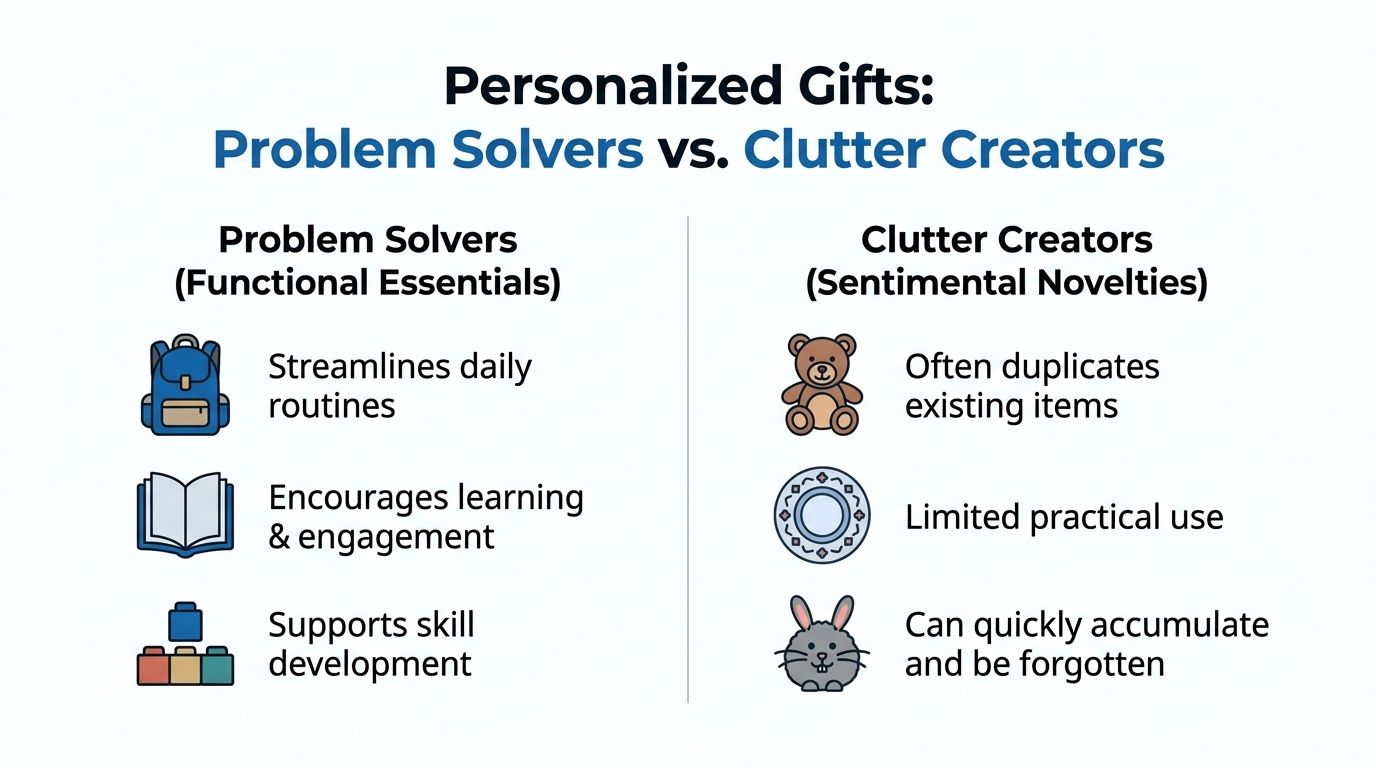
A personalized gift can be memorable or it can become shelf decor with a name on it. Those are not the same thing.
The difference usually comes down to use. A keepsake teddy bear might be loved for a week and then join the stuffed-animal pile. A personalized bottle band, clothing label, or clearly marked lunch container gets used every single day. That kind of gift earns its place fast.
Data shows that 68% of parents report daily gear confusion in daycare settings, yet fewer than 12% of top-ranked personalized gift articles for preschoolers include functional labeling solutions like waterproof bottle bands or clothing tags. That gap is why so many parents end up with charming gifts that don't solve the actual stress point.
A simple filter for better gift picks
When I'm choosing personalized gifts for preschoolers, I run through four questions.
- Does it improve a daily routine? A gift that helps with drop-off, lunch, cleanup, or bedtime tends to last longer than something that only photographs well.
- Can a preschooler identify it quickly? Clear names, readable fonts, and recognizable colors matter more than elaborate design.
- Will it survive normal kid use? Preschool gear gets washed, dropped, kicked under cubbies, and crammed into backpacks.
- Does it reduce work for the parent? If a gift creates extra sorting, hand-washing, or storage problems, it's not really helping.
What usually works and what usually doesn't
Here's the trade-off in plain terms:
| Gift type | Usually works when | Usually fails when |
|---|---|---|
| Personalized keepsake | It marks a milestone and has a clear place in the home | It's one more display item with no daily use |
| Personalized toy | It matches the child's actual interests and gets repeated play | It duplicates toys they already have |
| Personalized label or tag | It solves daycare, lunch, or clothing mix-ups | It's flimsy, hard to read, or not made for washing |
| Personalized bag or pouch | It contains a routine like art supplies or sleepover gear | It's too decorative to use freely |
Practical rule: If the gift helps a parent answer “Where is it?” fewer times each day, it's a strong gift.
Don't confuse sentimental with useful
Sentimental gifts aren't bad. They're just incomplete if that's all you give. Preschool families are managing cups, spare clothes, blankets, shoes, lunch containers, and allergy notes. A personalized item that handles one of those pressure points often feels more thoughtful than another decorative object.
That's the key shift. The most appreciated personalized gifts for preschoolers don't add to household noise. They remove some of it.
A Practical Guide to Personalizing Preschool Essentials
The easiest way to choose a useful gift is to start with the items that disappear most often. For most preschool families, that means bottles, clothes, and shoes. Those three categories create a lot of daily friction because they move between home, school, playgrounds, and car seats.
It is at this point that functional labeling stops feeling like an accessory and starts feeling like infrastructure.
When 95% of a child's belongings are tagged with unique, name-specific identifiers, the rate of misplaced items drops from an average of 3.5 per week to less than 0.2, and the labels can reduce parental and administrative cognitive load by 60%. That's why a practical labeling setup is one of the few gifts that pays you back all year.
For a deeper look at setting up labels by category, this guide to personalized labels for daycare is a helpful starting point.
The vanishing water bottle
Bottles get left on playground fences, swapped at snack time, and lost in classroom sink areas. For this category, I'd choose a name solution that stays visible without requiring constant reapplication.
A reusable bottle band works well because the child can spot it quickly, teachers can read it at a glance, and parents don't have to replace peeling stickers every week. Food-safe materials matter here because this item gets handled all day and washed often.
The jacket that never comes home
Coats and sweatshirts are trickier because tags can itch, marker fades, and iron-on options don't always hold up through repeated washing. Clothing labels need to be readable, secure, and simple enough that busy staff can find the name fast.
This is one place where product-specific shopping matters. Options such as Orbit Labels for bottles, TagPal clothing labels for garments, and ShoePal identifiers for shoes are designed around those exact use cases. That's the sort of setup parents usually appreciate because each item has a clear job instead of being a one-size-fits-all label.
The single-shoe predicament
Shoes are notorious because they separate in cubbies, gym rooms, and nap areas. Preschoolers also recognize visual cues faster than tiny printed text, so shoes benefit from labels that are easy to spot and easy for a child to understand.
What works best is a label that pairs identity with location. Left shoe, right shoe, same visual family, same name. That lowers the odds of one shoe going home in the wrong backpack.
A quick visual helps if you want to see how these products fit into real routines:
A good setup is boring in the best way
The goal isn't to create a Pinterest-perfect system. The goal is to stop thinking about it. Once the essentials are labeled, mornings get simpler because you aren't rewriting names, repacking replacements, or texting the teacher about a missing sweater.
That's my favorite kind of preschool gift. It disappears into family life because it's doing its job.
Creative Ideas From Keepsakes to Activity Kits
Not every practical gift has to look utilitarian. Some of the nicest personalized gifts for preschoolers are bundled in a way that still feels festive, but every piece has a purpose.
That's where themed kits work beautifully. They let you include something playful, something personal, and something a parent will find useful.
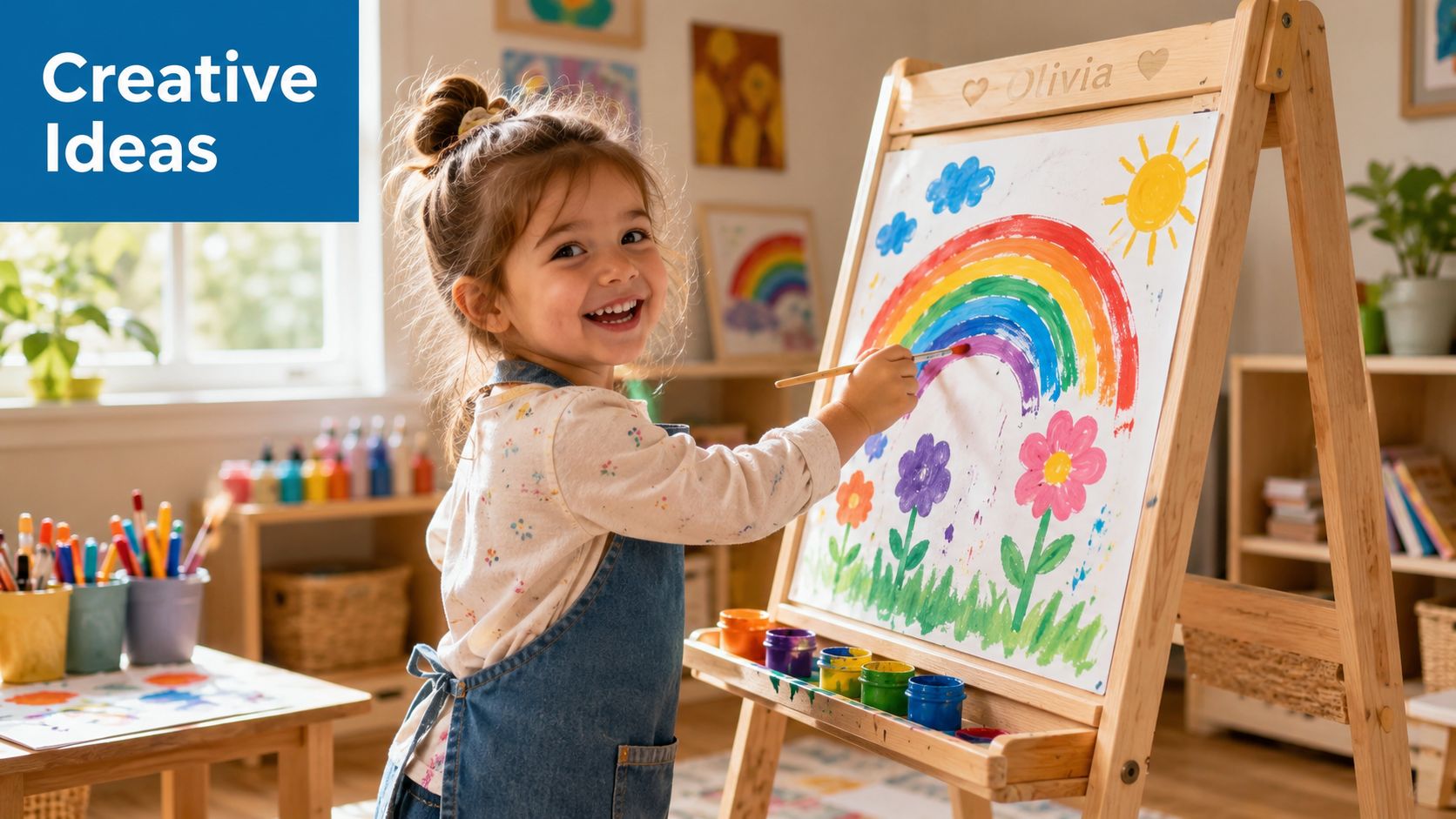
Personalized toys and gifts for preschoolers can also support focus during play. Research indicates a 75% increase in sustained play duration compared to generic alternatives when customization creates a stronger emotional connection. That's a useful reminder that a smart gift bundle can be fun and functional at the same time.
The daycare survival kit
This is the bundle I'd give to a child starting a new classroom. Use a personalized pouch or small bag as the base, then add the practical essentials: spare socks, a labeled water bottle, extra underwear, and a comfort item that's easy to identify.
It feels generous because it's a complete set, but it also helps the family from day one.
The best preschool gift bundles answer a specific question. What does this child need every week?
The art-on-the-go bag
A preschooler who loves to draw will use this constantly. Pack a personalized zip pouch with washable crayons, a small notebook, stickers, and a name-marked folder for finished artwork.
This kind of gift works because it contains the activity. Parents don't just get a craft supply explosion. They get a portable routine.
If the child has a very specific interest, tailor the theme around it. For horse-loving kids, for example, this 2026 guide to horse gifts offers ideas you can adapt into a preschool-friendly activity bundle.
The first sleepover or grandparents' house kit
This one is especially good for children who are easing into time away from home. Include pajamas, a toothbrush case, a compact bedtime book, and a labeled comfort object in one personalized bag.
The customization does more than decorate the set. It creates familiarity, which matters when a child is in a less familiar environment.
For more gift ideas in this spirit, InchBug has a practical roundup of gift ideas for preschoolers that can help you think in bundles instead of one-off items.
Keepsakes still belong, just with a job to do
I'm not anti-keepsake at all. I just think keepsakes are strongest when they pull double duty. A milestone board, memory pouch, or personalized art folder earns more affection than a decorative item that never gets touched.
That's the sweet spot. A gift can still feel charming and personal without becoming one more thing parents need to dust, store, or donate later.
How to Bundle and Gift Like a Pro
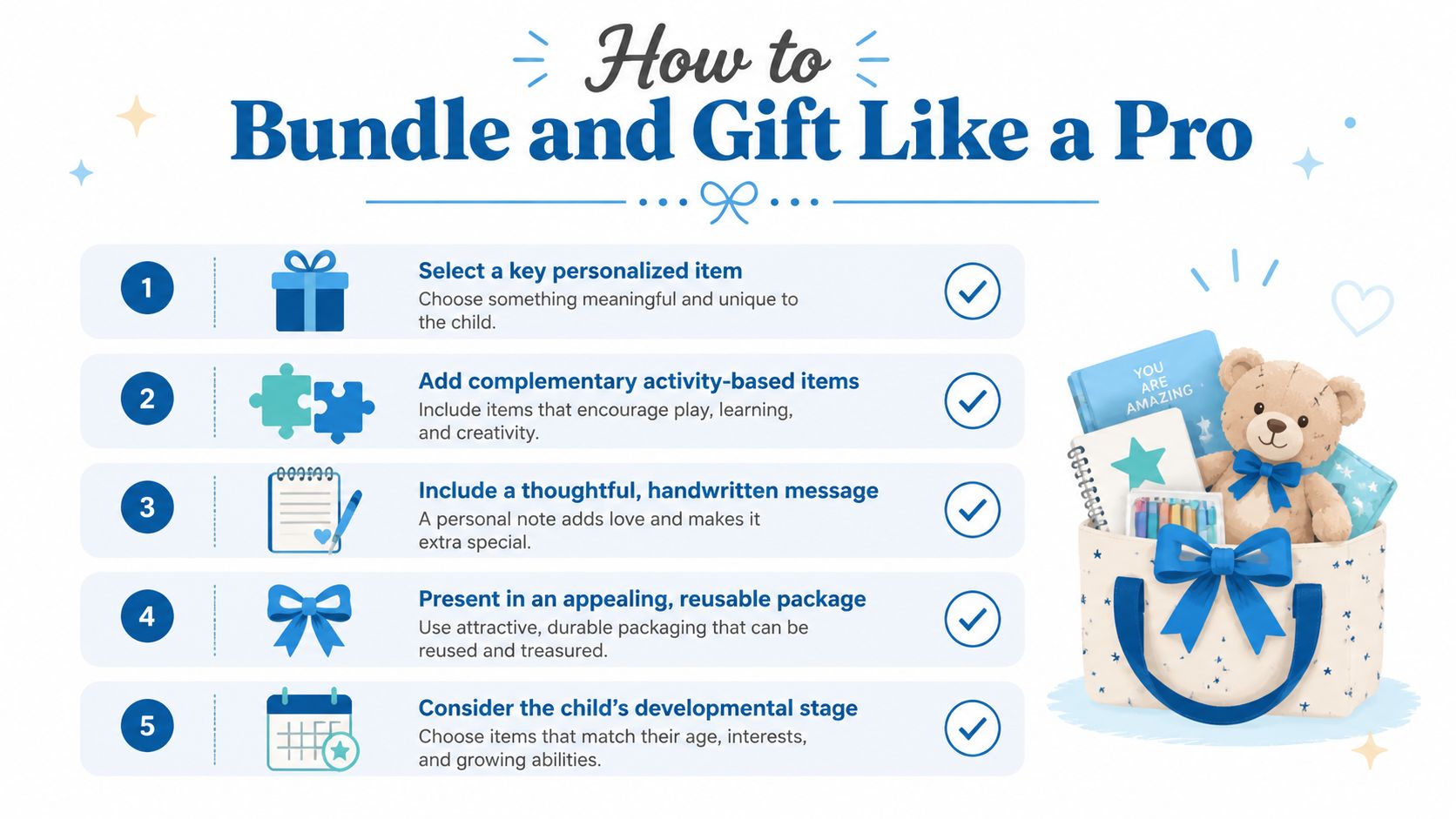
The easiest way to impress both the child and the parents is to build around one anchor item. Don't start with filler. Start with the thing that will get used most, then add a few pieces that support it.
That anchor could be a lunch bag, backpack, nap mat pouch, or water bottle. Once you have that, the rest of the gift gets easier because every add-on should make that main item more useful.
The broader market supports this instinct. The personalized gifts category is already a $30+ billion industry, and 70% of parents prefer personalized gifts over generic ones for young children, according to the Global Personalized Gifts Market Report. Parents are not hard to convince here. They already want gifts that feel specific to their child.
A bundle that feels complete
A good preschool gift usually includes these layers:
- A core item: backpack, bottle, lunch bag, or pouch.
- One daily-use add-on: something that helps at daycare or school.
- One child-pleasing extra: a sticker set, mini book, or art supply.
- A note for the grown-ups: especially helpful if the gift includes practical items they'll use right away.
The shortcut for busy gift-givers
Grandparents, aunts, family friends, and even room parents often want to give something useful but don't know what labels or school items the family needs. That's where prebuilt bundles make sense.
Combo packs are especially practical because they remove the guesswork. A coordinated set for daycare or school keeps the naming consistent across bottles, clothing, bags, and shoes, which makes the whole system easier to maintain. If you're shopping in that category, this guide to personalized school supplies can help you choose pieces that work together.
Give the gift that saves a parent from replacing the same missing item three times.
Small presentation choices matter
If you want the gift to feel polished, presentation still counts. Just make it useful presentation.
- Wrap with purpose: Use the backpack or storage pouch as the gift wrap instead of adding disposable packaging.
- Include a clear note: Mention what's personalized and where each item is meant to be used.
- Think seasonally: Rain gear at the start of fall, swim items in summer, spare layers in winter.
- Match the child's stage: A newly potty-trained preschooler needs a different setup than a child preparing for pre-K.
That's how you make a practical gift feel generous instead of clinical. It still feels fun, but every piece has a reason to be there.
Making It Last A Quick Guide to Care and Longevity
A useful personalized gift only stays useful if it can handle actual preschool life. That means dishwashers, cubbies, washing machines, sunscreen residue, snack crumbs, and the mysterious grime that appears on every lunch container by Friday.
Durability starts with matching the label or tag to the item. Bottle bands should stay on the bottle they fit. Clothing labels should be attached where they can be read without bothering the child. Shoe identifiers need a clean, dry surface before application so they stay put.
Care habits that prevent rework
A few simple habits make a big difference:
- Wash with placement in mind: Put labeled drinkware where the name stays visible and isn't constantly rubbing against rough surfaces.
- Check adhesion after laundry cycles: Clothing labels last longer when they're applied to the right fabric area and pressed down properly from the start.
- Replace before it becomes urgent: If a label starts lifting, deal with it on a calm evening, not five minutes before daycare.
- Keep naming consistent: Use the same child name format across bottles, bags, clothes, and allergy items so teachers don't have to decode abbreviations.
Don't overlook safety labeling
Personalization isn't only about convenience anymore. It's also becoming part of how families handle safety in group settings. There's a 42% year-over-year rise in searches for personalized allergy tags and emergency contact labels for kids, which shows parents are actively looking for safety-focused tools, not just decorative options.
That matters most for lunch gear, medication pouches, and any item that travels between caregivers. Clear labeling reduces uncertainty, and uncertainty is what creates mistakes.
For families choosing drinkware labels specifically, this guide to dishwasher-safe name labels is a practical read.
The gifts that keep paying off
The personalized gifts for preschoolers that last aren't always the flashiest ones in the room. They're the ones that keep a child's things identifiable, keep routines smoother, and make parents feel slightly less outnumbered by the daily mess.
That's what makes them worth giving. They carry a little affection, a little identity, and a lot of real-life usefulness.
If you want personalized gifts that are built around everyday preschool routines instead of one-time novelty, take a look at InchBug. Their focus is personalized labels and essentials for bottles, clothes, shoes, bags, and allergy-related identification, which makes them especially relevant for daycare and school use.