

Yes, some labels are absolutely dishwasher safe, but only if they've been specifically engineered for it. The secret isn't magic; it's a combination of a tough waterproof vinyl, a super-strong permanent adhesive, and a protective top layer. This trio works together to shield the name from the intense heat and harsh detergents of the dishwasher.
Without these key features, most ordinary labels will quickly fade, peel off, or turn into a gummy mess after just one or two washes.
The End of Lost Lids and Faded Names
If you’re a parent, you know the drill. You spend time washing a mountain of sippy cups, lunch containers, and water bottles, only to pull them out and find the names you painstakingly wrote on them have vanished. What's left is a collection of anonymous plastic, ready to get lost at daycare or school the very next day.
This endless cycle of labeling and relabeling is more than just annoying. It’s a drain on your time and money, and it creates a real hygiene headache when items get mixed up. The problem is that most everyday labels and markers simply weren't made to survive the brutal environment inside a dishwasher.
The Ultimate Durability Gauntlet
Think of your dishwasher as an obstacle course designed to destroy any label. It’s a triple-threat of forces working together to break down anything that isn’t built to last:
- High-Heat Cycles: Temperatures can soar up to 150°F (65°C). That kind of heat can weaken adhesives and cause flimsy materials to warp or even melt.
- Powerful Detergents: Modern dishwasher detergents are packed with potent chemicals designed to obliterate grease and food. Unfortunately, they attack weak inks and adhesives with that same intensity.
- Constant Moisture: All that hot water and steam is constantly prying at the edges of a label, searching for any weak point to start the peeling process.
A truly dishwasher safe label isn’t just water-resistant; it’s purpose-built to withstand this combined assault, cycle after cycle, without failing. It’s the difference between a temporary tag and a permanent solution.
Finding a labeling system that can consistently win this battle brings some much-needed order to the daily chaos. It means your child’s belongings return home safely and hygienically, every single day. That's exactly why solutions like InchBug’s specially designed dishwasher-safe name labels were created—to pass this test and end the frustrating cycle of lost and faded names for good.
The Science Behind a Truly Indestructible Label
What’s the real difference between a temporary tag and a label that’s built to last? Think of it like trying to stay dry in a storm. A paper towel isn't going to cut it—it soaks through in seconds. But a high-quality wetsuit? That creates a waterproof barrier, keeping you protected. The best dishwasher safe labels for your family’s gear are engineered a lot more like that wetsuit, with distinct layers working together to survive the chaos of the dishwasher.
This layered approach is absolutely key. Without it, even a label that claims to be "waterproof" will quickly start peeling, fading, or turning into a sticky mess after just a few runs through a high-heat wash cycle.
The Three Layers of Durability
To create a label that really, truly lasts, you need three key components working in perfect harmony. Each one has a specific job to do in defending against the onslaught of heat, water, and harsh detergents.
- The Waterproof Foundation: This is the backbone of the label. It's usually made from a tough vinyl or a synthetic polymer called Biaxially Oriented Polypropylene (BOPP). Unlike paper, these materials are non-porous and naturally waterproof, so they won’t tear or fall apart when they get wet.
- The Industrial-Strength Adhesive: We’re not talking about your average craft glue here. This is a specialized, permanent adhesive engineered to create a super-strong bond with non-porous surfaces like plastic, metal, and glass. It's chemically designed to stand up to the powerful solvents found in dishwasher pods and liquids.
- The Protective Overlaminate: This is the label’s invisible shield. A clear, tough film is applied right over the printed name, protecting the ink from fading caused by UV light, getting scratched by other dishes, and being attacked directly by detergents.
This little flowchart breaks down the common problems that pop up when one of these layers gives out.
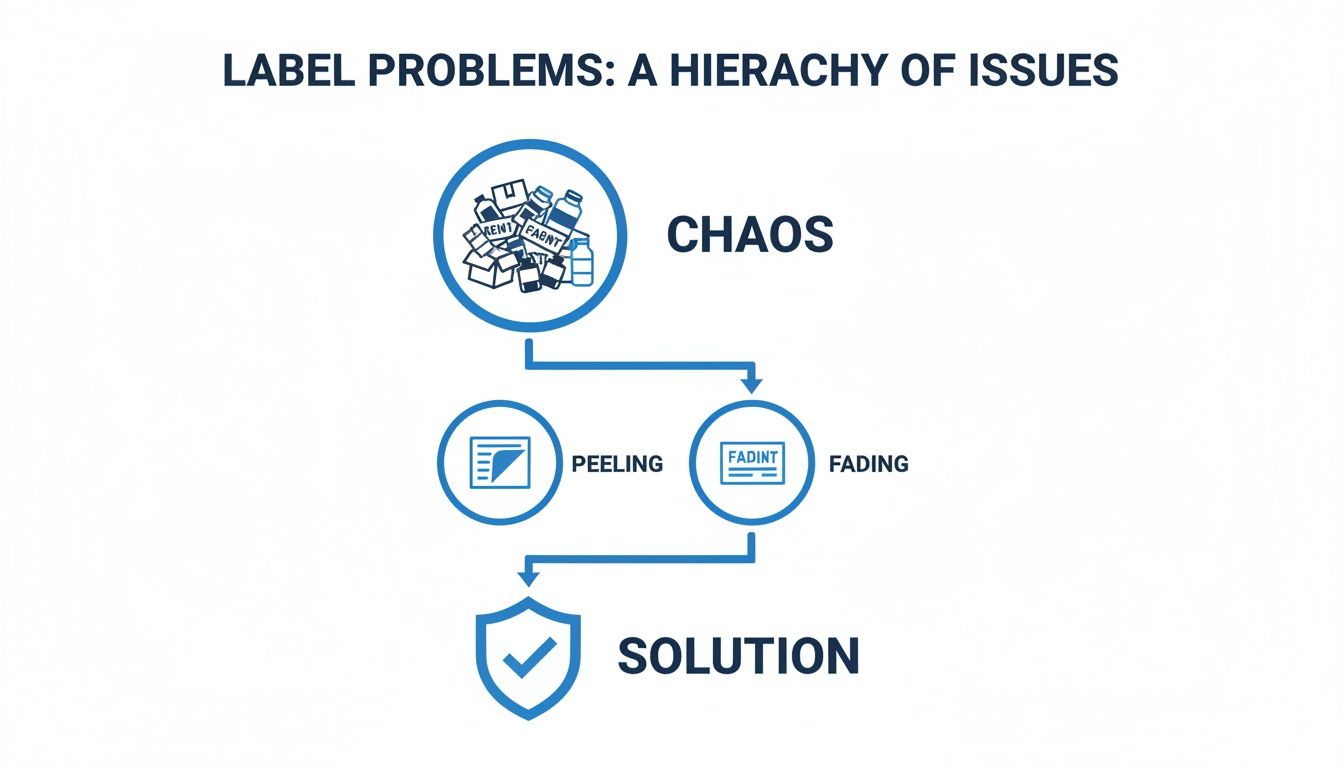
As you can see, the chaos of lost sippy cups and mismatched containers often starts with a peeling or fading label. It’s why having a multi-layered defense is the only way to go.
Our Commitment to Quality and Safety
When you bring these three elements together, you get a powerful barrier that stays bright and stuck on, wash after wash. This science-backed approach is non-negotiable for anything designed for kids' items. At InchBug, for example, we only use premium, BPA-safe materials to make sure every label is not just durable, but completely safe for your family.
And we're not the only ones who see the value in this. The global market for dishwasher-safe bottle labels hit USD 1.09 billion, driven by parents and daycares who need reliable ways to keep things hygienic and organized.
At its core, a dishwasher safe label is a feat of material science. It’s an engineered solution designed to solve a very real problem for busy families—bringing lasting order to the daily scramble.
This same commitment to durability and smart design isn't just for our adhesive labels. You can explore what makes the Orbit Label 2.0 so special to see how these principles work for reusable labeling solutions, too. The goal is always the same: create a product you can apply once and trust for years to come.
How We Stress Test Labels for Real-World Durability
So, how does a simple name label earn the title of "dishwasher safe"? It’s not just a claim we make lightly; it's a badge of honor earned through a whole series of demanding trials designed to mimic years of real-world abuse. This behind-the-scenes process is what separates a reliable label from one that peels and fades after just a few washes.
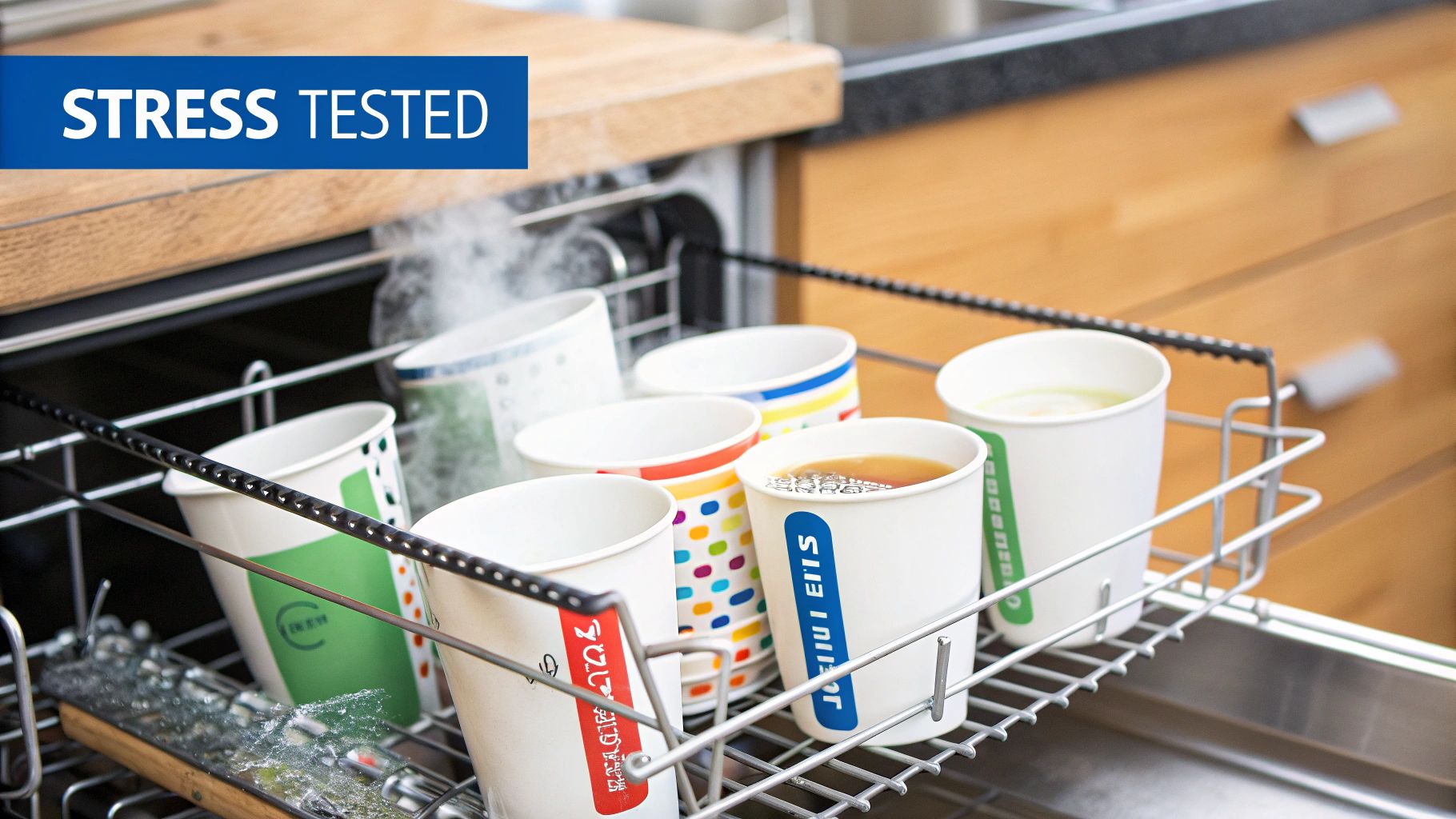
The cornerstone of our evaluation is what we call the dishwasher gauntlet. We run our labels through hundreds of wash cycles in normal, residential-grade dishwashers. And we don't go easy on them—we use high-heat settings that can hit 150°F (65°C). We also test with a variety of popular, aggressive detergents to make sure our labels can withstand the harsh chemical cocktails designed to strip away grease and grime.
Beyond the Dishwasher Cycle
While the dishwasher test is critical, true durability requires so much more. We put our labels, including InchBug’s Orbit Labels and adhesive Name Labels, through a full suite of stress tests to ensure they are prepared for anything a busy family can throw at them.
Here's what else they have to endure:
- Abrasion Resistance: We simulate the friction of being scrubbed with a sponge or jostled against other dishes in the sink. This makes sure the protective overlaminate doesn't scratch easily, keeping the name underneath crisp and readable.
- Microwave Safety Checks: Labels are exposed to microwave radiation to confirm they won’t curl, melt, or release anything harmful when you’re reheating leftovers or warming up a bottle.
- UV Exposure Simulation: To mimic leaving a water bottle in a sunny car or out at the playground all day, we expose labels to concentrated UV light. This verifies that the inks are truly fade-resistant and won’t turn dull over time.
A truly durable label doesn’t just survive; it thrives. It must emerge from every test—heat, chemicals, scrubbing, and sunlight—with its colors still vibrant and its adhesive bond completely intact.
This whole process is about building confidence. When we say a label is dishwasher safe, it's because we've proven it, time and again, in a controlled environment that is often tougher than your own kitchen. This commitment is how we can promise that every label stays put and stays perfectly readable, from the first day of school to the last.
Why Most Dishwasher Labels Fail and How to Avoid It
It’s a story every parent knows all too well: you buy a set of labels that promise to be durable, only to find them peeling, faded, or turning into a sticky mess after just a few trips through the dishwasher. When this happens, it’s usually because one of the key parts—the material, the adhesive, or the protective top layer—just wasn't built for the job.
Figuring out these common weak points is the secret to choosing a label that actually goes the distance. It’s not just a small annoyance when a label gives up; it’s a waste of your money and often leads to lost sippy cups and containers. The good news? These issues are almost always preventable, either by picking a better label from the start or by making sure you apply it correctly.
The Most Common Label Problems
Most label failures boil down to just a few key issues. I like to think of a label like a chain—it's only as strong as its weakest link. If the glue is weak, the vinyl is flimsy, or the ink is left exposed, the whole thing is going to fall apart in the hot, soapy chaos of a dishwasher cycle.
Let's get into the two biggest culprits behind disappearing names and peeling stickers.
- Peeling and Curling Edges: This is, without a doubt, the most frequent complaint. It almost always means there’s a problem with the adhesive. The glue might not be made for high heat, or it’s just not strong enough to get a solid grip on smooth surfaces like plastic and stainless steel.
- Fading and Smudging Ink: If your child's name blurs or vanishes completely, the problem is a total lack of protection. This is a dead giveaway that the label was made without a vital protective top layer, leaving the ink defenseless against the onslaught of hot water and harsh detergents.
Just like the materials used for dishwasher safe pots and pans have to be tough, the same goes for labels. They need to be specifically engineered to handle the unique challenges a dishwasher throws at them.
Troubleshooting Common Label Failures
To help you figure out what went wrong and stop it from happening again, I’ve put together a quick guide. It’s a simple look at the most common issues, what causes them, and how to avoid them in the future.
Troubleshooting Common Label Failures
| Problem | Why It Happens | How to Prevent It |
|---|---|---|
| Edges Are Lifting | The adhesive isn't strong enough for the heat, or the label was put on a textured or dirty surface, which stopped it from getting a good grip. | Choose labels with permanent, industrial-grade adhesive. Always apply them to a surface that is smooth, clean, and completely dry. |
| Ink Is Fading | The label is missing a protective overlaminate. This leaves the printed name exposed to hot water, soap, and friction from other dishes. | Only buy labels that clearly mention a protective top layer or laminate. This shield is an absolute must-have for durability. |
| Label Is Bubbling | Air got trapped underneath when you applied it. These tiny pockets create weak spots where water can sneak in and break down the glue. | Press the label down firmly from the center outwards to squeeze out any air bubbles. Make sure the entire surface is making contact. |
| Sticky Residue Left Behind | The label material itself fell apart, but the low-quality adhesive was left behind. This is really common with paper or super-thin vinyl labels. | Stick to high-quality BOPP or thick vinyl labels. When it’s finally time for removal, these materials usually peel off cleanly in one piece. |
By getting familiar with these common failure points, you can easily spot low-quality products and make sure you’re applying your labels dishwasher safe for the best possible stick.
Honestly, investing in a well-made product, like InchBug's collection of waterproof bottle labels, and taking a moment to apply it right is the best way to skip the frustration and keep your kids' gear clearly marked, wash after wash.
Applying Your Labels for Maximum Lifespan
Even the world's toughest, most high-tech labels dishwasher safe can give up the ghost if they aren’t applied correctly. Think of it like painting a wall—you wouldn’t just slap a coat of paint on and expect a perfect finish without doing the prep work. Taking just a few extra minutes to apply your labels properly is the single best thing you can do to make sure they last for years.
When you get it right, you create a powerful, permanent bond between the adhesive and the surface, making the label pretty much indestructible. A flawless application is what stops water, heat, and detergent from ever finding a way underneath to weaken the glue.
Prepping for a Perfect Stick
Before you even think about peeling that label off its backing, a little prep work goes a long, long way. The goal here is simple: create the ideal canvas for the adhesive to grab onto and never let go.
- Select the Right Spot: Look for a smooth, clean area on the bottle or container. Steer clear of placing labels over sharp ridges, textures, or seams where the adhesive can't make full, even contact.
- Clean the Surface: This is the one step you absolutely cannot skip. Grab a cotton ball with some rubbing alcohol and give the application area a good wipe. This removes any invisible oils from your fingers, dust, or other gunk that could get in the way of a super-strong bond.
- Make Sure It’s Dry: Let the alcohol evaporate completely. You’ll be left with a perfectly clean and dry surface that’s ready for its new label.
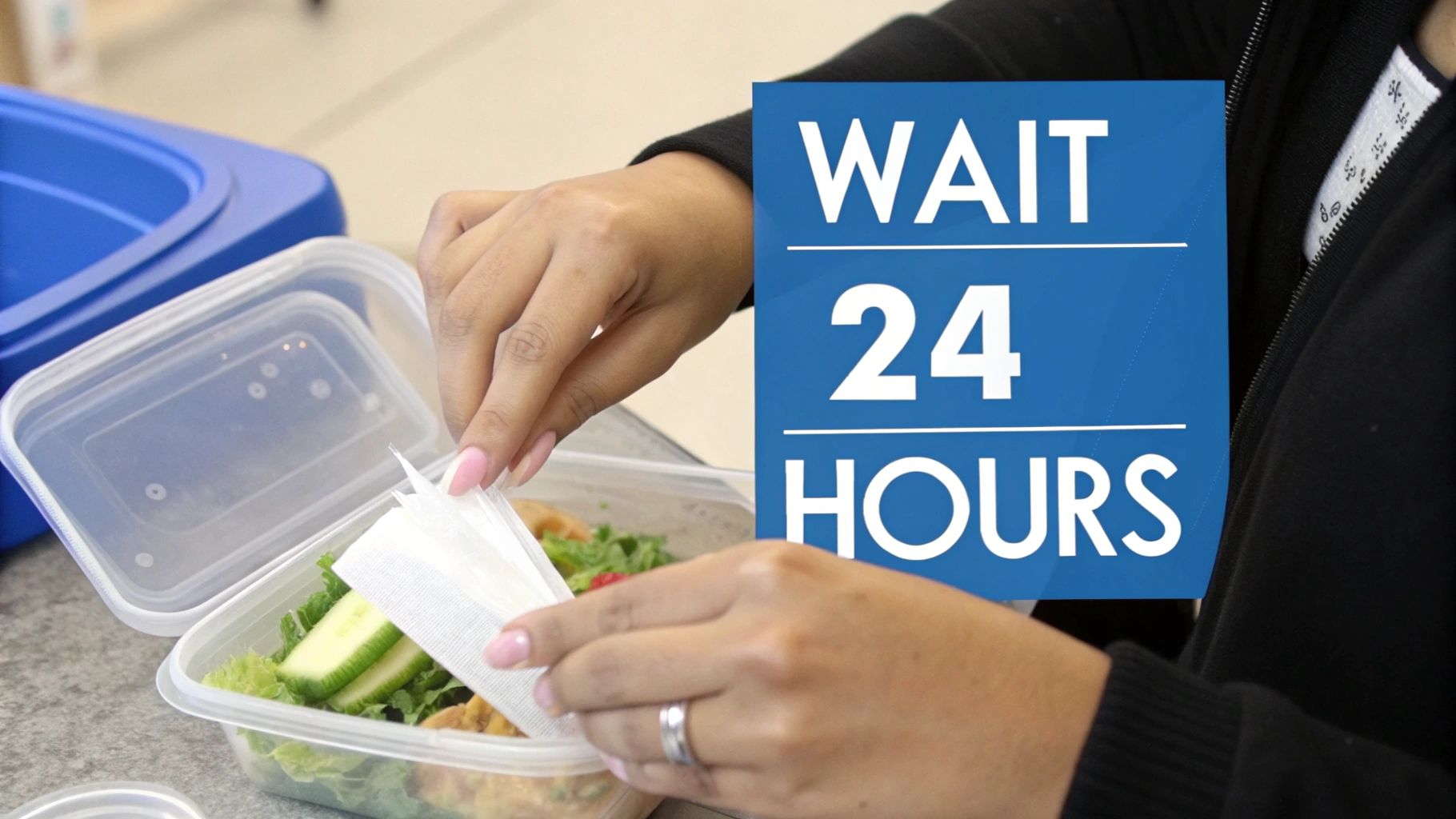
Key Insight: That 24-hour waiting period? It's the most crucial step in getting a truly permanent, dishwasher-safe bond. Trust me, rushing this process is the #1 reason I see labels fail.
This waiting game isn't just for show. It allows the adhesive to fully "cure," creating a seal on a molecular level that’s virtually impenetrable. It’s a vital step for ensuring that labels from packs like InchBug’s Daycare and School Combos stick around for the long haul.
The Application and Curing Process
Okay, prep work is done! You’re ready for the main event. Follow these steps carefully to get rid of any pesky air bubbles and create that perfect, waterproof seal.
- Step 1: Apply with Firm Pressure: Peel your label and place it on the prepared surface. Start from the center and press down firmly, working your way out to the edges. This smooths the label down and pushes out any trapped air.
- Step 2: Focus on the Edges: Pay extra attention to the edges and run your thumb over them several times. This creates that watertight seal that stops water from creeping underneath during a wash cycle.
- Step 3: Wait 24 Hours Before Washing: This is the magic step. After you’ve applied the label, let the item sit for a full 24 hours. Don't put it in the dishwasher, don't hand-wash it, don't even get it wet. Just let it be.
It’s interesting how this same principle of trusting quality and following instructions applies elsewhere. For instance, the dishwasher tablet market is projected to hit USD 1.2 billion by 2030, a growth driven by consumers who stick with trusted brands known for performance. As you can read on Grandviewresearch.com, people want products that just work. It’s the same with labels—by choosing a quality product and applying it correctly, you guarantee success.
Your Dishwasher Safe Label Questions Answered
Even with the toughest labels out there, questions are bound to pop up. We get it! This little FAQ section is designed to tackle the most common things parents ask when trying to get the absolute best performance and longest life out of their labels.
Our goal is simple: give you clear, straightforward answers so you can label with total confidence. We’ll cover everything from how long a quality label really lasts to whether it can survive an accidental trip through the washing machine.
How Long Do Dishwasher Safe Labels Actually Last?
A truly high-quality, dishwasher-safe label is built for the long haul—we're talking years, not just a few months. When you stick it onto a clean, dry surface, it should easily handle hundreds of trips through the dishwasher without a hint of peeling or fading.
The secret sauce is that powerful trio we’ve been talking about: a super durable vinyl material, a seriously strong permanent adhesive, and a protective top layer. While cheaper labels might give up after a handful of washes, a premium label from a trusted brand like InchBug is designed to last as long as the item it’s stuck to.
Here’s the single most important tip for making your labels last forever: give the label a full 24 hours to cure before its first wash. This lets the adhesive form its strongest possible bond, making it practically invincible against water and heat.
Can I Use These Labels on Clothing in the Washing Machine?
It’s a tempting idea, but we don't recommend it. Dishwasher-safe and laundry-safe labels are two completely different beasts, relying on fundamentally different adhesives to do their jobs.
Dishwasher labels are engineered for hard, non-porous surfaces like plastic, glass, or metal. Laundry labels, on the other hand, are specifically made to bond with fabric fibers and handle the constant flexing, stretching, and tumbling inside a washer and dryer. A dishwasher label might cling to a garment’s care tag for a wash or two, but it will almost certainly peel off over time. For the best results, always use the right tool for the job!
Where Is the Best Place to Put a Label on a Water Bottle?
For the strongest, most durable stick, always apply your labels to a smooth, flat, or gently curving spot. Try to avoid placing them directly over sharp ridges, heavily textured plastic, or seams where the adhesive can’t get full, uninterrupted contact with the surface.
On bottles and sippy cups, the sweet spot is usually the main body of the container, well away from the lid's screw threads. For lunchboxes, any flat surface on the lid or side works like a charm. Always press firmly across the whole label, giving the edges a little extra attention to create a complete, watertight seal. As you can learn in our guide covering common questions about InchBug adhesive labels, proper placement is key.
Are All Dishwasher Safe Labels Also Microwave Safe?
Not always, but the best ones usually are. Whether a label is microwave-safe comes down entirely to the materials it's made from.
Labels made from high-quality vinyl or BOPP with a stable, permanent adhesive are typically good to go in the microwave. They’re designed not to melt, curl, or release any funky stuff when heated. However, you should always double-check the manufacturer’s product description just to be sure. If a label isn’t explicitly marked as “microwave safe,” it’s best to play it safe. And a big one: never put any label containing metallic or foil bits into a microwave.
Ready to end the cycle of lost lids and faded names for good? Equip your family with labels that are truly built to last. Shop the full collection of customizable, dishwasher-safe name labels at InchBug and bring lasting order to your daily routine.