

The gear bag hits the mudroom floor, the zipper opens, and the smell rolls out before anything even comes out. Sweat, grass, damp fabric, old turf, and that sharp sour note that seems to cling to shoulder pads no matter how many times your kid says, “They're fine.” If you're searching how do you wash football pads, you're probably already standing in that moment, wondering what can safely go in the washer and what might get ruined.
Most parents learn this by trial and error. One week the pads just need a wipe-down. The next week they smell like they've been living in the trunk. Then you realize football gear isn't like regular laundry. It has hard shells, foam, straps, hidden seams, and sometimes removable interior pieces that don't all respond the same way to water and soap.
I've found that the easiest system is the one you can repeat during the season. It doesn't need to be complicated. It does need to be careful. A good routine cuts the smell, helps keep bacteria under control, and protects expensive gear from getting warped, broken down, or worn out too soon.
If you're also building out a full youth football setup, this guide to kids football training equipment is useful for sorting through what's worth having at home and what just adds clutter. And if your laundry room already feels like a sports equipment triage center, this practical post on washing hockey gear without losing your mind has a lot of overlap with the reality of cleaning football gear too.
That "Game Day" Smell a Little Too Real?
The worst smell usually isn't from one dramatic game. It's from the slow buildup. Pads get worn, tossed in a bag, pulled back out, worn again, and left to marinate between practices. By the time you notice it, the odor is deep in the padding and the straps feel tacky.
That's why parents often think the gear needs something aggressive. Strong bleach. Hot water. A long dryer cycle. Those fixes feel satisfying for about five minutes, right up until the gear starts cracking, warping, or shedding bits of foam.
Practical rule: Football pads need a cleaning routine, not a panic clean.
The good news is that smelly pads usually respond well when you handle them in the right order. First remove loose dirt. Then separate anything delicate. Then wash based on the materials you're dealing with. The safer method almost always wins over the faster one.
What parents are really trying to solve
Most of the time, you're not just trying to make the pads smell better. You're trying to do all of this at once:
- Protect the gear: Shoulder pads and integrated padding aren't cheap, and rough washing can shorten their usable life.
- Keep your athlete comfortable: Clean pads feel better to put on, especially around the shoulders, ribs, and lower back.
- Reduce stress at home: A repeatable routine beats the last-minute scramble before the next practice.
- Keep the bag from becoming the problem: Even freshly cleaned pads can pick up odor again if they go straight back into a stale gear bag.
That's why the best approach is practical, not perfect. You don't need a professional equipment room. You need a method that works on a school night.
Pre-Wash Prep for a Deeper Clean
Before any soap or water touches the pads, slow down and check what you're washing. At this point, a lot of avoidable damage happens.
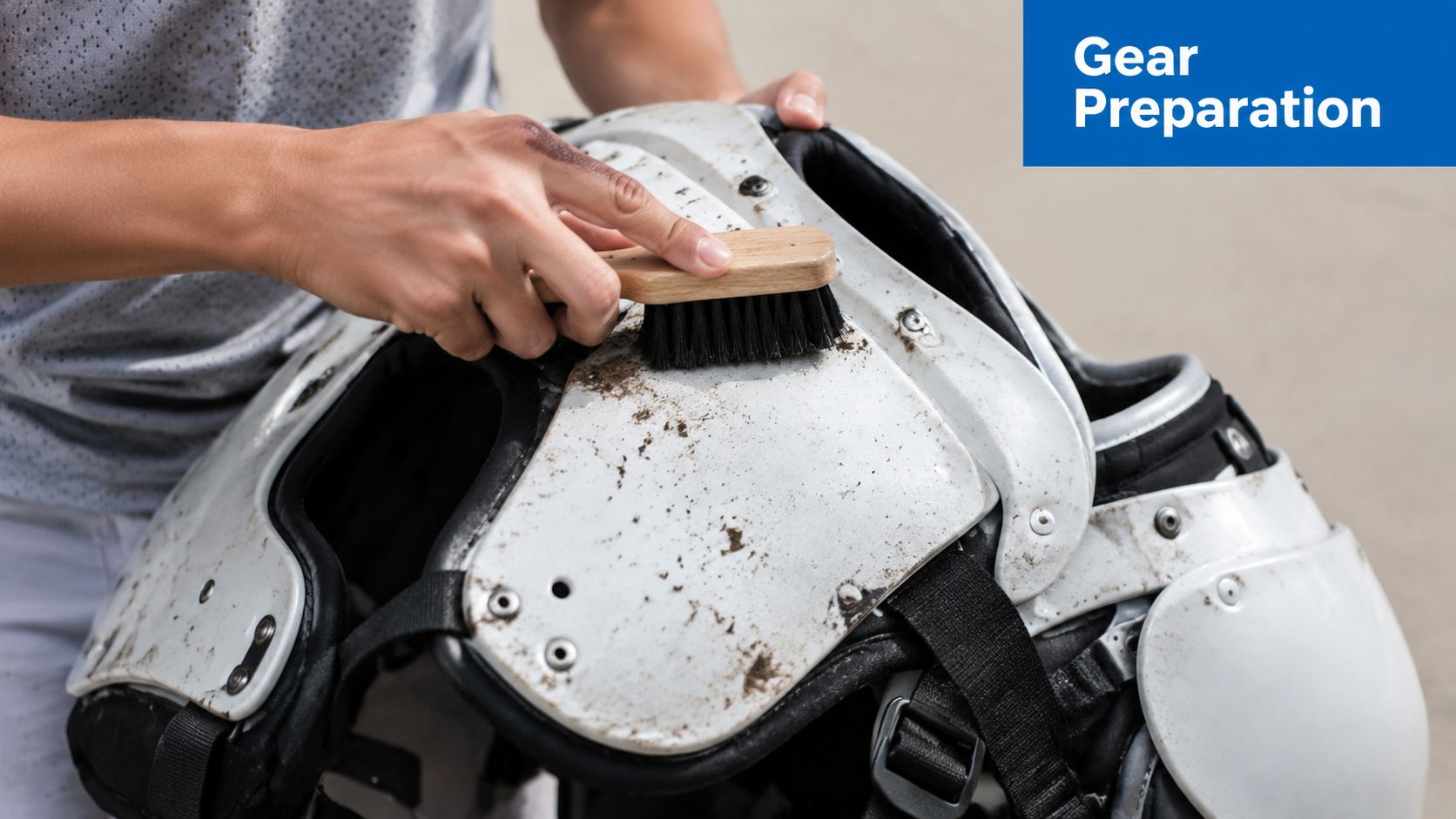
Many football pads include inner foam pieces, liners, or removable components that look sturdy enough for the washer but aren't. According to Matguard USA, internal foam pads are often hand-wash only and can disintegrate or lose shock absorption if they're machine-washed, which is why so many parents accidentally damage the sensitive parts while trying to do the right thing in a hurry. Their guidance on cleaning football gear like the pros is a helpful reminder to treat those inner pieces differently from the hard shell.
Take the pads apart first
If the gear has removable parts, remove them. Don't assume every piece should be cleaned the same way.
Use this quick checklist before washing:
- Open every strap and closure: Dirt hides where straps fold over and where buckles sit against padding.
- Remove internal pieces carefully: If something comes out, set it aside and plan to hand-wash it unless the care label clearly says otherwise.
- Shake out debris: Loose grass, rubber pellets, dried mud, and dust make wash water dirtier fast.
- Check for damage: Look for split stitching, compressed foam, loose snaps, cracked plastic, or frayed straps.
If you're also cleaning the helmet at the same time, this guide on how to clean a football helmet is worth keeping open so you don't treat helmet padding and shoulder pads as if they're identical.
Do a little spot work before the main wash
Heavy grime comes off better when you deal with it before the full clean. A soft cloth, soft brush, and mild detergent solution usually handle the messiest spots.
Focus on:
| Area | What to do |
|---|---|
| Shell edges | Wipe away sticky buildup and caked dirt |
| Strap anchors | Scrub gently where sweat collects |
| Underside padding | Blot and lift grime instead of grinding it in |
| Muddy spots | Let the dirt loosen first, then brush lightly |
Mud is easier to remove when it's loosened first. Scrubbing hard on dry grime often just pushes it deeper into seams.
This prep work doesn't take long, but it changes the result. Cleaner wash water. Less odor left behind. Less wear on the parts that matter most.
Choosing Your Cleaning Method Hand vs Machine
A lot of pad damage happens in the washer, not because the machine is always wrong, but because parents toss in the whole set still assembled. That is the mistake I see most often. The hard shell may survive. The internal pads marked hand-wash only often do not.
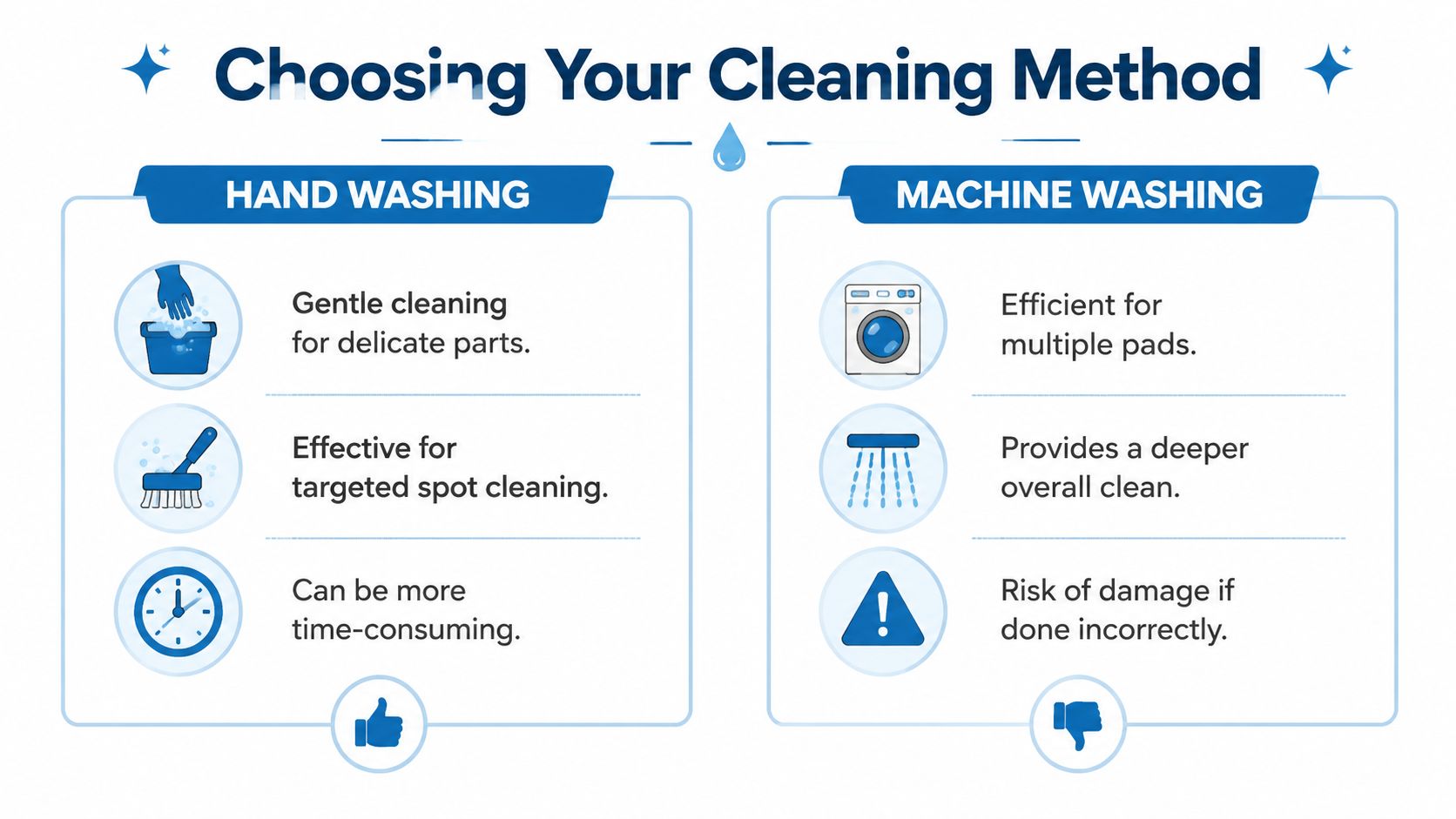
Hand washing is the safer call for interior padding
If a removable piece sits against skin, absorbs sweat, or has a hand-wash-only label, wash it by hand. That includes the softer interior pads many families assume can handle a machine because they came out of shoulder pads. Those are often the first parts to lose shape, split at the seams, or stay damp too long after a rough cycle.
A vinegar soak can help loosen odor before the actual wash. This guide on washing football pads with a vinegar soak recommends soaking in a mix of 2 parts water to 1 part white vinegar, then washing with a mild detergent.
A dependable hand-wash routine:
- Fill a sink, tub, or basin with cool or lukewarm water.
- Soak the removable pads in the vinegar solution.
- Drain and refill with clean water plus a small amount of mild detergent.
- Wipe or squeeze-clean with a soft cloth or sponge.
- Rinse until the water runs clear.
- Press out water with your hands or a towel. Do not twist or wring.
This takes longer, but it protects the foam and gives you better access to the sweat-heavy spots where odor and bacteria hang on.
Machine washing works only for label-approved pieces
Machine washing is useful for sturdier components, but only after you separate out anything delicate. If the care label is missing, faded, or unclear, treat that piece like hand-wash gear. That cautious approach saves more pads than any shortcut.
Use the washer only when all of these are true:
- The label allows machine washing: If it says hand wash only, keep it out of the drum.
- The pad is not fragile or already damaged: Loose stitching and compressed foam get worse fast in a washer.
- You removed interior inserts first: Soft internal pads should not be left inside just because they are annoying to remove.
- You wash on cold with a gentle cycle: Heat and aggressive agitation are hard on foam, glue, and straps.
- You use a small amount of HE detergent: Extra soap tends to stay trapped in padding.
A mesh laundry bag helps keep straps from wrapping around other gear. I also like to wash pads with towels, not heavy items, because the load stays more balanced and the gear gets less knocked around.
If you're sorting gear for siblings or teammates, machine-washable labels for sports gear make it much easier to keep removable parts matched to the right set after washing.
Quick comparison
| Method | Best for | Main drawback |
|---|---|---|
| Hand washing | Interior foam, hand-wash-only pieces, older pads, odor-heavy areas | Takes more time |
| Machine washing | Label-approved outer components and sturdier removable pieces | Can damage hidden interior pads if you wash everything assembled |
One more practical point. If pads have been stored damp and picked up a musty smell, treat that as a moisture problem as much as a laundry problem. The same basic lesson shows up in tackling mildew on boat seats. Soft materials hold odor when moisture stays trapped inside.
If you are deciding between the two methods, hand-wash the questionable piece and machine-wash only the parts you know are built for it.
Beyond Clean Banishing Odors and Bacteria
A clean-looking pad isn't always a clean pad. Odor tells you something is living in the material, and that's why basic washing sometimes isn't enough.
Football gear sits against sweaty skin, then gets stuffed into dark, damp places. That combination gives bacteria too much opportunity. Parents usually notice the smell first, but the bigger issue is hygiene. If the gear never gets sanitized, the problem keeps coming back even after a wash.
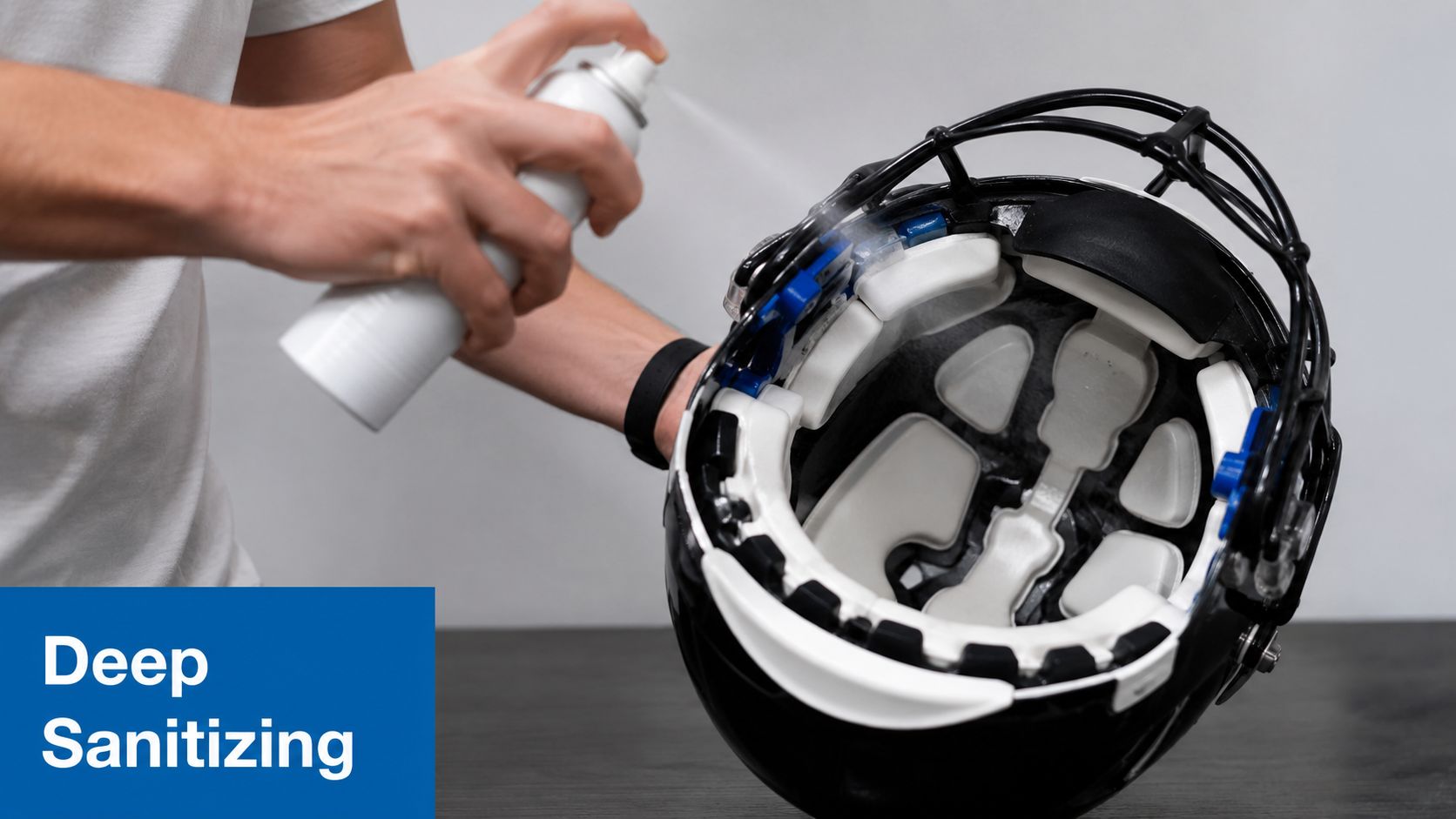
Use a disinfecting spray, not just soap
Sports hygiene guidance recommends a disinfectant spray made with 1 part rubbing alcohol, 1 part white vinegar, and 2 parts water for regular use against bacteria like MRSA and staph without degrading foam. That ratio is demonstrated in this sports gear sanitizing video.
That mix is useful for:
- Post-wash sanitizing: Spray lightly after the pads are clean.
- In-season maintenance: Use it between deeper washes when the gear needs a refresh.
- Hidden odor zones: Straps, inner seams, and foam surfaces often hold the strongest smell.
How to apply it without overdoing it
Mist the surfaces rather than soaking them. You want contact, not saturation. Too much liquid slows drying and can leave gear damp in all the wrong places.
A practical routine is simple:
- Spray the interior contact areas first: Focus where the gear touches the body.
- Hit straps and creases: Bacteria and odor tend to linger there.
- Let it sit briefly: Give the spray time to do its job.
- Air dry completely: Don't put sanitized gear straight back into a closed bag.
Cleaning removes grime. Disinfecting addresses what soap can leave behind.
If you've ever dealt with other stubborn moisture-and-odor problems around the house, the logic is similar to tackling mildew on boat seats. Different material, same lesson. Moisture plus trapped organic residue creates repeat problems unless you clean and dry thoroughly.
The Crucial Final Steps Drying and Storage
A careful wash can still go wrong at the finish. Drying is where a lot of parents accidentally undo all the good work.
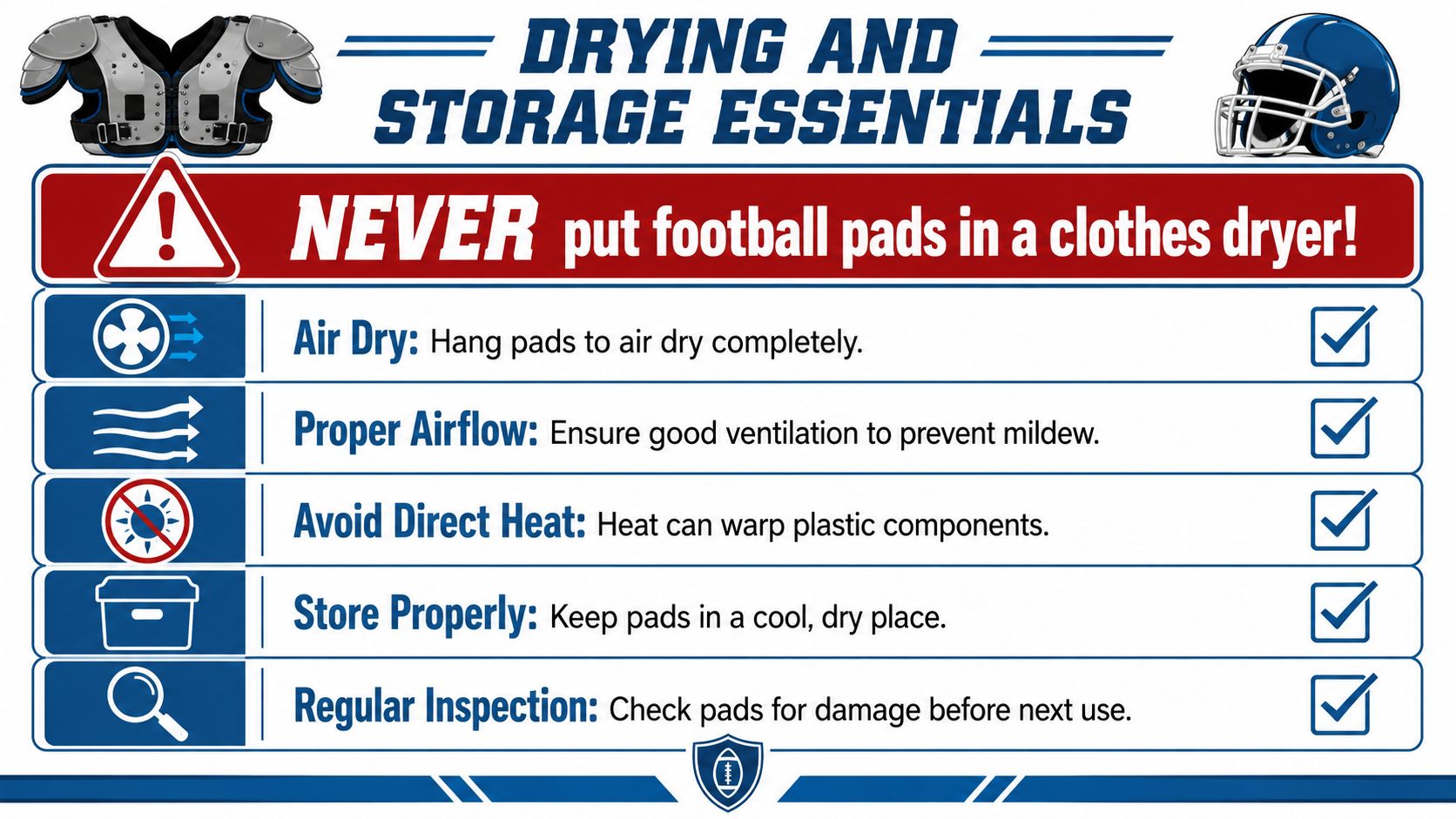
The big rule is simple. Never put football pads in a clothes dryer. Heat can warp plastic, weaken foam, and distort the shape that gives the gear its protection and fit.
What good drying actually looks like
Air drying works best when you help it along. Don't toss the pads on a pile of towels in a closed laundry room and hope for the best.
Do this instead:
- Hang or prop the gear open: Let air reach both the shell and the interior padding.
- Use a fan if needed: Moving air helps dry seams and folds faster.
- Lay removable pads flat on towels: Keep their shape while they dry.
- Check the hidden spots: Under straps and inside curves are usually the last places to dry.
Store it so the smell doesn't come back
Once the gear is fully dry, keep it in a cool, dry place with airflow. Closed plastic bins and zipped-up bags trap leftover moisture. That's how “clean” pads start smelling stale again.
A few small habits make a big difference:
- Empty the bag after practice: Let everything breathe before storing it.
- Inspect before the next use: Make sure no section is still damp.
- Keep parts together: If your child has multiple pieces of gear, labeling and organizing storage saves frustration later.
If your garage, mudroom, or laundry area always turns into a sports pileup, these ideas for sports equipment organization at home can help keep clean gear separate from the stuff that still needs attention.
Frequently Asked Football Pad Questions
How often should football pads be washed?
During the season, give football pads a light clean after each use and a more thorough wash on a regular schedule. If your child practices in the heat, sweats heavily, or shares locker room space, clean them more often, not less.
The goal is not just to cut the smell. It is to keep sweat, skin buildup, and bacteria from sitting in the padding long enough to become a bigger hygiene problem.
Can I use bleach or fabric softener?
Skip both. Bleach can break down foam, fade fabric, and irritate skin if residue is left behind. Fabric softener leaves a coating that traps odor and makes pads harder to rinse fully clean.
Use a sports-safe detergent instead. If you are trying to address bacteria concerns such as staph or MRSA, follow the product label on a disinfecting laundry sanitizer or gear-safe disinfectant and make sure it is suitable for the pad materials.
What if the smell is still there after washing?
That usually points to one of a few common misses. The inside pads may not have been cleaned well enough, the gear may need a disinfecting step instead of another round of soap, or moisture may still be hiding in seams and under straps.
One mistake I see all the time is tossing internal pads marked hand-wash only into the washer anyway. That can damage the foam and still leave odor behind because the wash cycle does not always reach the grimiest spots well. Hand washing those sections with extra attention to the contact areas is slower, but it is often what finally fixes the problem.
Should I wash the helmet the same way as the pads?
No. Helmets need their own care routine because the shell, fit system, chin strap, and interior liners all have different cleaning limits. Follow the manufacturer instructions and avoid soaking parts that are not meant to be submerged.
How do I keep gear from getting mixed up at school or practice?
Football gear gets separated fast, especially removable pads, compression shirts, gloves, and water bottles. Adding durable sports labels for football gear and kids' equipment saves time and makes it much easier to get everything back home after practice.
If your child plays on a team where gear gets piled together in the locker room, label the bag and the small items too. That simple habit prevents a lot of last-minute searching and a surprising number of accidental mix-ups.