

When you're a busy parent, "dishwasher safe" isn't just a feature—it's a lifesaver. But for a label to truly earn that title, it needs to be more than just waterproof. The best dishwasher safe labels are actually a mini feat of engineering: a tough, multi-layered system built to survive scorching heat, harsh detergents, and endless wash cycles without peeling, fading, or falling apart.
What Makes a Label Truly Durable?
That little label that comes out of the dishwasher looking as bright and perfect as the day you stuck it on? That’s no accident. It’s the result of smart design where every single component has a critical job to do. Think of it as a tiny suit of armor for your child's name, built to last for years.
It’s no surprise that the demand for these trusty labels has skyrocketed. The global market for dishwasher-safe bottle labels recently hit an incredible USD 1.09 billion, with parents in North America spending over USD 410 million alone. This just goes to show how essential these labels have become for keeping kids' gear organized at daycare, school, and camp.
The Three Pillars of Durability
At its heart, a label's strength comes down to three key layers working together perfectly. Each one is specifically chosen to fight off a different dishwasher threat, from the chemical attack of detergent pods to the intense, steamy heat.
-
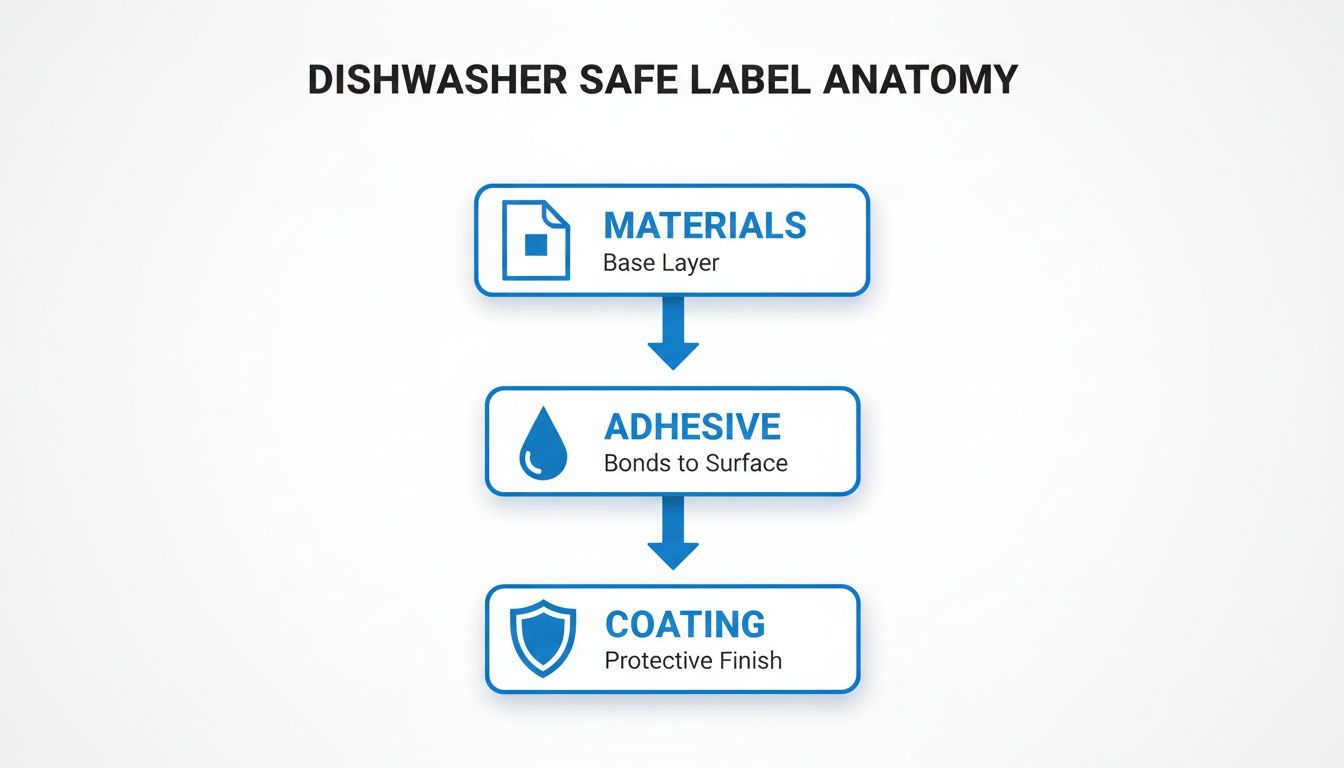
The Foundation Material: Forget paper. The base of a truly durable label is almost always a synthetic polymer, like a high-grade vinyl. This material is naturally waterproof and flexible, which means it can wrap smoothly around curved water bottles and sippy cups without tearing or wrinkling.
-
The Super-Strength Adhesive: This isn't your average sticker glue. The adhesive has to be a special formula that can keep its powerful grip through wild temperature swings and constant exposure to water. It’s the secret weapon that stops those dreaded peeling corners after just a few washes.
-
The Protective Overlaminate: This is the label's invisible shield. A clear, tough topcoat is layered over the printed name to protect it from everything the dishwasher throws at it—preventing fading from detergents, stopping scratches from other dishes, and keeping the ink from smudging in the heat.
This diagram really breaks down how these three layers—the base material, the adhesive, and the protective coating—team up to create a label that can handle the daily grind.
This layered construction is what gives you peace of mind, knowing that every part of the label is built for the job. To see these principles in action, you can explore some great examples of waterproof bottle labels.
The Science of a Label That Actually Lasts
Have you ever wondered why some labels curl up and peel off after just one wash, while others look brand new after a hundred? The difference isn’t magic; it’s a careful mix of science and smart design. A truly tough dishwasher safe label is a multi-layered system where every single part has a crucial job in surviving the chaos of a dishwasher cycle. It's less like a simple sticker and more like a tiny suit of armor built just for your child's gear.
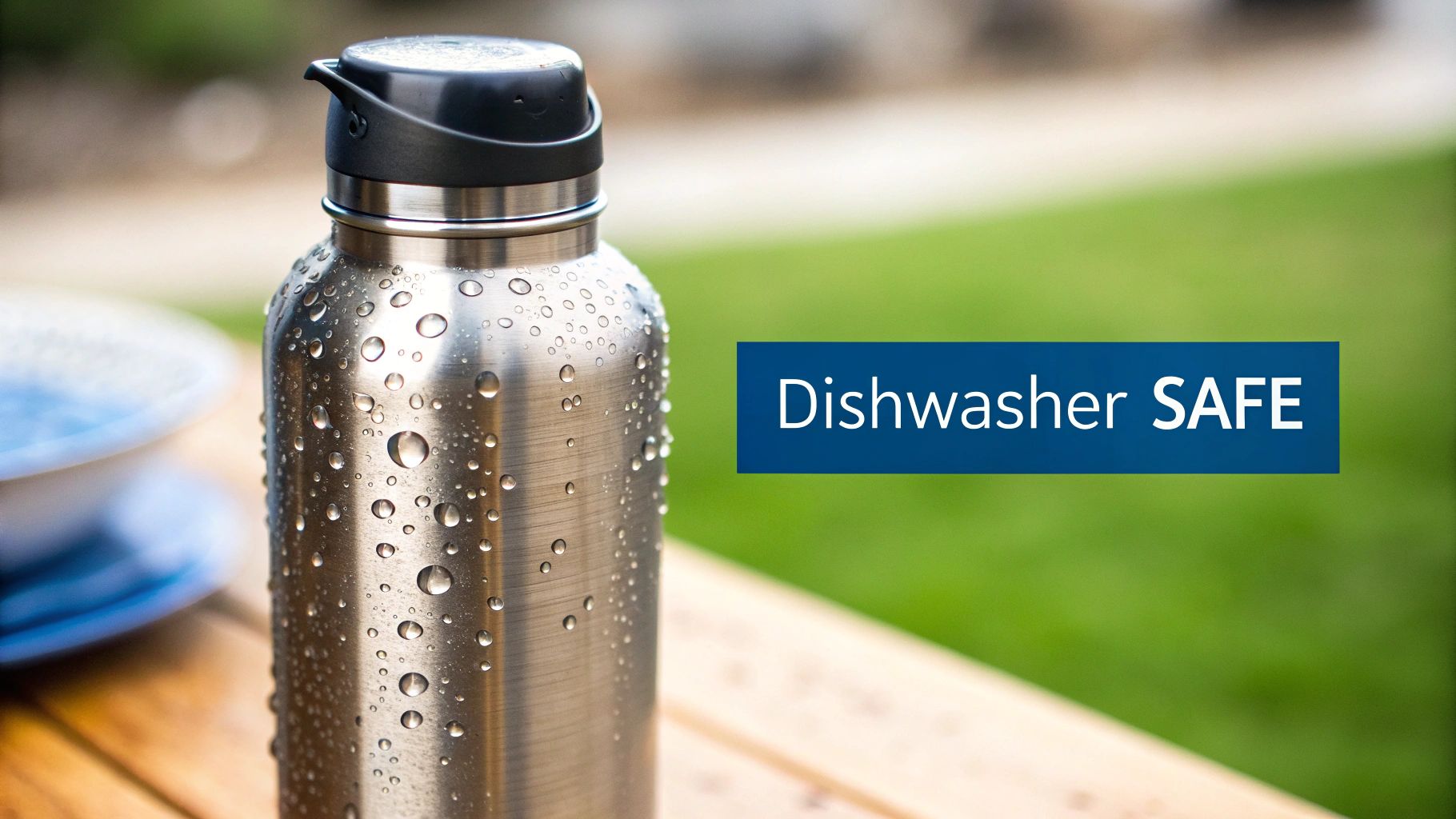
This incredible durability starts with a strong foundation. Instead of flimsy paper, premium labels use a synthetic base, usually a high-grade vinyl or polyester. These materials are naturally waterproof and tear-resistant, giving you a stable canvas that won’t fall apart when soaked or hit with the high-pressure water jets inside your dishwasher.
Next up is the adhesive, which acts as the anchor. Trust me, this isn't the craft glue you find on ordinary stickers. It’s an industrial-strength, pressure-sensitive adhesive made to create an incredibly strong bond that can handle extreme temperature swings—from the cold water in your sink to the scalding heat of a sanitizing cycle, which can hit up to 150°F. This powerful glue ensures the label stays put, even on tricky curved or textured surfaces.
The Invisible Shield of Protection
The final piece of this durable puzzle is the protective overlaminate. Think of this as an invisible shield layered right over the printed name. This clear, tough coating is what stands between your child’s name and the harsh, abrasive detergents that can make ink fade or smudge. It also provides that all-important scratch resistance, protecting the label from clanking against other dishes.
This three-part construction is the real secret to a label's long life.
- Foundation: A waterproof vinyl or polyester base that repels moisture.
- Adhesive: A powerful, heat-resistant glue that stops peeling in its tracks.
- Overlaminate: A clear topcoat that guards against fading and scratches.
By combining these elements, a quality label becomes a complete, sealed unit. Each layer supports the others, creating a finished product that stays bright, easy to read, and firmly attached through years of use. This thoughtful design is what transforms a simple name tag into a reliable tool for organization.
It’s a perfect example of how even the smallest items, like labels, can be expertly designed for a specific, demanding job. For parents looking for durable solutions, you can explore more about how specific products like the Orbit Label 2.0 are specially designed to meet these tough challenges. This scientific approach ensures your investment in organization truly lasts.
How Durability Is Tested Before It Reaches You
When a label says it’s “dishwasher safe,” that should be a promise, not just a hopeful guess. For brands that parents trust, this promise is backed by some serious behind-the-scenes work—a series of intense, controlled experiments designed to simulate years of real-world abuse in a fraction of the time. This rigorous testing is what separates a flimsy sticker from a truly reliable dishwasher safe label.
The whole process starts by pushing the labels to their absolute limits, way beyond what they’d ever face in your home dishwasher. Testers create the toughest conditions possible to find any weak spots in the materials, adhesive, or protective coating before they ever make it to your child’s gear. It’s a scientific approach to making sure they’re built to last.
Simulating Real-World Wear and Tear
To guarantee a label can handle the daily grind of a busy family, it has to pass several key stress tests. Each one is designed to mimic a specific threat lurking inside your dishwasher, from scorching hot water to harsh chemical detergents.
-
Temperature Stress Tests: First up, the heat. Labels are put through cycle after cycle of high temperatures, often cranked up to 150°F, to replicate the sanitizing settings on modern dishwashers. This confirms the adhesive won’t turn gooey and the label itself won’t warp, melt, or shrink.
-
Chemical Resistance Trials: Next, they face the soap. The labels are soaked and scrubbed in solutions made with the active ingredients found in popular dishwasher detergents. This test is all about making sure the protective overlaminate does its job, preventing the ink from fading, smudging, or bleeding. Your kid’s name needs to stay perfectly clear.
-
Cycle Endurance Tests: This is the marathon. To see how they hold up over the long haul, labels are run through hundreds of wash cycles back-to-back. This accelerated aging process mimics years of use, proving that the edges won't start peeling, the surface won't get scratched up, and that adhesive bond will stay just as strong as it was on day one.
Think of it like a boot camp for labels. Only the ones that come out of these demanding trials without any peeling, fading, or damage get to earn the “dishwasher safe” title.
This behind-the-scenes quality control is what gives parents like us real peace of mind. When you pick a label that’s been put through its paces, you’re not just buying a sticker. You’re investing in a solution that was truly engineered for the chaos of daycare and family life, ensuring it will last for years to come.
Putting Labels to the Test on Everyday Kids' Gear
Understanding the science behind a durable label is one thing, but the real question for parents is much simpler: will it actually stay on a sippy cup after a week of daycare? The true test is how these labels perform in the real world, sticking to the wild variety of surfaces that make up a child’s daily gear.
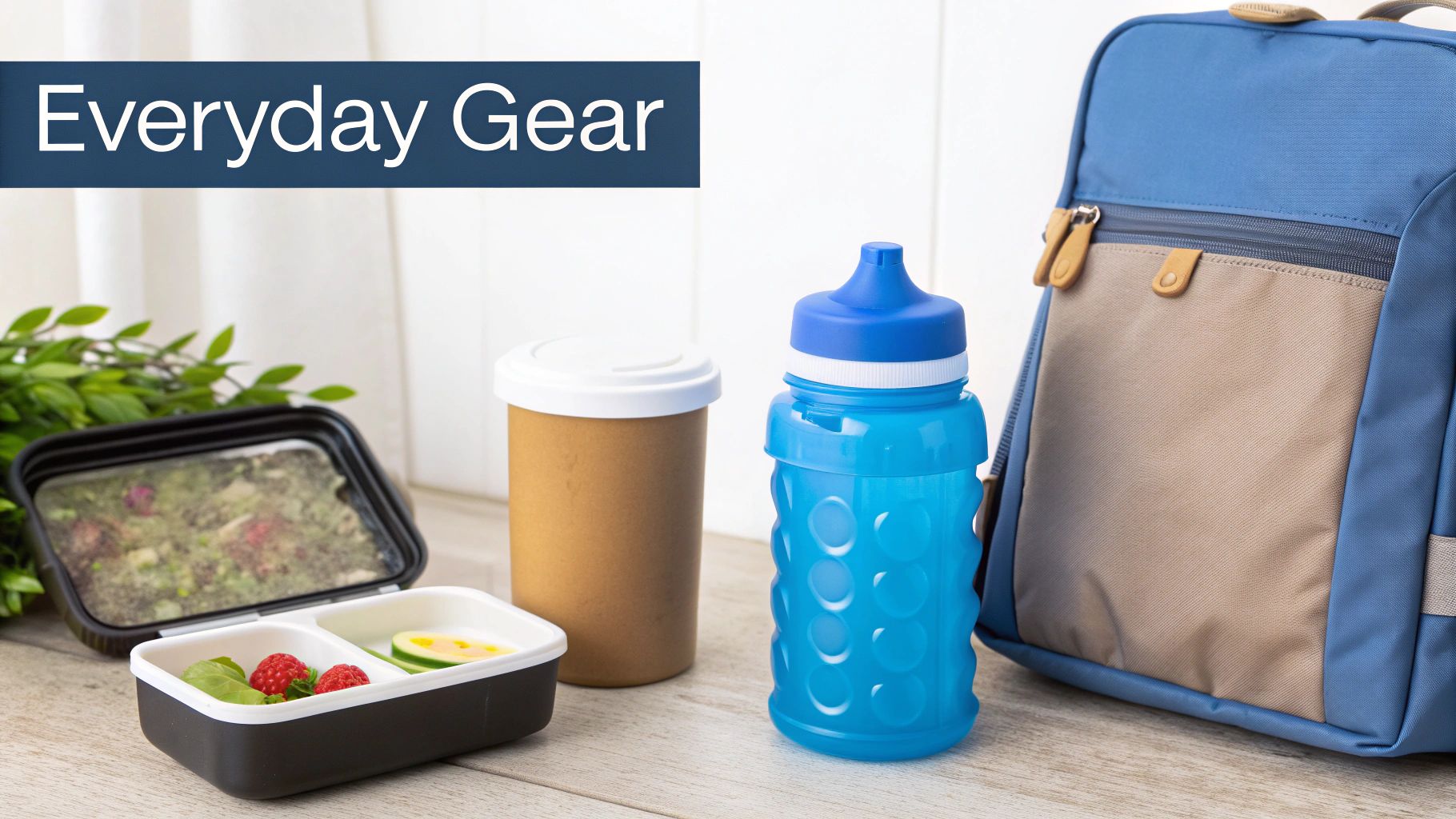
The challenges are everywhere. A water bottle has that sleek, curved surface that can make lesser labels lift at the edges. A plastic lunch container might have a slightly textured lid, making it harder for adhesive to get a perfect grip. Then you have flexible items, like silicone bottle bands, which require a label that can bend and stretch without cracking or peeling away.
This is where a high-quality dishwasher-safe label really proves its worth. Its industrial-strength adhesive is made to bond securely to all these different materials, creating a seamless seal that keeps water and soap from sneaking underneath. This adaptability is the secret to solving the daily puzzle of lost and misplaced items for good.
From Water Bottles to Lunch Boxes
Let’s walk through a few common scenarios. That stainless steel water bottle your toddler adores is a perfect candidate for a durable label. The smooth surface allows for maximum adhesive contact, creating an incredibly strong bond that can handle daily washing and sanitizing cycles without breaking a sweat.
Plastic lunch boxes and bento containers, with their textured surfaces, can be a bit trickier. But a premium label’s material is both strong and pliable, so it conforms to those slight bumps and dips. When you apply firm pressure, the adhesive fills in any microscopic gaps, locking it in place. That hold won't fail, even when faced with greasy food residue and a high-heat wash.
The real test of a label isn't just surviving the wash; it's thriving on the diverse and demanding surfaces of everyday kids' items. From the constant flexing of a silicone bottle sleeve to the rigid curve of a sippy cup, a truly reliable label is engineered to stick with them through it all.
Built for the Realities of Modern Family Life
The performance of these labels is directly tied to a growing need in households. The waterproof label market, valued at around USD 2.5 billion, is seeing huge demand for dishwasher-safe options, especially for kids' stuff. It makes sense when you think about it.
With over 70% of U.S. households owning dishwashers and running them up to six times a week, any label has to be tough enough to endure constant exposure to 150°F heat and harsh detergents. You can dig into the research on the waterproof label market to see just how big this is. This resilience is what gives parents peace of mind, knowing the label they applied last month will still be there next year.
Simple Steps for a Perfect Application Every Time
Even the best dishwasher safe labels need a little help from you to create a bond that really lasts. The secret to stopping those annoying peeling edges and making sure your labels survive hundreds of trips through the dishwasher isn't complicated—it just comes down to a few simple, but super important, application steps.
Taking a minute to do it right the first time is the key to a perfect, permanent hold.
Think of it like painting a wall. You wouldn’t just slap a coat of paint on a dirty, dusty surface and expect it to look good, right? Of course not. You’d clean and prep it first. The same idea applies here. Proper application gives the adhesive its full sticking power, creating a seamless seal that locks out water, soap, and heat for a flawless, long-lasting finish.
Your Foolproof Application Checklist
Follow these quick steps to make sure your labels stay put on water bottles, lunch containers, sippy cups, and everything in between. A few seconds of prep work now will save you from the hassle of reapplying labels down the road. This little routine is your ticket to worry-free organization.
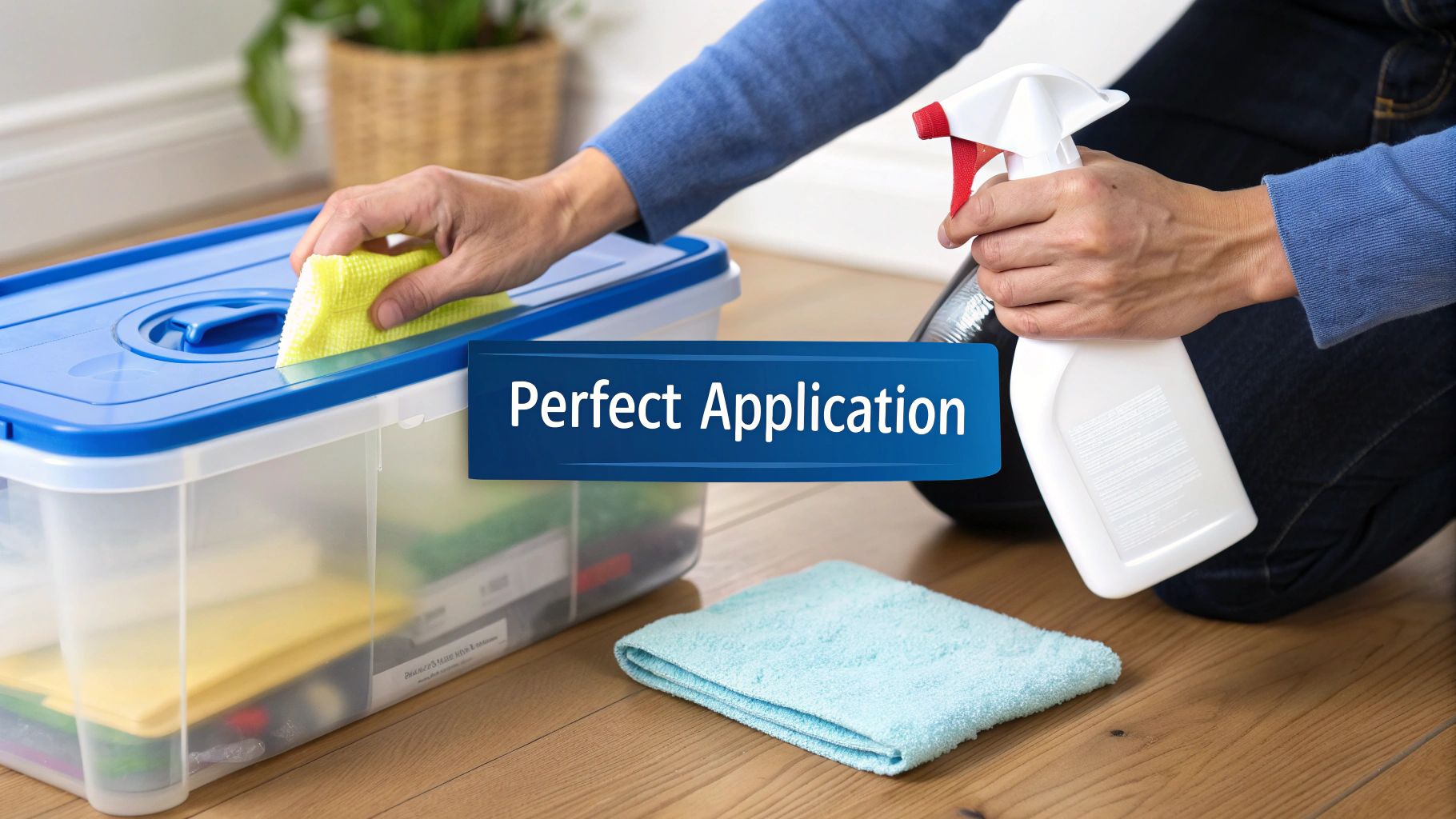
- Start with a Clean Slate: The surface has to be completely clean and dry. I like to use a little rubbing alcohol on a cotton ball to wipe away any fingerprints, oils, or soap residue. Then, just let it air dry completely.
- Press with Purpose: Place the label on the item and press down firmly across the whole thing. I always pay extra attention to the edges—that’s where peeling usually starts if it’s going to happen.
- Smooth It Out: Use your thumb or the edge of a credit card to smooth the label from the center out to the edges. This little trick pushes out any tiny air bubbles that could trap moisture later on.
But here’s the most important step of all: Patience. Once your label is on, let it sit for a full 24 hours before it takes its first trip through the dishwasher. This is the critical curing time that allows the adhesive to fully bond with the surface, creating that powerful, waterproof seal we’re looking for.
When you follow this process, you’re not just sticking on a label; you’re activating its long-term adhesive technology. It’s a method that works great for all kinds of gear, from smooth plastic bottles to those slightly textured lunch boxes. For more specific tips on different materials, check out our guide on how to label baby clothes for daycare, which has some great info on various fabric types.
What to Look For When Choosing Your Labels
Walking down the label aisle (or scrolling online) can feel a bit overwhelming. With so many options, how do you pick the right ones? While durability is a great place to start, things like safety and kid-friendly features are just as important, especially for stuff your child uses every single day.
Think of this as your practical guide to making a smart, safe choice that you won't regret after the first wash cycle.
The absolute first thing to check is material safety. These labels will be stuck to water bottles, lunch containers, and sippy cups—all things that come in close contact with your child. You want to be sure they’re made from non-toxic materials.
Always, always look for labels that are clearly marked as BPA-free, lead-free, and phthalate-free. It’s a simple check that gives you peace of mind, knowing nothing harmful is leaching into your kid’s food or drink.
Customization and Kid-Friendly Design
Once you've got safety covered, think about the design. For little ones who can't read yet, a simple icon—like a star, a truck, or their favorite animal—is a total game-changer. It’s a quick visual cue that helps them spot their own cup or lunchbox in a chaotic daycare room, which is a great little boost for their independence.
Look for brands that offer:
- A wide selection of icons: This lets you pick a unique symbol your child will actually love and remember.
- Clear, legible fonts: The name should be super easy to read at a glance, both for your child and for busy teachers and caregivers.
- Vibrant, fade-resistant colors: Bright colors help items stand out, but the ink needs to be tough enough to not fade away after a few trips through the dishwasher.
The best labels are designed with a child’s world in mind. A fun, personalized label is more than just a name tag; it’s a small source of pride and ownership for your little one, making them more likely to keep track of their gear.
Value and Versatility in Label Packs
Finally, think about the value you’re getting. Instead of buying different types of labels for every single item, look for combo packs. These bundles are a super cost-effective way to get a variety of shapes and sizes designed for everything from bottles and containers to clothing tags and shoes. A good combo pack is an all-in-one solution for keeping your child's entire world organized.
It’s also smart to think about safety standards beyond just the label itself. For example, if you're labeling clothes, it’s helpful to know about things like the Oeko Tex Standard 100 label, which certifies that the fabric is free from harmful substances. It’s all part of ensuring everything your child uses is as safe as it can be.
Still Have Questions? Let's Clear Things Up
Even after getting the rundown on what makes a label tough, you probably still have a few questions floating around. It's totally normal! To help you feel 100% confident, I’ve pulled together the most common questions I hear from other parents and caregivers about dishwasher safe labels, with clear, no-fluff answers.
Are Dishwasher Safe Labels Also Microwave Safe?
This is a big one! The short answer is: often, yes, but you absolutely have to check what the brand says. Many high-quality labels made from materials like premium vinyl are engineered to handle the heat of a microwave without melting, peeling, or causing trouble. Always look for labels that are specifically called out as "microwave safe," especially for anything you'll be warming up for your little one.
Having a label that can do both is a huge win for busy parents, but its safety and performance really do come down to the specific materials the company uses.
How Long Will the Adhesive Actually Last?
With a good application—meaning you stick it on a clean, dry, smooth surface—the adhesive on a quality dishwasher safe label is meant to last for years. In most cases, it’ll outlive the item it's stuck to!
The real secret is giving that adhesive a little time to set. Let it cure for about 24 hours before it takes its first trip through the dishwasher or microwave. A well-made label should be able to handle hundreds of wash cycles without its grip weakening one bit.
If you ever see a corner start to peel, it's almost always because the surface wasn't perfectly clean or dry when the label was first applied. That initial bond is everything for long-term stickiness.
Are the Label Materials Safe for Kids?
Absolutely, as long as you’re buying from a reputable company. Brands that cater to families make it their top priority to use non-toxic, child-safe materials. Look for labels that are explicitly marked as BPA-free, lead-free, and phthalate-free. For things that will touch food, like the inside of a lunch box or a water bottle, I always recommend choosing labels that are certified as food-safe.
This certification is your peace of mind, confirming they’ve been tested to make sure no harmful stuff leaches out. When you're looking for any durable item for your kitchen, from labels to cookware, checking out product tests like those for Dishwasher Safe Nonstick Pans can give you great insight into what really holds up safely, wash after wash.
Can I Use These Labels in a Bottle Sterilizer?
Great question! This really depends on the brand and the kind of sterilizer you have. The intense, high-temperature steam in many sanitizers is a much tougher environment than a regular dishwasher cycle.
While some super-durable labels might make it through just fine, it’s not always a guarantee. Your best bet is to check the manufacturer’s website or product info for any specific notes on sterilizer use. If they don't mention it, I’d suggest testing just one label first to see how it holds up before you label a whole batch of bottles.
Ready to end the lost-and-found scramble for good? Explore the full collection of durable, kid-friendly, and customizable labels from InchBug and find the perfect solution for your family’s needs. Shop now at InchBug.com.