

Three toddlers arrive at daycare gripping nearly identical matte-blue steel water bottles. Each bottle has the same shape, the same lid, and no visible name. By pickup, one has gone home with the wrong child, another is sitting in the lost-and-found bin, and a staff member has added masking tape that's already peeling away. Parents start texting the group chat while teachers sort lunchboxes, jackets, and spare clothes.
Dinosaur name labels solve more than the spelling problem. A child who can't read yet can point to “the green T-Rex one,” and a teacher can spot the same character quickly in a crowded cubby. The motif gives toddlers, siblings, grandparents, and substitute caregivers a visual shortcut while the printed name gives adults the precise identification they need. The practical question is which label format will survive the item, the washing routine, and the way your child handles it.
The Three Identical Water Bottles Problem
The bottle mix-up usually starts innocently. A parent wipes down the outside, packs the bottle, and assumes the child's familiar belongings will be obvious at daycare. They aren't. In a room full of similar bottles, a plain initial or tiny name printed near the base can be difficult to see during the morning rush, especially when teachers are also helping children remove coats and settle into activities.
The result is a chain of small problems. A bottle gets swapped, a lunchbox stays behind, or a staff member creates a temporary label with tape that won't last through handwashing or pickup. Parents then spend time searching, replacing, and explaining. Daycare workers spend time identifying property that should have been easy to recognize.
Why the dinosaur matters
A dinosaur graphic creates a visual marker before a child can decode letters. A toddler may not read a full name, but they can recognize a bright triceratops, a blue long-necked dinosaur, or a green T-Rex. That recognition can help the child choose the right bottle independently, while the name supports staff members who need confirmation.
The same cue helps adults who don't know the family well. A grandparent collecting a child, a substitute teacher covering a classroom, or an older sibling helping with bags can identify “the dinosaur bottle” faster than they can inspect every item for a small printed name.
Practical rule: Use the dinosaur as the fast visual cue and the child's name as the verification step.
Personalization may also do more than make belongings look appealing. Independent research on children's drink choices found that naming a drink increased healthy choices to 25.6% compared with 16.9% in a control group (the child-personalization research). That result doesn't prove a dinosaur label will prevent every lost bottle, but it supports a useful design principle: a personal, recognizable cue can influence engagement, not just appearance.
What Dinosaur Name Labels Actually Are
Dinosaur name labels are name-bearing labels with a dinosaur design, made for a specific child and a specific type of gear. The important distinction is personalization. A decorative dinosaur sticker bought in a generic sheet may look fun, but it doesn't identify the owner unless the child's name is added separately.
A true personalized label prints the child's name beside or within the dinosaur artwork. That name should remain readable after the label is placed on the item, not disappear into a busy background or decorative script.
Four formats with different jobs
Printed vinyl stickers have a flat adhesive surface. They work well on lunchbox lids, smooth bottles, storage containers, and bag panels, provided the surface is clean and the label is pressed down properly.
Wrap-around silicone bottle bands sit around the bottle rather than relying on a flat adhesive patch. They're useful when the bottle goes through regular washing or when its curved, textured surface makes stickers difficult to apply.
Hang tags clip to zippers, handles, or backpack loops. A TagPal-style tag remains visible from the outside, which makes it practical for bags that are stacked or stored in a shared entry area.
Iron-on and stick-on clothing labels identify shirts, trousers, jackets, uniforms, and other washable items. Iron-ons bond to suitable fabric with heat, while stick-on versions can suit clothing that shouldn't be ironed.
Color and character choices are functional too. A green T-Rex, blue Brontosaurus, or mixed dinosaur pack gives children a visual identity. Mixed-character packs can be especially useful for siblings who share supplies but need different markers.
For a useful primer on applying adhesive labels correctly, see this beginner's guide to adhesive labels for kids.
Matching Labels to Bottles, Lunchboxes, Clothing, and Shoes
The right format depends less on the dinosaur artwork than on the item's surface and routine. A bottle faces water, handling, and often a dishwasher. A jacket faces fabric movement and laundering. A backpack needs a visible identifier that can be read without opening it.
Choose by item, not by design
For bottles, a silicone wrap band is usually the most forgiving choice because it stays readable from the side and doesn't depend on a small adhesive edge remaining flat around a curve. A vinyl sticker can work on a smooth, flat bottle section, but textured powder coating, seams, and repeated friction can shorten its useful life.
Lunchboxes offer a simpler surface. Put a vinyl label on the flat front panel or a lid corner where it can be seen when lunchboxes are stacked. Band-style labels tend to be awkward on rigid lunchboxes because there's no suitable continuous circumference.
Clothing needs a label that moves with the fabric. Iron-on labels suit care-tag areas on shirts, trousers, and jackets, while stick-on clothing labels are useful for items that shouldn't receive direct heat. Shoes need their own approach. Use a shoe-specific sticker or clip tag on the tongue or strap, and mark both shoes because one shoe frequently separates from its pair.
Backpacks and daycare bags benefit from hang tags clipped to a zipper or handle. The tag stays visible when the bag is placed in a cubby, and staff don't need to search inside for a label.
| Item | Best Label Format | Placement Tip |
|---|---|---|
| Water bottle | Silicone band or flat vinyl sticker | Place the name where it's visible without removing the lid |
| Lunchbox | Vinyl sticker | Use the flat front panel or lid corner |
| Clothing | Iron-on or stick-on clothing label | Apply near the care-tag area |
| Shoes | Shoe sticker or clip tag | Mark the tongue or strap on both shoes |
| Backpack or daycare bag | Hang tag | Clip it to a zipper or outer handle |
A small, consistent set is easier for staff to manage than a collection of unrelated labels. Guidance on building that approach is available in this daycare labeling guide. One bottle label, one lunchbox label, and a spare clothing label can create a recognizable pattern across the child's daily gear.
Materials and Durability Compared
Parents often compare dinosaur designs first and materials second. Daycare routines work better in the opposite order. The material has to match the stress the item receives, whether that means a dishwasher, washing machine, microwave, sunscreen, freezer, or repeated handling by small children.
Vinyl stickers are practical for smooth, hard surfaces. They're a good fit for lunchbox lids, storage containers, and bag panels that get wiped rather than submerged. Their weak points are textured surfaces, exposed corners, abrasive cleaning, and prolonged sunlight, which can fade ink or weaken adhesion.
Silicone bands avoid the exposed adhesive-edge problem on bottles. They're particularly useful for children whose bottles are washed frequently or handled roughly. Check the manufacturer's care and food-contact guidance rather than assuming every silicone band has the same temperature rating.
Polyester clothing labels are designed for fabric and laundering. They suit uniforms, everyday clothing, and jackets that go through regular washing. Application quality matters. A poorly bonded iron-on can lift even when the label material itself is durable.
Paper stickers are the short-term option. They can identify shared classroom supplies, temporary items, or materials that won't be washed. They're a poor choice for a bottle or lunchbox that sees water every day.
| Material | Dishwasher | Microwave | Washing Machine | Best For |
|---|---|---|---|---|
| Vinyl | Depends on product rating | Depends on product rating | Not usually a clothing solution | Lunchboxes, smooth containers, bags |
| Silicone | Choose a dishwasher-rated product | Only if specifically rated | Not intended for clothing | Bottles and reusable drinkware |
| Polyester | Not intended for dishes | Not intended for dishes | Choose a clothing-rated product | Shirts, jackets, uniforms |
| Paper | Short-term only | Not suitable | Not suitable | Shared classroom supplies |
A useful durability check is simple: inspect the label after real use. Peeling corners after several washes, fading that makes the name hard to read, or adhesive failure on a textured bottle means the format is wrong for that item. More detail on evaluating label performance appears in this label durability testing guide.
Don't pay for heavy-duty construction on a dry storage bin that rarely moves. At the same time, don't rely on disposable paper for gear that goes through daily cleaning.
Personalization Options and Safety Basics
The name is only one personalization decision. The label also needs a font, color scheme, icon, and optional alert information that work together at the distance a teacher or child will see them.
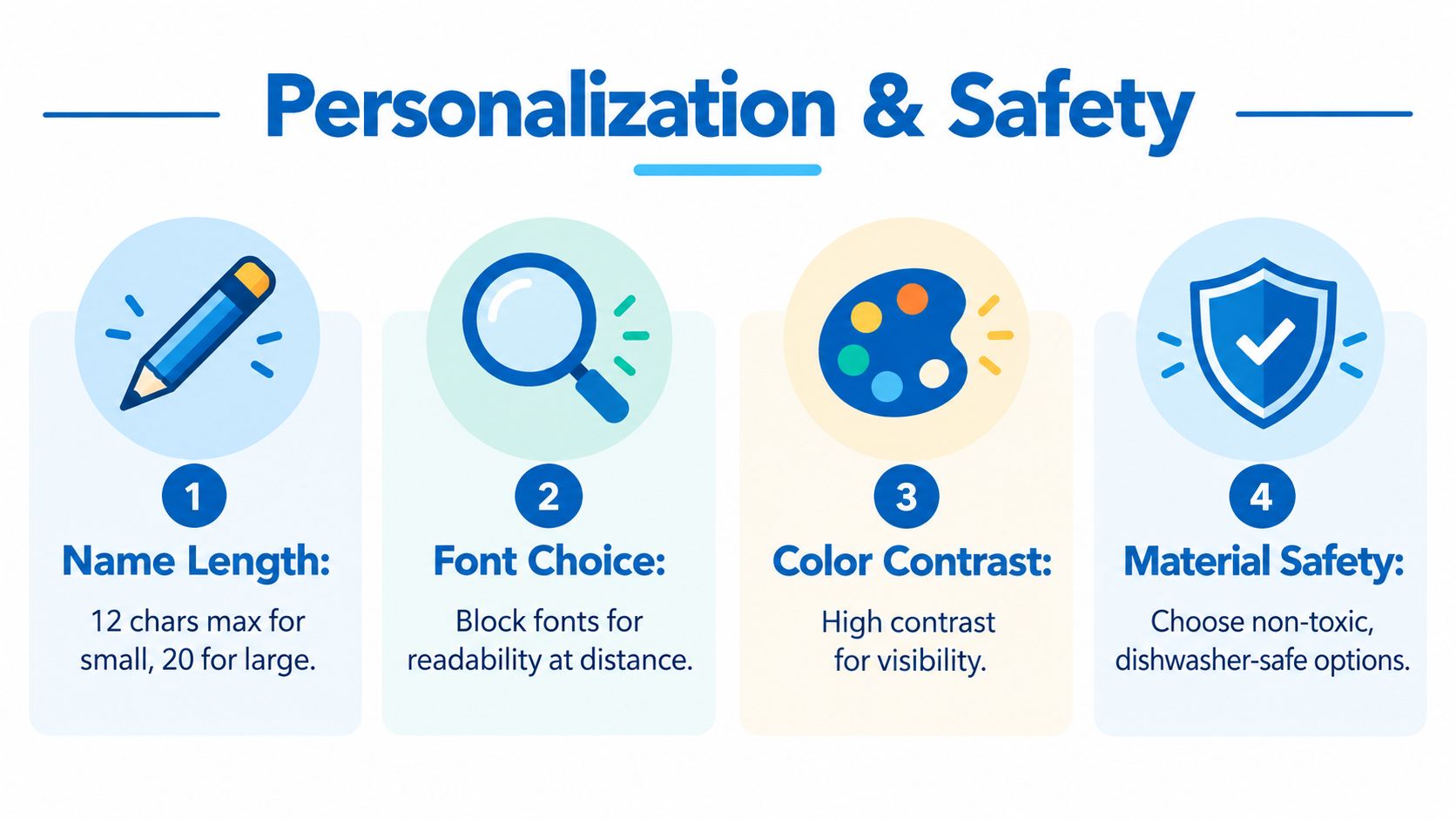
Start with the name length. Short names fit comfortably on small shoe stickers and narrow bottle surfaces. Longer names may need a larger label or a less crowded layout. Block fonts generally outperform elaborate scripts for cubby checks because the letters remain distinct when the label is viewed quickly or from across a room.
Color contrast matters just as much. A dark name on a pale background, or a light name on a dark background, is easier to scan than a name printed over a busy dinosaur pattern. Choose one strong character and keep the text visually separate from the artwork.
A readable label beats a more elaborate label when staff are identifying belongings under time pressure.
Medical and dietary information deserves careful handling. An allergy alert, EpiPen note, or nut-free indicator can be useful when the daycare accepts and uses that format, but parents should confirm the center's policy before adding sensitive information to an item that travels publicly.
For toddler gear, look for clear material claims such as BPA-free and phthalate-free on silicone products. For adhesives, review the manufacturer's safety documentation and whether the label is intended for the relevant surface. Any label used on or near food-contact items should have clear care instructions and, at minimum, a top-rack dishwasher-safe rating when it will be washed with the container.
Application is a supervision issue too. A product page for dinosaur labels advises that an adult should apply the labels or supervise the application (dinosaur label product guidance). That's sensible for toddlers, who may pull at loose edges or put small detached pieces in their mouths.
Sizing and Placement on Common Items
Placement determines whether a dinosaur label stays visible or gets rubbed, caught, or covered. A label that's technically durable can still fail if it sits across a seam, zipper path, bottle threading, or shoe sole.
Five reliable placement choices
Bottles: Put a silicone band around the lower third of the bottle, below the drinking spout and away from the lid threading. On a flat sticker, choose the smoothest broad section and avoid ridges.
Lunchboxes: Use the flat front panel or lid area so the name remains visible when lunchboxes are stacked. If the box has a side handle, a smaller secondary label can help during pickup, but don't crowd the hinge or latch.
Clothing: Place an iron-on label near the care-tag area, inside the neckline or waistband. Keep it clear of seams that flex against the child's skin. A tag-style label on an outer collar can help teachers identify a jacket quickly, but it shouldn't scratch or catch.
Shoes: Use a small adhesive label on the tongue or strap, never the sole. Mark both shoes, and shorten the name if necessary. “Sam” may fit a shoe tongue comfortably while a longer full name may need a different location.
Backpacks: A larger vinyl sticker belongs on a smooth front pocket flap or another visible panel. Leave space around zippers and seams so the label doesn't catch as the bag opens.
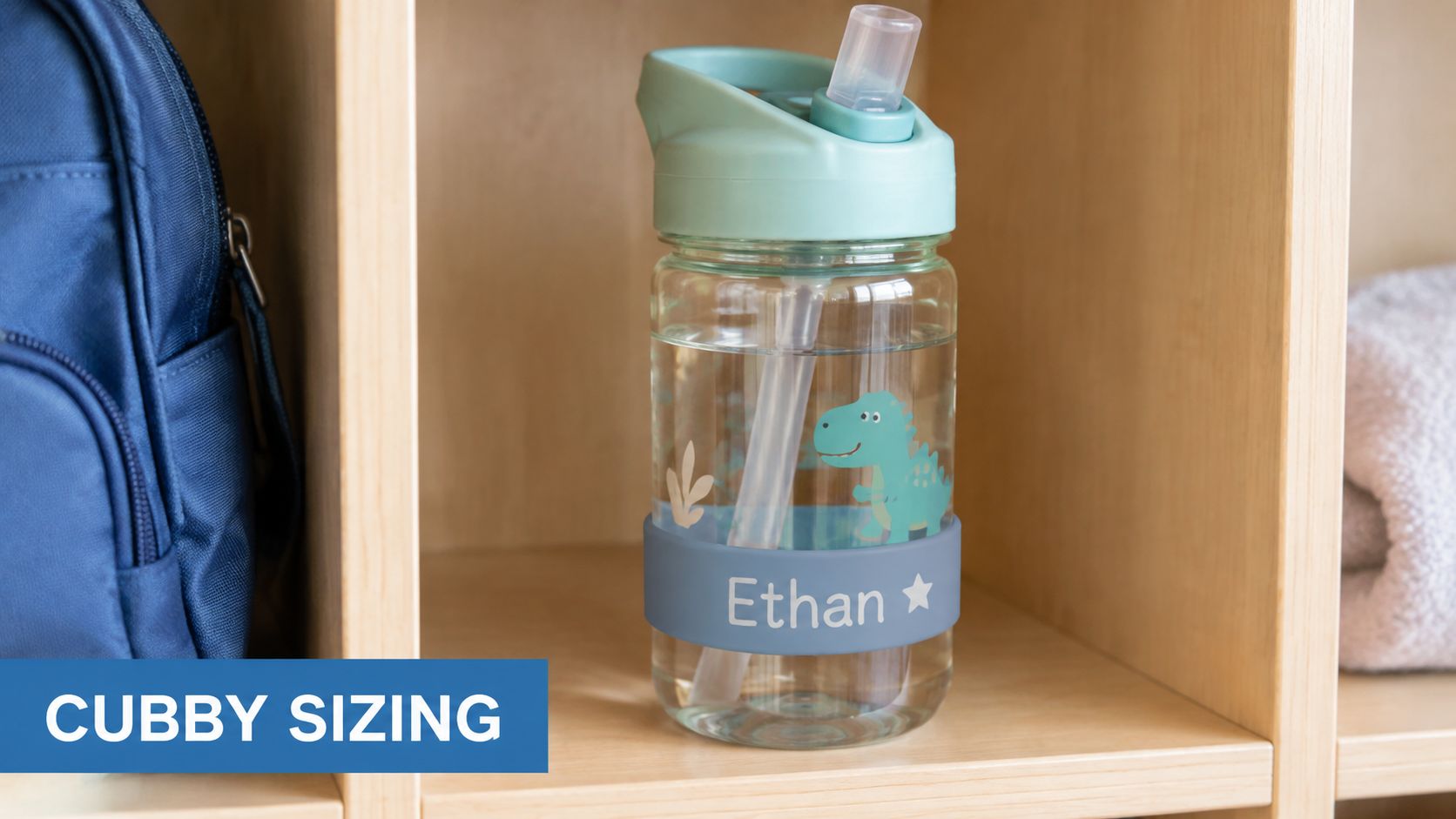
Before ordering, measure the actual surface rather than relying only on the product photo. This custom label size guide can help you compare the available space with the child's name length and the label's shape.
Care Instructions and When to Replace
Label care should follow the material, not the item's general cleaning routine. A dishwasher-safe bottle doesn't automatically make every sticker or band on it dishwasher-safe, and a washable jacket can still damage a clothing label if the application instructions weren't followed.
Silicone bottle bands can go on the top rack when the product specifically carries that rating. Vinyl lunchbox labels are better wiped with a damp cloth, and abrasive sponges can scratch the print or lift the edges. Iron-on clothing labels need firm, even heat during application. Follow the product's instructions for pressing time and wash temperature, and avoid treating a paper name tag as a washable solution.
| Label Type | Care Method | Max Temperature | Replace When |
|---|---|---|---|
| Silicone bottle band | Top-rack dishwasher when rated | Follow product rating | Silicone cracks or the print becomes unreadable |
| Vinyl sticker | Wipe with a damp cloth | Follow product rating | Edges peel or the name fades |
| Iron-on clothing label | Wash according to clothing and label instructions | Follow product rating | The bond lifts or fabric pulls away |
| Paper sticker | Single-use, dry handling | Not suitable for heat | It gets wet, torn, or detached |
Replace a label before it becomes a lost-item problem. Warning signs include peeling edges, faded print that can't be read from a short distance, cracked silicone, or a label that survives washing but no longer adheres. A quick inspection during laundry or bottle washing is easier than rebuilding a child's daycare kit after several items disappear.
The label care instructions should take priority over general rules, because products made from the same broad material can still have different adhesives, coatings, and temperature limits.
A Simple Buying Checklist for Parents and Daycare
A dinosaur label order works best as a small identification system, not a single attractive sticker. Start with the items that travel every day, then add the pieces most likely to be misplaced.
Check these before you buy
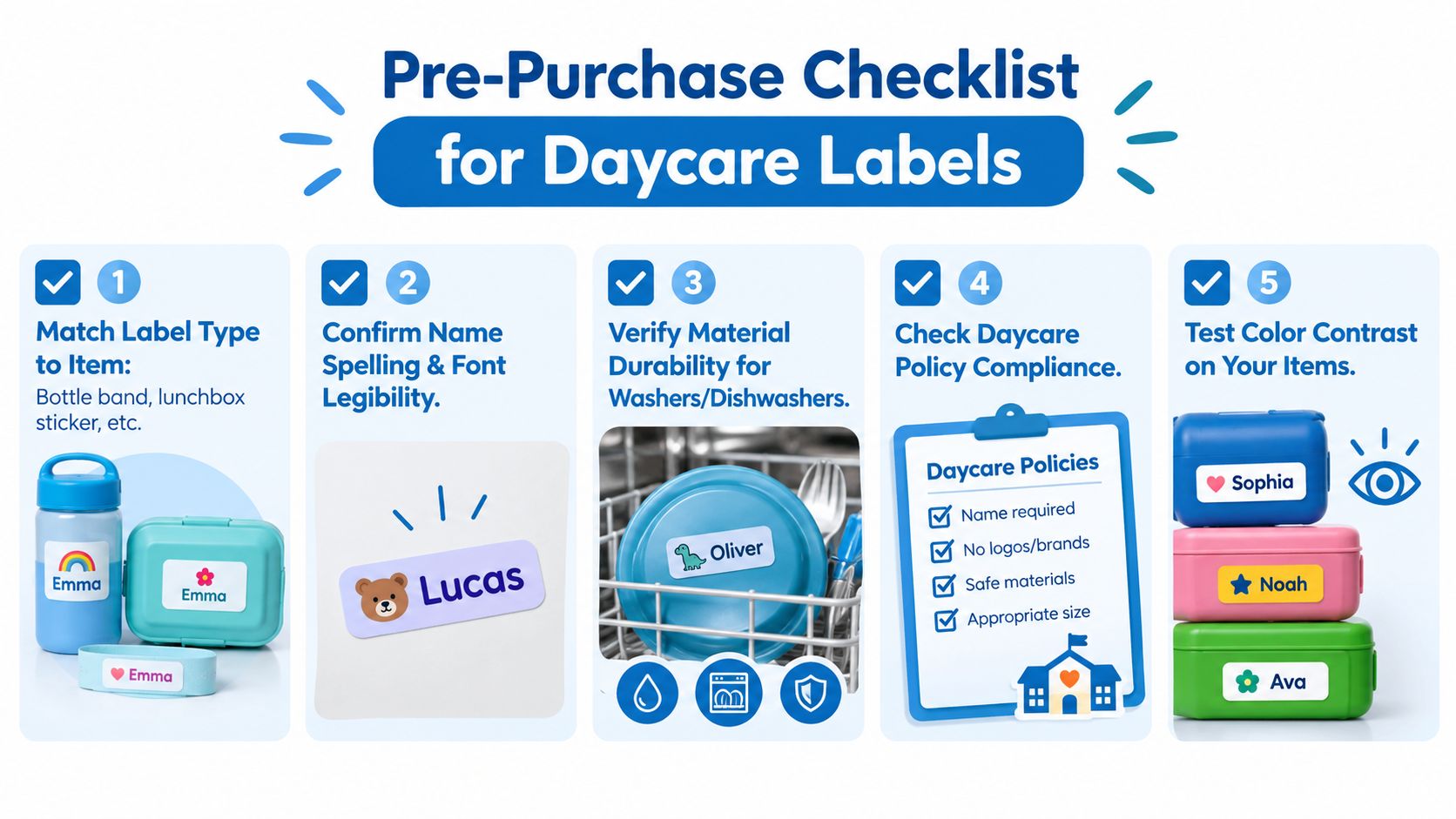
- Match the format to the item: Choose a bottle band for a bottle, a flat sticker for a lunchbox, a clothing label for fabric, and a shoe identifier for each shoe.
- Confirm the care rating: Daily-use items need clear dishwasher or washing-machine guidance. Don't infer heat resistance from the picture or the word “waterproof.”
- Prioritize readability: Select a high-contrast dinosaur design and a font that adults can read quickly. Confirm the spelling before placing the order.
- Test before expanding: A small pack lets you check adhesion, visibility, and fit on the actual bottle, lunchbox, or jacket.
- Build a matching set: Use the same dinosaur character or visual theme on the bottle, lunchbox, spare clothes, and bag so the child's belongings form one recognizable kit.
- Check daycare policy: Ask whether the center requires names on specific surfaces, permits allergy alerts, or has rules about labels on food containers and clothing.
The scientific naming system behind dinosaur names is precise. A valid zoological name uses a genus and species epithet, with the genus capitalized, the species lowercase, and both italicized in print, as explained by the American Museum of Natural History's guide to dinosaur names. A child's label doesn't need taxonomic formatting, but the lesson carries over: consistent, clear naming reduces ambiguity.
Dinosaur naming itself has changed as evidence improved. A study of dinosaur species named through 2004 found that 726 of 1,401 names, or 51.8%, were later judged invalid (the study of dinosaur name revisions). That doesn't make a T-Rex label unreliable, but it's a useful reminder to choose the name your family and daycare use, rather than overcrowding the label with unnecessary detail.
A consistent motif gives toddlers a recognizable cue, while readable text gives adults certainty. That combination is why dinosaur name labels work best across a bottle, lunchbox, and spare clothing item rather than on one isolated piece of gear.
If you're ready to build that matching daycare set, InchBug offers personalized dinosaur-themed bottle bands and labels alongside clothing, shoe, bag, and allergy-identification options. Choose the format for each item, check the care rating, and order a small coordinated set before labeling the rest of your child's gear.