

The daycare pickup is five minutes away, one shoe is under the bench, and the other is buried in a basket full of nearly identical sneakers. Your child insists both shoes belong to them, while another parent is already checking the soles for a name. By the time everyone agrees, the morning routine has become a small logistics exercise.
That's why parents look for decals for shoes. A visible name, symbol, or character can turn a guessing game into a quick match for children, teachers, and caregivers. But shoe decals aren't magic stickers. Their success depends on the material, placement, adhesive, and the punishment the shoes receive every day.
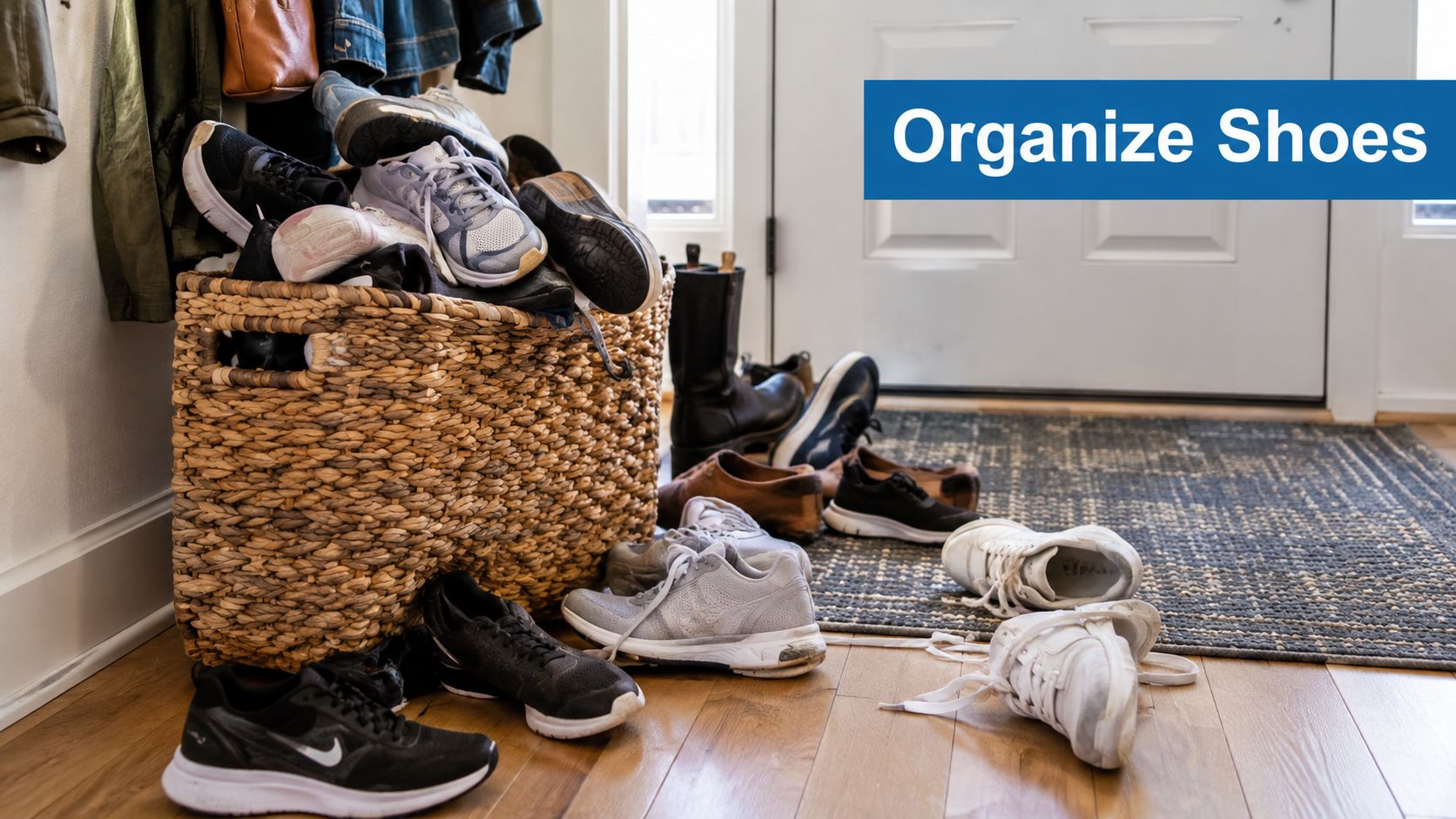
The Real Chaos Behind the Shoe Cubby
A daycare shoe cubby creates a perfect storm for mix-ups. Children often wear similar athletic shoes, remove them quickly for indoor play, and put them back in a shared area where rubber soles, mesh uppers, and dark colors blur together. A small decal won't stop a child from kicking off a shoe, but it can make the recovery process much faster.
The useful part of a shoe decal is identification at the moment of confusion. A child may recognize a favorite color or character before they can read a full name. A teacher can spot a name on the tongue or insole without trying every pair. A parent can confirm ownership before leaving with the wrong size.
This is why labeling works better as part of a routine than as a decorative extra. The name should be easy to find, the design should remain legible, and the label should sit where it won't rub against the foot or catch constantly on the floor.
Practical rule: Label both shoes, not just one. Children rarely lose footwear in a perfectly organized pair.
A good system also supports ownership. When children know where their names or symbols appear, they can begin checking their own belongings instead of waiting for an adult to identify everything. That matters during busy transitions, especially when several children are changing shoes at once.
Parents often start with a broad labeling approach that covers bags, clothing, bottles, and shoes. These loss-prevention strategies for children's belongings are useful because the same problem rarely stops at footwear. A missing shoe may be followed by a missing coat, lunch container, or sports bag.
The main distinction is simple:
- Decorative decals add a name, image, or visual cue to an existing shoe.
- Shoe labels prioritize readable identification and a dependable bond.
- Dedicated shoe identifiers are designed around repeated use, quick recognition, and the awkward surfaces found inside children's footwear.
For a one-day event, an ordinary sticker may be enough. For daily daycare, the label has to tolerate sweat, friction, dirt, and repeated cleaning. The right choice starts with the shoe itself, not with the prettiest design on the screen.
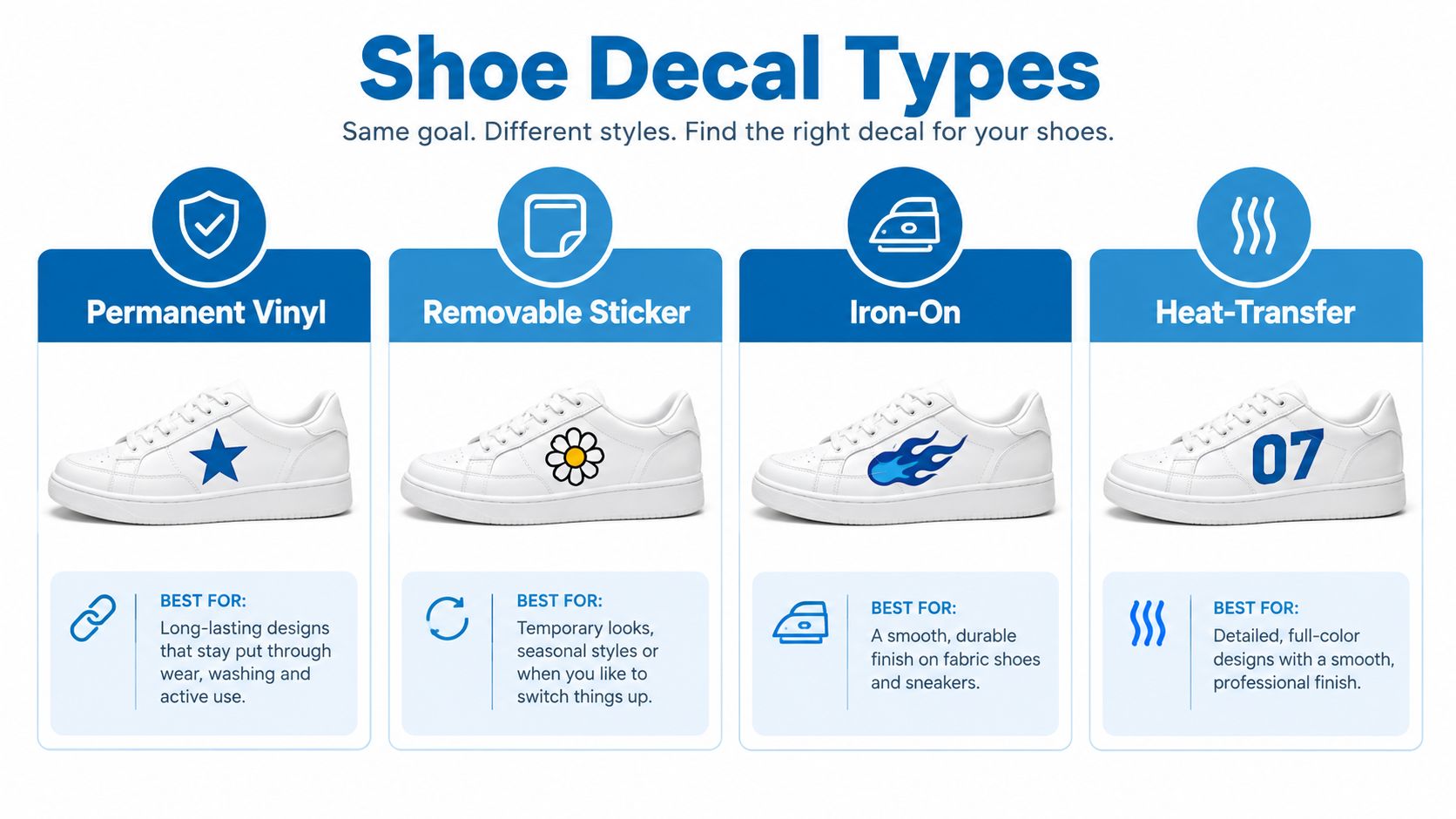
Vinyl, Sticker, Iron-On, and Heat-Transfer Options
Not all decals behave alike. A label that works on a smooth rubberized toe may fail quickly on a fuzzy canvas upper, because the adhesive is bonding to a different surface and facing a different kind of movement.
Permanent vinyl decals
Permanent vinyl is usually the practical choice for smooth synthetic uppers, molded athletic shoes, and other low-porosity surfaces. A high-tack or permanent acrylic adhesive can maintain its bond as the shoe flexes during walking and running. A laminated face adds protection against scuffing, moisture, and fading.
The trade-off is removal. A strong adhesive may leave residue or require careful peeling when the shoe is outgrown. It also won't compensate for a dirty, textured, or oily surface.
Removable sticker decals
Basic paper or polyester stickers are convenient for temporary use. They're suitable for a party, a short trip, or a pair of dress shoes that won't face much abrasion. Their weakness appears on active footwear, where repeated rubbing, dampness, and cleaning can lift the edges or wear away the print.
A removable sticker is easy to apply, but that convenience often comes with a shorter working life.
Iron-on transfers
Iron-on transfers bond to fabric with heat rather than relying only on a pressure-sensitive adhesive. They can make sense on canvas shoes or fabric sections that can tolerate controlled heat. The process is less forgiving, though. Too much heat can damage a shoe, and too little may leave the transfer poorly bonded.
Use the manufacturer's instructions and test an inconspicuous area first. An iron-on label isn't a universal solution for rubber, foam, leather-like finishes, or molded uppers.
Heat-transfer decals
Heat-transfer decals also use heat, but they're often designed to sit more softly on knit or stretchable materials. That can make them more comfortable and visually integrated on fabric shoes. Their performance still depends on the weave, heat tolerance, and amount of flex.
| Decal type | Best surface | Main advantage | Main risk |
|---|---|---|---|
| Permanent vinyl | Smooth synthetic or rubberized surfaces | Strong bond and protected print | Harder removal |
| Removable sticker | Temporary or lightly used shoes | Fast, simple application | Early peeling or fading |
| Iron-on | Heat-tolerant fabric canvas | Bond integrates with fabric | Heat can damage unsuitable materials |
| Heat-transfer | Knit or flexible fabric | Softer feel and stretch | Requires careful heat application |
For fabric footwear, compare the transfer method with a dedicated iron-on name tag option rather than assuming every heat-applied product behaves the same way.
The material decision comes down to the contact surface. Smooth uppers favor adhesive decals. Fabric may favor heat. Porous suede, rough mesh, and heavily textured materials demand caution because neither method creates a reliable result automatically.
Applying Shoe Decals Without Regret
Most failed decals don't fail because the product was poor. They fail because the shoe was labeled five minutes before departure, after a quick wipe that left moisture behind.
Start with the surface. Choose a flat area inside the tongue, on a smooth insole, or on another location recommended for the product. Remove dust, dirt, oils, and factory residue, then let the area become completely dry.
A reliable application sequence
- Clean the contact area. Use a suitable gentle cleaner if needed, then allow the shoe to dry fully. Adhesive cannot form a dependable bond through dust or moisture.
- Check the fit before peeling. Hold the decal over the intended spot and make sure it won't cross a seam, deep groove, ventilation opening, or constantly flexing edge.
- Apply from the center outward. Press down firmly and smooth toward the edges. This pushes out trapped air and helps the adhesive meet the surface evenly.
- Seal the perimeter with your thumb. Edge lift often begins at a corner or narrow lip. Spend extra pressure there, especially near areas exposed to water or floor friction.
- Leave the shoes alone for at least 24 hours. The adhesive needs time to cure and conform to the surface. Don't wash, soak, or wear the shoes during that period.
- Inspect before the first outing. If a corner is already lifting, fix it before the child takes the shoes into daycare. A lifted edge usually collects dirt and continues separating.
Angle decals near the sole slightly upward where the design allows it. That orientation gives water and mud fewer opportunities to push beneath the edge. Avoid placing labels directly under the heel or ball of the foot, where pressure and sweat can make an otherwise sound label uncomfortable.
The first day matters more than most rushed applications suggest. A decal that looks attached immediately may not have developed its full bond yet, and early wear can create a failure point that becomes impossible to correct cleanly.
For more placement ideas, compare these label application methods for different belongings before choosing a location.
How Durability Actually Holds Up for Kids
“Waterproof” is a limited description. A bathtub tests water exposure. Children's shoes face sweat trapped inside the shoe, grit worked into the edges, carpet friction, playground abrasion, mud, and repeated washing. Those stresses attack both the printed face and the adhesive bond.
Smooth synthetic uppers are generally the friendliest surface for adhesive decals. A permanent acrylic or high-tack adhesive typically offers the most durable bond on low-porosity materials that flex during normal walking. The decal face matters too. Laminated vinyl helps protect against abrasion, moisture, and UV exposure, which can reduce edge lift and print fading during daily use.
That doesn't mean every laminated decal will last indefinitely. A laminate can protect the print while the adhesive fails underneath. Conversely, the adhesive may remain attached while scuffing makes the name difficult to read.
The surface decides more than the label claim
A smooth molded sneaker gives an adhesive a continuous surface. Rough fabric gives it fibers and gaps. Suede can resist a clean bond because its nap moves and sheds particles. Mesh may look smooth from a distance but still offer very little solid area for the adhesive to grip.
The real durability question is not whether a decal is waterproof. It's whether the name stays readable and attached after the child creates the exact conditions the shoe will face.
Inside placement creates another set of pressures. An insole decal may be protected from playground scrapes, but sweat and barefoot friction can affect it. A tongue label may stay drier, yet it can rub against socks or fold when the shoe is put on.
Use this simple wear check after application:
- Readability: Can an adult identify the name without turning the shoe inside out?
- Edge condition: Are corners flat, or have they started collecting lint?
- Surface match: Is the decal attached to a smooth area rather than a seam or porous patch?
- Comfort: Does the label create a ridge where the foot presses?
- Cleaning exposure: Will the shoe be wiped, hand-washed, machine-washed, or just aired out?
A quality product applied to a suitable surface can remain useful through repeated cleaning, but the result depends on preparation and material compatibility. Label durability testing guidance is more valuable than a broad claim because it encourages parents to think about the actual cleaning and wear cycle.
The honest boundary is porous or highly textured footwear. Rough fabric, suede, and loose-knit areas will challenge almost any surface decal. If those shoes are worn daily, choose a location with a smoother interior surface or use a purpose-built identifier instead of forcing a sticker onto the exterior.
When Decals for Shoes Fall Short
A decal and a dedicated shoe identifier solve related problems, but they aren't identical tools. A vinyl name decal can personalize a shoe and provide a readable mark. It may still catch against a rough surface, lose clarity under abrasion, or peel after repeated friction.
That distinction becomes obvious in a busy school or daycare. Staff don't have time to study a faded graphic, search for a missing corner, or guess whether a partial name belongs to the child standing in front of them. They need a mark that remains easy to locate and read.
Decorative personalization versus daily identification
Decals make sense when appearance matters as much as identification. A child may enjoy a favorite color, animal, or character, and a personalized exterior can make the shoe feel unmistakably theirs. They're also useful for a short-term need, such as an event, a spare pair, or a shoe that won't see much washing.
A dedicated identifier is a better fit when the priority is repeated sorting and minimal reapplication. ShoePal, for example, is a shoe-specific identification product designed for daycare and school use, with labels intended for multiple pairs of shoes. Its purpose is less about decorating the outside and more about making footwear ownership clear during everyday routines.
The right choice depends on the failure you can tolerate:
| If your biggest concern is... | A decal may work when... | A dedicated identifier is preferable when... |
|---|---|---|
| Personal style | You want a visible design or name | Appearance is secondary |
| A temporary event | The shoes will see limited wear | The shoes are used every day |
| Quick application | The surface is smooth and clean | Staff need fast, consistent identification |
| Exterior visibility | The label can avoid high-friction areas | Interior placement is more practical |
| Reapplication | You don't mind replacing it | You want a system built around repeated use |
Decals aren't failures just because they have limits. They're the wrong tool when parents expect a decorative sticker to perform like a specialized identifier on a difficult surface. Matching the product to the job prevents the familiar cycle of peeling, residue, unreadable print, and another rushed replacement.
Choosing the Right Label System for Your Situation
Start with the routine, not the product category. A child who wears one pair of smooth sneakers to daycare needs a different solution from a child moving between school shoes, sports footwear, rain boots, and indoor slippers.
The wider category reflects that recurring need. One industry report values the shoe labels for kids market at $1.04 billion in 2025 and projects it to reach $1.52 billion by 2030, at an 8.0% CAGR, according to the shoe labels for kids market report. Another market analysis identifies daycares as a substantial application setting and reports that 67% of parents voluntarily adopt label solutions after institutional recommendations in its coverage of the category, as described in this independent shoe-label market report.
Those figures point to a practical reality. Shoe identification isn't only a consumer impulse. It spreads through places where children share storage, change footwear, and rely on adults to sort belongings quickly.
Match the system to the situation
| Primary goal | Recommended approach | Best fit product type |
|---|---|---|
| Temporary identification for a party or special outing | Use a simple decal on a clean, smooth area | Removable sticker or basic vinyl |
| Personalization for lightly used dress shoes | Choose a discreet label with a readable name | Small adhesive decal |
| Daily daycare sorting | Prioritize clear identification over exterior decoration | Dedicated shoe identifier |
| Helping a child distinguish left and right | Use paired visual cues placed consistently | Shoe label system with left-right designs |
| Canvas or fabric footwear | Confirm heat tolerance and test the material | Iron-on or heat-transfer option |
| Smooth athletic footwear | Apply a laminated decal to a flat, prepared surface | Permanent vinyl |
| Multiple shoe types | Use a consistent naming and placement routine | Mixed system based on surface |
Left-right cues add a second benefit beyond ownership. Product pages commonly position visual shoe labels as a way to help children match the correct foot, but the effect depends on age, design clarity, and repetition. A simple split image or paired character can support independence, especially when the cue is placed where the child can see it while putting shoes on.
Don't choose a left-right design that becomes hidden under the foot or distorted by a curved surface. A useful learning cue must remain visible, comfortable, and consistent across both shoes.
For families managing frequent daycare changes, ShoePal name labels provide a product-specific option for identifying children's footwear. For a single temporary need, decals may be all you need. For daily routines, a dedicated system can reduce the number of decisions parents and caregivers make during every shoe change.
The best setup is usually boring in the most helpful way. Use the same name format, place labels in a predictable spot, and teach your child what to look for. That consistency turns shoe identification from an adult rescue task into a small habit the child can gradually handle alone.
InchBug offers personalized labels and shoe identifiers for daycare, school, clothing, bags, bottles, lunch boxes, and sports gear, including options designed for repeated everyday use. If decals for shoes keep peeling or your child needs a clearer left-right and ownership cue, visit InchBug to choose a labeling setup that fits your family's routine.