

The night before your baby's first daycare day often looks the same. Tiny socks on the couch. Bottles drying by the sink. A diaper bag half packed, half guessed at. You're trying to be practical, but the feelings sneak in anyway. What if I forget something important? What if they need more than I sent? What if all of it ends up mixed into someone else's cubby?
That's why a simple checklist isn't enough. What helps most is a repeatable system. When your supplies are organized, labeled, and easy to hand off, mornings feel steadier and caregivers can care for your baby without hunting for basics.
This matters in all kinds of care settings, not just large centers. Approximately 12.2 million infants, toddlers, and preschool children in the United States had at least one weekly nonparental care arrangement as of spring 2001, according to the National Center for Education Statistics report. That range of care arrangements is one reason your daycare essentials for infants need to be portable, durable, and clearly identified.
If you're in the season of firsts, you may already be documenting everything because it goes by fast. Some parents like to pair that transition with keepsake photos, and a session with Atlanta newborn photography can be a meaningful way to mark the stage before daycare routines take over the calendar. For the day-to-day side of the transition, InchBug also shares a helpful read on navigating the transition to daycare.
Your Guide to a Stress-Free First Day of Daycare
The calmest daycare mornings usually start the night before. Not because everything is perfect, but because the decisions are already made. The diapers are counted. The bottles are in one spot. The backup outfit is packed in a pouch instead of rolled into the bottom of the bag.
A good daycare system does three jobs at once. It helps your baby get what they need, helps caregivers find it fast, and helps you avoid the mental load of rebuilding the bag from scratch every single day.
Practical rule: Pack for the caregiver who has never seen your bag before. If they can find what they need in seconds, your system is working.
The most useful mindset shift is this. Don't think of daycare prep as “bringing stuff.” Think of it as building a small, portable care station that moves with your child. That changes what you choose and how you pack it.
What a real system looks like
Instead of tossing in random extras, keep your bag set up in zones:
- Feeding zone for bottles, nipples, bibs, and any solids
- Diapering zone for diapers, wipes, cream, and a changing pad if your provider asks for one
- Clothing zone for full spare outfits and socks
- Comfort zone for pacifiers and any approved soothing item
- Parent notes zone for daily sheets, medication forms, or special instructions
That kind of structure lowers stress quickly. You're not trying to remember everything from memory every morning. You're maintaining a system that already works.
The Ultimate Infant Daycare Checklist
The most helpful daycare essentials for infants are the ones tied to daily routines. Feeding. Diapering. Clothing changes. Comfort. Hygiene. When you pack by category, you stop underpacking the important things and overpacking the nice-to-haves.
Infants in daycare typically require 5 to 10 diaper changes daily, and newborns eat every 2 to 3 hours, which is why most families need a real supply plan, not a casual handful of items, as outlined in this daycare packing guide from Gerber Childrenswear. The same source notes that parents often need multiple pacifiers, bibs, and age-appropriate foods, all labeled with the child's full name.
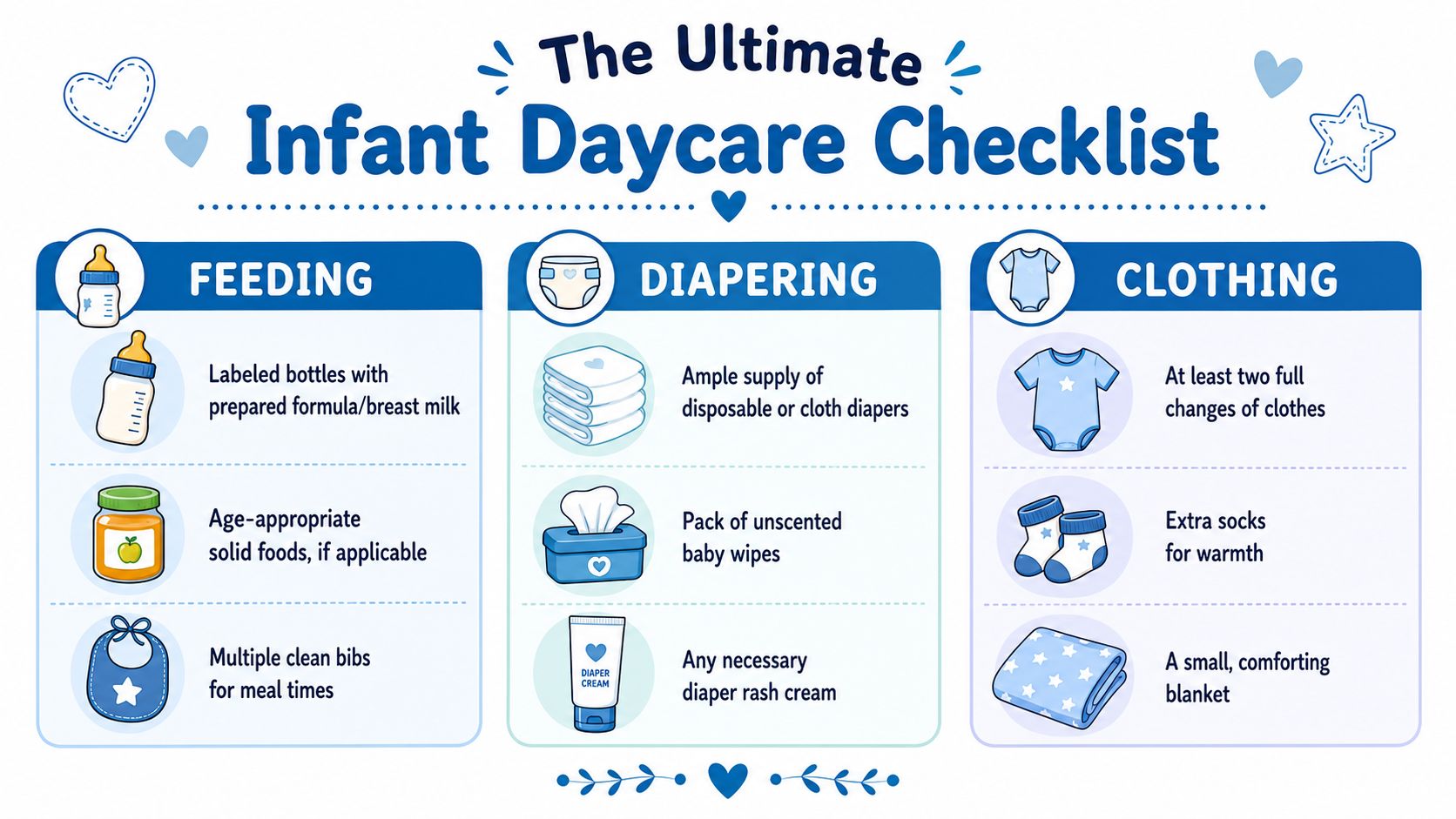
Feeding essentials
For young infants, feeding supplies take up more room than most parents expect. If your baby takes bottles during care hours, send enough prepared milk or formula for the full day plus a little margin that fits your center's policy.
- Bottles with clear names: Every bottle should be easy to identify at a glance.
- Extra nipples or bottle parts: Helpful if one falls or gets separated during cleaning.
- Burp cloths and bibs: A clean bib supply matters more than you think once drool, spit-up, and milk all stack up.
- Solid food containers: For older infants who've started solids, use easy-open containers and keep them clearly marked.
- Feeding instructions: If your baby has a specific routine, write it down clearly.
Diapering essentials
This category disappears fastest, and it's the one most likely to cause a hard day if you send too little.
- Diapers: Pack enough for a full day and follow your provider's restock rhythm.
- Wipes: Many programs ask for a full pack so caregivers aren't rationing.
- Diaper rash cream: Send your child's own tube if your center allows application with a signed form.
- Disposable bags or wet bag: Useful for soiled clothes or cloth diaper systems.
- Changing extras: Some providers prefer a small changing pad or a dedicated diapering pouch.
Send diapering supplies as if the busiest part of the day will happen when your baby is there, because it probably will.
Clothing and comfort
Clothing for daycare should be easy to change, easy to wash, and easy to send back and forth.
- At least two full changes of clothes: Blowouts and spit-up don't care what your plans were.
- Extra socks: They vanish easily and get wet faster than expected.
- Seasonal layer: A lightweight outer layer helps caregivers adjust for naps, stroller walks, or room temperature changes.
- Pacifiers: If your baby uses one, send multiples.
- Small approved comfort item: Only if your provider allows it.
Health and care items
These are less visible, but they keep handoffs smooth.
- Daily note card: Feeding times, recent teething, rough night, or medication notes if permitted
- Any required forms: Especially for creams, allergies, or medication
- A spare labeled storage bag: For messy clothes coming home
Infant essentials by age
| Item Category | 0-6 Months Focus | 6-12+ Months Additions |
|---|---|---|
| Feeding | Bottles, nipples, burp cloths, bibs, milk or formula | Solid food containers, infant utensils if requested, more meal bibs |
| Diapering | Frequent diaper restocking, wipes, cream | Same core setup, with more attention to on-the-go messes as mobility increases |
| Clothing | Soft easy-change outfits, extra socks, backup layers | Durable play clothes, extra tops or pants for mealtime and movement |
| Comfort | Pacifiers, swaddle alternative if approved, soothing routine notes | Approved comfort item, teething items if the center allows them |
| Daily logistics | Written feeding schedule and nap cues | Food notes, routine updates, pickup communication |
If you're building a baby shower registry or helping a friend stock up before daycare starts, practical gifts tend to win. Thoughtful bundles like these luxury baby gift options can be useful when they include items parents will rotate into daycare life.
Smart Organization Systems for Daycare Bags
A packed bag isn't the same thing as an organized bag. The difference shows up at drop-off, when a caregiver needs one bottle, one bib, and one clean outfit without unpacking your entire life onto the counter.
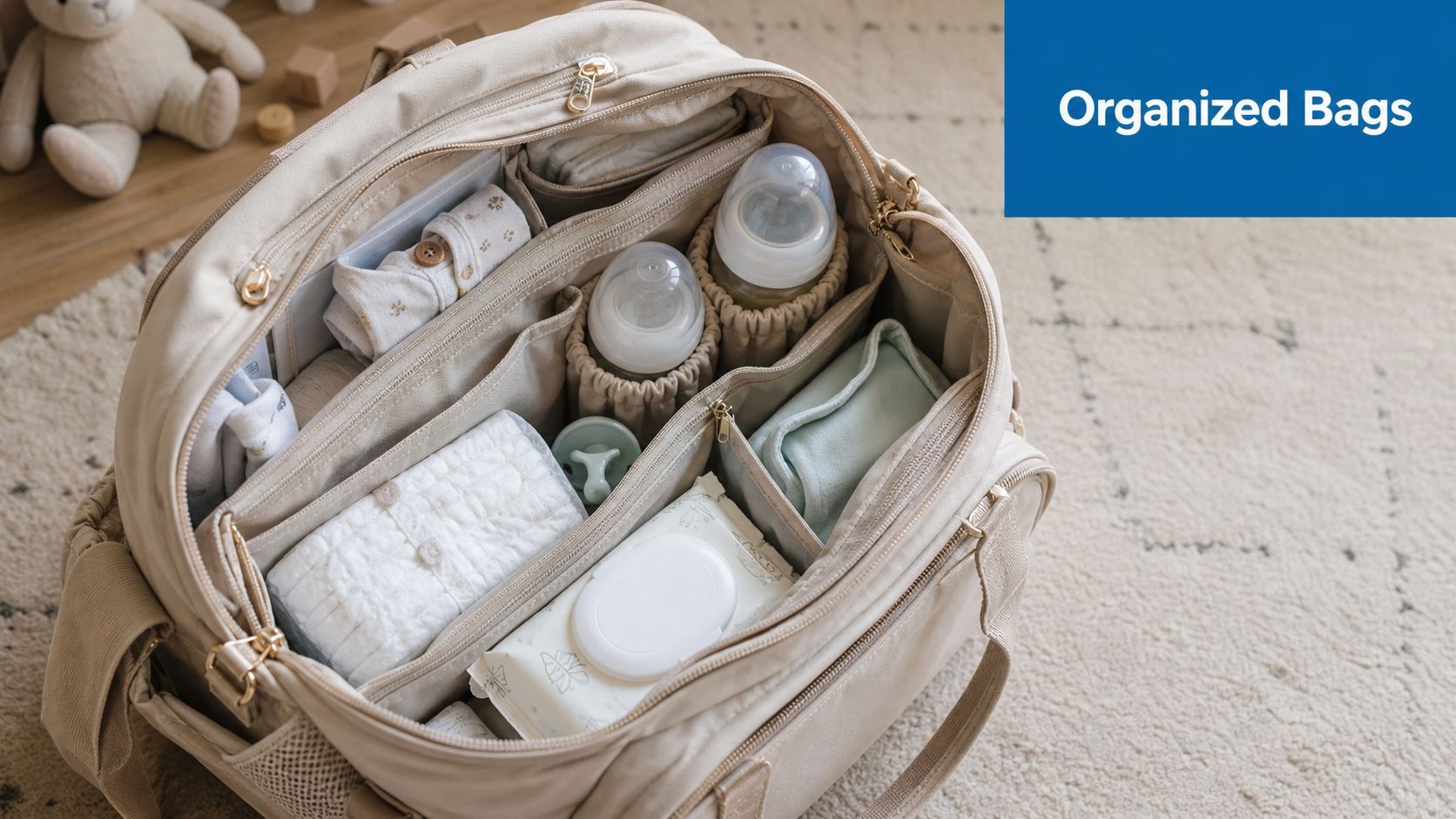
Use the one-bag method
Keep one daycare bag as the official bag. Don't borrow from it for errands, car trips, or overnights if you can help it. That's how key supplies disappear.
Inside that bag, create fixed sections:
- Top pocket: Daily handoff items such as bottles and notes
- Middle section: Diapering supplies in one pouch
- Side pocket: Pacifiers or quick-grab items
- Bottom section: Spare clothes in a sealed bag or pouch
This is also where accessory organizers help. Some parents use zip pouches, some use packing cubes, and some prefer compact labeled organizers. If you like visual order, these ideas for how to organize backpacks translate well to infant daycare bags too.
Build a home restock station
The easiest daycare bag to maintain is the one you refill from one place. A small basket, shelf, or drawer near your packing area works well. Keep refill items together so you're not pulling diapers from one room, wipes from another, and bibs from the laundry pile.
A simple restock station usually includes:
- Bulk diapers and wipes
- Clean bibs and burp cloths
- Backup pacifiers
- Prepped spare outfits
- Empty wet bags or laundry bags
When supplies live in one place, you stop making the same tired decisions every morning.
Pack for speed, not for volume
A huge bag feels prepared, but it often slows everyone down. What works better is a moderate-size bag with contained categories and visible labels. Caregivers can open, grab, use, and repack without confusion.
If your provider sends notes about low supplies, keep those alerts inside the bag until you restock that night. That little habit prevents the classic morning problem of seeing the note after you've already left the house.
The Unspoken Rule Label Everything Properly
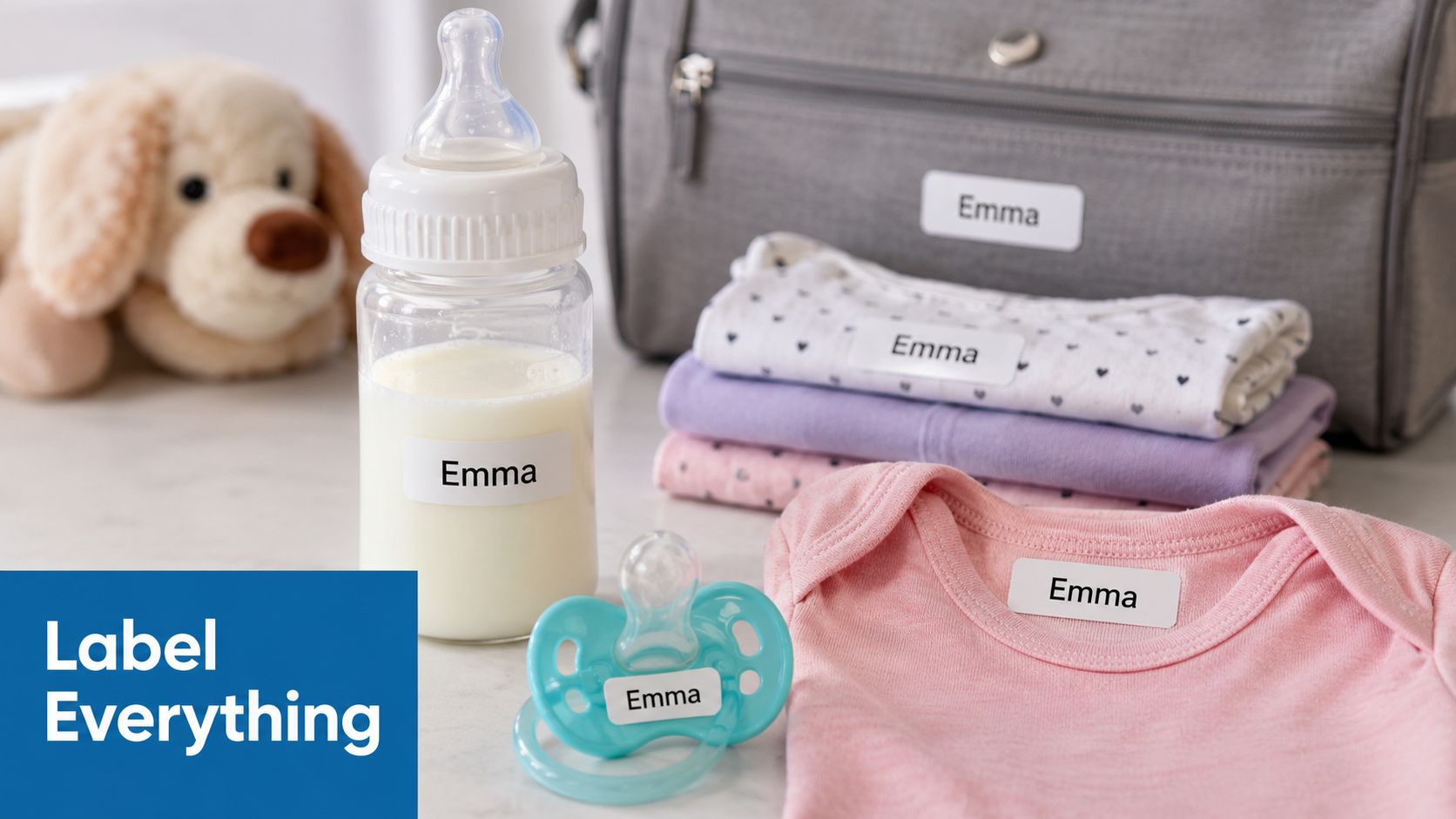
Labeling sounds like a small administrative detail until your baby's bottle is on a counter with several others that look exactly the same. In group care, labeling isn't just about staying organized. It supports safety, hygiene, and smooth caregiving.
A lot of daycare lists tell parents to label bottles, food, and personal items. What they often skip is labeling hygiene. A parent guide discussing infant care points out that many checklists require labeling but don't explain how to do it safely for items babies mouth or drink from, and it stresses the need for clear, inclusive health and hygiene protocols in quality infant care in this parents' guide to infant care daycare.
Why ordinary labeling falls short
A marker on masking tape may get you through a day. It usually won't get you through repeated washing, condensation, bottle prep, or a caregiver moving fast in a busy room. It also doesn't answer the material question for items that come into close contact with your baby.
That's the part many parents only learn after a few frustrating weeks. A label has to stay readable. It has to hold up through water, soap, and daily handling. And for baby gear, it should make sense for the surface it touches.
What to label first
Start with the items most likely to be mixed up, misplaced, or handled quickly:
- Bottles and food containers
- Pacifier cases
- Diaper cream and ointments
- Spare clothes and jackets
- Sleep items if your center allows them
- The daycare bag itself
For bottles, bands and name labels are usually easier to read than tiny handwritten stickers. For clothing, a dedicated clothing label stays more consistent than a pen mark that fades after laundry. For bags and pouches, visible tags save time at pickup.
A practical example is using one coordinated system rather than a mix of tape, marker, and random stickers. Products such as InchBug Orbit Labels for bottles and TagPal clothing labels are made for repeated washing and everyday daycare handling, which is the use case parents need to solve. Their overview of labels for daycare is a useful starting point if you're deciding what needs a bottle band, what needs a clothing label, and what just needs a bag tag.
Labeling protects more than your budget
Lost bibs and socks are annoying. Mixed-up milk or personal care items are a different level of problem. Clear naming helps caregivers move faster and more confidently, especially at feeding time and diaper changes.
Here's a short visual on practical labeling in action:
The label that stays on is the one that actually protects your routine.
The families who feel least frazzled usually aren't the ones bringing the fanciest gear. They're the ones who can identify every item quickly, replace what's missing fast, and trust that their baby's things are staying with their baby.
Understanding Daycare Health and Safety Protocols
Many daycare rules feel fussy until you know what problem they're solving. Once you understand the reason behind them, it's easier to work with your provider instead of feeling like you're getting a new policy every week.
Licensed infant care standards in major jurisdictions require one dedicated crib or portable crib per child under 12 months, along with a waterproof mattress and minimum spacing between cribs to reduce cross-contamination and support safe access, as shown in this infant care centre standards guide. The same standards include raised sides on diapering tables, which help reduce falls, identified there as the most common injury in infant care environments.
The rules that protect your baby most
When a center asks for original containers, written permissions, or strict storage steps, that usually comes down to consistency and traceability. Caregivers need to know what an item is, who it belongs to, and how it should be used without guessing.
Common examples include:
- Illness policies: These protect the group and help staff respond consistently.
- Medication rules: These reduce confusion about dosage and authorization.
- Allergy procedures: These make feeding and topical care safer for children with sensitivities.
- Sleep setup rules: These keep infant sleep spaces consistent and easier to monitor.
Partner with the daycare, don't work around it
The smoothest relationships happen when parents treat policies as part of the care plan. Ask direct questions. Write down the answers. Then pack and label in a way that supports those rules.
If your child has food sensitivities or a diagnosed allergy, it helps to prepare beyond the intake form. This guide on how to prepare a child with allergies for daycare gives a practical framework for communication and item identification.
A daycare policy is often a shortcut to a safer room, not extra paperwork for its own sake.
Budgeting Hacks and Pro Packing Tips
Infant daycare can get expensive fast, so the smartest approach is to spend according to wear, washability, and daily use. Put more of your budget toward the items you'll handle constantly. Save on the pieces that are likely to get stained, outgrown, or sent home messy.
Where to save and where not to
Save on everyday clothing. Daycare is not the place for outfits that require special washing, careful folding, or emotional recovery if they get stained. Soft basics and secondhand backup clothes work beautifully here.
Be pickier with bottles, food containers, and your labeling setup. Those are the items you rely on repeatedly, and they affect daily convenience in a very real way. If you want one purchase that simplifies a lot of little decisions, combo label packs can be a practical buy because they cover bottles, clothes, and bags in one order instead of piecing things together later. For more general family budgeting ideas, InchBug has a useful post on how to save money on back-to-school shopping, and many of the same habits apply to daycare prep.
Packing habits that reduce waste
- Ask what the daycare provides: Some centers supply wipes, some don't. Don't buy duplicates before you ask.
- Rotate older clothes into daycare duty: Reserve the cutest pieces for weekends.
- Buy with daily handling in mind: If it's hard to open, close, clean, or identify, it usually won't earn its keep.
- Choose simple fit and sizing: For clothing that goes to daycare often, comfort and easy movement matter more than style details. If you're ever unsure how a garment should fit around changing growth patterns, a guide for finding your perfect fit is a handy reminder of how much good measurements help with online buying in general.
Your Daycare Essentials Questions Answered
How should I send breast milk or pre-mixed formula?
Follow your daycare's exact storage and labeling policy. Send clearly identified bottles or containers, keep prep consistent, and avoid making caregivers guess what's inside or when it should be used. If your provider has a written feeding form, use it.
What's the best way to manage soiled clothes?
Pack one dedicated wet bag or sealed pouch and keep it in the same spot every day. Caregivers can drop messy clothes in fast, and you can take the whole pouch straight to the laundry area when you get home. It keeps the rest of the bag cleaner and makes restocking easier.
What if the daycare provides some supplies like wipes?
Take them up on it, but don't assume that means they provide everything. Ask exactly which items are communal and which must stay personal. Most confusion happens when parents hear “we provide wipes” and think that includes cream, bottles, or food items.
Why does the daycare want my own diaper cream?
Because shared cream creates a hygiene problem. A daycare packing guide notes that insufficient diaper supply can lead to delayed changes, which can contribute to diaper dermatitis, and it also explains why many facilities use no shared cream policies to reduce the chance of passing bacterial or fungal infections between children in this what to pack for daycare checklist. A labeled personal tube is the simplest fix.
How often should I check the bag?
Do a quick reset every evening. Replace anything used, pull out dirty clothes, and restage bottles or food supplies according to the next day's plan. That small habit keeps mornings from turning into scavenger hunts.
Getting ready for daycare feels lighter when your system does the work for you. If you want a simple way to keep bottles, clothes, bags, and everyday baby gear clearly identified, InchBug offers personalized labels and organizers designed for the realities of daycare life.