

Starting daycare marks a significant milestone for both you and your infant, and the preparation can often feel as monumental as the event itself. Between the emotional adjustment and the long list of required supplies, it's easy to feel overwhelmed by the sheer volume of details. Forgetting a crucial item or a piece of paperwork can add unnecessary stress to your morning routine, which is the last thing any new parent needs. This is where a comprehensive daycare checklist for infants becomes an indispensable tool, transforming potential chaos into calm, streamlined confidence.
This guide is designed to eliminate the guesswork and provide a clear, actionable plan. We will walk you through the eight critical categories of items and information every parent needs to prepare for a successful daycare experience. Our focus goes beyond just packing a bag; we'll cover everything from the must-have supplies like diapers and feeding gear to the often-overlooked details like allergy alerts, vital documentation, and effective communication strategies with caregivers.
By creating a clear, organized system from day one, you can ensure a smoother transition for your little one, build a strong foundation for communication with their teachers, and, most importantly, focus on what truly matters: your baby's comfort, safety, and happiness in their new environment. This detailed checklist is your ultimate resource for mastering daycare prep. Let's dive into the essential plan for making every morning drop-off a completely stress-free breeze.
1. Personalized Name Labels for Bottles and Sippy Cups
In a bustling daycare environment with dozens of bottles, preventing mix-ups is crucial for both hygiene and accurate feeding. Personalized name labels designed specifically for bottles and sippy cups are a non-negotiable item on your daycare checklist for infants. These are not your average stickers; they are durable, waterproof labels engineered to withstand daily wear and tear, including repeated cycles in the dishwasher, sterilizer, and microwave, without fading or peeling.
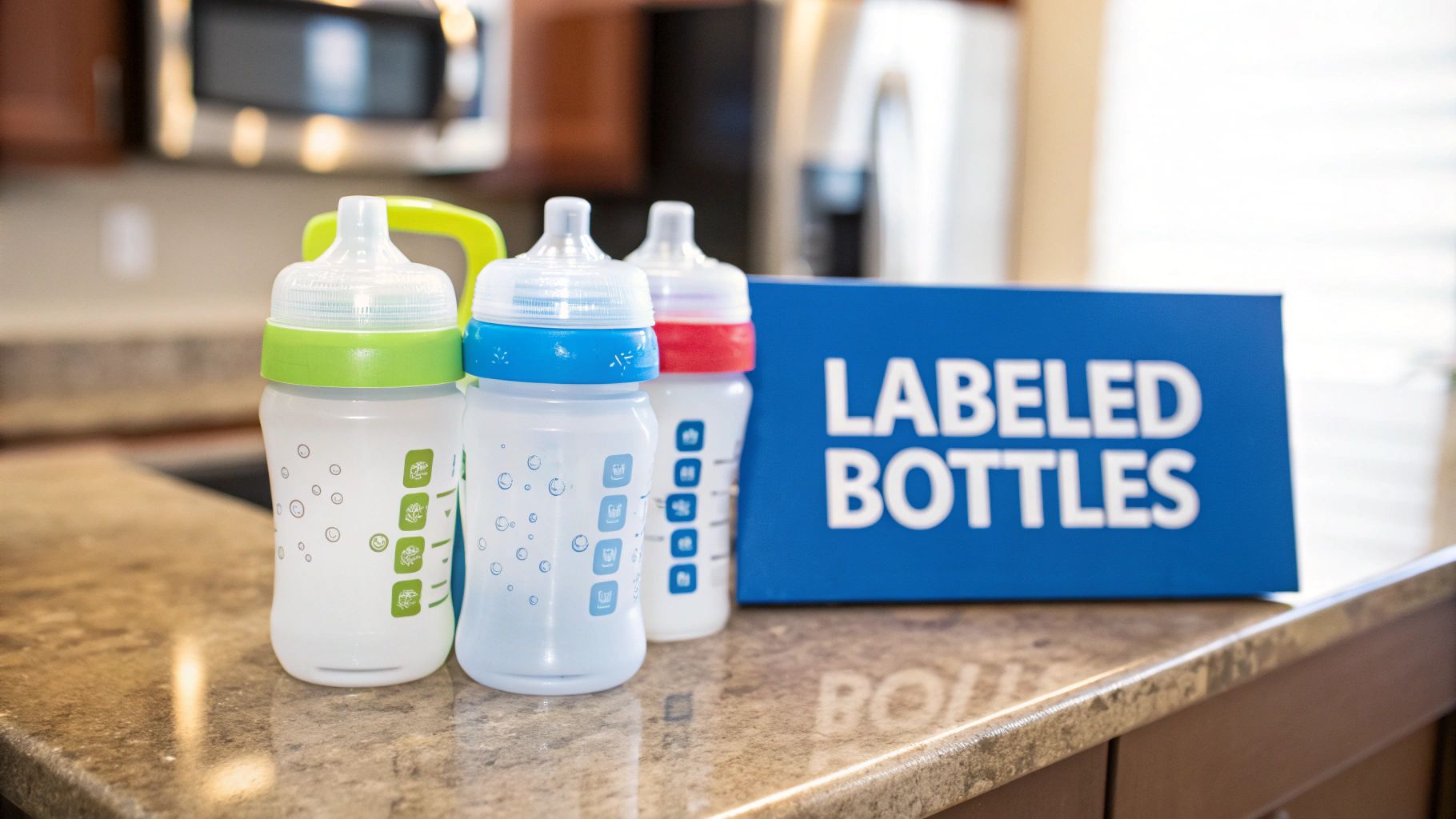
This simple organizational tool prevents cross-contamination and ensures your baby receives the correct milk or formula, which is especially vital for infants with dietary restrictions or allergies. For daycare providers managing multiple children, clearly labeled bottles, like Philips Avent or Tommee Tippee bottles marked with a child's full name, streamline feeding times and minimize errors.
Why They Are Essential
The primary benefit is safety and accuracy. A well-labeled bottle guarantees your infant gets their specific breast milk or formula. Furthermore, it helps caregivers track consumption accurately, providing you with reliable feedback on your baby's daily intake. This level of detail is a cornerstone of effective communication between parents and daycare staff.
Actionable Tips for Bottle Labeling
To get the most out of your labels, follow these practical steps:
- Label Everything: Don't just label the bottle base. Place a label on the cap and collar as well, as these parts are often washed separately and can easily get mixed up.
- Choose High Contrast: Opt for bright, colorful labels or bands that stand out. This allows caregivers to identify your child’s bottle at a glance, even from a distance.
- Order Extras: Labels can get lost or damaged over time. Having a few spares on hand prevents last-minute labeling scrambles before a daycare drop-off.
- Consider Reusable Bands: Products like InchBug's Orbit Labels are a fantastic reusable option. These stretchy, non-adhesive bands can be moved from bottle to bottle as your child grows, making them a long-term, eco-friendly investment. If you'd like to explore this further, you can discover why these are a popular choice for personalized baby bottle labels on inchbug.com.
2. Clothing Labels and Shoe Identifiers
With multiple daily outfit changes due to spills, diaper leaks, and messy play, an infant’s clothing can easily get mixed up or lost in a busy daycare setting. Personalized clothing labels and shoe identifiers are an essential part of any daycare checklist for infants. These durable, laundry-safe labels affix to everything from onesies and socks to jackets and hats, ensuring every item your child wears comes back home at the end of the day.

This simple organizational system is a lifesaver for daycare staff, who manage clothing for numerous children. Clearly labeled items, like a winter coat marked with a TagPal label or shoes with a custom ShoePal identifier, prevent mix-ups and reduce the time caregivers spend sorting through lost-and-found bins. For parents, it means protecting your investment in your child's wardrobe and avoiding the frustration of lost favorite outfits or expensive outerwear.
Why They Are Essential
The key benefit is loss prevention and organization. A labeled wardrobe ensures your baby’s belongings are easily identifiable, which is critical for seasonal items like winter coats and boots that can look similar. It also helps daycare providers quickly locate your child’s spare clothes during an unexpected change, maintaining a smooth and efficient routine. This attention to detail promotes an organized environment and gives parents peace of mind.
Actionable Tips for Clothing Labeling
To ensure your labeling system is effective and long-lasting, follow these practical steps:
- Label All Layers: Attach labels to every clothing item, including socks, hats, jackets, and especially the backup outfits stored at the daycare.
- Strategic Shoe Placement: For maximum durability, place shoe labels on the insole under the heel, where they experience the least friction. Labeling both shoes helps prevent swaps in rooms with multiple cribs.
- Waterproof Is a Must: Choose high-quality, waterproof labels specifically designed to withstand hundreds of wash and dry cycles without peeling, fading, or smudging.
- Order in Bulk: You'll need more labels than you think. Ordering a larger pack, especially during back-to-school or back-to-daycare seasons, ensures you are prepared for new clothing and replacements.
3. Diaper Bag Organization and Labeling
A well-organized diaper bag is more than a convenience; it's a critical communication tool that ensures daycare providers can quickly and efficiently find exactly what your baby needs. Implementing a comprehensive system for organizing, labeling, and tracking supplies is a key part of your daycare checklist for infants. This approach transforms a potentially chaotic bag into a streamlined resource, minimizing stress for caregivers and ensuring your child's needs are met promptly.
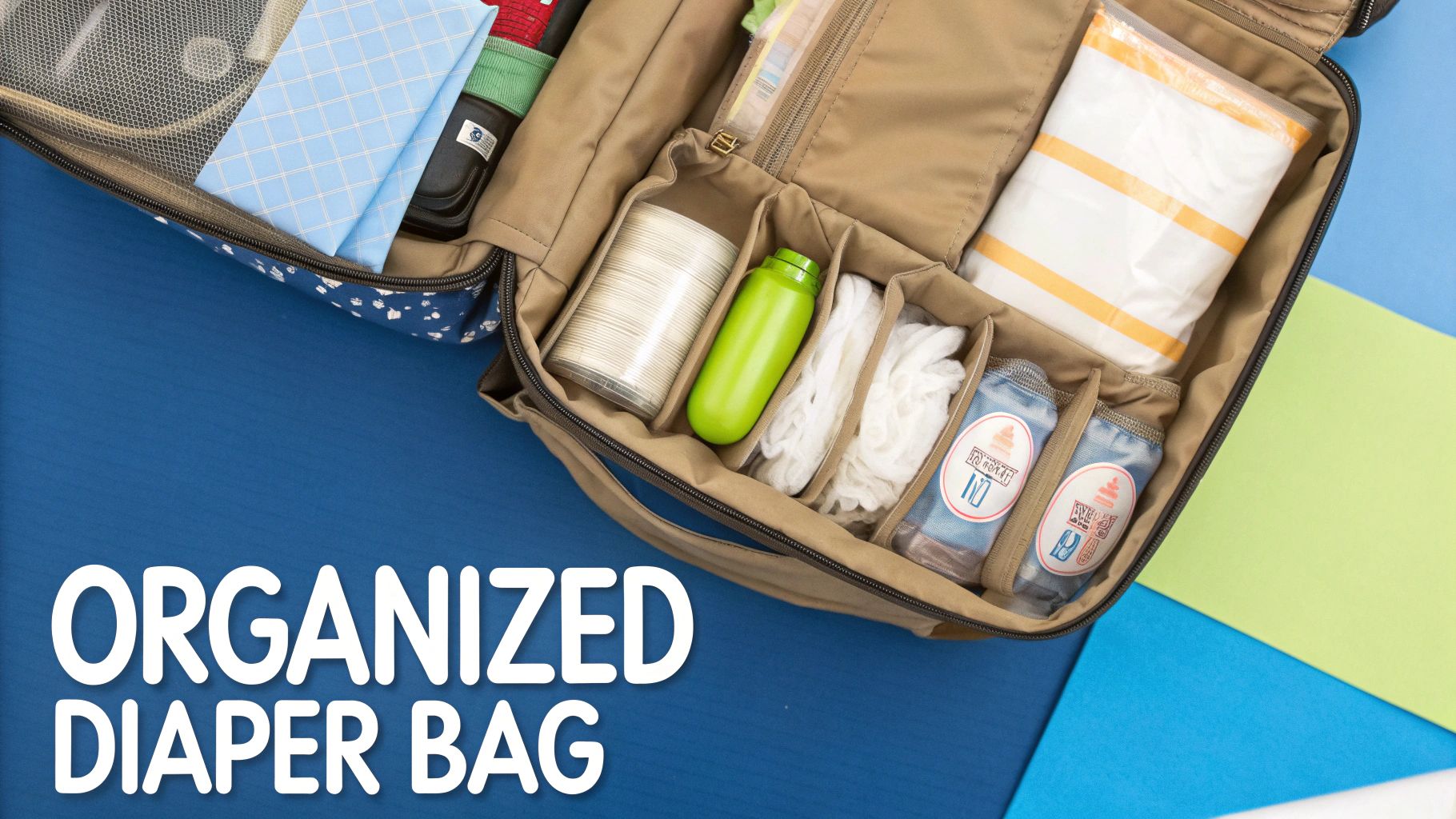
This system involves using tools like personalized bag tags for easy identification, internal pouches to separate items like diapers and clothes, and clear labels for every component. For daycare staff managing multiple infants, an organized bag means less time searching and more time caring. It prevents mix-ups, especially in families with multiple children in daycare who might use color-coded tags to distinguish bags at a glance.
Why It Is Essential
The core benefit is efficiency and clarity. When a caregiver needs a fresh diaper, a change of clothes, or a specific cream, they can locate it immediately without rummaging through the bag. This system also empowers you, the parent, to conduct quick daily inventory checks, making restocking a simple and error-free task. A neatly organized bag reflects a partnership between parent and provider, built on clear communication and preparation.
Actionable Tips for Diaper Bag Organization
To master your diaper bag system, apply these practical strategies:
- Use Labeled Pouches: Separate items into categories using clear, labeled pouches. Designate specific pouches for "Diapers & Wipes," "Extra Clothes," "Feeding," and "Medications/Creams" so contents are instantly recognizable.
- Attach a Personalized Tag: A durable, high-contrast bag tag with your child's full name and your contact information is non-negotiable. Secure it firmly to the bag's handle with a sturdy clip or loop.
- Include a Checklist: Keep a laminated, reusable checklist attached to the inside of the bag. This allows caregivers to see what you’ve packed and helps you remember to restock essentials like diapers and wipes each evening.
- Create Designated Zones: Assign specific pockets or sections of the diaper bag for consistent placement of items. For example, the front pocket is always for creams and medications, while the main compartment holds the larger pouches.
4. Enrollment and Health Documentation
Before your infant’s first day, you'll need to complete a comprehensive packet of enrollment and health documents. This paperwork is a fundamental requirement for any licensed childcare facility and is a critical component of your daycare checklist for infants. These forms provide caregivers with the vital information needed to ensure your child's safety, health, and well-being while in their care, covering everything from medical history to emergency procedures.
Properly organized and up-to-date documentation is not just about regulatory compliance; it's about creating a secure environment for your child. It ensures that staff can respond swiftly and appropriately in any situation, from a minor allergic reaction to a facility-wide emergency. This paperwork is the primary communication tool that formalizes your child's specific needs and your parental authorizations.
Why It Is Essential
The core benefit is safety and preparedness. Complete and accurate forms, including emergency contacts, physician details, and state-mandated immunization records, give daycare staff immediate access to life-saving information. This is particularly crucial for infants with severe allergies or medical conditions, as clearly documented allergy action plans can prevent serious incidents. Furthermore, these documents meet legal requirements, protecting both your family and the childcare center.
Beyond specific health documentation, understanding broader strategies for preventing healthcare-associated infections is crucial for any facility caring for young children.
Actionable Tips for Documentation
To streamline the process and ensure all information is readily available, follow these practical steps:
- Create Digital and Physical Copies: Scan all completed forms and save them in a secure cloud storage folder. Also, keep a printed copy in a clearly labeled folder at home for quick reference.
- Highlight Critical Information: If your child has a severe allergy, use a highlighter on the form and consider adding a separate allergy alert tag to their diaper bag for extra visibility.
- Set Renewal Reminders: Many forms, like immunization records or health assessments, expire annually. Set calendar reminders a month before the due date to schedule necessary appointments and avoid last-minute rushes.
- Provide Multiple Contacts: List at least two or three emergency contacts who are available during daycare hours. Ensure they are aware they are on the list and have consented to be contacted.
- Update Immediately: If you move, change phone numbers, or there's an update to your child’s health status, inform the daycare and update the forms immediately. Outdated information can cause critical delays in an emergency.
5. Allergy Alert System and Documentation
For infants with food allergies or dietary restrictions, clear communication is not just helpful; it's a critical safety measure. An allergy alert system with comprehensive documentation is an indispensable part of your daycare checklist for infants. This system goes beyond a verbal note at drop-off; it involves a visible, multi-layered approach to ensure every caregiver is aware of your child's specific needs, from enrollment forms to visual cues on their belongings.
This organized system helps prevent accidental exposure to allergens, which is crucial in a shared care environment where snacks and meals are prepared for multiple children. For common infant allergies like dairy, egg, or peanuts, a robust alert protocol ensures caregivers can confidently manage your child’s nutrition and respond appropriately in an emergency, following guidelines from organizations like Food Allergy Research & Education (FARE).
Why They Are Essential
The primary benefit is health and safety. A well-documented allergy alert system drastically reduces the risk of an allergic reaction by providing constant, clear reminders to all staff members. It also empowers caregivers to act quickly and correctly if a reaction occurs, using the action plan you provide. This thoroughness builds trust and ensures your infant's well-being is prioritized throughout the day.
Actionable Tips for Allergy Documentation
To create a foolproof allergy alert system, implement these practical strategies:
- Use Multiple Methods: Don't rely on a single point of communication. Combine official documentation in your child's file with visible alerts like a red tag on their diaper bag and clear labels on their food containers.
- Be Specific: Instead of just writing "allergy," clearly state the exact allergen (e.g., "Severe Peanut Allergy" or "Dairy Intolerance"). Beyond documentation, clearly mark items with specific allergy alert labels to visually communicate important health information to caregivers.
- Document Severity and Action: Clearly outline the severity of the allergy, potential reaction symptoms (e.g., hives, breathing difficulty), and a step-by-step emergency action plan. Include all emergency contacts.
- Provide Labeled Alternatives: Pack and clearly label "safe" snacks and meals for your infant to prevent any confusion during feeding times.
- Review and Reinforce: Periodically review the allergy information with the daycare director and your child's primary caregivers, especially during staff changes or as your child transitions to a new classroom. If you want to dive deeper, you can learn more about how to prepare a child with allergies for daycare at inchbug.com.
6. Daily Communication Log and Progress Tracking
A transparent and consistent line of communication between you and your daycare provider is the backbone of excellent infant care. A daily communication log, whether a physical notebook or a digital app, serves as a systematic record of your baby’s day, and it's a vital component of your daycare checklist for infants. This log documents everything from feeding times and amounts to diaper changes, nap durations, and developmental milestones, ensuring you never miss a beat.
This shared documentation bridges the gap between home and daycare, creating a cohesive care environment. It allows caregivers to understand your baby's recent patterns (like a restless night) and enables you to stay informed about their daytime activities and well-being. For example, a detailed log can quickly reveal a potential food sensitivity or highlight a new skill your baby is mastering, like rolling over or grasping a toy.
Why It Is Essential
The primary benefit is continuity of care. This log ensures that both you and the daycare staff have a complete picture of your infant's daily life, which helps in identifying patterns, addressing potential health concerns early, and celebrating new achievements together. It transforms the daily handoff from a rushed summary into a meaningful, data-informed conversation, building a strong parent-provider partnership.
Actionable Tips for Communication Logs
To make your daily log an effective tool, follow these practical steps:
- Use a Consistent Template: Whether digital or paper, a structured template makes logging quick and ensures no key information is missed. Categories should include feeding, sleep, diapers, mood, and activities.
- Ask for Specifics: Let your provider know what information is most important to you. Are you tracking milk intake closely? Concerned about nap transitions? Prioritizing this helps them focus their notes.
- Review for Patterns: Take a few minutes each evening to review the day’s log. Look for emerging patterns in sleep, eating, or mood over a week or two, which can help you adjust home routines accordingly.
- Share Home Observations: Communication is a two-way street. Note any significant changes at home, such as teething, poor sleep, or a change in appetite, so the daycare staff is prepared for a potentially fussy day.
7. Backup Supplies and Labeled Storage System
Accidents, spills, and growth spurts are a daily reality for infants, making a well-stocked cache of backup supplies at daycare an absolute necessity. A dedicated, clearly labeled storage system ensures that caregivers can quickly access extra diapers, clothes, or wipes without delay. This organizational strategy is a critical part of any daycare checklist for infants, transforming potential chaos into a seamless and efficient process for both staff and parents.
This system typically involves a designated bin or cubby for each child, holding everything from spare bodysuits to diaper cream. By using transparent containers labeled with the infant’s name, daycare providers can see the contents at a glance, grab what’s needed during a quick diaper change, and easily communicate when supplies are running low. This prevents frantic searches through communal storage and ensures your baby is always clean, dry, and comfortable.
Why It Is Essential
The core benefit is preparedness and efficiency. When a diaper leaks or lunch ends up on a shirt, caregivers don't have time to search. A labeled backup system allows them to resolve the issue immediately, minimizing your baby's discomfort and disruption to the classroom routine. It also prevents the accidental use of another child’s items, which is crucial for preventing the spread of germs and accommodating sensitivities to certain creams or wipe brands.
Actionable Tips for Backup Supplies
To create a foolproof backup system, follow these practical steps:
- Use Clear, Labeled Bins: Choose transparent storage containers so staff can instantly identify the contents. Apply a large, waterproof label with your infant's full name, using the same style as your bottle labels for consistency.
- Organize by Supply Type: Within the bin, use smaller bags or dividers to separate items. Keep clothing in one section, diapering supplies (diapers, wipes, cream) in another, and feeding extras in a third.
- Date and Rotate Clothing: Pack seasonally appropriate clothing and label items with the date. This helps you remember to swap out smaller sizes or weather-inappropriate outfits as your baby grows.
- Establish a Replenishment Schedule: Check the bin at the end of each week during pickup. Create a personal checklist to quickly see what needs to be restocked for the following week, preventing early-morning surprises.
8. Daycare Transition Preparation and Checklists
Starting daycare is a significant milestone that involves more than just packing a bag; it requires thoughtful preparation to ensure a smooth transition for both you and your infant. A comprehensive approach to daycare transition preparation, centered around detailed checklists, transforms a potentially stressful process into a manageable and organized experience. This structured planning is a critical part of any daycare checklist for infants, as it addresses the logistical and emotional aspects of this new chapter.
By starting the process weeks in advance, parents can systematically gather supplies, complete paperwork, and emotionally prepare their child and themselves. For instance, a family with multiple children might create a color-coded system for each child’s supplies, using a master checklist to track duplicates and ensure nothing is missed. This methodical approach minimizes last-minute chaos and fosters a sense of calm and control.
Why It Is Essential
The primary benefit is reducing transition-related stress. A well-planned transition helps your infant acclimate more easily to a new environment, new routines, and new caregivers. For parents, having a clear plan of action eliminates the anxiety of forgetting crucial paperwork or essential supplies. It also establishes a foundation for strong communication with the daycare facility from day one.
Actionable Tips for a Smooth Transition
To ensure your daycare preparation is seamless, follow these practical steps:
- Start Early: Begin your preparations 4 to 6 weeks before your infant’s start date. This provides ample time to gather documents, purchase supplies, and gradually introduce your baby to the idea of daycare.
- Request a Facility Checklist: Your daycare will have a specific list of required items. Ask for this list early and use it as the foundation for your personal checklist.
- Label Everything in Advance: Set aside time 1 to 2 weeks before the start date to label every single item, from clothing and bottles to pacifiers and diaper cream. This prevents loss and mix-ups during the busy first few weeks.
- Familiarize Your Infant: If possible, visit the daycare facility with your baby a few times before their official start date. This helps them get comfortable with the sights, sounds, and faces in the new environment.
- Streamline Your Shopping: Use combo packs designed for daycare, which often include a variety of labels and supplies needed for a new start. For a deeper dive into what to pack, you can explore this detailed daycare packing list on inchbug.com.
- Create a Milestone Calendar: Map out key dates, such as when to submit forms, when to have all supplies purchased, and when to complete labeling. This visual guide keeps you on track.
Infant Daycare: 8-Item Checklist Comparison
| Item | Implementation (🔄) | Resources & Setup (⚡) | Expected Outcomes (📊⭐) | Ideal Use Cases (💡) | Key Advantages (⭐) |
|---|---|---|---|---|---|
| Personalized Name Labels for Bottles and Sippy Cups | Low–Moderate: order, apply, occasional replacement 🔄 | Low: waterproof labels, extras, optional reusable bands ⚡ | High: prevents mix-ups; durable 6–12+ months 📊⭐ | Shared feeding areas, multi-infant daycares 💡 | Durable waterproof personalization; easy ID; reduces liability ⭐ |
| Clothing Labels and Shoe Identifiers | Moderate: label each garment/shoe; periodic refresh 🔄 | Low–Moderate: adhesive/fabric labels, bulk ordering ⚡ | High: significant drop in lost items and exchanges 📊⭐ | Frequent outfit changes, high-turnover classrooms 💡 | Reduces loss; improves parent-daycare return rates; visual accountability ⭐ |
| Diaper Bag Organization and Labeling | Moderate: set up pouches/tags; maintain contents 🔄 | Moderate: organizers, bag tags, waterproof pouches ⚡ | High: faster handoffs; less searching; consistent supplies 📊⭐ | Parents with detailed supplies, multi-child drop-offs 💡 | Streamlines drop-off/pickup; organized, quick access to essentials ⭐ |
| Enrollment and Health Documentation | High: collect, verify, update records; compliance work 🔄 | Low–Moderate: forms, secure/digital storage, tracking system ⚡ | Very High: regulatory compliance; rapid emergency response 📊⭐ | All enrollments; medically vulnerable children 💡 | Critical legal/medical records; liability protection; emergency readiness ⭐ |
| Allergy Alert System and Documentation | Moderate–High: tags + documentation + staff updates 🔄 | Moderate: alert tags, EAPs, staff training, documented plans ⚡ | Very High: prevents reactions; enables rapid response 📊⭐ | Children with known food/medication allergies 💡 | Visible alerts; reduces cross-contamination; legal protection ⭐ |
| Daily Communication Log and Progress Tracking | Moderate–High: consistent logging; possible app adoption 🔄 | Moderate: digital apps or paper templates, staff time ⚡ | High: better transparency; early issue detection; developmental tracking 📊⭐ | Monitoring feeding/sleep/milestones; parent communication 💡 | Detailed records; supports interventions and trust-building ⭐ |
| Backup Supplies and Labeled Storage System | Moderate: set up bins, labeling, and rotation system 🔄 | Moderate: bins/cubbies, waterproof labels, inventory checklists ⚡ | High: accessible backups; fewer emergencies; reduced mix-ups 📊⭐ | Classrooms needing bulk backups or limited daily restock 💡 | Quick access to supplies; reduces staff search time; consistent stock levels ⭐ |
| Daycare Transition Preparation and Checklists | Moderate: advance planning and itemization 🔄 | Low: checklists, labeled items, combo bundles ⚡ | High: smoother first days; reduced parental stress 📊⭐ | New enrollments, transfers, or phased transitions 💡 | Comprehensive readiness; consistency from day one; fewer last-minute issues ⭐ |
From Checklist to Confidence: Your Daycare Journey Starts Here
Navigating the transition to daycare can feel like a monumental task, filled with long lists and a whirlwind of emotions. However, by transforming that initial apprehension into proactive preparation, you lay the groundwork for a smooth, secure, and positive experience for your infant. The comprehensive daycare checklist for infants we've explored isn't just about remembering to pack diapers and wipes; it's a strategic framework for creating systems that foster safety, streamline communication, and build a strong partnership with your childcare providers.
This journey from a simple list to genuine confidence is built on the small, intentional actions you take. It's about more than just gathering supplies; it's about establishing routines that will serve you well beyond the first week. By diligently organizing documentation, clearly labeling every single item, and establishing a robust communication log from day one, you are actively minimizing potential stress and maximizing your child's comfort and well-being in their new environment.
Key Takeaways for a Seamless Daycare Experience
Let's distill the core principles from our checklist into actionable pillars for success. Mastering these concepts will be the difference between a chaotic morning scramble and a calm, collected handoff.
- Systematic Labeling is Non-Negotiable: Think of labeling as your first line of defense against lost items, accidental mix-ups, and potential health hazards. From bottle bands that survive countless washes to durable clothing labels, a clear identification system is crucial. This isn't just about convenience; it's a fundamental safety measure, especially concerning feeding items, pacifiers, and medication.
- Communication is a Two-Way Street: The daily communication log is your family's lifeline to your daycare provider. It’s not just a record of naps and feedings. It's a dynamic tool for tracking developmental milestones, noting changes in mood or behavior, and ensuring consistent care between home and daycare. Proactive and detailed notes empower caregivers to provide the best possible support for your infant.
- Preparation Prevents Panic: The "backup supply" bin is your secret weapon. A well-stocked, clearly labeled container of extra essentials left at the daycare center eliminates frantic last-minute calls about running out of diapers or a missing pacifier. This foresight demonstrates your partnership with the staff and ensures your child always has what they need, even on the most hectic days.
Turning Your Checklist into a Daily Habit
The ultimate goal is to move beyond the checklist as a one-time task and integrate its principles into your daily routine. This means making packing the daycare bag the night before a standard practice, just like brushing your teeth. It involves a quick review of the communication log each evening to stay informed and a weekly inventory check to restock supplies before they run low.
Remember, organization is a form of love. The time you invest in creating these systems directly translates into a safer, more predictable, and more nurturing environment for your child. It gives you peace of mind and allows your daycare providers to focus on what they do best: caring for and educating your little one.
By embracing this daycare checklist for infants not as a burden but as a roadmap, you are setting a powerful precedent. You are building a foundation of preparedness that will reduce daily friction and allow you to focus on the joyful moments of your child’s growth. You've reviewed the lists, you understand the strategies, and you are more than equipped to handle this new chapter. Walk into that daycare on the first day with your meticulously labeled bag, your organized folder of documents, and the unshakeable confidence that you have set your child up for a wonderful and successful journey. You've got this.
Ready to conquer your daycare checklist with the best labeling system available? Discover how InchBug's durable, customizable, and award-winning Orbit Labels and other personalized products can make organization effortless. Visit InchBug to find the perfect labeling solutions that grow with your child, ensuring every item is safe, identified, and ready for the day.