

Several backpacks sit in the same cubby at daycare, and from a distance they look almost identical. During a rushed pickup, a child reaches for one, a caregiver checks the name, and everyone loses time figuring out which bag belongs to whom. A well-chosen bag tag turns that small daily mix-up into a quick visual check.
The best bag tag ideas balance several needs at once: clear identification, useful contact information, child-friendly design, privacy, and enough durability for rain, washing, sports, or travel. A tag should help a caregiver spot the right bag, give a finder a sensible way to return it, and still appeal to the child carrying it.
The options below are organized around real family situations, from allergy communication and fast visual recognition to child-led personalization, reuse, photo keepsakes, digital profiles, and complete daycare systems. You'll find practical examples for backpacks, lunch bags, diaper bags, camp gear, and luggage, along with ways to decide what belongs on the outside and what should stay private.
1. Personalized Name and Contact Bag Tags
A personalized name tag is the dependable starting point for a child's backpack, lunch bag, diaper bag, or travel case. The front should make ownership obvious at a glance, while the reverse can provide a parent contact method for a finder. Bright color, large lettering, and a secure attachment point matter more than decorative detail when several children carry similar bags.
For a toddler who can't yet read, choose a strong visual combination, such as a large first name with a dinosaur, rainbow, animal, or favorite color. A preschool teacher may recognize that design before the child recognizes the printed name. For an older child, a first name and last initial can provide enough clarity without displaying more personal information than necessary.
The bag tag guidance from InchBug can help families think through placement and everyday use. Attach the tag where a caregiver can see it quickly, such as a top handle or exterior loop, rather than hiding it beneath a flap.
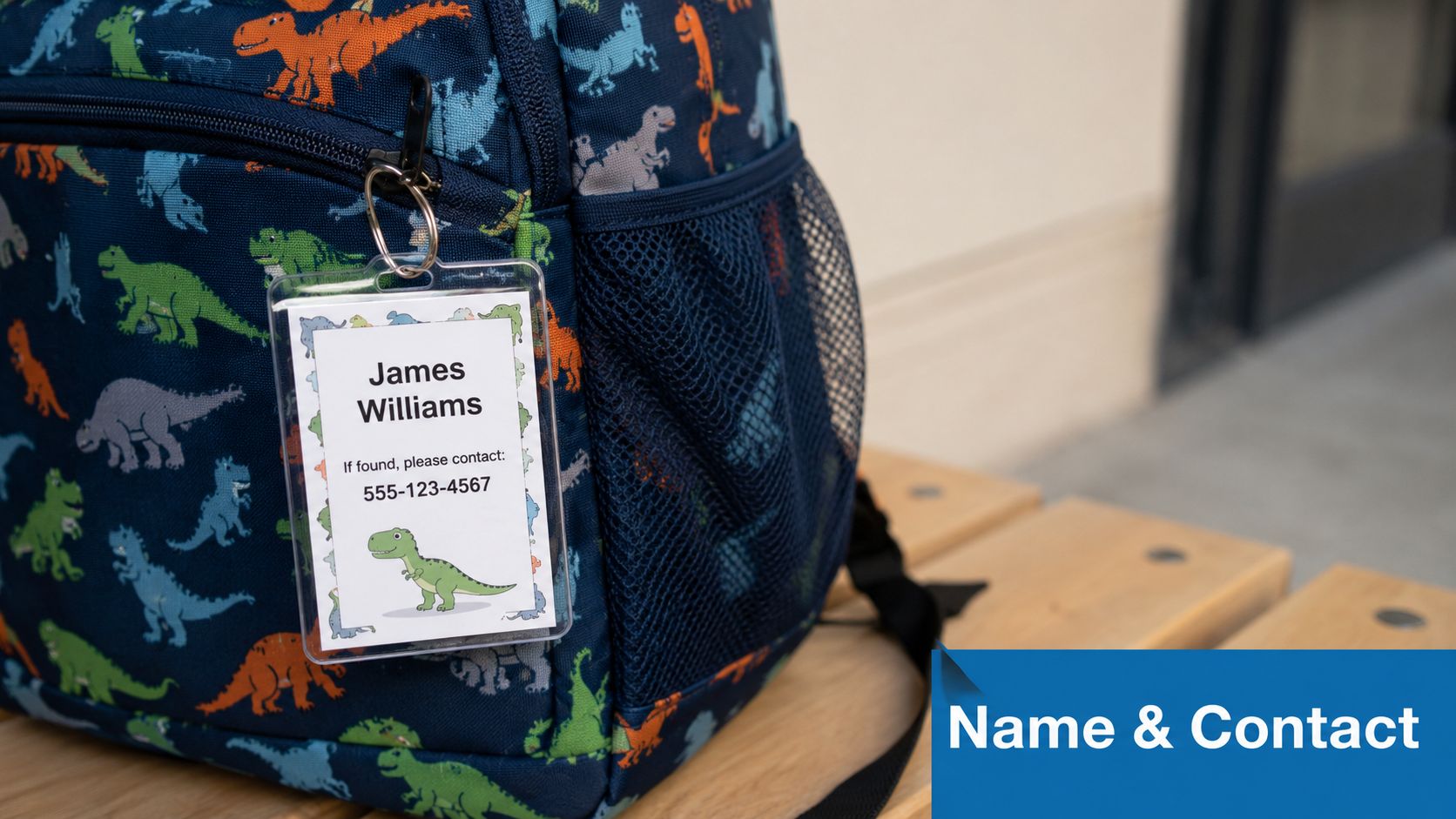
Make the information useful, not excessive
A parent may want to print both phone numbers, especially when caregivers share pickup responsibilities or one adult is often unavailable. That can improve the chance of reaching someone, but it also increases the amount of personal information exposed in public spaces. For most school and daycare settings, a parent contact method is more appropriate than a full home address.
Practical rule: Put fast identification on the outside, and keep sensitive details inside the bag or behind a protected digital profile.
Waterproof or laminated construction is a sensible choice for bags that encounter playground rain, spilled drinks, or regular cleaning. Order extras when the child uses several bags or when contact information may change, but don't keep an outdated tag attached just because it still looks good. Check it at the beginning of the school year and whenever a phone number, classroom, or care arrangement changes.
2. Allergy Alert Bag Tags
An allergy alert tag has a different job from a standard name tag. It should communicate an important restriction quickly to teachers, daycare staff, lunchroom helpers, and other caregivers without forcing them to search through the bag. A bold warning color, a clear symbol, and short wording create a visual signal that's easier to notice than a long note printed in small type.
Use the tag on the lunch bag when the concern relates mainly to food, and consider a second visible location if the child carries an allergy-related emergency kit or medical pouch. The tag shouldn't replace the child's care plan, prescribed medication, or the instructions provided to the adults responsible for them. It should support those systems by making the need visible.
The InchBug guide to allergy alerts offers a useful starting point for coordinating visible alerts with other labels. Consistency helps when a family labels several children or uses matching clothing and item identifiers.
Keep the alert readable
Avoid filling the tag with every detail from a medical document. A short phrase naming the main allergen, paired with an emergency contact or clear instruction, is usually easier to process than dense text. Ask the daycare or school which symbols and wording their staff already recognize before ordering a large set.
- Use strong contrast: Red, yellow, or another clearly differentiated color can help the tag stand out against a lunch bag.
- Name the critical issue: Print the primary allergen or restriction in large, direct wording.
- Confirm staff understanding: Explain what the color, symbol, or phrase means to every regular caregiver.
- Review it regularly: Replace the tag when the child's needs, care plan, or school arrangements change.
One child may need a food alert, while a sibling needs a completely different message. Give each child a distinct tag rather than relying on a shared family design. The goal isn't to make the bag look medical. It's to make the important information hard to miss when a busy adult is sorting several lunches.
3. Themed and Character-Based Bag Tags
A child who helps choose a tag is more likely to recognize it and take ownership of the bag. That makes themed designs practical, not merely decorative. A superhero, animal, space, princess, holiday, or dinosaur theme can give a young child a fast visual cue when several backpacks share the same shape.
Start with the child's current interest, not the theme you expect them to like for years. A preschooler may be excited about a particular character now and ready for a completely different design next school year. That's a good reason to choose a replaceable tag rather than permanently decorating the bag itself.
InchBug's shop-by-theme options show how a family can carry one visual idea across bag tags, clothing labels, and other belongings. Matching designs can help a child connect the tag on a backpack with the label inside a jacket or on a lunch container.
Turn recognition into a small routine
At drop-off, ask the child to point to the design before handing over the bag. At pickup, use the same cue: “Find your space-themed tag.” This builds a simple habit without turning organization into a correction or lecture.
Seasonal designs can work well for camp bags, holiday travel, or short-term activities. For everyday school gear, choose an image with strong contrast and a large name area. A busy background may look fun online but make the text difficult to read in a dim cubby area or crowded hallway.
Combo packs can be useful when the family wants a coordinated look, but check what's included before buying. A child who uses one backpack and one lunch bag may not need a large themed set. On the other hand, siblings, sports gear, and daycare supplies create more opportunities for matching identifiers. The right theme is the one your child can recognize immediately and still enjoys carrying.
4. Eco-Friendly and Sustainable Bag Tags
An eco-conscious bag tag should be evaluated across its entire lifecycle. Material choice matters, but so do durability, replaceability, packaging, manufacturing transparency, and how long the tag remains useful. A tag that peels, fades, or breaks quickly can create more waste than a sturdier option that stays attached through several seasons.
Start with the product details and care instructions. If a seller describes a tag as recycled, biodegradable, or sustainably sourced, check whether the page explains what that means for the finished product. Recognized certifications may provide useful context, while a broad environmental claim alone offers limited guidance.
InchBug outlines its eco-friendly labeling options, giving parents a way to review the brand's stated approach instead of judging by color or packaging. Families assembling reusable travel gear can also browse HYDAWAY eco travel essentials.
Judge the tag by its whole lifecycle
A durable tag can remain useful through daycare, preschool, camp, and travel, especially when the child's name and contact details stay current. Families do not need the heaviest option for every bag. Pick sturdiness that fits how long the bag itself will stay in service. A classroom tote may need less reinforcement than luggage that is loaded, pulled, and handled repeatedly.
- Check the material description: Look for specific information rather than broad environmental language.
- Consider attachment life: A durable tag offers little value if its loop opens easily or its attachment point tears.
- Buy the right quantity: A small, planned set is often more practical than extras that remain unused.
- Include the child: Explain that keeping useful items in service helps reduce unnecessary replacement.
Reuse also depends on whether the identifier can change with the family's needs. If a bag still works for the child's routine but the contact details are outdated, replace the tag rather than discarding the bag. This keeps the system organized and extends the bag's useful life. For growing children, that flexibility matters because equipment may remain functional even as names, classrooms, or contact methods change.
5. Photo and Memory Bag Tags
A photo tag helps when a child is too young to read their name or when caregivers know the child's face more readily than their belongings. Choose a recent, well-lit image with the child's face easy to see. A clear portrait works for a backpack, while a fuller image may help a daycare team distinguish one toddler's bag from another's during a busy handoff.
Photo tags also have emotional value. A grandparent might give one as a milestone gift, or a family might create a travel tag with a favorite shared picture. The best versions still function as identifiers, so the image should support, not overwhelm, the name and contact details.
For printing guidance and ideas around keepsake use, see InchBug's photo bag tag article. Protecting the image beneath a durable waterproof finish is especially important for lunch bags, stroller bags, and items exposed to outdoor play.
Balance recognition and privacy
A child's photo can make a bag easier for familiar caregivers to identify, but it also makes the owner more recognizable to strangers. Avoid pairing a large portrait with a full name, home address, and extensive family information on the outside. A first name, last initial, or private contact method may be enough for the setting.
Photo tags need updating as children grow. A baby's picture may no longer help a new teacher identify an elementary school child, and a very old photo can make a recovery handoff less certain. Review the image with the same care you'd give a phone number or allergy message.
Use the child's choice to create a keepsake without sacrificing function. Let them pick between a smiling portrait, a family travel photo, or a favorite activity image. Then keep the readable name and safe contact method prominent, with the photo acting as a memorable visual anchor.
6. QR Code and Digital Integration Bag Tags
A QR tag helps when a backpack changes hands quickly, such as during daycare pickup or a school field trip. It can connect a small tag to a parent contact method, allergy summary, emergency instructions, or recovery form. Keep a visible first name and last initial, or a simple “If found” message, on the tag itself. A finder should still know what the item is if the code will not scan.
Choose the digital destination carefully. Check how the platform stores information and who can view it. Sensitive medical details belong behind a password or limited-access setting when possible, rather than on an unrestricted public page. For event or group materials, the EventUploader QR sign generator can support QR-based information sharing. The same scanability and privacy checks apply to a child's bag tag.
Check the tag in real conditions
A code that works on a computer screen may fail on a curved, scratched, or moving tag. Test the finished design with more than one phone, in bright and dim light, while the tag hangs naturally from the bag. If scanning requires holding it perfectly flat, a finder in a crowded hallway may struggle.
Use these checks before the bag leaves home:
- Keep a printed fallback: Show enough information to support recovery without scanning.
- Use a mobile-friendly destination: Make the page load quickly and place the main contact choice first.
- Limit sensitive details: Share only what a finder or caregiver needs.
- Review the destination: Update phone numbers, care instructions, and permissions when circumstances change.
A QR code works best as an extra layer for families who need more room than a printed tag allows. It also suits older children who can explain the code to a teacher or caregiver, while a simple printed identifier remains easier for younger children and hurried staff. Avoid adding a code merely for appearance. Its value depends on a readable physical tag, a current destination, and a privacy setting that fits the child's routine.
Watch a quick scanability test before you order:
7. Combo Bundle and Coordinated System Bag Tags
A bag tag solves only one part of the lost-item problem. A child may also carry a water bottle, jacket, lunch container, shoes, sports gear, and a sleep blanket. A coordinated bundle gives every item a consistent name, color family, or theme, so caregivers can identify belongings even when they're separated from the main backpack.
This approach is particularly useful during daycare and back-to-school transitions. Staff can look for the same visual system across a child's supplies, while parents can personalize several item types in one order. InchBug's product range includes bag tags alongside options such as TagPal clothing labels, ShoePal identifiers, allergy alert tags, and Orbit Labels bottle bands.
Build the set around the routine
List what the child carries before choosing a bundle. A toddler in full-day daycare may need identifiers for bottles, spare clothing, shoes, a lunch bag, and a comfort item. An older student may need tags for a backpack, sports duffel, lunch container, and water bottle. The right set depends on the daily handoff, not the number of products in a package.
Look for a system that lets you repeat the same name treatment across different surfaces. A large bag tag can carry the main visual identity, while small labels handle narrow bottle bands or clothing tabs. Keep allergy messaging separate and conspicuous rather than blending it into a decorative theme.
Bundles can reduce ordering effort, but they aren't automatically better value for every household. Check the quantity, sizes, materials, personalization limits, and return terms before committing. Extra labels make sense for siblings or frequent replacements, but unused products don't help the family stay organized.
A consistent system also makes updates easier. When a phone number, classroom, or allergy need changes, review every labeled item instead of updating only the backpack. That small administrative habit prevents one outdated label from undermining an otherwise careful setup.
8. Washable and Reusable Fabric Bag Tags
A child who switches between daycare, sports, and weekend bags can benefit from one detachable fabric tag. Move it from a backpack to a tote, duffel, or travel bag without adhesive residue or a new permanent label. Soft fabric also works well on items that bend, fold, or rub against clothing.
The fastening determines whether the idea works in daily use. Loops, bands, sewn tabs, and hook-and-loop closures each suit different handles and materials. A tag that comes loose in a busy gym loses its purpose. A bulky attachment can snag on cubbies or make a small backpack awkward to carry.
InchBug's reusable Orbit Labels are bottle bands, so confirm that any fabric-based product fits the specific item and attachment point. A formalwear or graduation trip may call for a separate cap and gown travel bag, with its own luggage identifier rather than an everyday child's tag.
Plan the tag around your laundry cycle
Choose the material according to how the bag is cleaned and used. Embroidery usually tolerates repeated friction, while printed fabric allows more detailed artwork and may require closer attention to care instructions. Let tags dry fully before storing them with clean items. Damp sports gear and wet swimwear can leave odors in fabric.
A few practical checks prevent avoidable failures:
- Choose the fastening carefully: Confirm that the closure suits the handle thickness and bag material.
- Inspect seams: Loose stitching or stretched attachment points indicate that the tag needs repair or replacement.
- Keep the name exposed: Place it where folds, straps, or the bag body will not cover it.
- Use a transferable format: Detachable tags are useful when a child rotates among several bags.
Fabric tags also support child-led personalization. A child can choose the color or design, then move the same identifier between bags as interests change. Families sharing equipment between siblings can reuse one tag when the name treatment remains appropriate.
Durability still matters. For a tag that must stay attached permanently, or for luggage facing rough handling, a fixed luggage tag may provide more confidence than a soft reusable option.
8-Point Bag Tag Ideas Comparison
| Item | 🔄 Complexity | ⚡ Resource requirements | 📊 Expected outcomes | ⭐ Key advantages | 💡 Tips |
|---|---|---|---|---|---|
| Personalized Name and Contact Bag Tags | Low, simple personalization and attachment | Low, basic printing, lamination, attachment hardware | High, reduces lost items and mix-ups | Cost-effective, broad compatibility, quick ID | Include two phone numbers; use bright colors; laminate; order extras |
| Allergy Alert Bag Tags | Low–Medium, custom medical text and high-visibility design | Low, bold-color printing and durable lamination; periodic updates | High, immediate visual alert; faster emergency response | Critical health communication; consistent across caregivers | Use standard warning colors/symbols; list main allergens; update regularly |
| Themed and Character-Based Bag Tags | Medium, licensed art and multiple SKU management | Medium, licensing/design costs increase price | Medium, boosts child engagement and recognition | Highly appealing to kids; encourages ownership; identifiable | Let child choose; buy combo bundles; update themes annually |
| Eco-Friendly and Sustainable Bag Tags | Medium, sourcing recyclable/biodegradable materials and certifications | Medium, sustainable materials and limited production runs can raise cost | Medium, lowers waste footprint and appeals to eco-conscious buyers | Reduced environmental impact; teaches responsibility | Verify certifications; weigh durability vs biodegradability; buy in bundles |
| Photo and Memory Bag Tags | Medium, photo prep, print quality control and lamination | Medium, higher printing and lamination quality needed | High, emotional attachment; helps young children visually identify items | Keepsake value; strong recognition; encourages care | Use high-res, well-lit photos; laminate well; update annually |
| QR Code and Digital Integration Bag Tags | High, requires backend, security, and user training | High, development, hosting, maintenance, and smartphone reliance | High, provides rich, updatable information without reprinting | Dynamic updates, privacy controls, multimedia capability | Provide physical backup info; ensure QR scanability; use secure platforms; train staff |
| Combo Bundle and Coordinated System Bag Tags | Medium, coordinating multiple product types and fulfillment | Medium, larger initial order, inventory management but lower per-item cost | High, simplifies organization and saves money at scale | Unified appearance, bulk savings, convenience | Review bundle contents; calculate total savings; check return policies |
| Washable and Reusable Fabric Bag Tags | Medium, design for washability, secure non-adhesive attachments | Medium, durable fabrics and embroidery increase upfront cost but enable reuse | High (long-term), reusable across items; cost-effective over time | Reusable, non-damaging, machine-washable, sustainable | Choose embroidery for longevity; match attachment method to bag; reinforce seams |
Choose the Tag That Fits Your Routine
Start with the bag's actual job. A daycare backpack needs fast visual recognition and a safe parent contact method. A lunch bag carrying an allergy alert needs a clear medical signal that staff can understand immediately. A sports duffel or travel case needs an attachment point that can handle repeated handling, while a child's favorite everyday backpack may benefit most from a theme or photo they recognize without reading.
Next, decide what information belongs outside. A first name, last initial, class or group, and parent contact method can support recovery without displaying a full home address. The privacy guidance for children's backpack tags is useful here because the balance changes by setting. A tag used in a familiar daycare cubby may need a different level of visible information from one carried through airports, camps, or public sports venues.
Then choose the design with your child. A dinosaur, character, photo, or favorite color gives them an ownership cue and can make the daily routine easier. The design should still leave enough contrast and space for the name. A beautiful tag that caregivers can't read quickly is less useful than a simple one with strong lettering.
Check the attachment and care demands
Think through rain, spills, washing, playground use, sports, and travel before ordering. Waterproof or laminated tags suit wet environments, while a washable, detachable fabric option may make more sense when the child moves between bags. A QR code can add a private information layer, but it should never be the only identification method. Test it, protect sensitive information, and keep the visible side useful if a finder doesn't scan.
Review the system at the start of every school year. Confirm parent contacts, allergy information, photos, classroom details, and themes. Replace anything faded, cracked, loose, or outdated. If the child has moved from daycare to school, revisit whether a full name still feels appropriate on the exterior or whether a first name and last initial provide a better balance.
A coordinated set can simplify the process when a child carries many labeled belongings. Bag tags, allergy alerts, clothing identifiers, shoe labels, bottle bands, and back-to-school bundles can give parents and caregivers one consistent way to sort daily gear. InchBug offers these categories in customizable formats, so families can build a system around their routine instead of choosing every label separately.
Choose the bag tag by starting with the child's daily setting, then add the design and information that make identification easy without exposing unnecessary personal details. Visit InchBug to explore personalized bag tags, allergy alerts, reusable bottle bands, and coordinated daycare or back-to-school labeling options. Build the set around the bags and belongings your child carries, and review the details before the next busy drop-off.