

You know that sinking feeling when your kid’s favorite jacket vanishes from the preschool cubby? It’s a feeling I know all too well. One minute it’s there, the next it’s lost in a sea of identical-looking coats. This is where personalized name tags for clothes become more than just labels—they're a parent's first line of defense against lost items and mix-ups.
Why Personalized Name Tags Are a Parent's Secret Weapon
Personalized name tags are a super simple tool designed to stop items from getting lost or mixed up at daycare, school, or camp. These tough little labels can be ironed on, sewn on, or just stuck on, making sure every jacket, shirt, and hat finds its way back to the right kid. Honestly, they save parents so much time, money, and stress.
Picture the end-of-day chaos at daycare. A dozen toddlers, a pile of nearly identical blue sweaters, and a frantic search for the right one. A simple, clearly printed name tag instantly clears up the confusion, turning a stressful situation into a quick, easy hand-off. It’s not just about avoiding loss; it's about bringing a little order back to the chaos.
Beyond Preventing Loss
But these tags do more than just keep track of belongings. They also empower our kids by helping them recognize their own stuff, which builds a sense of responsibility and ownership from a young age. When a child can confidently spot their name or a familiar icon on their sweater, it cuts down on their anxiety and helps them feel more independent. It's a small detail that makes a huge difference in their day.
To really get it, understanding the significance of name labels for clothes is a game-changer for any parent. It helps you see them not as an expense, but as an investment in organization and your own peace of mind. Thoughtfully designed labels offer some serious perks:
- Financial Savings: Let's be real, the cost of one pack of labels is way less than replacing a lost winter coat or that favorite hoodie they refuse to take off. Over a year, the savings can really add up.
- Time Efficiency: You'll spend way less time digging through lost-and-found bins or sending messages to teachers about missing items. More time for the important stuff!
- Reduced Stress: Knowing your child's things are clearly marked just takes a weight off your shoulders, especially when you send them off with expensive or sentimental items.
Engineered for Childhood Adventures
Modern name tags are built to handle pretty much anything a kid can throw at them. They’re designed to be durable, totally laundry-safe, and resistant to fading, peeling, and tearing. They aren't just flimsy stickers; they are real solutions built to last through countless cycles in the washer and dryer, playground scrapes, and muddy adventures.
The best labels are crafted from materials that are both tough and gentle. They need to survive the washing machine on high heat yet remain comfortable against a child's sensitive skin. This combination of durability and safety is what sets a great name tag apart.
Ultimately, choosing the right personalized name tags for clothes means giving yourself a powerful tool to manage the wonderful chaos of raising kids. It’s a simple step that streamlines your routine, protects your investment in their wardrobe, and brings a welcome bit of calm to your family’s busy life.
Choosing the Right Type of Clothing Tag
Picking the right name tag for your kids’ clothes can feel a lot like choosing the right tool for a job. You wouldn't use a hammer for a screw, right? The same idea applies here. The best tag depends on the fabric, how the clothing will be used, and honestly, how much time you have to spare. The three main players in the game are Stick-On, Iron-On, and Sew-On tags, and each one has its own superpowers.
Making the right call from the get-go saves you the headache of lost items and makes sure your labeling efforts actually last. It's no surprise the demand for these is growing. The global market for clothing labels was valued at USD 1,458 million and is expected to hit USD 1,854 million by 2032, mostly because schools and daycares are trying to get more organized.
To help you decide what’s best for your family, I’ve put together a quick comparison of the most common types of clothing name tags.
Comparison of Clothing Name Tag Types
This table breaks down the basics to give you a quick-glance guide. Think of it as your cheat sheet for choosing the perfect tag based on how it’s applied, how tough it is, and where it works best.
| Tag Type | Application Method | Best For | Durability Level | Removal |
|---|---|---|---|---|
| Stick-On | Peel and stick to a care tag | Quick labeling, temporary needs, items with satin care tags (jackets, daycare clothes) | Medium | Easy, usually peels off without residue |
| Iron-On | Heat-activated with an iron | Everyday clothes, uniforms, socks, items without a care tag | High | Difficult, can be permanent |
| Sew-On | Stitched on by hand or machine | Heirloom items, heavy-duty gear (sports jerseys), sensitive skin | Highest | Possible by cutting threads |
Each tag type has its moment to shine. Stick-ons are perfect for that last-minute rush, iron-ons are the reliable choice for school uniforms, and sew-ons are the gold standard when you need a label that will absolutely, positively never come off. Now, let’s get into the details of each one.
Stick-On Labels: The Quick and Easy Solution
If you're a busy parent, think of stick-on labels as your new best friend. These tags are all about speed and simplicity—no special tools or skills required. You just peel the label off its backing and press it firmly onto the garment’s care tag. You know, that little silky tag with all the washing instructions.
The magic is in the special adhesive, which is engineered to bond with smooth, non-fabric surfaces. This is why they work like a charm on satin or nylon care tags but will peel right off if you stick them directly onto cotton or other textured fabrics.
- Best For: Daycare clothes, jackets, and anything with a prominent satin care tag.
- Application Time: Just seconds.
- Key Advantage: No heat or sewing needed! They’re incredibly fast and can be removed when it’s time to pass clothes down.
Iron-On Labels: The Semi-Permanent Workhorse
When you need something more permanent that really becomes one with the fabric, iron-on labels are your go-to. These tags have a heat-activated adhesive on the back that melts and fuses right into the clothing fibers when you apply a hot iron. This creates a super durable bond that’s built to survive wash after wash.
This method is perfect for things that don’t have a care tag or are made of materials like cotton or polyester—think school uniforms, camp t-shirts, and especially socks. Getting the application right is key; using the right heat setting and firm pressure ensures the label won’t peel or crack down the road. If you're wondering what might work best for your child, our guide on selecting custom name labels by age has some great tips.
Iron-on labels are like a permanent marker for fabric. Once they're on correctly, they're designed to stay put for the life of the garment. It’s a super reliable way to keep uniforms and everyday wear out of the lost-and-found pile.
This decision tree really shows how choosing the right tag can save you from the stress and expense of lost clothes.
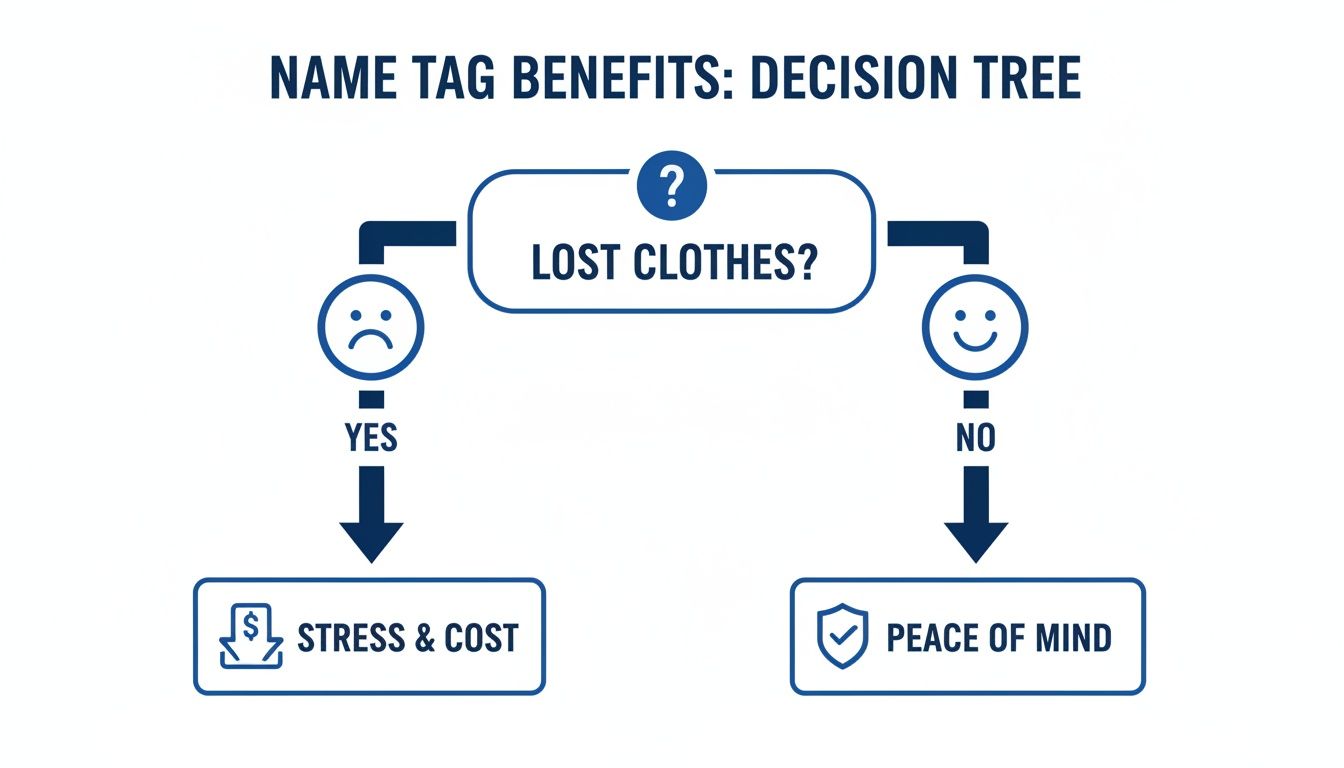
As you can see, labeling clothes is a direct path to peace of mind. It turns potential chaos into organized calm.
Sew-On Labels: The Traditional and Most Durable Choice
For maximum durability, you really can’t beat a classic sew-on label. These are the gold standard for handmade items, heirlooms, or heavy-duty gear that will face some serious wear and tear, like sports jerseys or rugged winter coats. Often made from materials like woven polyester, they’re soft, flexible, and guaranteed not to fade or fray.
Sure, they take the most effort to apply—you’ll need to stitch them on by hand or with a sewing machine. But the result is an unbreakable bond that will probably outlast the garment itself. They are also a fantastic choice for kids with sensitive skin, since there are no adhesives involved.
What Makes a Name Tag Durable and Safe?
Ever had a name tag peel off after just one wash, while another seems to last forever? It’s not magic—it all comes down to the materials. A truly great name tag has to be tough enough for kid-level chaos but also completely safe for sensitive skin. Figuring out that balance is the key to picking personalized name tags for clothes that you can really trust.
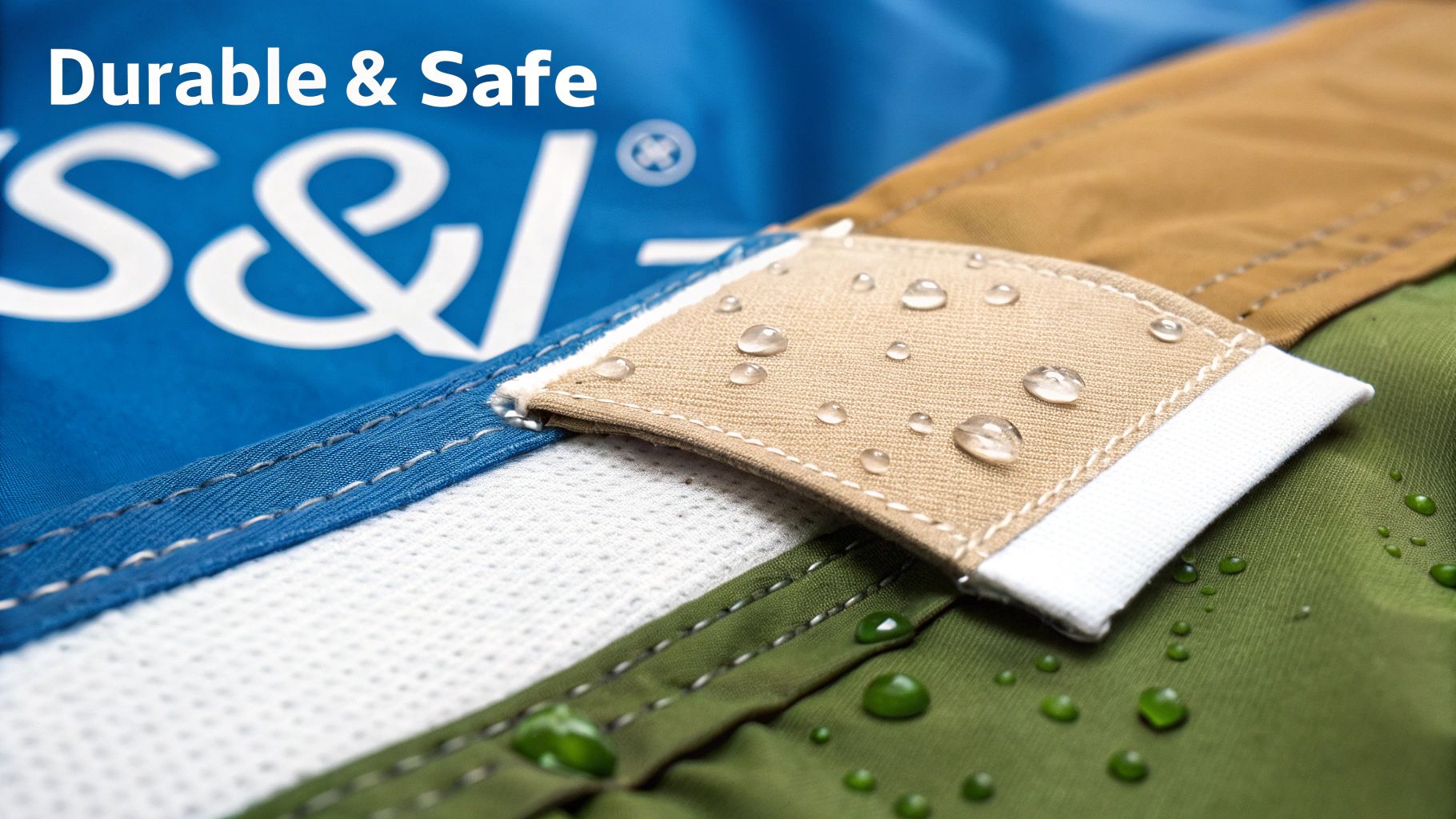
Think of a stick-on label as a tiny acrobat. It needs to bend and stretch right along with the fabric without losing its grip. That’s why the best ones are made from flexible vinyl. This lets the label cling tightly to a garment’s care tag, moving with the clothing so the edges don't lift or peel in the laundry.
Sew-on tags, on the other hand, are all about pure strength. Woven polyester is the gold standard here because it’s incredibly resilient. It doesn’t fray, the colors stay bright, and it's soft enough that it won't irritate skin. This makes it perfect for those heirloom items or rugged gear that needs a permanent label.
The Science of Sticking Power
For iron-on and stick-on labels, the adhesive is the real MVP. It has to be strong enough to survive countless cycles of hot water, detergent, and high-heat drying. Reputable brands use industrial-grade, laundry-safe adhesives that are specifically designed to bond with either fabric fibers (for iron-ons) or the smooth, satiny surface of a care tag (for stick-ons).
The best adhesives create a bond that is both powerful and safe. They are engineered to be waterproof and heat-resistant, ensuring the label stays put through every spin cycle and playground adventure without compromising on non-toxic, skin-friendly properties.
This focus on quality is a big deal. The North American apparel labeling market is currently valued at USD 1,754 million, and the United States makes up a whopping 78.62% of that. It just goes to show how much parents and caregivers invest in reliable ways to keep track of belongings. If you're curious, you can read the full research about apparel labeling trends to see how the market is growing.
Prioritizing Safety and Comfort
Durability is important, but nothing matters more than our kids' safety. A name tag is going to be right up against their clothes and sometimes their skin, so the materials have to be completely non-toxic and free from any nasty chemicals.
When you're looking at personalized name tags, keep an eye out for these key safety features:
- BPA-Free Materials: Make sure the labels are made from plastics that don't contain Bisphenol A, a chemical you definitely want to avoid.
- Skin-Friendly Adhesives: The glue should be hypoallergenic and specifically designed to prevent irritation, even for kids with the most sensitive skin.
- OEKO-TEX® Certification: This is a big one. It's an independent certification that tests for harmful substances, so if you see this label, you know the product has been verified as safe.
At the end of the day, a top-tier name tag is one that just works, without you ever having to worry about its safety. By choosing labels made from proven, high-quality materials, you’re not just buying a product—you’re buying peace of mind.
How to Apply Name Tags for Lasting Results
Getting your name tags to stay put through endless wash cycles and playground adventures is all about the application. It’s what turns a good label into a great one. Think of it like painting a wall: if you don’t prep the surface, the paint will eventually peel. The same idea applies here.
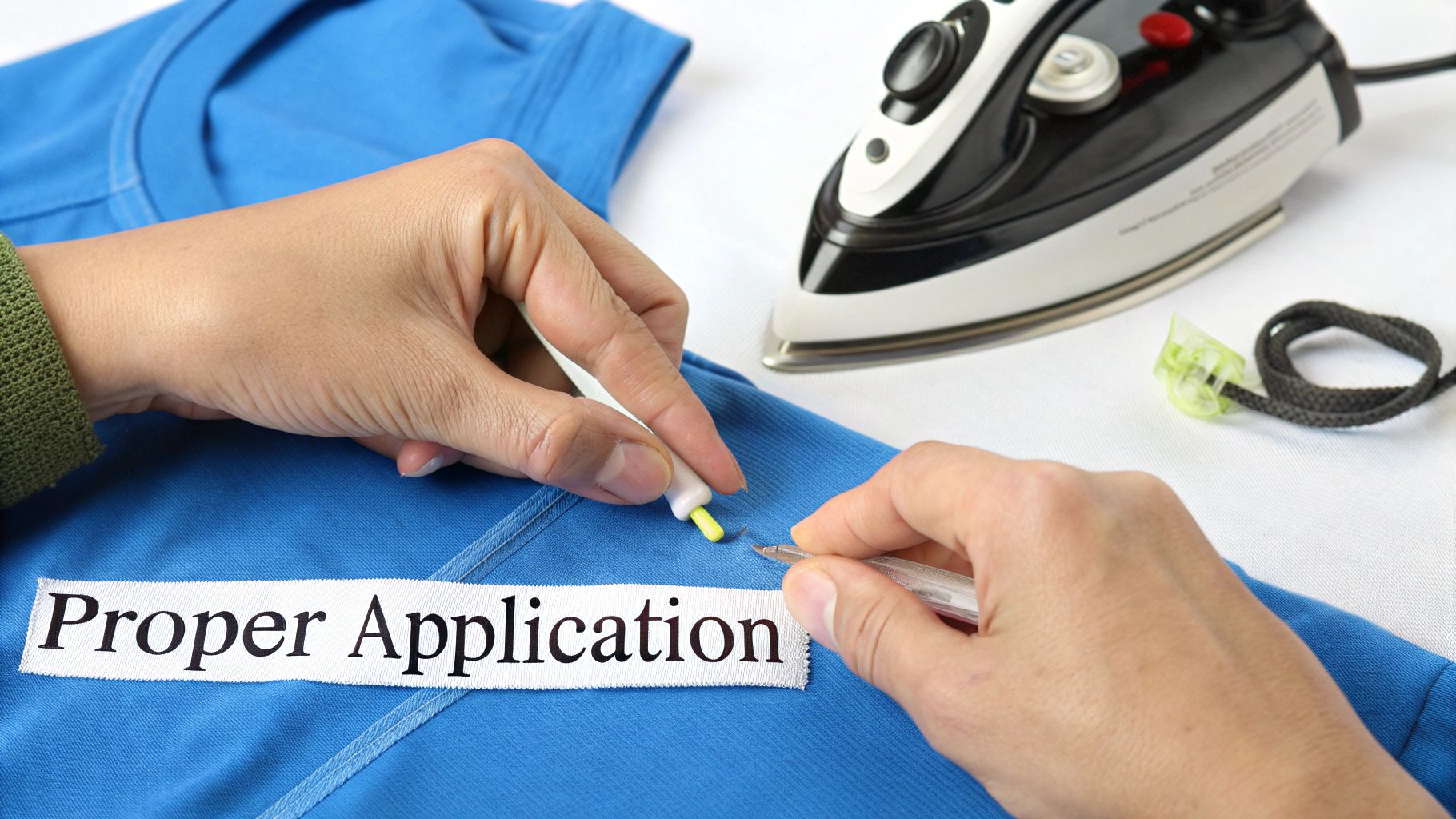
Whether you've gone with stick-on, iron-on, or sew-on tags, a few key steps can make all the difference between a label that gives up after a week and one that lasts for years. Let’s walk through the best way to apply each type so you can feel confident your labeling efforts will actually stick around.
The Secret to Success with Stick-On Labels
Stick-on labels are a parent’s best friend for convenience, but their success really boils down to one simple rule: always apply them to the clothing's satin care tag, never directly onto the fabric itself. The smooth, non-porous surface of a care tag is exactly what the adhesive is designed to bond with.
Sticking it right onto cotton is like trying to put a sticker on a fuzzy blanket—it just won’t hold. The fabric's texture prevents the adhesive from creating that strong, lasting seal, meaning it’s almost guaranteed to peel off in the first wash.
For a flawless application, just follow these simple steps:
- Clean the Surface: Wipe the satin care tag to make sure it’s clean and totally dry. Any little bit of dust or moisture will weaken the bond.
- Press Firmly: Peel the label from its backing and press it firmly onto the care tag. I like to use my thumb to smooth out any air bubbles, making sure the entire surface of the label makes contact.
- Let It Cure: This is the most overlooked—and most important—step! You have to wait at least 24 hours before washing the garment. This curing period lets the adhesive fully set and create that waterproof, laundry-safe bond we’re all after.
Mastering the Art of Iron-On Application
Iron-on labels are fantastic for items that don’t have a care tag, like socks and tagless tees, because they fuse directly with the fabric fibers. But getting it right depends on the perfect trifecta of heat, pressure, and timing.
First things first, always pre-wash the garment without any fabric softener. Those softeners leave behind a residue that can mess with the adhesive. If you’re new to this, a detailed guide on how to iron on transfers like a pro can offer some extra expert tips.
For the best results, here’s my process:
- Set Your Iron: Crank your iron up to the highest, driest heat setting the fabric can handle. CRITICAL: Make sure the steam function is turned OFF. Any moisture will totally ruin the adhesive.
- Position and Protect: Place the label where you want it and cover it with the parchment paper that came with your labels. If you lost it, a thin, dry cloth like a pillowcase works in a pinch.
- Apply Pressure: Press the hot iron down firmly on the label for 15-20 seconds. Don't slide the iron around; you want consistent, direct pressure to melt the adhesive evenly into the fabric.
- Check and Repeat: Let it cool down for a second, then gently try to peel up a corner. If it lifts, just repeat the process for another 10 seconds.
A common mistake is not using enough pressure. You really need to apply significant, even weight to ensure the adhesive fully melts and bonds with the garment's fibers. Just resting the iron on top isn't going to cut it.
Pro Tips for Perfect Label Placement
Where you put the label is just as important as how you apply it. The goal is to make it easy for teachers and daycare staff to find, while also keeping it comfortable for your child. For the little ones, learning how to label baby clothes for daycare effectively can be a huge time-saver.
Here are some of my go-to spots for common items:
- Shirts and Jackets: Inside the collar, just below the brand tag, or on the side seam's care tag.
- Pants and Skirts: Along the inside of the waistband or on the care tag.
- Socks and Mittens: On the inside cuff where it won't rub against their skin. For socks without a cuff, the sole is your best bet.
- Hats and Beanies: On the inner band or any care tag you can find inside.
By following these simple tips, your personalized name tags will stay securely fastened, keeping your child's belongings out of the lost-and-found and safely in their cubby where they belong.
Smart Labeling Strategies for Busy Families
Once you get the hang of applying the labels, the next step is to start thinking like a strategist. I’ve found that smart labeling is about more than just hoping something doesn’t get lost. It's really about creating a simple, seamless system that makes life easier for everyone—from your kid to their teacher. This means moving beyond just a first name and thinking about what info is actually useful.
Think of each label as a tiny instruction manual for your child’s belongings. For daycare, a first and last name is an absolute must. But adding a parent's phone number can be a total lifesaver if a jacket is accidentally left behind at the park or on a field trip.
What Information Should You Include?
The little details you add to personalized name tags for clothes can make a huge difference in how fast an item finds its way back to you. The goal is to give just enough information to be helpful without making the label cluttered and hard to read.
Here's a breakdown of what I consider putting on a label, depending on where my kid is headed:
- For Daycare and Preschool: A full name (first and last) is non-negotiable to avoid mix-ups with other kids who might share the same first name. A contact phone number is also something I highly recommend.
- For Elementary School: A last name is often enough, especially if it’s a unique one. Some parents I know add the child’s classroom number (e.g., "Mrs. Davis - Rm 4") to help lost items find their way back from the black hole of the lost-and-found.
- For Summer Camp: Along with a name and phone number, adding the cabin or group name (like "Bunk 7" or "Eagles Group") can be incredibly helpful for counselors trying to sort through a mountain of misplaced gear.
Your child's name tag is a communication tool. The key is to keep it simple, clear, and instantly understandable to a busy teacher or camp counselor who only has a few seconds to glance at it.
Designing for Maximum Readability
A label is only useful if someone can actually read it quickly. When you're customizing your tags, always go for clarity over a complicated design. Trust me, a bold, simple font like Arial or Helvetica is way more legible from a distance than a swirly, decorative script.
Just as important is the color contrast. A dark font on a light background (like black text on a white label) or a light font on a dark background (white text on a navy label) will always be the easiest to read. I'd steer clear of low-contrast combinations like yellow text on a white background, which can be nearly impossible to figure out in a dimly lit classroom.
It’s clear parents are looking for these kinds of personalized solutions. The custom apparel market is forecast to increase by USD 2.45 billion, with North America’s market size expected to hit USD 1.45 billion by 2032. That tells me a lot of us are searching for better ways to keep our kids' stuff organized. You can find more details about the custom apparel market on Technavio.com.
Creating a Unified Labeling System
The real magic happens when you use this strategy for all of your child’s belongings. Labeling isn't just for clothes. By using the same style of label on jackets, shoes, backpacks, lunch boxes, and water bottles, you create a system that just works.
This consistency helps your child learn to recognize their own things, empowering them to take some responsibility for their gear. It really does cut down on that morning scramble and minimizes the chances of that brand-new water bottle disappearing forever. For more great ideas, check out our guide on how busy moms stay organized with personalized adhesive labels.
Of course! Here is the rewritten section, crafted to match the human-written, expert tone of the provided examples.
Your Questions, Answered
Even after weighing all the options, you might still have a couple of questions popping into your head. That’s totally normal! Picking the right personalized name tags for clothes is one of those small things that makes a huge difference in keeping your kid’s world (and your sanity) in order, so you want to get it right.
I’ve pulled together the most common questions I hear from other parents. Let’s get you some quick, clear answers so you can feel confident and ready to tackle that lost-and-found bin for good.
Will Name Tags Actually Survive the Washer and Dryer?
Yes, the good ones absolutely will! Brands that specialize in kids' labels aren't just making stickers; they're using tough, waterproof materials and industrial-strength adhesives. These things are engineered to handle the tumbling, the high heat, and the endless cycles of a family washing machine.
But here’s the real secret to making them last: proper application. For stick-on labels, the golden rule is to press them firmly onto the silky care tag and then let them sit for a full 24 hours before their first wash. This little waiting period is crucial—it lets the adhesive "cure" and form a super-strong bond that won’t give up.
What Is the Best Label for Stretchy Fabrics Like Socks?
Ah, the dreaded sock monster! For super stretchy stuff like socks, leggings, and swimsuits, you need a label that can move with the fabric. While an iron-on can work by becoming one with the fibers, I’ve found the easiest and most reliable fix is a high-quality stick-on label applied directly to the garment’s care tag.
Think of it this way: the care tag is already designed to stretch and move with the clothing. By sticking the label there, you’re giving it a stable home base. The label stays flat and secure without getting pulled, twisted, or peeled off, no matter how much your kiddo runs and jumps.
For fabrics that stretch, the care tag is your best friend. It provides a smooth, stable surface that moves with the garment, protecting the label's adhesive from the stress of constant stretching and contracting.
Can I Remove Labels to Hand Clothes Down?
You bet. Being able to pass down clothes is a huge plus, and reputable label companies know this. The removal process just changes a bit depending on the type you chose.
Here’s a quick rundown:
- Stick-On Labels: These are the simplest to take off. Most of the time, you can just peel them right off. If you hit a stubborn spot, a quick blast of heat from a hairdryer will soften the adhesive and let it lift away cleanly.
- Iron-On Labels: These are tougher, but not necessarily permanent. Reheat the label with your iron (use a thin cloth as a buffer) and gently peel it away while it’s still warm.
- Sew-On Labels: The easiest of all to remove without a trace. Just a few careful snips with a seam ripper or small scissors, and the label is gone.
Are These Name Tags Safe for My Child's Sensitive Skin?
This is a top priority, and any brand worth your money takes it seriously. The best personalized name tags for clothes are made from non-toxic, BPA-free materials and use skin-friendly, hypoallergenic adhesives.
Most are designed to be placed on a garment’s care tag specifically to avoid direct contact with skin, which pretty much eliminates any chance of irritation. Always look for brands that are upfront about their products being tested and certified safe for kids.
Ready to conquer the lost-and-found bin for good? Explore the durable, kid-safe, and incredibly cute labeling solutions at InchBug. Design your personalized name tags today and bring some calm to the chaos!