

Starting daycare marks a significant milestone, bringing a mix of excitement and anxiety for both parents and children. The key to a smooth transition lies in meticulous preparation. This comprehensive daycare checklist for parents is your strategic guide to navigating enrollment, packing, and daily routines with confidence, ensuring nothing falls through the cracks. It's designed to be more than just a list; it’s a system for building a stress-free daycare experience from the ground up.
Forget generic advice. We will dive deep into eight critical areas, providing actionable insights and practical solutions for each. This guide covers everything from the essential paperwork and medical forms to the surprisingly crucial role of durable, personalized labels for every single item your child brings. Proper organization isn't just about convenience; it’s about safety, efficiency, and ensuring your child feels secure with their familiar belongings.
This checklist will help you:
- Prevent lost items by implementing a foolproof labeling strategy.
- Streamline daily drop-offs with a perfectly organized daycare bag.
- Ensure clear communication with providers regarding medical needs and permissions.
- Prepare your child emotionally with familiar comfort items and a predictable routine.
We’ll explore how to set up efficient systems that reduce morning chaos, prevent frantic searches for a missing sock, and guarantee your child has everything they need for a safe, comfortable, and happy day. Let’s get you and your little one fully prepared for a successful daycare journey.
1. Personalized Name Labels for All Belongings
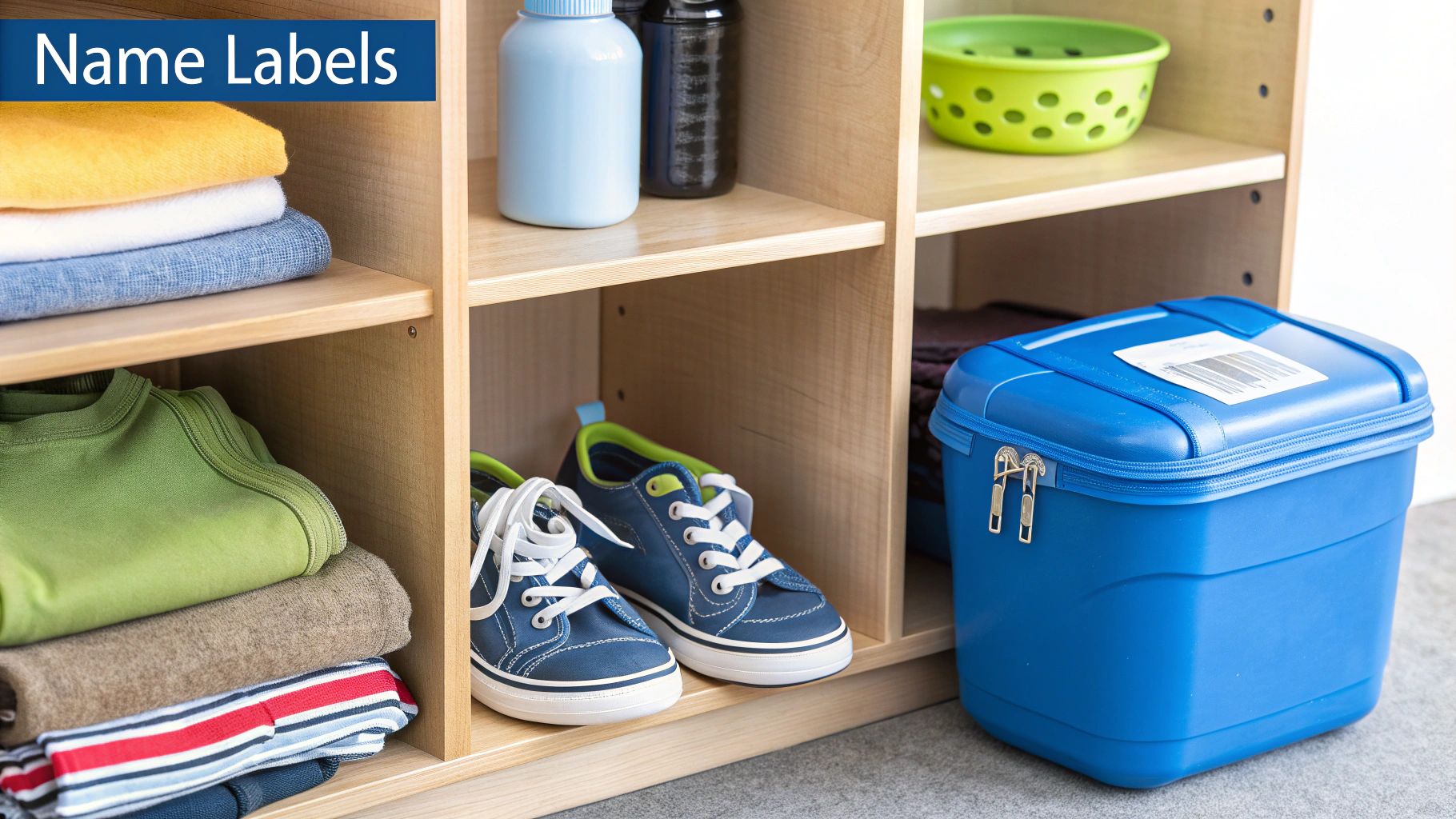
The bustling environment of a daycare center is a prime location for mix-ups. With dozens of similar-looking sippy cups, jackets, and backpacks, it's easy for your child's belongings to get lost or accidentally taken home by another family. Applying durable, waterproof name labels to everything you send to daycare is a non-negotiable step for maintaining organization and preventing loss. Personalized labels ensure that every item, from a tiny sock to a large blanket, is easily identifiable and can be quickly returned to your child's cubby.
Why Labeling is a Daycare Essential
Many daycare centers and preschools now require that all personal items be labeled with the child's name. This policy minimizes classroom chaos, reduces the spread of germs from shared items, and saves teachers valuable time that would otherwise be spent searching for lost belongings. For parents, it provides peace of mind and reduces the cost and stress of constantly replacing misplaced gear.
Products like InchBug's specialized labels are designed to withstand the rigors of daycare life. Their TagPal clothing labels, ShoePal shoe identifiers, and Orbit Labels for bottles are engineered to be dishwasher-safe, laundry-safe, and durable enough for daily use.
Actionable Labeling Strategies
To make labeling effective, follow these practical tips:
- Start Early: Label items as soon as you purchase them. It’s much easier to label a new set of clothes or a lunchbox before it ever enters the daycare rotation.
- Use Combo Packs: Save time and money by purchasing label bundles that include different sizes and types for clothing, containers, shoes, and bags.
- Strategic Placement: Place labels in visible, consistent locations. For example, always put shoe labels inside the heel and bottle bands around the middle for quick identification by caregivers.
- Get Creative: Use color-coded or themed labels to help pre-readers identify their own belongings. For parents with a crafty touch, learning how to embroider a name by hand can provide durable and charming personalized labels.
Understanding these requirements is a key part of any complete daycare checklist for parents. To learn more about why many schools have adopted this policy, explore this guide on why personalized labels are often required.
2. Emergency Contact Information and Medical Documentation
Before your child's first day, you will need to complete and submit a comprehensive packet of medical and emergency forms. This documentation, which includes emergency contacts, health insurance details, allergy information, and up-to-date vaccination records, is a non-negotiable legal requirement for licensed daycare centers. It equips caregivers with the critical information needed to provide appropriate care, administer medication if necessary, and contact you or a designated alternate immediately in case of an emergency.
Why This Documentation is a Daycare Essential
These forms are the primary tool that allows the daycare staff to act swiftly and correctly in any health-related situation, from a minor scrape to a serious allergic reaction. Licensing bodies require centers to have these records on file for every child to ensure they meet safety standards and can provide proof of compliance. For parents, having this paperwork in order provides the crucial reassurance that the center is prepared for any scenario and can legally authorize medical treatment if you cannot be reached. Keeping this information accurate and current is a key responsibility for families.
Many centers now use digital portals to streamline the collection of this information, making it easier for parents to upload documents and for staff to access them quickly. However, maintaining your own organized copies is still a best practice.
Actionable Documentation Strategies
To manage this critical part of the daycare checklist for parents, follow these practical tips:
- Create a Centralized Folder: Keep both physical and digital copies of all submitted documents. Use a clearly labeled binder or a secure cloud folder to store vaccination records, insurance cards, and contact lists.
- Designate Local Contacts: Your emergency contacts should ideally live nearby and be able to reach the daycare quickly. Always inform these individuals that they are listed and provide them with authorization details.
- Update Proactively: Do not wait for the daycare to ask for updates. If you move, change phone numbers, or switch insurance providers, inform the administration in writing immediately. The same applies to any new allergies or medical conditions.
- Prepare a Quick Summary: Create a one-page "at-a-glance" sheet with your child's photo, key medical details, allergies, and primary emergency contacts. Laminate it and provide it to the main caregivers as a handy reference for their classroom.
3. Allergy Alert Labels and Medical Identification Tags
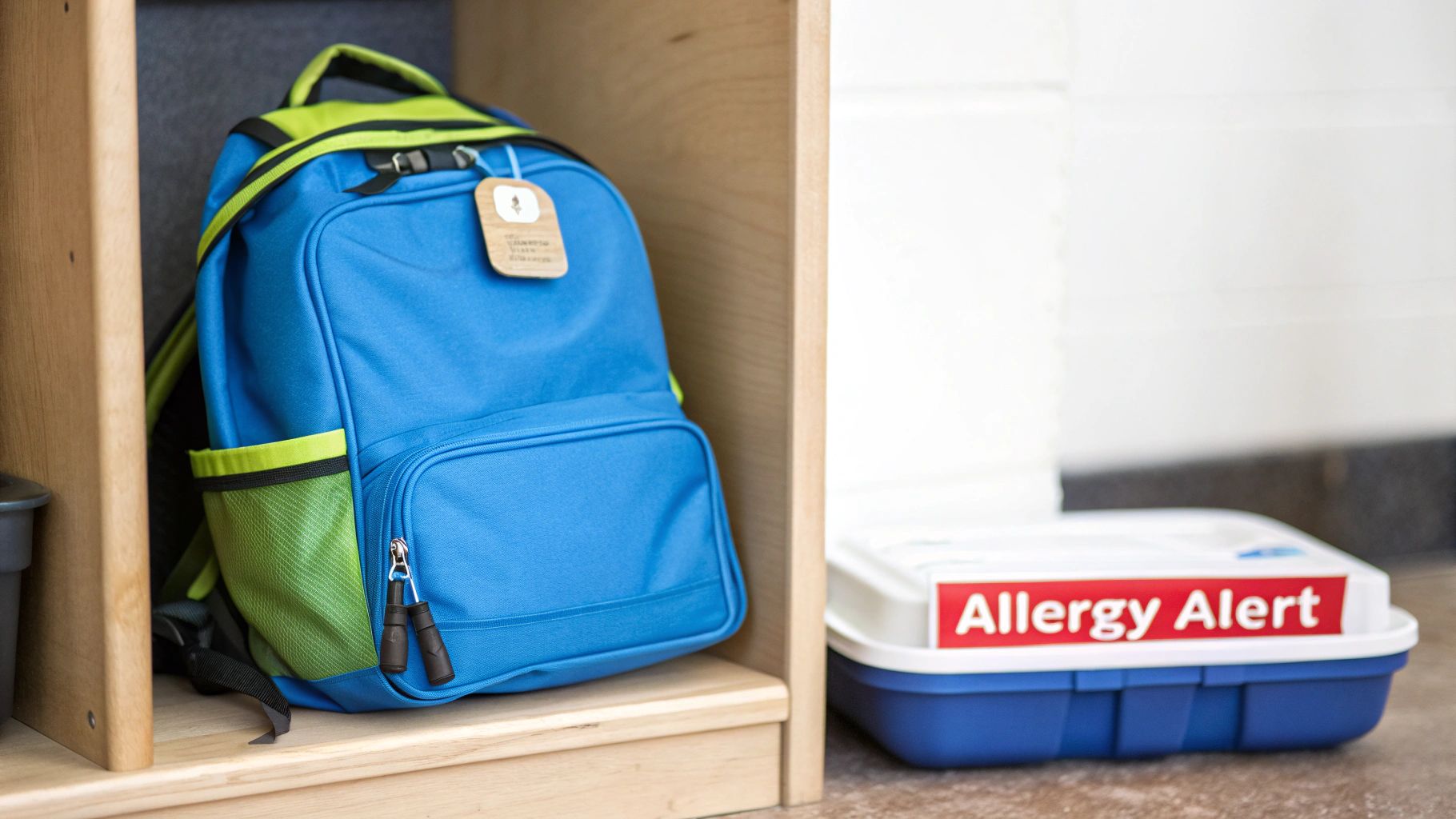
For parents of children with food allergies, asthma, or other significant medical conditions, clear communication is the cornerstone of safety. In a busy daycare setting, visible allergy alert labels and medical identification tags serve as a critical first line of defense. These highly noticeable markers ensure that every caregiver, from the lead teacher to a substitute, is immediately aware of your child's specific health needs, especially during mealtimes, snack breaks, or in an emergency.
Why Medical Identification is a Daycare Essential
A simple, clear label can prevent a life-threatening situation. Daycare staff are responsible for numerous children, and relying solely on memory or written notes in a file is not enough. Visible tags on lunch boxes, water bottles, and backpacks provide a constant, unavoidable reminder of a child's allergy or medical condition. This proactive approach helps prevent accidental exposure and ensures staff can react swiftly and appropriately if a problem arises.
Products like InchBug's Photo Allergy Labels and Alert Tags are designed for this exact purpose. They are bright, durable, and can be customized with specific information, making them an indispensable part of your child's daycare gear. For parents, this provides an essential layer of security, knowing their child’s health information is always visible.
Actionable Medical Alert Strategies
To ensure your child's medical information is communicated effectively, follow these practical steps:
- Collaborate with Your Center: Speak with the daycare director to understand their existing allergy protocol. Work together to establish the best system for displaying your child's information, whether it's color-coded tags or specific placement on cubbies.
- Use High-Visibility Alerts: Choose labels and tags with bright, contrasting colors like red or orange that stand out. The goal is for the alert to be easily seen from across a room.
- Label Multiple Items: Don't stop at the lunchbox. Place medical alert tags on your child's backpack, cubby, and even their water bottle to ensure the information is seen in various contexts throughout the day.
- Create Laminated Cards: Provide the daycare staff with a laminated, wallet-sized card detailing your child's allergies, emergency contacts, and action plan. This gives them a durable, quick-reference guide.
- Regularly Review Information: Reconfirm allergy and medical details with your child's teachers at the beginning of the school year and after any parent-teacher conferences. Ensure any new staff or volunteers are also briefed.
Properly using these labels is a vital component of any complete daycare checklist for parents. To further understand how to implement these safety measures, you can find more information about using personalized allergy labels for kids' safety at daycare.
4. Complete Change of Clothes and Seasonal Backup Supply
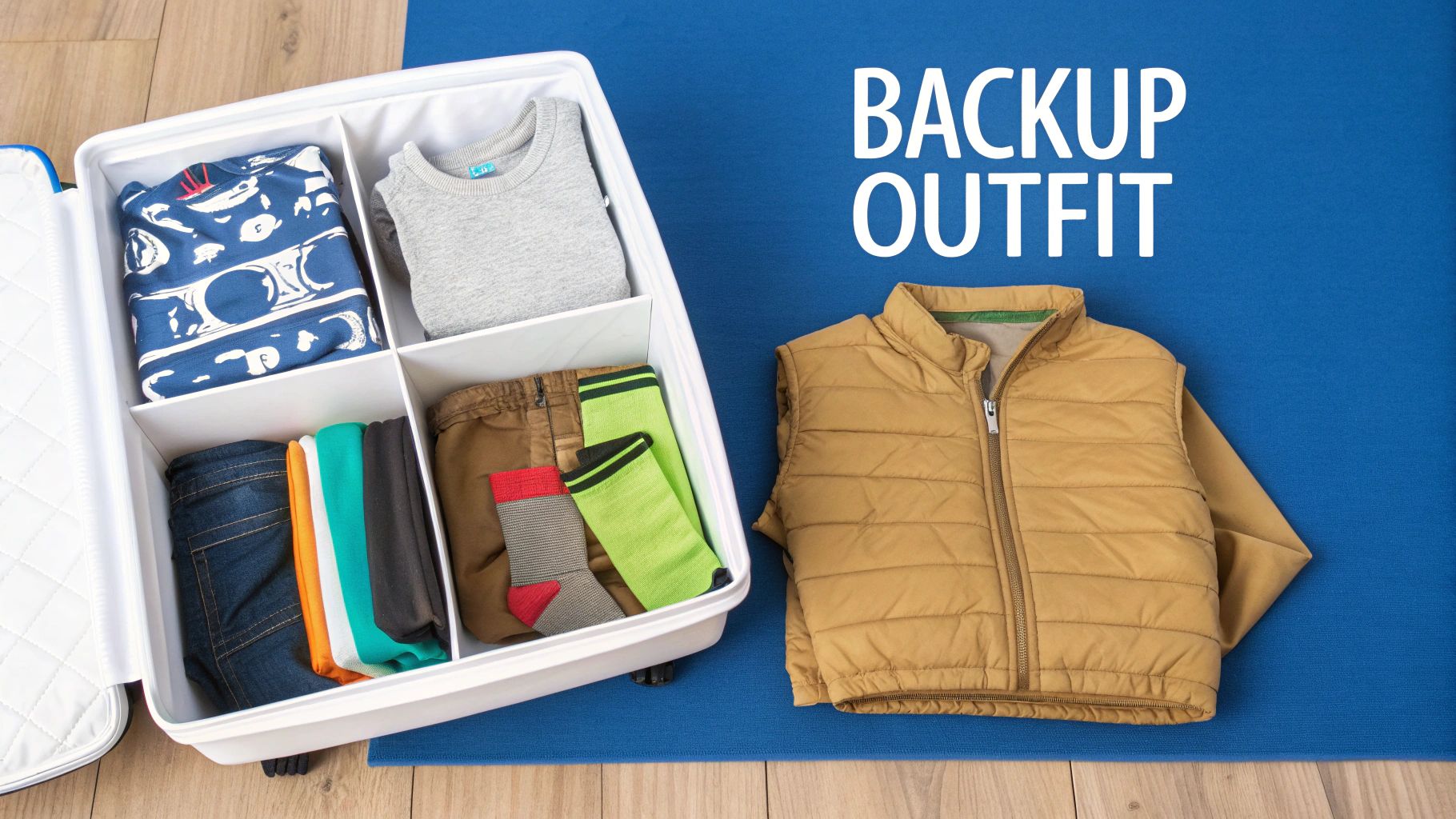
Accidents, spills, and messy play are all part of a typical day for a child in daycare. From a spilled cup of juice to an enthusiastic art project, your child's clothes can go from clean to soiled in an instant. Packing a complete, seasonally appropriate change of clothes is a fundamental part of any daycare checklist for parents, ensuring your child remains comfortable, clean, and dry throughout the day. This backup supply prevents you from having to make an emergency trip to the center with fresh clothes.
Why a Backup Supply is a Daycare Non-Negotiable
Having a backup outfit on hand at the daycare center is a requirement for most facilities. It allows caregivers to quickly and efficiently handle any messes without disrupting the classroom routine or leaving a child in uncomfortable clothing. A well-stocked backup supply means staff can grab what they need immediately, from a fresh pair of socks after puddle-jumping to a clean shirt after a messy lunch. This proactive step supports your child's well-being and shows you're prepared for the realities of daily daycare life.
This preparation is a key component of a successful daycare experience, demonstrating foresight and partnership with the center's staff. It’s also crucial for unexpected weather changes, ensuring your child has a warm layer if the temperature drops or lighter clothes if it warms up.
Actionable Strategies for Managing Backup Clothes
To keep your child’s backup clothing organized and ready for use, follow these practical tips:
- Create Complete Outfit Packs: Pack a full outfit in a labeled, waterproof bag. This should include a shirt, pants, underwear (if applicable), and socks. This "grab-and-go" system makes changes quick and easy for teachers.
- Rotate Seasonally: Check the backup supply every few months to swap out clothes. Replace heavy winter items with light summer layers and vice versa to align with the current weather.
- Include Slightly Larger Sizes: Children grow quickly. Including items one size up ensures you're prepared for sudden growth spurts and won’t be caught with clothes that no longer fit.
- Label Everything Individually: Don't just label the bag; label each piece of clothing inside. This small step is crucial for preventing lost items and ensuring everything returns home after being used and washed.
5. Labeled Water Bottles, Lunch Boxes, and Feeding Supplies
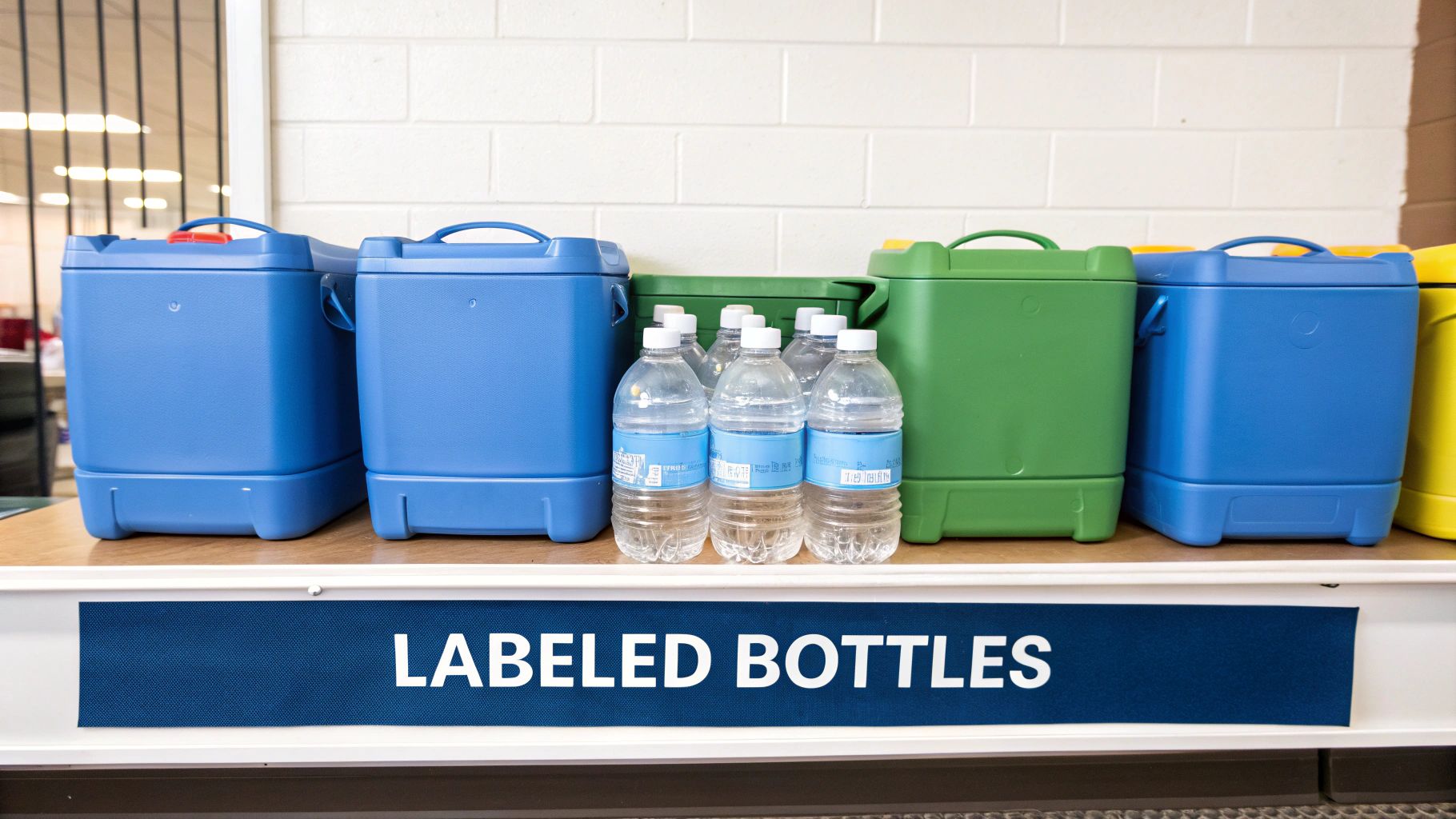
Meal and snack times at daycare involve a flurry of activity, with caregivers managing multiple children's bottles, cups, and lunch containers simultaneously. Clearly labeled feeding supplies are essential to prevent mix-ups, ensure your child gets their own food and drink, and help manage allergy safety. Using durable, identifiable labels on every water bottle, lunch box, and container is a simple step that significantly streamlines the daycare routine for everyone involved.
Why Labeling Feeding Supplies is a Daycare Essential
Many daycare centers mandate that all feeding items be clearly labeled with the child's full name. This policy is critical for health and safety, preventing the accidental sharing of germs and ensuring that children with dietary restrictions or allergies receive the correct meal. For parents, properly labeled items mean fewer lost containers and the assurance that their child is using the supplies sent from home.
Products like InchBug’s Orbit Labels are a game-changer for parents. These reusable, non-adhesive bands stretch to fit securely around bottles and sippy cups, are dishwasher-safe, and won't peel, fade, or wash away. They provide a clear, easy-to-read name without covering important product information on the bottle itself.
Actionable Labeling Strategies
To ensure your child's feeding supplies are always identifiable, implement these practical tips:
- Choose Reusable Options: Opt for reusable labels like Orbit Labels for bottles and cups. They can be easily moved from one container to another and are incredibly durable, saving you money over time.
- Strategic Placement: Apply waterproof adhesive labels to flat, smooth surfaces on lunch boxes for the best stick. For bottles, the reusable band is ideal as it’s highly visible to caregivers from any angle.
- Prepare a Rotation: Purchase multiple bottles and sets of containers. This allows you to have a clean, labeled set ready to go each morning while others are in the dishwasher or drying.
- Test for Durability: Before sending a newly labeled item to daycare, run it through the dishwasher to ensure the label holds up. This pre-test guarantees it can withstand the daily cleaning required.
Incorporating these labeling habits is a fundamental part of any effective daycare checklist for parents. To better understand the advantages of this specific labeling method, discover the 7 reasons why Orbit Labels are the best personalized baby bottle labels.
6. Diapers, Wipes, and Personal Care Supplies with Proper Organization
Staying stocked on diapers, wipes, and personal care essentials is a cornerstone of any robust daycare checklist for parents. Without a clear organization system, caregivers can spend precious minutes hunting for the right diaper size or run into hygiene risks from cross-contamination. By pre-sorting supplies into clearly labeled bins or personalized pouches, you ensure your child’s needs are met smoothly and hygienically throughout the day.
Why Proper Organization Prevents Mid-Day Chaos
Daycare staff juggle multiple children’s routines at once, and a messy supply station leads to delays, frustration, and unnecessary waste. Organized, labeled containers let teachers identify sizes and product types at a glance. Color-coded bins or pouches also reduce the chance of using the wrong cream or running out of wipes unexpectedly. Some centers even integrate digital tracking systems that alert parents when stock dips below a set threshold, streamlining communication and restocking.
Example implementations include:
- Parents preparing a week’s supply of diapers sorted by size in sealed, transparent pouches
- Daycares grouping individual children’s products in color-coded bins on labeled shelves
- Preschools using QR-based inventory apps to text parents when wipes or cream are 20% low
Actionable Organization Strategies
To build a foolproof personal care supply station, follow these best practices:
-
Clear, Consistent Labeling
- Use waterproof labels indicating your child’s name, diaper size, wipe brand, and cream type
- Place labels on pouch exteriors and bin lids for instant recognition
-
Small-Batch Refills
- Pack enough supplies for 5–7 days rather than a bulky month’s worth
- Weekly turnover keeps products fresh and reduces storage clutter
-
Backup Stock Protocol
- Tuck a mini emergency kit (2 extra diapers, wipes packet, cream sachets) into your car or backpack
- Prevent mid-day scrambles if usage spikes or spills occur
-
Parent-Daycare Coordination
- Agree on preferred brands and formulations before first drop-off
- Request weekly email or app updates on remaining supplies
-
Simple Consumption Tracker
- Keep a shared checklist or spreadsheet that logs daily usage rates
- Adjust your packing routine based on actual wipe and diaper needs
Implementing these targeted organization methods ensures your child’s diapering and hygiene routine never misses a beat. For downloadable supply-tracking templates and label ideas, visit https://www.daycarechecklist.com/printable-supply-tracker.
7. Enrollment Forms, Permissions, and Policy Acknowledgments
Completing all required enrollment paperwork is the cornerstone of a smooth daycare experience. This includes parent information forms, authorization for care, photo/video consent releases, activity permissions, discipline policy acknowledgments, tuition agreements, and facility procedure acknowledgments. Filing these documents properly—and keeping copies for your records—ensures your child is covered from day one.
Why Enrollment Paperwork Is a Daycare Essential
Enrollment forms create a transparent agreement between families and providers. They:
- Protect your child’s health and safety by documenting allergies, emergency contacts, and medication protocols
- Ensure legal compliance with state and local childcare regulations
- Clarify financial commitments, late-pickup fees, and vacation hold policies
- Streamline administrative tasks so caregivers can focus on your child rather than chasing signatures
For example, Maple Street Preschool implemented a digital platform last year that required parents to complete their enrollment packets two weeks before orientation. As a result, 100% of families arrived on day one with up-to-date health records and signed policy acknowledgments—eliminating delays and reducing staff follow-up calls by 75%.
“A thorough enrollment process sets the tone for clear communication and mutual expectations,” says daycare director Maria Lopez. “When paperwork is done right up front, we can focus our energy on curriculum and care.”
Actionable Enrollment Strategies
-
Review Every Document Carefully
- Read policy details on illness exclusion, vacation holds, and discipline methods.
- Highlight any clauses you don’t understand and ask for clarification before signing.
-
Create a Dedicated Storage System
- Use a physical binder with tab dividers or a secure cloud folder labeled “Daycare Enrollment.”
- Scan each signed form and back it up on your phone or home computer.
-
Leverage Digital Platforms
- If available, complete forms electronically through your center’s portal (for example, Brightwheel or Procare).
- Enable automated reminders for annual updates and emergency contact reviews.
-
Maintain an Enrollment Calendar
- Note key dates: tuition due dates, policy review deadlines, and annual re-enrollment windows.
- Set alerts two weeks in advance to avoid last-minute scrambling.
-
Keep Contact Information Current
- Notify the center immediately of any changes to phone numbers, addresses, or authorized pick-up persons.
- Confirm your emergency contacts are reachable and up to date.
-
Clarify Financial Agreements
- Verify payment methods, due dates, late-pickup fees, and refund policies before enrollment.
- Request a written fee schedule and store it alongside your signed tuition contract.
By tackling enrollment forms, permissions, and policy acknowledgments early, you’ll check a critical box on your daycare checklist for parents. This proactive step fosters clear expectations, protects your child, and allows your chosen center to deliver exceptional care from the very first drop-off.
8. Comfort Items, Quiet Activities, and Personalized Keepsakes
Starting daycare is a major transition that can bring up feelings of anxiety for both children and parents. Packing a special comfort item, such as a favorite stuffed animal, a soft blanket, or a pacifier, can provide a tangible source of security and familiarity in a new environment. These items serve as a connection to home, easing separation and helping your child self-soothe during quiet times or moments of distress.
Including quiet activities or personalized keepsakes also helps create a comforting space for your child. A favorite board book or a small photo album can offer a peaceful distraction, while personalized items foster a sense of belonging. This focus on emotional support is a crucial component of any comprehensive daycare checklist for parents, helping to ensure a smooth and positive adjustment period.
Why Comfort Items are a Daycare Essential
Familiar objects play a vital role in a child's emotional regulation and development. They provide a sense of control and stability when everything else feels new and overwhelming. Daycare providers recognize the importance of these transitional objects and often encourage them, especially during the first few weeks, to help children build trust and feel secure in their new surroundings.
Products like InchBug's personalized pouches are perfect for keeping these special items organized and clean within a cubby. A themed sticker pack can also be used to decorate their space, making it feel uniquely theirs and more like home.
Actionable Strategies for Comfort and Security
To effectively use comfort items and keepsakes, consider these practical tips:
- Check the Policy First: Before packing any items, discuss the daycare's policy on comfort objects. Some centers may have restrictions on size or type for safety reasons.
- Label Everything: Just like other belongings, comfort items are prone to getting lost. Clearly label stuffed animals, blankets, and pacifiers to prevent mix-ups and ensure they make it back home.
- Choose Wisely: Select items that are durable, easy to clean, and not irreplaceable. It's a good idea to have a "daycare-only" version of a favorite toy to avoid heartbreak if it gets misplaced.
- Create a Keepsake Board: Work with your child to create a small keepsake board or photo album with pictures of family, pets, and happy memories. This gives them a personal touchstone they can look at throughout the day.
8-Item Daycare Checklist Comparison
| Item | Implementation complexity 🔄 | Resource requirements ⚡ | Expected outcomes ⭐ / 📊 | Ideal use cases 💡 | Key advantages 📊 |
|---|---|---|---|---|---|
| Personalized Name Labels for All Belongings | Low — one-time labeling effort | Low — purchase label bundles | High ⭐ — fewer lost/mixed items | Daycare starters; whole-kit labeling | Durable, washable, customizable; saves time/money |
| Emergency Contact Information and Medical Documentation | Moderate — gather forms & verifications | Low — forms, scans, occasional doctor visit | Critical ⭐ — enables emergency care & compliance | Mandatory at enrollment; children with medical needs | Ensures proper care, legal protection, rapid contact |
| Allergy Alert Labels and Medical Identification Tags | Low — create tags & notify staff | Low — tags, color-coding, info cards | High ⭐ — reduces allergen exposure risk | Children with allergies/asthma; meal times | Highly visible, customizable, improves staff awareness |
| Complete Change of Clothes and Seasonal Backup Supply | Moderate — organize, label, rotate seasonally | Medium — extra clothes, storage space | Medium ⭐ — minimizes disruptions from accidents | Toddlers, potty training, variable weather | Ensures comfort, prevents day disruption, labeled returns |
| Labeled Water Bottles, Lunch Boxes, and Feeding Supplies | Low — apply labels/bands; test adhesion | Low — bottle bands, lunch labels, spares | High ⭐ — fewer mix-ups; better hygiene | Snack/lunch periods; group meal service | Dishwasher-safe, reusable bands; reduces cross-contamination |
| Diapers, Wipes, and Personal Care Supplies with Proper Organization | Moderate — stock, label, track usage | Medium–High — ongoing supply and storage | High ⭐ — consistent availability of care items | Infants/toddlers; high-change classrooms | Prevents sharing, saves staff time, ensures supplies |
| Enrollment Forms, Permissions, and Policy Acknowledgments | Moderate — detailed review and signatures | Low — time, document storage, possible fees | High ⭐ — legal clarity and expectations set | All enrollments; administrative compliance | Protects families/facility, clarifies policies and payments |
| Comfort Items, Quiet Activities, and Personalized Keepsakes | Low — select, label, coordinate with staff | Low — small items, labeled pouches | Medium ⭐ — supports adjustment & emotional security | Separation anxiety; transition/nap times | Eases anxiety, fosters familiarity, personalized keepsakes |
Setting Your Family Up for Daycare Success
Transitioning your child into daycare represents a significant milestone for your entire family. It's a journey filled with excitement, anticipation, and, admittedly, a bit of logistical complexity. The comprehensive daycare checklist for parents detailed throughout this guide is designed to dismantle that complexity, transforming what could be an overwhelming process into a series of clear, manageable steps. By systematically addressing each category, from daily essentials like diapers and feeding supplies to critical paperwork and emergency protocols, you build a powerful foundation for a smooth and positive experience.
The core principle underpinning every item on this checklist is proactive preparation. This isn't just about packing a bag; it's about creating a system that anticipates needs, minimizes daily stress, and fosters a strong partnership with your child's caregivers. Meticulously labeling every single item, from the smallest sock to the largest lunchbox, is not a minor detail. It is a fundamental practice that prevents lost belongings, reduces classroom confusion, and ensures your child has exactly what they need, when they need it. Similarly, organizing medical documentation and allergy information with unmistakable clarity is a crucial safety measure that provides profound peace of mind.
Key Takeaways for Long-Term Success
To truly master the daycare routine, it's helpful to move beyond a simple "to-do" list mindset and embrace a more strategic approach. Think of this checklist as a dynamic tool, not a one-time task.
Here are the most critical takeaways to carry forward:
- Consistency is Your Best Friend: A well-organized daycare bag, packed the night before, sets a calm and predictable tone for your morning. This consistency helps reduce rush-hour anxiety for both you and your child, making drop-offs a more pleasant experience.
- Communication is Non-Negotiable: Your meticulously prepared supplies and documents are one half of the equation. The other half is open, ongoing dialogue with your daycare provider. Regularly check in about supply levels, discuss any changes in your child’s routine, and be receptive to their feedback.
- Systems Over Stress: Instead of scrambling each morning, create dedicated "stations" in your home. A designated shelf for daycare supplies, a hook for the backpack, and a folder for paperwork can streamline your entire process. This organizational system is a gift you give your future self every single day.
Actionable Next Steps to Implement Today
Feeling prepared is about taking small, concrete actions now. Start by choosing a labeling system that is durable, waterproof, and easy to read. Products like InchBug’s personalized Orbit Labels for bottles and adhesive labels for clothing and containers are game-changers, built to withstand the rigors of daily daycare use.
Next, assemble a complete "just-in-case" kit to leave at the daycare, including a full change of seasonally appropriate clothes, extra diapers, and any specific comfort items. Finally, review your enrollment paperwork one last time to ensure all contact numbers and medical permissions are current. Mastering these organizational habits frees up mental energy, allowing you to focus on what truly matters: supporting your child's emotional and developmental journey. This transition is not only about logistics; it's also about managing your own schedule effectively. To ensure a smooth transition into daycare and long-term family success, consider exploring effective time management strategies for working mothers.
Ultimately, this daycare checklist for parents is more than a guide to getting organized. It is a roadmap to building confidence, ensuring your child's safety and comfort, and establishing a seamless routine that supports your family's well-being. By investing this effort upfront, you create an environment where your child can thrive, explore, and grow, allowing you to embrace this new chapter with joy and assurance.
Ready to conquer the daycare checklist with confidence? Equip your child with the most durable, personalized, and kid-safe labels on the market from InchBug. Visit InchBug to explore our innovative labeling solutions and make lost items a thing of the past.